
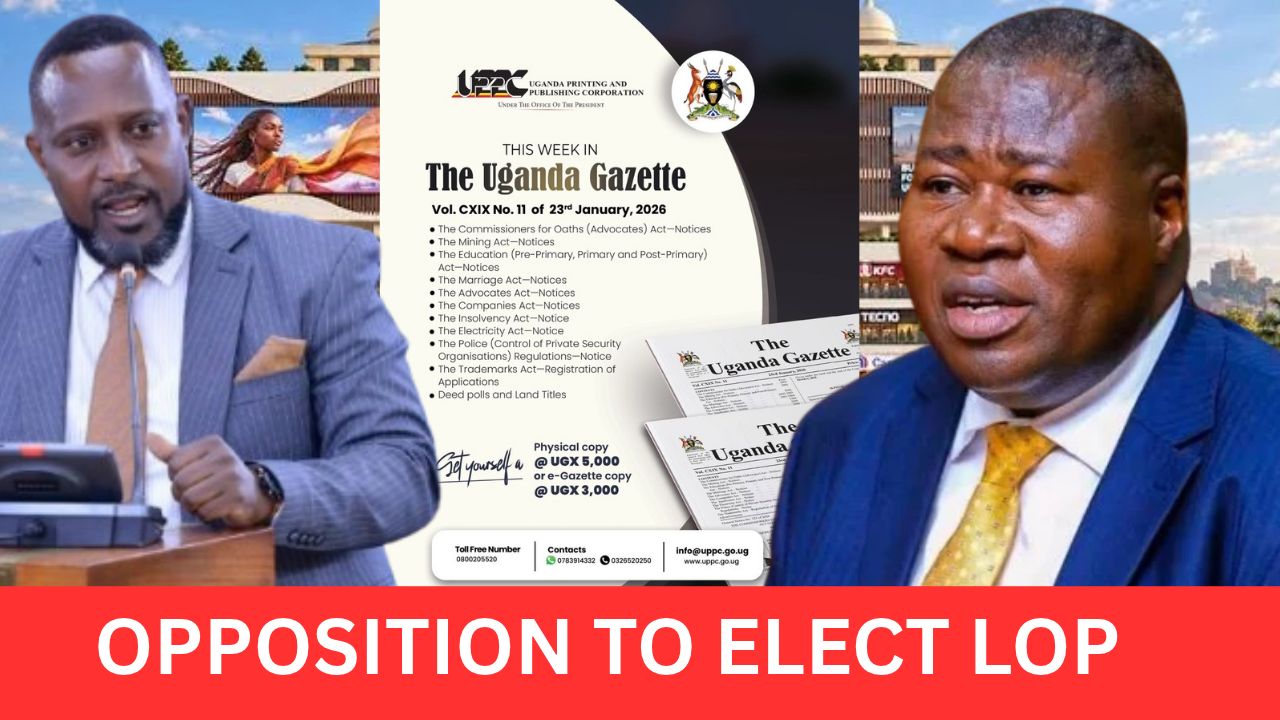



















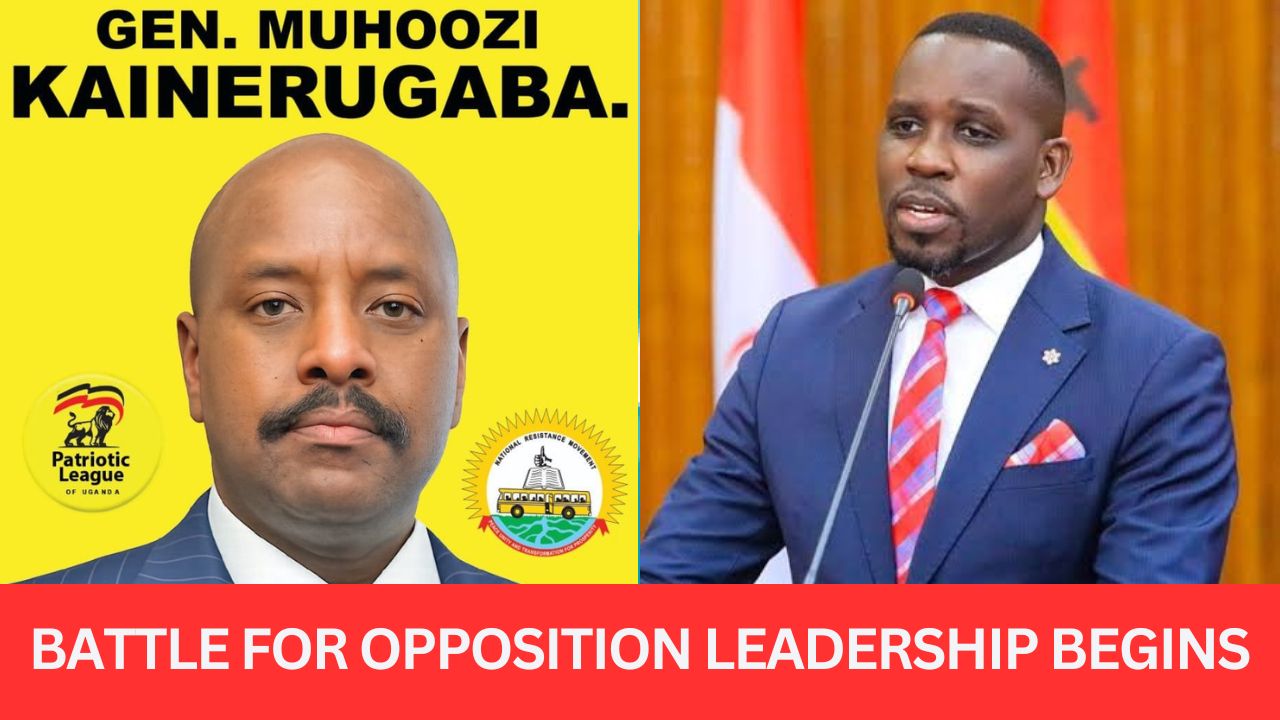
A fresh political battle is brewing in Parliament after Buyaga West MP Denis Namara formally submitted a notice to introduce a Private Member’s Bill seeking to amend the Administration of Parliament Act, 2006 and change how Uganda’s Leader of Opposition (LOP) is selected.
The move, backed by Patriotic League of Uganda (PLU)-leaning legislators, has been presented as an effort to democratize the election of the Leader of Opposition by allowing all opposition and independent MPs to vote for the office.
However, legal experts argue that even if the Bill is passed into law, it cannot remove the current Leader of Opposition, Joel Ssenyonyi, because legislation generally does not operate retrospectively unless Parliament expressly provides otherwise.
On Tuesday, Buyaga West MP Denis Namara officially lodged a Notice of Motion with the Clerk to Parliament seeking leave to introduce the Administration of Parliament (Amendment) Bill, 2026.
The notice, dated June 24, 2026, indicates that the proposed law seeks to amend Section 8 of the Administration of Parliament Act.According to Namara, the amendment will fundamentally alter the method used to choose the Leader of Opposition.
“I am going to seek leave to introduce a proposed amendment into the Administration of Parliament Act. We shall amend Section 8 of this Act so that both Opposition and independent MPs elect the Leader of Opposition in Parliament. The new law will also consider the Commissioners and Leaders of Committees,” Namara said.
The proposal immediately generated political debate because the Leader of Opposition is currently nominated by the political party with the largest number of opposition MPs in Parliament.That arrangement has allowed the National Unity Platform (NUP), which commands the biggest opposition bloc, to appoint Joel Ssenyonyi as Leader of Opposition.
PLU SAYS PROCESS HAS STARTED
Former PLU Secretary General and Kasambya County MP Daudi Kabanda confirmed that the legislative process has officially begun.”The process of getting the new Leader of Opposition has officially commenced. Don’t ask me how, just know we will achieve it and we will do it legally.”
Kabanda further revealed that PLU legislators Linos Ngompek and Denis Namara had already served the Clerk to Parliament with the notice introducing the Bill.
“PLU MPs Hon. Linos Ngompek and Hon. Denis Namara are at the Clerk to Parliament’s office serving notice to introduce a Private Member’s Bill amending the Administration of Parliament Act. The Bill targets LOP selection rules.”
While PLU supporters have celebrated the move as a way of broadening participation among opposition legislators, constitutional lawyers say expectations that the amendment could immediately replace Ssenyonyi are legally misplaced.
WHY THE LAW CANNOT REMOVE SSENYONYI
Several legal analysts note that Uganda follows the long-established legal principle against retrospective application of legislation.
Unless Parliament explicitly provides that a law applies to existing office holders—and such a provision is consistent with the Constitution—new legislation ordinarily governs future appointments rather than undoing appointments already made under the previous law.
Constitutional lawyer Nicholas Opiyo has previously argued in public discussions on legislative reform that laws affecting public offices should generally operate prospectively in order to uphold legal certainty and the rule of law.
Similarly, constitutional law scholar Prof. Fredrick Ssempebwa has repeatedly explained that retrospective legislation is exceptional because it can interfere with vested rights and legitimate expectations created under existing law.
Another Kampala-based lawyer, Isaac Ssemakadde, has also argued in previous constitutional debates that Parliament cannot simply use ordinary legislation to unsettle completed legal processes unless the law expressly authorizes it and survives constitutional scrutiny.
Legal experts say Joel Ssenyonyi assumed office under the legal framework that existed at the time of his appointment.
Consequently, his tenure remains protected until it naturally expires or until circumstances recognized under the current law bring it to an end.
Any amendment passed during his tenure would ordinarily apply to the next appointment of a Leader of Opposition rather than invalidating the existing one.
One constitutional lawyer who preferred not to be named summarized the issue simply:
“You cannot appoint someone under one law today and tomorrow change the law to say the appointment never existed. Unless Parliament expressly makes the law retrospective and that retrospective effect passes constitutional tests, the amendment would only affect future appointments.”
COULD PARLIAMENT MAKE IT RETROSPECTIVE?
Lawyers caution that Parliament has legislative powers to determine when laws commence, but retrospective provisions affecting constitutional offices are particularly vulnerable to constitutional challenge.
If Parliament attempted to terminate the current Leader of Opposition through an amendment, the law would almost certainly face petitions before the Constitutional Court.
Such litigation could delay implementation for months or even years.
POLITICAL REACTIONS
As expected, the proposal has sharply divided opinion on social media.Political commentator Dr. Aggrey Atwine welcomed the proposed amendment.
“We are waiting. We will be pleased seeing NUP finish and their hooligans.”Others accused the government and its allies of attempting to weaken the country’s largest opposition party.
X user Bidi Mustapha criticized the proposal, writing:
“This is a desperate attempt by the state and its military affiliated proxies to manage, control and choose their own opposition. Genuine opposition is chosen by forces fighting for change, not curated by a ruling junta that wants to choose a soft, compromised Leader of Opposition.”
The contrasting reactions reflect the wider political contest surrounding the office, which has become one of the most influential positions available to opposition parties in Parliament.
WHAT HAPPENS NEXT?
The Private Member’s Bill must still undergo several procedural stages before becoming law.First, Denis Namara must obtain leave of Parliament to introduce the Bill.
It will then be published in the Gazette before receiving its First Reading.The Bill would subsequently be referred to the relevant parliamentary committee for scrutiny and public consultation.
After committee consideration, it returns to the House for Second and Third Readings before being passed by Parliament.
If approved, it must then be presented to the President for assent before becoming law.The process could take weeks or months depending on the political environment and parliamentary priorities.
NUP STILL HOLDS THE ADVANTAGE
Even if the amendment succeeds, analysts say the outcome may not necessarily produce the political result its supporters expect.NUP remains the largest opposition party in Parliament, meaning that if opposition and independent MPs were required to vote, the party would still enter the contest with numerical strength.
Whether enough opposition MPs would vote differently remains an open political question.
For now, however, constitutional experts are largely united on one issue: Joel Ssenyonyi’s appointment was made under the existing legal framework, and a future amendment would ordinarily govern only the selection of the next Leader of Opposition.
In other words, while the proposed amendment has ignited a fresh political contest over the future of opposition leadership, it is unlikely to unseat the current Leader of Opposition before the end of his lawful tenure unless Parliament enacts constitutionally valid transitional provisions that survive judicial scrutiny. Until then, Ssenyonyi remains Leader of Opposition under the law as it currently stands.
Author Profile

- Mr. Stephen Kasozi Muwambi is a seasoned crime investigative writer, majoring in judicial-based stories. His two decades’ experience as a senior investigative journalist has made him one of the best to reckon on in Uganda. He can also be reached via [email protected]
Latest entries
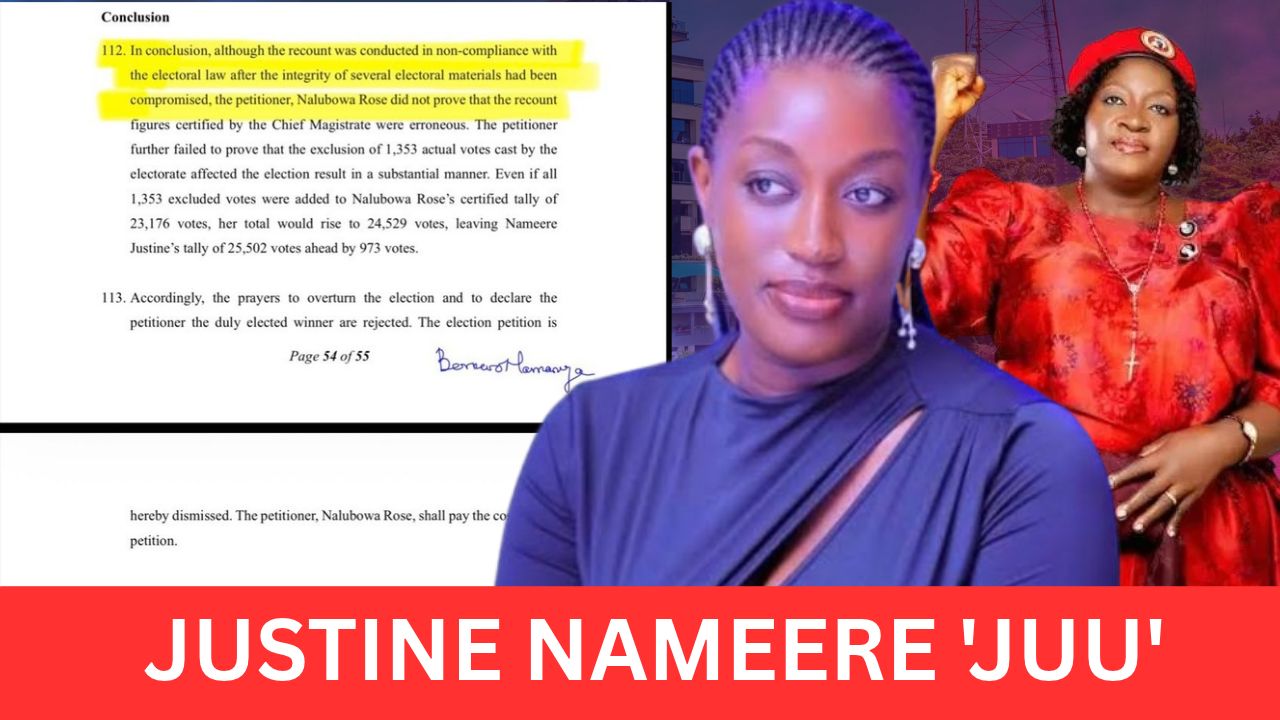 FeaturedOctober 21, 2026NAMEERE RETAINS MASAKA CITY SEAT: High Court Dismisses Nalubowa’s Election Petition, Ruling That Recount Irregularities Did Not Substantially Alter The Final Result
 FeaturedOctober 20, 2026VETERAN JOURNALIST KASYATE JOINS OPM: Simon Kasyate Moves Back Into Government Communications After Years In Journalism, Corporate Affairs And Public Relations, Including A Senior Role At KCCA
 FeaturedOctober 19, 2026BILLIONS LOST, INVESTORS DUPED, GOLD TRADE UNDER SCRUTINY: A City Pastor’s Arrest Over An Alleged Shs2.9b Fraud Involving American Investors Adds To A String Of High-Profile Gold Scams Threatening Uganda’s Investment Reputation
 FeaturedOctober 17, 2026THREE VETO POWERS THREATEN OTUNNU’S UN BID: With Three Of The Five Permanent Members Reportedly Against Him, Otunnu Must Win Over Powerful Opponents Or Risk Seeing His Campaign Collapse Before The Final Selection


What happens to the in coming LOP in case Hon Senyonyi has been removed from office and parliament thru any malice and parliament has to get another LOP? This can happen as soon as possible depending on the wish of the backers of this amendment