


















MWEBEIHA’S DOUBLE TROUBLE!
Deck 1: Wanted businessman faces fresh arrest warrants over alleged theft and giving false information after reportedly jumping bail.
Deck 2: Police sources say the Muyenga tycoon fled Uganda and is believed to be living in Boston.
Deck 3: High Court throws out his multi-billion claim against Government, ruling he slept on his rights despite finding the State breached the compromise agreement.
A dramatic legal storm is engulfing fugitive businessman Amatos Mwebeiha, with fresh warrants of arrest issued against him even as the High Court dismissed his latest bid to recover billions of shillings from the Government.The Investigator has established that Mwebeiha, a resident of Muyenga-Bukasa, is now wanted in separate criminal cases before the Makindye Chief Magistrate’s Court after allegedly failing to honour his bail conditions.
According to police documents seen by The Investigator, the first warrant directs police to arrest Mwebeiha over allegations of giving false information.The warrant states that Mwebeiha is charged with the offence of giving false information contrary to Section 115(c) of the Penal Code Act, directing any police officer to arrest him and produce him before the court without delay.
A second warrant was subsequently issued in a separate matter in which the businessman is accused of theft-related offences. In that case, court documents indicate that Mwebeiha is charged with theft contrary to Sections 254 and 261 of the Penal Code Act, with the Chief Magistrate again directing police to arrest him and present him before court.
MAN ON THE RUN
Multiple security sources told The Investigator that the businessman is no longer believed to be in Uganda. According to a senior police officer familiar with the investigations, Mwebeiha allegedly fled the country several months ago and is believed to be living in the United States.
“He left the country and is in self-imposed exile. Intelligence indicates he has been spotted in Boston. The necessary international law enforcement channels have been notified to facilitate his arrest should the opportunity arise,” the senior officer said.
The officer maintained that investigators remain determined to ensure the suspect appears before Ugandan courts to answer the criminal charges.The latest warrants add another chapter to the businessman’s growing legal troubles, which now span both criminal prosecutions and a decade-long civil dispute involving billions of shillings owed by Government.
Meanwhile, High Court dismisses Mwebeiha’s latest bid. Even as police intensified efforts to locate him, Mwebeiha suffered another setback inside the High Court.
In a ruling delivered on April 30, 2026, Justice Flavia Nassuna Matovu dismissed his application against the Attorney General, the Secretary to the Treasury and Treasury Secretary Ramathan Ggoobi, despite agreeing that Government had breached an earlier settlement agreement.The application arose from Civil Suit No. 382 of 2015, in which Mwebeiha had previously obtained judgment against Government before the parties later entered into a compromise agreement to settle the decretal amount.
The businessman returned to court seeking declarations that Government had breached that compromise agreement and that he was therefore entitled to enforce a default clause requiring payment of the entire outstanding amount together with accrued interest.The respondents opposed the application, arguing among other grounds that it had been filed outside the statutory limitation period.
COURT REJECTS LIMITATION OBJECTION
Justice Matovu first dealt with the preliminary objection that the application was time-barred.Government lawyers had argued that the alleged breach occurred in January 2020 and that any action founded on contract should have been brought within three years.
The judge rejected that argument. She held that the compromise agreement had been endorsed by court and effectively constituted a judgment of the court.
Under Section 35 of the Civil Procedure Act, she observed, enforcement of court decisions may be pursued within twelve years.”The application is therefore properly before court and is not barred by limitation,” the judge ruled.
GOVERNMENT FOUND IN BREACH

Having disposed of the preliminary objection, the court turned to the substance of the dispute.Justice Matovu noted that judgment in the original civil suit had been entered in favour of Mwebeiha on February 3, 2016, after which Government failed to immediately satisfy the decree.
To resolve the dispute, the parties later signed a compromise agreement under which Mwebeiha agreed to waive 40 percent of the accumulated interest, while Government undertook to clear the revised judgment debt within four years.The deadline for payment expired at the end of January 2020. After reviewing the financial records presented before court, Justice Matovu found that Government had not honoured that obligation.
“From the evidence on record it is clear that by end of January 2020, the Respondent had not paid the entire decretal sum as reflected in the compromise. The record shows that by end of January 2020, the Respondent had only paid Shs16,974,551,384 out of the entire decretal sum, which was an apparent breach of the compromise.”
The judge further observed that Government had offered no satisfactory explanation for missing the agreed deadline.”No justification was given by the Respondent for their failure to pay within the agreed period. I therefore find that the Respondents were in breach of the compromise agreement.”
That finding appeared at first glance to hand Mwebeiha victory.But the court’s analysis did not end there.
WHY MWEBEIHA STILL LOST
Justice Matovu found that despite Government’s breach, Mwebeiha’s own conduct after the default proved fatal to his application.The judge observed that the compromise agreement expressly allowed immediate execution if Government failed to pay within the agreed period.
Instead of enforcing that right immediately after January 2020, Mwebeiha continued receiving payments for several more months.The court noted that he accepted approximately Shs31.54 billion outside the agreed payment period without raising any protest. According to the judge, that conduct amounted to acquiescence.
She held that Mwebeiha effectively accepted Government’s delayed performance instead of insisting on the strict terms of the compromise. Justice Matovu stated that the businessman failed to take timely action and instead only sought to enforce the default clause in 2025—about five years after the breach had occurred. The delay, she found, was unreasonable.
EQUITY FAVOURS THE VIGILANT
In one of the ruling’s strongest passages, Justice Matovu invoked the equitable principle that courts will not assist parties who sleep on their rights.
She wrote: “Since the Applicant opted to accept further payments outside the stipulated period without any objection or protest, by his conduct he impliedly waived his right to demand execution of the default clause even at a later date. He cannot turn around to seek enforcement of the same five years later.”The judge added: “The maxim that equity aids the vigilant but not the indolent and that delay defeats equity aptly describes the Applicant’s conduct in this case.” Those findings ultimately proved decisive.
APPLICATION DISMISSED
Although the court accepted that Government had breached the compromise agreement, Justice Matovu concluded that Mwebeiha had forfeited his right to invoke the default clause through his own delay and conduct.
Delivering the final orders, the judge ruled: “I therefore find that whereas it is true the Respondent breached the compromise when he failed to pay by end of January 2020, as agreed, there has been undue delay by the Applicant in enforcing the default clause and for that reason the Applicant cannot enforce the said default clause.”She concluded: “This application is accordingly hereby dismissed and each party shall meet their costs for the application.”
LEGAL WOES DEEPEN
The ruling represents a significant legal setback for Mwebeiha, who had hoped to revive claims arising from the compromise agreement and recover additional sums from Government through enforcement of the default clause.Instead, the court found that while Government initially breached its obligations, Mwebeiha’s own conduct in continuing to accept late payments without protest effectively extinguished the remedy he later sought to invoke.
The decision now comes against the backdrop of mounting criminal proceedings in which the businessman is being sought by police under two separate warrants of arrest.With investigators alleging he has left the country and international law enforcement reportedly alerted, the once-prominent businessman now finds himself confronting legal challenges on multiple fronts.
As authorities continue searching for him, both the criminal warrants and the High Court ruling have intensified scrutiny of a businessman whose name has featured prominently in some of Uganda’s most high-profile legal disputes over the past decade.
By Charles Gazzaman
Author Profile

- Charles Gazza Kodili is a seasoned journalist with over 20 years of experience in the media industry. He holds a Bachelor of Arts degree in Mass Communication. He’s currently the Chief Editor at the Investigator.
Charles can also be reached via; Tel: +256 774 108978
Email: [email protected]
Latest entries
 NewsJune 23, 2026FUGITIVE TYCOON! Court Orders Hunt for Mwebeiha as Judge Throws Out Shs Billions Claim Against GovernmentPolice launch fresh manhunt after businessman allegedly jumps bail
 NewsJune 23, 2026INSIDE NMG’S BIG CRISIS! From Muhoozi’s shutdown threats to secret meetings and editorial shake-ups, East Africa’s media giant faces one of its toughest tests.
 NewsJune 23, 2026WHY NEXT MEDIA’S MARRIAGE WITH CAPITAL IS BIG BUSINESS: Next Media, Capital Radio Group Seal Strategic Partnership in Landmark Media Alliance
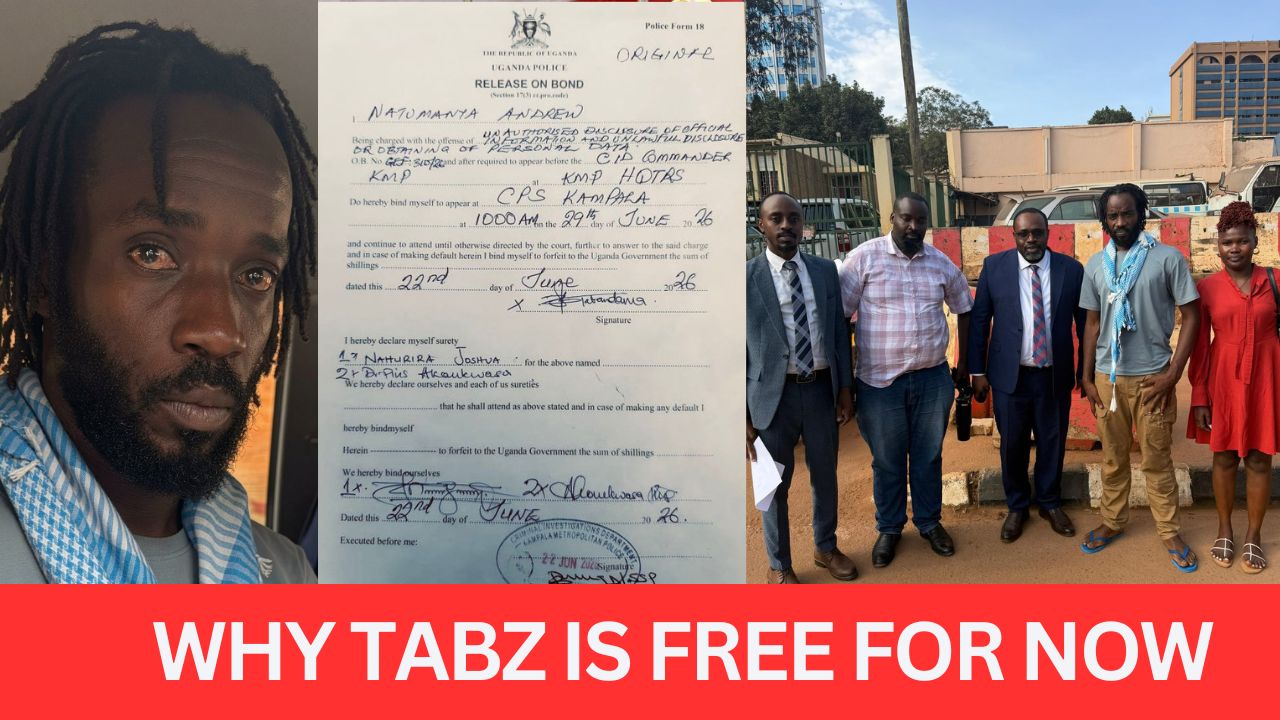 NewsJune 22, 2026WHY TABZ WAS RELEASED! Security insiders claim investigators had already obtained what they wanted before freeing NUP photographer “Ninye Tabz”