






















When the price of fuel rises, the pump is the only place where the problem becomes visible. Uganda’s rising fuel prices are telling us a much bigger economic story than what we see at the filling station. Between June and October, petrol has moved from about Shs.6,415 to Shs6,890 per litre, while diesel has risen from approximately Shs.6,510 to Shs7,190, an increase of nearly 11 percent in just four months. Adding to this is the tax increment of about Shs200 per litre, as the pressure becomes even more significant.
To this moment, the revealing number is the exchange rate: the Uganda shilling has moved from around Shs.3,634 in June to Shs4,140 in October, against the US dollar. In simple language, we are paying more for the same imported commodity because our currency has become weaker. And therein lies the real story, not the oil barrel price of $106.
Fuel is not mere fuel; it is an input into almost every productive activity. Diesel moves trucks, powers factories, supports construction, drives agricultural machinery and transports food from the village to the market. When diesel becomes more expensive, the farmer pays more to transport produce, the manufacturer pays more to run machinery, the trader pays more to move goods and ultimately the consumer pays more at the supermarket.
As economists put it, the fuel shock has a multiplier effect. As Milton Friedman reminded us, “Inflation is always and everywhere a monetary phenomenon,” but in an open economy like Uganda’s, imported inflation and exchange-rate movements can rapidly transmit external pressures into domestic prices.
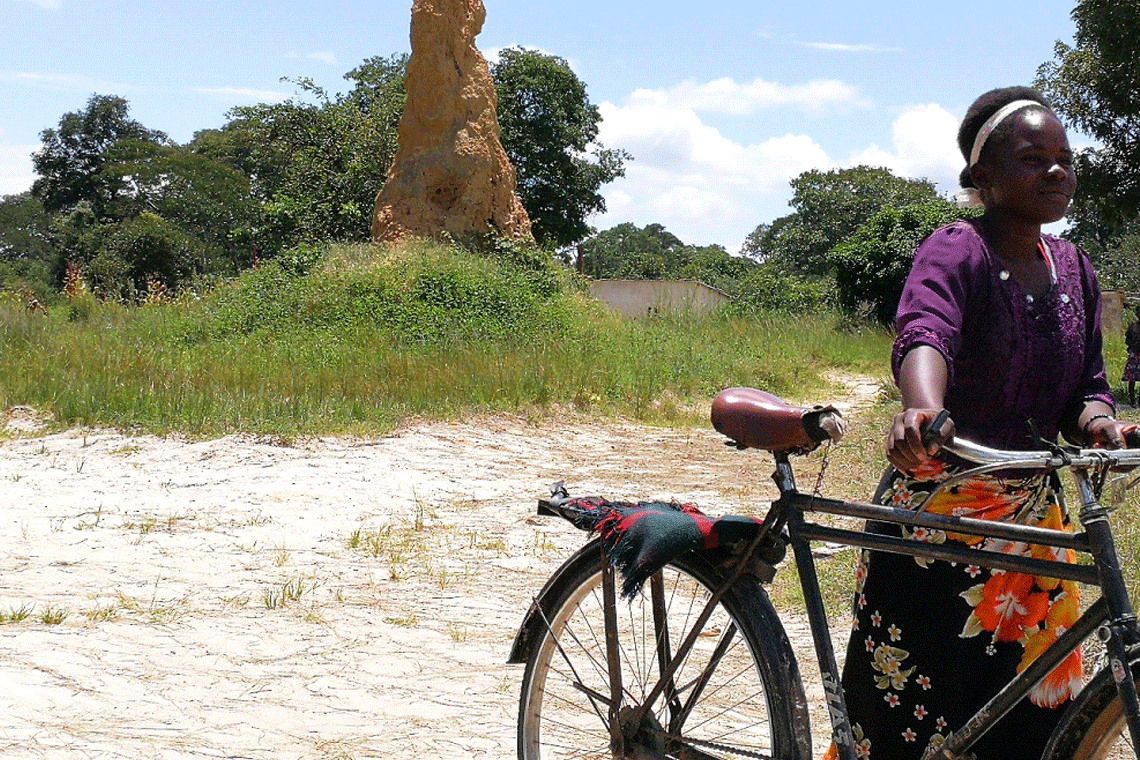
Yet the most vulnerable participant in this chain remains the farmer. Our coffee farmer does not experience economics through narratives; he experiences it through the length of the dry spell, the price of fertiliser, the cost of transport and the price offered at the farm gate. A prolonged dry spell can reduce yields precisely when the cost of producing and transporting those yields is rising.
Less output, higher costs and uncertain prices- a perfect economic squeeze. If we genuinely want to transform agriculture, climate resilience cannot remain an environmental conversation; it must become an economic policy priority through irrigation, water harvesting, climate-smart farming, storage and value addition.
But there is another dimension to the equation that deserves greater attention: confidence. Uganda’s sovereignty legislation generated concerns among some development partners and foreign-funded organisations about the operating environment and the treatment of externally financed activities. Although the legislation was subsequently narrowed, perceptions matter in economics.
Capital is usually quiet and shy. Investors do not only look at returns; they look at predictability, policy consistency and institutional confidence. A country can be fully sovereign while remaining open, predictable and attractive to capital. Indeed, sovereignty without economic confidence can become an expensive luxury.
This is where Uganda must think beyond the immediate fuel-price debate. We need to ask a more fundamental question: how do we make the Ugandan economy less vulnerable to shocks that originate outside Uganda? The answer lies in increasing export earnings, deepening tourism, strengthening manufacturing, accelerating agro-processing, attracting quality foreign direct investment, expanding renewable energy, improving domestic production of strategic inputs and building sufficient strategic fuel reserves.
As Dambisa Moyo argues in her work on development, sustainable economic progress requires countries to think carefully about how they mobilise and deploy capital rather than simply depending on external financing.
Tourism provides another important piece of the puzzle. The Ebola outbreak created a significant disruption to international travel perceptions, with some tourists cancelling or postponing trips to Uganda. Although the country was eventually declared Ebola-free, the economic effects of such a shock do not disappear the day the medical emergency ends.
Well, Tourism is an invisible exporter: the visitor arrives with dollars, spends them locally and leaves the foreign exchange behind. When visitors stay away, the country loses not only hotel revenues but also foreign exchange, jobs, taxes, transport income and demand for local products. A tourist who does not arrive is, economically speaking, an export that never happened.
This is why Uganda’s response must be bigger than attempting to control the price displayed at the fuel station. We need an integrated economic response that protects the shilling, expands foreign-exchange earnings, supports productive sectors, rebuilds international confidence and reduces our dependence on imported energy and other strategic inputs. The debate should move from “How do we make fuel cheaper?” to “How do we make the entire economy cheaper and more productive?”
John Maynard Keynes highlighted that “When the facts change, I change my mind.” The facts before Uganda are changing rapidly. Global energy markets are volatile. Climate change is affecting agricultural productivity. The dollar is strengthening against the shilling. Development financing is becoming more cautious. Tourism is recovering from sensitivity to perceptions of safety (Kenya and DRC still with Ebola cases). At the same time, Uganda is pursuing an ambitious economic transformation agenda.
The answer, therefore, cannot be to fight every fire separately. Fuel is expensive. The dollar is expensive. Transport is expensive. Food is expensive. Capital is becoming more expensive. These are not five unrelated problems; they are different windows into the same economic house.
As Peter Drucker stated, effectiveness is not about doing more things; it is about doing the right things. Uganda therefore needs to focus relentlessly on the fundamentals: produce more, export more, attract more dollars, add more value locally, waste less and create greater confidence in the economy.
In conclusion, a dollar earned is often cheaper than a dollar borrowed. And that may be the most important lesson from the fuel price at the pump: Uganda does not simply need cheaper fuel. Uganda needs a cheaper, more productive and more resilient way of producing Uganda.
Michael Jjingo is the General Manager of Commercial Banking at Centenary Bank.
By Michael Jjingo
Author Profile

Latest entries
 FeaturedNovember 7, 2026GOOD CUSTOMER SERVICE STARTS WITH LESS EFFORT: As Customer Expectations Evolve, Businesses Are Being Challenged To Eliminate Unnecessary Queues, Simplify Transactions And Embrace Digital Self-Service Platforms That Put Convenience And Control In Consumers’ Hands
 FeaturedNovember 7, 2026DSTV UNVEILS KISWAHILI FOOTBALL REVOLUTION WITH NEW SUPERSPORT CHANNEL: SuperSport Swahili Joins DStv’s Expect More Campaign, Offering Selected European Football, WWE, UFC And Athletics Coverage To Subscribers Across Three East African Markets
 BusinessNovember 4, 2026EXPECT MORE FOR LESS: MultiChoice Uganda CEO Hassan Saleh Says The New Campaign Responds To Changing Economic Realities And Customer Demands For Affordable Entertainment Without Compromising Quality
 FeaturedNovember 3, 2026CENTENARY BANK COMMITS TO MASAZA CUP: The Bank Injects Shs200m Into The 2026 Tournament As Kyaggwe Makes History With Its Maiden Title After Defeating Gomba 1-0 At Wankulukuku


And how i wish the effects of the macro economic effects also affect the prices of the local producers most likely of us doing animal rearing. But as i speak a big remains in the old price it was, the hen remains in the old price that it was. Salaries can not really buy peanut as of late. Economics criticises government being major part of the blame but in reality it is seen that its to blame for failing to put up policies to curb the situation but rather to prolong the economic block to development. Strategic measures should be put in place to curb this. Fix prices for farmers that they can also catch up with the economy, buffer stock and buy their goods to stabilise them. publicly announce the prices so that even those far away from towns know the real price but not to be cheated. Given the economy being in shambles dictate of some policies like transport. Let the service sector understand that from Kampala to Mbarara is 25000. Let them make money but not abnormal profits as previously. I believe the economy is bad and demand is low and hence these should act and make minimal profits as opposed to the days before. Think of today for tomorrow.