















Opinion: Maybe Ugandans do not simply get lied to. Maybe we love a good lie, provided it is packaged well enough. Think about it. The most successful deception is rarely presented as deception. It usually arrives dressed as opportunity, wrapped in confidence, sprinkled with impressive numbers and delivered by someone who appears to know something the rest of socierty members do not.
There is often a success story. Someone who supposedly made millions. Someone who bought a car. Someone who built a house. Someone who claims to have joined early and now wants you to join before the “window” closes. Then comes urgency. “Don’t miss out.” Statements like “Today is the last day… Those who joined yesterday are already making money.” And suddenly, asking questions becomes almost offensive.
This is how confidence tricks work. And Uganda has seen its share. The old stories keep returning! In 2008, Dutch International became one of the country’s most notorious financial scandals. Police said thousands of Ugandans had deposited money into the scheme after being promised extraordinarily attractive returns.
At one point, police were investigating claims involving about 9,000 people and more than UGX90 billion. The scheme operated in several parts of the country before its offices closed and directors came under investigation. What made such schemes powerful was not simply the promise of money. It was the story. People were told that they were participating in something that could transform their lives. The confidence of those selling the scheme became part of the evidence.
Then came TelexFree
In 2014, Bank of Uganda publicly warned that TelexFree and other pyramid-style operations were unregulated and unlicensed financial schemes. Police subsequently received hundreds of complaints, with investigators saying billions of shillings could have been lost, already. Again, the attraction was not complicated.
Work from your phone, post advertisements, recruit others, then make money. The simplicity itself was persuasive. Then came another generation of schemes. This time speaking the language of football. BLQ Football Uganda promised an investment opportunity built around betting. Government investigators concluded that the company was operating illegally and that it had used betting to market membership and attract investors.
Government figures put the amount Ugandans lost at at least UGX60 Billion. BLQ’s final message became almost a symbol of the entire episode. “I’m Out!”… Thousands of people were left trying to understand how the opportunity that had appeared so convincing had suddenly disappeared. The lesson should have been obvious. But it wasn’t.
The above stance, because the next story is always more attractive than the last warning. We don’t just buy products. We buy narratives There is a deeper pattern here. The successful con does not begin with money. It begins with belief. Tell someone that they can become rich and they will listen.
Tell them that their neighbour has already become rich and they will listen more carefully. Tell them that the opportunity is available only for a limited period and they will become anxious. Tell them that people who are questioning the scheme simply “don’t understand” and you have begun creating a psychological wall around the story.
This is why confidence is so powerful. A person who speaks with certainty can make an unverified claim sound like established fact. A photograph can become “proof”. A luxurious car can become “evidence”. A famous name can become “authentication”. A large crowd can become “credibility”. And once enough people repeat the same claim, repetition itself begins to look like confirmation.
That is how society can be moved from “Is this true?” to “Everyone knows it is true!” The difference is enormous. And yes, dangerous too. From money to charity, for the same psychology does not exist only in financial schemes. Lets look at community fundraising. Someone announces that a new health centre will be built. Another fundraiser promises a borehole. Another seeks money for a church building. Another launches an appeal for a vulnerable family. Another says a community school urgently needs classrooms. People give.
Why do they give? They give because they trust the messenger. They give because the cause sounds worthy. They give because refusing to contribute can make them look selfish, and sometimes, the project is completed. But sometimes, years pass and the promised building does not appear, the borehole is nowhere to be seen, the hospital equipment never arrives.
The accounts are never produced. Questions are met with anger. And once again, the person asking, “Where did the money go?” can become the villain. This is where Uganda’s relationship with stories becomes particularly interesting. We often judge the questioner before we establish the facts. We ask such questions like; “Why are you attacking him?”… “Why can’t you respect the elders? Why can’t you wait? Why are you being negative?” But the most important question many avoid remains… Where is the evidence?
Enters the King Oyo Succession Mystery
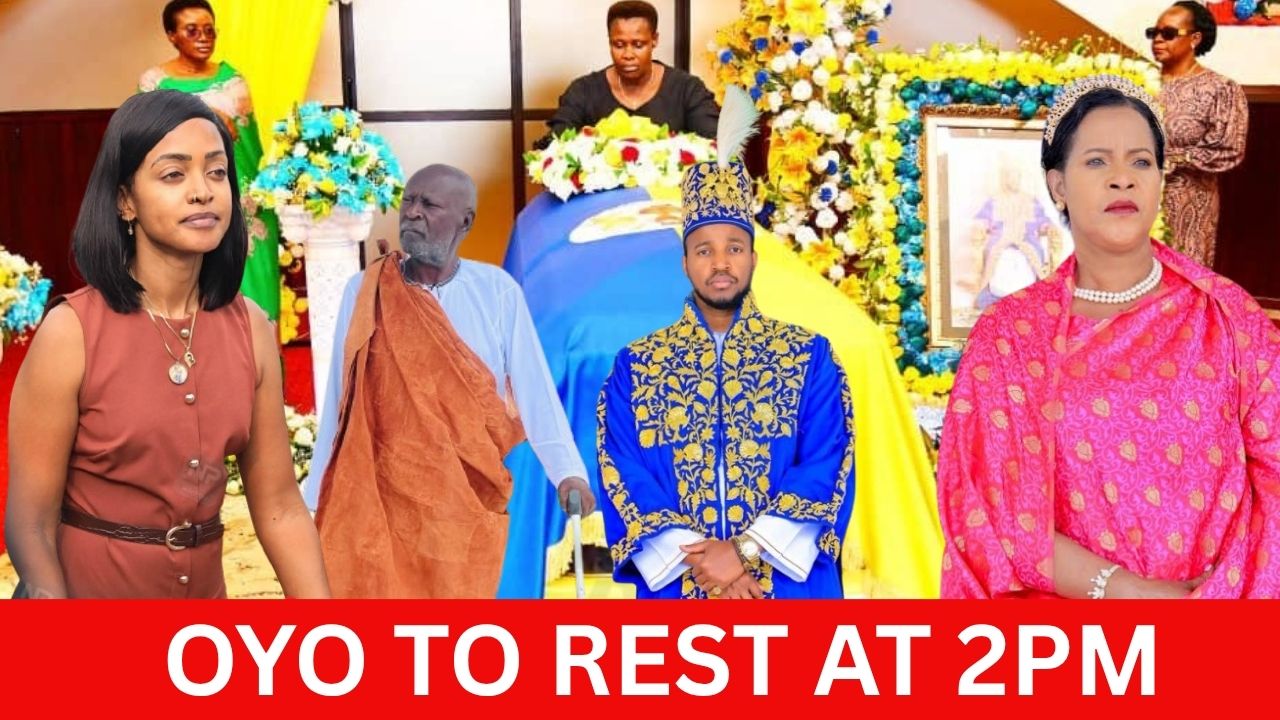
Nothing demonstrates the power of a compelling story more dramatically than the extraordinary succession dispute that followed the death of Tooro’s King Oyo Nyimba Kabamba Iguru Rukidi IV. King Oyo died on August 27th 2026, aged 34, after a 31-year reign that began when he was only three years old. He was buried at the Karambi Royal Tombs on September 12th 2026. But even before the funeral was over, Tooro had been drawn into a succession dispute. At the centre of it was a remarkable claim, that King Oyo had left behind a biological son who was entitled to succeed him.
The claim was initially made publicly by Tooro Kingdom officials after the king’s death. The kingdom’s Prime Minister, Calvin Armstrong Rwomiire Akiiki, said the late monarch had left a prince who would become heir, but that his identity would be revealed at the appropriate time in accordance with Tooro customs. That announcement changed everything.
The problem was that the Babiito royal clan, which plays a central role in the traditional succession process, said it had no knowledge of such an heir. The clan, after several trials to prove the Baby Oyo`s existense in vain, instead moved to identify a successor and eventually selected Prince Edward Rukidi Kijanangoma. Then came another dramatic development. Read on…
The royal family produced what was described as King Oyo’s Last Will and Testament, dated September 2022. According to reports on the document, Oyo provided that if he died leaving a son “lawfully recognised as his biological…”, that son would be his heir to the Tooro throne. The will also reportedly provided alternative successors if the son could not assume the crown.
Now the matter was no longer simply about whether a child existed. It had become a question of law, custom, lineage, succession and the authority of the royal clan. But the questions were already there. This is where the story became uncomfortable to some of us. On September 9th 2025, almost exactly one year before the current succession controversy, Queen Mother Best Kemigisa publicly appealed to her son, King Oyo, to marry.
She was speaking at the baptism ceremony of her first grandchild, the son of Princess Ruth Komuntale. According to a Daily Monitor story, the Queen Mother thanked God for giving her the first grandchild and asked the king to get a wife who would give her more grandchildren. That statement should have become central to the public debate. Why?
Because after Oyo’s death, the public was told that the late king had a biological son. The apparent contradiction prompted questions from some critical members of the public and commentators. if there was a son, when was the child born? Who is the mother? When was the child introduced to the royal family? Why was the child not publicly known? What customary steps were taken to recognise him?
Those are legitimate questions. But there is an equally important distinction. A question is not proof that the child does not exist. The fact that a child was not publicly known does not, by itself, establish that the child is fictitious. The existence of a child and the child’s eligibility to inherit the throne are separate questions. That distinction matters too.
And The Story Kept Moving
Since Oyo’s death, different descriptions and claims about the alleged heir circulated publicly, including claims about his age and whereabouts. Some reports have referred to a young boy, other claims circulating publicly pointed to different locations and circumstances. But those claims were never established. That when the matter precisely required evidence rather than emotions.
The Babiito leadership questioned the claim and said the child had not been introduced through the customary process. International reporting also highlighted the fact that the child had not been publicly identified. President Yoweri Museveni was also reported to have been informed by the Queen Mother about the existence of a young heir. And the legal debate now moved to another step.
Uganda’s Attorney General advised that Oyo’s will should guide the succession process and that any challenge to the validity of the will should be resolved by a court. The opinion reportedly relied on constitutional and statutory provisions governing traditional and cultural institutions. That was significant. Because it moved the argument away from social media and into questions that could actually be tested.
Was the will genuine? Was it valid? Was the alleged son lawfully recognised? What do Tooro customs require? Who has authority to determine succession? And, ultimately, does the alleged heir meet the requirements for succession? These were questions that evidence can answer. Facebook cannot, a rumour cannot, emotions cannot. This is where sympathy became dangerous
Now, There is Another Lesson in All This
People are particularly vulnerable to claims when the story involves grief. King Oyo’s death was a deeply emotional national event. He was not simply a traditional leader. He was the boy-king millions of Ugandans had watched grow into a young man. For many people, his death was personal.
In such circumstances, asking difficult questions can appear insensitive. But that`s precisely why difficult questions became even more important. Respect for the dead should never mean surrendering the right to establish facts. Respect for culture should never mean abandoning accountability. And sympathy should never become a substitute for evidence.
At the same time, suspicion should not become evidence either. That principle must apply to everybody. If the royal family says there is an heir, let the appropriate legal and customary processes establish it. If the Babiito clan disputes the claim, let them present the basis for their position. If the will is challenged, let the courts determine its validity. If the child exists, his identity and lineage can eventually be established through lawful and culturally appropriate procedures.
That is how serious societies should resolve serious questions. We have seen this movie before. The Dutch International story was a story about money. TelexFree was a story about opportunity. BLQ was a story about football and quick returns. Fundraising can become a story about compassion. And the Tooro succession controversy is a story about bloodline, culture, tradition and the future of a historic institution.
Different subjects, same human vulnerability. We want to believe. We want to believe that the opportunity is real, we want to believe that the person speaking is trustworthy, we want to believe that the project will be completed, we want to believe that the person we admire could not be misleading us, we want to believe that the child exists, we want to believe that the child does not exist. Sometimes we even choose the evidence that fits the story we already prefer!
And once we have chosen a side, facts become inconvenient. The real question is not whether Ugandans are gullible. For, calling Ugandans gullible is very easy. The problem is more complicated. Humans everywhere are susceptible to persuasive narratives. But Uganda has repeatedly demonstrated how quickly confidence, celebrity, religion, culture, money and emotions can combine to overpower their suspicions.
The answer is not suspicion. It is verification. Before sending money, ask for the right recieving number or account details. Before investing, check whether the institution is licensed. Before forwarding a sensational claim, ask where it came from. Before defending a public figure, ask what the evidence actually shows. Before condemning one, do the same.
And Lastly…
Before accepting a succession claim, ask what the law and the relevant customs require. And before calling someone heartless for asking questions, remember that questions are sometimes the only protection ordinary people have. A story can be repeated by thousands of people and remain unproven.
And a story can even contain some truth while the most important part remains unverified. That is why evidence matters. The Dutch International victims did not lose money because the mathematics of wealth was impossible to understand. They lost money because the story was convincing.
TelexFree did not become attractive because posting adverts was inherently a revolutionary financial model. It became attractive because people believed the promise. BLQ did not attract billions because Ugandans suddenly became football experts. It just sold a dream to them. And the Tooro succession dispute became so emotionally charged because it touches something even more powerful than money. Identity.
But identity does not make facts optional. So perhaps Ugandans do not love lies. That may sound too harsh. Perhaps what we really love is a good story. We love stories about sudden wealth. Stories about miracles. Stories about rescue. Stories about hidden fortunes. Stories about powerful connections. Stories about secret heirs.
Mostly, stories in which our side is right and the other side is wicked. And sometimes, when the truth threatens the story, we choose the story. Yes, ourselves! That is where the danger begins. Because the most sophisticated deception does not always require someone to force a lie down our throats. Sometimes all they have to do is tell us a story we desperately want to believe…
Then they sit back and we do the rest. And maybe the most important civic lesson of all is this; Never punish the person who asks for proof simply because the story is too good to question. In the end, evidence should not be the enemy of a good story. It should be what separates a good story from a dangerous one. Nobugambo Obwo, Happiest Coronation to HRM Edward Kijanangoma Rukidi Nabongo the First.
Author Profile

- Stanley Ndawula is a two and a half decades’ seasoned investigative journalist with a knack for serious crimes investigations and reporting. He’s the Founding Editorial Director and CEO at The Investigator Publications (U) Limited
Latest entries
 BusinessOctober 3, 2026NEW KID ON THE CELEBRITIES` BLOCK LT. HERBERT MABONGA UNVEILS HIS CONNECTIONS WITH THE PORTUGESE FUGITIVE: But Who Is Carlos Cohen? The Runaway Gold Dealer With M7`s Ear
 UncategorizedOctober 1, 2026ONE YEAR WITHOUT YOU, NDUGU TATYA: A Tribute to My Friend, Colleague and Brother, Daniels Nabongo Tatya, “The Prince Of Journalism, The Man From the Mineral-Rich Busoga”
 BusinessSeptember 25, 2026OF DEPUTY MUFTI SHEIK DR. HAFIDH MUHAMMAD HARUNAH BUKENYA`S BAD GOLD DEAL AND THE MISSING FILE: DPP Lino Anguzu Petitioned Over the Handling of the UGX1 Billion Criminal Case
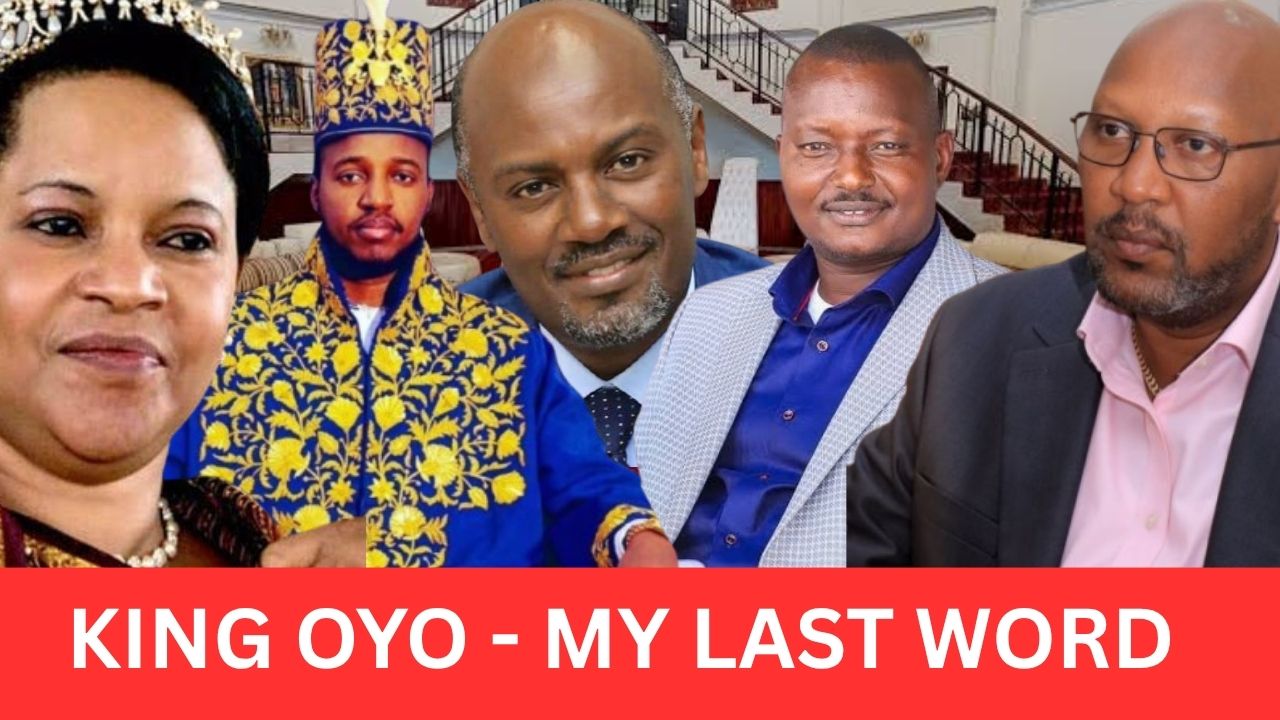 EducationSeptember 23, 2026MY LAST WORD ON FALLEN KING OYO`S SUCCESSION TREK: Maybe Ugandans Love a Good Story! But Punish Not the One Who Asks for Proof Simply Because the Story is Too Good to be Questioned


For the first time, I have seen you write with a biased opinion and still fought so hard to defend your credulity. As a journalist, you should bear in mind that there is always a last laugh. Before that time comes, it’s always good to never say never. Propositions such as, bring out the baby, let us see the baby’s face, let us know the baby’s mother are enough for one to keep the baby undisclosed until the dust settles. Either way, one of the sides succumbed to public pressure motivated by ambitions or even greed. You can not be celebrating a new king while the old one is still lying lifeless in a few meters away. Let us pray to live longer because with time, nothing remains hidden.