






















Uganda’s gold sector is facing a financial-crime challenge that goes far beyond counterfeit gold bars. An emerging pattern involves foreign investors being persuaded to put millions of dollars into gold transactions that subsequently fail to materialise.
In some cases, the apparent transaction is supported by companies, purported refineries, bank accounts, contracts, security personnel, cargo documentation and professional intermediaries—creating an entire environment designed to make the transaction appear legitimate.
The refinery that creates confidence
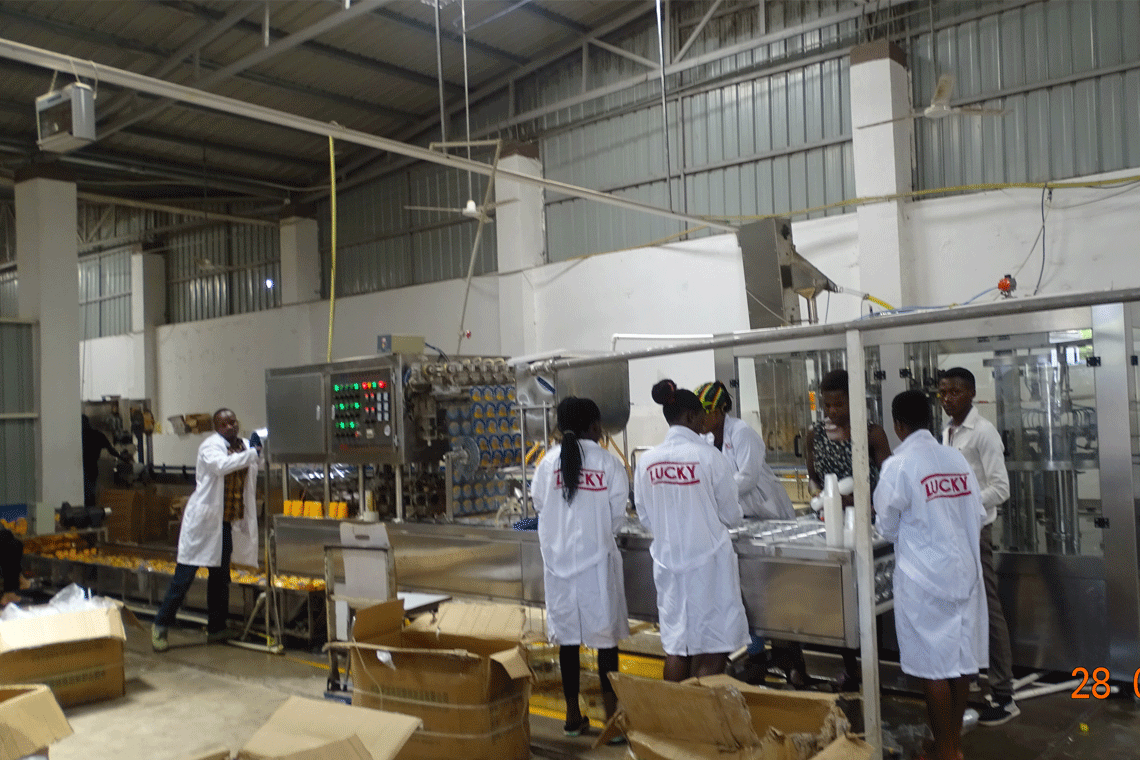
 The sophistication of these schemes lies in manufacturing credibility. A victim may be shown a refinery, introduced to directors and lawyers, presented with contracts and assay documents, taken through an apparent export process and told that government or security officials are aware of the transaction.
But a registered company is not necessarily proof of a genuine transaction. Neither is a bank account, an office, a contract or even a physical quantity of gold. The real question is whether the entire transaction can be independently verified.
Professional credibility problem
Professionals can become an important part of the credibility chain without necessarily knowing that a fraud is taking place.
There have been publicly reported cases in which lawyers were implicated in alleged gold-related fraud involving foreign investors. This should not be interpreted as an indictment of the legal profession.
 It should instead prompt stronger scrutiny of high-value transactions: beneficial ownership, source of funds, client accounts, counterparties and the economic purpose of payments.
Follow the money—and the cryptocurrency
Recent cases demonstrate the growing relevance of cryptocurrency. In September 2026, prosecution alleged that a foreign investor paid $85,300 in a purported seven-kilogram gold transaction, including $64,600 through a USDT wallet. The gold was allegedly never exported. The allegations remain before court.
For investigators, therefore, “follow the money” now means following bank accounts, wallets, exchanges and ultimately beneficial owners.
The Congo and Sudan effect
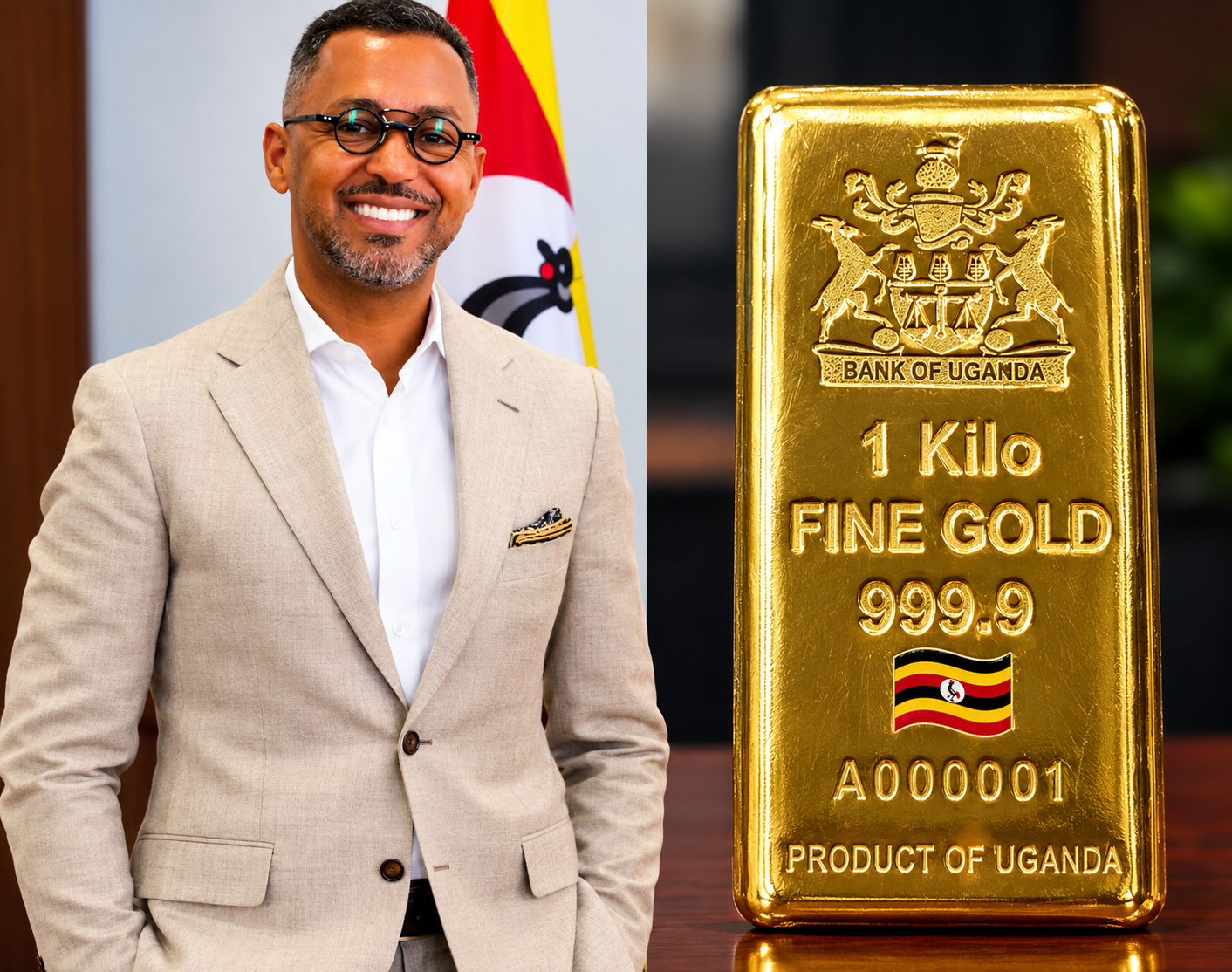 Uganda’s position in the regional gold trade creates another layer of risk. Gold from high-risk and conflict-affected environments, including the Democratic Republic of Congo and Sudan, requires enhanced attention to provenance, ownership, sanctions exposure, smuggling and trade-based money laundering.
The question cannot simply be whether the gold is genuine. It must also be: Where did it come from, who owns it, and how did it enter Uganda?
When the airport becomes part of the fraud
The airport is another critical control point. In 2024, the State House Anti-Corruption Unit reported the arrest of six suspects following an alleged fake-gold consignment at Entebbe. Investigators intercepted 300 purported gold bars which mineral experts determined were other minerals. Several airport clearing agents were among those arrested.
This illustrates an important principle: documents and cargo must be independently verified, not merely presented.
A fake invoice, airway bill, export document or assay certificate can be just as important to a fraudster as fake gold itself.
The institutional credibility trap
Perhaps the most dangerous weapon in sophisticated fraud is the appearance of government or security involvement.

A fraudster may invoke State House, the military, Police, intelligence agencies, ministries or senior officials to reassure a foreign investor.
The recent Police case demonstrates how serious this risk can become when serving officers are allegedly drawn into a fraudulent enterprise.
At the same time, State House’s own investor-protection machinery has been actively involved in investigating gold fraud. No investor should regard a claim of government connection as proof of legitimacy. Government authority must always be independently verified.
What should Uganda do?
The response must go beyond arrests. Banks and other accountable persons should apply enhanced due diligence to unusually large gold transactions. Regulators should make it easier for investors to independently verify mineral licences, beneficial ownership, refinery operations and export documentation.
Investigators should follow both the money and the credibility chain:
Who introduced the investor? Who introduced the seller? Who arranged the refinery? Who prepared the contracts? Who provided security? Who issued or verified the assay? Who arranged the cargo? Who received the money? Who controlled the cryptocurrency wallet? And where did the money ultimately go?

Most importantly, Uganda must distinguish between legitimate participants in the gold economy and those who exploit legitimate institutions for criminal purposes.
It should be possible for a legitimate gold transaction to be verified—and a fraudulent one exposed—before millions of dollars disappear.
Conclusion
The central question is therefore no longer simply: “Where is the gold?” It is: “Who manufactured the credibility that made the victim believe the gold was there?”
That is where Uganda’s next generation of financial-crime investigations should begin.
By Malcom Kiyimba
Author Profile

Latest entries
 FeaturedSeptember 21, 2026THE FAKE GOLD ECONOMY: Inside Uganda’s Emerging Financial Crime Ecosystem. The Most Dangerous Weapon In Sophisticated Fraud Is The Appearance Of Government Or Security Involvement
 BusinessSeptember 19, 2026THE GOLD RUSH: Inside Uganda’s Murky Gold Trade and the Israeli Tycoon Who Caught Museveni’s Eye
 FeaturedSeptember 18, 2026ARROW BOYS REGROUP AS TESO SECURITY FEARS GROW: Former Fighters Who Battled Joseph Kony’s LRA Under Musa Ecweru And Mike Mukula Pledge To Work With Police And Other Security Agencies To Confront Rising Attacks On Civilians
 FeaturedSeptember 18, 2026LAWYER PILI LEKU THE NEW MOSES ALI: MP-Elect Calls On Defeated Candidates To Join Hands, Unite And Work To Transform Adjumani West