














For four hours on Saturday morning, Uganda experienced scenes that reminded many of the restrictive days of the COVID-19 lockdown. Streets that would ordinarily be buzzing with taxis, buses, motorcycles and traders fell unusually quiet as businesses temporarily shut their doors and millions of Ugandans put aside their daily routines to participate in the country’s first-ever National Cleaning Day.
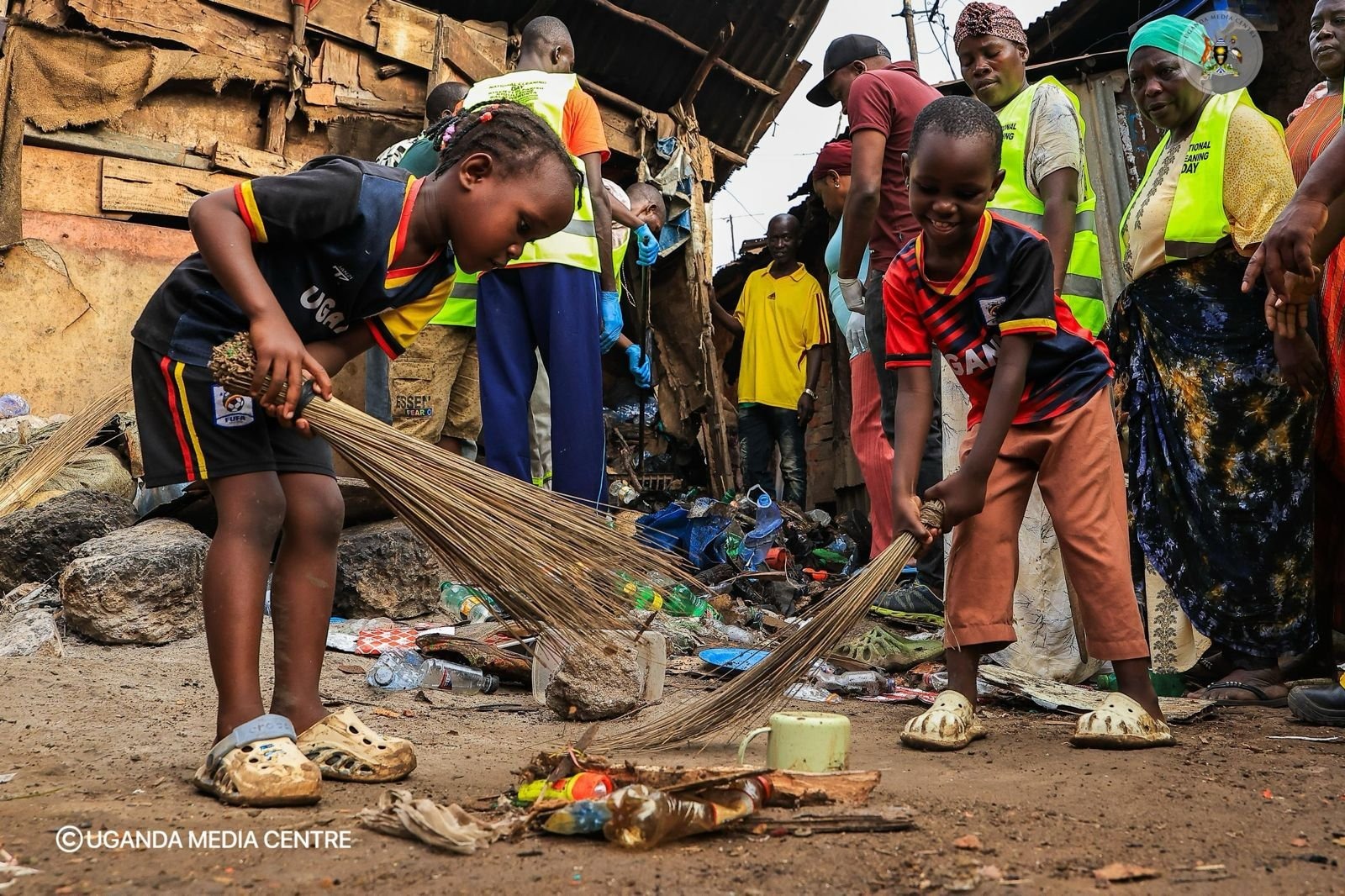
Unlike the coronavirus lockdowns that confined people to their homes, however, this shutdown had a different purpose. Instead of staying indoors, citizens stepped outside carrying brooms, slashers, hoes, wheelbarrows and garbage bags to clean roads, markets, schools, drainage channels and public spaces in what government described as a nationwide campaign to restore environmental cleanliness and civic responsibility.
The exercise, which ran from 7:00am to 10:00am, was officially launched by Vice President Jessica Alupo and Prime Minister Robinah Nabbanja in Kampala and will now become a monthly event to be observed on the last Saturday of every month.
Thousands of Ugandans—from schoolchildren and university students to cabinet ministers, security officers, religious leaders and ordinary residents—answered the call, transforming the three-hour exercise into one of the largest community service campaigns witnessed in recent years.
A New National Culture
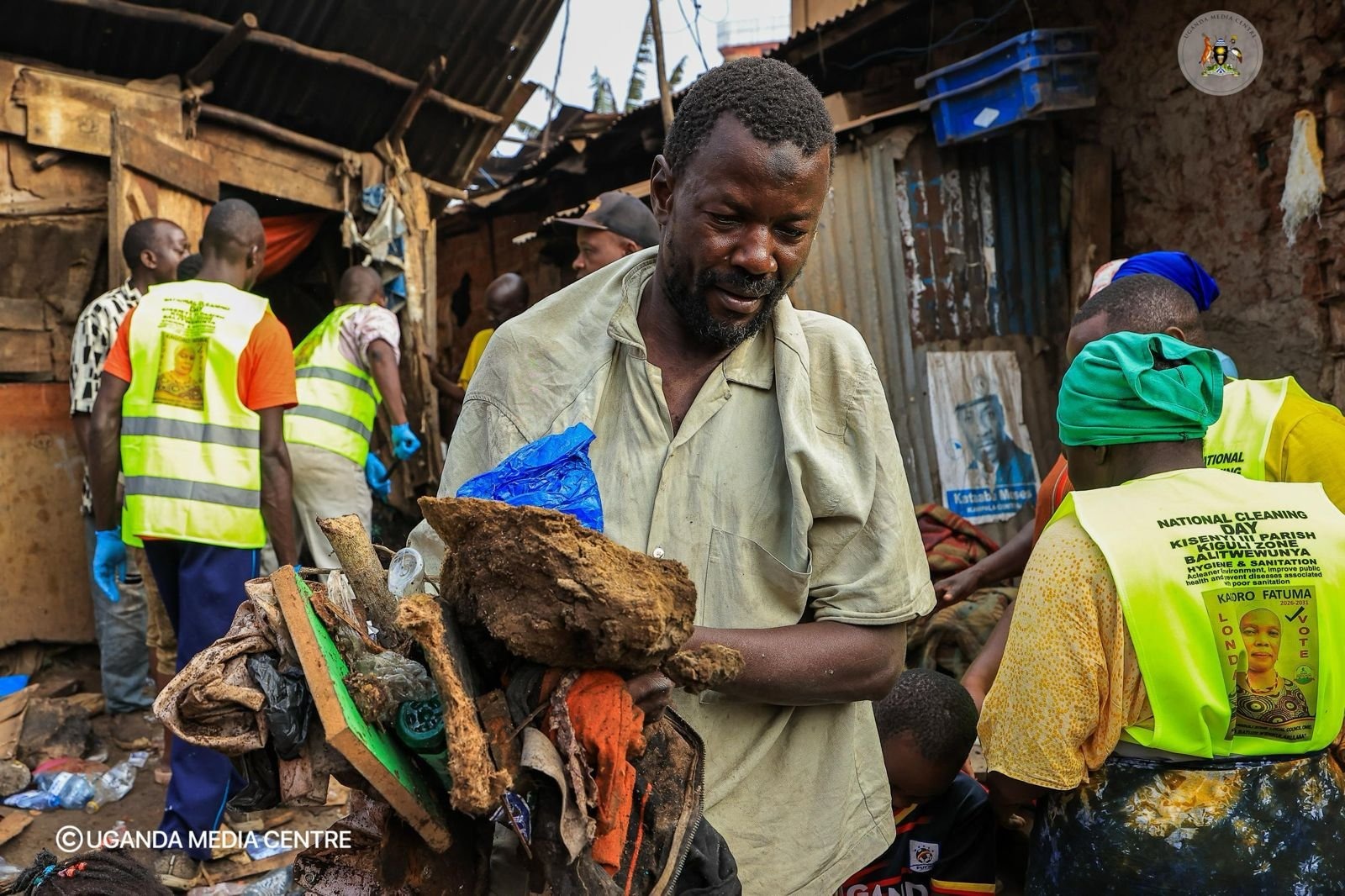
Launching the initiative, Prime Minister Robinah Nabbanja described the exercise as the beginning of a national movement aimed at improving sanitation, preventing disease outbreaks and fostering patriotism through community service.
“This is not a one-off event,” Nabbanja said. “Today marks the beginning of a monthly National Cleaning Day. Every last Saturday of the month, all Ugandans are expected to dedicate time to cleaning their homes, neighbourhoods, workplaces and public spaces because a clean environment is everyone’s responsibility.”
She urged local governments, schools, businesses, markets and households to fully embrace the initiative, saying government alone cannot maintain cleanliness without active citizen participation.
For three hours, businesses remained closed across much of the country, with even commercial banks delaying opening until 11:00am despite belonging to essential service providers.
Alupo Leads National Launch
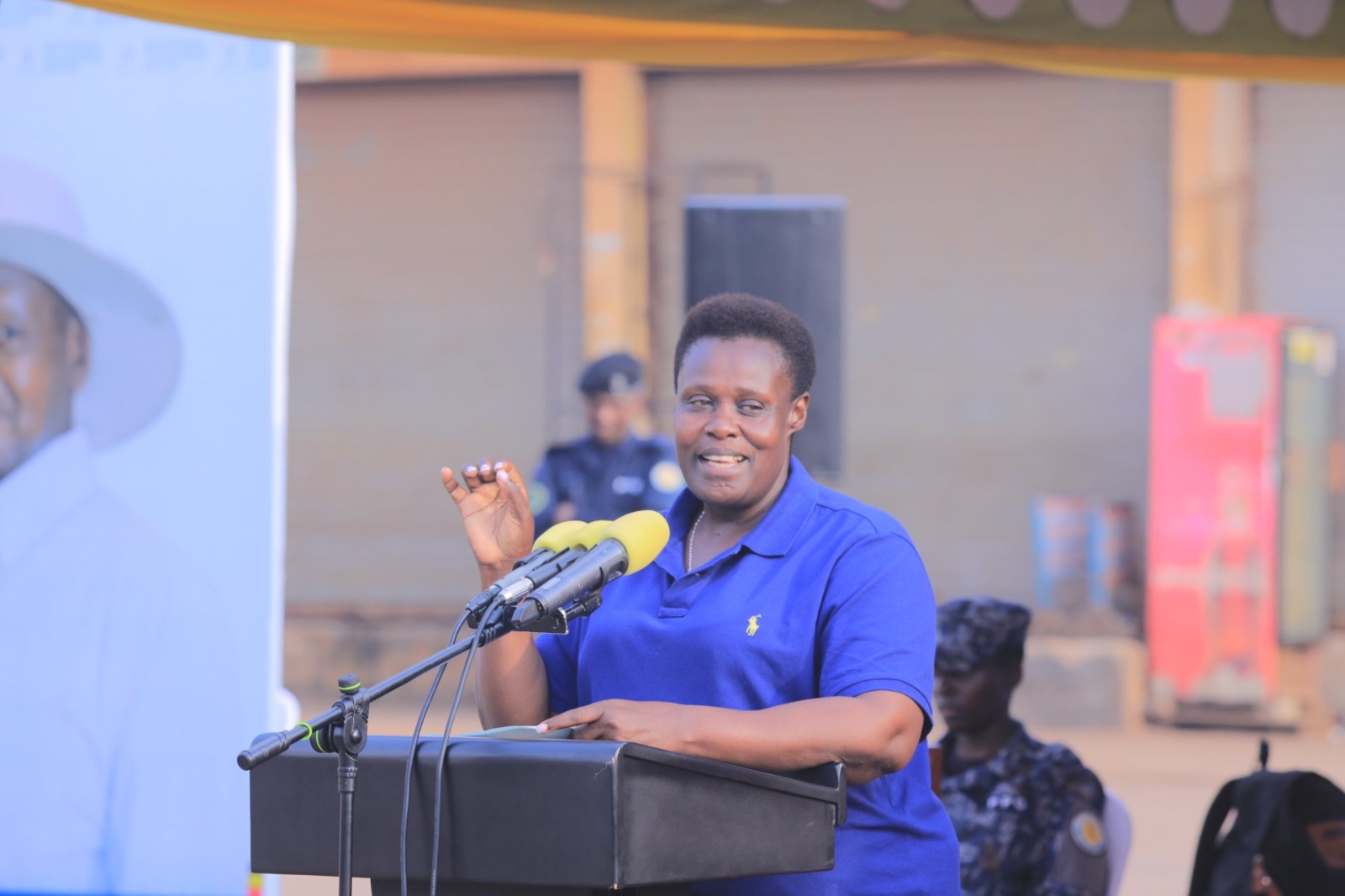
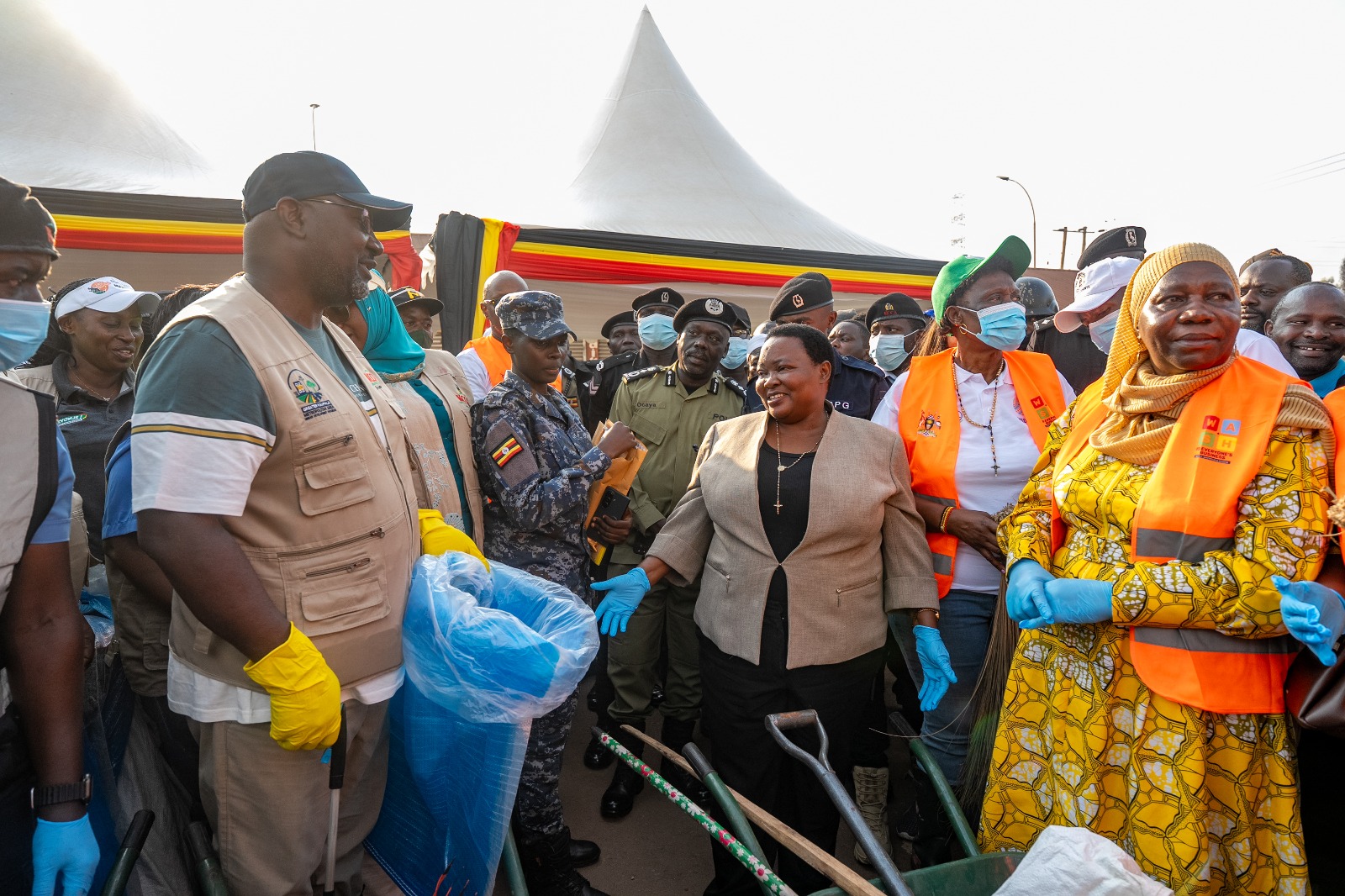
Vice President Jessica Alupo joined Nabbanja at the official launch in Kampala, where hundreds of residents, security officers and government officials gathered to clean roads, drainage channels and public spaces around the city.
Alupo described cleanliness as a matter of public health rather than politics.”A clean environment protects our families from disease, preserves our environment and reflects our national pride,” she said.
She urged Ugandans not to view the exercise as government work alone but as a shared civic duty.The Vice President later joined Deputy Inspector General of Police James Ocaya and other dignitaries in sweeping roads and collecting garbage around Usafi Park.
Muhoozi Leads by Example
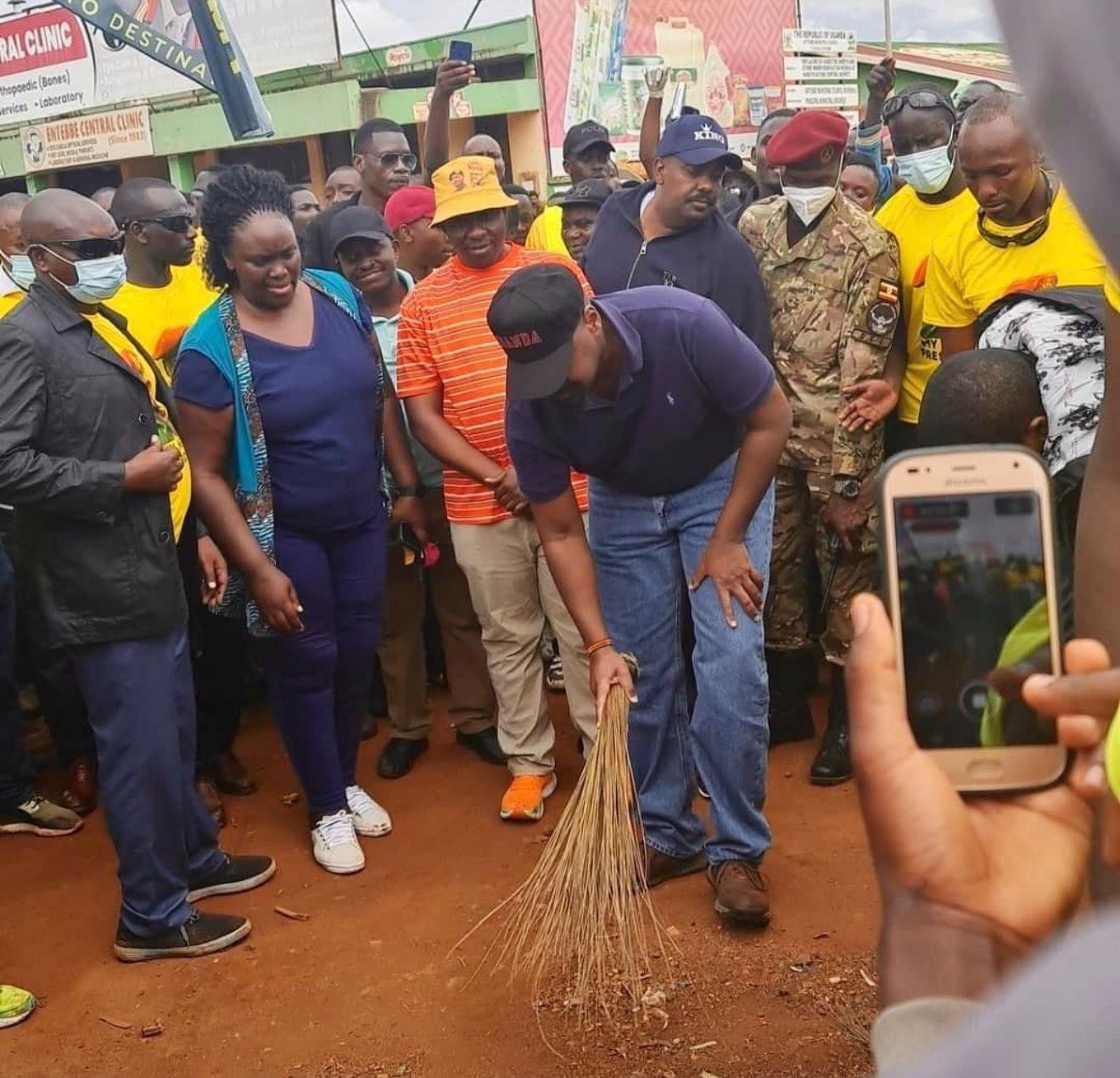
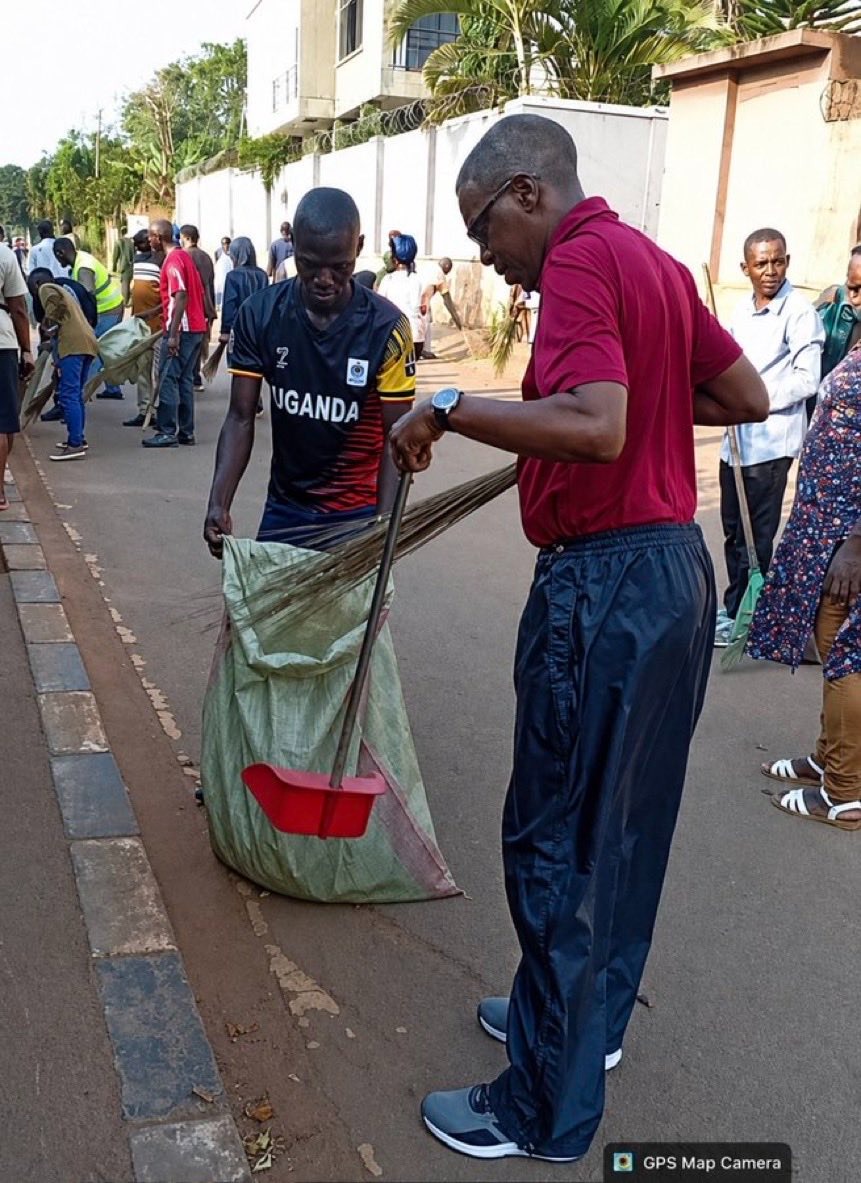
Perhaps one of the most widely shared images of the day came from Chief of Defence Forces Gen. Muhoozi Kainerugaba, who traded military fatigues for a broom as he personally swept a section of a dirty road.
The CDF has been one of the strongest proponents of the initiative through the Patriotic League of Uganda (PLU).
According to PLU, the concept traces its roots to March 27, 2023, when Gen. Muhoozi officially launched what became popularly known as Usafi Day, encouraging Ugandans to dedicate the last Saturday of every month to community cleaning under the traditional Bulungi Bwansi spirit.
Gen. Muhoozi has consistently argued that environmental cleanliness should become part of Uganda’s national identity.”A clean environment is a shared responsibility,” he has repeatedly emphasised.
He says cleaner communities reduce disease, improve public health and contribute directly to national development.On Saturday, UPDF soldiers joined civilians across several districts, cleaning roads, markets and public institutions.
KCCA Mobilises Kampala
In Kampala, the Kampala Capital City Authority (KCCA) deployed staff, trucks and heavy equipment to support the exercise.
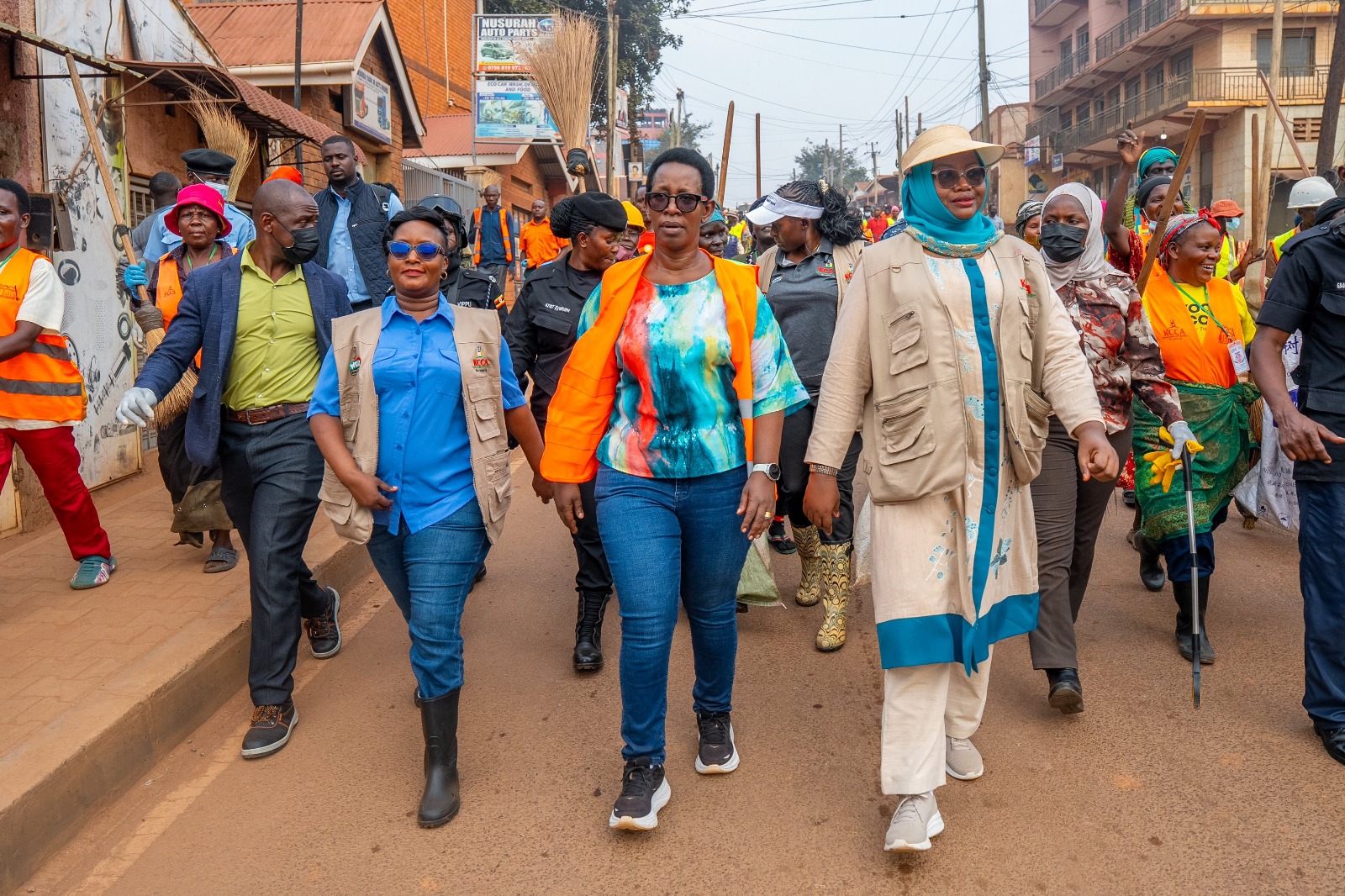
Executive Director Hajat Sharifah Buzeki joined Permanent Secretary at the Ministry of Health Dr Diana Atwine and residents in Kisenyi III around Usafi Market, Lubiri Ring Road and surrounding communities.
The exercise included:
General cleaning of public spaces.
Garbage collection and evacuation.
Road washing.
Unclogging drainage channels.
Community sensitisation on proper waste management.
Buzeki thanked city residents for embracing the campaign.
“We thank everyone who came out to participate in today’s National Cleaning Day. We meet again on August 29 for the next exercise. Our garbage trucks are moving around the city collecting waste, and we encourage communities to bring garbage to designated collection points. A cleaner city is everybody’s responsibility.”
The authority said the campaign complements ongoing efforts to improve drainage and reduce flooding caused by poor waste disposal.
Schools Join the Campaign
One of the day’s biggest highlights was the participation of schools.
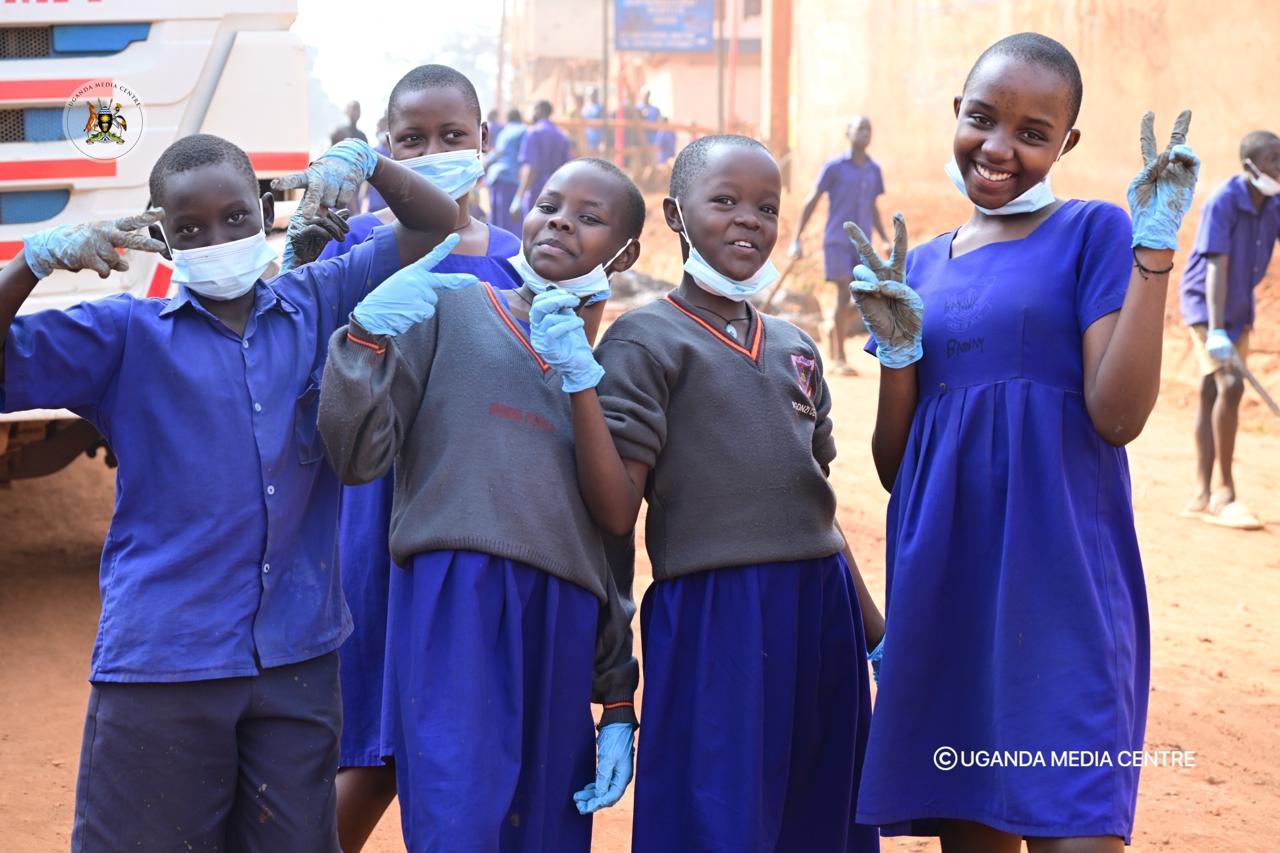
Learners from Gayaza High School joined neighbouring communities in cleaning roads and public spaces, while Makerere University Vice Chancellor Prof. Barnabas Nawangwe led staff and students in cleaning Freedom Square, areas around the Main Gate, Guest House and the College of Computing and Information Sciences.
“I thank the Government for this great initiative,” Nawangwe said after the exercise.
Across Uganda, numerous primary and secondary schools turned the exercise into practical civic education lessons, teaching learners the importance of environmental conservation and volunteerism.
Institutions Respond
Government institutions also embraced the initiative.
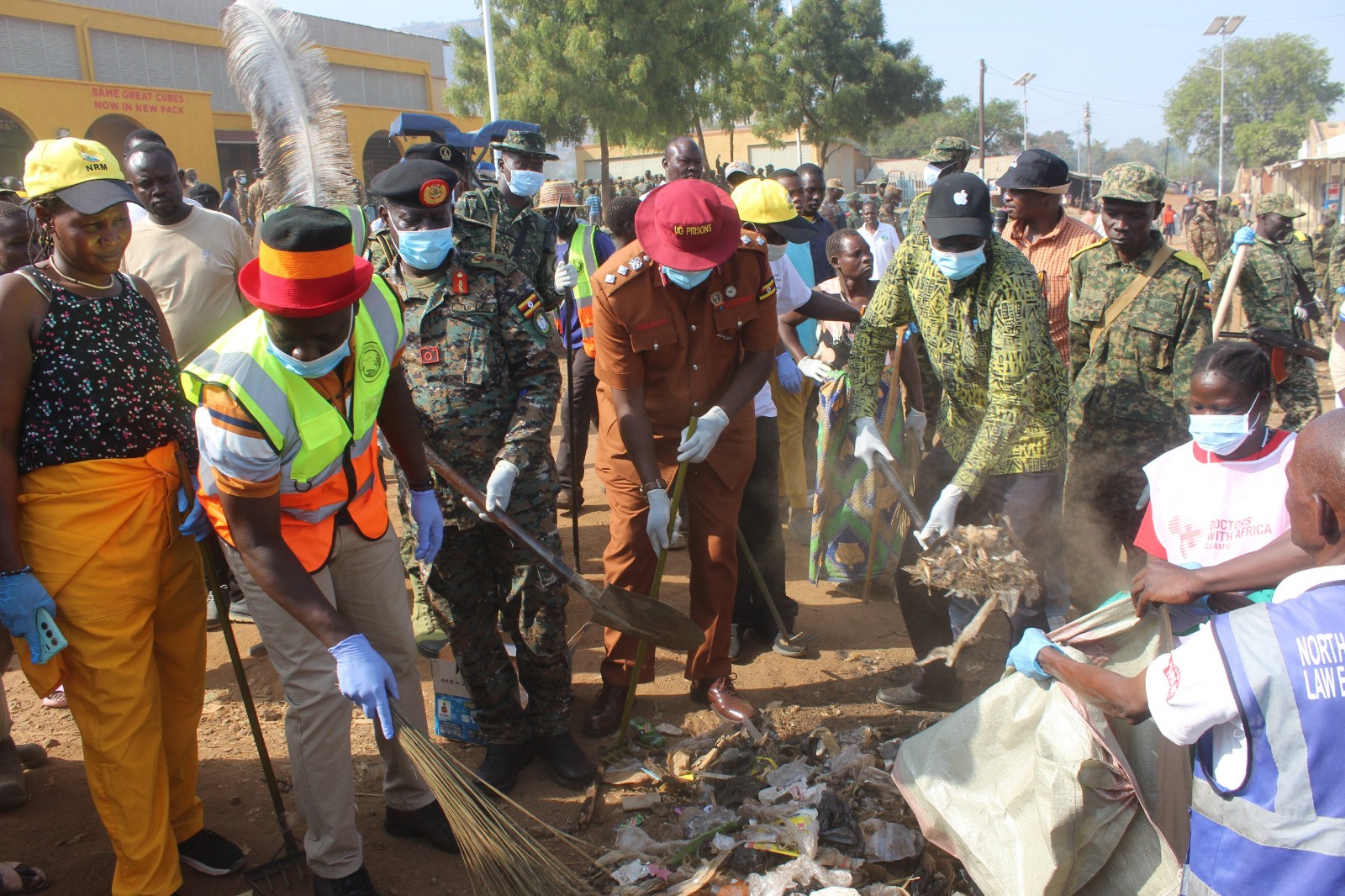 At the Uganda Revenue Authority, management and staff led by Assistant Commissioner for Public and Corporate Affairs Robert Kalumba cleaned roads stretching to Nakawa Market.
URA Commissioner General John Musinguzi said maintaining cleanliness contributes directly to national development.
“This reaffirms our shared commitment to a cleaner and healthier nation. Only a healthy population can contribute positively to our vision of a US$500 billion economy.”
Bank of Uganda, Deputy Governor Prof. Augustus Nuwagaba also participated.”A clean environment starts with each of us taking responsibility for the places where we live and work,” he said.
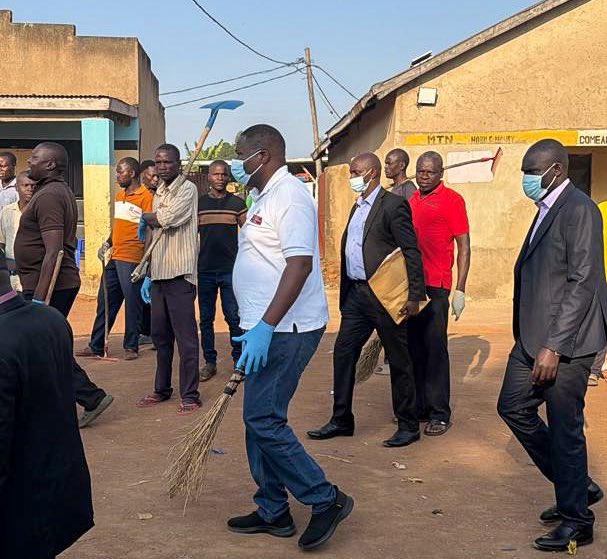
Speaker of Parliament —who joined residents of West Budama Central in Tororo District—said environmental conservation requires collective responsibility from every citizen.
Minister of Lands Judith Nabakooba thanked residents of Mityana for embracing the exercise.
“Our towns and communities are looking much smarter today. I pray this becomes our everyday culture,” she said.
Minister of Defence and Veteran Affairs Kiryowa Kiwanuka was also seen cleaning streets, reinforcing government’s message that no one is too important to participate in community service.
Ordinary Ugandans Join In
Across the country, citizens used social media to share photographs and videos of community clean-up exercises.
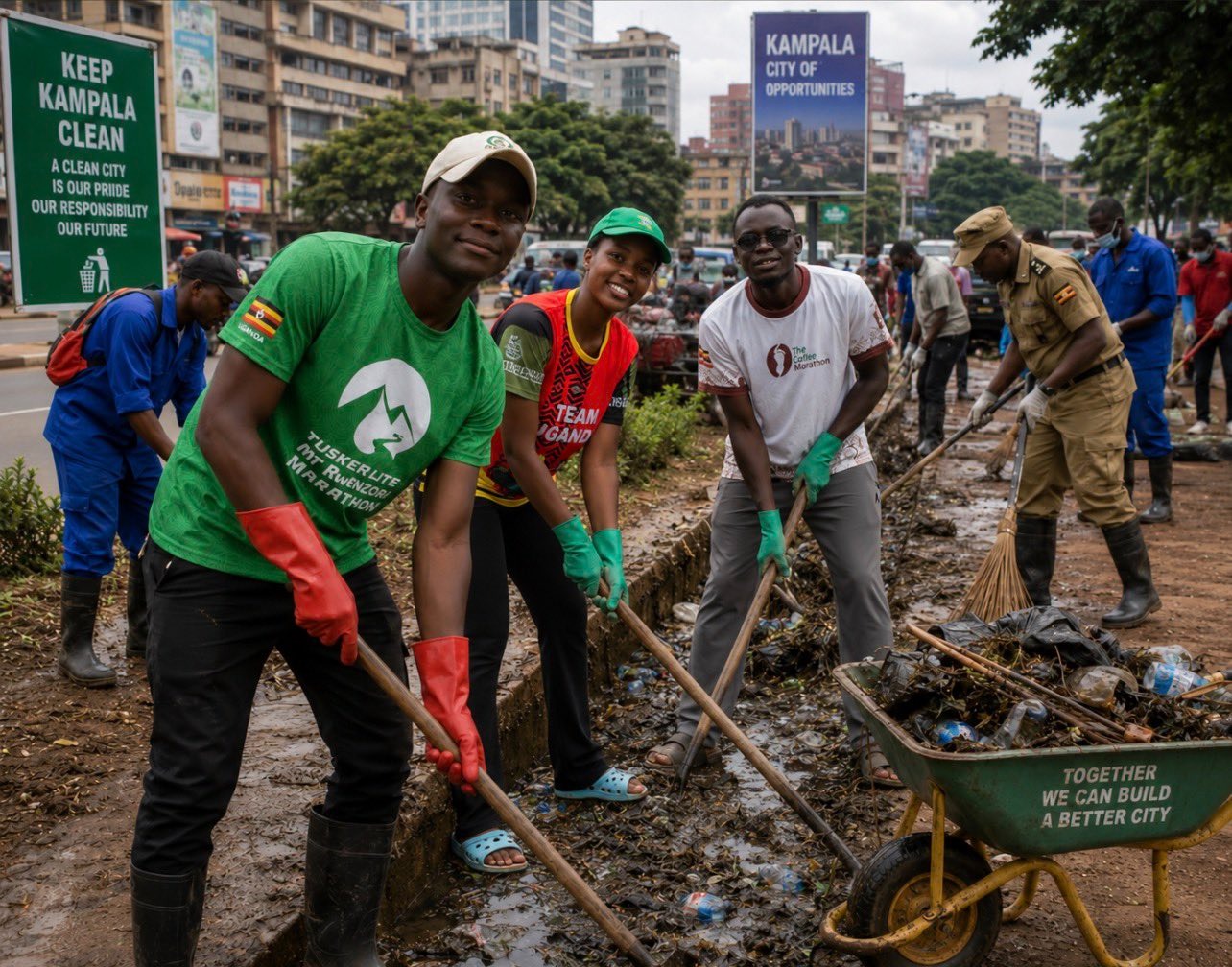
Communities in Kazo District praised local leaders for organizing successful campaigns, while Ministry of Works spokesperson Allan Ssempebwa participated in cleaning his neighbourhood.
He also used the opportunity to educate residents about the dangers of littering. “I shared with neighbours how irresponsible disposal of waste blocks drainage channels and destroys expensive public infrastructure. If sustained, this initiative can create lasting behavioural change.”
Nzeire Sedrack Kaguta applauded government for institutionalising the monthly exercise.
“Cleanliness is not just a one-day event; it is a culture of dignity, patriotism and care for one another. When we keep our surroundings clean, we protect our children from disease and build the Uganda we all deserve.”
Praise and Caution
While many welcomed the initiative, others urged government to ensure participation remains voluntary rather than coercive.
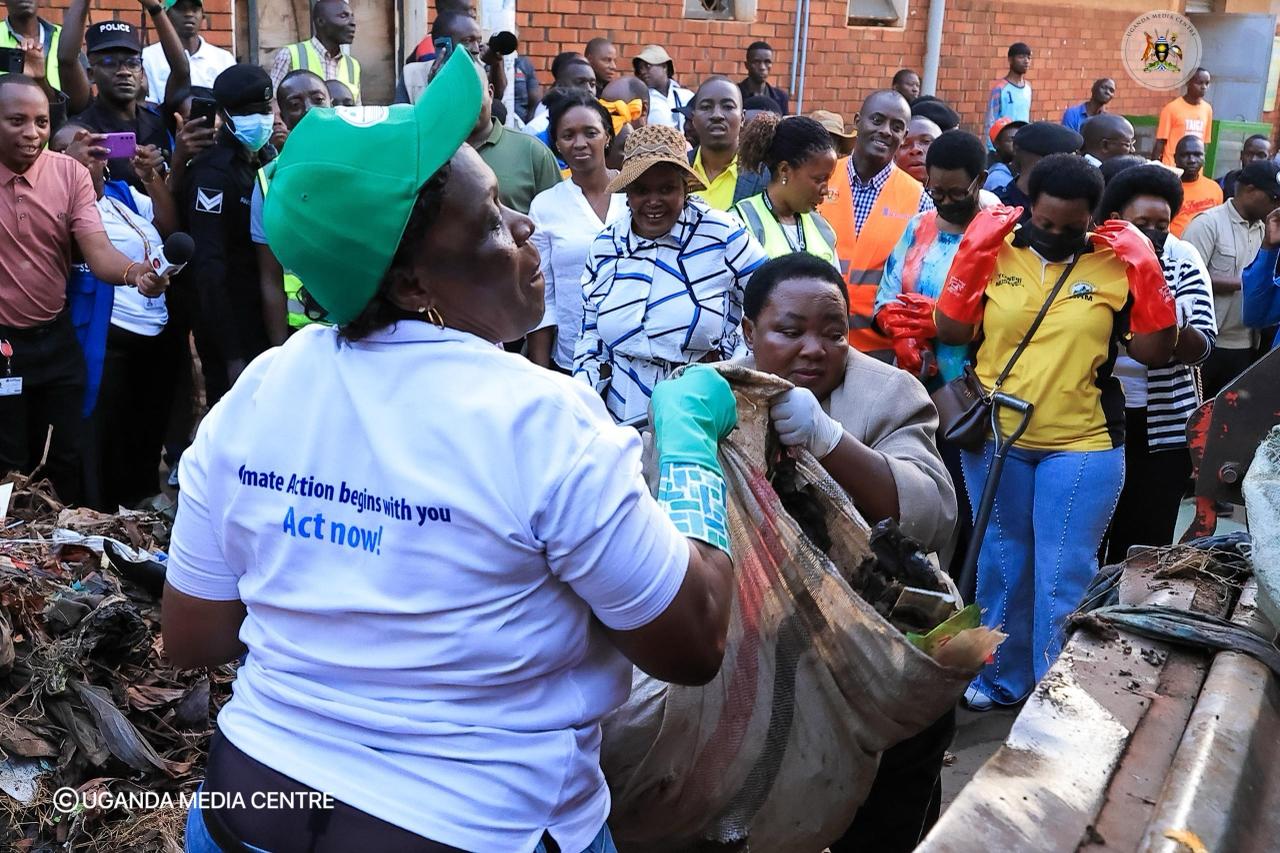
Political philosopher Dr Jim Spire Ssentongo argued that the traditional Bulungi Bwansi concept has always existed within Ugandan communities.
“‘Bulungi Bwansi’ is actually a good initiative and communities already practise it,” he noted.
“But for it to work, it must be appreciated and owned by the community—not coerced.”
Ssentongo warned that forcing compliance could undermine an otherwise noble programme.
He recommended that government involve sociologists, social workers and behavioural experts to help build long-term community ownership.
“Some good initiatives fail because they are imposed instead of being embraced.”
His comments reflected concerns expressed by sections of the public that while environmental cleanliness is important, sustainable behavioural change requires civic education rather than enforcement alone.
Echoes of the Pandemic
For many Ugandans, Saturday’s quiet streets evoked memories of the COVID-19 lockdowns between 2020 and 2021. The difference this time, however, was striking.
 Instead of empty streets caused by fear and restrictions, neighbourhoods came alive with laughter, conversations and the sound of sweeping brooms.
Markets, schools, churches, trading centres and villages became centres of community activity as neighbours worked side by side. Many described the atmosphere as one of unity and shared purpose.
Looking Ahead
Government now faces the challenge of sustaining public enthusiasm beyond the inaugural event.
The next National Cleaning Day is already scheduled for Saturday, August 29, with authorities hoping participation will become a permanent part of Uganda’s civic culture.
If maintained consistently, officials believe the campaign could significantly reduce flooding caused by blocked drainage channels, improve public health, minimise waste-related diseases and encourage greater respect for public infrastructure.
For now, the first National Cleaning Day appears to have achieved one important objective—it reminded Ugandans that keeping the country clean is not solely the responsibility of government agencies or city authorities.
Whether in Kampala’s busy markets, the villages of Karamoja, the streets of Tororo, the schools of Wakiso or neighbourhoods across the country, the message resonated loudly through the morning’s unusual silence: a cleaner Uganda begins with every citizen picking up a broom.
Author Profile
- Charles Gazza Kodili is a seasoned journalist with over 20 years of experience in the media industry. He holds a Bachelor of Arts degree in Mass Communication. He’s currently the Chief Editor at the Investigator.
Charles can also be reached via; Tel: +256 774 108978
Email: [email protected]
Latest entries
 FeaturedSeptember 25, 2026SAIL WELL MOSES MATOVU: Thousands Of Mourners Gather In Kyanja to Honour Afrigo Band Surviving Founder, Prince Kassim Nakibinge Calls for Justice as Gen. Muhoozi Contributes UGX15m
 FeaturedSeptember 24, 2026NSSF SAVERS HIT JACKPOT: Government Declares Record 22.53% Interest As Fund Revenue Soars To Sh6.51 Trillion, Triggering Celebrations Among Millions Of Members
 FeaturedSeptember 24, 2026OYO’S TEXAS SON BLOCKED! MUSUUGA: WE WON’T ACCEPT HIM: Tooro Throne War Explodes Over Baby Oyo As Kamurasi Rejects Secret Return, Demands Royal Regalia Back
 crime NewSeptember 24, 2026MATOVU’S LOVE-NEST DEATH! Afrigo Boss Allegedly Killed by Rival at Girlfriend’s One-Room House, He Had Just Dropped Beauty Queen Rose Tumusiime Before the Deadly Encounter