





















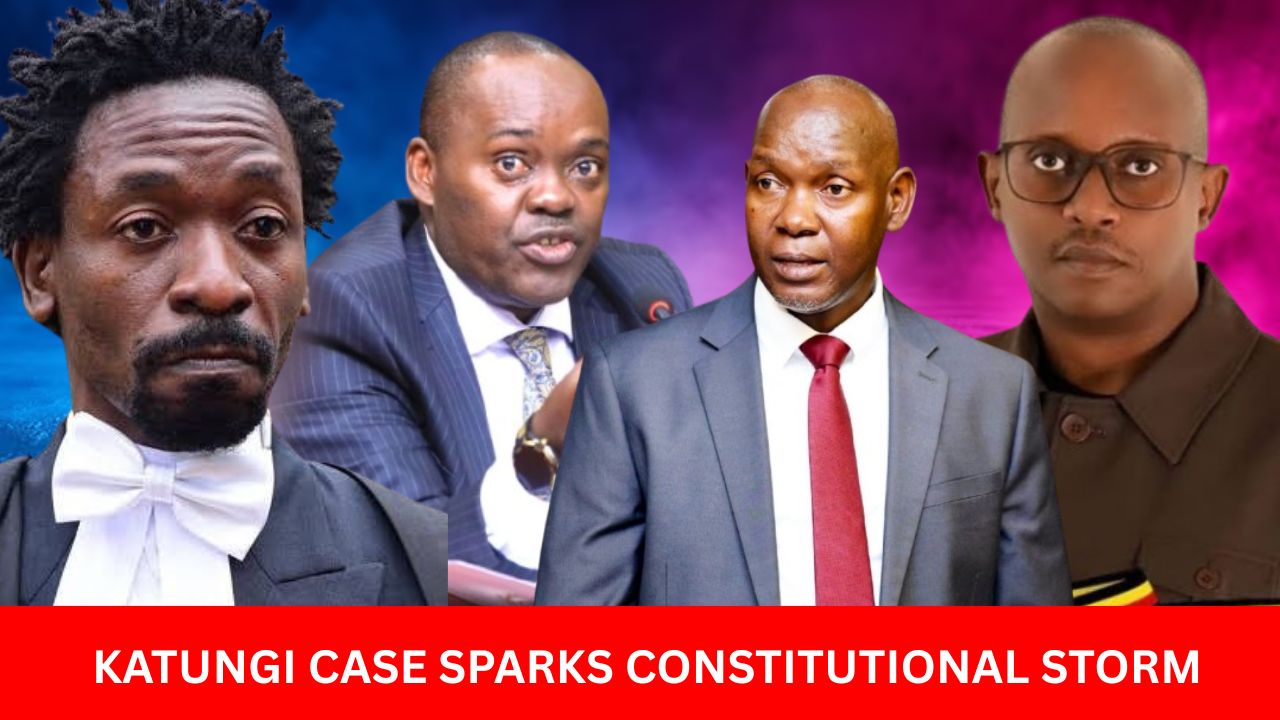
The Uganda Law Society (ULS) has strongly condemned the attempted extradition of businessman Michael Katungi, warning that the proceedings, if allowed to continue in their current form, risk setting a dangerous legal precedent that could undermine constitutional protections and the rule of law in Uganda.
In a strongly worded statement, the lawyers’ umbrella body said it was protesting “in the strongest terms possible” what it described as the illegalities surrounding the extradition process, arguing that the case raises fundamental constitutional questions that extend far beyond the fate of one individual.
The intervention by the Uganda Law Society comes after the High Court halted the extradition proceedings, providing temporary relief to Katungi and opening the door for a broader legal examination of Uganda’s extradition laws and their compatibility with the 1995 Constitution.
For the country’s legal fraternity, the case has become more than an ordinary extradition dispute. It is now viewed as a test of whether Uganda’s courts will uphold constitutional safeguards, protect due process and ensure that international cooperation in criminal justice does not come at the expense of citizens’ fundamental rights.
ULS Challenges Legality of Proceedings
According to the Uganda Law Society, the extradition process was marred by serious procedural irregularities that should never have formed the basis of proceedings before a competent court.
The lawyers contend that before the High Court intervened, Katungi had already been subjected to proceedings founded on what they described as a defective notice of motion and defective affidavit evidence.
They argue that such shortcomings strike at the very heart of the judicial process.In any legal proceeding—particularly one involving the possible removal of a Ugandan citizen or resident to another jurisdiction—the law requires strict compliance with procedural rules.
Failure to meet those standards, the Society argues, renders the entire process vulnerable to constitutional challenge.”The Uganda Law Society protests in the strongest terms possible the illegality inflicted in the extradition trail of Michael Katungi,” the Society said.
The lawyers maintain that extradition proceedings must be conducted with the highest degree of legal precision because they directly affect an individual’s liberty, fair trial rights and constitutional protections.
Constitutionality of Uganda’s Extradition Law Questioned
Beyond procedural concerns, the Uganda Law Society has raised broader constitutional issues regarding Uganda’s extradition framework itself.
The Society argues that provisions within Uganda’s extradition law are inconsistent with the Constitution and may violate several constitutional guarantees, particularly those relating to human rights, due process and access to a fair hearing.According to ULS, the Constitution remains the supreme law of Uganda, and any legislation found to be inconsistent with it must be subjected to judicial scrutiny.
Legal experts note that extradition is one of the most sensitive areas of international law because it requires balancing two competing interests: a country’s obligation to cooperate with foreign governments in combating transnational crime, and its constitutional duty to protect the rights of individuals within its jurisdiction.
The Uganda Law Society believes that where constitutional rights are threatened, the Constitution must prevail.The Society has therefore urged the courts to examine not only the facts surrounding Katungi’s case but also the legality of the statutory framework governing extradition.
Fear of a Dangerous Legal Precedent
Central to the Uganda Law Society’s protest is its warning that failure to challenge the alleged illegalities could establish a precedent with long-term consequences for Uganda’s justice system.Lawyers argue that judicial precedents shape how future courts interpret and apply the law.
If defective extradition proceedings are permitted to stand unchallenged, future applicants facing extradition could be exposed to similar procedural shortcomings.
“This illegality, if left unnoticed or unchallenged, will lead to a very bad precedent in Uganda, which we shall live to regret,” the Society warned.
The concern extends beyond Michael Katungi. Legal analysts say the principles established in this case could affect future extradition requests involving Ugandan citizens sought by foreign governments for alleged crimes committed outside Uganda.
They argue that weakening procedural safeguards today could erode constitutional protections tomorrow.
High Court Intervention
The High Court’s decision to halt the extradition proceedings has been welcomed by many within Uganda’s legal fraternity as an opportunity to thoroughly examine the constitutional questions raised by the case.
The stay has effectively paused efforts to extradite Katungi while legal arguments concerning due process and constitutional compliance are determined.
Lawyers believe the High Court now has an important opportunity to clarify the standards that should govern future extradition proceedings.Its eventual decision is expected to have significant implications for Uganda’s criminal justice system and its international legal obligations.
Balancing International Cooperation and Human Rights
Uganda, like many countries, maintains extradition arrangements designed to facilitate cooperation in combating serious transnational crimes such as fraud, money laundering, terrorism, narcotics trafficking and organized crime.
However, international legal cooperation must always operate within constitutional limits.Human rights advocates argue that extradition cannot become a mechanical administrative process.
Instead, courts must carefully evaluate whether the requesting country’s legal process, the evidence presented and the domestic procedures comply with constitutional standards.
The Uganda Law Society maintains that protecting constitutional rights strengthens rather than weakens Uganda’s justice system.It argues that adherence to due process enhances confidence in judicial institutions and ensures that international cooperation is conducted lawfully.
Rule of Law at Stake
The Katungi matter has increasingly become a debate about the rule of law itself.
For many lawyers, the issue is not whether individuals accused of crimes should face justice, but whether the justice process itself complies with the Constitution.The Uganda Law Society insists that constitutional safeguards exist precisely to protect individuals from arbitrary or unlawful state action.
The Society argues that respecting these safeguards is essential regardless of the allegations against any particular individual.Legal scholars note that constitutional rights are tested most severely in controversial cases.
If courts rigorously enforce procedural fairness even in difficult matters, public confidence in the justice system is strengthened.Conversely, overlooking procedural defects risks undermining confidence in judicial independence and constitutional governance.
Looking Ahead
As the legal battle over Michael Katungi’s proposed extradition continues, attention will remain focused on the courts and their interpretation of Uganda’s extradition laws.
The Uganda Law Society has made its position clear: it does not support Katungi’s extradition in its current form because it believes the process contravenes Uganda’s Constitution and existing laws.
The Society argues that any extradition must strictly comply with constitutional requirements, procedural fairness and the protection of fundamental human rights.The eventual outcome of the case is likely to resonate far beyond Katungi himself.
It could redefine how Uganda balances its international obligations with its constitutional commitments, determine the standards governing future extradition requests and reinforce—or weaken—the legal safeguards available to individuals facing removal from the country.
For the Uganda Law Society, the stakes could not be higher. In its view, the Katungi proceedings represent not simply an extradition dispute, but a defining moment for constitutionalism, judicial independence and the rule of law in Uganda. The Society believes that allowing alleged procedural and constitutional violations to pass unchallenged would establish a precedent capable of reshaping Uganda’s legal landscape for years to come.
Author Profile

- Charles Gazza Kodili is a seasoned journalist with over 20 years of experience in the media industry. He holds a Bachelor of Arts degree in Mass Communication. He’s currently the Chief Editor at the Investigator.
Charles can also be reached via; Tel: +256 774 108978
Email: [email protected]
Latest entries
 FeaturedSeptember 25, 2026SAIL WELL MOSES MATOVU: Thousands Of Mourners Gather In Kyanja to Honour Afrigo Band Surviving Founder, Prince Kassim Nakibinge Calls for Justice as Gen. Muhoozi Contributes UGX15m
 FeaturedSeptember 24, 2026NSSF SAVERS HIT JACKPOT: Government Declares Record 22.53% Interest As Fund Revenue Soars To Sh6.51 Trillion, Triggering Celebrations Among Millions Of Members
 FeaturedSeptember 24, 2026OYO’S TEXAS SON BLOCKED! MUSUUGA: WE WON’T ACCEPT HIM: Tooro Throne War Explodes Over Baby Oyo As Kamurasi Rejects Secret Return, Demands Royal Regalia Back
 crime NewSeptember 24, 2026MATOVU’S LOVE-NEST DEATH! Afrigo Boss Allegedly Killed by Rival at Girlfriend’s One-Room House, He Had Just Dropped Beauty Queen Rose Tumusiime Before the Deadly Encounter