





















A Kampala pastor is at the centre of a Shs2.9 billion alleged gold scam in which American investors are said to have lost money in a deal that promised them access to Uganda’s lucrative gold trade.
Pastor Solomon Mwesigye of Good News Church was arrested early October during an operation at his church premises as investigators moved against a suspected gold fraud network.
According to information gathered during the operation, the pastor reportedly admitted to investigators that he knew the American investors, although the circumstances surrounding his relationship with them and his alleged role in the transaction remain subject to investigation.
The case has once again thrown the spotlight on Uganda’s growing problem of gold scams, in which foreign investors are lured with promises of cheap or high-value gold before allegedly being defrauded through fake consignments, fictitious companies, bogus documents or demands for additional payments.
Uganda has become an important regional gold-trading hub, making the country attractive to legitimate investors as well as criminal networks.
A recent analysis by the Global Initiative Against Transnational Organized Crime found that fake-gold scams have become a prolific problem across East Africa, with Kampala and Nairobi emerging as important centres for schemes targeting foreign buyers.

The scams often involve the presentation of genuine gold, gold-plated metals, nuggets or powder to convince potential investors that a much larger consignment exists. Once confidence is established, victims are encouraged to transfer large sums of money.
Pastor caught in the gold web
The arrest of Pastor Mwesigye has added a new dimension to Uganda’s gold-scam problem because of his position as a religious leader.
Investigators are examining how the pastor became connected to the American investors, what representations were made to them, and how the Shs2.9 billion transaction was structured.
The pastor’s arrest does not, by itself, establish guilt, and the allegations will have to be tested through investigations and, if charges are brought, court proceedings. But the case illustrates one of the key weapons used by gold fraudsters: trust.
Gold transactions involve enormous sums of money, and foreign investors unfamiliar with Uganda’s networks can depend heavily on people who appear respectable, well-connected or influential.
A church leader can therefore provide something that is invaluable in a fraudulent transaction — credibility.
Investigators in Uganda have repeatedly warned that gold scams can take months to execute. Criminal networks may first establish relationships with prospective investors before introducing them to supposed gold dealers, lawyers, government officials, security personnel or company directors.
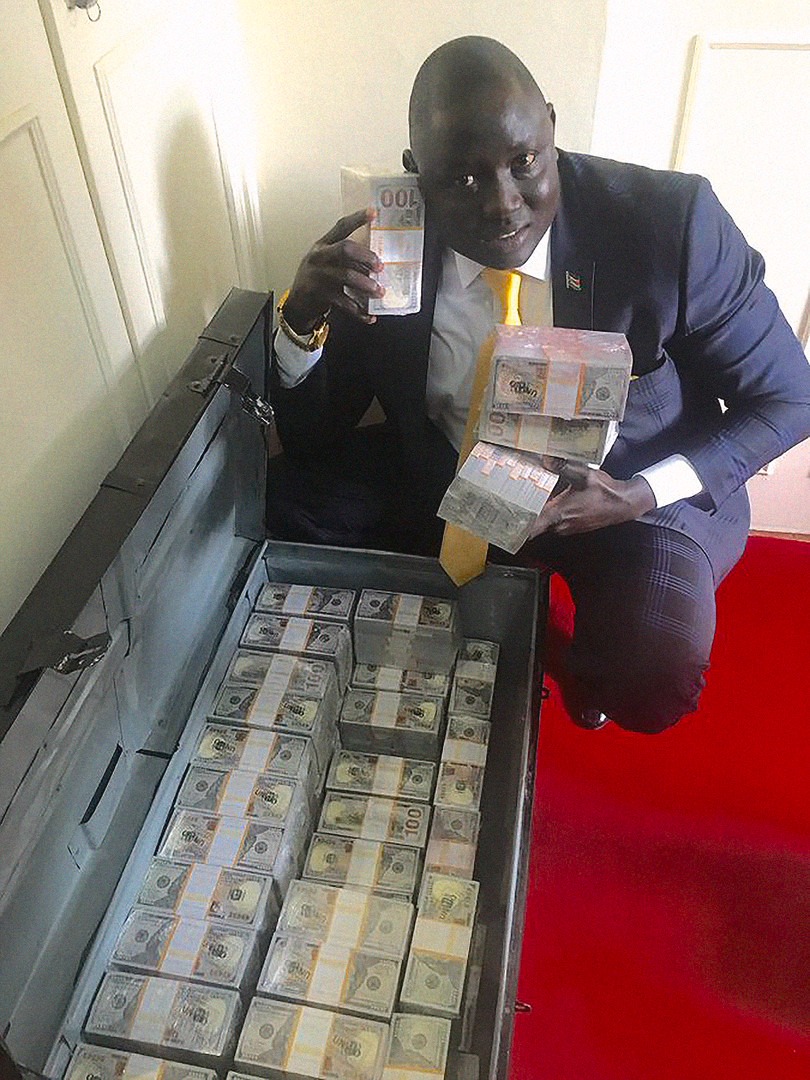 Once the investor is convinced that the operation is legitimate, the money begins moving.
Uganda’s gold-scam epidemic
The pastor’s case comes against a backdrop of increasingly sophisticated gold fraud in Uganda.
In August 2025, the State House Investors Protection Unit held discussions with senior government officials over gold-trade fraud, with Energy Ministry Permanent Secretary Irene Batebe warning that fraudsters were mainly dealing in gold and that several investors had fallen victim to fake gold deals.
Police also reported in August 2025 that Shs900 million had been recovered from 56 people accused of scamming gold investors in Uganda over a seven-month period.
Investigators said the schemes normally take several months to execute, with members of the suspected cartels helping targeted investors process documents and navigate the supposed gold transactions.
The scale of the problem is illustrated by another case from April 2026, when businessman Muhammad Ali was remanded over an alleged Shs13 billion gold scam targeting foreign investors.
The case was brought by the State House Anti-Corruption Unit in collaboration with the Criminal Investigations Directorate and the Office of the Director of Public Prosecutions.
And in August 2026, police announced the arrest of 16 suspects, including four police officers, over an alleged $4 million fake-gold fraud scheme.
Police said the operation recovered suspected fake gold, documents and vehicles allegedly used to facilitate the enterprise. The authorities also alleged that four officers had abandoned their official duties and deployed themselves to guard suspects at an illegal gold refinery where the transactions were being facilitated.
The Malong case
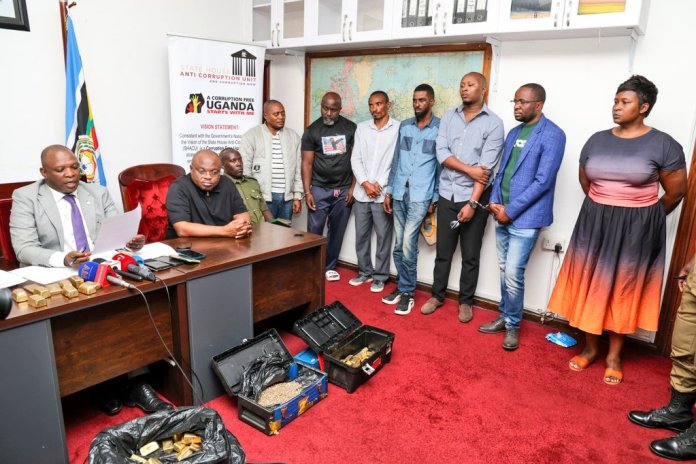 One of Uganda’s best-known international gold-fraud cases involved South Sudanese businessman Luol Lawrence Malong and his associates.
According to an account of the case, Malong and two co-accused were convicted after defrauding two Ethiopian businessmen living in South Africa of huge sums of money in a fake-gold scheme.
The case became an illustration of how international gold scams operate across borders, using Uganda’s reputation as a gold-trading centre to attract foreign buyers.
The wider regional investigation into fake-gold scams found that foreign investors from countries including Malaysia, India, Dubai, Ukraine, Korea and the United Arab Emirates have been targeted.
The pattern is remarkably similar: investors are offered gold at prices that appear unusually attractive, shown samples or documents designed to establish credibility, and then encouraged to commit increasingly larger amounts of money.
Foreign investors as prime targets
Foreigners are particularly attractive targets because they may have access to large amounts of capital while lacking knowledge of Uganda’s gold-trading networks. Criminals can exploit that information gap.
An investor arriving from the United States, Europe or Asia may not know which refinery is licensed, which dealer is genuine, how gold is assayed or which government agency is responsible for different aspects of the trade.
A fraudster can exploit that confusion by producing apparently official paperwork, introducing supposed government contacts or arranging meetings at impressive premises.
By the time the victim realises that something is wrong, millions or even billions of shillings may have changed hands. This is why investigators increasingly describe gold scams as organised criminal enterprises rather than simple acts of individual deception.
The attraction of Uganda’s gold
The country’s legitimate gold industry has grown significantly, further complicating the fight against fraud.
Uganda’s gold exports surged dramatically in 2023, reaching $2.3 billion from $201 million the previous year, according to Bank of Uganda data reported by Reuters.
 The growth helped cement Uganda’s position as a regional gold hub, but it also increased the opportunities available to criminals seeking to exploit the sector. For legitimate traders, the repeated scandals are damaging Uganda’s reputation.
Every foreign investor who loses money in a fake transaction becomes a potential source of negative publicity abroad, creating the impression that Uganda’s gold market is inherently fraudulent.
The authorities have consequently faced pressure to improve licensing, traceability, refinery oversight and verification of gold transactions.
A familiar formula
The alleged Shs2.9 billion transaction involving Pastor Mwesigye appears against this broader background. The most striking feature is not simply the amount involved but the use of personal credibility.
Gold scammers rarely begin by asking strangers to immediately send billions of shillings. They cultivate confidence.
They introduce intermediaries. They produce samples. They discuss export opportunities. They invoke government offices. They promise enormous profits.
And when the investor is convinced, the transaction becomes less about whether the gold exists and more about how much money the victim is prepared to commit.
The involvement of a pastor, if investigators establish that he knowingly participated in the alleged fraud, would demonstrate how far such networks can reach into respected sections of society.
For Uganda, the recurring cases raise a difficult question: how can the country attract legitimate foreign investment in minerals while preventing its gold sector from becoming synonymous with fraud? The answer will require more than arrests after investors have lost their money.
It will require stronger regulation, proper verification of gold dealers, tighter monitoring of refineries and greater cooperation between police, financial investigators, immigration officials and international law-enforcement agencies.
For now, investigators are expected to continue piecing together the alleged Shs2.9 billion transaction and determining exactly what role Pastor Mwesigye played.
The Americans who allegedly lost their money are likely to want more than arrests. They will want accountability, recovery of their funds and an explanation of how they were persuaded to trust a gold deal worth billions of shillings.
And as Uganda’s gold trade expands, the country faces an increasingly urgent choice: build a transparent gold market that attracts genuine investors, or allow fraudsters to exploit its riches and its reputation.
Author Profile
- Mr. Stephen Kasozi Muwambi is a seasoned crime investigative writer, majoring in judicial-based stories. His two decades’ experience as a senior investigative journalist has made him one of the best to reckon on in Uganda. He can also be reached via [email protected]
Latest entries
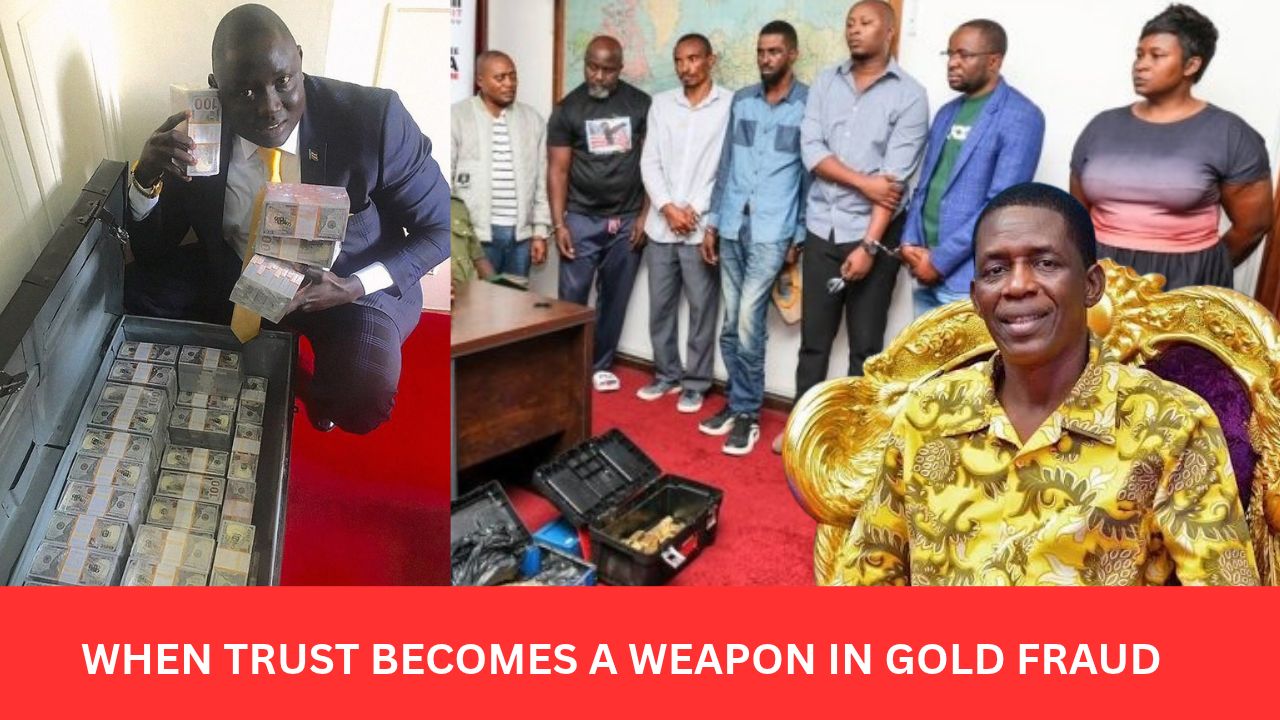 FeaturedOctober 19, 2026BILLIONS LOST, INVESTORS DUPED, GOLD TRADE UNDER SCRUTINY: A City Pastor’s Arrest Over An Alleged Shs2.9b Fraud Involving American Investors Adds To A String Of High-Profile Gold Scams Threatening Uganda’s Investment Reputation
 FeaturedOctober 17, 2026THREE VETO POWERS THREATEN OTUNNU’S UN BID: With Three Of The Five Permanent Members Reportedly Against Him, Otunnu Must Win Over Powerful Opponents Or Risk Seeing His Campaign Collapse Before The Final Selection
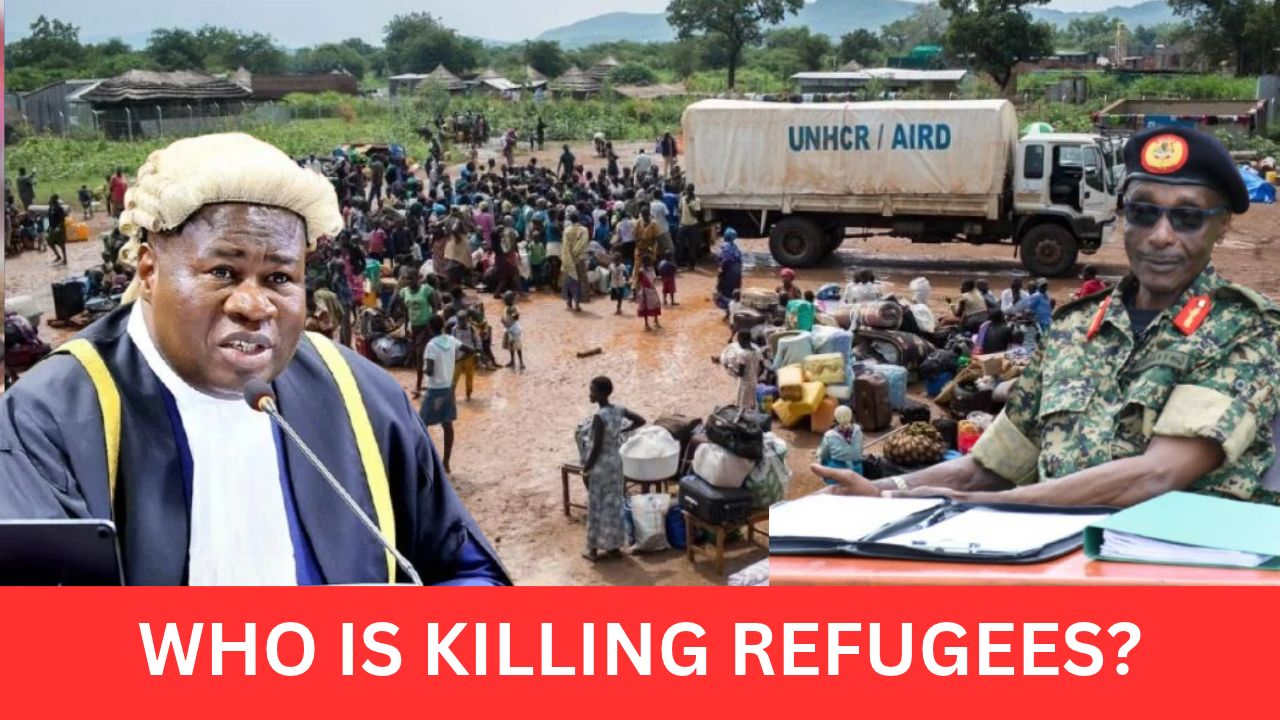 FeaturedOctober 16, 2026DRC REFUGEES PETITION PARLIAMENT OVER 34 ALLEGED DEATHS IN UGANDA: Congolese Refugees Petition Parliament Over Reported Killings, Disappearances And Insecurity In Kyaka II Settlement
 FeaturedOctober 15, 2026THE MIRACLE BUSINESS: How Desperate Ugandans Are Being Sold Hope, Healing And Prophecy For Money. Believers Should Be Free To Give. But Nobody Should Be Free To Use Religion As A Shield For Fraud