






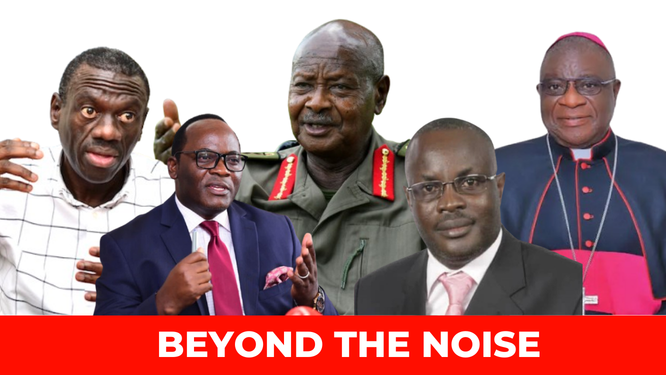

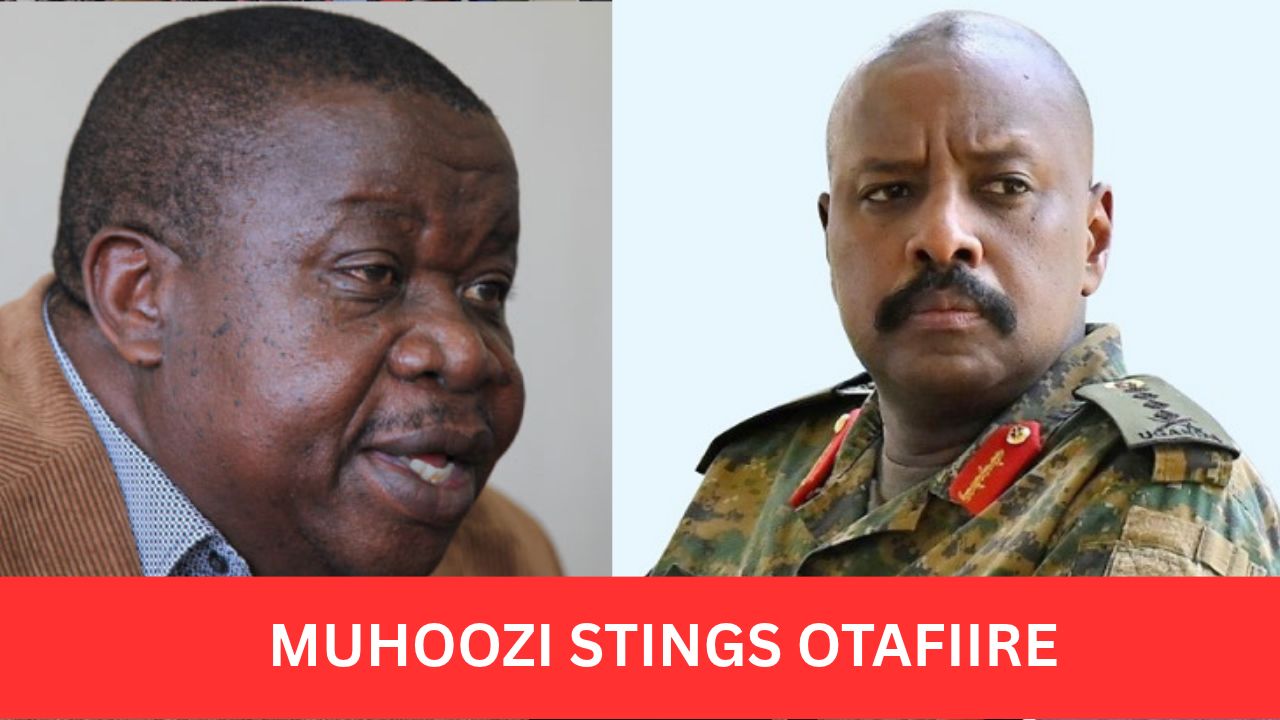
Veteran General Kahinda Otafiire has intensified his public confrontation with Gen Muhoozi Kainerugaba, warning the Chief of Defence Forces (CDF) and his supporters against personalising state institutions, in a fresh salvo that exposes growing tensions within President Museveni’s inner circle over power, succession and ownership of the State. The Water and Environment minister, who has increasingly challenged the politics surrounding Muhoozi’s possible presidential ambitions, has declared that Uganda, its roads, hospitals and armed forces do not belong to individuals, telling the rival general and his supporters to abandon what he described as the “politics of Me and I”.
Gen Kahinda Otafiire has fired back at Gen Muhoozi Kainerugaba following the latter’s explosive personal attack in which he told the veteran politician to “Go Fuck Your Mother”, escalating an extraordinary public confrontation between two senior military figures who belong to different generations of the National Resistance Movement (NRM) establishment. In remarks circulating on social media on Wednesday (today), Otafiire delivered a pointed response to Muhoozi and members of his political camp, rejecting what he considers an increasingly personalised approach to state power and public institutions.
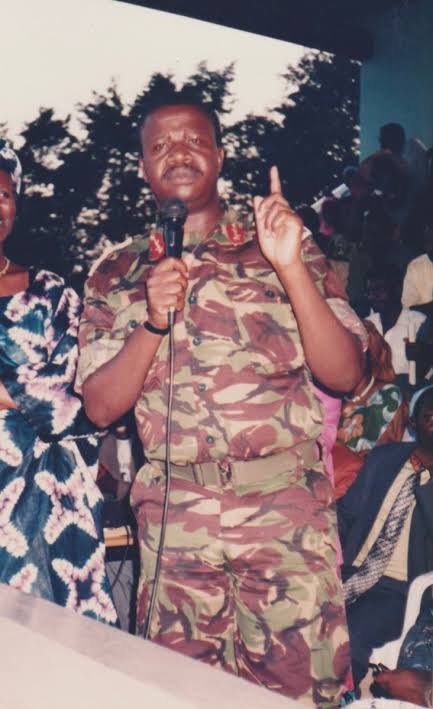
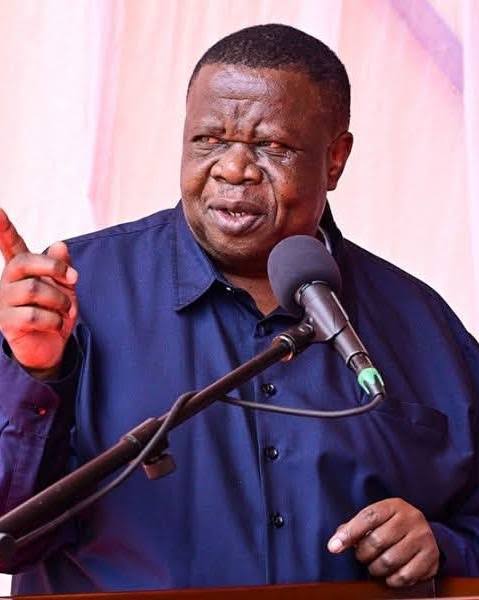
“The State is not you, the State is us,” Otafiire declared, warning against claims of individual ownership of national institutions. “This road is mine, this hospital is mine, the UPDF is mine. Stop the politics of Me and I,” he said. The remarks appeared directed not only at Muhoozi but also at members of the Patriotic League of Uganda (PLU), the pressure group chaired by the CDF, whose supporters have increasingly projected him as a potential successor to his father, President Museveni.
Otafiire’s intervention introduces a deeper ideological dimension to the increasingly bitter exchange, shifting the argument from personal insults and military credentials to the fundamental question of who owns the Ugandan State. His message is that neither military rank, political influence, revolutionary credentials nor proximity to State House gives an individual exclusive ownership of national institutions.
From succession disagreement to personal warfare
The latest exchange is the culmination of a dispute that has been building for months, with its roots in disagreements over Muhoozi’s political ambitions and the question of who should succeed President Museveni. Otafiire, a veteran of the 1981–1986 National Resistance Army (NRA) guerrilla war, has repeatedly challenged the idea that Muhoozi should automatically become President because he is the son of the incumbent.
In February 2026, the minister made his position unmistakably clear, saying he respected Muhoozi as an individual and as Museveni’s son but did not want him to become President. “I do not hate Kainerugaba as a person. I simply do not want him as President of Uganda. I respect and love Kainerugaba as the son of Museveni, but I do not support Kainerugaba as President,” Otafiire said. The remarks touched a sensitive nerve within Muhoozi’s political camp, which has been mobilising support for his anticipated 2031 presidential bid through PLU.
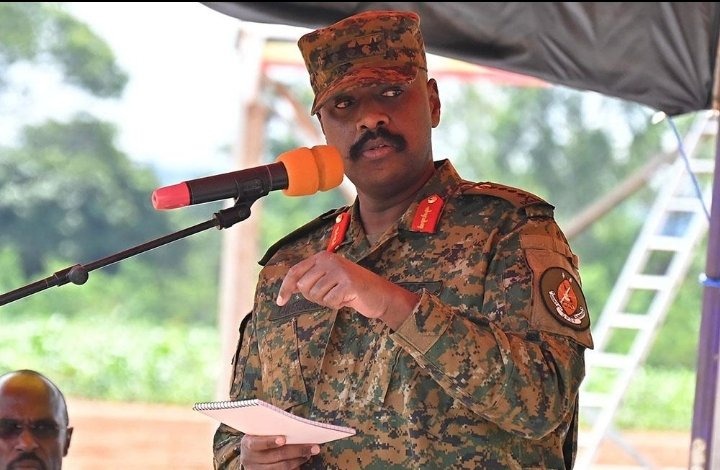
Muhoozi subsequently accused Otafiire of attempting to drag him into disagreements with his father, President Museveni. “Hon. Otafiire should stop trying to use me in his fights with my father. He has a very big problem with Mzee, he knows it. Let us see if Mzee arrests him,” Muhoozi posted. The CDF also suggested that arresting the minister would take less than half a second, setting the stage for an increasingly confrontational relationship between the two generals.
The disagreement exposed a fundamental contradiction within the NRM: a movement founded on a collective armed struggle now facing questions about whether political leadership should be inherited, earned through individual merit or determined through a democratic process. Otafiire’s position has been that the liberation struggle was not fought to establish a political inheritance for one family. His argument is that the country belongs to all Ugandans and that leadership must remain subject to public choice. Muhoozi’s supporters, meanwhile, have increasingly portrayed his anticipated presidency as an extension of the political and security continuity associated with his father.
The September parliamentary speech that reignited the feud
The confrontation acquired a new dimension on September 30, 2026, when Otafiire made remarks in Parliament that were widely interpreted as criticism of Muhoozi’s political approach and the conduct of some security actors. The minister called for political tolerance and dialogue, arguing that disagreements should not be settled through intimidation, violence or threats. He described the opposition as a mirror through which the ruling party should examine itself, insisting that those who lose elections retain the right to be heard.
“Those who win are magnanimous in victory, and those who don’t win also respect the winners, but they have a right to be heard,” he said. Although Otafiire did not directly name Muhoozi, the CDF interpreted the remarks as an attack on him and his political camp. On October 2, Muhoozi took to X to demand an apology from the minister, initially giving him one week to comply before shortening the ultimatum to three days. “I hear my junior MG. Otafiire made some statements in Parliament against me. I’m giving him exactly one week to apologise to me or else he will see,” Muhoozi posted.
The army chief subsequently threatened arrest, declaring: “Three days is too long. We are arresting Otafiire tomorrow without fail.” He also threatened that the veteran would never stand for anything in Bushenyi again. The minister, however, refused to apologise. During a public lecture at Valley University of Science and Technology in Bushenyi, Otafiire delivered a defiant response that appeared to underline his refusal to be intimidated. “I would rather die fighting than live begging,” he declared.
Kisangani, wheelbarrows and the seven arrested soldiers
The dispute took another dramatic turn on November 21 when Muhoozi returned to X with a series of posts attacking Otafiire’s military record. The CDF questioned whether the veteran deserved his military rank, dragging into the debate the controversial clashes between Ugandan and Rwandan forces in Kisangani, Democratic Republic of Congo, in 1999 and 2000. “We are investigating whether Otafiire is a true General or not? According to our records the only thing he excelled at is being surrounded by Rwanda Defence Forces in Kisangani,” Muhoozi wrote. He followed this with another allegation: “We lost Kisangani because of people like Otafiire.”
The comments reopened an uncomfortable chapter in Uganda’s military history, when Ugandan and Rwandan troops, previously allies in the Congolese conflict, fought each other in the northeastern Congolese city. Muhoozi also mocked Otafiire’s ministerial performance, referring sarcastically to the Ministry of Water and Environment as the Ministry of Water and Swamps. “Mzee and me deployed Otafiire to Ministry of Water and Swamps etc. He is already failing there as usual… maybe he needs to go home permanently?” he posted.
In another message, Muhoozi claimed that he had arrested about seven soldiers attached to Otafiire. “I arrested about 7 soldiers of Otafiire a few months ago,” he wrote, without giving details of their identities, the circumstances of their arrest or the legal basis for their detention. He then challenged the minister to a physical confrontation. “He likes talking about fighting, that’s good. Let us fight old man. I am waiting for you,” Muhoozi posted.
He also revived the wheelbarrow controversy, warning Otafiire: “You call us wheelbarrows but you will end up in a ditch.” The exchange was particularly striking because Otafiire is not an ordinary political opponent. He is a former senior military officer, a liberation war veteran and a serving minister who has been part of the political establishment for decades. Muhoozi’s attacks culminated on November 23 with the extraordinary personal insult: “I tell Otafiire Go Fuck Your Mother! This is my message as Muhoozi!” He followed the outburst with another threat, describing Otafiire as a traitor and declaring: “We will sack the TRAITOR Otafiire from our government soon.” The threat was politically significant, although the constitutional authority to appoint and dismiss ministers rests with President Museveni, not the CDF.
Kabanda, Balaam and the Muhoozi political camp
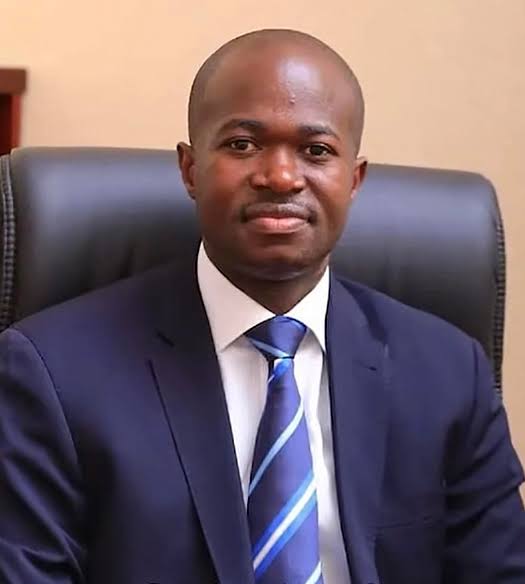
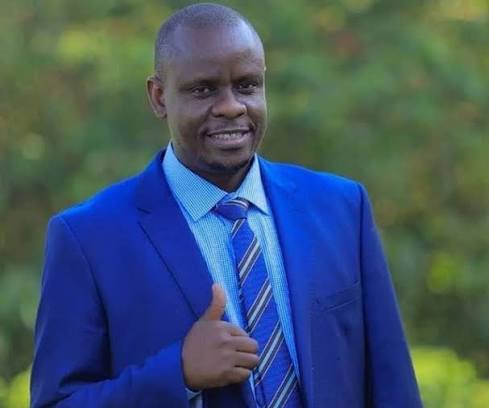
Otafiire’s latest response also puts the spotlight on the conduct of Muhoozi’s political allies, particularly members of the PLU who have publicly defended the CDF and challenged those questioning his political ambitions. Among the most vocal has been Kasambya County MP Daudi Kabanda, the PLU executive secretary. During the earlier parliamentary controversy, Kabanda questioned why Otafiire had been allowed to make remarks against Muhoozi in Parliament without being stopped by the Speaker.
“Who allowed Otafiire to digress from the issues of his docket that he was addressing as per the order paper and resort to abusing Afande MK on the floor of Parliament without being ruled out of order?” Kabanda posted. His intervention demonstrated how the disagreement had moved beyond the two generals, drawing in politicians associated with Muhoozi’s 2031 ambitions.
Kabanda has emerged as one of the more combative voices defending the CDF, frequently using his public platforms to reinforce the PLU’s political messaging. Another prominent figure in the camp is Balaam Barugahara, the Minister for Local Government, who has previously attempted to present the disagreement as one that should not be personalised. When Otafiire declared that he respected Muhoozi but did not support his presidential ambitions, Balaam said the minister was entitled to his opinion.
In a lengthy statement, he wrote that the future leadership of Uganda would ultimately be determined by citizens. “Hon. Kahinda Otafiire’s statement that he respects Gen. Muhoozi Kainerugaba but does not support him for President is his personal view, and it deserves respect. In a democracy, differing opinions are natural and should be handled with civility and maturity,” Balaam said.
He nevertheless endorsed Muhoozi’s leadership credentials, saying many Ugandans continued to express confidence in the general’s vision and commitment to national progress and strategic security. Balaam’s intervention was an attempt to strike a balance between defending his political leader and acknowledging the right of an NRM historical to disagree with the proposed succession. However, other members of the Muhoozi camp have been less restrained. Frank Mwesigye, a PLU mobiliser and media official, recently attracted attention after describing Minister for the Presidency Milly Babalanda as a “fatty woman who has lost sense of leadership”.
The remarks, directed at another senior government minister, added to criticism of the language used by some individuals associated with Muhoozi’s political movement. Mwesigye has also been involved in promoting the PLU’s organisational activities and the CDF’s presidential ambitions. In October, he announced that the organisation had collected 6.4 million endorsement signatures in support of Muhoozi’s anticipated 2031 bid. His remarks about Babalanda, although not directly connected to the Otafiire dispute, have become part of a wider debate about the tone and conduct of some of the people surrounding the CDF.
Ugandans rally behind Otafiire’s message
Otafiire’s declaration that the State belongs to all citizens has generated considerable debate on X, with several Ugandans interpreting it as a direct challenge to what they consider the growing personalisation of government institutions. Journalist Andrew Mwanguhya appeared to endorse the minister’s position, writing: “Gen. Otafiire is all of us. If you’re not among ‘us’ don’t even bother commenting.”
Another user, Andereya Andrew, drew a historical comparison with France’s King Louis XVI, recalling the famous declaration attributed to him: “The State is me, and I am the State!” Nshekanabo Immaculate warned that Ugandans would eventually demonstrate their displeasure if those in power refused to listen. “Ugandans will prove him wrong if he cannot listen. I am waiting,” she wrote.
Bwayo Enock described Otafiire’s intervention as the words of a wise man, while another user, Bob Lee, suggested that the minister’s message would not be understood by those he was criticising. “Still they will not understand,” he wrote. However, not everyone was convinced that the confrontation would produce meaningful change. Mutungi Emmanuel expressed frustration with the political leadership, suggesting that ordinary Ugandans had become increasingly detached from the country’s political direction.
Another user, Daniel, called for forgiveness, invoking the biblical teaching of forgiving repeatedly rather than allowing disagreements to escalate. The reactions demonstrate how the confrontation has become a subject of wider public discussion, with Ugandans debating not only the conduct of the two generals but also the relationship between political leaders and the institutions they serve.
The bigger question: Who owns Uganda?
At the centre of Otafiire’s latest intervention is a question that goes beyond his personal disagreement with Muhoozi: whether the State should be understood as a national institution serving citizens or as an extension of individuals who wield political and military power. The veteran general’s declaration that “the State is not you, the State is us” is particularly significant because it challenges the language of personal ownership increasingly associated with political mobilisation around Muhoozi.
The UPDF, for instance, is a national institution established under the Constitution, while roads, hospitals and other public infrastructure are financed through public resources and exist to serve Ugandans. Otafiire’s argument appears to be that neither the President, the CDF, the ruling party nor any political organisation should claim exclusive ownership of these institutions. It is also a reminder of the ideals of the NRA liberation struggle, whose leaders presented their campaign as a fight against personalised government and the exclusion of ordinary citizens from national affairs.
The irony, therefore, is that two men associated with the same liberation movement are now publicly confronting each other over questions of authority, loyalty and the ownership of the State. Otafiire represents the historical generation that fought in the bush war alongside Museveni, while Muhoozi represents a younger generation whose growing political influence is increasingly intertwined with the succession question.
The minister’s latest remarks suggest that he is not prepared to accept a political arrangement in which loyalty to an individual becomes synonymous with loyalty to Uganda. For Museveni, the confrontation presents another delicate test of his ability to manage competing interests within the ruling establishment.
Both men have longstanding connections to the President, but the public nature of their disagreement makes it increasingly difficult to contain the dispute through private political mediation. Whether Museveni will intervene to restore discipline or allow the two generals to continue their war of words remains to be seen.
For now, Otafiire has answered Muhoozi’s vulgar attack with a political message about collective ownership of the country. And in a feud that has moved from presidential succession to parliamentary speeches, arrest threats, Kisangani, wheelbarrows and personal insults, his latest declaration may prove to be the most politically consequential message yet. “The State is not you, the State is us.”
Author Profile
- Charles Gazza Kodili is a seasoned journalist with over 20 years of experience in the media industry. He holds a Bachelor of Arts degree in Mass Communication. He’s currently the Chief Editor at the Investigator.
Charles can also be reached via; Tel: +256 774 108978
Email: [email protected]
Latest entries
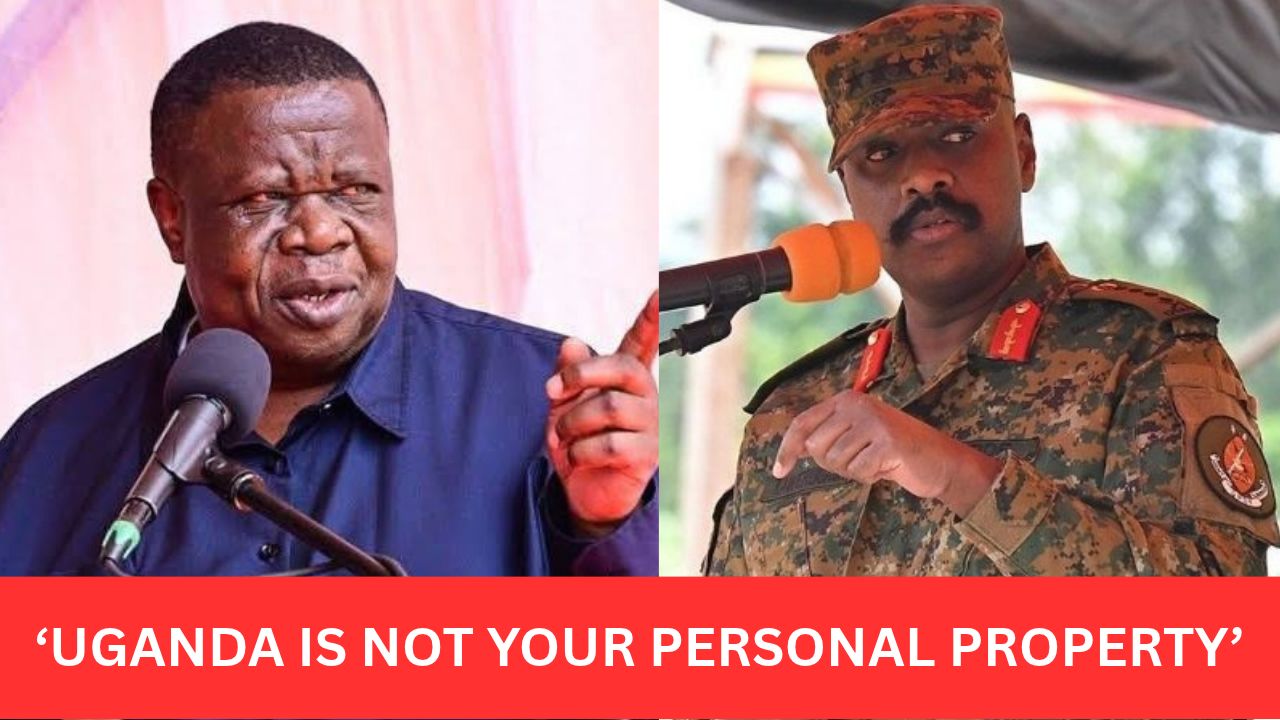 FeaturedNovember 25, 2026INSIDE THE OTAFIIRE-MUHOOZI WAR: Otafiire Challenges The CDF’s Politics Of “Me And I” After Months Of Confrontations Over Muhoozi’s 2031 Ambitions, Military Credentials And The Future Of The NRM
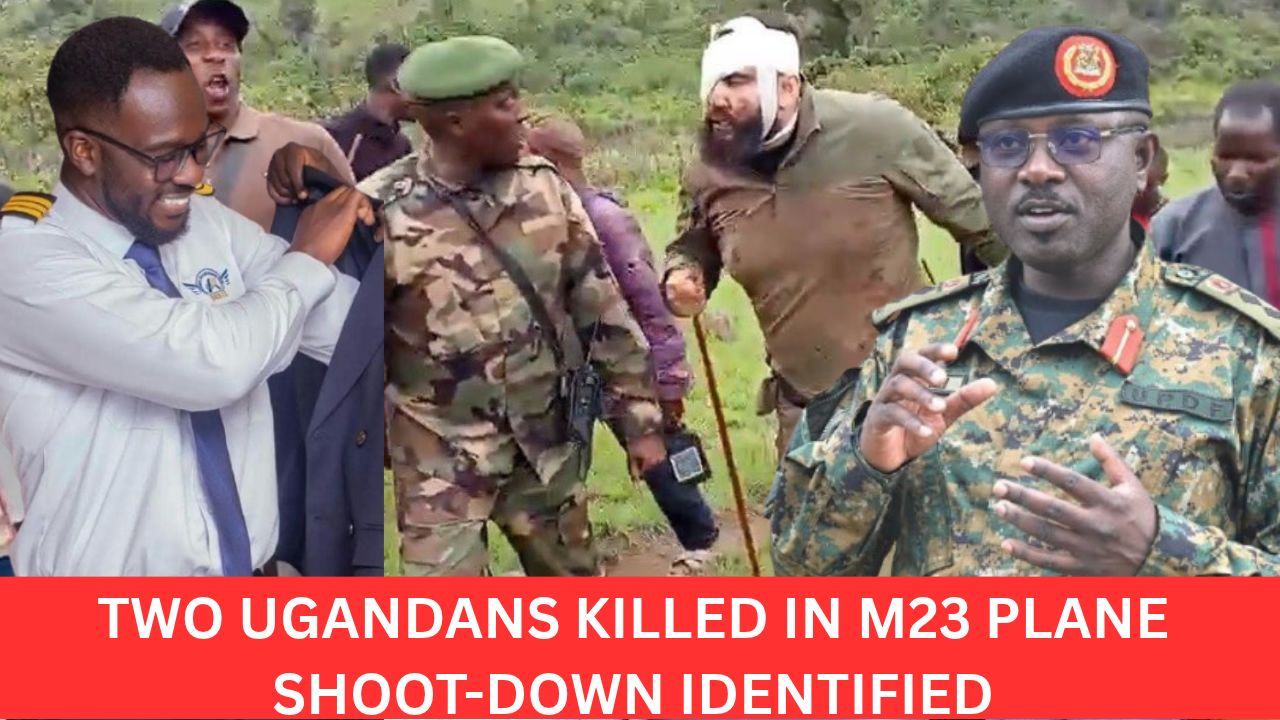 FeaturedNovember 25, 2026OCHEN, MOSES: TWO UGANDANS IDENTIFIED IN M23 PLANE SHOOT-DOWN: One Family Is Mourning A Pilot Whose Father Also Died In An Aircraft Crash, While Another Is Desperately Waiting For The Remains Of Moses, Who Reportedly Told Relatives He Had Gone To Work In Burundi
 FeaturedNovember 24, 2026HOW PRIVATE DEFENCE CONTRACTORS DRAGGED UGANDA INTO DRC’S MINEMBWE WAR: Two People Reportedly Died When An Aircraft Went Down Near Minembwe, Exposing Questions About Ugandan Security Personnel Allegedly Deployed Through Private Military Contractors And Prompting Gen Muhoozi To Distance The UPDF From The Operation
 FeaturedNovember 24, 2026I TELL OTAFIIRE, GO F***K YOUR MOTHER! THIS IS MY MESSAGE AS MUHOOZI: The Chief of Defence Forces has Escalated his Confrontation with Veteran General Kahinda Otafiire, Resorting to an Extraordinary Personal Insult that has Reignited Debate about Military Discipline, Political Succession and the Growing Divisions within the Ruling NRM