
























The ghosts of Uganda’s infamous Temangalo land scandal have returned to haunt the National Social Security Fund (NSSF), nearly two decades after the controversial purchase first shook Parliament and the country’s political establishment.
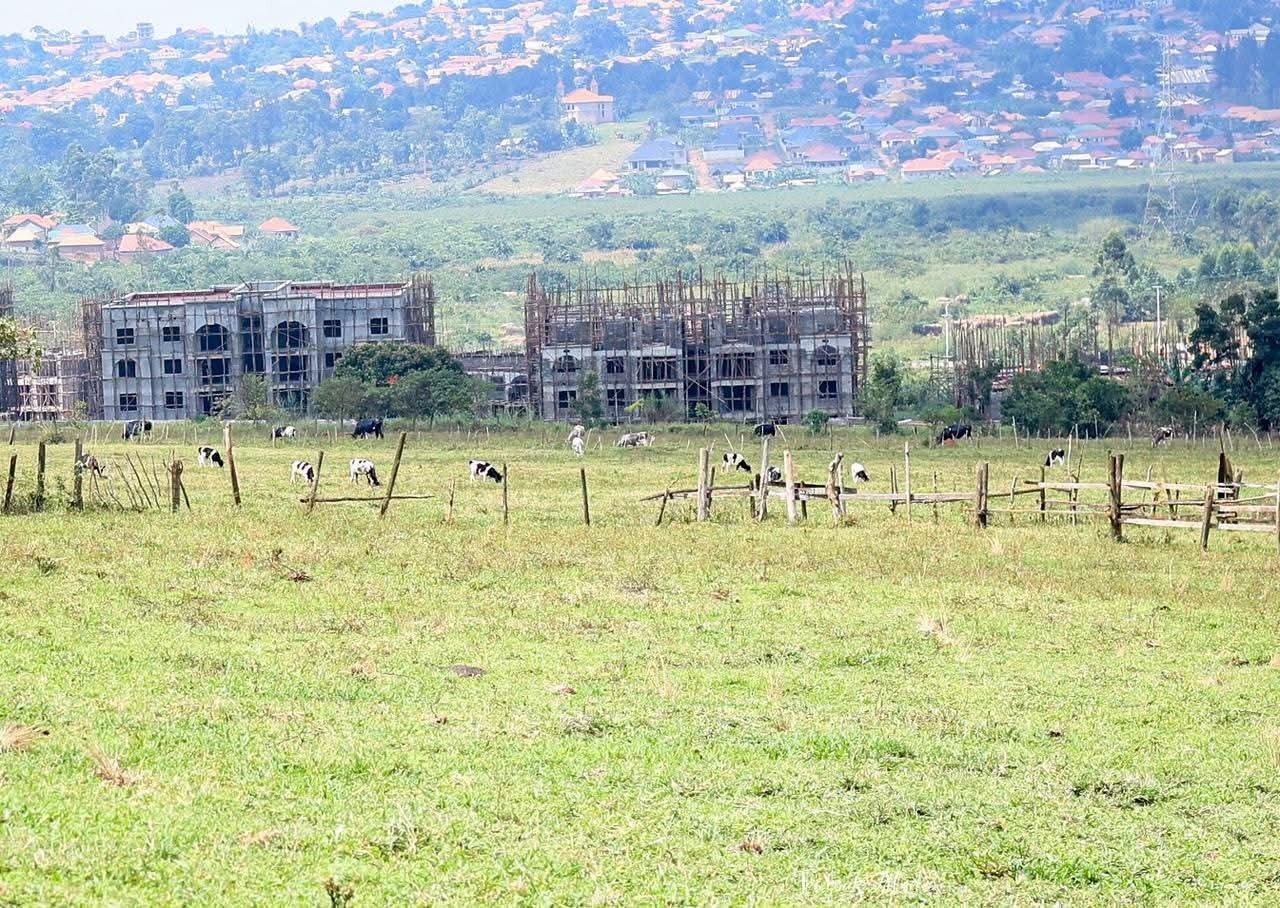
Members of Parliament conducting an oversight inspection of NSSF property in Temangalo have discovered that part of the land purchased by the Fund from businessman Amos Nzeyi remains inaccessible to NSSF, with farming and cattle grazing activities reportedly continuing on the property.
The revelation has reopened questions about one of Uganda’s longest-running land controversies and raised a fundamental question: How can land that NSSF says it fully purchased, paid for and holds in its name remain occupied by the very person who sold it?
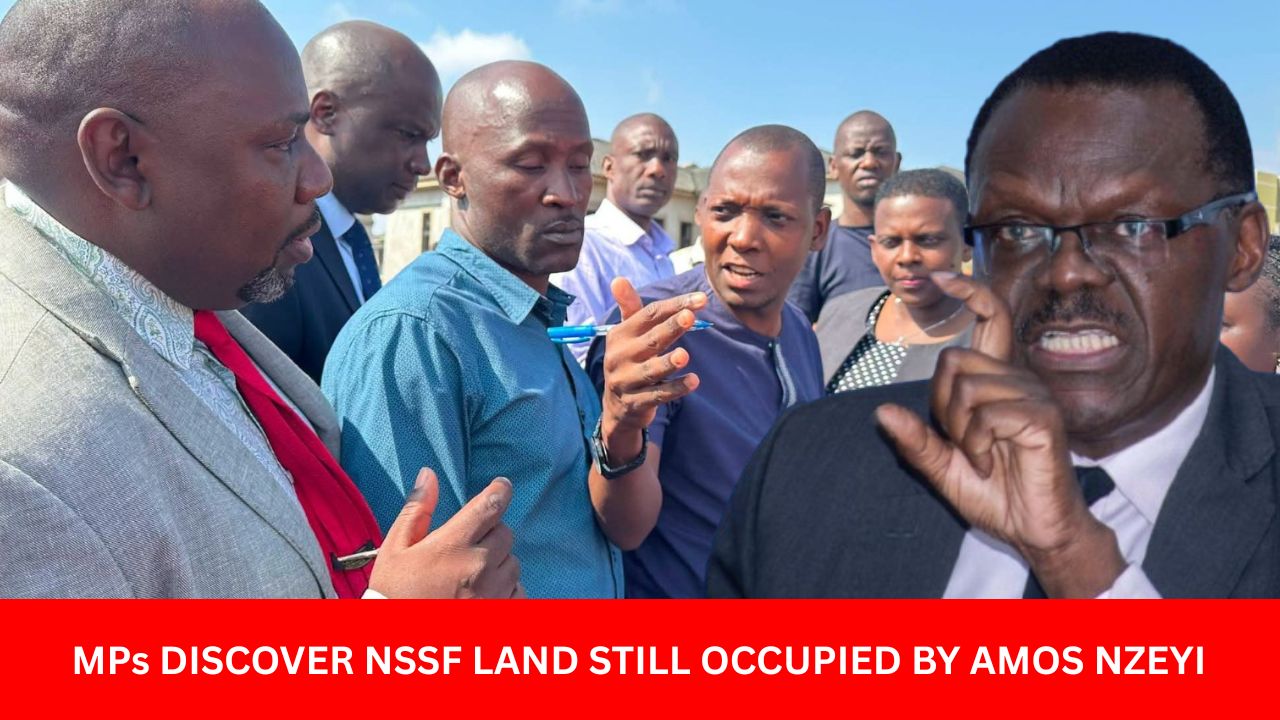
The latest inspection was led by the Parliamentary Committee on Commissions, Statutory Authorities and State Enterprises (COSASE), chaired by Muwada Nkunyingi, as part of Parliament’s scrutiny of NSSF land holdings and its housing project.
Nkunyingi said the committee was prompted to physically visit Temangalo after receiving information that one of the original vendors, Nzeyi, continued to occupy part of the property despite having received full payment.
“COSASE Committee [is] doing oversight on NSSF land in Temangalo and the NSSF housing project,” Nkunyingi said in a statement following the inspection.
“The Committee earlier learnt that one of original vendors/seller Amos Nzei is still occupying and farming/grazing cattle on the land even though they received full payment. This prompted our interest for a physical inspection.” The MPs’ visit produced a striking discovery.
According to Nkunyingi, cattle and farms were visible on the disputed section, while the property appeared fenced off. Although the title is reportedly in NSSF’s names, the Fund could not access the land.
“The land looked fenced, title said to be in NSSF names BUT not accessible by NSSF thus we stopped by the fence,” he said.
The disputed portion measures about 50 acres out of the 463.87 acres purchased by NSSF in the Temangalo transaction.
Nkunyingi said the committee will now seek answers from NSSF and other parties about why the former vendor has remained on the land for years without giving the Fund vacant possession. “NSSF claim to have issued eviction notice. We shall further seek to establish reasons as to why the former vendor has not offered NSSF vacant possession for years,” he said.

The discovery is particularly significant because the Temangalo controversy was never simply about the price of land. It involved questions about ownership, valuation, the circumstances under which the land was acquired, the identities of the vendors and whether NSSF obtained effective possession of the property after paying billions of shillings.
A scandal that refuses to die
The original Temangalo controversy erupted in 2008 after NSSF bought approximately 463.87 acres from Nzeyi and a company associated with former Prime Minister Amama Mbabazi for about Sh11.2 billion.
Contemporary records and parliamentary investigations placed the price at roughly Sh24 million per acre, although figures have varied depending on the portion and transaction being discussed. NSSF later maintained that it had acquired the land through formal transactions and possessed valid titles. The purchase immediately triggered political controversy.
At the time, Mbabazi was a powerful government figure, serving as Security Minister, while Nzeyi was a prominent businessman and his associate. A parliamentary investigation questioned the valuation of the property and the circumstances surrounding NSSF’s decision to buy it.
During the 2008 parliamentary probe, three independent valuations were reported to have placed the value of the land significantly below the price paid by NSSF, with allegations that the property had been acquired at an inflated price. Mbabazi denied directly managing the transaction, maintaining that Nzeyi handled the sale.
The controversy became one of the defining political scandals of the period, damaging the reputations of several senior officials and prompting intense scrutiny of NSSF’s investment decisions. But the story did not end there.
Ownership questions emerge
Years after the original transaction, another layer of controversy emerged. In 2018, a Canadian-based family linked to the former owners of Temangalo Tea Estate petitioned the Commission of Inquiry into Land Matters, claiming ownership of about 366.2 acres forming part of the land sold to NSSF.

The family, represented by Nazim Moosa, said the property had historically belonged to Temangalo Tea Estate Limited, associated with the family of the late Mohammed Hassnali Moosa.
The family argued that its property had been taken over following the expulsion of Asians during Idi Amin’s regime and subsequently transferred through circumstances they disputed.
The renewed claims transformed Temangalo from a controversy over price into a much wider dispute over the chain of ownership.
The Land Commission subsequently summoned individuals involved in the property’s history, including Abbas Mawanda, the man Nzeyi said had sold him part of the land.
Mawanda, a former Uganda Development Bank managing director, challenged aspects of Nzeyi’s account, including documents relating to how the land had allegedly been acquired.
At one stage, the controversy involved claims that some of the disputed land had been acquired by Nzeyi before eventually being sold to NSSF.
NSSF, however, defended its position, telling the Land Commission in 2018 that it had purchased the 463.87 acres on two titles and had paid Nzeyi Sh24 million per acre after receiving titles that were believed to be genuine. The Fund maintained that it had valid ownership documents.
The 50-acre question
The latest COSASE inspection introduces a new and potentially explosive dimension. Even assuming that the NSSF titles are valid, Parliament now wants to know why a former vendor would continue to exercise physical control over part of the property years after receiving payment. The issue of vacant possession is crucial.
Buying land does not merely involve obtaining paperwork. The purchaser ordinarily expects to take control and use the property for the purpose for which it was acquired.

Yet, according to the committee, the 50-acre section remains fenced and occupied, with cattle grazing and farming activities visible from outside.
That means the current dispute is no longer confined to what happened in 2008. It is about what has happened to the property since then.
The committee will have to establish whether Nzeyi remains on the land personally, whether the occupation is authorised in any form, whether there are tenants or other occupants, whether NSSF formally served eviction notices and, critically, why those notices have apparently not resulted in vacant possession.
It will also need to establish whether the occupation has affected NSSF’s plans for the property and whether the Fund has suffered financial losses as a result.
Housing project under microscope
The MPs did not limit their inspection to the disputed land. COSASE also examined the NSSF housing project in Temangalo, with Nkunyingi saying legislators raised questions concerning the size of rooms, design, quality and workmanship.
“We also made various observations on the housing project including size of rooms, quality, design and workmanship to which we shall seek further clarification,” he said.
This means the committee’s inquiry could now develop into a broader examination of how NSSF has managed its Temangalo investment—from the original acquisition and possession of the land to the development of housing on the property. For contributors to the Fund, the stakes are high.
NSSF manages workers’ savings and invests them in assets intended to generate returns for members. Any prolonged dispute over ownership, possession or development therefore raises questions about the protection and utilisation of workers’ money.
A scandal entering its third chapter
Temangalo has already passed through several official investigations. First came the parliamentary scrutiny following the 2008 purchase. Then came renewed controversy before the Commission of Inquiry into Land Matters in 2018, including claims by the Moosa family over hundreds of acres. Parliament again summoned NSSF and Nzeyi in 2019 as legislators examined allegations concerning the property.

The latest COSASE inspection shows that, despite those years of investigations, important questions about the physical control and use of the land remain unresolved.
The committee has not yet made a final finding that Nzeyi is illegally occupying the 50 acres. Its current position is that the circumstances surrounding the occupation must be established. That distinction will be important as the inquiry proceeds. But the physical discovery itself is difficult to ignore.
A title may sit in NSSF’s name. A purchase agreement may have been signed. Billions may have changed hands. Yet Parliament says it has found cattle grazing and farms behind a fence on a portion of the very land NSSF says it owns.
For COSASE, the next task will be to follow the paper trail to the ground—and determine how, after nearly two decades, the seller of land can still apparently be on the land he sold.
Temangalo was once a scandal about the price of land. Today, Parliament is asking an even more basic question: Who actually controls the land?
Author Profile

- Mr. Stephen Kasozi Muwambi is a seasoned crime investigative writer, majoring in judicial-based stories. His two decades’ experience as a senior investigative journalist has made him one of the best to reckon on in Uganda. He can also be reached via [email protected]
Latest entries
 FeaturedSeptember 28, 2026NSAMBA IN LUZIRA, ROSE BACK TO CID: Matovu Murder Probe Deepens As Suspect Is Sent To Luzira, While Rose Returns To CID For More Questioning Over Fatal Kibuli Night
 FeaturedSeptember 28, 2026‘FOR CONTINUITY, MUHOOZI WILL BE OUR CANDIDATE’ Succession Battle Gathers Pace As NRM Elderly Throw Weight Behind Muhoozi, PLU Warns Namyalo Against Attacking CDF’s 2031 Presidential Ambitions
 FeaturedSeptember 26, 2026‘HE GRABBED AND SQUEEZED MY BUTTOCKS’ — Stella Nyanzi Recalls Her Awkward Encounter With Chameleone, Then Cheers Him For Turning Matovu’s Vigil Into A Rare Musical Reunion
 FeaturedSeptember 20, 2026“I WILL NEVER INSULT YOU AGAIN, AFANDE… PLEASE FORGIVE ME!” — Motormouth Minister Justine Nameere Swallows Her Words, Bows Before Gen Muhoozi and Begs for Mercy


The Temangalo land issue is not settled. There was a running lease on the property before 1972 in the name of Temangalo Tea Estate Limited (Moosa Family), held under a Registered Leasehold Certificate of Title. This property was placed under the aegis of the Custodian Board after the 1972 Asian expulsion, but was fraudulently and illegally occupied by Haji Abbas Mawanda, who sold it to Amos Nzei, who then sold it to the NSSF. All this transpired while the property had a registered and running lease in place. The Custodian Board recognised us as the legitimate owners of this property, as did the Cosase Committee in 2021, when a resolution was tabled in Parliament recommending that the property be returned to the Moosa Family. We have been seeking readdress and justice for 33 years. We are requesting the intervention of His Excellency to review the facts in this matter and correct this injustice.