








Sam Mugumya, the opposition activist whose prolonged disappearance and alleged secret detention have become a major human rights controversy in Uganda, has left opposition politicians deeply distressed after they visited him at Luzira Prison, where he is now being held following his production before the General Court Martial.
In an encounter that exposed the extraordinary extent of his isolation, Mugumya reportedly had no idea that veteran opposition politician Dr Kizza Besigye was still in detention or that Kampala Lord Mayor Erias Lukwago had also been arrested.
For a man whose political struggles have been closely associated with opposition politics and the fight against President Yoweri Museveni’s government, the revelation was particularly striking. While the political landscape outside prison walls had continued to change, Mugumya appeared to have been completely disconnected from the events unfolding around him.
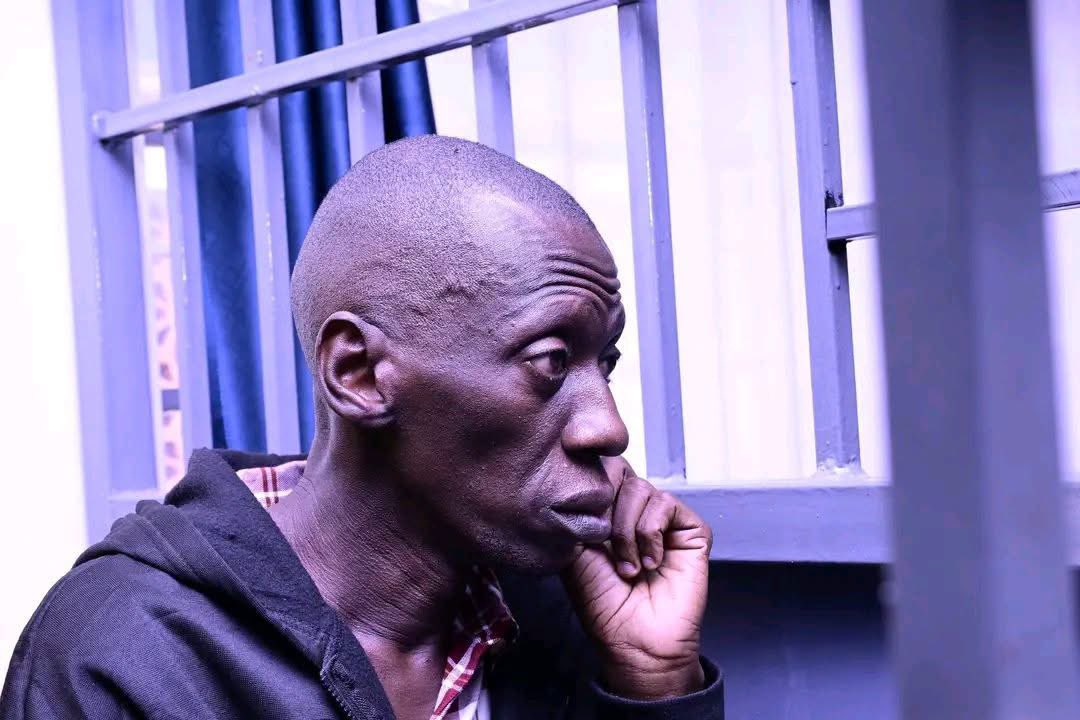
His visitors described an activist who had been physically diminished by his ordeal but was still attempting to maintain his characteristic humour, courage and determination.
The encounter also raised disturbing questions about what happens to individuals held in prolonged isolation, without access to television, radio, newspapers or ordinary communication with the outside world.
‘I was in another world’: A man cut off from the rest of humanity
The most disturbing aspect of the visit was not simply Mugumya’s physical condition but the extent to which his alleged detention had separated him from the outside world. According to former Kampala Deputy Lord Mayor Doreen Nyanjura Omutatina, the visitors discovered that Mugumya had not been following developments in Uganda. He did not know that Besigye was still in prison, nor that Lukwago had been arrested. The revelation reportedly caught the visitors by surprise. Nyanjura explained that the politicians had initially mentioned Lukwago’s detention while trying to comfort Mugumya. They subsequently realised that he did not even know Besigye remained behind bars. They therefore decided against giving him more distressing information about Besigye’s health, including reports surrounding his collapse.
The encounter offered a chilling illustration of what prolonged incommunicado detention can mean: a person is not merely denied freedom of movement but is effectively removed from the information, relationships and events that make up ordinary life.
Nyanjura observed that there had been no television, radio or newspapers in the basement where Mugumya was allegedly held.
In her account, the basement was a world of complete darkness, where time stood still and the outside world ceased to exist. She described the experience as one in which a detainee is effectively erased from the world.
Mugumya reportedly told his visitors that he had been living in another world, a description that captures the psychological isolation of someone who had spent more than a year without normal contact with society.
For the opposition politicians, the discovery was particularly painful because the political events that had unfolded during his disappearance were developments they would ordinarily have discussed with him.
Instead, they were meeting a man who had missed an entire chapter of the country’s political history.
A frail man who still tried to comfort his visitors
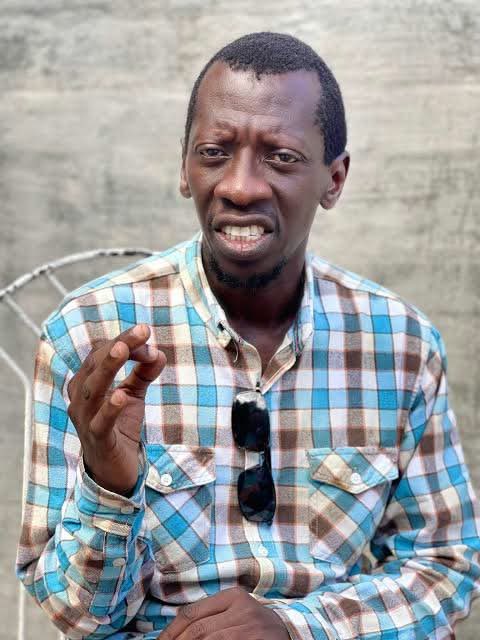
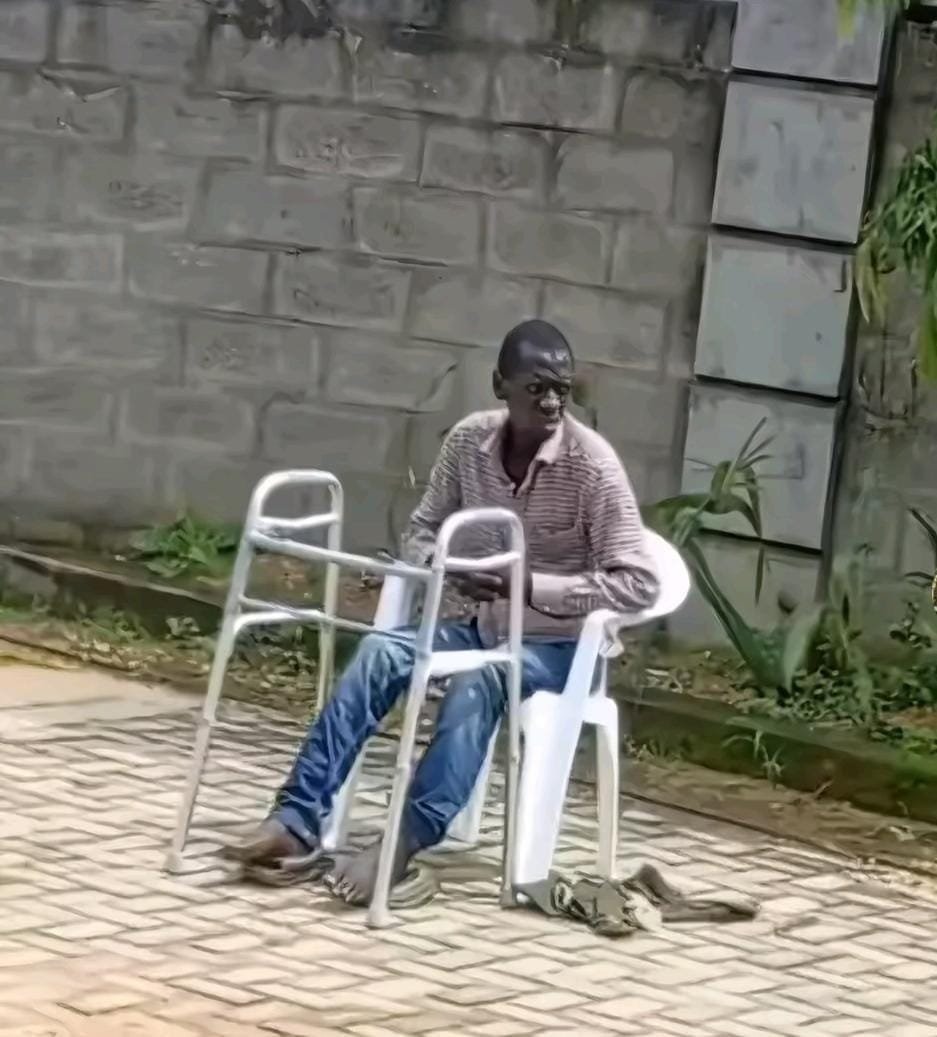
The physical transformation of Mugumya appears to have been equally distressing. Nyanjura described him as a mere shadow of the man they previously knew. He was reportedly in a wheelchair and depended on two fellow inmates to assist him with movement.
Despite his condition, Mugumya reportedly requested assistance to stand so that he could embrace each of his visitors.
The gesture was emotionally significant. Rather than remaining seated and allowing the visitors to approach him, he wanted to welcome them personally, even though his body could barely support him. Nyanjura said the group was able to spend only 15 minutes with him, but the short encounter exposed the extent of his physical deterioration.
She also revealed that Mugumya became emotional while recounting how another opposition detainee, Raymond Asiku, had helped him survive during their time in the alleged secret detention facility.
According to her account, Asiku took care of Mugumya when he had become too weak to perform even the most basic activities for himself. He reportedly did everything for him when Mugumya could no longer do anything for himself.
Nyanjura thanked Asiku for standing by Mugumya, particularly because signing an affidavit concerning his detention had allegedly exposed him to considerable personal risk.
The account introduces another dimension to the Mugumya saga: the role of fellow detainees in sustaining one another in circumstances where family members, lawyers and ordinary sources of assistance were inaccessible.
It also raises questions about the treatment and whereabouts of other people who may have been held alongside Mugumya.
The opposition politician’s account suggests that Mugumya’s survival during his weakest moments was partly dependent on the assistance of another prisoner rather than the normal support structures available to a person in custody.
Rubongoya’s sleepless night
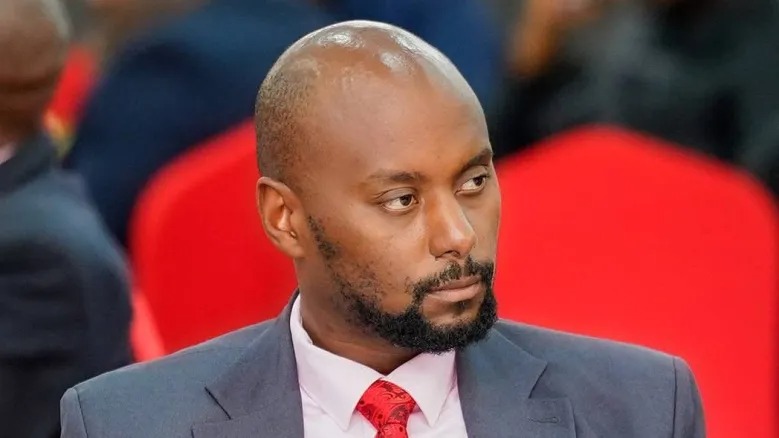
For David Lewis Rubongoya, the National Unity Platform (NUP) secretary general, the encounter was so disturbing that he struggled to sleep after returning home. In a deeply emotional statement shared on X, Rubongoya said his mind remained occupied by Mugumya and the suffering he had endured.
He recalled the strong man they had previously known and contrasted that image with the frail, thin-framed individual they encountered at Luzira. Rubongoya said Mugumya had attempted to remain strong for the sake of his visitors, some of whom broke down and loudly wailed when they saw him.
Rather than allowing the visitors to console him, Mugumya reportedly turned the encounter around by trying to encourage and comfort them. In what Rubongoya described as a moment of characteristic humour, Mugumya removed his face mask and laughed heartily.
He reportedly emphasised that now that he was at Luzira, he could no longer die. The statement was both humorous and heartbreaking. For someone who had allegedly spent more than a year in secret detention, without knowing whether he would ever see his family or friends again, being transferred to a recognised prison facility appeared to offer a measure of relief. At Luzira, his whereabouts were known. His family, lawyers, political colleagues and other visitors could seek access to him.
But Rubongoya said Mugumya’s laughter could not conceal the suffering reflected in his eyes. He described the painful contrast between lips that were laughing and eyes carrying an agony that words could not adequately express.
Rubongoya questioned how human beings could subject another person to such suffering simply because of differences in political opinion.
His message reflected the emotional shock experienced by opposition supporters who had spent months demanding answers about Mugumya’s disappearance.
For them, his reappearance was a moment of relief, but the condition in which he emerged transformed the celebration into another episode of anguish.
From Mbarara disappearance to Luzira
Mugumya’s appearance at Luzira follows a 449-day disappearance that became one of the most contentious human rights cases involving opposition activists in Uganda.
According to the Uganda Law Society, Mugumya was allegedly seized by armed men at NIM Hotel in Mbarara on August 26, 2025.
The lawyers and his family subsequently embarked on efforts to establish his whereabouts, arguing that he had been abducted and held incommunicado.
The Uganda Law Society said the government had repeatedly denied holding him, including through sworn affidavits filed during legal proceedings.
In its November 18 statement, the lawyers’ professional body said Mugumya’s appearance before the military court did not erase the alleged violations that preceded his production.
The society argued that the State still had questions to answer over his disappearance, detention and the circumstances in which he was eventually presented before court.
The case attracted attention after videos allegedly showing Mugumya in a severely weakened condition circulated, intensifying concerns about his health and safety.
His family and lawyers had sought court intervention to compel security agencies to account for his whereabouts.
The High Court subsequently directed security agencies to continue investigating his disappearance and establish what had happened to him.
The controversy was further complicated by official denials that he was being held in military detention facilities.
His sudden appearance before the General Court Martial on Wednesday, therefore marked a dramatic development in a case that had remained unresolved for more than a year.
It also raised fresh questions about the circumstances under which he was held and why authorities had not accounted for him earlier.
The military court charges
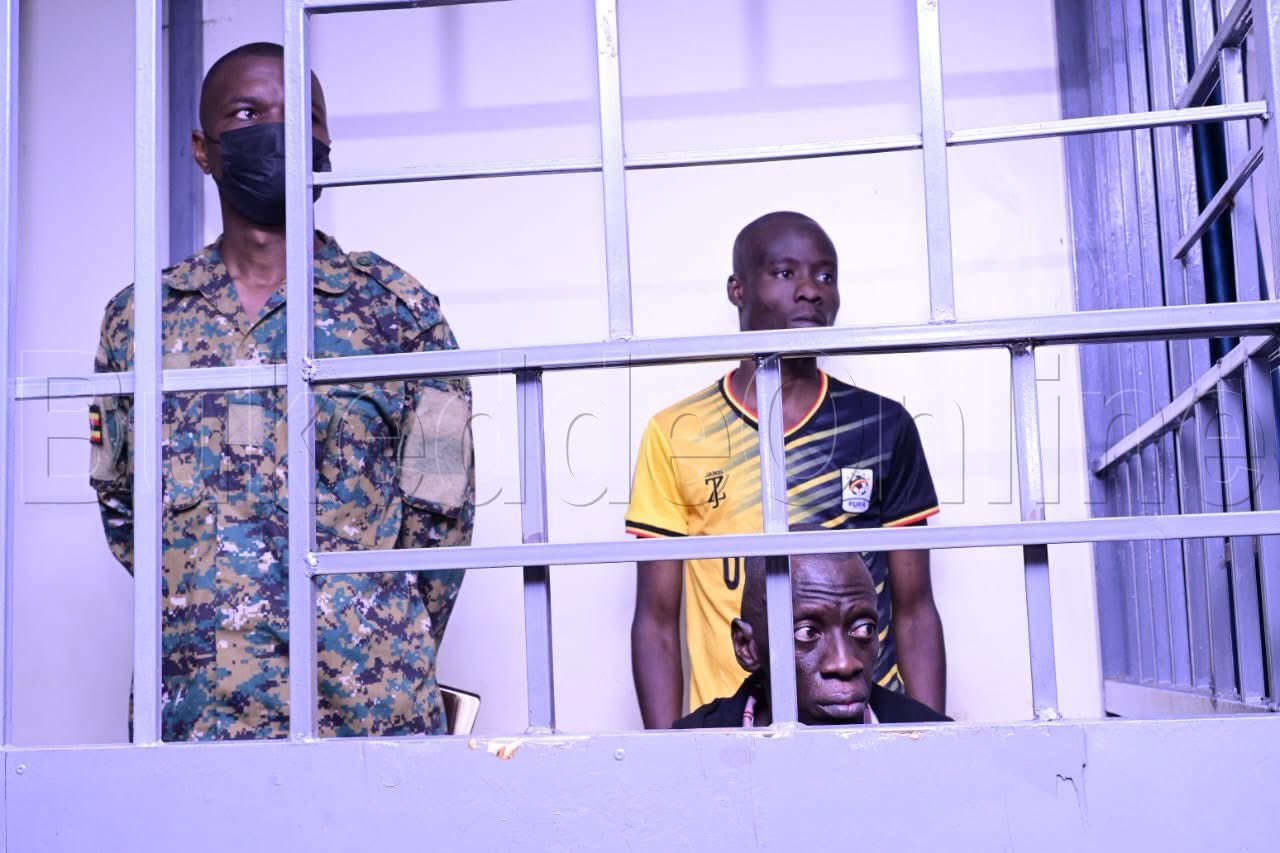
Mugumya was presented before the General Court Martial in Makindye alongside two serving UPDF soldiers, Lance Corporal Gift Mukundane and Lance Corporal Isaac Ocan. The prosecution accused the three of offences relating to security and treachery under the UPDF Act.
According to the prosecution, the accused and other individuals still at large allegedly held meetings between November 2023 and September 2025 in different parts of Uganda, including Kampala, Kasese, Bundibugyo and Ntoroko.
The prosecution further alleged that Mugumya solicited support from the soldiers to coordinate activities with the Allied Democratic Forces (ADF), with the intention of prejudicing the security of the Defence Forces.
A separate count alleged that the accused conspired with others to withhold information concerning efforts by the ADF to mobilise manpower and logistical support. Mugumya and the two soldiers denied the charges.
The prosecution, led by Colonel Raphael Mugisha, told the court that investigations were still ongoing and requested more time.
The military court, chaired by Brigadier General Richard Tukacungurwa, subsequently remanded Mugumya to Murchison Bay Prison in Luzira, while the two soldiers were sent to the Military Police detention facility in Makindye. The case was adjourned to December 21, 2026.
The charges remain allegations and Mugumya is entitled to the presumption of innocence unless proven guilty. However, his appearance before the military court did not end the controversy surrounding his disappearance. Instead, it shifted the debate towards accountability for the period he was allegedly held outside the recognised criminal justice system.
Besigye’s connection and the political significance of Mugumya’s ordeal
Mugumya’s predicament has particular political significance because of his longstanding association with Besigye, one of President Museveni’s most prominent political opponents.
He served as an aide to Besigye and remained associated with the opposition struggle, making him a familiar figure among activists and supporters of the former Forum for Democratic Change leader.
His disappearance therefore became part of the wider debate about the treatment of opposition politicians, activists and government critics. The fact that Mugumya did not know Besigye was still imprisoned was particularly striking to his visitors.
Besigye has himself been at the centre of a prolonged legal and political controversy following his arrest and prosecution. His continued detention has attracted national and international attention, with his supporters repeatedly demanding his release. Lukwago’s arrest added another development to the opposition’s difficult political environment.
Yet Mugumya knew none of this. For more than a year, the political world had continued moving without him. Leaders had been arrested, court proceedings had taken place, political alliances had shifted and new controversies had emerged, but he had remained cut off from the developments.
His visitors were confronted with the difficult responsibility of deciding what information to share with a man who was still recovering from an extraordinary ordeal.
Nyanjura’s decision to withhold details about Besigye’s reported collapse illustrated the sensitivity surrounding his condition.
The politicians had gone to offer encouragement, but instead found themselves struggling to decide how much of the outside world Mugumya was physically and emotionally prepared to confront.
Questions over the conditions of detention
The accounts from the Luzira visit have also revived questions about the conditions under which Mugumya was allegedly held before his appearance in court.
Nyanjura said he had been kept indoors throughout the year and was only allowed outside when his health had deteriorated severely. Her account, together with the reported assistance he received from Raymond Asiku, raises serious questions about access to medical attention, adequate nutrition, fresh air and basic human contact.
These are matters that require independent investigation rather than conclusions based solely on accounts shared by visitors.
The Uganda Law Society has maintained that presenting Mugumya before a military court after 449 days does not absolve the State of responsibility for the circumstances surrounding his disappearance.
The society has particularly emphasised command responsibility, arguing that senior officers and political figures who directed, authorised or endorsed unlawful detention must be identified and held accountable.
It has also questioned how security agencies could deny holding Mugumya while he was allegedly being kept in secret detention.
The lawyers’ body insists that the criminal charges against him must be separated from the question of whether his rights were violated during the period he was missing. This distinction is important.
Even where the State has legitimate security allegations against an individual, it remains obligated to follow the law, respect constitutional protections and ensure that suspects are brought before competent courts within the required time.
A prosecution cannot retrospectively legitimise an alleged abduction or prolonged detention outside the law.
Relief at Luzira, but the questions remain
For Mugumya’s visitors, the most immediate relief was that they had finally seen him alive. After months of uncertainty, rumours and legal battles, his family and political colleagues could at least establish where he was being held and attempt to follow up on his welfare.
But the emotional accounts shared by Rubongoya and Nyanjura suggest that the reunion came at a devastating cost.
The man they had gone to see was physically weakened, dependent on assistance and apparently struggling to recover from an extended period of isolation.
Yet he still had enough humour to laugh, remove his mask and reassure his visitors that being at Luzira meant he could no longer die. That statement may have been Mugumya’s way of telling his friends that he was grateful to have emerged from the darkness and returned to a place where people could see him. Rubongoya’s sleepless night and Nyanjura’s account of his unfamiliarity with events outside detention have turned the visit into a powerful illustration of the human cost of prolonged isolation.
The questions now extend beyond the charges before the military court. Who held Mugumya during the 449 days? Under whose authority was he detained? Why did the State fail to account for his whereabouts? What medical assistance did he receive? And who will take responsibility if investigations establish that his rights were violated?
For now, Mugumya is at Luzira, awaiting his next court appearance on December 21. His political colleagues have renewed their demands for accountability and the release of other political detainees.
But perhaps the most haunting revelation from the visit was his description of the world he had inhabited.
While Uganda debated politics, arrests, court cases and the fate of its opposition leaders, Mugumya says he was living in another world.
And when he finally emerged, he discovered that even the people closest to his political struggle had continued suffering in his absence.
He is now back in the world he was taken away from, but the physical and psychological scars of the 449 days remain.
Author Profile
- Mr. Stephen Kasozi Muwambi is a seasoned crime investigative writer, majoring in judicial-based stories. His two decades’ experience as a senior investigative journalist has made him one of the best to reckon on in Uganda. He can also be reached via [email protected]
Latest entries
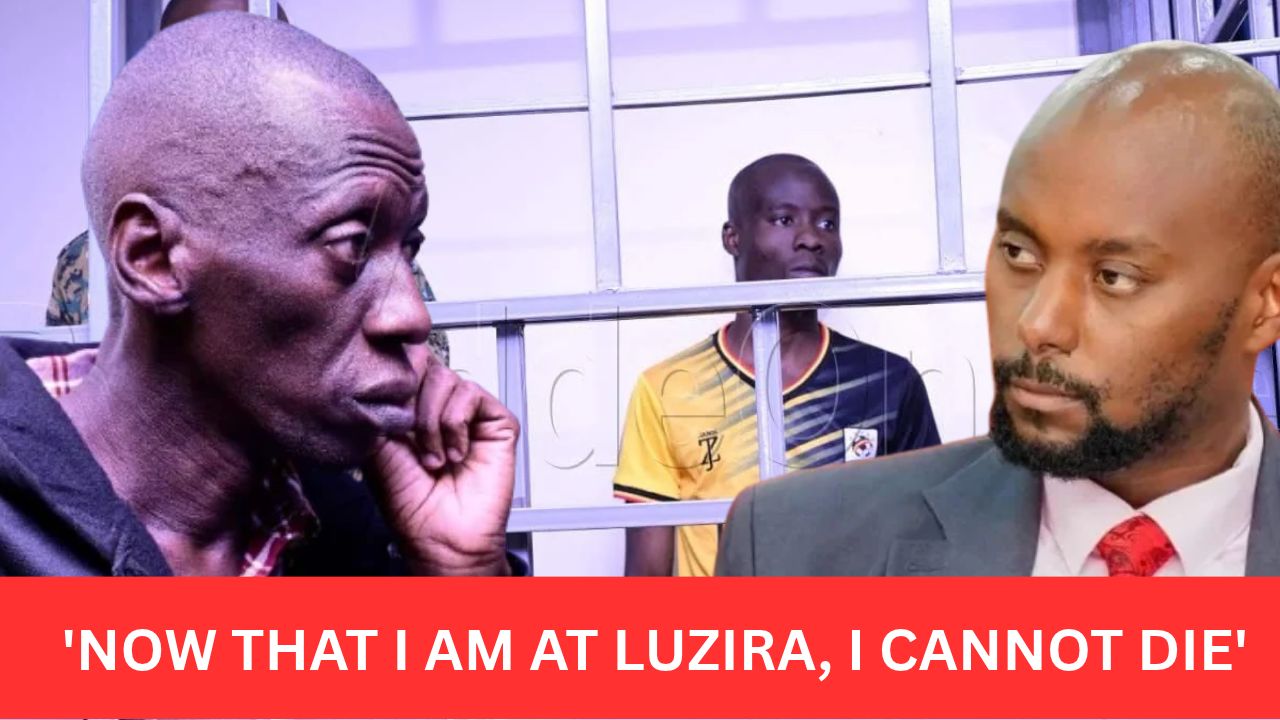 FeaturedNovember 20, 2026INSIDE MUGUMYA’S WORLD OF DARKNESS: How 449 Days in Secret Detention Left Activist Unaware of Besigye’s Imprisonment and Lukwago’s Arrest
 FeaturedNovember 19, 2026MADE IN UGANDA SINO-TRUCKS: The 45-acre Double Q Assembly Complex In Nakirebe Is Assembling Hundreds Of Sinotruk Trucks, With Ambitions To Boost Local Manufacturing, Create Jobs And Strengthen Uganda-Tanzania Trade
 FeaturedNovember 16, 2026URA’S PLOT TO TAX WHATSAPP CALLS EXPOSED! URA Commissioner General John Musinguzi Warns That Cheaper Internet-Based Calls Are Eroding Taxes Collected From Conventional Voice Services, With Rising Data Revenue Failing To Close The Gap
 FeaturedNovember 16, 2026INSIDE THE KING OYO FOUNDATION: Four Months After The Death Of The 34-Year-Old Tooro Monarch, His Family Has Launched A Foundation To Preserve His Memory Through Education, Youth Empowerment, Tourism, Conservation And Agriculture