




As Tanzania’s President Samia Suluhu Hassan visits Uganda following the death of her husband, Hafidh Ameir Hassan, President Museveni has surprised observers with an unusually affectionate reception, leaving social media detectives wondering whether there is more to the presidential chemistry than diplomatic courtesy.
President Museveni has never been particularly famous for being an overly affectionate host. The Ugandan leader, who has perfected the art of keeping a certain distance between himself and the people he receives, appears to have developed a special exception for his Tanzanian counterpart, President Samia Suluhu Hassan. And this time, the cameras were watching.
When the Tanzanian leader arrived in Uganda for her two-day State Visit on Tuesday, the official programme was supposed to be about regional cooperation, infrastructure, trade and the long-standing relationship between the two neighbouring countries.
But somewhere between the ceremonial reception, the red carpet and the State House engagements, the diplomatic cameras captured something that threatened to overshadow the usual presidential business.
Museveni was not merely receiving a visiting Head of State. He appeared to have temporarily suspended some of his famously guarded public mannerisms to give Suluhu a reception that has since become a subject of online amusement, speculation and commentary.
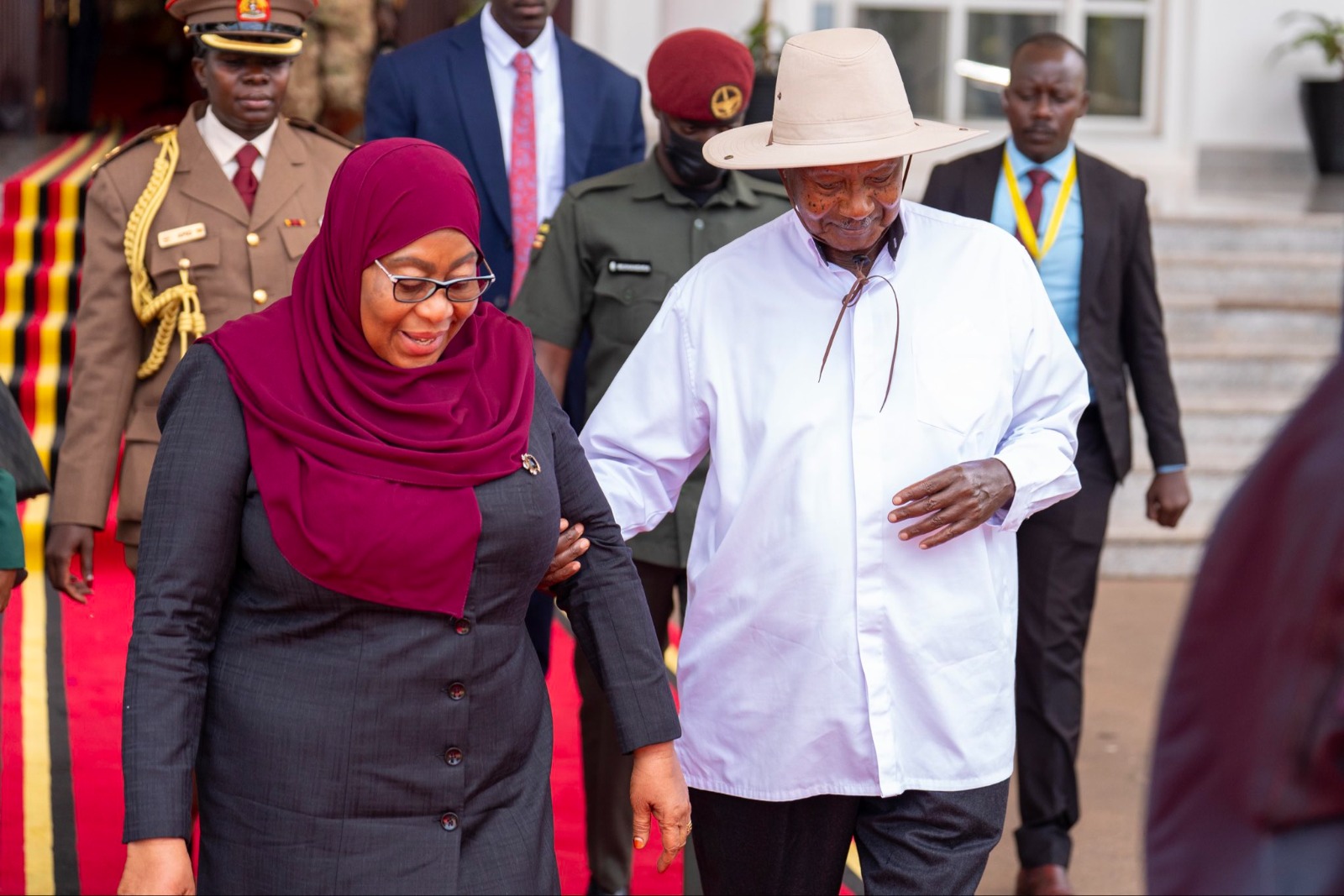
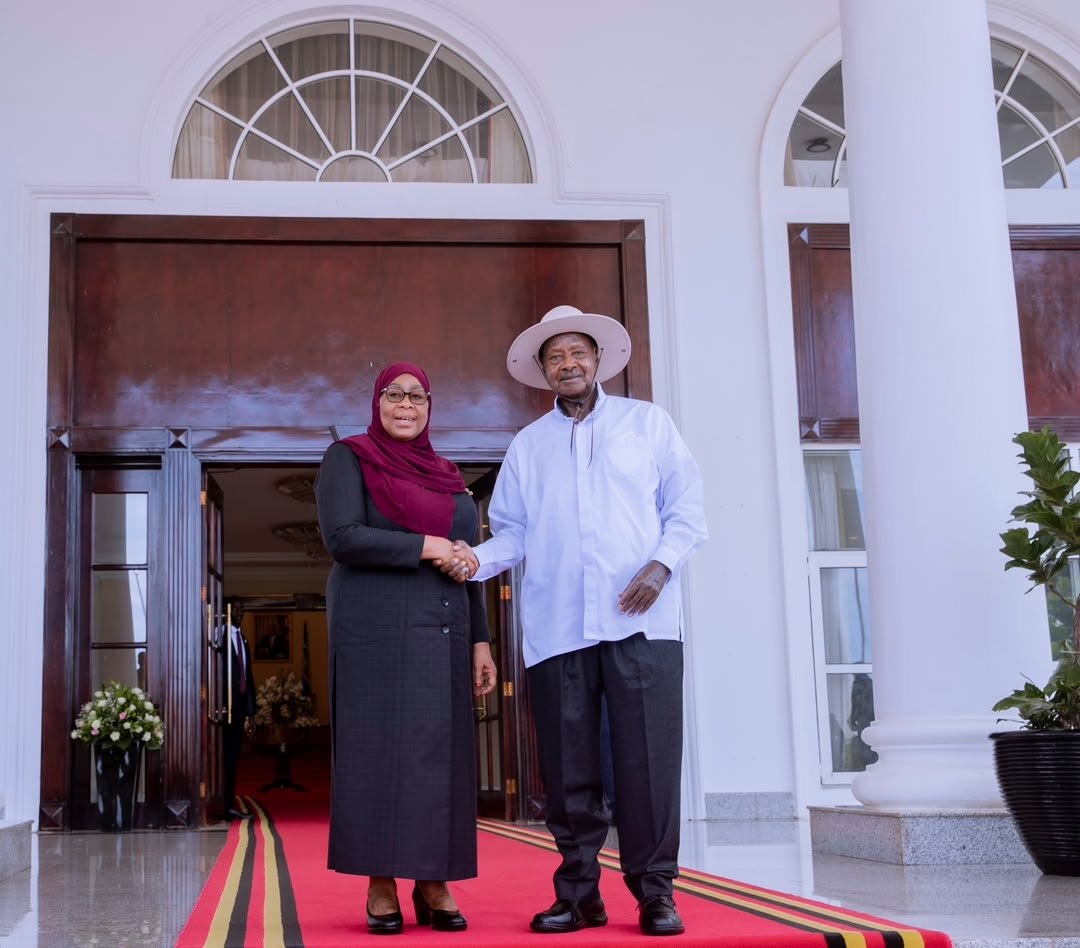
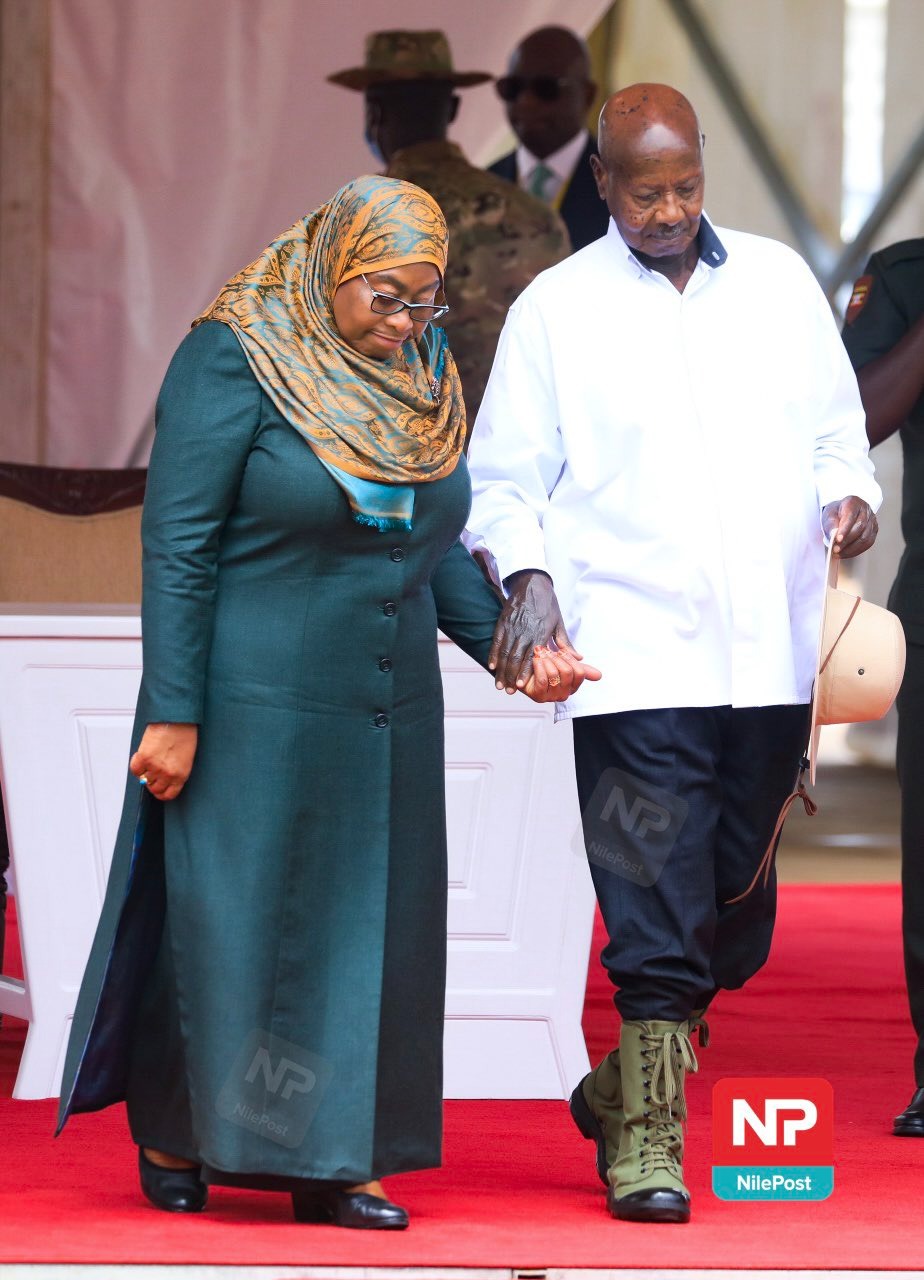
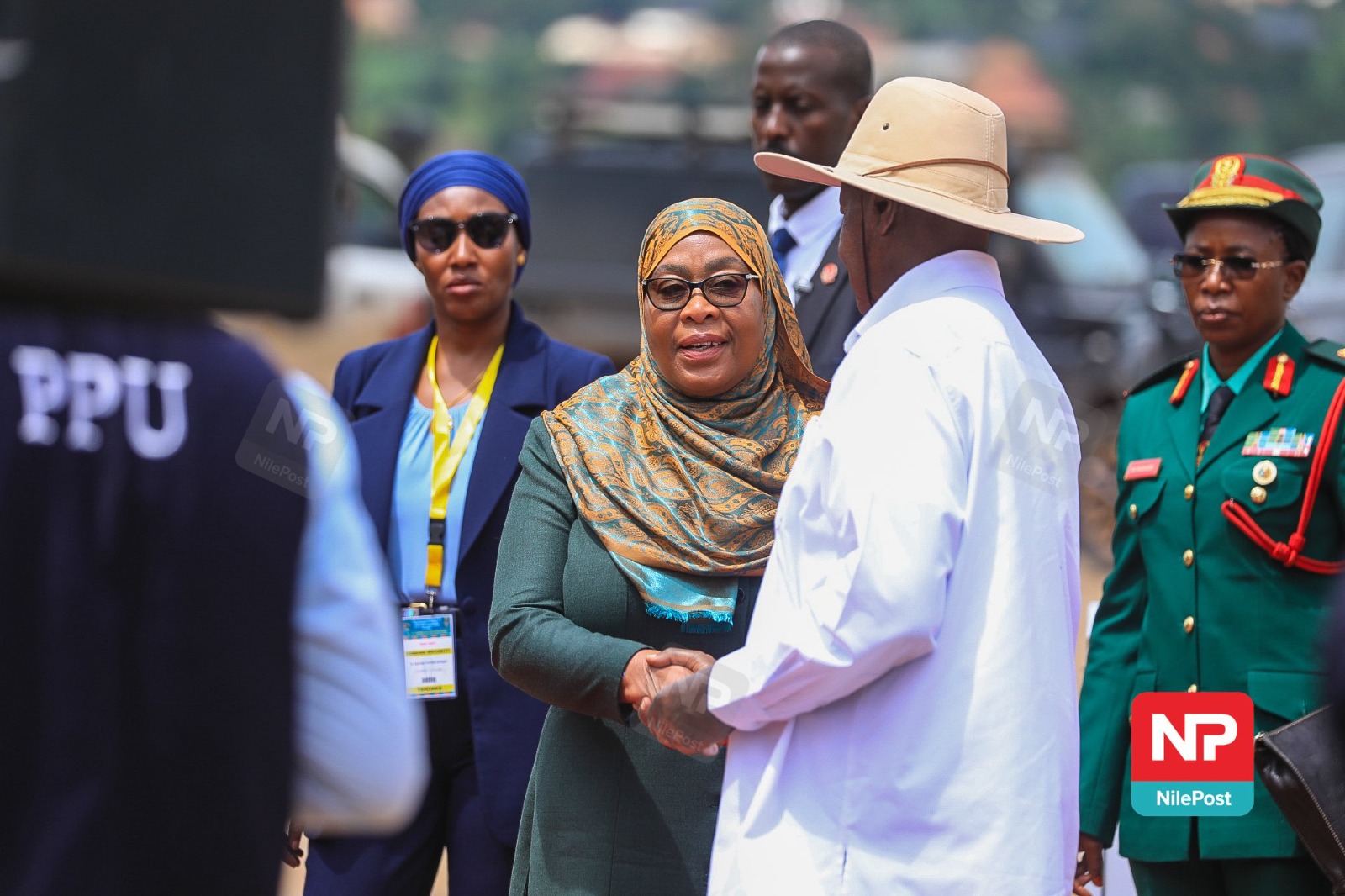
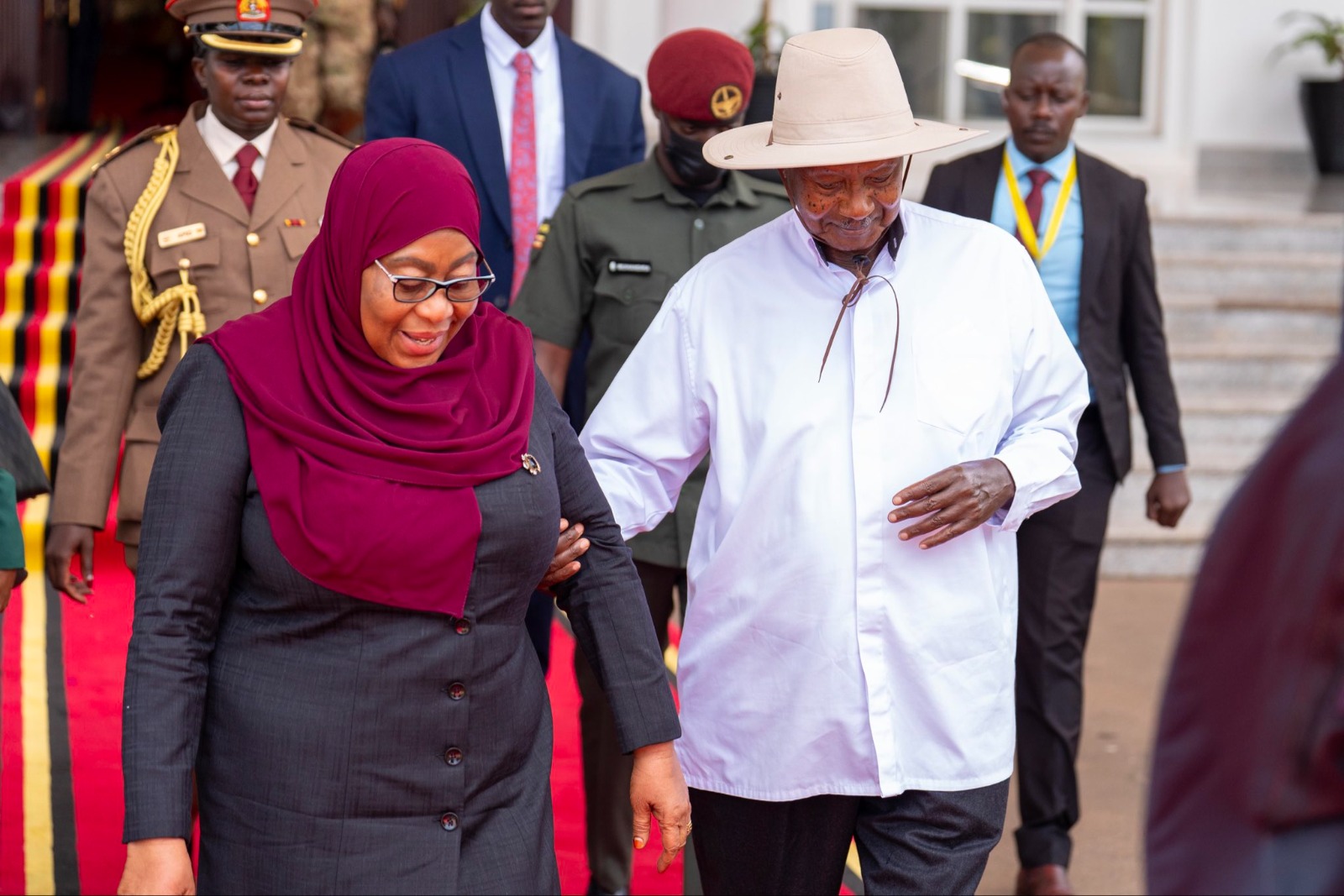
In photographs circulated by the President’s handlers, Museveni is seen walking alongside Suluhu, holding her by the arm as the two make their way along the red carpet. In another photograph, the two leaders stand outside State House, Entebbe, smiling and holding hands in a handshake that has attracted considerable attention.
For a president whose public engagements are often characterised by carefully choreographed protocol, the images have provided social media users with an unusual spectacle.
The question being asked in some online corners is simple: What exactly is cooking between these two presidents?
Before anyone rushes to conclusions, however, there is a perfectly respectable explanation: Museveni could simply be demonstrating the warmth, courtesy and compassion expected of a host receiving a fellow Head of State who has recently suffered a personal tragedy. But where would social media be without a little presidential gossip?
THE PRESIDENT WHO FORGOT HIS DISTANCE
For years, Museveni has cultivated an image of a leader who is not particularly enthusiastic about unnecessary physical contact during public engagements. His formal demeanour, characteristic hat and carefully managed interactions have become part of his political identity.
He is a president who can spend hours discussing the economy, regional security, agriculture and the politics of liberation movements without necessarily turning every encounter into a warm embrace. Yet the photographs from Suluhu’s visit appear to tell a different story.
In the first image, Museveni, dressed in his familiar white shirt, black trousers and broad-brimmed hat, walks beside the Tanzanian leader, who is wearing a dark outfit and a maroon hijab.
The Ugandan President appears to be holding her arm as they walk, with the two leaders seemingly comfortable in each other’s company.
The second photograph is even more interesting to those who enjoy reading political meaning into body language. The two are standing outside State House, holding hands in a prolonged-looking handshake, with the red carpet extending behind them.
And, perhaps most amusingly for those accustomed to seeing Museveni’s guarded public image, the cameras captured his face without the usual barrier of a face mask. The mask, it seems, was not invited to this particular diplomatic engagement.
One could argue that there was nothing extraordinary about any of this. A handshake is hardly a constitutional amendment, and walking beside a visiting president is not a declaration of a new political alliance.
But when the man doing the hand-holding is Museveni, every additional centimetre of presidential warmth can become a national discussion.
The photographs, shared publicly by the President’s communication handlers, have therefore given Ugandans something to talk about beyond the usual speeches and official statements.
A WIDOWED PRESIDENT AND A SUPPORTIVE HOST
There is also an important human dimension to the photographs. Suluhu arrived in Uganda just over two months after losing her husband, Hafidh Ameir Hassan, who died on September 7, 2026, while receiving treatment for a heart condition at Emilio Mzena Memorial Hospital in Zanzibar. His death was announced by Tanzania’s Vice-President, Deogratius Ndejembi, who conveyed condolences to the President, her family and the people of Tanzania.
Hafidh, who married Samia in 1978, had largely maintained a private life despite becoming Tanzania’s First Gentleman when his wife assumed the presidency in 2021.
His death was a deeply personal loss for the Tanzanian leader, who had shared decades of marriage with him.
It is against this background that some observers have interpreted Museveni’s unusually warm reception as an expression of solidarity with a fellow leader navigating personal grief while continuing to discharge the responsibilities of high office. In that interpretation, the Ugandan President was simply being a gentleman.
There is something to be said for that argument. Diplomacy is not always about agreements, memoranda and the exchange of official documents. Sometimes, it is about making another leader feel welcome, respected and supported.
Museveni may have understood that Suluhu was arriving not only as Tanzania’s Head of State but also as a woman who had recently lost her lifelong companion.
And perhaps the Ugandan leader decided that the occasion called for something more personal than the standard presidential handshake. Still, the internet has never been particularly good at leaving a perfectly innocent handshake alone.
SOCIAL MEDIA DETECTIVES REPORT FOR DUTY
The photographs quickly found their way into online conversations, with users attempting to interpret every gesture and facial expression.
One of the posts attracting attention came from Nelson Bwire Kapo, whose November 18 photograph-sharing post generated a lively exchange. Kapo is a presidential press aide.
The accompanying reactions ranged from laughter to teasing, with some users seemingly finding the presidential body language more entertaining than the official diplomatic programme.
One user, abi gaba, posted the expression “Tajaaa kuuu”, prompting Kapo to respond with a blunt “Tumbavu” accompanied by a laughing emoji.
Another user, Kezaala Hamid, joined the exchange with “Kapo kapo kapo”, while Kapo responded with a brief “Yoo”. Perhaps the most colourful reaction came from a user identified as That loyal guy, who joked: “Mzee yagwa atari kya fresh nyamwandu”, accompanied by laughing emojis. Kapo responded: “Oyetware guy!”
The exchanges illustrate the familiar Ugandan habit of turning presidential photographs into a national entertainment event.
For some, the pictures were simply amusing. For others, they represented an unusually affectionate side of a president who has spent decades cultivating an image of authority, discipline and political distance.
The online detectives, naturally, were not satisfied with the official explanation of diplomatic hospitality.
They wanted to know why Museveni appeared so comfortable, why he was holding Suluhu as they walked and why the handshake seemed to attract more attention than the usual ceremonial photographs.
Of course, none of the online comments establishes anything beyond the public’s fascination with the images. There is no evidence of a relationship beyond the cordial diplomatic engagement between the two presidents.
But in the court of social media, a photograph can generate more theories than an entire parliamentary inquiry.
DIPLOMACY OR SOMETHING SPECIAL?
Beyond the jokes, Museveni and Suluhu have a substantial political and economic relationship to protect.
Uganda and Tanzania are strategic partners, particularly because of the oil industry and the East African Crude Oil Pipeline (EACOP), which connects Uganda’s oilfields to the Tanzanian port of Tanga.
The two countries are also working on the Standard Gauge Railway, cross-border electricity connectivity, trade facilitation and other regional infrastructure projects.
During their November 18 bilateral discussions at State House, Entebbe, the two leaders agreed to accelerate key infrastructure projects, including EACOP and the railway.
The discussions were therefore not merely ceremonial. They touched on projects that will shape the economic fortunes of both countries for years to come.
Museveni has repeatedly championed regional economic integration, arguing that African countries must work together to expand markets, develop infrastructure and exploit their natural resources.
Suluhu, on her part, has an important role in ensuring that Tanzania remains a reliable partner in the regional oil and transport arrangements. It is therefore understandable that the two leaders would want to demonstrate a strong personal relationship alongside their countries’ strategic partnership.
Perhaps the hand-holding is simply the diplomatic equivalent of signing another memorandum of understanding: a public demonstration that Kampala and Dodoma are getting along just fine.
And if the two presidents can manage to fast-track EACOP and the railway while exchanging warm greetings, the region may have reason to celebrate.
MUSEVENI THE GENTLEMAN
There is also another school of thought that believes the President is being unfairly subjected to social media scrutiny for doing something perfectly normal. A visiting Head of State, particularly one who has recently lost her husband, deserves warmth and respect.
Museveni is an experienced regional leader who has interacted with presidents, monarchs, diplomats and international dignitaries for decades. He understands the importance of personal relationships in international politics.
His decision to walk alongside Suluhu and offer her a hand could therefore be interpreted as a simple act of courtesy. Indeed, there is no reason why a president should be condemned for displaying kindness, especially towards a colleague going through a difficult personal period.
The more interesting question is why such an ordinary gesture has become so extraordinary in the public imagination. Perhaps it is because Museveni has cultivated an image of a leader who rarely allows personal sentiment to dominate his official engagements.
When a president known for his measured public demeanour suddenly appears particularly attentive to a guest, the contrast becomes newsworthy.
And when his own handlers distribute the photographs, the public naturally gets an opportunity to study the pictures and draw its own conclusions.
The President’s communication team may simply have wanted to showcase the hospitality extended to Tanzania’s leader. Instead, they have inadvertently supplied social media with material for an entirely different conversation.
WHEN THE CAMERAS BECOME THE STORY
The most interesting aspect of this episode is that the photographs have generated attention beyond the official diplomatic agenda.
In a normal State Visit, the headlines would be expected to focus on the 21-gun salute, the guard of honour, bilateral discussions, trade agreements and the signing of joint communiqués.
But Museveni’s unusual warmth towards Suluhu has provided an alternative storyline. The Ugandan President appears to have demonstrated that, even after decades in power, he can still surprise the public.
He removed the face mask, exchanged a warm handshake and appeared comfortable walking arm-in-arm with his visiting counterpart.
Whether this was an expression of compassion, friendship or simply excellent presidential hospitality is something only the two leaders can explain. For now, the photographs have left the public with more questions than answers.
But perhaps the most reasonable conclusion is that two neighbouring presidents can share a warm moment without every gesture becoming a political mystery.
Museveni may simply have decided to be a gentleman. And if that is the case, the President’s handlers have certainly succeeded in showing Uganda a side of their boss that does not always make it into the official photographs.
The only thing missing from this diplomatic picture was a social media caption reading: Relax, Ugandans. It is called hospitality.
Until then, the online detectives can continue their investigations. Meanwhile, Museveni and Suluhu have more serious business to attend to, including ensuring that the oil pipeline, railway and other regional projects move from presidential promises to actual delivery.
Author Profile
- Charles Gazza Kodili is a seasoned journalist with over 20 years of experience in the media industry. He holds a Bachelor of Arts degree in Mass Communication. He’s currently the Chief Editor at the Investigator.
Charles can also be reached via; Tel: +256 774 108978
Email: [email protected]
Latest entries
 FeaturedNovember 19, 2026M7 GETS TOUCHY WITH SULUHU! From Hand-Holding To Escorting The Tanzanian Leader Along The Red Carpet, Museveni Displays Rare Public Affection, Leaving Ugandans Wondering What Has Changed
 FeaturedNovember 19, 2026INSIDE MUSEVENI’S DANGOTE DEAL: WHY UGANDA NEEDS AFRICA’S RICHEST MAN: How Dangote’s Expanding East African Empire Could Reshape Uganda’s Oil Industry And Manufacturing Ambitions
 FeaturedNovember 19, 2026INSIDE ULS FIGHT FOR ACCOUNTABILITY OVER MUGUMYA’S DISAPPEARANCE: The Bar Says Mugumya’s Secret Production Before A Military Tribunal Cannot Legitimise His Disappearance, Vows Legal Action
 FeaturedNovember 18, 2026WHY SAM MUGUMYA’S COURT MARTIAL APPEARANCE RAISES FRESH QUESTIONS FOR UPDF: After The UPDF Denied Holding Him In Court, The CDF Publicly Claimed Custody Of The Opposition Activist And Threatened To Execute Him. The State Has Now Produced Him And Charged Him With Treachery