









The identities of two Ugandans reportedly killed when an aircraft went down near Minembwe in eastern Democratic Republic of Congo have emerged, drawing fresh attention to the recruitment of Ugandan aviation personnel for military operations in the conflict-ravaged country.
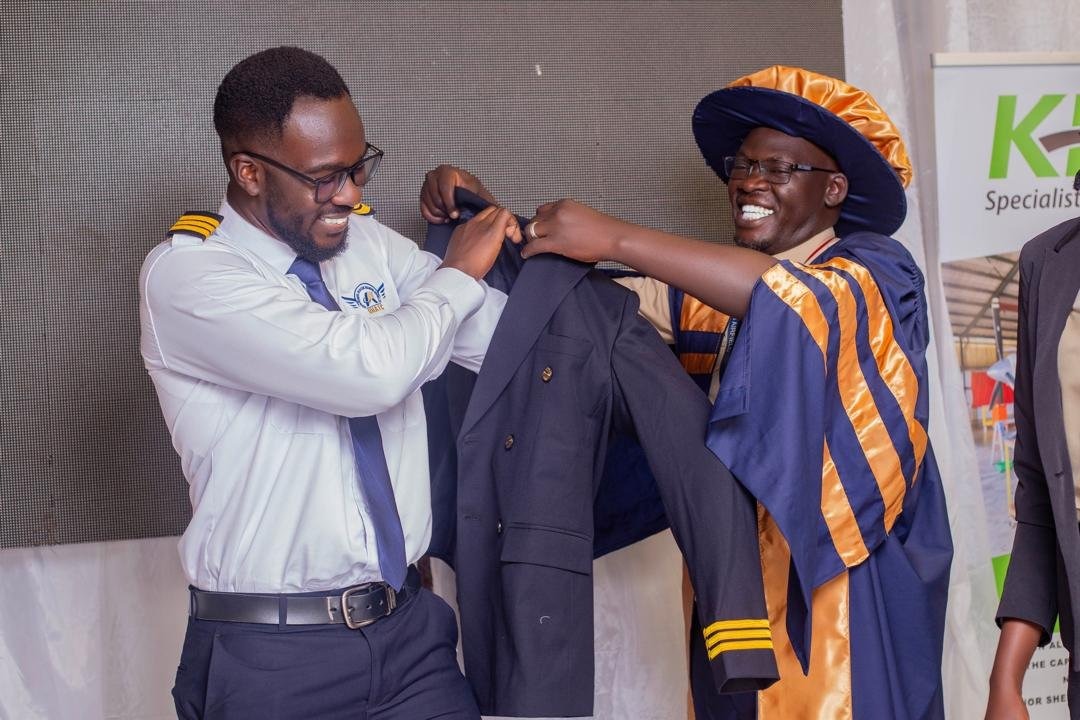
The deceased have been identified as Flight Captain Joshua Ochen, the son of the late Uganda People’s Defence Forces (UPDF) pilot Captain Peter Amua, and another Ugandan identified only as Moses, who is described by his family as a Mugisu from eastern Uganda.
The revelations have added a deeply personal dimension to an incident that has triggered diplomatic and military questions in Kampala, following allegations that foreign aviation personnel were involved in operations supporting government forces in eastern Congo.
Ochen’s reported death is particularly poignant because his father, Captain Peter Amua, also died in an aircraft crash in South Sudan in January 2025.
The apparent repetition of tragedy within the same family has drawn attention to the risks faced by Ugandan aviation professionals working in conflict zones outside the country.
The second victim, Moses, is understood to have travelled to the region after communicating with relatives that he had secured work in Burundi. His family now says it is waiting for his remains as it seeks clarification about the circumstances surrounding his death.
The two names have emerged amid conflicting accounts of what happened to the aircraft, who was operating it and the precise nature of its mission.
 Moses’ family waits for body after Burundi work communication
For Moses’ family, the tragedy has been compounded by uncertainty over the circumstances that took him to the volatile region and how he ended up aboard an aircraft allegedly involved in military operations.
A family representative, who contacted The Investigatorfollowing reports of the crash, said relatives had received information suggesting that Moses was among the Ugandans caught up in the incident.
The representative explained that Moses had communicated to the family that he was travelling from Burundi, where he had reportedly gone for work.
“Good afternoon, sir, I have seen your story about the aircraft crash in Congo. We as a family have lost one of our children in that crash. The Ugandan civilian was travelling from Burundi and he got trapped. We are not sure if he is among the people involved. But at the moment we are gathered and waiting for his remains. Any details please are important,” the family representative said.
The message reveals the family’s distress and its struggle to establish the exact circumstances surrounding Moses’ final journey.
It also raises questions about whether he had been employed directly by an aviation company, was working as a civilian contractor or had been engaged in another capacity connected to operations in the Democratic Republic of Congo.
The family’s account that Moses had told relatives he was going to work in Burundi is particularly significant because the crash occurred in South Kivu, a province bordering Burundi, where military operations involving Congolese and Burundian forces have intensified.
However, the family has not provided details of the employer, the nature of the job or the arrangements under which Moses travelled. His tribal identity as a Mugisu has also emerged in accounts identifying him, although his full name and professional background remain unknown.
For now, the family is seeking information about his whereabouts and the recovery of his remains, amid uncertainty over the identities of all those aboard the aircraft.
Ochen’s father’s tragic aviation history
Ochen’s identification has generated another layer of emotion because of his family’s previous experience with an aviation tragedy. His father, the late Captain Peter Amua, was also a pilot who died in an aircraft crash in South Sudan in January 2025.
The younger Ochen’s reported death in another aircraft incident has therefore revived memories of the loss of his father barely two years earlier.
A message circulated by people from Soroti mourning the pilot described the deceased as a close friend and recalled the late Captain Amua. “From Soroti we mourn the passing of our buddy Flight Captain Amua who perished in the plane shot down by M23 rebels in the East of Democratic Republic of Congo,” the tribute reads.
The coincidence of father and son reportedly dying in separate aircraft accidents has become one of the most striking aspects of the Minembwe tragedy.
However, beyond the family connection, little publicly established information is available about Ochen’s aviation career, the company he worked for, his precise responsibilities aboard the aircraft or the circumstances under which he was recruited for operations in Congo.
The circumstances surrounding his reported death also remain subject to official confirmation.
Journalist Andrew Bagala was among the first to bring attention to Ochen’s identity, reporting that he had received information identifying one of the deceased pilots as the son of the late Captain Amua.
The revelations have since widened the controversy from questions about the aircraft’s mission to the recruitment and deployment of Ugandan professionals in a foreign conflict.
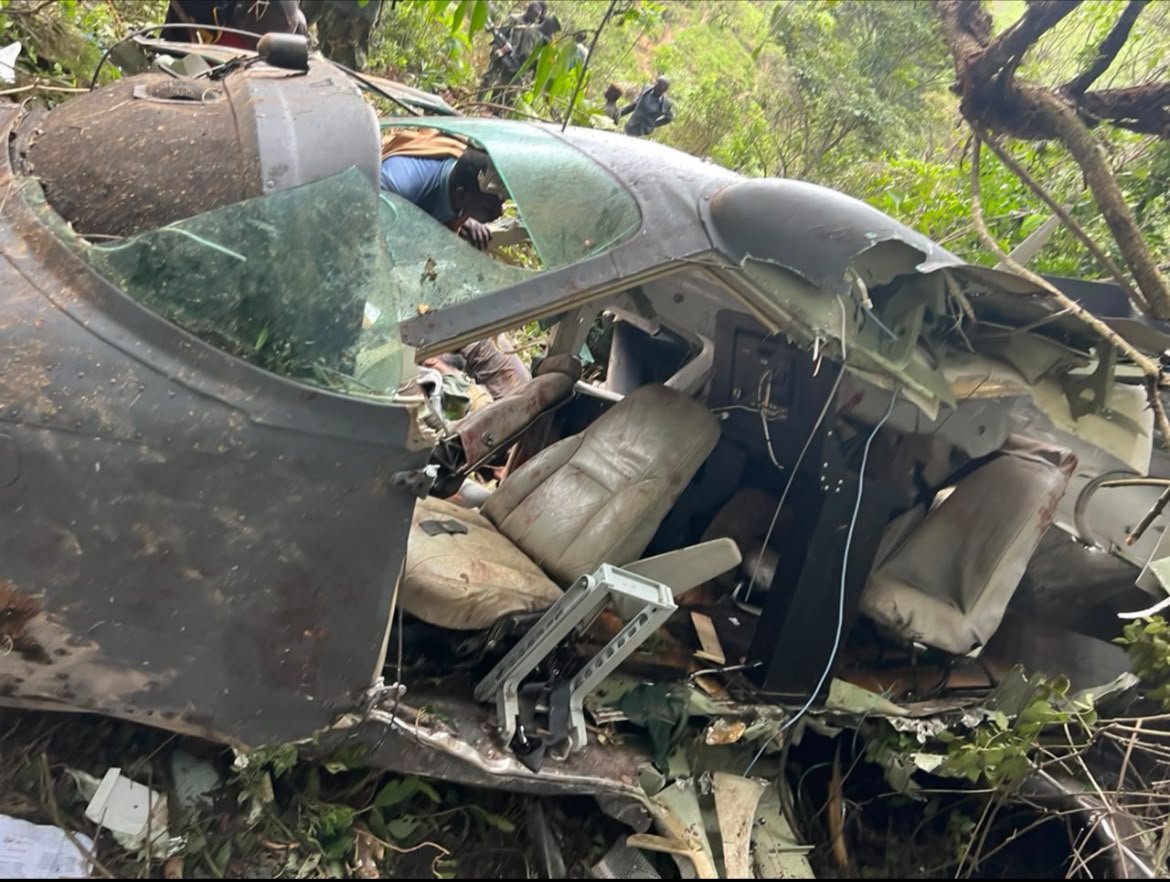
What happened at Minembwe?
The aircraft incident occurred on Sunday, November 22, 2026, near Minembwe in South Kivu Province, eastern Democratic Republic of Congo.
The Front for the Refoundation of the Nation (FRN), the movement that emerged from the AFC-M23 alliance, claimed responsibility for bringing down an aircraft it described as a warplane preparing to attack civilian populations in the area.
The group’s spokesperson, Lawrence Kanyuka, announced that its fighters had shot down the aircraft at approximately 6am.
According to the rebels, four people were aboard the aircraft, with two reportedly killed and two surviving.
The incident was initially presented as the destruction of a fighter jet. However, photographs and videos circulated from the scene appeared to show wreckage resembling a Cessna 208 Caravan, a single-engine turboprop aircraft.
Military aviation publication Military Africa reported that the wreckage appeared consistent with a Cessna 208 in a military configuration, potentially an AC-208 Combat Caravan, rather than a conventional fighter jet.
The aircraft is a platform that can be modified for surveillance and light attack missions, including the deployment of guided weapons.
The publication also reported that the aircraft appeared to have been operating in support of the Congolese armed forces. However, the Congolese military offered a different explanation.
In a statement, the Armed Forces of the Democratic Republic of Congo (FARDC) said it had lost contact with a Cessna 208 cargo aircraft travelling from Beni in North Kivu to Kalemie in Tanganyika Province.
The military attributed the loss of contact to adverse weather conditions and said the aircraft and its crew had not been located.
This created two competing accounts of the incident: the rebels’ claim that they had shot down a military aircraft on an attack mission and the Congolese military’s explanation that it had lost contact with a cargo aircraft because of bad weather.
The BBC reported that it could not independently verify the rebels’ shoot-down claim or establish whether the aircraft the FARDC was searching for was the same one shown in the videos released by the rebels.
The uncertainty has made it difficult to establish independently the exact circumstances of the deaths and the respective roles of the people aboard.
UPDF distances itself as Magezi communicates Muhoozi’s position
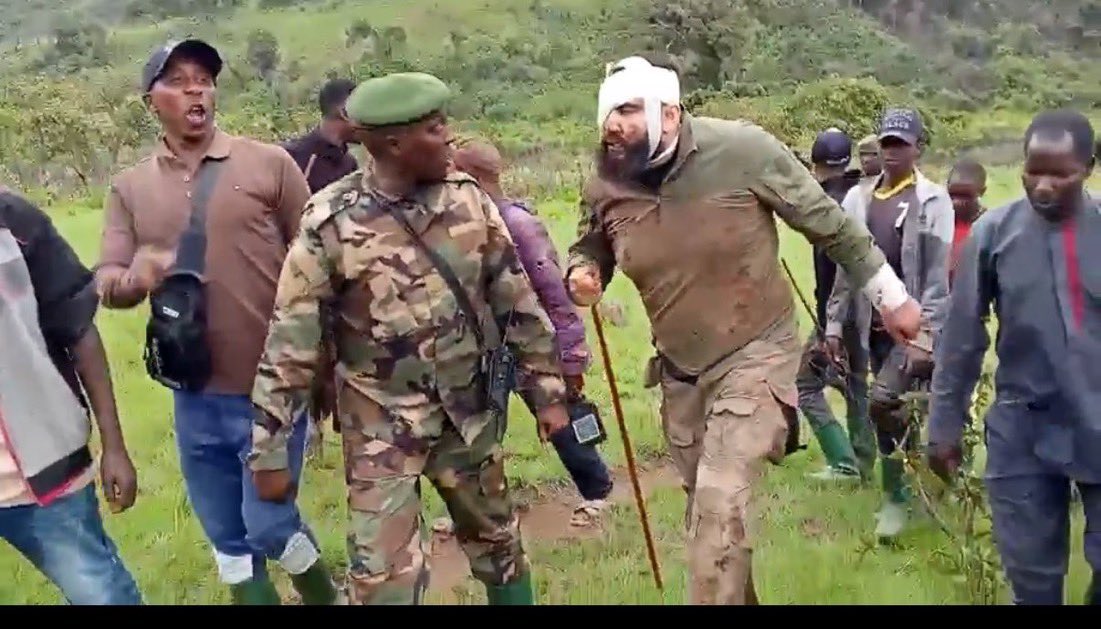
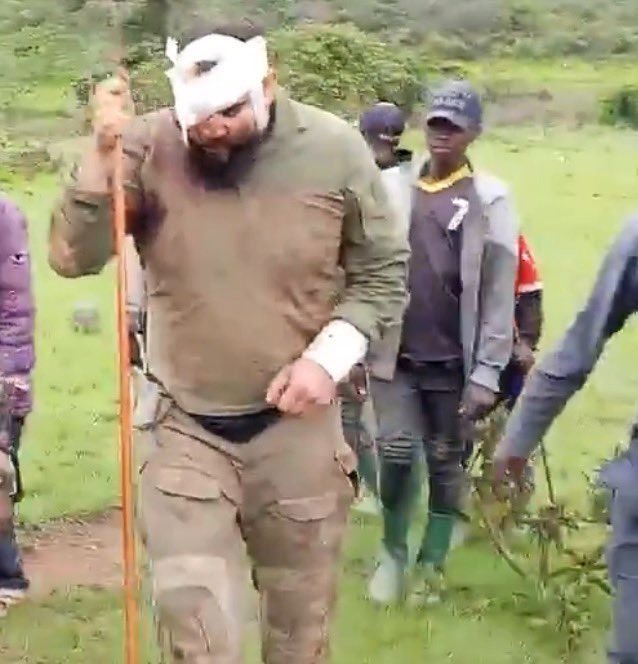
The incident quickly drew Uganda into the controversy after videos emerged showing a man identified as a Ugandan being questioned by armed men near the wreckage.
In the footage, the man reportedly identifies himself as a Ugandan military officer and claims he had been deployed to Congo by the Ugandan government.
His identity, military status and account of how he ended up in the area have not been independently established.
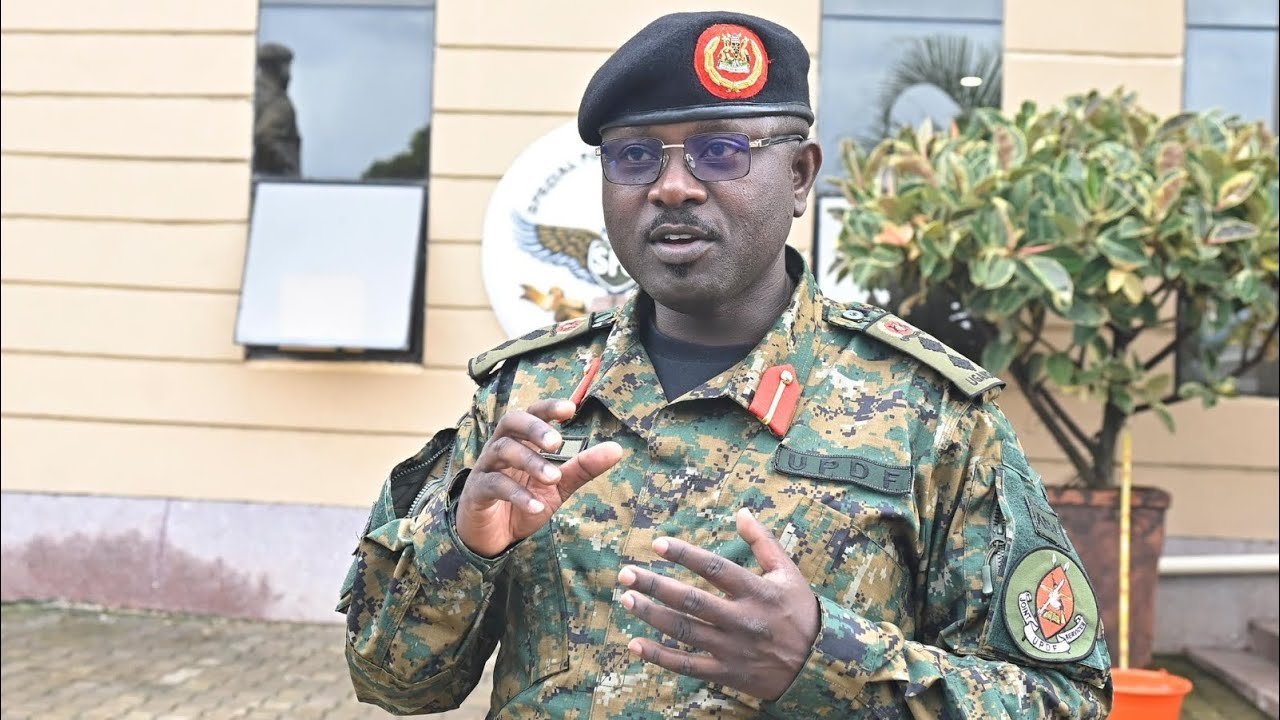
The footage prompted a response from Uganda’s military leadership, with Chief of Defence Forces (CDF) Gen Muhoozi Kainerugaba distancing the UPDF from the aircraft.
UPDF spokesperson Col Chris Magezi shared a statement attributed to Gen Muhoozi on X in which the army chief categorically denied the military’s involvement.
“UPDF had nothing to do with the aircraft that was shot down in Minembwe. We have penalized that company,” Gen Muhoozi said.
The statement, communicated through Col Magezi, did not identify the company involved or explain the nature of the penalties imposed.
Gen Muhoozi subsequently announced that he had ordered the arrest of several soldiers and officers linked to a company that had sought to employ them.
“Today, I ordered the arrest of several soldiers and officers. The company that sought to employ them is banned from operating in Uganda. We shall investigate it further,” he said in a separate communication.
He also warned Ugandans against working for mercenary companies operating in the Democratic Republic of Congo, signalling that the military intended to take action against personnel involved in unauthorised foreign engagements.
The statements have raised questions about whether serving military personnel had been recruited by private companies to participate in operations outside Uganda without the necessary authorisation.
The CDF, however, did not publicly disclose the identities of the soldiers and officers targeted, the name of the company or the specific offences under investigation.
The distinction between the UPDF’s denial of institutional involvement and the reported involvement of Ugandan individuals is central to the controversy.
Uganda may not have officially deployed the aircraft, but the appearance of Ugandan nationals among those connected to the incident has raised questions about the networks through which personnel are recruited for foreign military assignments.
BAR Aviation allegations and the mystery company
Another dimension of the unfolding scandal concerns the identity of the private company allegedly connected to the recruitment of aviation personnel for operations in Congo.
Reports have pointed towards BAR Aviation, a Ugandan aviation company based at Kajjansi Airfield, as one of the entities whose operations have come under scrutiny following the crash.
The company publicly advertises services including cargo transportation, aircraft leasing, medical evacuations, private charters, drone operations and aviation training.
Credible military sources have linked the pilots who died to BAR Aviation, although the company has not been independently established as the owner or operator of the aircraft involved in the Minembwe incident.
Gen Muhoozi has not named the company he said had been penalised and banned from operating in Uganda.
Military Africa, meanwhile, reported separate allegations linking the aircraft’s operations to foreign contractors supporting the FARDC. It cited investigations suggesting that Contractor Airways (PTY) Limited had been involved in aerial surveillance and strike operations under a contract signed in February 2025.
The publication cautioned that it had not independently verified those allegations.
Consequently, the precise relationship between the aircraft, the foreign contractors, any Ugandan aviation company and the two deceased Ugandans remains unclear.
The mystery surrounding the company has become particularly sensitive because the CDF acknowledged taking action against an entity connected to the recruitment of military personnel without publicly explaining the full circumstances.
Questions are also emerging about whether the company had the necessary approvals to recruit Ugandan military personnel, whether the individuals involved were serving soldiers or civilians, and whether their deployment complied with Uganda’s laws governing foreign military engagements.
The investigation could also establish whether the two deceased Ugandans were employees of the same company or were independently contracted for the aircraft’s operations.
Uganda’s military involvement in Congo complicates the questions
The controversy comes against the background of Uganda’s long-standing military engagement in the Democratic Republic of Congo.
The UPDF maintains a military presence in North Kivu under Operation Shujaa, a joint operation with the Congolese army targeting the Allied Democratic Forces (ADF), an armed group responsible for deadly attacks in Uganda and eastern Congo.
However, the Minembwe incident occurred in South Kivu, far from the principal areas publicly associated with Operation Shujaa.
The region is also a major theatre of confrontation between the FARDC and the FRN coalition, which includes the M23 movement and other armed groups.
The Congolese government has previously relied on foreign military contractors to strengthen its operations against rebel forces.
In early 2025, more than 200 foreign contractors, many of them Romanian, left the country through Rwanda after M23 captured Goma.
The reliance on foreign specialists has since remained a contentious feature of the conflict, particularly as aerial surveillance, armed drones and modified civilian aircraft have increasingly become part of military operations.
The Minembwe incident has therefore exposed the complicated relationship between private aviation companies, foreign contractors and government military operations in the region.
For Uganda, the central question is no longer simply whether the UPDF operated the aircraft. It is also whether Ugandan citizens, including former or serving military personnel, are being recruited through private arrangements to participate in military operations in a neighbouring country.
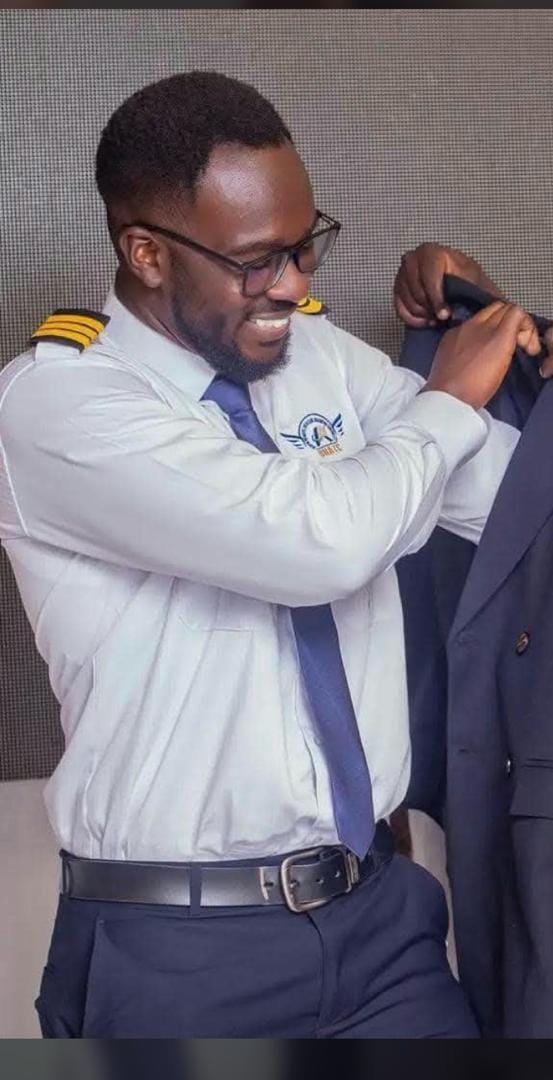
Families seek answers as investigations loom
For the families of Ochen and Moses, however, the political and military controversy is secondary to the immediate reality of losing their relatives.
Ochen’s family has to contend with the painful history of his father, who also died in an aircraft crash in South Sudan.
Moses’ relatives, meanwhile, are seeking clarity about the circumstances under which he travelled from Burundi and became caught up in the Minembwe incident.
Their appeal for information reflects the uncertainty surrounding the identities of those aboard and the process of recovering the bodies.
The circumstances also present a challenge to Ugandan authorities, who must establish whether the deceased were civilians, private aviation employees, military personnel or contractors working under arrangements involving foreign governments.
The UPDF’s announcement that it had penalised a company and ordered arrests suggests that investigations into the recruitment arrangements are expected to follow.
But the public is yet to receive answers about the company’s identity, the individuals recruited, the aircraft’s ownership, its operational authorisation and the nature of the mission it was undertaking.
The Congolese military’s account of losing contact with a Cessna 208 because of bad weather also remains to be reconciled with the FRN’s claim that it shot down an aircraft preparing to attack Minembwe.
Until these questions are resolved, the full circumstances of the tragedy will remain contested.
For now, two Ugandan names have emerged from the wreckage: Flight Captain Joshua Ochen, whose father also perished in an aircraft accident, and Moses, a Mugisu whose family says he had gone to work in Burundi.
Their reported deaths have turned an already explosive military aviation controversy into a deeply personal tragedy for two Ugandan families, while exposing unanswered questions about the country’s citizens and private contractors operating in eastern Congo.
Author Profile
- Charles Gazza Kodili is a seasoned journalist with over 20 years of experience in the media industry. He holds a Bachelor of Arts degree in Mass Communication. He’s currently the Chief Editor at the Investigator.
Charles can also be reached via; Tel: +256 774 108978
Email: [email protected]
Latest entries
 FeaturedNovember 25, 2026OCHEN, MOSES: TWO UGANDANS IDENTIFIED IN M23 PLANE SHOOT-DOWN: One Family Is Mourning A Pilot Whose Father Also Died In An Aircraft Crash, While Another Is Desperately Waiting For The Remains Of Moses, Who Reportedly Told Relatives He Had Gone To Work In Burundi
 FeaturedNovember 24, 2026HOW PRIVATE DEFENCE CONTRACTORS DRAGGED UGANDA INTO DRC’S MINEMBWE WAR: Two People Reportedly Died When An Aircraft Went Down Near Minembwe, Exposing Questions About Ugandan Security Personnel Allegedly Deployed Through Private Military Contractors And Prompting Gen Muhoozi To Distance The UPDF From The Operation
 FeaturedNovember 24, 2026I TELL OTAFIIRE, GO F***K YOUR MOTHER! THIS IS MY MESSAGE AS MUHOOZI: The Chief of Defence Forces has Escalated his Confrontation with Veteran General Kahinda Otafiire, Resorting to an Extraordinary Personal Insult that has Reignited Debate about Military Discipline, Political Succession and the Growing Divisions within the Ruling NRM
 FeaturedNovember 23, 2026TOORO’S NEW PREMIER INHERITS A KINGDOM AT WAR WITH ITSELF: As Factions Fight For Influence, Questions Swirl Over King Oyo’s Legacy, The Bugaki Farm And Accountability. Tungwako Must Unite The Palace Before Tooro’s Internal Battles Destroy Its Development Ambitions