





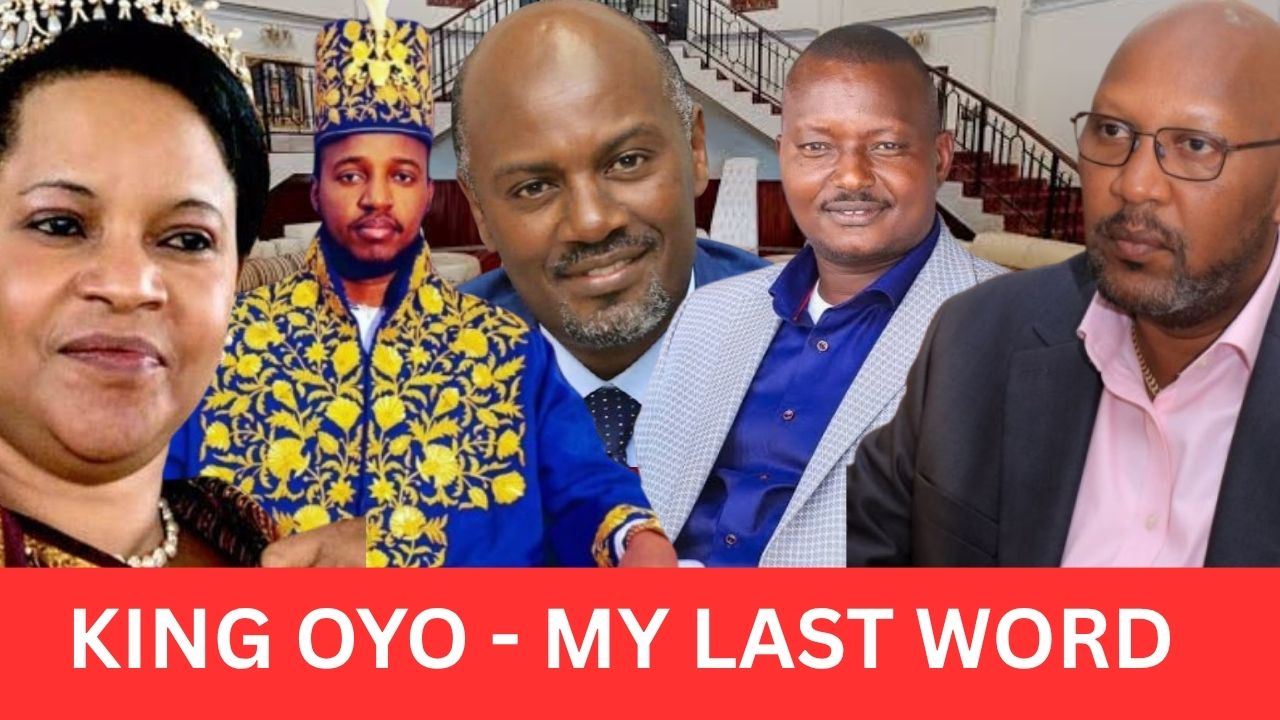
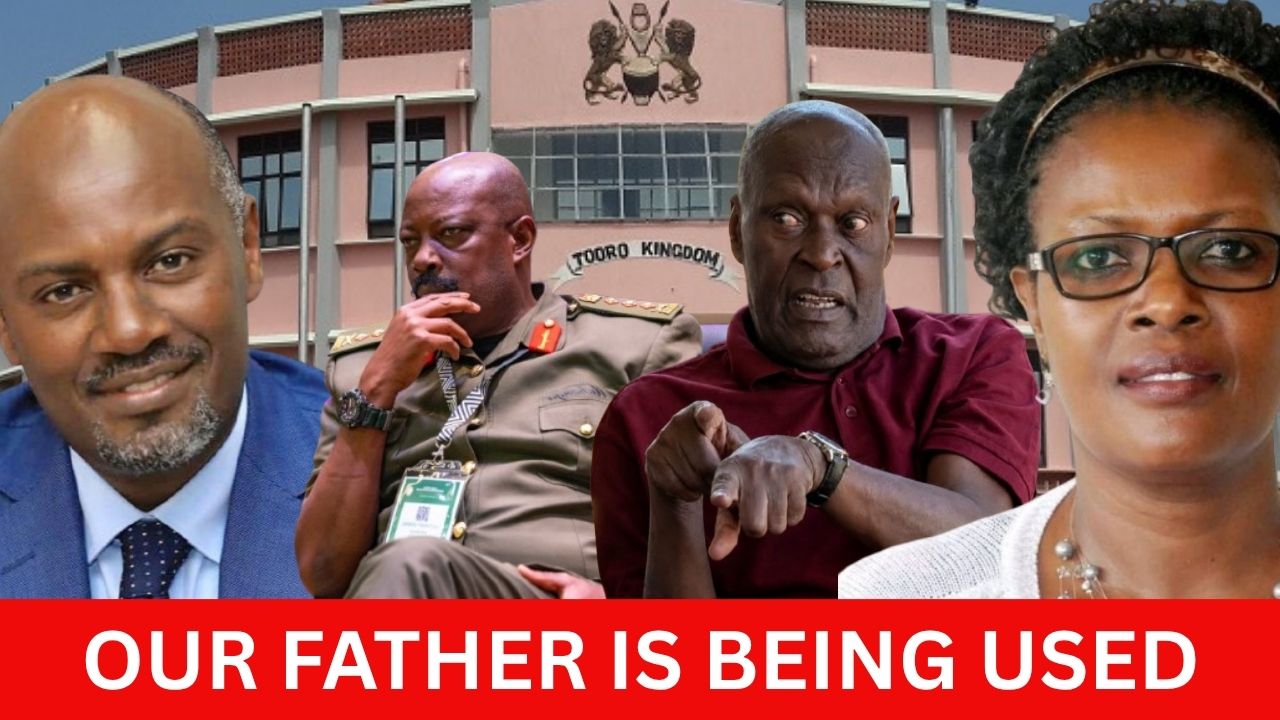



The appointment of Bernard Tungwako Ateenyi as the new Prime Minister of Tooro Kingdom comes at a critical moment when the institution is struggling to overcome internal divisions, unresolved land disputes, questions about financial accountability and competing centres of power following the death of Omukama Oyo Nyimba Kabamba Iguru Rukidi IV.
Tungwako returns to a position he previously occupied, but the circumstances surrounding his latest appointment are considerably more complicated. Unlike his first tenure, when he served under the late King Oyo, he now assumes office under a new monarch, Omukama Edward Rukidi Nyabongo I, at a time when the kingdom is still navigating the political and administrative consequences of a royal succession.
His predecessor, Calvin Armstrong Rwomiire Akiiki, resigned on November 20, citing a breakdown of trust, consultation and institutional discipline within the kingdom’s leadership.
Armstrong’s departure exposed deep-seated disagreements over Cabinet appointments, the authority of the Prime Minister, the influence of individuals around the palace, financial accountability and the handling of the Bugaki/King Oyo Model Farm land dispute.
These are precisely the issues Tungwako must confront if he is to restore confidence in an institution whose unity is increasingly being tested.
The challenge is not simply to assemble a functioning Cabinet or restore administrative order. It is to convince the royal family, kingdom officials, subjects and other stakeholders that Tooro can move beyond personal interests and factional disagreements to serve the interests of the institution.
Who is Bernard Tungwako Ateenyi?
Tungwako is a businessman, administrator and former civil servant who has considerable experience in the affairs of Tooro Kingdom. He is from Kitagwenda District and previously served as Omuhikirwa during the reign of the late Omukama Oyo.
His association with the kingdom’s administration stretches back several years. King Oyo appointed him Prime Minister in 2015, and he was subsequently given another term in 2017. He left office in August 2022, saying he wanted to prepare for service in another role at the national level and avoid a potential conflict of interest. Steven Kiyingi subsequently replaced him.
Tungwako’s departure in 2022 was itself accompanied by controversy. Some members of the Supreme Council challenged the appointment of his successor, with disagreements emerging over the eligibility of the incoming premier and whether the proper constitutional procedures had been followed. The dispute demonstrated that disagreements over leadership, representation and the kingdom’s governing structures did not begin with Oyo’s death.
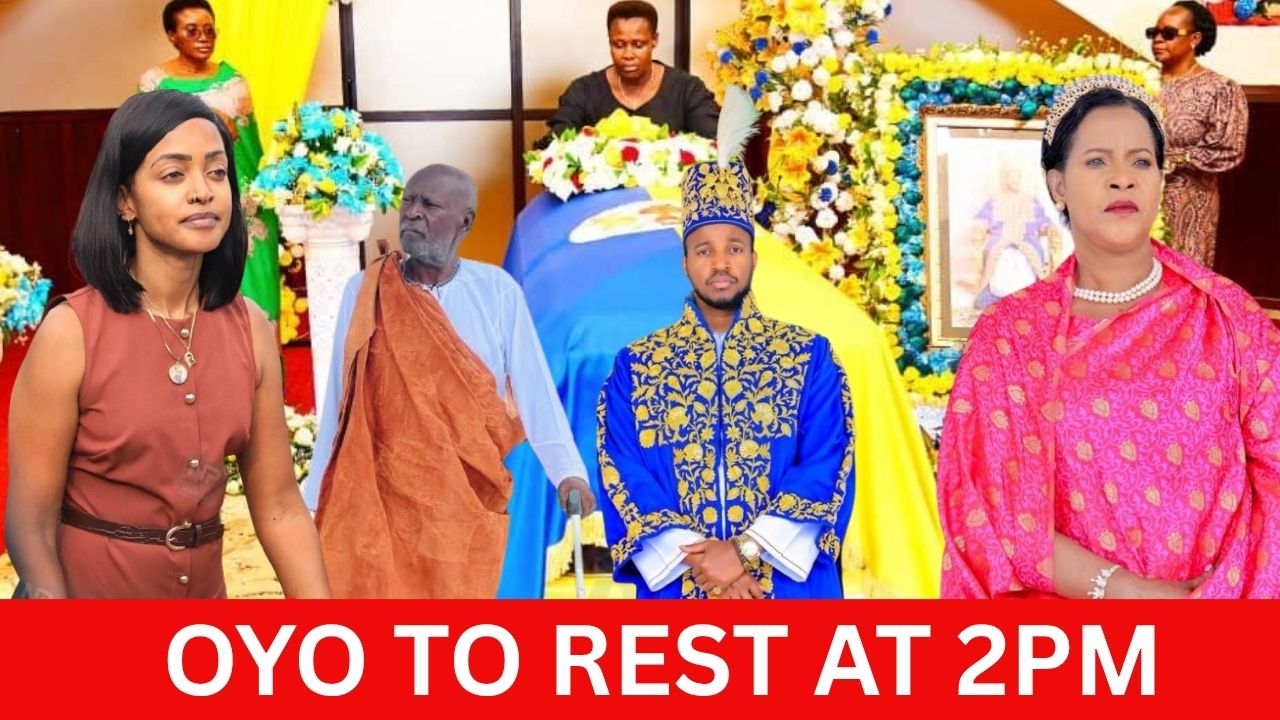
Following Oyo’s death on August 27, 2026, and the enthronement of Edward Rukidi Nyabongo I on September 29, Tungwako was included in an 11-member advisory committee appointed to support the new monarch. His return to the premiership therefore brings institutional experience at a time when the kingdom needs someone capable of rebuilding confidence among competing factions.
But experience alone will not be enough. The new Prime Minister must demonstrate that he can manage a kingdom where disagreements have moved beyond ordinary administrative differences and are now touching on royal property, money, institutional authority and the legacy of the previous monarch.
The Bugaki farm controversy: A royal inheritance or kingdom property?
One of the most delicate matters awaiting Tungwako is the dispute surrounding Bugaki Farm in Kyejonjo District, where the King Oyo Model Farm is established.
The farm has become a symbol of the wider disagreement over the relationship between the late monarch’s personal interests, his family and the kingdom as an institution.
In his resignation correspondence, Armstrong raised concern over reports that the family of the late King Oyo was being asked to vacate the land on which the model farm operates. He described the development as deeply unfortunate and called for any questions about ownership, administration and use of the property to be resolved lawfully, respectfully and in consultation with the late King’s family.
The matter became even more complicated following a November 3 communication by the kingdom’s lawyers, Rwabwogo and Company Advocates, directing people keeping privately owned cattle at Bugaki Farm to remove their animals by the end of November.
The lawyers said the kingdom intended to reorganise the farm and use it for the benefit of the institution. They also instructed the farm management to prepare an inventory of institutional assets.
For Tungwako, the immediate task will be to prevent the farm from becoming another battleground between the royal household and the kingdom administration.
The distinction between land held by the institution and property associated with the late king must be established through documentation, transparent procedures and consultation. The family should not be treated as an adversary, while the kingdom’s legitimate institutional interests must equally be protected.
Any perception that the new administration is taking over the late monarch’s property without a transparent explanation could deepen resentment and undermine the legitimacy of the new reign.
The Prime Minister will therefore need to encourage an independent and credible process that establishes the ownership, management arrangements, investments and assets attached to the farm. This is not merely a dispute about cattle or agricultural land. It is a test of how Tooro handles the estate and legacy of a monarch who ruled the kingdom for decades.
Accountability: The biggest test of the new administration
Perhaps the most difficult assignment facing Tungwako will be restoring accountability in an institution whose financial and administrative affairs have come under scrutiny.
The late king’s death created an opportunity for the new monarch to examine how the kingdom was managed, what resources were available, which development programmes were implemented and what obligations remained outstanding.
Omukama Nyabongo directed kingdom departments to submit reports detailing their performance during Oyo’s reign. The Supreme Council was tasked with reviewing the submissions and advising the monarch on the way forward, with a further sitting scheduled for November 27 to consider the findings.
However, the exercise has become contentious, particularly following Armstrong’s allegations that some matters raised during his administration were not receiving the independent examination they deserved.
One of the issues concerns the partnership between Tooro Kingdom and MTN Uganda, particularly the Masaza Cup and grassroots sports development.
Armstrong reportedly raised questions about the management of funds intended for grassroots sports development, including the involvement of individuals operating outside established institutional structures.
He called for an independent review of the memorandum of understanding between the kingdom and MTN, including scrutiny by the telecommunications company’s senior leadership and chief executive officer.
These are allegations and concerns raised by the former Prime Minister, not established findings of financial wrongdoing. Nevertheless, they have placed the question of accountability firmly on the new administration’s agenda.
Tungwako must establish whether the partnership was implemented according to agreed terms, how resources were received and utilised, who was authorised to manage them and whether the intended beneficiaries received the promised support.
The exercise should not be treated as a witch-hunt against individuals who served under the previous administration. Equally, it should not be abandoned to protect powerful personalities or preserve political relationships.
A transparent review, supported by documentary evidence and independent scrutiny where necessary, would help restore confidence among development partners and kingdom subjects.
There is also a wider institutional question: who is responsible for authorising expenditure, supervising projects, receiving donations and reporting on the use of kingdom resources?
Without clear answers, even well-intentioned development programmes risk becoming sources of suspicion and internal conflict.
For Tungwako, accountability must become a principle governing the entire administration rather than a selective exercise targeting officials associated with the previous reign.
Competing centres of power and palace intrigue
The new Prime Minister also walks into a palace environment where the question of who exercises influence over the monarch has become increasingly sensitive.
In his November 20 resignation letter, Armstrong raised concern about what he described as the emergence of competing centres of influence around the throne. He warned that some individuals appeared to be pursuing personal interests rather than the collective welfare of the kingdom, resulting in conflicting directives, weakened accountability and uncertainty within the administration. He also expressed concern that individuals exercising influence without carrying responsibility for their advice could compromise the King’s independence of judgement.
The former premier’s complaints were not limited to differences over policy. In a 42-page report submitted to the King on November 12, he alleged witch-hunting, blackmail, sabotage and insubordination by individuals he said were undermining his office.
He further complained that the Prime Minister’s office had been sidelined during significant events, including Oyo’s funeral, Nyabongo’s coronation and a sitting of the kingdom’s parliament, the Orukurato. These remain Armstrong’s allegations and should be independently examined. This is an uncomfortable inheritance for Tungwako.
A Prime Minister cannot effectively coordinate the kingdom’s administration if ministers receive conflicting instructions from different power brokers or if officials are uncertain about whose authority they should recognise.
Neither can the monarch be expected to provide effective leadership if competing factions constantly seek to influence decisions through informal channels.
Tungwako will have to establish a functional relationship between the throne, the premiership, the Cabinet and the Supreme Council. He must also persuade those who have enjoyed proximity to the palace that access to the King does not automatically confer administrative authority.
The kingdom needs a system in which decisions are made through recognised structures, communicated clearly and implemented without interference from individuals who hold no formal responsibility.
The new premier’s greatest political skill may therefore be his ability to manage powerful personalities without allowing personal disagreements to paralyse the institution.
A divided royal family and the challenge of reconciliation
The death of King Oyo did not merely create a vacancy on the throne. It opened a sensitive period of transition involving the royal family, the Babiito clan, kingdom officials and other stakeholders.
Oyo died on August 27, 2026, aged 34, after receiving treatment in the United States. His successor, Edward Rukidi Nyabongo I, was enthroned on September 29 at Karuziika Palace in Fort Portal. Although the succession produced a new monarch, it did not automatically resolve the disagreements surrounding the kingdom’s leadership and administration.
The disputes surrounding the late king’s property, the management of his development projects and the authority of different palace actors demonstrate how difficult it has been to separate personal interests from institutional responsibilities.
Tungwako must work towards reconciliation without appearing to take sides. The royal family must be assured that its concerns will be heard, while the new monarch must be allowed to exercise his constitutional and traditional responsibilities without undue interference.
The Babiito clan and the Supreme Council also have an important role in restoring stability.
The Prime Minister will need to create space for dialogue, particularly where disagreements involve succession-related sensitivities, land ownership, appointments and the administration of kingdom resources. His task will be to convince the different groups that the survival and reputation of Tooro Kingdom are more important than individual positions.
This will require patience, discretion and the willingness to confront uncomfortable issues rather than simply pushing them aside.
Cabinet unity and restoring confidence in the premiership
Another immediate challenge will be rebuilding confidence in the office of the Prime Minister itself. Armstrong’s resignation exposed disagreements over the composition and authority of the Cabinet. Among the concerns he raised was the reversal of jointly agreed Cabinet appointments without adequate consultation or explanation.
Such disagreements undermine the authority of the premier and create uncertainty among ministers who are expected to implement kingdom programmes.
Tungwako must establish whether the Cabinet will operate as a collective administrative body or whether individual ministers will continue to depend on competing power centres for instructions.
He will also need to define the responsibilities of his deputies, ministers and departmental heads, while ensuring that appointments are based on competence, institutional loyalty and the interests of the kingdom.
The new premier should avoid turning the Cabinet into a reward system for individuals who supported his appointment. Instead, he needs a team capable of delivering services, mobilising resources and restoring administrative discipline. There is also the question of kingdom employees who have reportedly faced salary arrears.
When Armstrong was retained in October, his transitional administration identified clearing outstanding salaries at the kingdom’s administrative offices in Muchwa and strengthening administrative systems as priorities.
Tungwako will have to establish the extent of these obligations and develop a credible plan for settling them. An institution that cannot reliably pay its employees will struggle to attract competent professionals, maintain productive relationships with partners or effectively implement its development agenda.
Preserving King Oyo’s unfinished development legacy
Beyond palace politics, Tungwako inherits an ambitious development programme that must not be sacrificed to leadership disagreements.
In 2021, King Oyo launched a 25-year development plan intended to transform the livelihoods of his subjects through cultural preservation, youth empowerment, agriculture, tourism, environmental conservation and healthcare.
Five years into the programme, several projects had started, while others remained at different stages of implementation when the monarch died.
These included ICT training facilities, youth skills centres, agricultural demonstration farms, the King Oyo Medical Centre and a proposed stadium.
The kingdom had also developed a five-year strategic development plan running up to 2030 as part of implementing the broader 25-year vision.
Under the youth empowerment programme, the administration had outlined plans to distribute three million coffee seedlings, two million cocoa seedlings and three million chickens while supporting 50,000 young people in agriculture.
The King Oyo Model Farm at Bugaki was intended to demonstrate commercial agriculture, including coffee growing, poultry, cattle keeping, pineapples, tomatoes, bananas and goat rearing. The concept was also being extended to other counties.
The late monarch had envisioned establishing model farms across Tooro to equip farmers and young people with practical agricultural skills.
The proposed King Oyo Stadium is another major undertaking. The late monarch reportedly offered 50 acres of his land for the project, with the government expected to undertake a feasibility study before construction.
The kingdom must now determine how to preserve these commitments, particularly where projects involve partnerships, land and financial obligations.
Tungwako must work with the new monarch to ensure that the projects do not become casualties of the transition.
He will also have to rebuild relationships with development partners who may be concerned about the disagreements emerging from the kingdom’s leadership.
The message should be that Tooro remains a dependable institution capable of honouring its commitments regardless of changes in leadership.
Can Tungwako unite the people of Tooro?
Perhaps the most significant challenge is restoring unity among the people of Tooro themselves. The kingdom has previously experienced disagreements over representation, leadership appointments and the interpretation of its governing structures.
Tungwako must therefore avoid assuming that his experience and previous relationship with King Oyo automatically guarantee acceptance from every section of the kingdom.
He comes from Kitagwenda and has previously demonstrated that the premiership can bring together people from different communities under the same institution.
But he will need to earn the confidence of the royal family, clan leaders, cultural institutions, religious leaders, businesspeople and ordinary subjects.
His appointment should become an opportunity to establish a more inclusive administration where disagreements are resolved through consultation rather than personal confrontation.
The challenge is particularly important because Tooro’s development depends on cooperation between communities spread across its counties and districts.
A divided kingdom cannot easily mobilise its people around agriculture, tourism, education, healthcare and investment.
What Tungwako must do differently
The new Prime Minister’s immediate priority should be to stabilise the administration and prevent the disagreements that forced his predecessor out of office from resurfacing.
First, he must establish clear lines of authority between the monarch, Prime Minister, Cabinet and Supreme Council. Second, he must support a transparent examination of the kingdom’s finances, partnerships, projects and outstanding obligations, including the concerns raised over the MTN agreement.
Third, he must facilitate a lawful and consultative resolution of the Bugaki Farm dispute, protecting legitimate institutional interests while respecting the late king’s family.
Fourth, he must bring the different factions together and restore confidence in the kingdom’s administrative structures. Finally, he must ensure that King Oyo’s development agenda survives the leadership transition and delivers tangible benefits to the people.
The challenge is that these responsibilities are interconnected. A dispute over land can become a family disagreement, a financial accountability question can turn into a political confrontation, while disagreements over Cabinet appointments can undermine the authority of the monarch.
Tungwako will need to demonstrate that he can separate institutional interests from personal loyalties.
His previous experience under King Oyo gives him an advantage because he understands the kingdom’s administration, its development priorities and the personalities involved.
But he must also appreciate that the political environment has changed. He is returning to the premiership at a time when the new monarch is still consolidating his reign and when sections of the kingdom’s leadership are questioning how the institution should be managed.
The circumstances demand more than an experienced administrator. They require a mediator, negotiator and reformer capable of rebuilding trust.
A defining moment for Tooro Kingdom
Ultimately, Tungwako’s success will not be measured by how quickly he assembles a Cabinet or how many meetings he holds with kingdom officials. It will be determined by whether he can restore confidence in an institution that has been shaken by internal disagreements.
The new Prime Minister must also help Omukama Nyabongo establish a reign that does not become defined by disputes inherited from the previous administration.
King Oyo left behind an ambitious development vision, agricultural investments, youth empowerment programmes and partnerships intended to improve the welfare of his subjects. His death should not become an excuse for abandoning those commitments or turning the institution into an arena for competing interests.
For the people of Tooro, the immediate questions are straightforward: Who controls the kingdom’s land? Who accounts for its money? Who has authority to make decisions? And can the royal family and kingdom administration work together without constantly fighting?
Tungwako has returned to the premiership with the benefit of experience, but he also inherits an institution at a crossroads.
He must prove that the office of Omuhikirwa can be a unifying force rather than another centre of contention.
If he succeeds, his appointment could mark the beginning of institutional healing and a fresh chapter in Tooro’s development.
If he fails, however, the divisions that contributed to Armstrong’s departure could deepen, leaving the new monarch with a kingdom consumed by internal struggles instead of serving its people.
For Tungwako, the task ahead is clear: unite the palace, restore accountability, settle the land disputes and get a divided Tooro back to work. The real test will be whether he can put the kingdom before the competing interests of those who claim to serve it.
Who are the new Deputy Prime Ministers?
The appointment of Tungwako has also been accompanied by the unveiling of four Deputy Prime Ministers, each assigned specific responsibilities in the new administration. Rt. Hon. Henry Basaliza Araali, the First Deputy Prime Minister, will oversee protocol and kingdom security affairs, placing him at the centre of palace coordination and security management. The Second Deputy Prime Minister, Rt. Hon. Eng. Deo Katekeri, has been assigned responsibility for the Tooro Development Agency and the King’s special duties, giving him a significant role in coordinating development initiatives and executing special assignments on behalf of the monarch. Rt. Hon. Beth Muhangi, the Third Deputy Prime Minister, will handle general duties in the King’s Office, while the Fourth Deputy Prime Minister, Rt. Hon. Tinka Stephen Amooti, will oversee construction services. The appointments establish a four-tier deputy premiership intended to distribute administrative responsibilities across key areas of the kingdom. However, the effectiveness of the arrangement will depend on how clearly their mandates are defined and how well they work with Tungwako to avoid the overlapping authority and competing centres of influence that contributed to tensions under the previous administration.
Author Profile
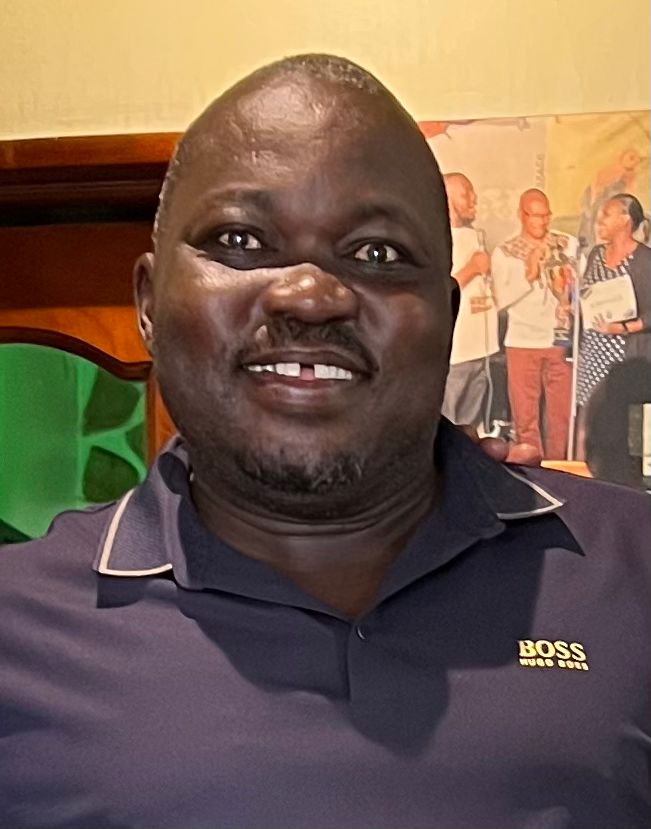
- Charles Gazza Kodili is a seasoned journalist with over 20 years of experience in the media industry. He holds a Bachelor of Arts degree in Mass Communication. He’s currently the Chief Editor at the Investigator.
Charles can also be reached via; Tel: +256 774 108978
Email: [email protected]
Latest entries
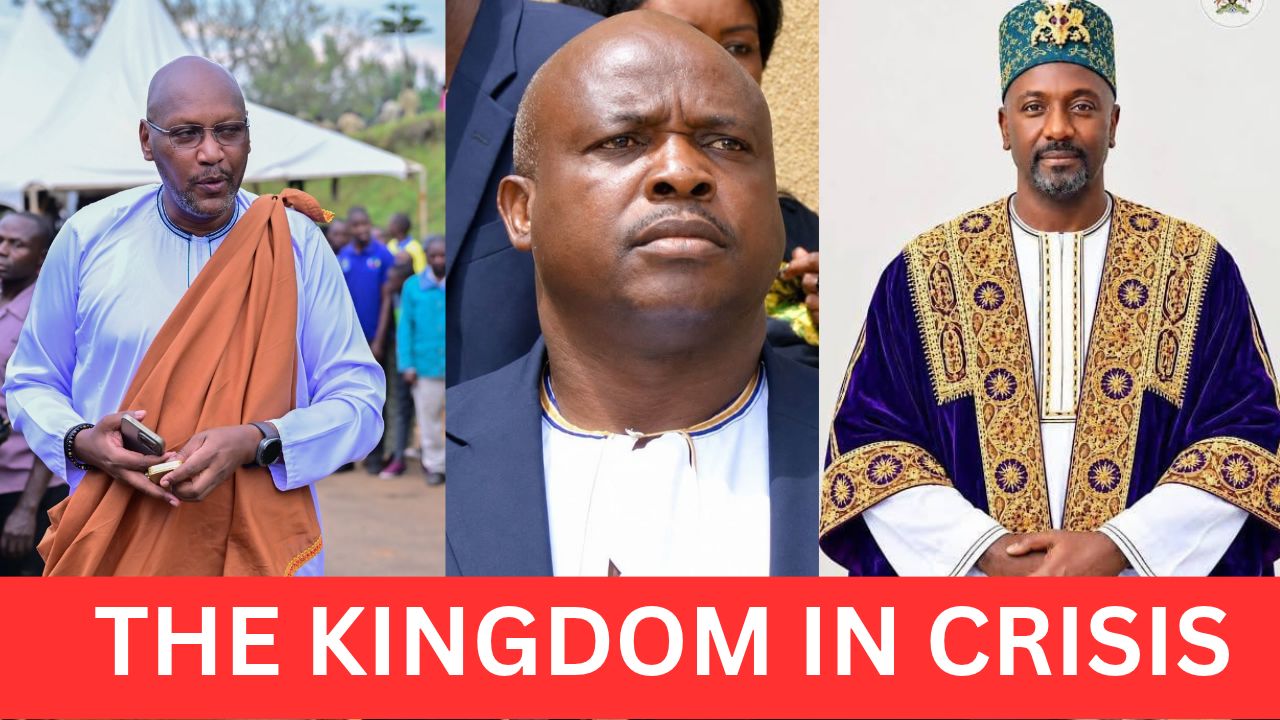 FeaturedNovember 23, 2026TOORO’S NEW PREMIER INHERITS A KINGDOM AT WAR WITH ITSELF: As Factions Fight For Influence, Questions Swirl Over King Oyo’s Legacy, The Bugaki Farm And Accountability. Tungwako Must Unite The Palace Before Tooro’s Internal Battles Destroy Its Development Ambitions
 FeaturedNovember 23, 2026KABANDA’S JESSICA BEDROOM BOMBSHELL! PLU Attack Dog Fires Bedroom Salvo At Vice-President Alupo As Teso Elders Demand Apology And Muhoozi’s 2031 Camp Faces Fresh Embarrassment
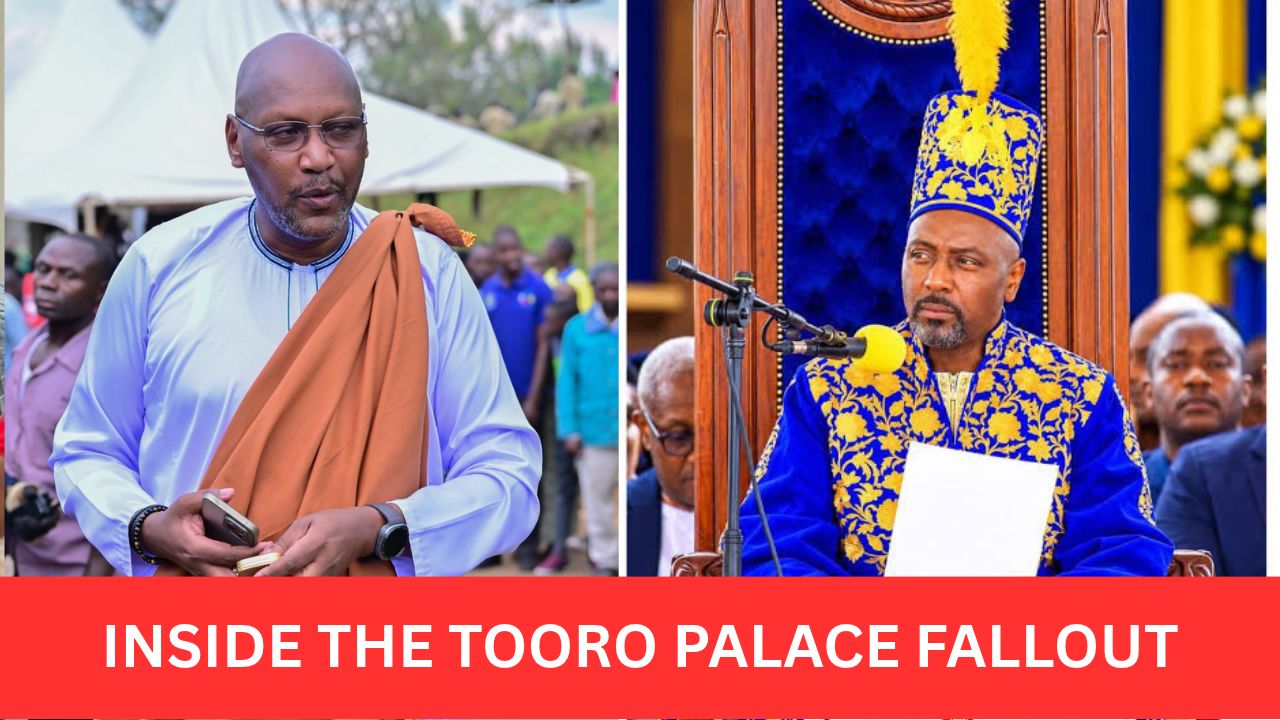 FeaturedNovember 23, 2026WHY TOORO PRIME MINISTER QUIT: Having Served Two Kings And Navigated A Bitter Succession Dispute, The Outgoing Premier Says Personal Interests, Unaccountable Palace Influencers And Collapsing Institutional Discipline Have Put Tooro’s Unity At Risk
 FeaturedNovember 21, 2026‘LET US FIGHT, OLD MAN’: MUHOOZI THREATENS OTAFIIRE AS NRM GENERATIONAL WAR EXPLODES The CDF Challenges The Veteran General To A Confrontation, Recalls Arresting Seven Of His Soldiers And Hints At Removing Him From Cabinet After Otafiire Warned The PLU Against Grabbing Power