






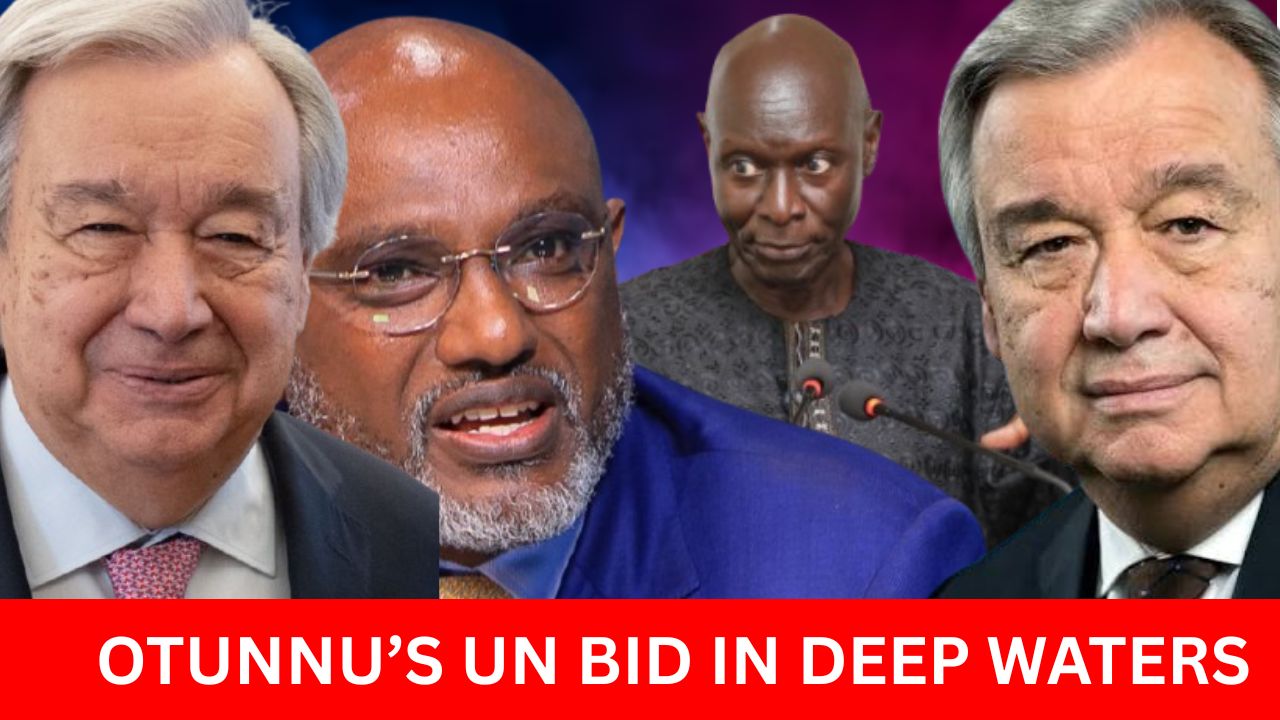
Uganda’s bid to install former United Nations Under-Secretary-General Olara Otunnu as the next UN Secretary-General has suffered an early setback after the first Security Council straw poll placed the veteran diplomat at the bottom of the seven-candidate field.
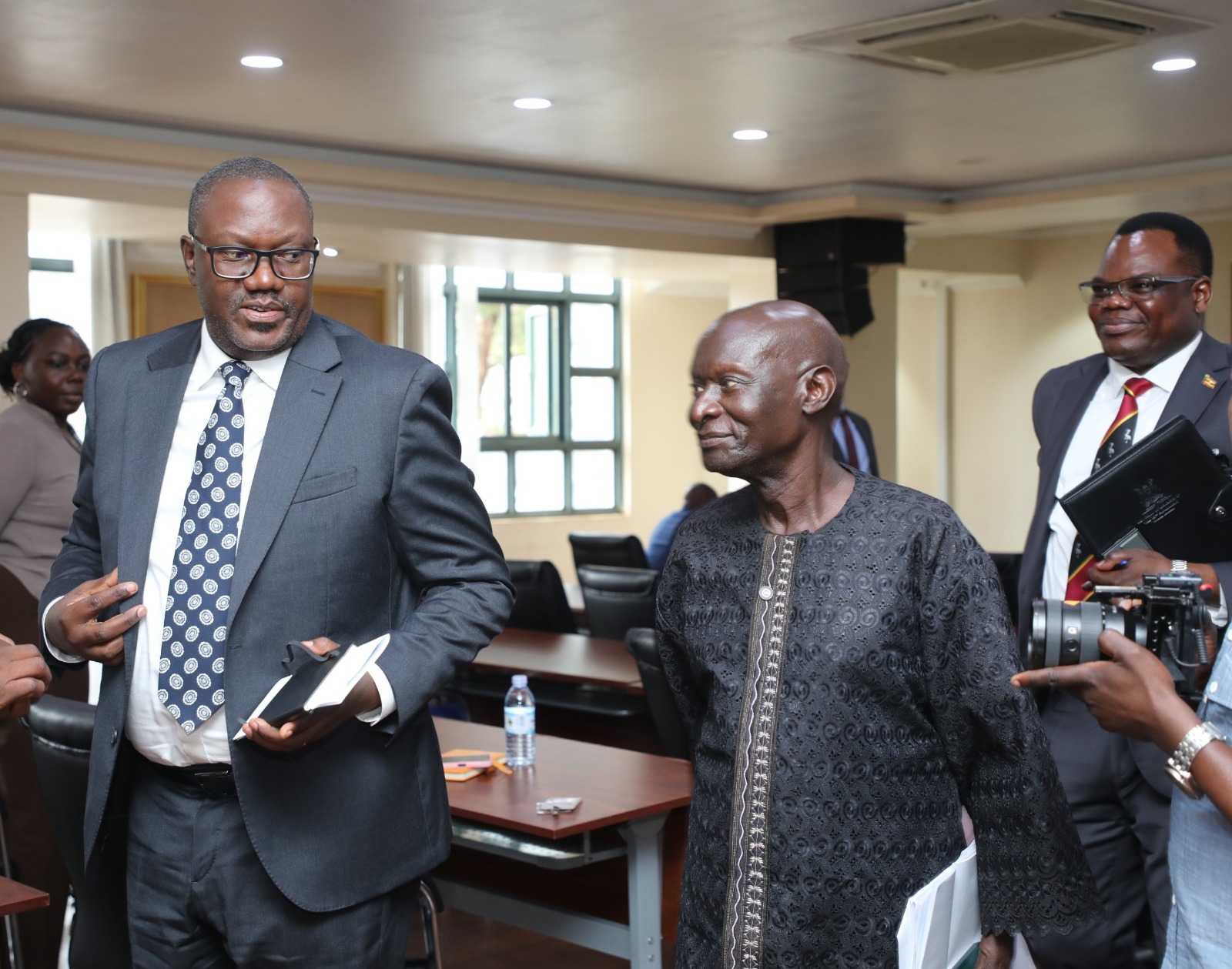
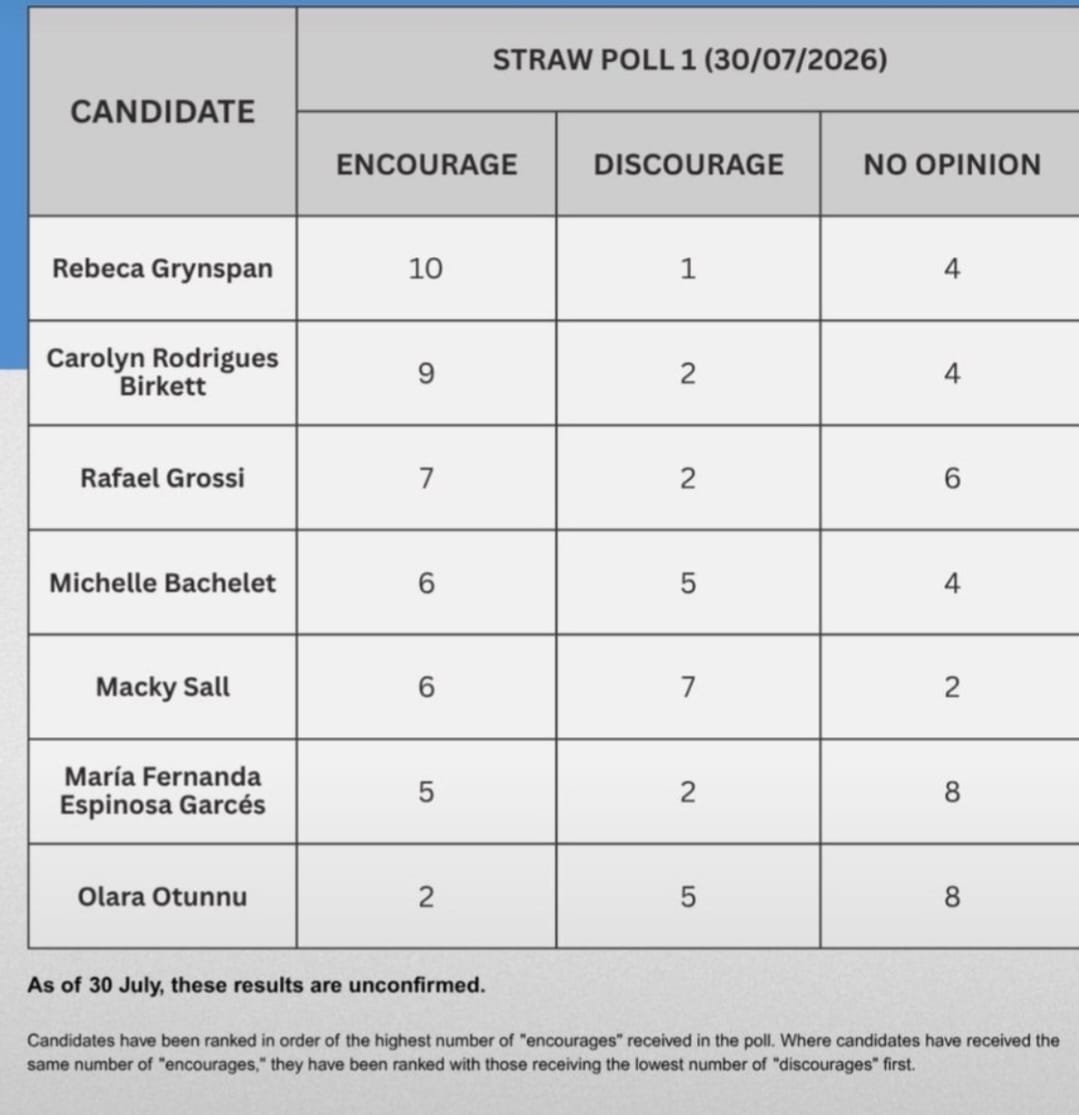
The confidential poll conducted on July 30 produced a sobering result for Kampala. Costa Rica’s Rebeca Grynspan led with 10 “encourage” votes, followed by Guyana’s Carolyn Rodrigues-Birkett with nine and Argentina’s Rafael Grossi with seven. Michelle Bachelet of Chile and Senegal’s Macky Sall each secured six, Ecuador’s María Fernanda Espinosa got five, while Otunnu received only two “encourage” votes against five “discourage” votes, with eight council members expressing no opinion.
The results are not final and, importantly, the straw poll is non-binding. But they provide the first concrete picture of where the candidates stand inside the Security Council and reveal just how much diplomatic work Uganda has ahead.
Otunnu is not out of the race. But Uganda can no longer afford to treat his candidacy as a symbolic nomination.
Otunnu Came Late to a Race Already Underway
Perhaps the biggest problem confronting the Ugandan candidate is timing. Otunnu was formally nominated by Uganda only in late July, making him the seventh and final candidate to enter the race for the position that António Guterres will vacate at the end of 2026. Uganda’s Permanent Representative to the UN, Ambassador Adonia Ayebare, formally transmitted the nomination to the presidents of the General Assembly and Security Council on July 24.
That late entry matters because the other candidates had already spent months building diplomatic relationships, presenting their visions and campaigning across the UN system.
Otunnu is also returning to the international stage after a long absence. He served as UN Under-Secretary-General and Special Representative for Children and Armed Conflict from 1997 to 2005 under Secretary-General Kofi Annan.
His previous UN experience is unquestionably a strength. Yet it also means Uganda must convince countries that Otunnu is not simply a distinguished former UN official seeking a return to an institution he left more than two decades ago.
The Eight “No Opinion” Votes Are Uganda’s Opening
There is, however, a potentially important positive hidden in the disappointing numbers.
Otunnu secured eight “no opinion” votes—more than any other candidate except Espinosa and Sall, who had eight and two respectively? More precisely, the poll shows Otunnu and Espinosa each with eight “no opinion” votes, while the other contenders registered fewer. This indicates that while some Security Council members actively discouraged Otunnu, a substantial group had not yet committed themselves against him. That is the space Uganda must exploit.
The eight “no opinion” votes potentially represent diplomatic territory that can still be conquered before subsequent rounds. The task is to transform neutrality into support.
As Ugandan commentator Fabian Ahaisibwe observed in the reactions to the poll, the eight undecided positions could still be converted into “encourage” votes in later rounds.
That is why the first poll should be read as a warning rather than a death certificate.
Ayebare Now Has a Huge Job
This is where Ambassador Adonia Ayebare could become central to Uganda’s campaign.
Ayebare, Uganda’s long-serving Permanent Representative to the United Nations and incoming Foreign Affairs Minister, understands the UN system from the inside. He has served in New York since 2017 and has been at the centre of Uganda’s multilateral diplomacy. He also submitted Otunnu’s nomination, making him one of the key architects of the campaign from the beginning.
During his vetting for the Foreign Affairs portfolio, Ayebare said his first priority would be to ensure that Uganda’s foreign-policy approach is properly coordinated across government institutions.
That principle now needs to be applied to the Otunnu campaign. Uganda needs a coordinated diplomatic operation involving State House, the Foreign Affairs ministry, Uganda’s missions abroad, regional allies and Otunnu himself.
The campaign cannot be left to one embassy or a handful of diplomats in New York.
Africa Must Decide Whether to Unite
The bigger diplomatic challenge is Africa itself. The continent has long argued for a greater role in the leadership of global institutions, but the Otunnu campaign has arrived in a race in which Senegal’s Macky Sall is also competing.
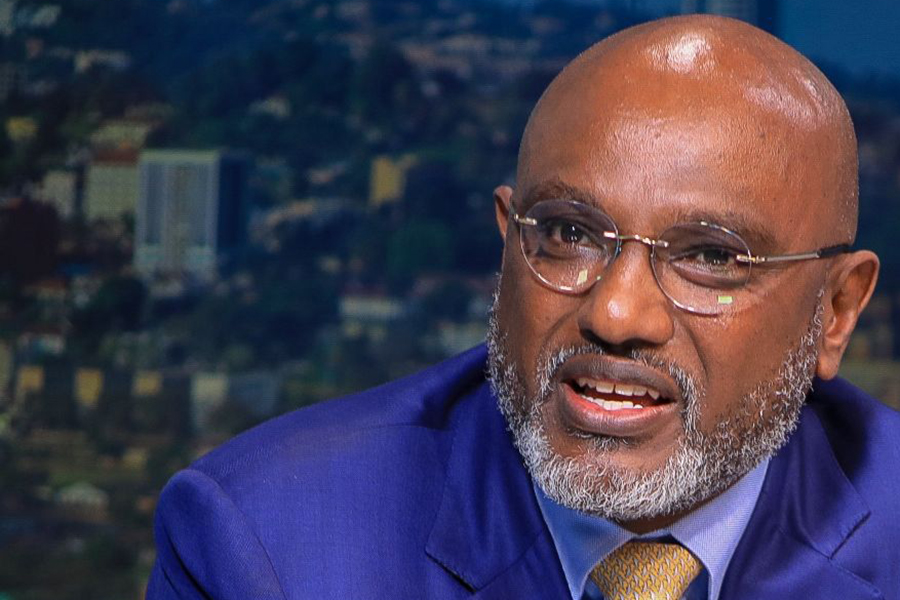
That creates an uncomfortable question: will Africa rally behind one candidate or allow its votes and diplomatic influence to be divided?
For Uganda, the answer should be obvious. If African governments believe the next Secretary-General should come from the continent, they must begin serious consultations on whether a single African candidate can emerge as the strongest proposition.
But Kampala cannot simply demand African solidarity. It must build a case for Otunnu.
His long record at the UN, his experience as Uganda’s former Permanent Representative to the organisation, his tenure as President of the Security Council and his work on children affected by armed conflict all provide material for such a campaign.
Uganda must sell those credentials not as nostalgia, but as evidence that Otunnu can address today’s crises.
The Human Rights Question Cannot Be Ignored
The Ugandan campaign also faces a political vulnerability at home. Some reactions to the straw poll have already focused on Uganda’s human-rights record, allegations of political repression and the contradiction, as critics see it, between Uganda presenting Otunnu as a candidate for global leadership while facing criticism over governance at home.
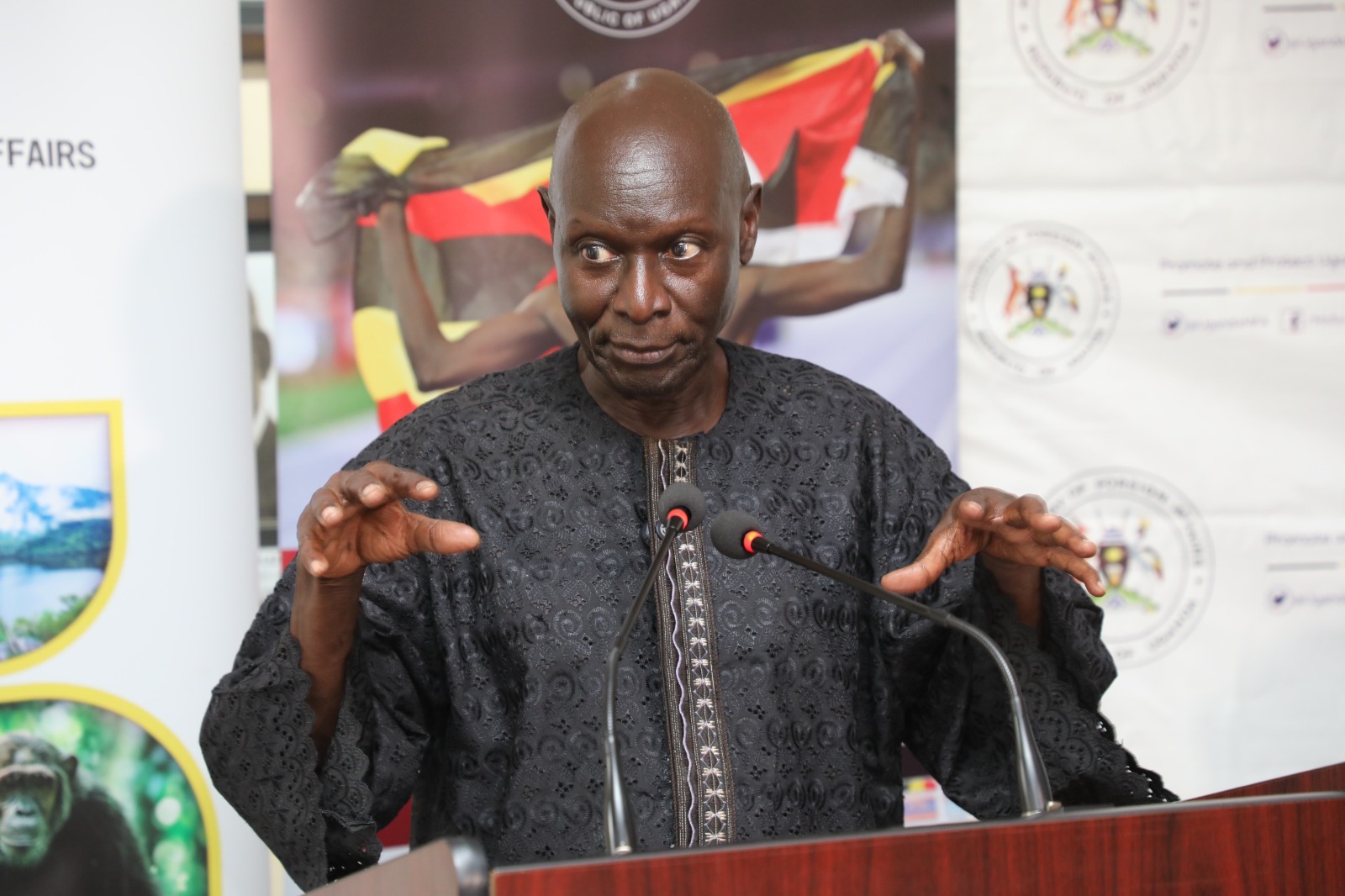
One social-media reaction asked why Africa would unite behind a candidate from a country accused of failing to protect human rights.
Whether such criticism is fair or not, Uganda cannot wish it away. The Secretary-General is not merely a diplomat chosen for professional experience. The office carries enormous political and moral expectations.
Consequently, the campaign needs a credible answer to questions about Uganda’s democratic record rather than simply dismissing criticism as partisan politics.
The P5 Will Ultimately Matter
Another mistake would be to read the straw poll as though the election were a conventional democratic contest.
The Security Council has five permanent members—the United States, Russia, China, France and the United Kingdom—with veto power. The final recommendation requires at least nine votes and no veto from a permanent member. At later stages, the Council uses colour-coded ballots to expose whether candidates face opposition from the P5.
Therefore, Otunnu does not simply need to improve from two “encourage” votes to five or six.
Uganda must identify which countries are potentially persuadable, which P5 capitals are open to his candidacy, and where the campaign is likely to encounter a veto.
This is high-level geopolitical bargaining, not popularity voting.
Uganda Must Launch a Full Diplomatic Offensive
The lesson from the first straw poll is that Uganda started late—and must now move fast. Ayebare should coordinate an intensive diplomatic campaign targeting the Security Council members, African Union leadership, key African capitals, the Non-Aligned Movement, Caribbean and Asian states and the P5.
Uganda also needs to persuade African countries that Otunnu’s candidature is not simply a national project but a continental proposition.
At the same time, Kampala should give Otunnu a clear campaign platform built around UN reform, conflict prevention, Africa’s place in global governance, multilateralism, peacekeeping and institutional credibility.
Hope Is Still Alive
For all the disappointment surrounding the first poll, Otunnu remains in the race.
The eight “no opinion” votes are evidence that the field has not hardened. The process could continue through further informal rounds before the Security Council makes its formal recommendation later in the year. But Uganda now faces a choice.
It can treat the nomination as a diplomatic gesture and allow Otunnu to fight a lonely campaign.Or it can turn the nomination into a serious national and continental diplomatic project.
The first straw poll has delivered Uganda its warning. The next polls will show whether Kampala listened.
Author Profile
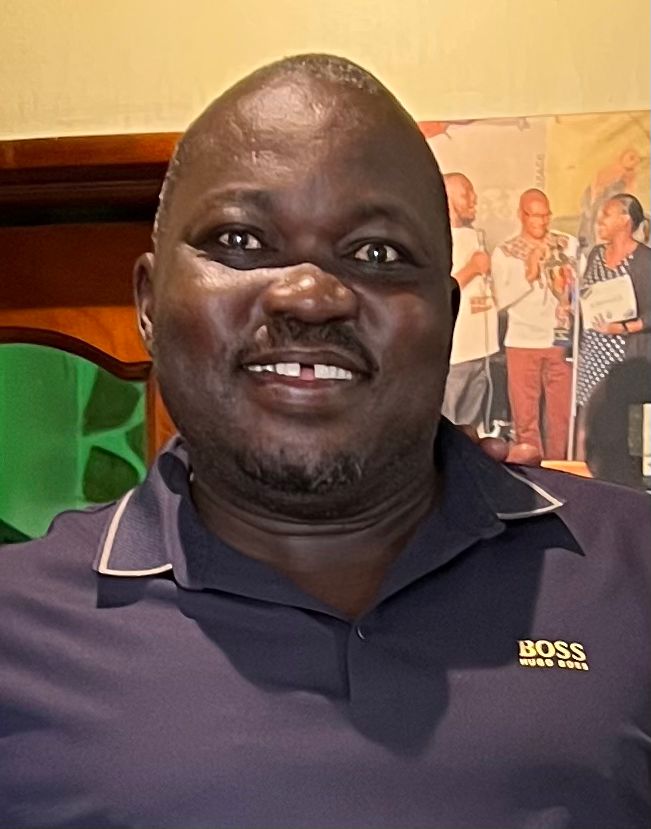
- Charles Gazza Kodili is a seasoned journalist with over 20 years of experience in the media industry. He holds a Bachelor of Arts degree in Mass Communication. He’s currently the Chief Editor at the Investigator.
Charles can also be reached via; Tel: +256 774 108978
Email: [email protected]
Latest entries
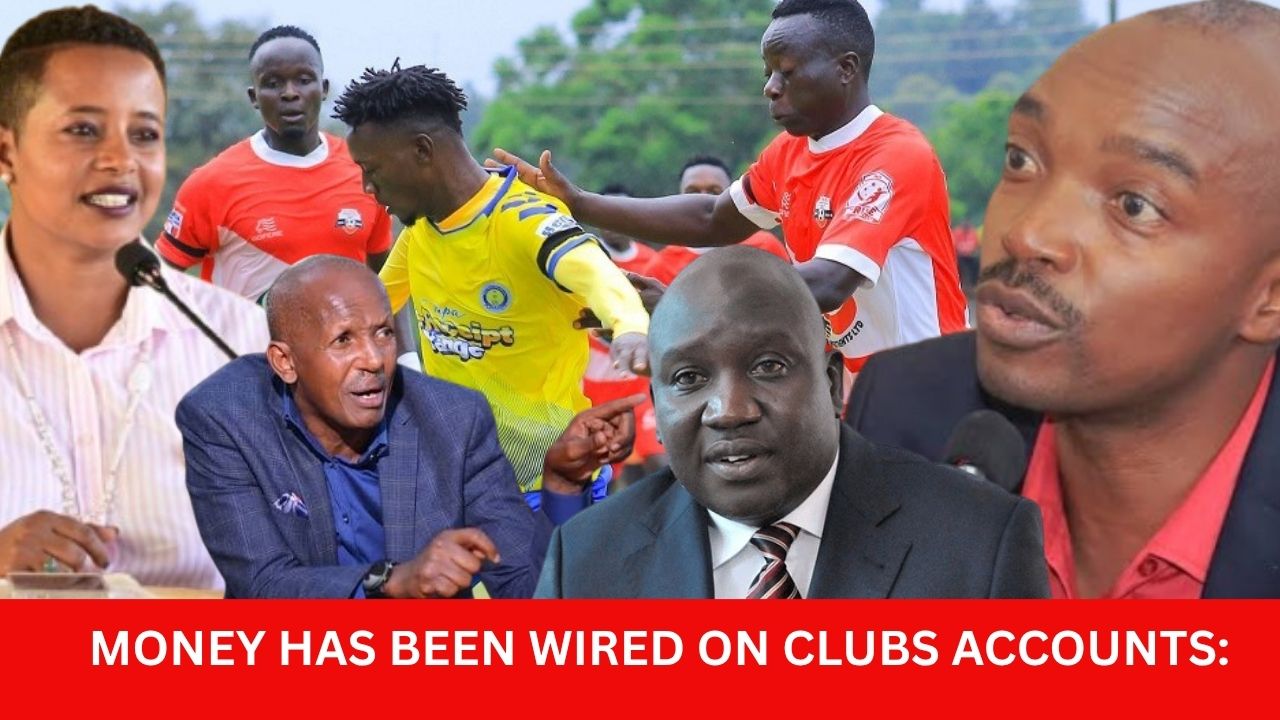 FeaturedSeptember 18, 2026MONEY HAS BEEN WIRED ON CLUBS ACCOUNTS: Each Uganda Premier League Club Is Allocated Sh305.5m Annually, With Sh152.7m Due In The First Quarter As Government Releases 50% Of The Subsidy
 FeaturedSeptember 18, 2026STATE HOUSE FALLOUT: Bishop Patience Museveni Warns Her Big Brother CDF Gen Muhoozi Kainerugaba As The Council of Elders From Ankole Move To Mend Family Rift
 FeaturedSeptember 18, 2026PLU MARCHES TO TURKISH EMBASSY AS MUSEVENI MEETS ENVOY: PLU Supporters Demand Extradition Of Uganda Blogger As President Holds Talks With Turkish Ambassador Mehmet Fatih Ak
 FeaturedSeptember 14, 2026WELL DONE UPDF ENGINEERS: 87% New Defence Headquarters Complete, Gen Muhoozi Kainerugaba Commends Engineers For Speeding Up The Modern Twin-Tower Complex At Mbuya