














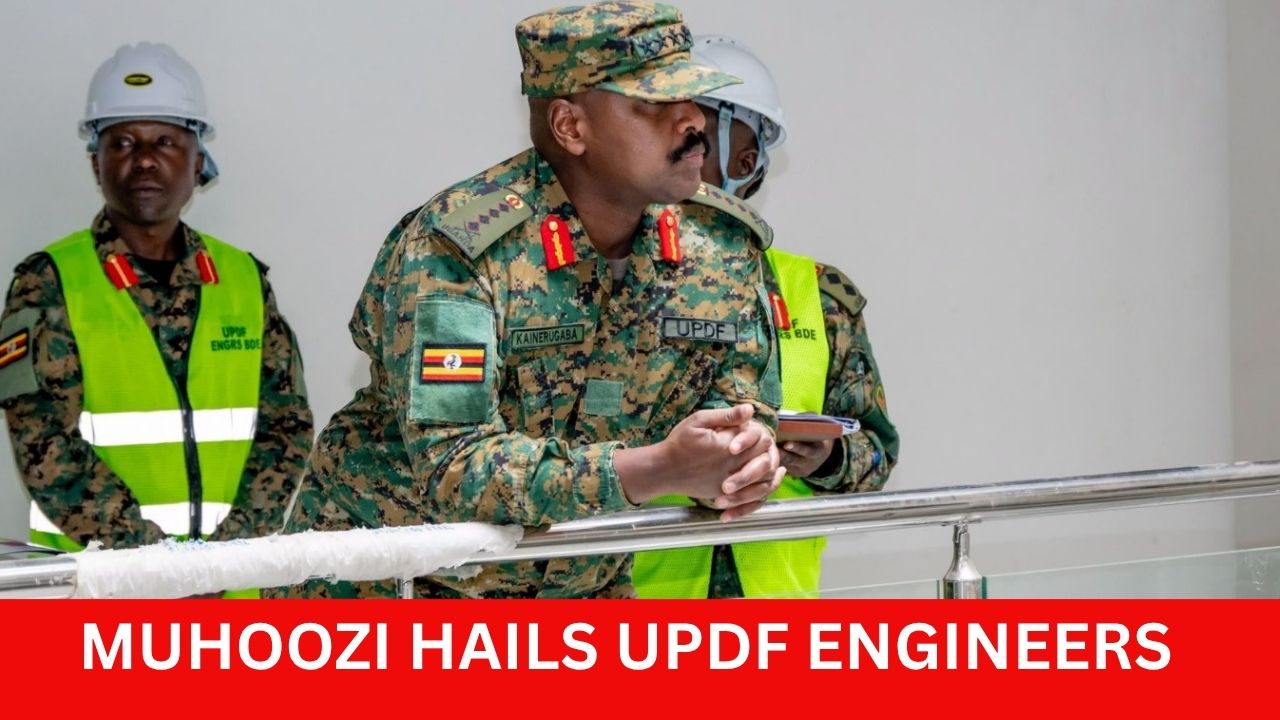
Chief of Defence Forces (CDF) Gen Muhoozi Kainerugaba has commended the UPDF Engineering Brigade for the progress made in the construction of the new Ministry of Defence and Veteran Affairs (MoDVA) and UPDF headquarters in Mbuya, Kampala. The project, which is now 87% complete, is expected to be commissioned in December, providing the Uganda People’s Defence Forces (UPDF) with a modern and consolidated command and administrative complex.
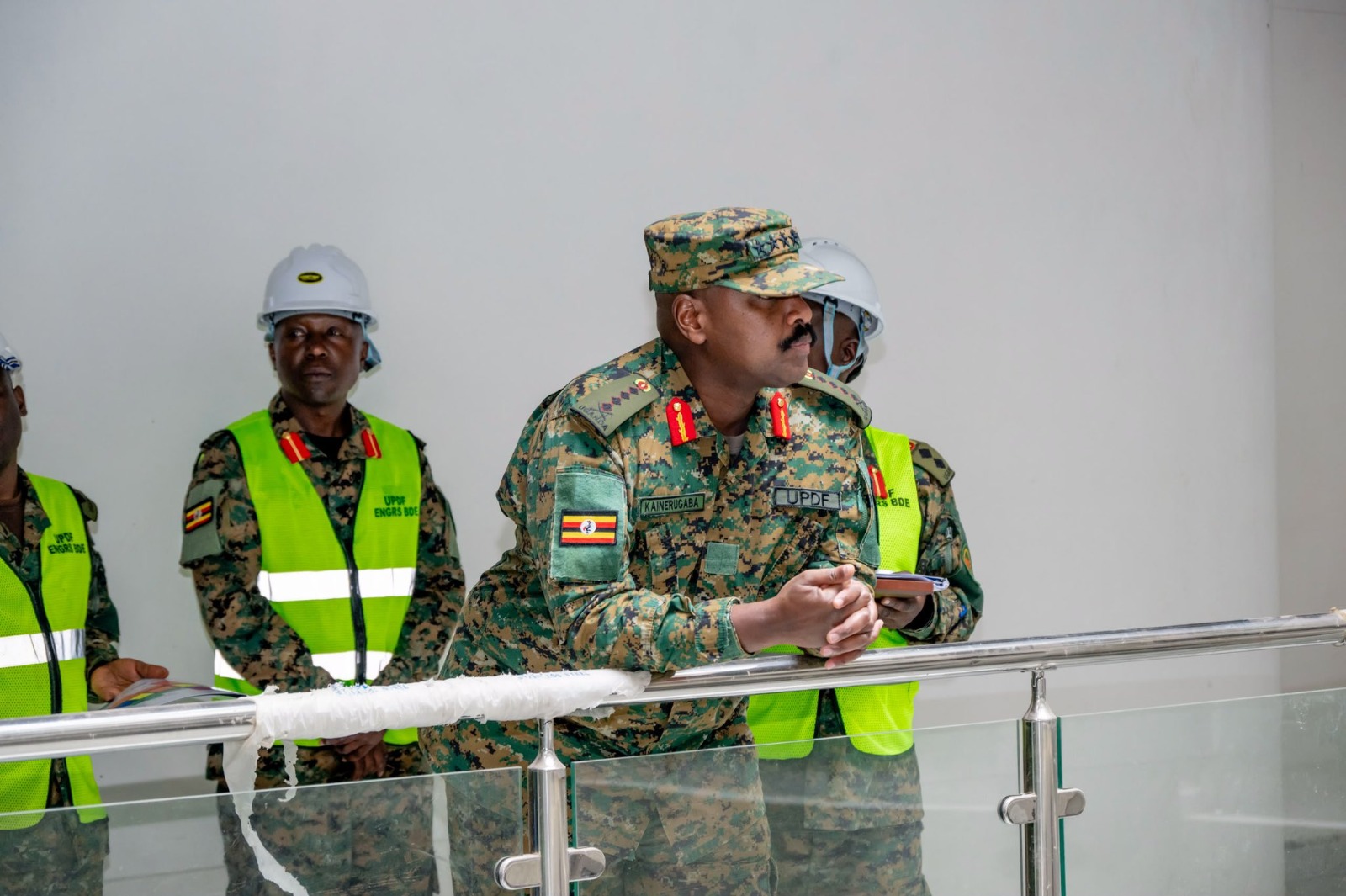 Muhoozi praises engineers
Gen Kainerugaba made the remarks on Monday during a site inspection of the project, where he interacted with engineers and other personnel involved in the construction. He praised the workforce for maintaining what he described as a high level of commitment to a project that is expected to transform the working environment of the defence ministry and military leadership.
“Your efforts and commitment to this project have not gone unnoticed. We shall appreciate your work when this facility is completed and handed over,” Gen Kainerugaba told the construction team. The CDF also urged the engineers to maintain the momentum and ensure that the remaining works are completed within the set timeframe without compromising the quality of the facility.
UPDF builds headquarters
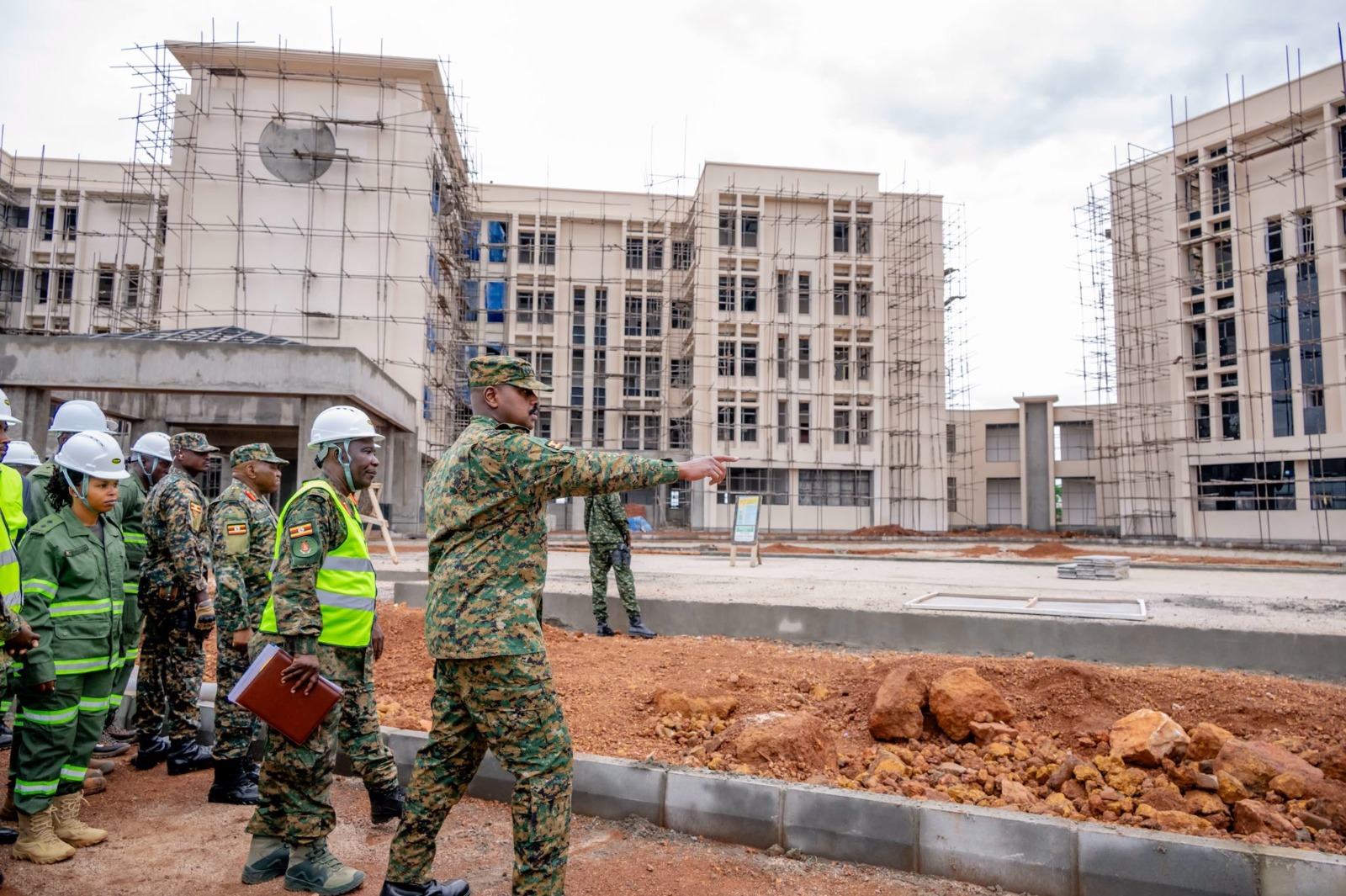 The headquarters is being constructed entirely by the UPDF Engineering Brigade, with the project officially breaking ground in August 2024.
The facility is intended to address the longstanding challenge of fragmented offices and administrative units within the defence establishment by bringing the ministry and military command structures together in one modern complex. Gen Kainerugaba has previously stressed the importance of having a suitable working environment for the defence leadership, noting that modern infrastructure is critical to effective military coordination and operational efficiency.
Twin towers for command
The new complex has been designed as a twin-tower facility to accommodate both the civilian leadership of the Ministry of Defence and Veteran Affairs and the operational command structures of the UPDF. It will house modern communication facilities, command installations and digital operational systems intended to improve coordination, information flow and decision-making within the defence establishment. The complex will also have enhanced security infrastructure, including a two-kilometre perimeter fence, modernised quarter guards and alternative access routes.
Project accelerated
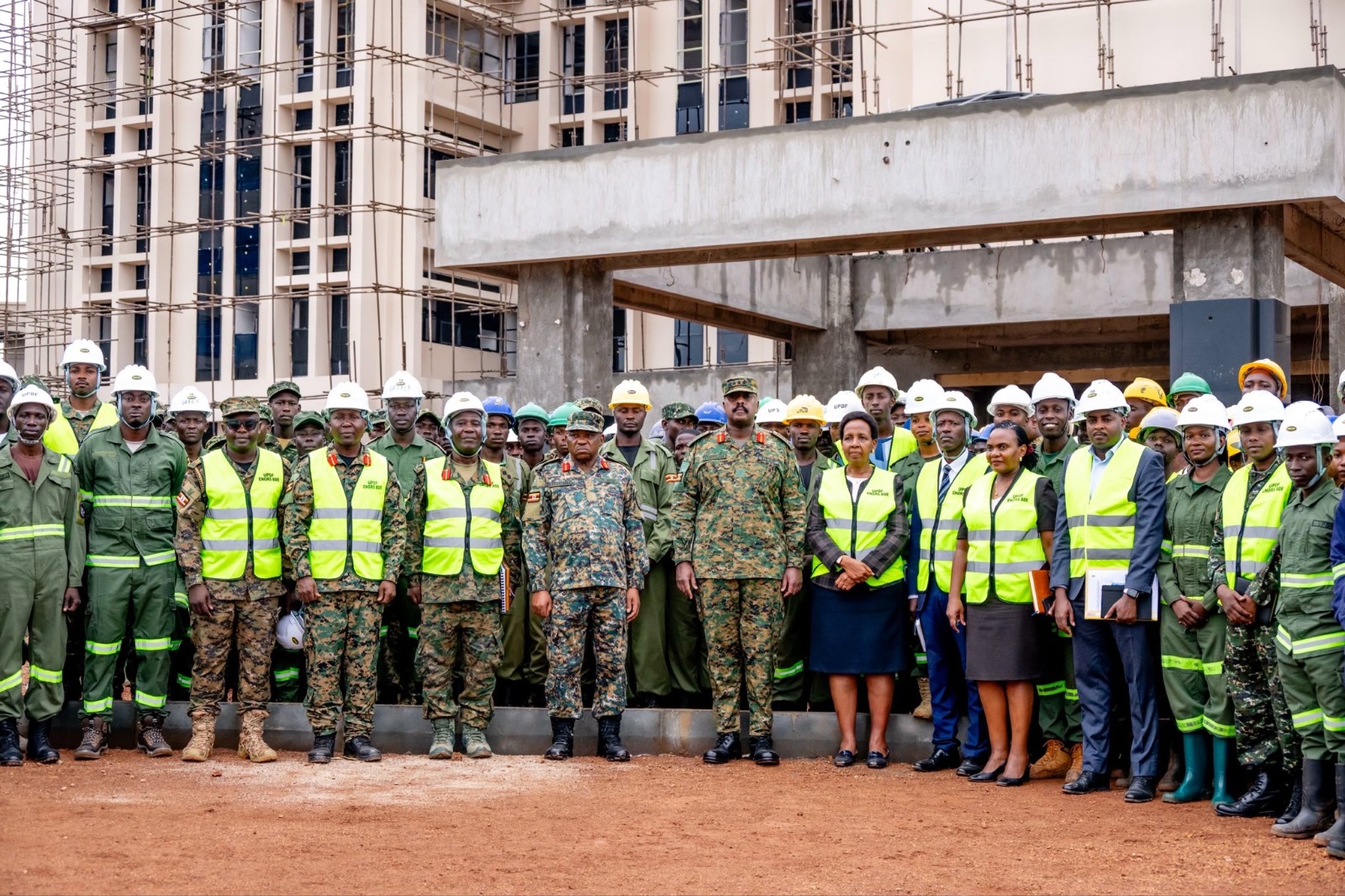 The construction gained momentum after Gen Kainerugaba directed the project team to accelerate the works and ensure that the facility is delivered within the revised timeframe while maintaining the required standards. The new headquarters is expected to replace some of the outdated and dispersed administrative arrangements currently used by the defence ministry and the military leadership on Mbuya Hill. Once completed, the facility will provide a central command and administrative hub where senior defence officials and military commanders can operate in closer coordination.
Senior officers inspect works
During Monday’s inspection, Gen Kainerugaba was taken on a guided tour of the complex by the lead engineers overseeing the project. The team included Col James Lwegaba of Joint Staff Engineering, Col Robert Chabo, the project engineer, and site engineer Capt Kikomeko Kigongo. The inspection was also attended by the UPDF Chief of Joint Staff, Lt Gen Jack Bakasumba; MoDVA Undersecretary Edith Butuuro; and other senior UPDF and ministry officials.
December commissioning
The completion of the project is expected to mark a significant change in the physical infrastructure supporting Uganda’s defence administration and military command. The UPDF Engineering Brigade has undertaken the construction works as part of the military’s growing involvement in strategic infrastructure projects.
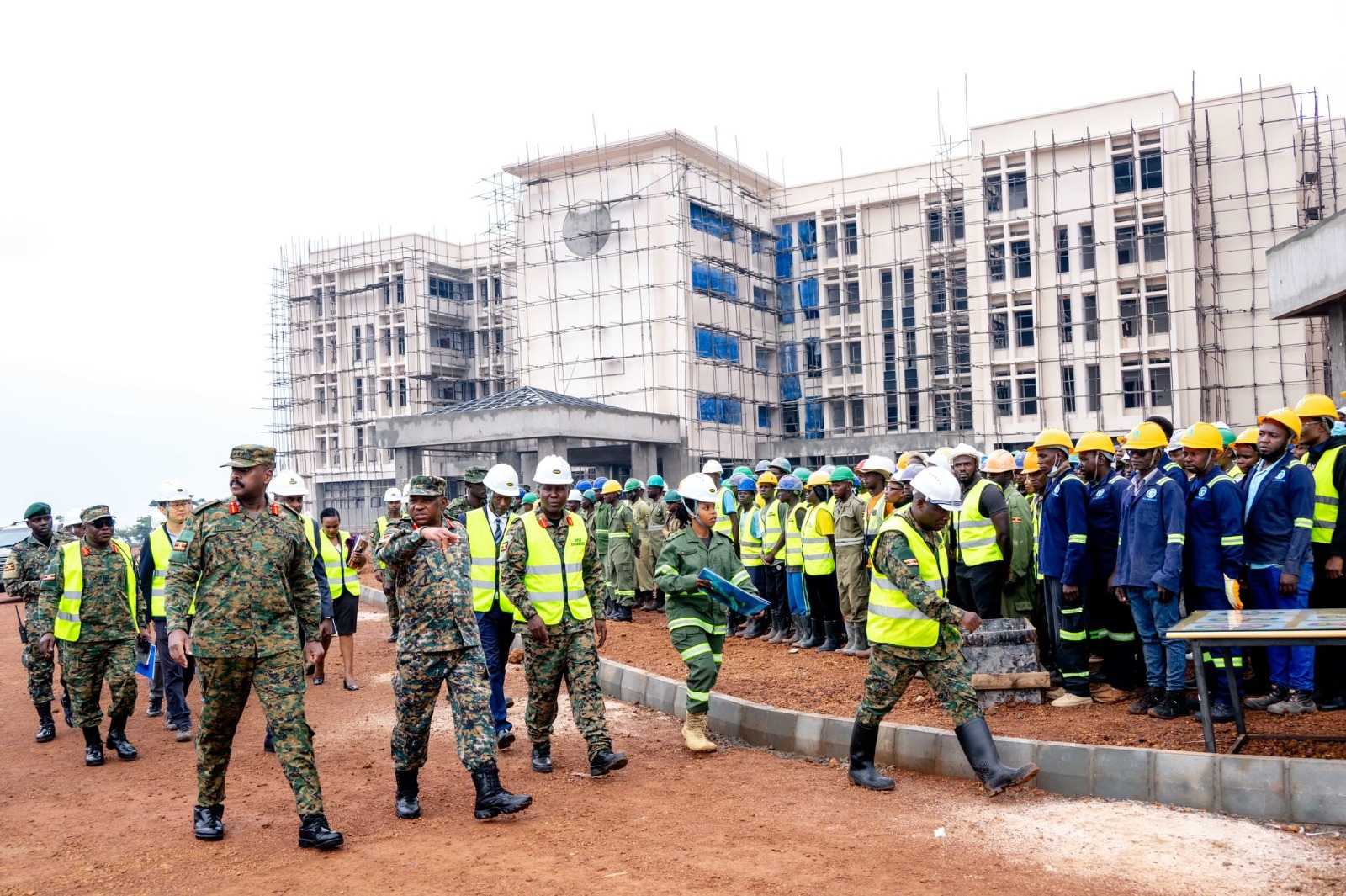 With the project now at 87% completion, attention has shifted to completing the remaining works, installing the required systems and preparing the facility for occupation ahead of the planned December commissioning. Gen Kainerugaba’s visit was therefore both an inspection of progress and an acknowledgement of the engineers and construction personnel responsible for turning the project into reality.
Modern infrastructure for UPDF
The CDF’s commendation comes as the UPDF continues to emphasise the importance of modern infrastructure, technology and integrated command systems in strengthening the country’s defence capabilities. The new complex is expected to provide a more coordinated environment for the ministry’s civilian officials and military commanders, while improving the efficiency of administrative and operational functions.
The project also reflects the military’s effort to utilise its internal engineering capacity for major infrastructure developments rather than relying entirely on external contractors. If completed and commissioned as scheduled in December, the facility will become one of the key installations supporting Uganda’s defence command and administration from Mbuya Hill.
Author Profile

- Charles Gazza Kodili is a seasoned journalist with over 20 years of experience in the media industry. He holds a Bachelor of Arts degree in Mass Communication. He’s currently the Chief Editor at the Investigator.
Charles can also be reached via; Tel: +256 774 108978
Email: [email protected]
Latest entries
 FeaturedOctober 9, 2026UGANDA ECONOMY TO HIT $73.96B: President Museveni Cites Decades Of Economic Growth As He Receives A Top National Honour During The 64th Independence Anniversary Celebrations At State House, Entebbe
 FeaturedOctober 9, 2026KABALEGA: THE KING WHO FOUGHT THE BRITISH: From Battles Against Sir Samuel Baker To Uganda’s Independence In 1962, The Bunyoro King Became A Symbol Of Resistance Against Foreign Domination
 FeaturedOctober 8, 2026UGANDA AT 64: From Obote Receiving the Instruments of Power in 1962 to Museveni Receiving a National Medal in 2026, Uganda’s Independence Story Remains Unfinished. We Journey With You the Thorney 6+ Decades of Uhuru
 FeaturedOctober 8, 2026AFRICA MUST PREPARE FOR NEW WARS – MUSEVENI: The President Challenges Defence Chiefs to Link Military Strength With Economic Power, Political Stability and Regional Integration as African Armies Rethink Security Beyond Conventional Warfare