







The Uganda Law Society (ULS) has been ordered to convene and hold its long-delayed Annual General Meeting (AGM) within 14 days, paving the way for fresh elections to its governing council and representatives to the Judicial Service Commission (JSC).
The directive, issued by Her Lordship Justice Joyce Kavuma, overturns orders previously issued by Justice Benard Namanya on October 16, 2025, in Miscellaneous Application No. 830 of 2025.
Justice Kavuma has vacated the orders that had effectively paralysed the Society’s electoral activities, allowing the legal fraternity to proceed with an AGM that has remained suspended amid competing legal claims over the legitimacy of its leadership and the composition of its governing council.
The ruling is particularly significant because the tenure of the current ULS Governing Council expired in September 2026, leaving the Society facing an increasingly difficult question about the continuity of its leadership and the need to renew its governing structures.
The 14-day deadline now places pressure on the Society’s leadership to organise an assembly, prepare an electoral programme and allow members to participate in choosing their representatives.
The decision also comes at a politically sensitive moment when the Society has become increasingly outspoken about alleged abductions, torture, threats and other human rights violations, particularly those it attributes to elements within the security establishment.
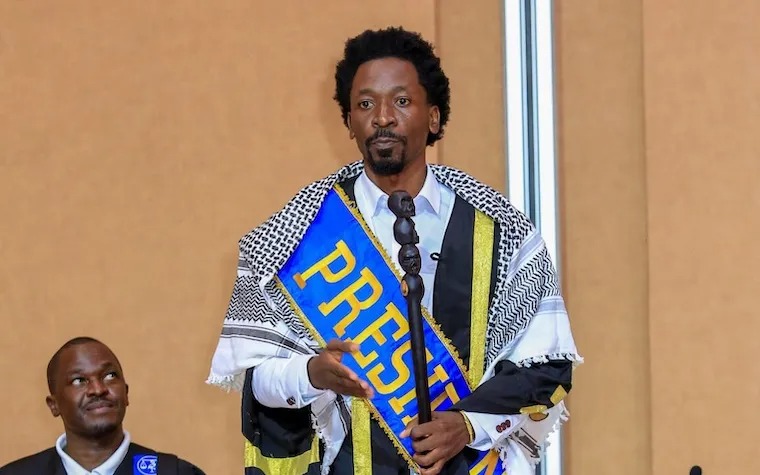
At the centre of that confrontation is ULS president Senior Counsel Isaac Kimaze Ssemakadde and Gen Muhoozi Kainerugaba, the Chief of Defence Forces and Senior Presidential Advisor for Special Operations.
The latest court decision therefore presents a double challenge for the Society: restoring its internal democratic structures while maintaining its public position as an independent professional body prepared to question the conduct of powerful state institutions.
How the AGM was suspended
The origins of the electoral crisis can be traced to September and October 2025, when disagreements over the composition of the ULS Governing Council escalated into court battles. On September 28, 2024, Ssemakadde was elected president of the Uganda Law Society, promising what he described as a Radical New Bar, an approach that sought to make the legal profession more assertive in challenging abuses of power and defending constitutionalism.
However, his administration soon encountered disagreements over the participation of government officials in the Society’s governing structures.
On October 15, 2024, Ssemakadde issued Executive Order No. 1, through which he purported to expel the Attorney General and Solicitor General from the ULS Council.
The decision created a major institutional dispute because Section 9 of the Uganda Law Society Act provides for the participation of the Attorney General and Solicitor General as statutory members of the Council.
The matter eventually reached court, with the High Court, in February 2025, declaring the executive order null and void and emphasising the need for the Society to comply with the law when constituting its governing structures. The dispute did not end there.
On September 10, 2025, following requisitions by members under Section 16 of the Uganda Law Society Act, a general meeting was called for September 17 at Imperial Royale Hotel in Kampala.
The meeting became another flashpoint in the Society’s internal leadership struggles. Members voted to extend the tenure of the governing council by six months to allow preparations for elections. A proposal for a six-month extension reportedly attracted 251 votes, against 85 for an alternative three-month extension.
The meeting also censured the Society’s secretary, Phillip Munaabi, and Central Region representative Geoffrey Turyamusiima.
Members subsequently voted to remove the two from the governing council, with the decisions attracting accusations that the process had been conducted without giving the affected officials an opportunity to defend themselves.
The meeting also sought to address the election of ULS representatives to statutory and constitutional bodies, particularly the Judicial Service Commission.
However, the decisions were immediately challenged by lawyers Martha Nabijewa and Tonny Tumukunde. The two filed Miscellaneous Cause No. 267 of 2025, arguing that the council which convened the September 17 meeting and subsequently called the AGM was improperly constituted.
Their argument was that the Attorney General, Solicitor General, Phillip Munaabi and Geoffrey Turyamusiima had not participated in the council decisions leading to the meetings. They contended that the exclusion of statutory and elected members undermined the legality of the decisions and consequently threatened the validity of the planned elections.
 How Justice Namanya stopped the elections
On October 16, 2025, Justice Benard Namanya issued orders stopping the ULS from holding its AGM scheduled for October 18 at Imperial Resort Beach Hotel in Entebbe.
The injunction followed an application by Nabijewa and Tumukunde, who wanted the court to stop the implementation of resolutions passed during the September 17 meeting.
Justice Namanya ruled that the Society, its members and officials could not convene or hold an AGM on October 18 or any other future date until the determination of the main case or further orders of court.
He also restrained the Society from implementing resolutions passed during the September 17 meeting. The judge explained that the main case raised serious legal questions about whether the council was properly constituted and whether it had the legal authority to convene the meetings.
One of the major concerns was the election of representatives to the Judicial Service Commission, a constitutional body involved in advising the President on judicial appointments.
Justice Namanya reasoned that the nomination process had to be conducted in accordance with the law and should not be allowed to proceed under circumstances that could later render the elections invalid. He also expressed concern that the censure and removal of Munaabi and Turyamusiima could have violated their right to a fair hearing.
ULS officials, however, had argued that the September 17 meeting was requisitioned by members under Section 16 of the Act and was not simply a council-initiated meeting.
They maintained that stopping the AGM would disrupt the Society’s operations and prevent it from fulfilling its statutory obligations, including electing representatives to the JSC. The court nevertheless maintained the injunction, effectively freezing the Society’s electoral process.
Justice Kavuma reopens the electoral process
Justice Kavuma’s latest decision now changes that position. By vacating Justice Namanya’s October 16, 2025 orders, she has removed the restrictions that had prevented the Society from convening its AGM.
Her directive that the meeting must take place within 14 days is particularly important because the current governing council’s tenure expired in September 2026. The elections are intended to produce a new governing council and representatives of the Society to the Judicial Service Commission.
The decision is also expected to provide an opportunity for members to address the governance disagreements that have divided the legal fraternity and affected the Society’s institutional operations.
However, the 14-day deadline means the leadership cannot afford prolonged internal consultations or further delays if it is to comply with the court’s directive.
The AGM will also be an important test of whether the Society can conduct a credible electoral exercise after months of litigation, factional disagreements and uncertainty surrounding the legitimacy of its leadership structures.
Muhoozi-Ssemakadde confrontation adds another dimension
The court development comes against the background of an increasingly bitter confrontation between Ssemakadde and Gen Muhoozi.
The two have become central figures in a dispute that has expanded beyond professional disagreements into questions about the military’s conduct, human rights, freedom of expression and the limits of public criticism of powerful state officials.
The latest confrontation followed the Society’s increasingly vocal criticism of alleged abductions and torture of government critics and other citizens.
On Saturday, Ssemakadde, through the Uganda Law Society, called on Gen Muhoozi and the Patriotic League of Uganda (PLU) to stop threatening critics, political opponents, journalists, lawyers and witnesses.
The Society also demanded the immediate and unconditional release of three people whose reported disappearances had attracted public concern.
They included political commentator and business strategist Leonard Egesa, Students Brotherhood President David Musiri and trainee advocate Prosper Julian Ahabwe.
The Society argued that threats of disappearance, elimination and torture could not be dismissed as political banter, insisting that such actions, if established, would amount to serious violations of the law.
Ssemakadde’s position was that the legal profession had an obligation to defend constitutional rights and challenge abuses regardless of the individuals or institutions involved.
The Society’s intervention further intensified the confrontation with Muhoozi, who has increasingly become a subject of public debate over the relationship between his military position and his political ambitions.
UPDF spokesperson issues warning to ULS
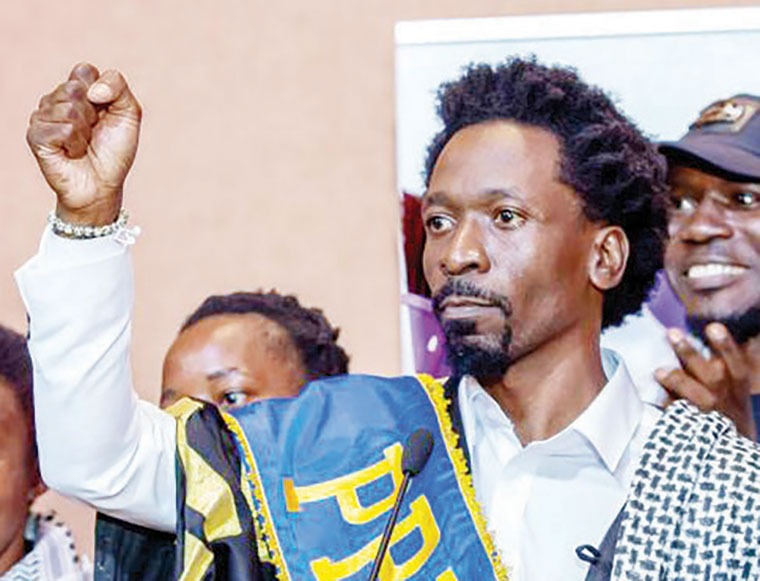
The confrontation escalated further after UPDF Acting Director of Defence Public Information Col Chris Magezi took to X and issued a strongly worded response to the lawyers’ body.
In a post that attracted considerable attention, Magezi questioned the Society’s legitimacy and warned against what he considered threats directed at the military leadership.
He wrote: “What is Uganda Law Society? Some kind of Jokers Club? Who are they to threaten God’s Army? Let them send another threat again. They will learn who we are.”
The statement was widely interpreted as a warning to the legal fraternity against continuing its criticism of the CDF and the military establishment.
It also raised questions about the appropriate relationship between the military and independent professional institutions, particularly where the latter are exercising their mandate to demand accountability. For the lawyers, the controversy is about more than an exchange of social media statements. It concerns whether citizens, lawyers and civil society organisations can freely question the conduct of public institutions without facing intimidation.
The Society has maintained that criticism of public officials is not a criminal offence and that constitutional institutions must remain accountable to the law.
The UPDF, on the other hand, has defended the military leadership against what it considers unfair attacks and attempts to undermine its authority.
The latest exchange has therefore placed the military spokesperson and the lawyers’ leadership on opposite sides of a growing public debate.
From professional dispute to constitutional confrontation
The Ssemakadde-Muhoozi dispute has also become part of the wider political debate about the role of the military in Uganda’s political affairs. Muhoozi, who also chairs the Patriotic League of Uganda, has repeatedly attracted attention through his social media statements and his involvement in discussions about the country’s political succession.
His supporters have openly associated the PLU with his political future, particularly the 2031 presidential election.
Ssemakadde and the ULS leadership have increasingly questioned the implications of a serving military officer occupying a prominent position in a political organisation while simultaneously commanding the armed forces.
The Society’s legal position has focused on the need to uphold constitutionalism, accountability and the separation of institutional responsibilities.
This has created a tense relationship between the legal fraternity and sections of the military establishment. The latest warning from Magezi has consequently been viewed as an escalation of a dispute in which the ULS believes it is exercising its professional responsibility, while the military spokesperson has portrayed the Society’s actions as an attack on the CDF.
The exchange also comes as Muhoozi continues to publicly discuss his presidential ambitions, further complicating questions about the boundaries between military command, political mobilisation and civilian oversight.
What the AGM means for Ssemakadde’s leadership
The court order now creates a new chapter in the Society’s internal leadership crisis. With the current council’s tenure having expired in September 2026, the elections are necessary to restore a clear mandate to the governing body.
The AGM will also determine the Society’s representatives to the Judicial Service Commission, an important institution in Uganda’s judicial administration.
For Ssemakadde, the meeting presents an opportunity for the Society to renew its leadership mandate and demonstrate that its internal democratic structures can function despite the legal and political battles surrounding his presidency.
However, the electoral exercise could also expose the depth of divisions within the legal fraternity, particularly over the controversial decisions taken during the September 2025 general meeting.
The questions surrounding the participation of statutory members, the removal of council officials and the legality of previous resolutions have not been erased merely by reopening the AGM process. Members will therefore be watching how the Society implements Justice Kavuma’s directive and whether the elections can be conducted transparently and in accordance with the Uganda Law Society Act.
The development also places the Society in a delicate position as it continues its public confrontation with the military leadership.
An institution struggling to resolve its own governance disputes could face questions about its credibility when demanding accountability from other public institutions.
Conversely, successfully organising elections within the period prescribed by court could strengthen its institutional legitimacy and give the incoming leadership a renewed mandate.
For now, the 14-day deadline has brought the long-running electoral stalemate to a turning point. After more than a year of court battles, internal disagreements and political confrontation, the Uganda Law Society must return to its membership and allow lawyers to decide who should lead their professional body.
Whether the forthcoming AGM will unite the divided legal fraternity or open another chapter of internal fighting remains to be seen.
But one thing is clear: Justice Kavuma’s decision has reopened the electoral road at a time when the Society’s relationship with the country’s most powerful military office is under increasing strain.
Author Profile
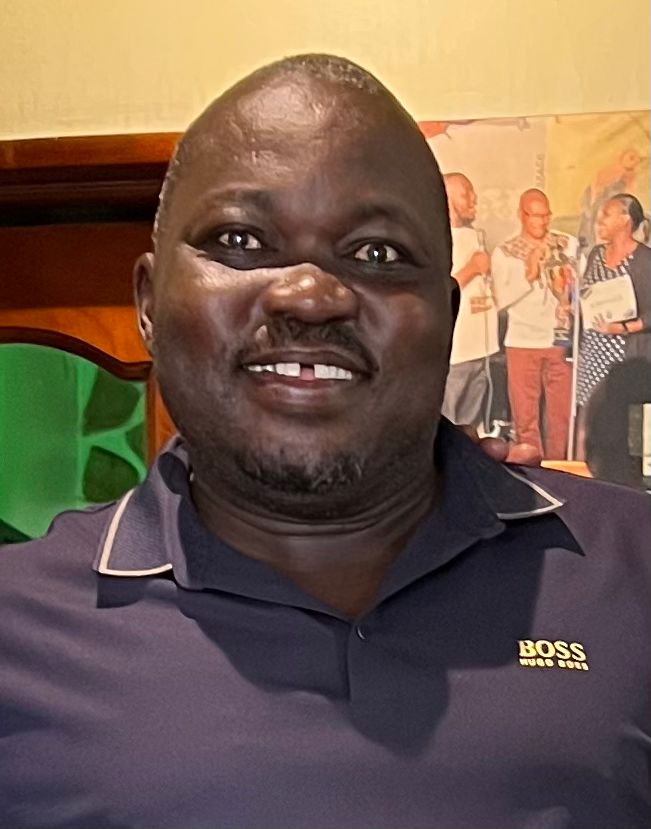
- Charles Gazza Kodili is a seasoned journalist with over 20 years of experience in the media industry. He holds a Bachelor of Arts degree in Mass Communication. He’s currently the Chief Editor at the Investigator.
Charles can also be reached via; Tel: +256 774 108978
Email: [email protected]
Latest entries
 FeaturedNovember 18, 2026WHY SAM MUGUMYA’S COURT MARTIAL APPEARANCE RAISES FRESH QUESTIONS FOR UPDF: After The UPDF Denied Holding Him In Court, The CDF Publicly Claimed Custody Of The Opposition Activist And Threatened To Execute Him. The State Has Now Produced Him And Charged Him With Treachery
 FeaturedNovember 18, 2026WHY MUHOOZI-SSEMAKADDE WAR IS HEATING UP: UPDF Spokesperson Chris Magezi Warns The Uganda Law Society Against Challenging The CDF As Court Orders Fresh Elections Within 14 Days
 FeaturedNovember 17, 2026WHY OTAFIIRE IS INCREASINGLY CHALLENGING CDF MUHOOZI: From Warning Against Human Rights Abuses To Questioning The PLU’s Political Ambitions, The Veteran General Is Emerging As One Of The Most Outspoken Critics Of The Leadership Style Associated With Museveni’s Son
 FeaturedNovember 17, 2026INSIDE MUHOOZI’S 2031 PRESIDENTIAL SUCCESSION PLAN: How Mwenda Sees CDF Gen Muhoozi Becoming Vice President, Defence Minister Before Taking Over from Museveni