









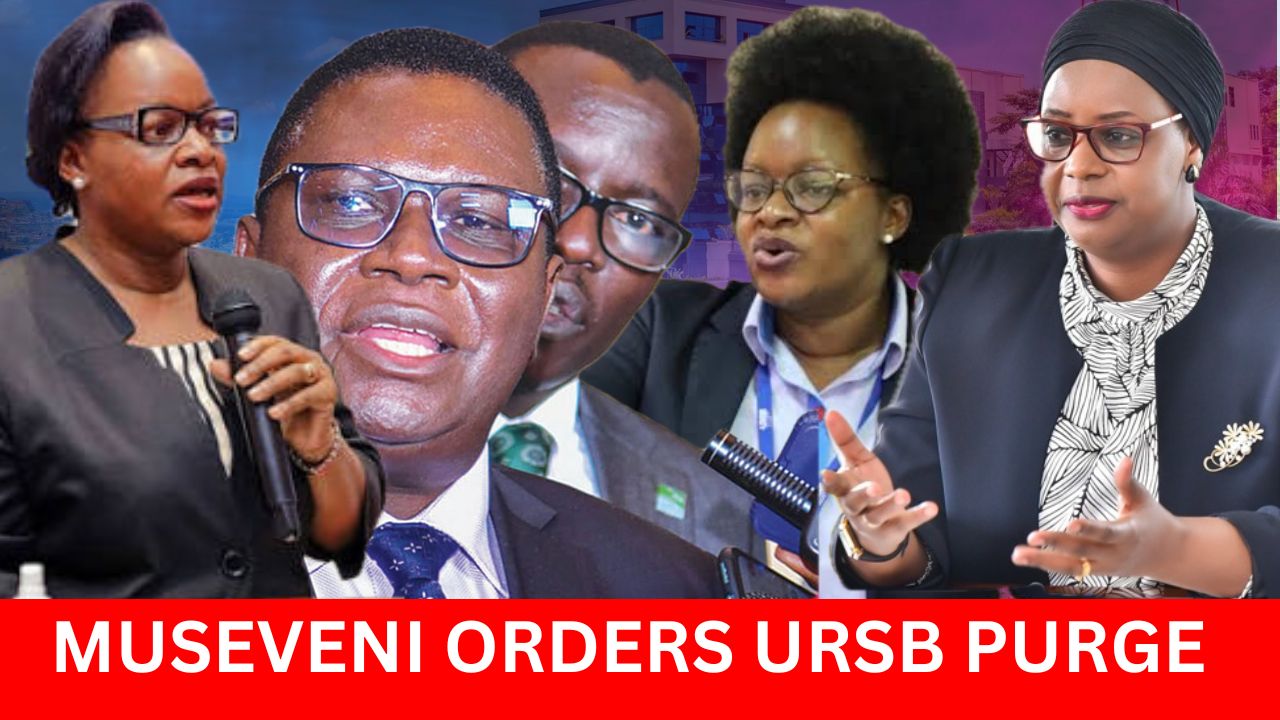
President Yoweri Museveni has ordered five senior officials of the Uganda Registration Services Bureau (URSB) to step aside as investigations deepen into allegations of embezzlement of government funds, abuse of office, money laundering, maladministration and institutional mismanagement at the government agency.
The dramatic intervention has placed the leadership of one of Uganda’s most important public institutions under intense scrutiny, with the Inspectorate of Government (IGG) ordered to lead a comprehensive investigation supported by State House auditors.
The officials affected are Registrar General Mercy Kainobwisho, Commissioner for Business Registration Gilbert Agaba, Assistant Commissioner for Business Registration Walid Kule, Commissioner for ICT Arthur Kwesiga, and Deputy Registrar General for Finance and Administration Alex Anganya.
The decision is contained in a July 24, 2026 letter from State House addressed to Justice and Constitutional Affairs Minister Norbert Mao. The letter directs the officials to go on leave until an audit into the activities of URSB is completed.
“This is to direct that the following persons go on leave until the audit I am instituting into the activities of URSB is finished,” the presidential directive states.
The move does not, by itself, amount to a finding of guilt against any of the officials. Rather, it clears the way for investigators to examine allegations without the accused officials remaining in positions from which they could potentially influence records, staff or other aspects of the inquiry.
The investigation is expected to examine the financial, administrative, procurement and technological operations of URSB and establish whether public resources were lost or mismanaged.
Whistleblower’s complaints trigger presidential action
The crisis appears to have been brought to the attention of the highest levels of government following complaints raised by Mr Agaba, the Commissioner for Business Registration.
According to correspondence seen in connection with the investigation, Agaba raised concerns over what he described as serious governance and accountability failures within the Bureau.
Among the allegations were suspected inflation of contracts relating to the development and maintenance of ICT systems, alleged money laundering through the Non-Individual Register project, embezzlement and misappropriation of URSB funds, irregular procurement processes, fraudulent registrations, weaknesses in internal financial controls and under-collection of revenue.
Agaba also reportedly complained that action was taken against him after he raised the concerns, creating a second layer of controversy around the management of the institution.
He told authorities that he had reasonable grounds to question whether disciplinary action against him had been impartial and undertaken in good faith.
The allegations were serious enough to attract the attention of the Attorney General, who, according to Agaba’s correspondence, brought the matter to the attention of President Museveni and the Inspectorate of Government.
That development transformed what could have remained an internal management dispute into a national-level investigation.
IGG takes charge
President Museveni has directed the Inspector General of Government to lead the investigation, assisted by State House auditors.
The presidential letter specifically names State House auditors Kawawa and Tumwine as part of the team expected to assist the IGG.
Museveni also directed his Principal Private Secretary to facilitate a meeting between him and URSB Board Chairman Stephen Katenta Butagira.
The involvement of the IGG is significant because the allegations extend beyond ordinary administrative disagreements and touch on potential corruption, abuse of office, financial impropriety and money laundering.
The investigation will therefore have to establish whether the allegations are supported by documentary evidence, financial records, procurement files, digital systems and testimony from officials and other persons who may have interacted with the Bureau.
URSB confirmed on August 17 that an audit was underway, although the institution did not disclose its detailed scope.
The Bureau said the audit was being undertaken in accordance with established procedures and applicable laws, adding that service delivery had not been interrupted. It said further information would be provided when appropriate after the processes were concluded.
Why the five officials matter
The decision to send the five officials on leave is particularly significant because they occupy positions covering virtually every critical area of URSB’s operations.
Kainobwisho, as Registrar General, has been the Bureau’s chief executive, accounting officer and official receiver. URSB describes her as responsible for leading its work in business formalisation, intellectual property protection, insolvency and receivership, access to credit and institutional transformation.
Agaba heads business registration, one of URSB’s central mandates. His department manages the registration of businesses and companies and plays a critical role in Uganda’s formalisation agenda. Kule serves as Assistant Commissioner for Business Registration, putting him within the operational chain responsible for registration activities.
Kwesiga is the Commissioner for ICT, a particularly sensitive position given that some of the allegations reportedly concern the development and maintenance of URSB’s information systems and the Non-Individual Register project.
Anganya, meanwhile, is Deputy Registrar General for Finance and Administration, placing him at the heart of financial and administrative management.
The fact that the investigation covers the chief executive, business-registration officials, ICT leadership and finance and administration suggests that investigators intend to examine URSB’s operations broadly rather than focus on a single transaction.
A successful institution now under scrutiny
The investigation comes at a particularly delicate moment for URSB. In recent years, the Bureau has presented itself as a successful example of public-sector reform, digitalisation and improved revenue mobilisation.
URSB’s own profile describes Kainobwisho as having led the institution’s efforts in business formalisation, intellectual property protection, insolvency regulation and institutional transformation.
Recent reports have also highlighted the Bureau’s revenue growth. URSB reportedly collected Shs311.08 billion in non-tax revenue during the five financial years under Kainobwisho, compared with Shs193.46 billion in the preceding five-year period.
The Bureau has simultaneously been expanding its enforcement role. In June, URSB announced the deregistration of 37,702 companies that had failed to comply with annual-return requirements.
These achievements are important because they demonstrate the scale of the institution now under investigation.
URSB is not merely a registry. Its systems hold information affecting businesses, companies, intellectual property and other legal processes. Any weaknesses in registration systems, financial controls or ICT infrastructure could therefore have consequences extending far beyond the agency itself.
The management feud
The investigation also comes against a backdrop of reported tensions within URSB’s senior management. Sources at URSB have described intense disagreements among senior managers, with disputes reportedly involving jobs, personalities and control of internal budgets.
Such internal conflicts can complicate investigations because allegations may emerge from genuine whistleblowing, institutional rivalry, or a combination of both.
That is why the IGG audit will be crucial. Investigators will have to separate legitimate governance concerns from personal disputes and determine whether the allegations can be substantiated through independent evidence.
The key questions will include whether contracts were inflated, whether procurement procedures were followed, whether public money was diverted, whether registration systems were manipulated, whether revenue was lost and whether officials failed to exercise the financial controls expected of them.
A warning to public agencies
Museveni’s intervention sends a powerful message to public agencies that seniority will not necessarily shield officials from scrutiny when serious allegations emerge.
It also places renewed attention on the effectiveness of internal audit, boards and management controls within government agencies.
URSB already has an internal accountability framework, and its published institutional history points to previous investigations into financial losses and unethical conduct. A Justice, Law and Order Sector report notes that URSB has handled internal investigations involving staff and financial losses, with disciplinary action taken where wrongdoing was established.
The current investigation will therefore test whether those systems were strong enough to detect and address the alleged problems before they reached State House.
For now, the five officials have not been convicted of any offence. Their being sent on leave is an administrative measure intended to facilitate the audit and investigation. The burden now rests with the IGG and the investigative team to establish the facts.
If the allegations are substantiated, Uganda could see disciplinary action, recovery of public funds or criminal proceedings depending on the evidence and the mandates of the relevant institutions.
If the allegations are not substantiated, the investigation should equally provide clarity and protect the reputations of officials who may have been caught up in an internal management dispute.
What is clear is that the URSB leadership crisis has moved beyond the walls of the Bureau. With the President personally ordering the audit and the IGG taking charge, the government is demanding answers about how one of its key institutions has been managed—and, most importantly, where the money went.
Author Profile
- Charles Gazza Kodili is a seasoned journalist with over 20 years of experience in the media industry. He holds a Bachelor of Arts degree in Mass Communication. He’s currently the Chief Editor at the Investigator.
Charles can also be reached via; Tel: +256 774 108978
Email: [email protected]
Latest entries
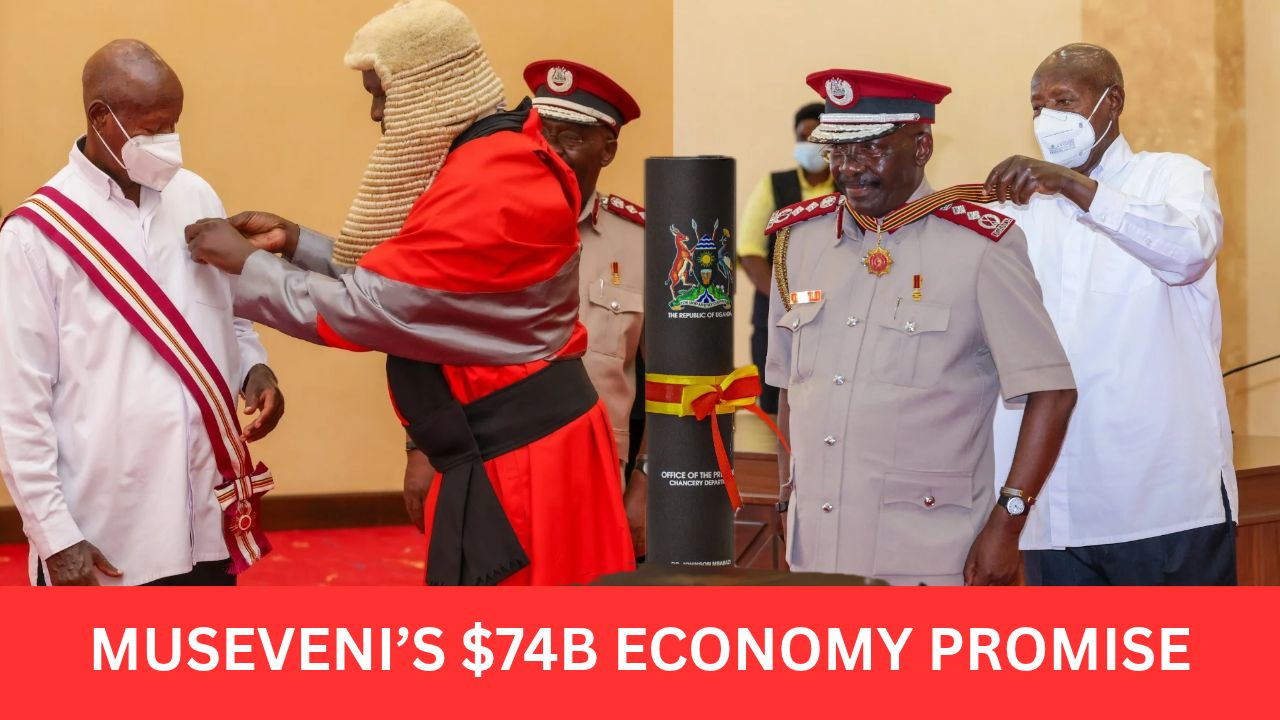 FeaturedOctober 9, 2026UGANDA ECONOMY TO HIT $73.96B: President Museveni Cites Decades Of Economic Growth As He Receives A Top National Honour During The 64th Independence Anniversary Celebrations At State House, Entebbe
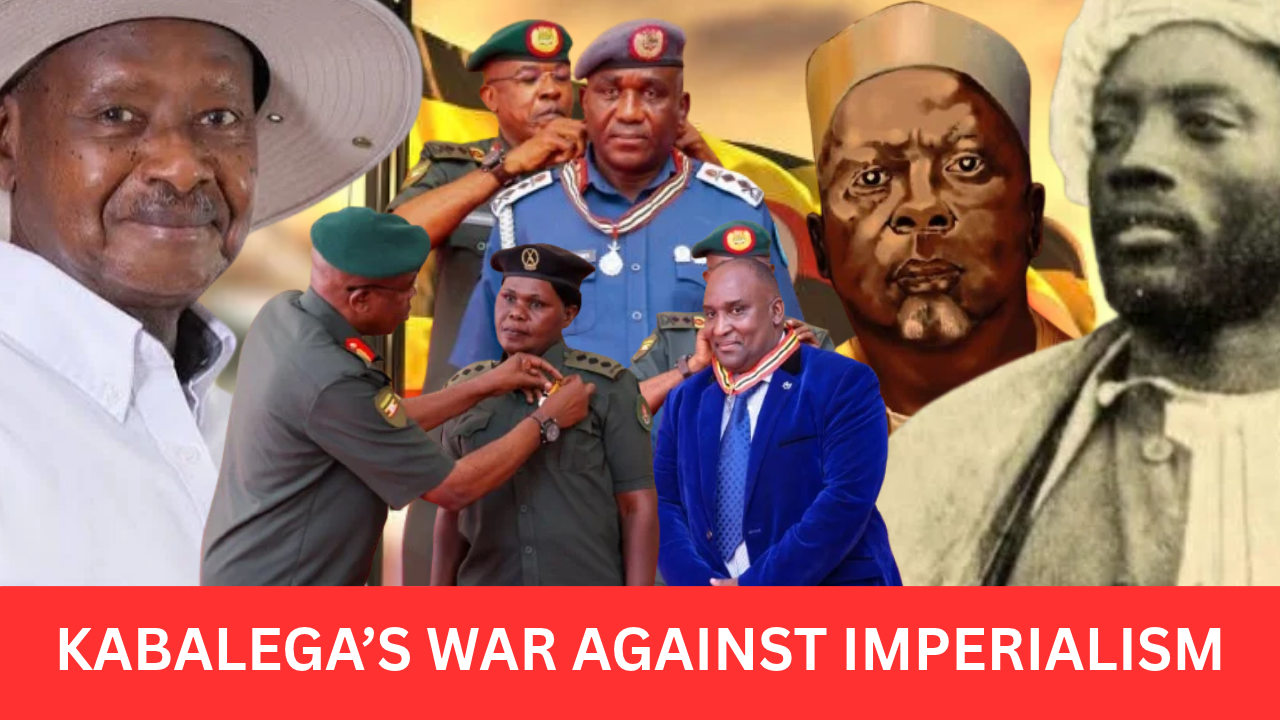 FeaturedOctober 9, 2026KABALEGA: THE KING WHO FOUGHT THE BRITISH: From Battles Against Sir Samuel Baker To Uganda’s Independence In 1962, The Bunyoro King Became A Symbol Of Resistance Against Foreign Domination
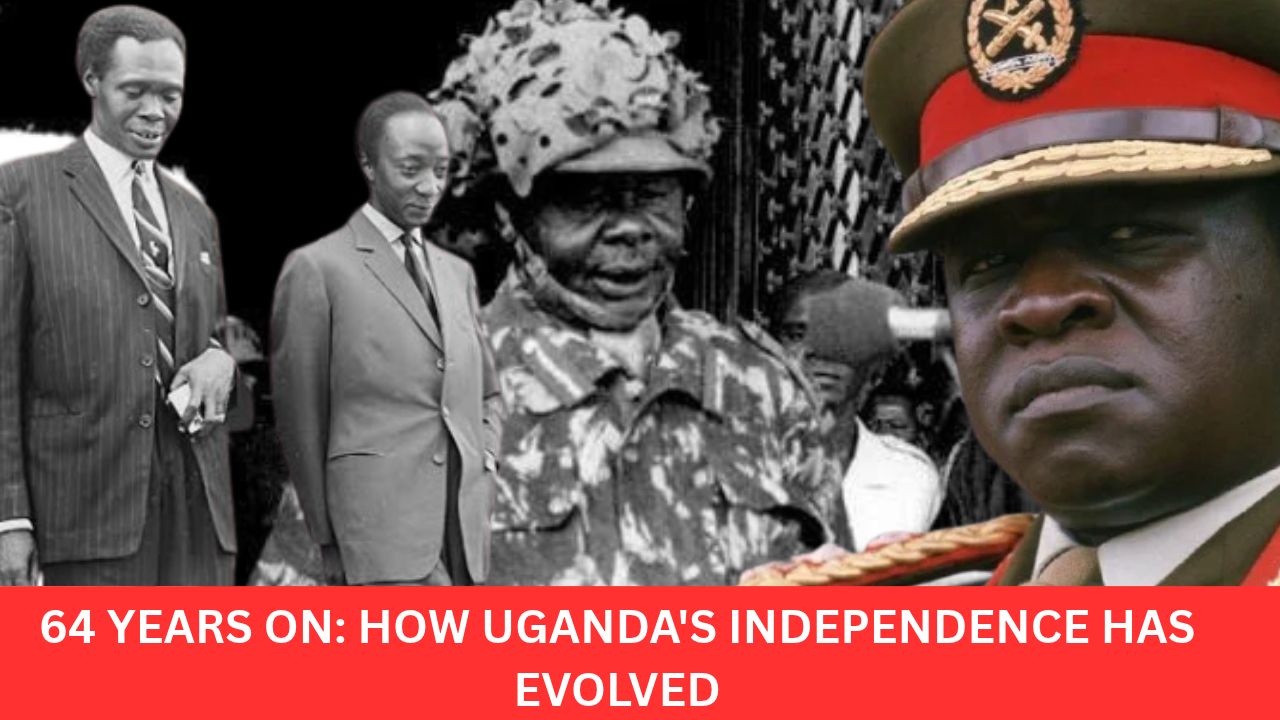 FeaturedOctober 8, 2026UGANDA AT 64: From Obote Receiving the Instruments of Power in 1962 to Museveni Receiving a National Medal in 2026, Uganda’s Independence Story Remains Unfinished. We Journey With You the Thorney 6+ Decades of Uhuru
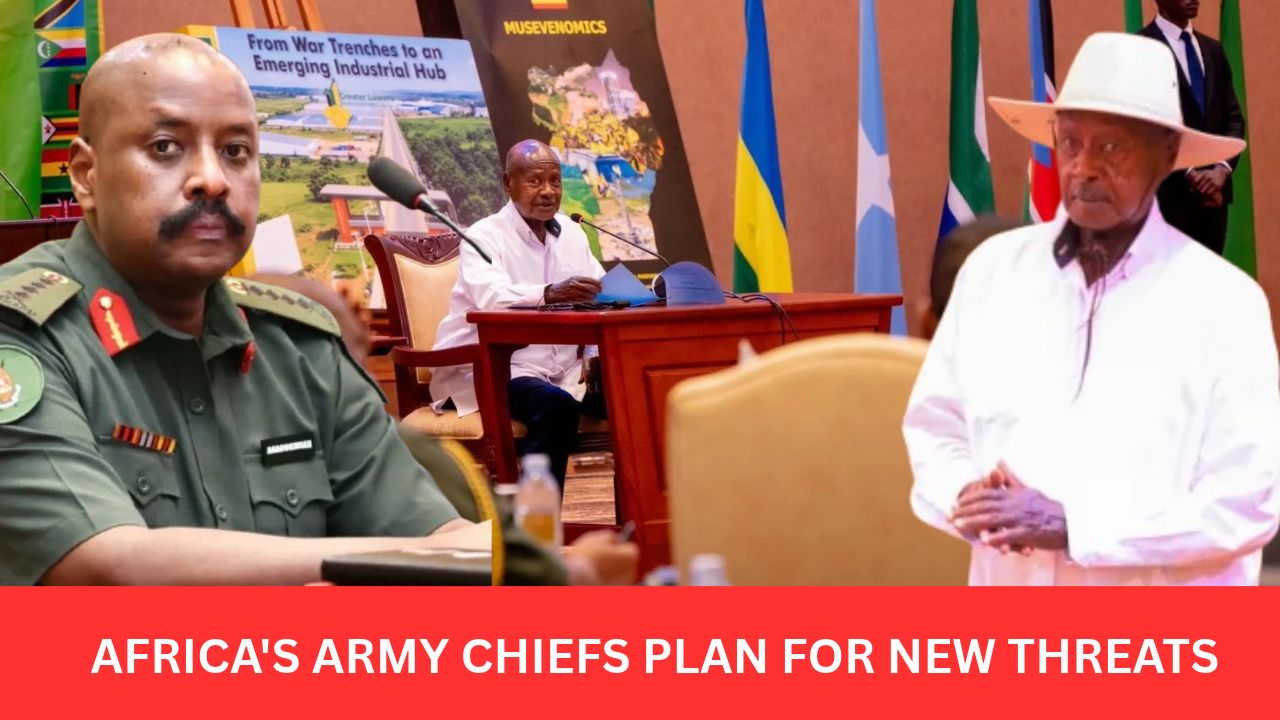 FeaturedOctober 8, 2026AFRICA MUST PREPARE FOR NEW WARS – MUSEVENI: The President Challenges Defence Chiefs to Link Military Strength With Economic Power, Political Stability and Regional Integration as African Armies Rethink Security Beyond Conventional Warfare