


















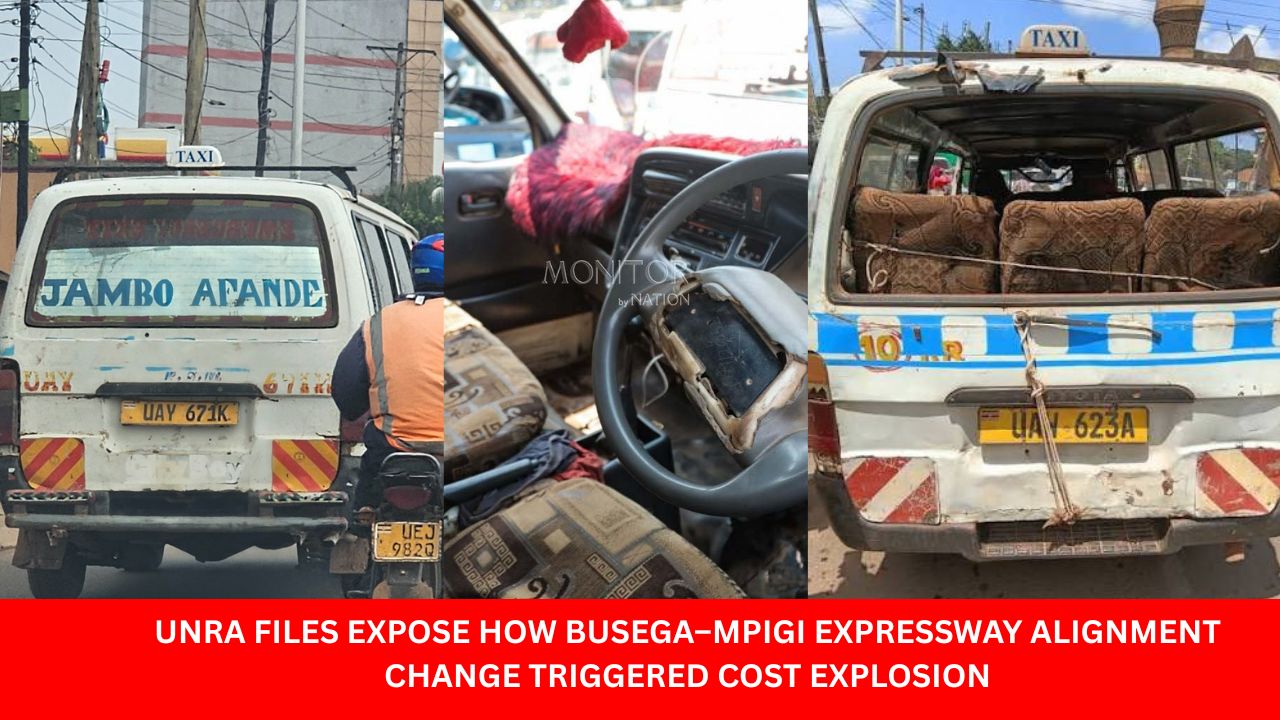
Hundreds of passengers were left stranded across the Greater Kampala Metropolitan Area yesterday as the government launched a 100-day crackdown on public service vehicles operating in Dangerous Mechanical Condition (DMC), popularly known as “Ganyegenya” taxis.
The operation, dubbed Operation Ganyegenya, follows a directive by Works and Transport Minister Fred Byamukama ordering police to immediately impound public service vehicles found to be mechanically unsafe and withdraw them from the roads. The enforcement, which began on Monday, August 24, has disrupted public transport on several routes, with commuters reporting unusually long waiting times at taxi stages as police and transport enforcement teams moved against vehicles deemed unfit for carrying passengers.
“Starting today swiftly impound all public service vehicles found operating in dangerous mechanical condition. Vehicles that fail structural and safety compliance must be immediately withdrawn from service and their operational licences revoked,” Byamukama directed police. The minister warned that severely damaged public service vehicles would not simply be given another opportunity to operate but could be permanently removed from the roads. The crackdown immediately exposed the delicate balance between passenger safety and the livelihoods of thousands of taxi operators, drivers, conductors and their families who depend on the industry.
Commuters Left Stranded
A simple survey by The Investigator on several roads leading into Kampala city centre found unusually long queues of passengers at taxi stages, while some routes had significantly fewer vehicles than normal. Passengers waiting for taxis at Kirinya, Bweyogerere and other parts of the Kampala metropolitan area complained that they had spent hours looking for transport. “I have been here since 7am but after two hours of waiting there is no sign of a taxi. I have to take a boda boda if I am to make it in time to the office,” said Nancy Nalwoga, a resident of Kirinya, Bweyogerere.
For many workers, students and traders, the sudden reduction in taxis translated into higher transport costs as passengers turned to boda bodas and other alternatives. Some commuters said they had no choice but to pay more for alternative transport despite already struggling with rising household expenses. The disruption was particularly noticeable on routes where old 14-seater commuter taxis dominate public transport. The vehicles, some of which have badly worn-out bodywork, damaged seats, defective lights, broken windows, faulty suspension systems and other mechanical problems, have long been a familiar feature of Kampala’s public transport system. Their nickname, “Ganyegenya”, has become synonymous with battered taxis that continue operating despite their poor condition.
Kasingye Backs The Minister
Retired Assistant Inspector General of Police, Asan Kasingye, backed the crackdown, saying the government should now ensure that the directive is implemented consistently. According to Kasingye, the success of the operation will depend heavily on the police identifying and removing vehicles that genuinely meet the definition of DMC. “According to the Minister of Works and Transport, there will be no #DMCs on our roads from today onwards,” Kasingye wrote on social media. “Can we all give Hon. Byamukama his flowers? If it fails, then my colleagues [in] Police will have failed him,” he added. Kasingye also challenged police authorities to clearly identify the vehicles that fall under the DMC category.
His intervention highlights one of the major questions surrounding the operation: how enforcement officers will distinguish between an old vehicle that is properly maintained and one that is structurally or mechanically dangerous. The government has insisted that the operation is not simply about the age of a taxi but its roadworthiness and compliance with safety requirements.
Operators Ask For More Time
While many passengers welcomed the crackdown, taxi operators appealed to Minister Byamukama to reconsider the immediate enforcement or grant them additional time to repair their vehicles. The operators argue that removing large numbers of taxis from the roads without adequate transition arrangements could cripple the public transport system and deprive thousands of families of income.
They cited difficult economic conditions and the approaching school-fees season, saying many families depend on daily earnings from public transport. For taxi owners, replacing or extensively repairing an old vehicle is a major financial undertaking. Some operators therefore want the government to allow them a grace period during which they can repair their vehicles and bring them into compliance.
But that argument has received little sympathy from many passengers and social media users, who say operators have had enough time to maintain their vehicles. One social media user, Jorge, argued that operators should be given a reasonable deadline to comply, suggesting a six-month period after which non-compliant vehicles should be removed.
Others, however, rejected any extension. “Don’t add them time. We are tired,” wrote Jotham, arguing that the government should also deal with unlicensed boda boda riders. Another user, Rock Kakinda, urged the minister not to extend the deadline, saying passengers had endured dangerous taxis for too long.
“We Cannot Compromise On Safety”
The strongest support for Operation Ganyegenya has come from Ugandans who have experienced the condition of some taxis first-hand. Kyambadde Mark said the safety argument should take precedence over concerns about inconvenience. “I don’t find such reasoning substantial if we are to be serious as a country, we can’t compromise on safety,” he said. Another user, Sige, argued that passengers deserved better because they pay for the service.
“No way, get the dangerous taxis off the road. Our lives matter first,” the user said, questioning how many taxis are properly serviced and maintained. Bernadette Akol similarly argued that vehicle maintenance should be a continuous responsibility rather than something operators undertake only when government launches an enforcement campaign. “A taxi just like any other car must be maintained always. They didn’t have to wait for government to tell them to clean their taxis,” she said.
The debate was further fuelled by personal experiences shared online. Alison K said she recently travelled in a taxi from Nakawa towards Kirinya and Bukasa during rainy weather. According to her, the vehicle had no mirrors and passengers had to improvise after rain entered through open windows. “We suffered, and they seemed unbothered,” she said. Another user said that some taxis were in such poor condition that “not even prisoners are transported in such conditions.”
The Cost Of Enforcement
The immediate effect of the operation is likely to be felt most by ordinary commuters. With fewer taxis available, fares could rise as passengers compete for limited vehicles and turn to boda bodas, special hires and other alternatives.
For workers who depend on affordable public transport, this could mean increased daily transport costs. A commuter who normally spends a fixed amount travelling to and from work may now be forced to use more expensive alternatives. Taxi operators, meanwhile, face lost income if their vehicles are impounded.
The government therefore faces the difficult task of enforcing safety regulations without creating a prolonged transport crisis. One social media user described Uganda as a country where widespread poverty often forces compromises, including compromises over safety.
That argument captures the central challenge facing the government: many taxi operators may genuinely lack the capital required to immediately replace or comprehensively repair their vehicles. But passengers equally argue that poverty cannot justify putting lives at risk.
Byamukama Under Pressure
Minister Byamukama now faces pressure from both sides. Passenger groups and safety advocates want him to remain firm and ensure that dangerous vehicles are removed from the roads. Taxi operators want time and financial relief to repair their vehicles.
The minister has so far maintained that safety must come first. His directive gives police the authority to impound vehicles that fail structural and safety compliance and requires the withdrawal of such vehicles from service. The 100-day operation will therefore be closely watched to determine whether it produces lasting improvements or becomes another short-lived enforcement campaign. Several social media users expressed scepticism, predicting that the operation could weaken after a few days as political and economic pressure builds.
From “Ganyegenya” To Safe Transport
Operation Ganyegenya has nevertheless opened a much-needed conversation about the quality of public transport in Kampala. For years, commuters have complained about taxis with broken seats, missing mirrors, defective doors, damaged bodywork, worn tyres and other safety problems.
Passengers have often had little choice but to use them because taxis remain one of the most accessible and affordable forms of transport in the metropolitan area. The operation could therefore mark an important turning point if it is implemented fairly and consistently. But enforcement alone will not solve the problem. Government will need to strengthen regular vehicle inspections, improve public transport alternatives, enforce speed controls, regulate boda bodas and ensure that vehicles cleared to operate remain compliant.
As Kasingye noted, the success or failure of the minister’s directive will ultimately depend on implementation. For passengers like Nalwoga, however, the immediate concern is more basic: getting to work safely and on time. The government has chosen safety over convenience. The coming 100 days will determine whether Operation Ganyegenya becomes a genuine road-safety reform or another temporary crackdown that leaves Kampala commuters facing the same battered taxis once the enforcement teams move on.
For now, hundreds of passengers are paying the immediate price of the operation through longer waits and more expensive alternatives—but many insist that a short-term transport headache is preferable to travelling in a vehicle that could become a death trap. As one social media user put it: passengers pay for the service and deserve better.
Author Profile

- Charles Gazza Kodili is a seasoned journalist with over 20 years of experience in the media industry. He holds a Bachelor of Arts degree in Mass Communication. He’s currently the Chief Editor at the Investigator.
Charles can also be reached via; Tel: +256 774 108978
Email: [email protected]
Latest entries
 FeaturedOctober 9, 2026UGANDA ECONOMY TO HIT $73.96B: President Museveni Cites Decades Of Economic Growth As He Receives A Top National Honour During The 64th Independence Anniversary Celebrations At State House, Entebbe
 FeaturedOctober 9, 2026KABALEGA: THE KING WHO FOUGHT THE BRITISH: From Battles Against Sir Samuel Baker To Uganda’s Independence In 1962, The Bunyoro King Became A Symbol Of Resistance Against Foreign Domination
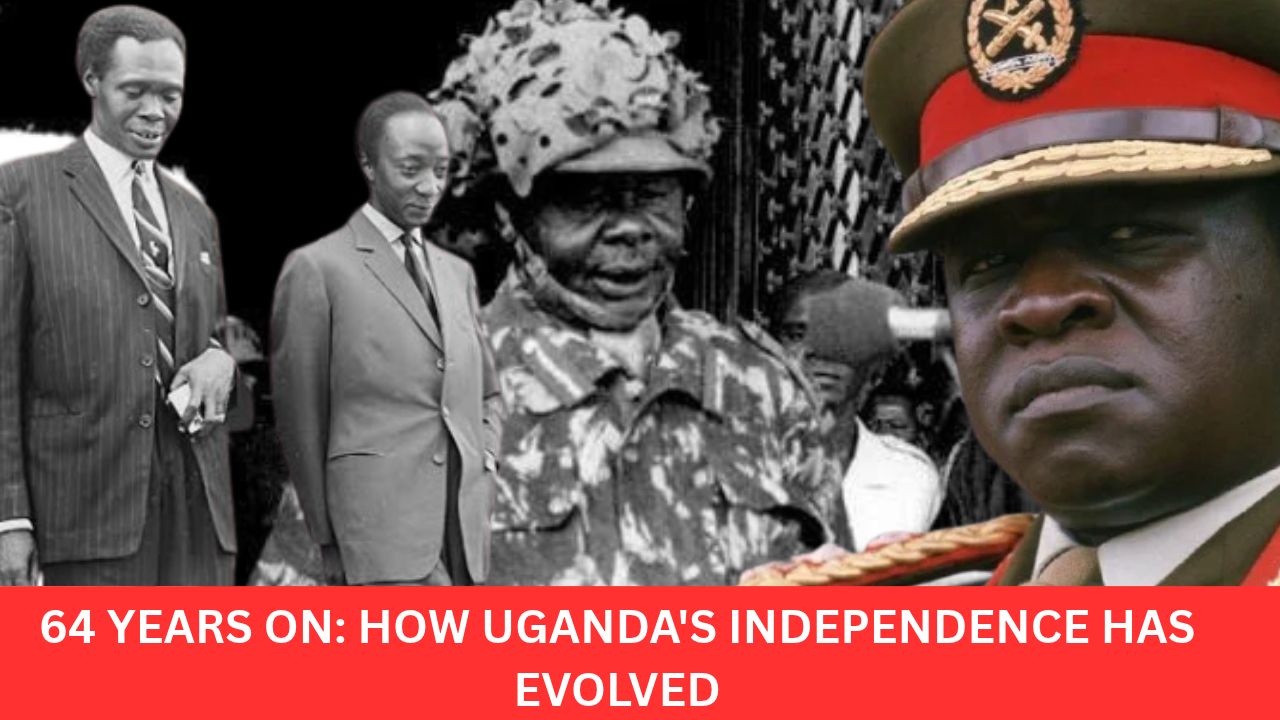 FeaturedOctober 8, 2026UGANDA AT 64: From Obote Receiving the Instruments of Power in 1962 to Museveni Receiving a National Medal in 2026, Uganda’s Independence Story Remains Unfinished. We Journey With You the Thorney 6+ Decades of Uhuru
 FeaturedOctober 8, 2026AFRICA MUST PREPARE FOR NEW WARS – MUSEVENI: The President Challenges Defence Chiefs to Link Military Strength With Economic Power, Political Stability and Regional Integration as African Armies Rethink Security Beyond Conventional Warfare