
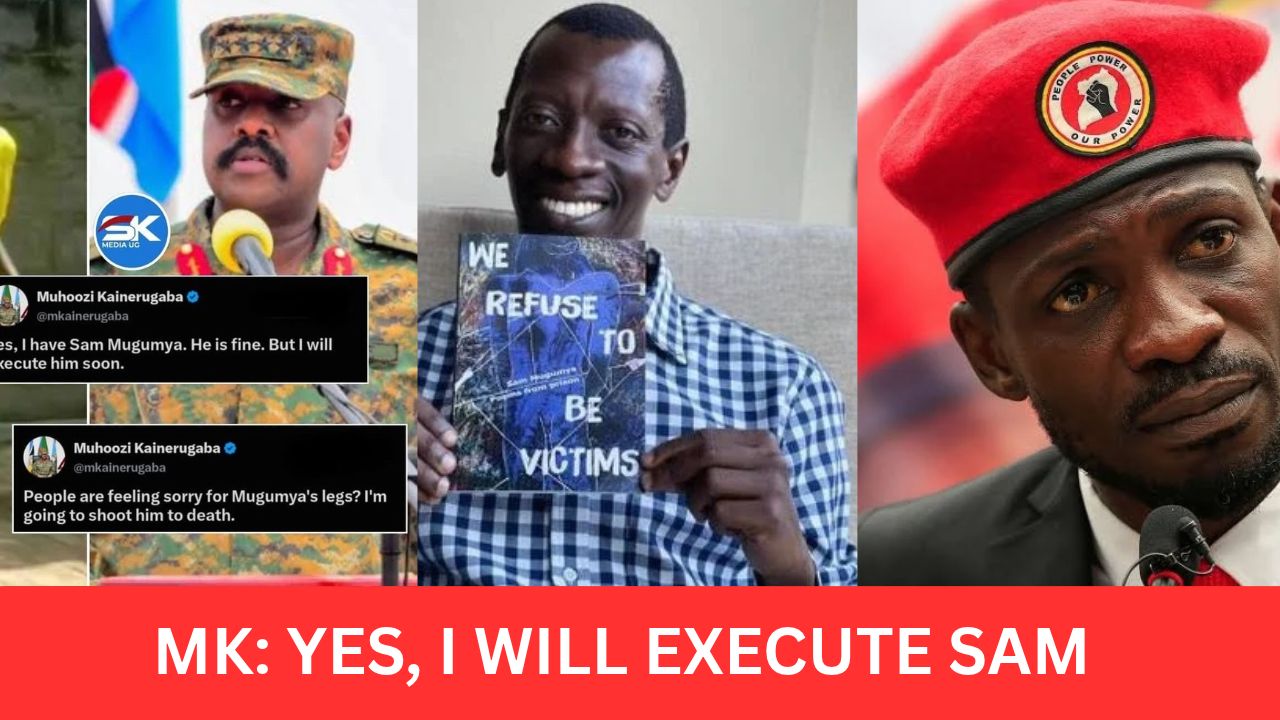







KAMPALA, Uganda: Lt. Herbert Mabonga, the soldier who earlier this week attracted public attention after releasing video footage showing opposition activist Sam Mugumya appearing to struggle to walk following alleged torture in detention, has now publicly confirmed his association with controversial gold dealer Carlos Cohen.
In a video posted on TikTok last night, Mabonga defended Cohen as a legitimate investor and portrayed himself as someone providing private security services to the businessman. The disclosure has added a new factor to the growing controversy surrounding Cohen, a foreign gold dealer whose activities in Uganda have increasingly drawn attention from security agencies, gold traders and, reportedly, the highest levels of government.
Mabonga came into the limelight after publishing the above mentioned footage of Mugumya, which spread widely on social media and triggered public outrage over the alleged treatment of the opposition activist while in detention. However, the footage also brought Lt. Herbert Mabonga himself under scrutiny.
His association with Cohen had previously been noted, and his appearance alongside the gold dealer raised questions about the businessman he was protecting and the circumstances under which Cohen had established himself in Uganda’s lucrative gold industry. Mabonga’s subsequent defence of Cohen has now made those questions even more difficult to ignore. For starters, it’s important to profile the person of Carlos Cohen.
Who is He
Until recently, Cohen Ferreira Carlos Partricio was a relatively obscure figure in Uganda’s gold-trading circles. He moved around in an armoured vehicle, surrounded by the kind of security and pomp commonly associated with high-value gold dealers. But unlike many of the indigenous gold traders who have operated in Uganda for years, Cohen’s profile suddenly rose after a purported letter from President Yoweri Museveni to the Inspector General of Police, directing the police chief to personally supervise investigations into a multimillion-dollar gold scam.
The letter, whose authenticity has been questioned by some people familiar with its circulation, was titled “INTERVENTION IN A GOLD SCAM CASE” and addressed to IGP Abas Byakagaba. In it, President Museveni purportedly recounts a complaint from two gold buyers, Gafar Ibrahim and Nagi Muhammed, Cohen`s collegues, who claimed to have lost hundreds of thousands of United States dollars to individuals they described as fraudsters.
“I have got a letter dated the 29th of June, 2026 from two gold buyers by the names of Gafar Ibrahim … and Nagi Muhammed,” the purported presidential letter begins. According to the document, the two complainants had narrated how large sums of money were allegedly taken from them in a gold transaction and how they subsequently reported the matter to several security agencies.
Among those named were Col. Edith Nakalema, Senior Presidential Advisor on Anti-Corruption and head of the State House Investors Protection Unit; Brig. Gen. Henry Isoke, who heads the State House Anti-Corruption Unit; Crime Intelligence, headed by Gen. Christopher Ddamulira; Uganda Police Force under IGP Byakagaba; and the military intelligence authorities.
The letter purportedly expresses the President’s dissatisfaction with the progress of the investigations. “All these have not helped them,” the document states, before directing the Inspector General of Police to personally take charge of the matter. “This is therefore to direct you to personally oversee the investigation of this scam, apprehend these criminals and recover their money,” the letter says.
It then reportedly gives the police chief two months to resolve the matter, subject to verification of the complainants’ claims. “I give you 2 months to solve this problem if the accusers are saying the truth,” the letter states.
Copies of the purported correspondence were reportedly circulated to several of the parties involved, including Ibrahim Muhammed Gafar. Yet, while Cohen’s name does not appear in the presidential letter, we have traced the circumstances surrounding the complaint to a much more intriguing figure, Cohen Ferreira Carlos Partricio, commonly known as Carlos Cohen.
According to information obtained by The Investigator, Cohen is alleged to have been instrumental in facilitating access between Gafar and Nagi and senior authorities at State House. That development raises a larger question of who exactly, is Carlos Cohen, the foreign gold dealer whose business dealings have apparently attracted presidential attention?
Who Exactly Is Carlos Cohen?
Cohen Ferreira Carlos Partricio was reportedly born on September 30, 1978, in Angola, to Alipio Joaquim Ferreira and Celeste Cohen. His early life and movements remain difficult to independently establish, but available information suggests that he left Angola in the late 1990s and eventually settled in Portugal, where he is said to have acquired citizenship.
His nationality and identity have, however, become a subject of discussion. In some circles, he has reportedly been described as Portuguese, while other accounts have associated him with Israel. The circumstances surrounding these different descriptions remain unclear. More significantly, records reportedly obtained from Portugal point to a long-running criminal case involving a person bearing Cohen’s name.
The records relate to proceedings before the Albufeira District Court (Tribunal Judicial de Albufeira) in Portugal’s Algarve region. According to those records, Cohen has for years been wanted in connection with criminal allegations involving unlawful appropriation, fraud and document forgery.
The case reportedly dates back to the early 2000s and concerns allegations that, if established in court, could have serious consequences. The Portuguese proceedings are particularly significant because they reportedly show that the defendant became difficult for authorities to locate.
The Allegations
The first allegation cited in the Portuguese proceedings is unlawful appropriation. In general terms, unlawful appropriation involves taking, using or retaining property belonging to another person without lawful authority or consent. The precise legal meaning and applicable penalty depend on the circumstances and the relevant provisions of Portuguese law.
The second allegation is simple fraud, or burla simples. Under Article 217 of Portugal’s Penal Code, fraud generally concerns obtaining an unlawful financial benefit by causing another person to act under an error or deception.
The third allegation concerns document forgery, commonly referred to in Portuguese as falsificação ou contrafacção de documento. The relevant provision, Article 256 of the Portuguese Penal Code, addresses conduct involving the falsification, alteration or misuse of documents where the statutory elements of the offence are met.
The 2006 Court Ruling
The Portuguese court records provide an unusual insight into what happened after Cohen became unavailable to the authorities. The proceedings are identified under Common Trial No. 451/00.0JAFAR, with Notice No. 2467/2006. According to the records cited, the matter was before the 2nd Court of the Albufeira District Court under Judge Dr. Patricia Malveiro.
On May 18, 2006, Cohen was reportedly declared contumacious under Article 335 of Portugal’s Code of Criminal Procedure. In simple terms, a declaration of contumacy is a legal mechanism applied when a defendant remains absent from proceedings in circumstances provided for by law. It can result in the suspension of proceedings until the defendant appears or is arrested.
A subsequent ruling stated thus; “The declaration of contumacy, which expires upon the defendant’s appearance in Court or arrest…” The ruling further provided for the suspension of the trial pending Cohen’s appearance or arrest and outlined additional legal consequences arising from the declaration.
Among those consequences was the restriction of certain legal and administrative transactions and the acquisition of specified official documents. The court consequently suspended the proceedings pending his arrest or appearance. That development would leave the case hanging over Cohen for years.
From Portugal to Dubai
According to the account being investigated by The Investigator, Cohen subsequently left Portugal and travelled to Dubai. It is from Dubai, according to the same account, that his Ugandan chapter began. While in Dubai, Cohen became acquainted with individuals connected to Uganda, eventually being introduced to a Ugandan national identified as Joram Itungo.
Itungo is described in the account as a 36-years long-serving State House employee. According to sources cited in the investigation, Itungo became an important link between Cohen and Uganda. After establishing contact with Itungo, Cohen travelled to Uganda. It was here, according to the account, that his involvement in Uganda’s gold trade began to attract increasing attention.
The Gold Business and the Disputes
Uganda’s gold trade is a lucrative but controversial sector, involving local traders, foreign buyers, brokers, refiners, investors and intermediaries. For Cohen, the business appears to have involved transactions running into millions of dollars. One of the disputes associated with him concerns a transaction in which he reportedly approached police at the Entebbe Aviation Police (AVIPOL), claiming that he had been defrauded of gold worth approximately USD1.6M.
That complaint adds another layer to a story that has increasingly become complicated by competing claims of victimhood. On one side are gold buyers who say they were defrauded and have sought the intervention of Uganda’s security agencies and State House. On the other are questions surrounding Cohen’s own history, including the unresolved proceedings reportedly pending against a person bearing his name in Portugal.
The result is an unusual situation in which an individual whose past is itself the subject of unresolved legal questions has emerged as a central figure in a dispute in Uganda involving claims of gold fraud running into hundreds of thousands, and potentially millions, of dollars.
Why President Museveni`s Intervention
The purported presidential letter is significant. Not merely because of the money involved, but because of the extraordinary number of security and anti-corruption institutions reportedly approached before the matter reached the President. The correspondence names State House anti-corruption officials, Police, Crime Intelligence and military intelligence authorities.
The President’s reported instruction that the Inspector General of Police personally oversee the investigation is therefore likely to attract considerable public interest. But there is another question that remains unanswered. Why did a dispute involving private gold transactions require intervention at the highest level of government?
And perhaps more importantly, what was the precise relationship between Cohen, the complainants and the individuals who facilitated their access to State House? Those questions are at the heart of the continuing investigation.
The Bigger Questions
Cohen’s story raises a number of issues that authorities may ultimately have to clarify. First, what is his precise immigration and citizenship status in Uganda? Second, what is the current legal status of the Portuguese proceedings reportedly registered against him? Third, was the Portuguese arrest warrant ever executed, withdrawn, cancelled or otherwise disposed of?
Fourth, what exactly brought Cohen to Uganda’s gold market? Fifth, what was his relationship with the Ugandan officials and intermediaries who reportedly helped him establish contacts?
And finally, what was the precise nature of the gold transactions involving Gafar Ibrahim and Nagi Muhammed that ultimately triggered the purported presidential intervention? These questions cannot be conclusively answered merely by the existence of court records or complaints. They require documentary verification, responses from the individuals named, and clarification from the relevant authorities.
For now, what is clear is that Cohen Ferreira Carlos Partricio has moved from relative obscurity to the centre of a gold controversy that has reached the highest levels of Uganda’s security establishment. His reported history in Portugal, his movement through Dubai, his arrival in Uganda, his links to influential intermediaries and the multimillion-dollar gold disputes surrounding him form a complex trail that raises more questions than answers.
And as the Portuguese proceedings reportedly remain tied to his appearance or arrest, the next chapter of the Cohen story may ultimately depend not only on what happened in Uganda’s gold market, but also on whether the long-running legal questions surrounding his past are ever brought to a final conclusion.
Author Profile

- Stanley Ndawula is a two and a half decades’ seasoned investigative journalist with a knack for serious crimes investigations and reporting. He’s the Founding Editorial Director and CEO at The Investigator Publications (U) Limited
Latest entries
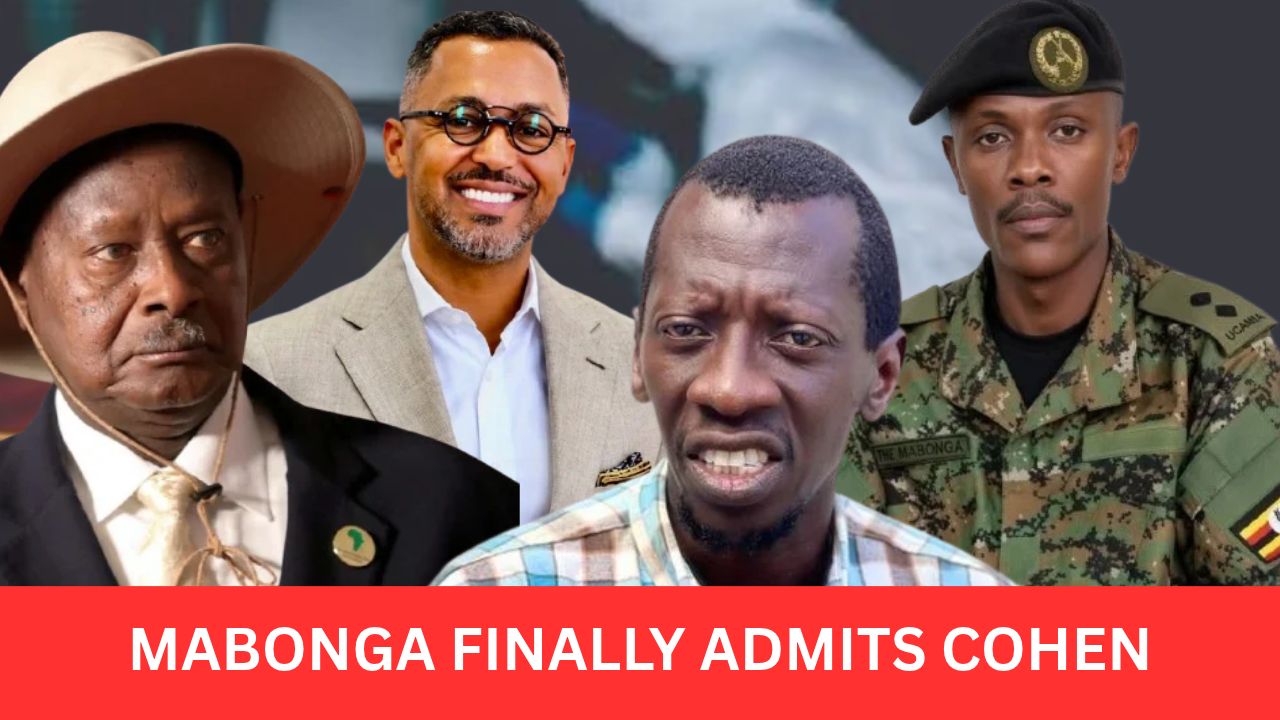 BusinessOctober 3, 2026NEW KID ON THE CELEBRITIES` BLOCK LT. HERBERT MABONGA UNVEILS HIS CONNECTIONS WITH THE PORTUGESE FUGITIVE: But Who Is Carlos Cohen? The Runaway Gold Dealer With M7`s Ear
 UncategorizedOctober 1, 2026ONE YEAR WITHOUT YOU, NDUGU TATYA: A Tribute to My Friend, Colleague and Brother, Daniels Nabongo Tatya, “The Prince Of Journalism, The Man From the Mineral-Rich Busoga”
 BusinessSeptember 25, 2026OF DEPUTY MUFTI SHEIK DR. HAFIDH MUHAMMAD HARUNAH BUKENYA`S BAD GOLD DEAL AND THE MISSING FILE: DPP Lino Anguzu Petitioned Over the Handling of the UGX1 Billion Criminal Case
 EducationSeptember 23, 2026MY LAST WORD ON FALLEN KING OYO`S SUCCESSION TREK: Maybe Ugandans Love a Good Story! But Punish Not the One Who Asks for Proof Simply Because the Story is Too Good to be Questioned