








Uganda has commenced a historic withdrawal of its troops from Somalia, bringing to an end nearly two decades of military engagement in one of Africa’s longest and most dangerous peace-support and counter-insurgency operations.
In a statement issued on Monday, UPDF Acting Director of Defence Public Information, Col Chris Magezi, confirmed that the military had started withdrawing troops deployed in Somalia under bilateral arrangements with the Federal Government of Somalia, with the first group of soldiers already arriving back in Uganda.
The announcement marks a significant turning point in Uganda’s military involvement in the Horn of Africa, where thousands of Ugandan soldiers have served, fought and died since the first UPDF contingent landed in Mogadishu in March 2007.
Col Magezi said the initial withdrawal would be completed within days, although the larger exercise involving all Ugandan forces in Somalia would continue in phases.
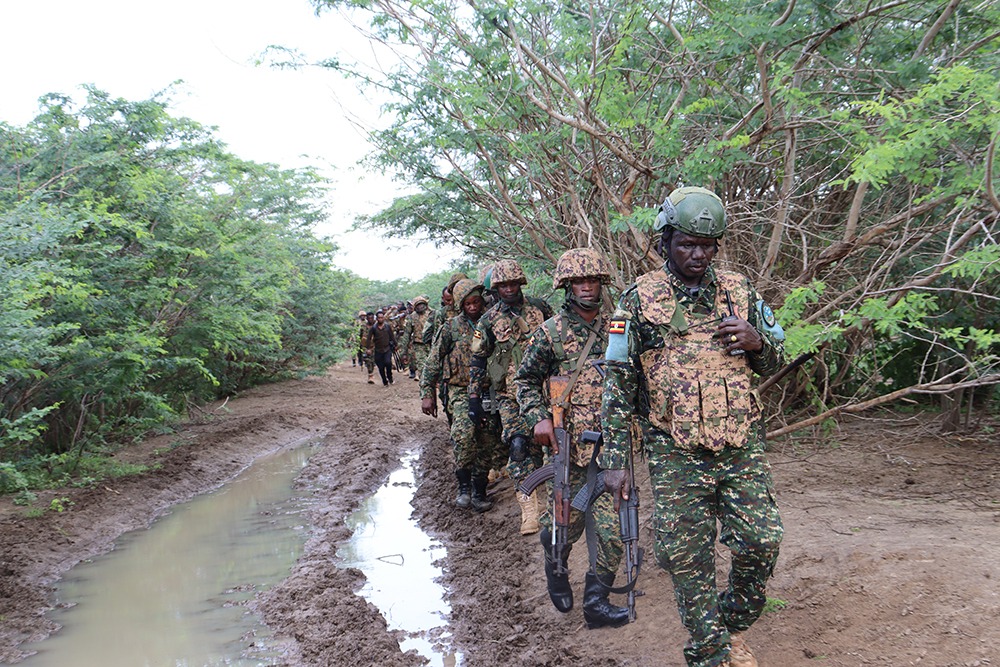 “The Uganda People’s Defence Forces (UPDF) has embarked on the drawdown of troops deployed in Somalia under bilateral arrangements with the Federal Government effective immediately. The first cohort of troops under the phased withdrawal operation have already arrived back in Uganda,” he said.
He added that the withdrawal would eventually cover troops serving under the African Union Support and Stabilisation Mission in Somalia (AUSSOM), the continental security mission responsible for supporting the Somali government against armed insurgencies.
“The UPDF will gradually withdraw all its forces in Somalia, including those currently deployed under the African Union Support and Stabilization Mission in Somalia (AUSSOM) by the close of 2027,” Col Magezi announced.
He said the withdrawal would mark the end of Uganda’s enduring 20-year peace and stabilisation support operations in Somalia, allowing the Somali Armed Forces to assume full responsibility for the country’s security.
The announcement effectively places Uganda’s long-running Somalia mission on a countdown, with the final departure of its troops expected by December 2027.
From the 2005 reconnaissance to the 2007 deployment
Uganda’s military involvement in Somalia did not begin with the arrival of its first soldiers in Mogadishu. The groundwork was laid in 2005 when President Yoweri Museveni dispatched senior security officers to assess the political and military situation in the conflict-ravaged country.
The officers included then Brig Peter Elwelu, Brig Dick Olum and Gen Kale Kayihura. They travelled to Baidoa, where Somalia’s Transitional Federal Government was operating after being driven out of Mogadishu.
Their assignment was to examine the country’s security situation, assess the possibility of deploying Ugandan troops and establish the military requirements for such an operation.
Following the reconnaissance, Museveni convened senior military commanders and other government officials in June 2006 to discuss the proposed deployment. The army subsequently embarked on preparations, including training, mobilisation of equipment and logistical arrangements.
The first contingent, comprising approximately 1,700 soldiers, assembled at Singo Military Training School in November 2006 for mission-specific training.
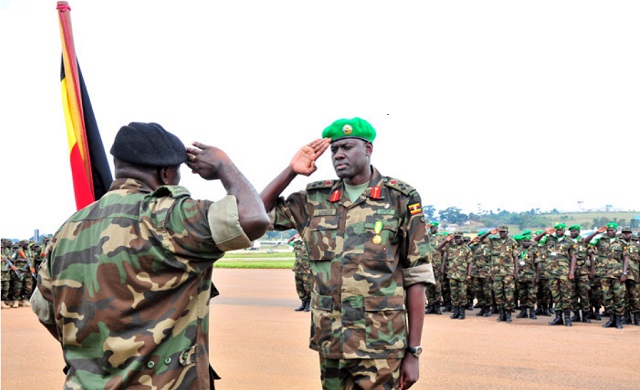 On March 6, 2007, the first UPDF troops landed in Mogadishu, becoming the first African Union contingent to deploy under the African Union Mission in Somalia (AMISOM), whose formal operations began the following day.
The initial deployment comprised two battalions, with the mission tasked with protecting Somalia’s transitional government, supporting reconciliation efforts and helping establish conditions for lasting peace.
However, the Ugandan soldiers quickly discovered that they were entering a battlefield rather than a conventional peacekeeping environment.
Somalia had been engulfed in civil war since 1991, following the collapse of Siad Barre’s government. Successive attempts to restore central authority had failed, while extremist groups and armed factions controlled large parts of the country.
Al-Shabaab, which emerged from the Islamic Courts Union, became the principal security threat, launching attacks against government institutions, African Union forces and civilians.
AMISOM therefore evolved from a conventional peacekeeping assignment into a demanding combat and stabilisation operation.
By the time the first Ugandan soldiers arrived, the Somali government had little control over Mogadishu, and the UPDF had to fight to secure strategic installations, government institutions and vital infrastructure.
Generals who shaped Uganda’s Somalia mission
Over the years, several senior Ugandan military officers have commanded troops or held senior operational responsibilities within the African Union mission.
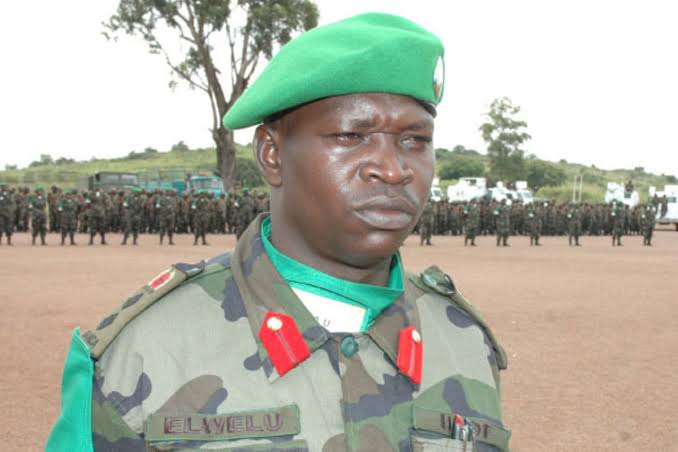 One of the most prominent names is retired Maj Gen Peter Elwelu, who commanded the first Ugandan contingent that landed in Mogadishu in March 2007.
Elwelu, who later rose to become Deputy Chief of Defence Forces, was among the officers who had earlier participated in the reconnaissance mission to Somalia.
He was succeeded by a succession of commanders, including Brig Godfrey Golooba, Brig Jack Bakasumba, Brig Tumusiime Katsigazi and Brig Michael Ondoga.
Another prominent figure was Maj Gen Paul Lokech, popularly remembered for his aggressive battlefield leadership and association with the operations that helped reclaim strategic areas from Al-Shabaab.
Lokech commanded the Ugandan contingent from May 2011 to November 2012 during an important period in the campaign against the militants. He returned for another tour as contingent commander between December 2017 and December 2018.
His military career in Somalia earned him considerable recognition, with his name becoming associated with the battlefield successes of Ugandan troops.
Other officers who subsequently commanded Ugandan contingents included Brig Dick Olum, Brig Sam Kavuma, Brig Sam Okiding, Lt Gen Kayanja Muhanga, Maj Gen Michael Kabango, Lt Gen Richard Otto and Brig Don Nabasa, among others.
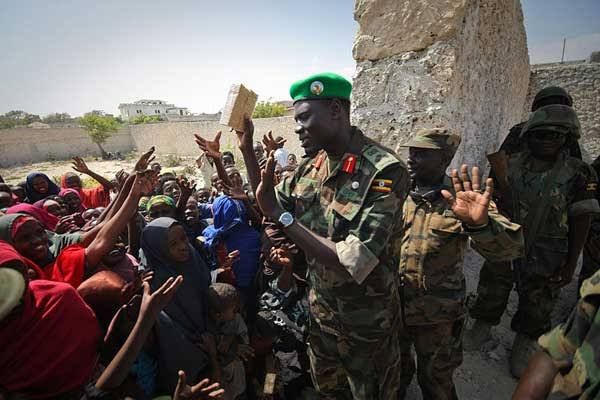 Nathan Mugisha, Lakara and Owoyesigire’s strategic leadership
Beyond the commanders directly leading Ugandan battalions and battle groups, Uganda also supplied several senior officers who rose to command the multinational African Union force.
Maj Gen Nathan Mugisha was among the most influential Ugandan officers in the mission. He served as AMISOM Force Commander from August 2009 to August 2011, overseeing troops drawn from different African countries.
His tenure coincided with some of the fiercest fighting in Mogadishu as AMISOM forces attempted to expand the territory under government control and weaken Al-Shabaab’s grip on the capital.
He was succeeded by Maj Gen Fred Mugisha, who served as Force Commander between August 2011 and May 2012. Other Ugandan officers who held the position included Maj Gen Levy Karuhanga and Maj Gen Francis Okello.
Another important name was Lt Gen James Nakibus Lakara, who served as AMISOM Deputy Force Commander in charge of logistics and support from April 2015 to October 2016.
His responsibilities involved coordinating the logistical requirements of a multinational force operating in a difficult environment, where supplying troops with food, ammunition, fuel, medical services and equipment was critical to sustaining military operations.
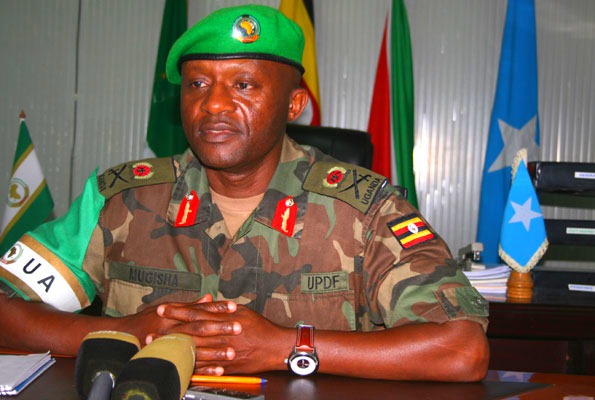
Lakara was subsequently appointed Deputy Force Commander in charge of Operations and Plans in February 2019, marking his second tour in the senior AMISOM leadership.
He became one of the longest-serving Ugandan officers in the mission’s senior command structure.
Lt Gen Jim Beesigye Owoyesigire was another Ugandan officer who assumed the influential position of AMISOM Force Commander.
A former Air Force commander, Owoyesigire took over from Burundian Lt Gen Osman Noor Soubagleh in January 2018.
His appointment was significant because it placed another Ugandan at the helm of the multinational military operation, which was responsible for coordinating the fight against Al-Shabaab and supporting the development of Somali security forces.
Upon assuming command, Owoyesigire pledged to continue the campaign against the militants while strengthening the capacity of the Somali National Army.
He emphasised the need to destroy Al-Shabaab’s remaining strongholds and ensure a gradual transfer of security responsibilities to Somali forces.
His leadership also coincided with efforts to move the mission towards a conditions-based transition, under which Somali forces would progressively take over security responsibilities from the African Union contingent.
These appointments demonstrated Uganda’s influence in the mission, not merely as a major troop-contributing country but also as a provider of senior military leadership.
The price of two decades of military engagement
Uganda’s Somalia mission came at a considerable human and material cost. The UPDF fought in an environment characterised by roadside bombs, suicide attacks, ambushes, urban warfare and sustained assaults on military installations.
Al-Shabaab repeatedly targeted Ugandan positions, convoys and military bases, forcing the UPDF to adapt its tactics and deploy additional military capabilities.
The operation also required enormous logistical resources, including armoured vehicles, artillery, ammunition, troop rotations and medical evacuation arrangements.
The Ugandan contingent expanded considerably from its initial deployment, becoming one of the largest components of the African Union force.
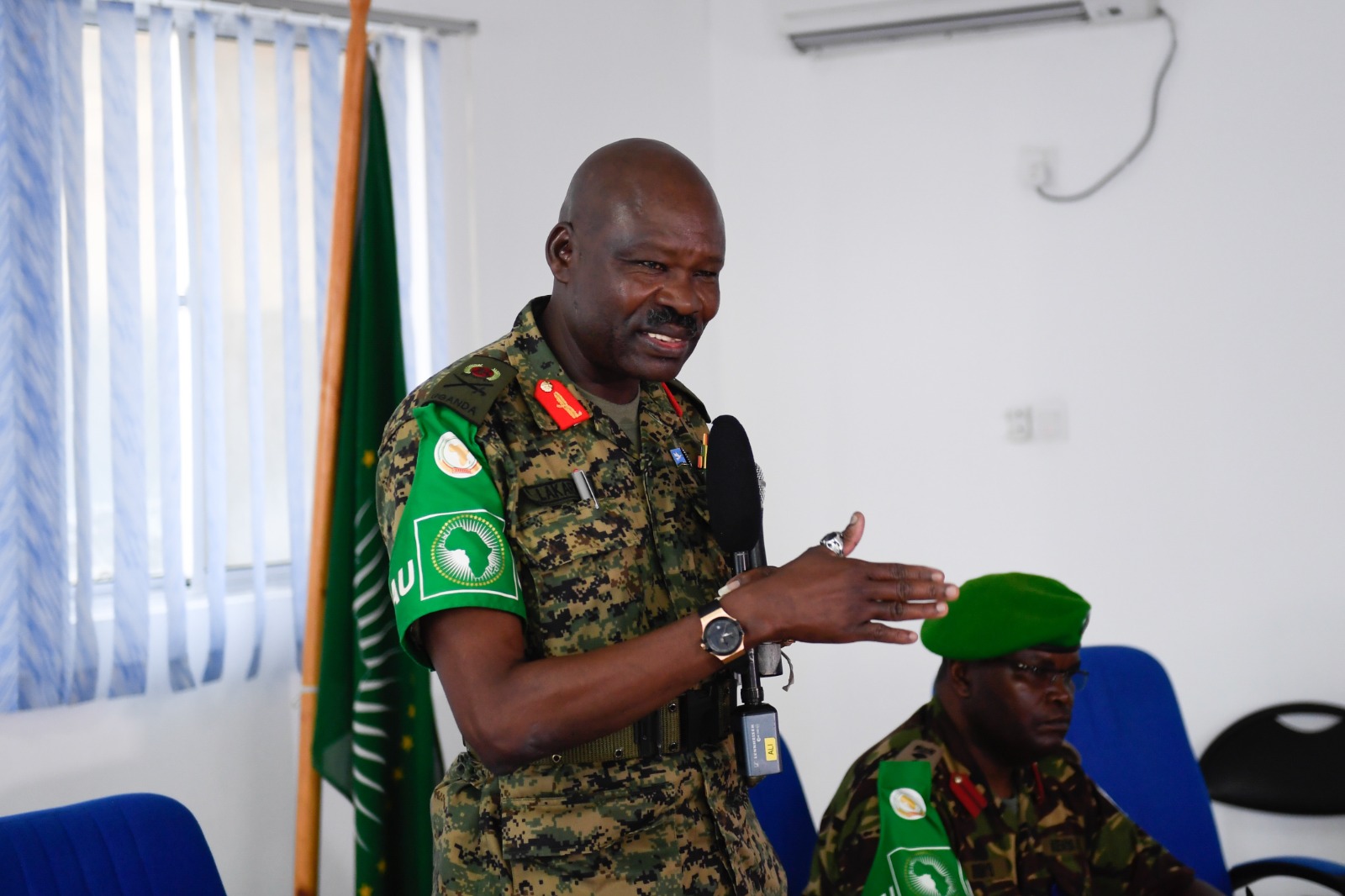 Ugandan soldiers participated in operations to secure Mogadishu and surrounding areas, protect important installations and support the Somali government in extending its authority beyond the capital. The mission also evolved institutionally.
AMISOM was replaced by the African Union Transition Mission in Somalia (ATMIS) in April 2022, with an emphasis on progressively transferring security responsibilities to Somali forces.
In January 2025, ATMIS was succeeded by the African Union Support and Stabilisation Mission in Somalia (AUSSOM), which continued supporting the Somali government in its fight against Al-Shabaab.
The final countdown to December 2027
The withdrawal announcement comes against the backdrop of growing expectations that Somalia should eventually assume full responsibility for its security after years of international military assistance.
For Kampala, the decision represents the conclusion of a major chapter in its regional security engagements.
The latest statement by Col Magezi is particularly significant because it makes clear that Uganda is not merely withdrawing soldiers deployed under bilateral arrangements but will also eventually pull out those serving under the African Union framework.
The distinction is important because the two deployments have operated under different arrangements, even though they have supported the broader objective of stabilising Somalia.
The first phase, involving troops deployed bilaterally with the Somali Federal Government, has already commenced, with the initial group returning home.
The larger withdrawal, including the AUSSOM contingent, will take place gradually until the end of 2027.
This means that Uganda’s military presence in Somalia, which began with the landing of the first UPDF soldiers in March 2007, will finally come to an end after more than 20 years.
For the soldiers who served in the mission, the withdrawal will represent the culmination of years of deployments, battlefield experiences, sacrifices and the loss of colleagues.
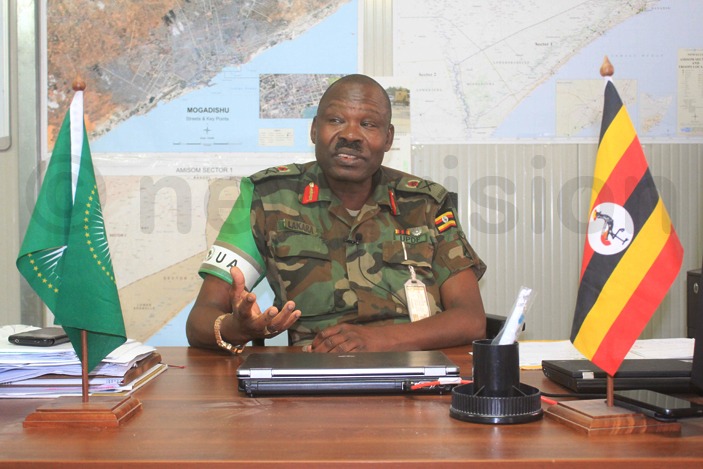 It will also mark the end of an era for senior military commanders such as Elwelu, Lokech, Nathan Mugisha, Lakara and Owoyesigire, whose names became associated with different stages of Uganda’s military involvement in Somalia.
However, the biggest test will be whether the Somali Armed Forces can sustain the security gains made over the years without the substantial military presence of foreign troops.
Al-Shabaab remains a formidable threat, and the transfer of responsibility will require continued investment in training, intelligence, logistics and the operational capacity of Somali security institutions.
For Uganda, the withdrawal is therefore not simply about bringing soldiers home. It is about concluding a mission that defined an entire generation of UPDF deployments outside the country’s borders.
As Col Magezi put it, the ultimate objective is to allow the Somali Armed Forces to assume full responsibility for their country’s security.
After two decades of fighting and sacrifice, Uganda is preparing to hand over the battlefield to the very people whose country its soldiers were sent to help stabilise.
Author Profile
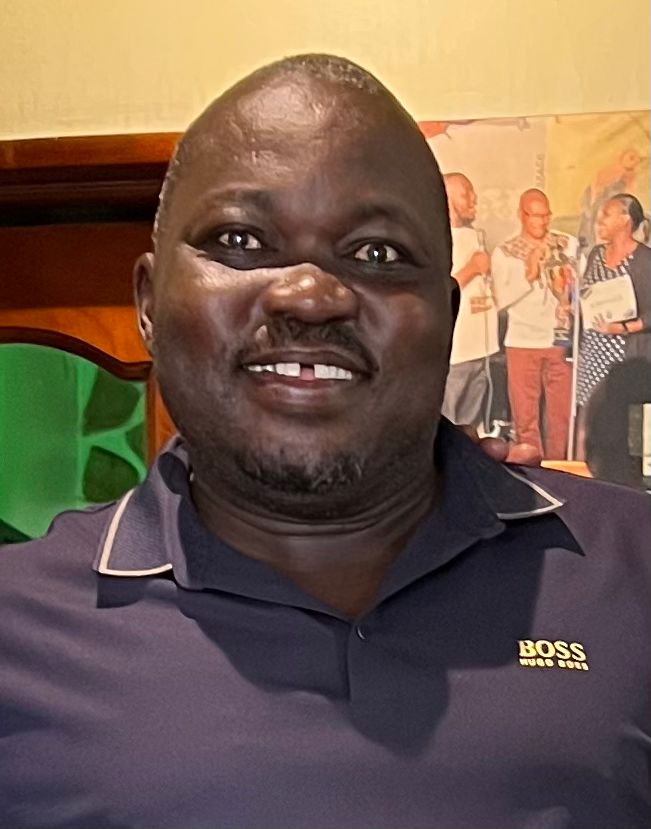
- Charles Gazza Kodili is a seasoned journalist with over 20 years of experience in the media industry. He holds a Bachelor of Arts degree in Mass Communication. He’s currently the Chief Editor at the Investigator.
Charles can also be reached via; Tel: +256 774 108978
Email: [email protected]
Latest entries
 FeaturedNovember 2, 2026WHY NEW VISION HAS AXED OFWONO OPONDO: The Veteran Columnist’s Criticism Of Muhoozi’s 2031 Project, Defence Of Otafiire And Questioning Of Museveni’s Succession Plans Reportedly Trigger Tensions With The Government Newspaper’s Editorial Leadership
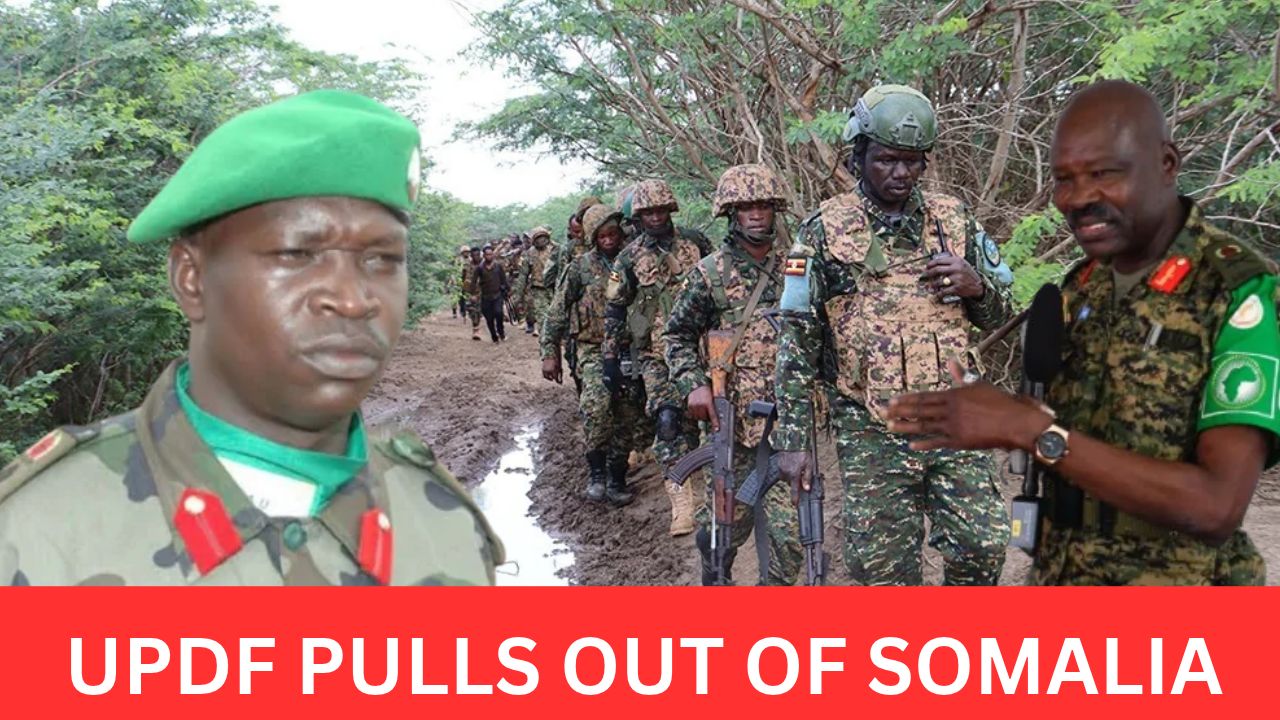 FeaturedNovember 2, 2026WHY THE UPDF IS ENDING ITS 20-YEAR WAR IN SOMALIA The Inside Story Of The 20-Year Operation, The Generals Who Commanded The Mission And The Sacrifices That Made Uganda A Regional Military Powerhouse
 FeaturedOctober 31, 2026MUHOOZI’S RDC TAKEOVER: WHY PLU WANTS TO VET EVERY MUSEVENI APPOINTEE! The CDF Declares That All New RDCs Must Pass The Organisation’s Scrutiny As PLU Seeks A Bigger Role In Determining Who Represents President Museveni Upcountry
 FeaturedOctober 30, 2026INTO THE CLASH OF TESO BIGWIGS OVER ELWELU: Why Ex Minister Musa Ecweru warned Retired Lt Gen Peter Elwelu to Surrender or Face the Full Force of Security! But Ambassador Nelson Ocheger Disputes Claims of Tension and Questions the Motives Behind the Intervention