























The Uganda Revenue Authority (URA) is considering how to respond to the growing shift from conventional telephone calls to cheaper internet-based communication services such as WhatsApp, as changing consumer habits threaten tax revenues generated from traditional voice calls.
URA Commissioner General John Rujoki Musinguzi says the increasing popularity of internet-based calls is affecting collections from ordinary voice services, with the growth in taxes collected from data consumption failing to compensate for the revenue lost as subscribers abandon conventional telephone calls.
The development presents a new challenge for the tax authority as Uganda’s telecommunications sector undergoes a transformation driven by cheaper internet access, smartphones and the growing popularity of over-the-top (OTT) communication platforms.
WhatsApp, which allows users to make voice and video calls through internet connections, has become an alternative to conventional mobile calls, particularly among people seeking to reduce communication costs.
Unlike traditional calls, which are billed through mobile network operators using established voice tariffs, WhatsApp calls consume internet data. This shift is changing the revenue structure of the telecommunications industry and raising questions about how government should respond to emerging digital services.
Musinguzi’s remarks point to a growing concern within URA: while Ugandans are consuming increasing amounts of internet data, the resulting tax collections are not growing at a rate sufficient to replace revenue previously generated through conventional voice communication.
The Commissioner General also raised concerns about unlicensed operators redistributing Wi-Fi services, an emerging business practice that could complicate the regulation of internet services and the collection of applicable taxes.

From voice airtime to internet data
The shift towards internet-based communication is part of a wider change in Uganda’s telecommunications market, where consumers increasingly prefer data bundles that allow them to communicate through several applications rather than purchasing airtime exclusively for voice calls.
WhatsApp, owned by Meta, has become one of the most widely used communication platforms, allowing subscribers to make voice and video calls, exchange messages, share documents and communicate across international borders without incurring the conventional per-minute charges associated with telephone calls.
Other platforms, including Facebook Messenger and Telegram, have similarly expanded the options available to consumers.
For a subscriber with an active internet bundle, making a WhatsApp call to a friend, relative or business associate can be considerably cheaper than purchasing airtime for a conventional call.
The economic consequences of this shift are significant for telecommunications companies and government.
Under the conventional model, a subscriber purchasing airtime to make a telephone call contributes to a revenue stream from which government collects applicable taxes. However, when that subscriber switches to internet calls, the operator earns revenue through data consumption instead of voice traffic.
Although internet data is also taxable, the difference in consumption patterns, pricing and applicable tax structures means that the revenue generated does not necessarily replace what government previously collected from voice services.
The problem is not that Ugandans have stopped spending money on telecommunications. Rather, they are spending it differently. Musinguzi’s concern is that the expansion of data consumption has not generated sufficient tax revenue to offset the decline in traditional voice-call collections.
This is an important distinction because it suggests that the challenge facing URA is not simply declining demand for communication services, but the changing composition of taxable telecommunications revenue.
Government will therefore have to consider whether the existing tax framework adequately reflects how Ugandans now communicate.

The history of Uganda’s controversial OTT tax
The debate over taxing internet-based communication is not entirely new in Uganda. In July 2018, government introduced a daily Over-The-Top (OTT) tax of Shs200 on users accessing social media platforms, including WhatsApp, Facebook, Twitter and other internet-based communication services.
The measure attracted considerable public criticism, with opponents arguing that it made access to information and communication more expensive.
The tax was particularly controversial because it was imposed at a time when social media was becoming an important platform for political debate, business promotion, news consumption and public engagement.
Critics also argued that the levy disproportionately affected low-income Ugandans who relied on affordable internet communication to keep in touch with relatives, conduct business and access information.
The tax triggered protests and encouraged some users to adopt Virtual Private Networks (VPNs) to circumvent the restrictions.
In July 2021, government replaced the daily OTT levy with a 12 per cent excise duty on internet data, a measure intended to broaden the tax base beyond individual social media applications.
Under the revised arrangement, consumers pay excise duty when purchasing internet data, rather than being charged a separate daily fee for accessing specific social media platforms.
The change effectively shifted the taxation model from taxing access to particular applications to taxing the internet data used to access digital services.
However, the fundamental challenge identified by Musinguzi remains: conventional telephone calls and internet-based calls generate different revenue patterns, and the growth in data-related collections has not been sufficient to compensate for declining voice-related taxes.
Uganda’s Excise Duty Act currently provides for a 12 per cent duty on airtime and internet data, subject to applicable exemptions and provisions. Telecommunications services are also subject to VAT under the country’s tax framework.
This means that the latest concerns should not automatically be interpreted as confirmation that government has introduced a new WhatsApp tax. Rather, they expose a revenue gap that URA wants addressed as the telecommunications industry evolves.

The Wi-Fi redistribution problem
Beyond the migration to internet calls, Musinguzi also raised concerns about unlicensed operators purchasing internet connectivity and redistributing it to customers without the necessary authorisation.
The practice involves individuals or businesses purchasing internet services from licensed telecommunications and internet service providers, then reselling access to other users through Wi-Fi hotspots.
Such arrangements have become increasingly attractive in residential neighbourhoods, trading centres, shopping areas, schools and other locations where consumers want affordable internet access.
Instead of purchasing individual data bundles from established telecommunications companies, customers pay a smaller amount to connect to a shared Wi-Fi network.
While the arrangement offers cheaper connectivity, it has raised concerns among regulators about licensing, tax compliance, consumer protection and the sustainability of investment in the telecommunications sector.
The Uganda Communications Commission (UCC) has already identified the scale of the problem. In an October 13, 2026 statement, the regulator disclosed that approximately 4,000 unlicensed providers were offering public Wi-Fi services across the country.
According to UCC, these operators purchase high-speed fixed broadband, fibre-to-the-home connections and Fixed Wireless Access services, including 5G connectivity, before reselling internet access to the public without the required licences.
The regulator said licensed operators charged an average of Shs2,000 for one gigabyte, inclusive of taxes and other costs, while unlicensed distributors were selling the same quantity for approximately Shs1,000.
UCC estimated that the practice was causing government an annual tax revenue loss of approximately Shs148 billion.
The regulator described the operations as an economic crime, arguing that unlicensed distributors were benefiting from infrastructure developed by companies that invest heavily in telecommunications networks and comply with regulatory obligations.
The development has created a difficult regulatory environment in which consumers are attracted to cheaper internet services, while licensed operators complain that competitors are avoiding the costs associated with operating legally.
For URA, the concern extends beyond the decline in voice-call taxation to the possibility that an increasing proportion of internet consumption is taking place through distribution channels that are difficult to monitor and tax.
The growth of these informal networks could therefore undermine the revenue gains that government expects from increased internet penetration.

UCC moves towards enforcement
The Communications Commission has indicated that it intends to move beyond identifying unlicensed Wi-Fi operators and begin enforcing regulations governing the provision of telecommunications services.
Under the Uganda Communications Act, 2013, businesses providing telecommunications services to the public are required to obtain the appropriate licence from the regulator.
UCC argues that operators who redistribute internet connectivity without authorisation undermine the regulatory framework and expose consumers to risks. The commission has also raised concerns about the quality of services offered by unlicensed providers, the absence of effective complaint-handling mechanisms and the potential misuse of customers’ personal information.
There are also concerns that some operators use unapproved equipment that could interfere with licensed networks. The enforcement campaign is likely to create uncertainty for thousands of small businesses that have built their operations around selling affordable internet access.
For many consumers, particularly those in densely populated urban neighbourhoods, shared Wi-Fi has become an affordable alternative to expensive individual data bundles. However, regulators insist that affordability should not come at the expense of compliance with the law.
The dispute therefore presents government with a balancing act: expanding affordable internet access while ensuring that businesses providing telecommunications services meet their tax and licensing obligations.

The changing economics of telecommunications
The concerns raised by Musinguzi reflect a broader challenge facing governments across the world as traditional telecommunications businesses compete with internet-based platforms.
Historically, mobile network operators generated substantial revenue from voice calls and text messages. However, smartphones and affordable internet connectivity have changed consumer behaviour.
A subscriber who previously purchased airtime to make several international calls can now communicate with relatives abroad through WhatsApp. Businesses that traditionally relied on telephone calls increasingly use internet-based platforms to communicate with customers and suppliers.
Even government agencies, financial institutions and media organisations have embraced internet communication to reduce operational costs and improve accessibility. The result is a gradual migration of communication traffic from conventional telecommunications infrastructure towards internet-based services. For mobile network operators, this transformation has created both opportunities and challenges. On one hand, increased data consumption provides new revenue streams through internet bundles. On the other, declining voice traffic threatens traditional revenue sources.
For government, the challenge is ensuring that the taxation framework keeps pace with the changing business models without making internet access prohibitively expensive.
The issue is particularly important because telecommunications has become central to Uganda’s digital transformation agenda. Internet connectivity supports mobile banking, electronic commerce, digital education, remote working, government services and access to information.
Any additional taxation imposed on internet-based communication could therefore have consequences beyond the telecommunications industry.
Could WhatsApp calls attract a new tax?
Musinguzi’s remarks are likely to reignite debate about whether internet-based communication should be subjected to additional taxation to compensate for declining collections from traditional telephone calls.
However, there are important policy considerations before government can introduce such a measure.
First, consumers already pay taxes when purchasing internet data. Introducing an additional levy specifically targeting WhatsApp calls could raise questions about double taxation, particularly if the data used to make those calls has already attracted excise duty and VAT.
Second, internet-based communication is increasingly integrated into business operations. Additional costs could affect small businesses, online traders, freelancers and other individuals who depend on affordable connectivity.
Third, taxing specific applications could recreate some of the challenges associated with the former OTT tax, including concerns about affordability, access to information and the ability of consumers to circumvent restrictions. There is also the question of implementation.
Unlike conventional telephone calls, which are recorded and billed through mobile network operators, WhatsApp calls are encrypted and transmitted over internet connections. Any attempt to impose application-specific charges would require a clear legal and administrative framework.
Government would therefore need to establish whether the most appropriate intervention is to revise existing telecommunications taxes, improve compliance among internet service providers or broaden the tax base through other digital economic activities.
The experience of the 2018 OTT tax demonstrates the political and economic sensitivities surrounding attempts to tax internet communication.

A balancing act for URA
For Musinguzi and the tax authority, the immediate concern is protecting government revenue as consumer preferences continue to change.
URA must find ways of ensuring that growth in the digital economy translates into sustainable tax collections without discouraging investment, innovation and access to affordable communication services.
The authority also faces the challenge of improving collaboration with UCC and telecommunications companies to identify revenue leakages within the industry.
The concerns surrounding unlicensed Wi-Fi distributors could provide one avenue for improving compliance.
Bringing internet resellers into the formal regulatory system would potentially improve accountability, expand the tax base and create a more competitive environment for licensed service providers.
However, enforcement must also recognise the role played by small internet distributors in extending connectivity to communities that might otherwise struggle to afford conventional data packages.
A regulatory approach that simply shuts down affordable internet distribution without providing viable alternatives could undermine efforts to increase internet penetration.
The bigger question is how government can collect revenue from a telecommunications industry that is increasingly moving away from conventional voice calls towards data-driven services.
For Ugandans, the popularity of WhatsApp calls is largely about convenience and affordability. For URA, however, it represents a growing mismatch between the way people communicate and the traditional sources of tax revenue.
Whether the response will involve changes to existing taxes, stronger enforcement against unlicensed internet distributors or a broader review of telecommunications taxation remains to be established.
What is increasingly clear is that the growth of internet communication has disrupted the traditional economics of telephone calls, forcing government to reconsider how it taxes an industry undergoing rapid technological change.
The challenge for URA will be to protect the tax base without making the digital revolution more expensive for the very Ugandans it is supposed to benefit.
Author Profile

- Mr. Stephen Kasozi Muwambi is a seasoned crime investigative writer, majoring in judicial-based stories. His two decades’ experience as a senior investigative journalist has made him one of the best to reckon on in Uganda. He can also be reached via [email protected]
Latest entries
 FeaturedNovember 16, 2026URA’S PLOT TO TAX WHATSAPP CALLS EXPOSED! URA Commissioner General John Musinguzi Warns That Cheaper Internet-Based Calls Are Eroding Taxes Collected From Conventional Voice Services, With Rising Data Revenue Failing To Close The Gap
 FeaturedNovember 16, 2026INSIDE THE KING OYO FOUNDATION: Four Months After The Death Of The 34-Year-Old Tooro Monarch, His Family Has Launched A Foundation To Preserve His Memory Through Education, Youth Empowerment, Tourism, Conservation And Agriculture
 FeaturedNovember 16, 2026GARUGA ESTATE WAR: THREE CHILDREN DRAW BATTLE LINES AGAINST ALWYN: Rowena, Johnnie and Phillip Musinguzi Rally Behind Their Widowed Mother Peace, Accusing Their Elder Brother Of Frustrating Her Bid To Administer Their Late Father’s Multimillion-Shilling Estate
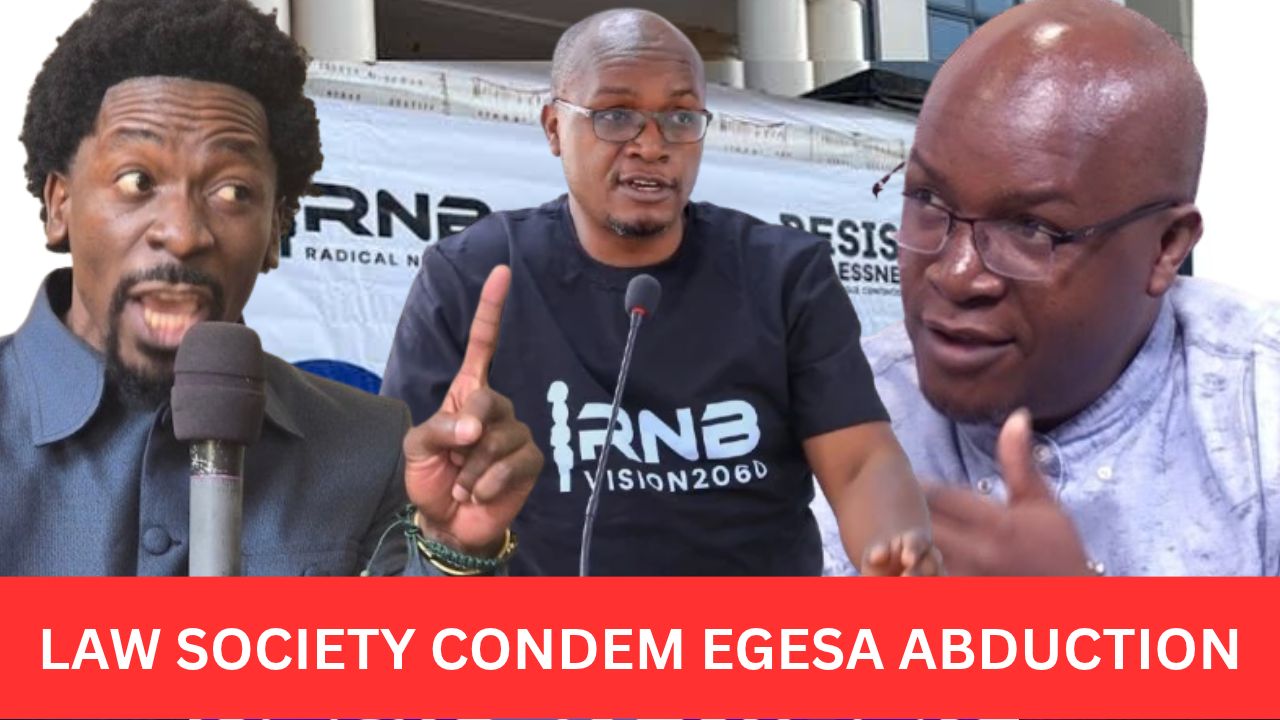 FeaturedNovember 14, 2026WHY EGESA WAS SNATCHED FROM RADIO ONE: Political Analyst Ronald Leonard Egesa Was Reportedly Bundled Into An Unmarked Van Shortly After An Akaboozi FM Talk Show, Prompting The Uganda Law Society To Condemn The Incident As An Abduction And Demand His Immediate Release