









The reported abduction of political commentator and business strategist Ronald Leonard Egesa from the premises of Radio One and Akaboozi FM has triggered fresh concerns about the safety of government critics, freedom of expression and the growing use of unidentified armed operatives in Uganda’s political environment.
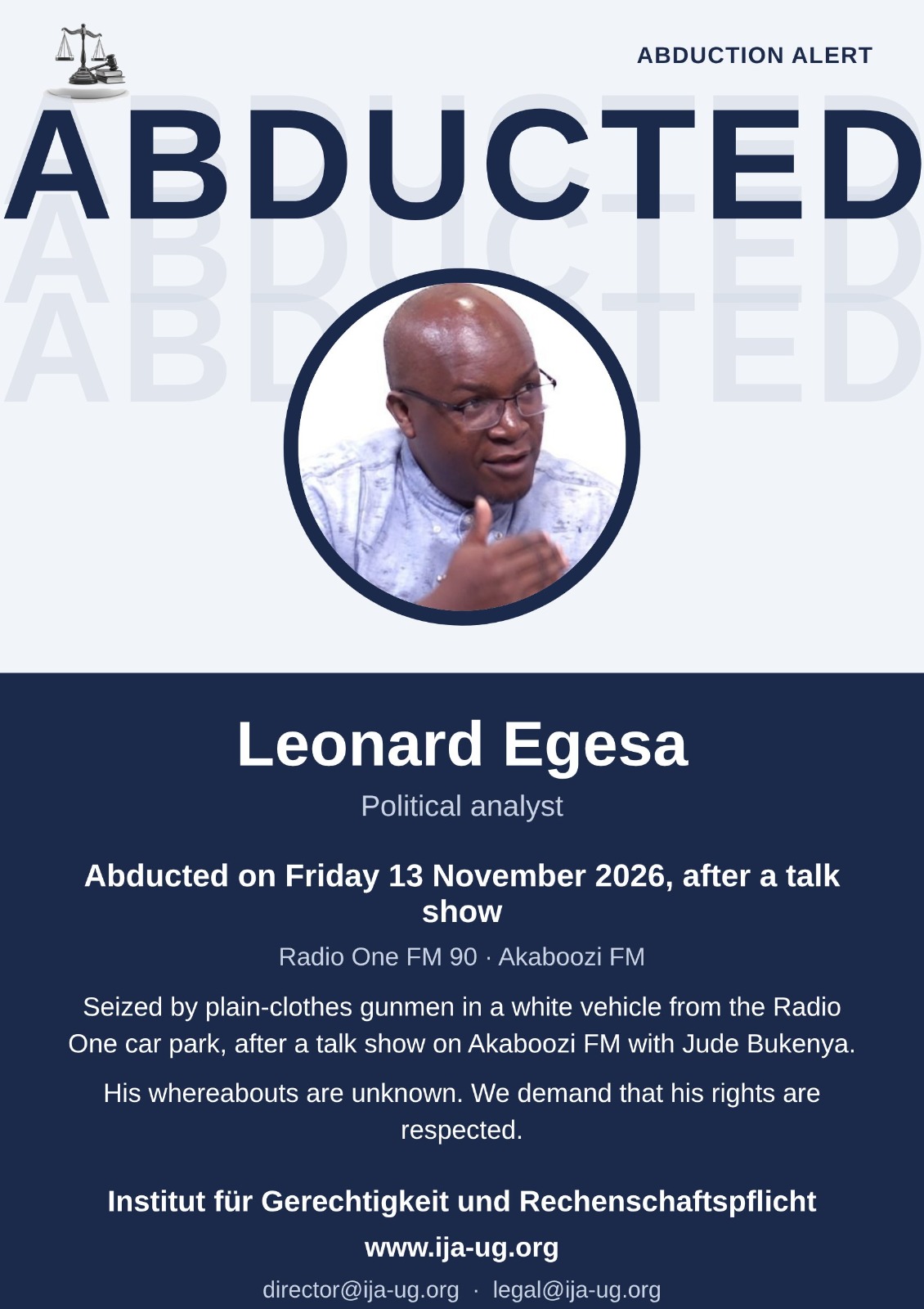
Egesa, popularly known as Leonard Egesa and identified on social media as @regesa, was reportedly seized on the evening of Friday, by armed men dressed in plain clothes shortly after participating in a political discussion on Akaboozi FM.
The men, reportedly travelling in a white unmarked van commonly referred to as a drone, are said to have intercepted him in the parking area of Radio One, whose premises also house Akaboozi FM, before forcing him into the vehicle and driving away.
The incident happened shortly after Egesa had participated in a talk show hosted by Jude Bukenya, alongside Harold Kaija and Henry Lubowa, where the panellists discussed political developments and current affairs.
 The circumstances surrounding the operation, including the identities of the men, the security agency they may have represented and the reasons for taking Egesa, remained unclear as of Saturday, November 14.
His whereabouts and physical condition had also not been publicly established.
Radio One was among the first media houses to raise the alarm, publishing a statement on social media in which it described the incident as an abduction and appealed to the Uganda Police Force and Uganda Media Centre to investigate.
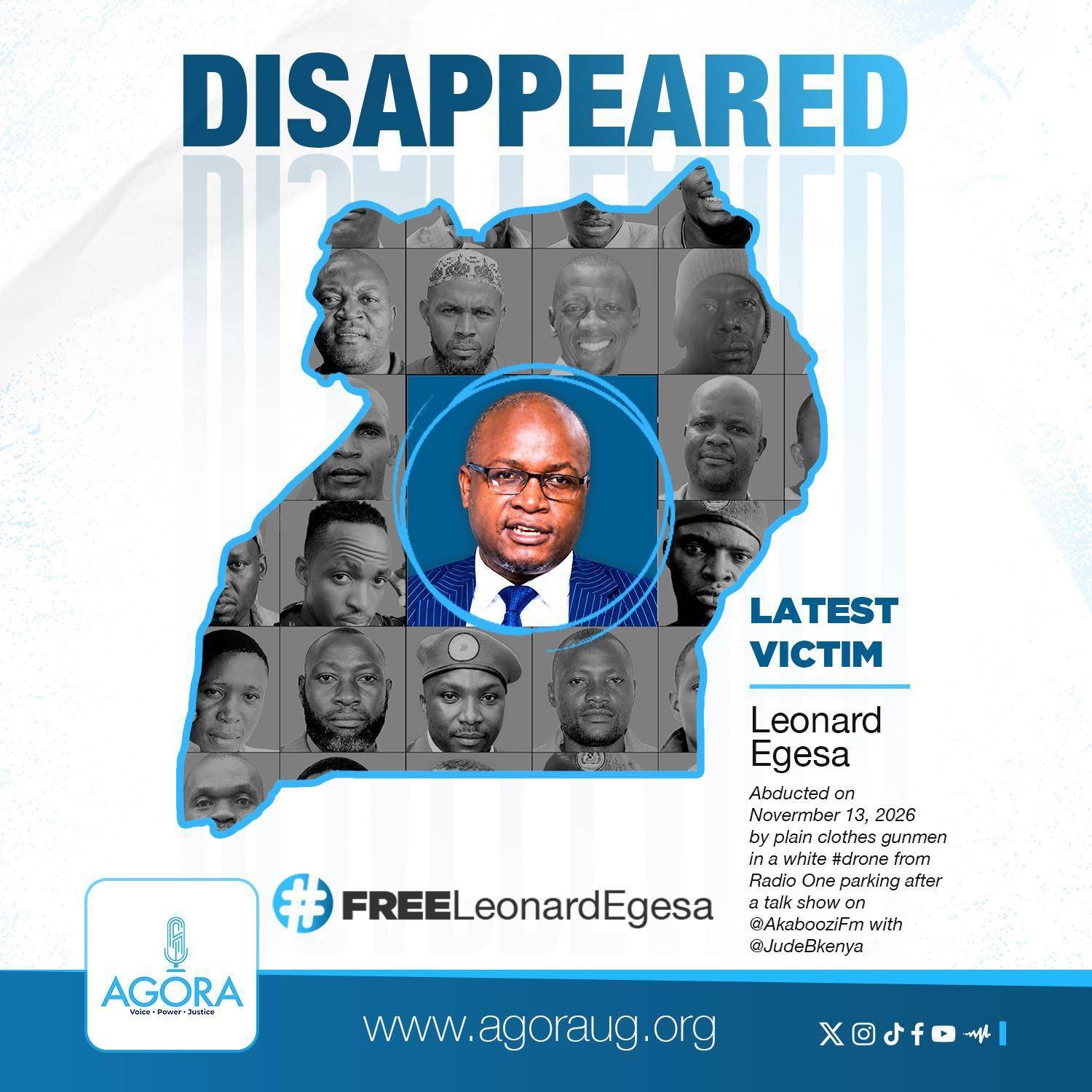
“Political Analyst Leonard Egesa @regesa has been abducted by plain clothes gunmen in a white #drone from Radio One parking after a talk show on @AkabooziFm with @JudeBkenya,” the station posted.
The station’s intervention brought the incident into the national spotlight, prompting journalists, lawyers, political activists and other commentators to demand answers about the disappearance.
Surveillance footage from the media house subsequently became central to the controversy, with the Uganda Law Society (ULS) confirming that it had obtained what it described as verified footage documenting the incident.
The footage was made public in the hope that members of the public could help identify the individuals involved and establish the circumstances under which Egesa was taken away.
The incident has particularly unsettled members of the media fraternity because it reportedly occurred within the premises of a broadcasting house, shortly after a programme in which Egesa had exercised his right to participate in public political debate.
It has also revived questions about whether media houses and their guests can conduct political discussions without fear of armed interference.
Uganda Law Society declares Egesa’s disappearance an enforced disappearance
The strongest condemnation came from the Uganda Law Society, whose president and Head of the Bar, Isaac K. Ssemakadde, SC, issued a strongly worded holding statement, describing the incident as an unlawful seizure and a serious violation of constitutional rights.
The lawyers’ body said it “strongly and unequivocally condemns” the reported abduction of Egesa, identifying him not only as a political analyst and strategist but also as the Chief Executive Officer of Magezi Harvest Ltd.
Ssemakadde disclosed that the Society had obtained surveillance footage from the media house documenting the incident and decided to publicise it to help obtain information about the perpetrators.
 According to the ULS president, Egesa was forcibly seized by armed men dressed in plain clothes who were travelling in a white unmarked van.
The Society was particularly concerned that the incident happened within the premises of a media organisation, arguing that the circumstances went beyond an ordinary security operation and raised serious questions about the independence of media institutions.
“This was not a lawful arrest. It was a brazen invasion of a media house premises, an abduction, and an enforced disappearance,” Ssemakadde declared.
He argued that taking a citizen away without disclosing the reasons, legal authority or place of detention amounted to a serious violation of Uganda’s Constitution, the Penal Code Act and the country’s international human rights obligations.
The Society specifically cited the International Covenant on Civil and Political Rights (ICCPR), which protects fundamental rights, including liberty, security of the person and freedom of expression.
The ULS also questioned the increasingly controversial practice of using unmarked vehicles and plainclothes operatives to take people away without publicly identifying the officers involved or explaining the legal basis for their actions.
In its assessment, the incident reflected a wider pattern of intimidation targeting individuals involved in public commentary, independent political analysis and criticism of those holding positions of power. The Society has made four principal demands.
First, it has demanded the immediate and unconditional release of Egesa, accompanied by full disclosure of his whereabouts and physical condition.
Second, it has called upon the Uganda Police Force and all security agencies to account for the operation, identify the individuals involved and investigate the matter as a criminal abduction rather than automatically treating it as an official security operation.
Third, the lawyers have demanded an end to the use of unmarked vehicles and plainclothes operatives to seize individuals from media premises, public spaces and private residences without following established legal procedures.
Finally, the ULS called for protection of media houses against intimidation and interference in the execution of their professional duties.
It also appealed to the Uganda Media Centre, Uganda Communications Commission, human rights organisations and the international community to treat the incident as an alleged enforced disappearance and demand accountability.
The statement was signed by Ssemakadde in his capacity as ULS president and Head of the Bar.
ULS raises alarm over alleged threats linked to PLU
 Perhaps the most politically sensitive part of the Law Society’s statement was its disclosure that Egesa had previously reported threats against his life allegedly involving individuals linked to the Patriotic League of Uganda (PLU), an organisation headed by Chief of Defence Forces Gen Muhoozi Kainerugaba.
The Society said Egesa was its lead consultant on technology and cybersecurity and had previously brought to its attention threats that he believed were connected to elements associated with the PLU Secretariat.
Ssemakadde subsequently raised concerns about what he characterised as partisan and unprofessional conduct by security operatives, alleging that the military leadership under Gen Muhoozi was presiding over a climate in which citizens could be seized without judicial oversight.
The ULS specifically argued that the use of unidentified armed men and unmarked vehicles was increasingly becoming a method of intimidating people who expressed dissenting political opinions.
However, the allegations concerning the involvement of military personnel, the PLU or any particular security agency had not been independently established by the time of reporting. Neither Gen Muhoozi nor the PLU had publicly been shown to have been connected to the specific operation.
The significance of the Society’s disclosure lies in the fact that it places Egesa’s disappearance within a broader debate about the relationship between political power, security institutions and freedom of expression.
It also raises questions about whether individuals who publicly challenge powerful political figures are adequately protected by the country’s legal institutions.
Who is Leonard Egesa?
Egesa has built a public profile as a political commentator, business strategist and technology specialist, regularly appearing on radio and television programmes discussing Uganda’s political developments, governance, leadership and business environment.
He is also the Chief Executive Officer of Magezi Harvest Ltd and has presented himself as a specialist in technology, cybersecurity and strategic business advisory.
His involvement in political discussions has increasingly placed him among the commentators examining the country’s changing political landscape, particularly the debate surrounding the future of the ruling National Resistance Movement (NRM), President Museveni’s succession and Gen Muhoozi’s growing political influence.
Egesa has used social media platforms, particularly X, to express his opinions on political developments, engage other commentators and question decisions by political actors.
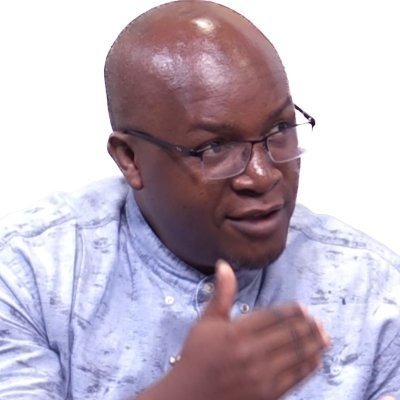
His reported disappearance comes against the backdrop of increasingly heated public discussions about the 2031 succession question and the role of the PLU in Uganda’s political future. The controversy surrounding Gen Muhoozi’s political ambitions has generated sharp exchanges between supporters, critics and individuals within the wider ruling establishment.
Egesa has been among those participating in these discussions, making his disappearance particularly sensitive given the ULS’s disclosure that he had previously reported threats allegedly linked to individuals associated with the PLU.
The lawyers’ body, however, has not presented independently established evidence connecting those alleged threats to the men who took him from Radio One.
A disturbing precedent for media freedom
The reported incident has also revived concerns about the safety of political commentators and other guests who participate in radio and television discussions.
Uganda’s radio talk shows have become important platforms for public engagement, providing opportunities for politicians, lawyers, activists, businesspeople and independent analysts to interrogate government decisions and debate national affairs.
Akaboozi FM, like other Ugandan broadcasters, regularly hosts discussions on political and social developments, bringing together people with competing opinions.
The reported seizure of Egesa from the shared Radio One and Akaboozi FM premises therefore raises a fundamental question about the safety of individuals participating in such programmes.
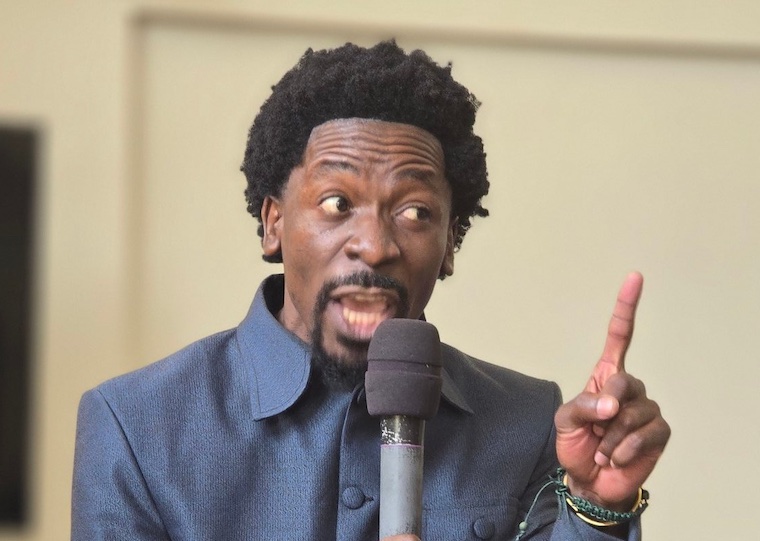 If a guest can reportedly be taken away by armed men shortly after a political discussion, media organisations could find themselves increasingly concerned about the security of their guests, presenters and employees.
The incident also raises questions about the responsibility of security agencies to respect the independence of media institutions and avoid actions that could intimidate journalists and their sources.
Under Article 29 of the Constitution, every Ugandan is entitled to freedom of speech and expression, including freedom of the press and other media.
Article 23 provides protections for personal liberty, including safeguards governing arrest and detention.
Among other protections, a person arrested or detained must be informed of the reasons for the arrest and must be brought before a court within 48 hours unless released earlier.
These constitutional safeguards are intended to prevent arbitrary detention and ensure that security agencies operate within the law.
The Uganda Law Society’s intervention is therefore significant because it places the burden on the relevant authorities to explain the circumstances under which Egesa was taken away.
The distinction between a lawful arrest and an abduction is particularly important. Security agencies have powers to investigate suspected criminal conduct and arrest individuals where the law permits, but those powers must be exercised within constitutional and statutory safeguards.
The identity of the arresting officers, the legal authority under which they acted and the place where the individual is being held are critical questions that authorities must address.
Calls for Egesa’s release intensify
The reported disappearance generated angry reactions from social media users and political commentators, with the hashtag #FreeEgesa circulating as demands for his whereabouts intensified.
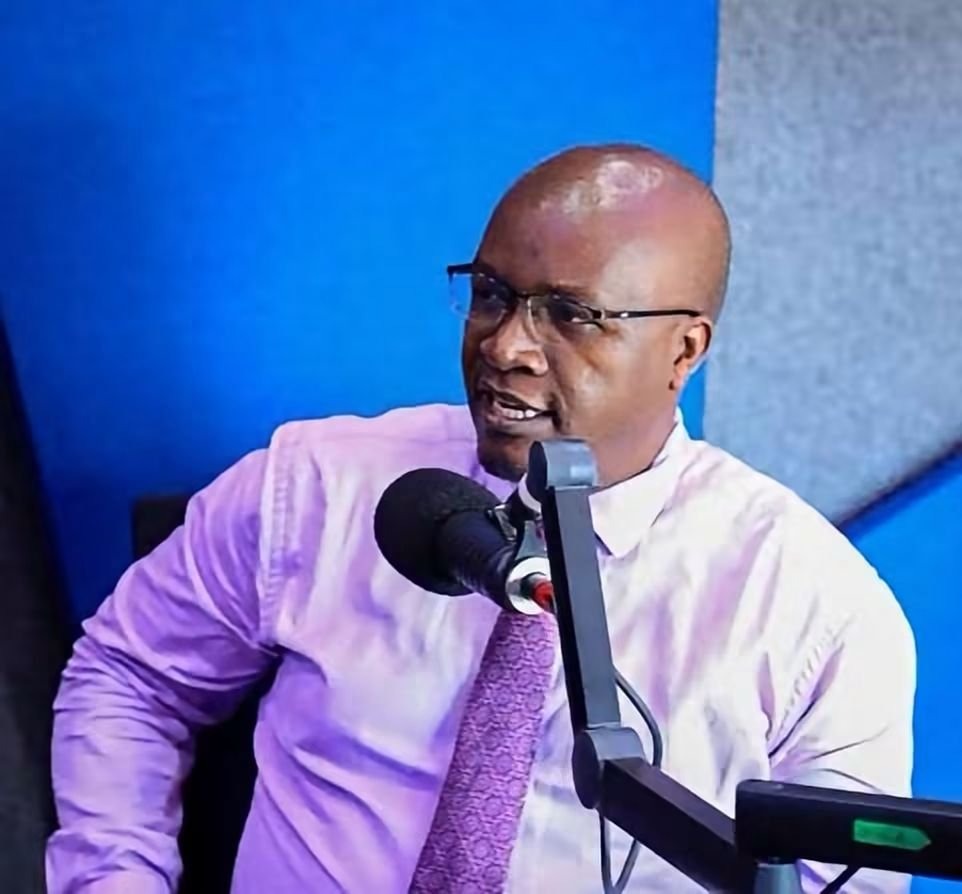 Hon Namutyaba, despite the separate allegations made in the social media post attributed to her, also expressed concern about the wider use of force against people engaged in political debate.
“They lack the intellectual capacity to engage or challenge anyone constructively. Their only tools are abduction, torture, and unlawful imprisonment; all in an attempt to silence those they perceive as rivals,” she posted. Her message was accompanied by repeated calls for Egesa’s release.
Other commentators questioned why an individual participating in a radio discussion should be taken away by armed men without an immediate explanation from the authorities.
For the Uganda Law Society, the matter is no longer simply about the fate of one political commentator but also about the country’s commitment to constitutional governance.
The Society’s demand that police and other security agencies account for the operation puts the spotlight on institutions mandated to protect citizens and investigate alleged criminal conduct.
As of Saturday, the central questions remained unanswered: Who were the armed men? Which agency, if any, authorised the operation? Where is Egesa being held? And what charges, if any, are being investigated against him?
Until authorities provide clear answers, the reported seizure of Egesa from a radio station will remain a troubling episode for Uganda’s legal and media fraternity.
For the ULS, the immediate priority is straightforward: establish his whereabouts, guarantee his safety, ensure that his rights are respected and hold accountable anyone found responsible for violating the law.
The wider test will be whether Uganda’s security institutions can demonstrate that even politically controversial commentators are entitled to the protection of the Constitution.
Author Profile
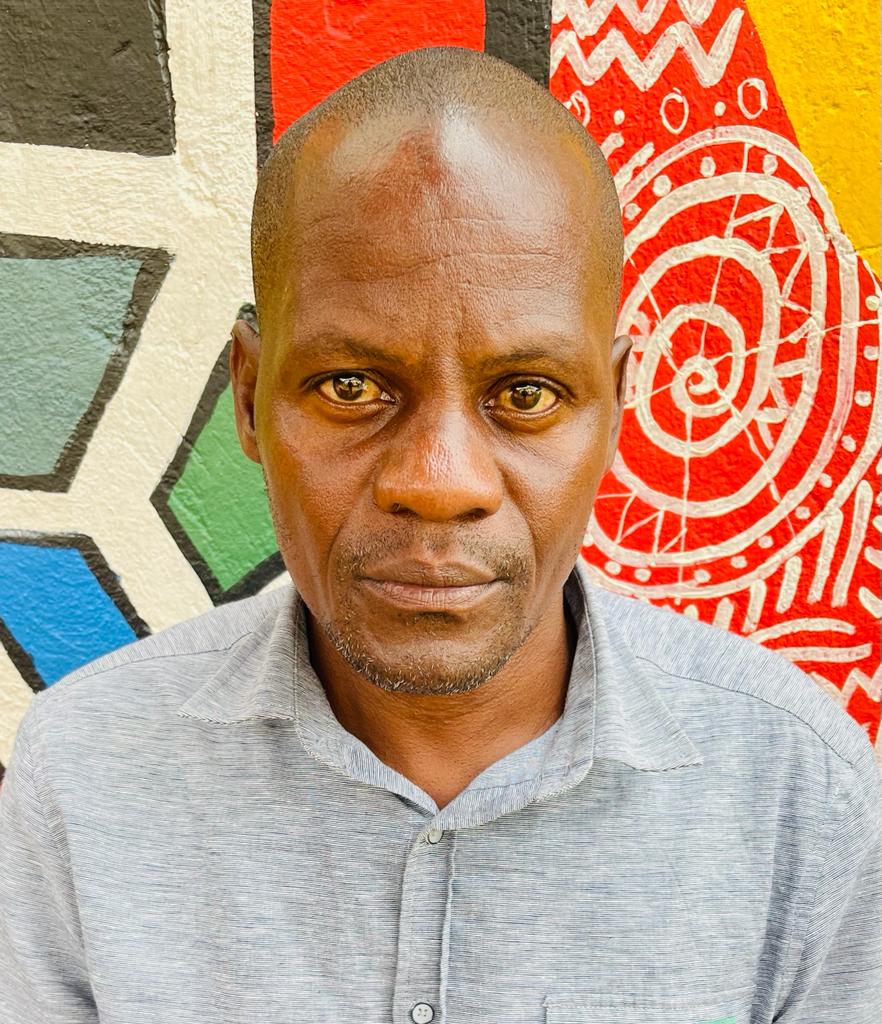
- Mr. Stephen Kasozi Muwambi is a seasoned crime investigative writer, majoring in judicial-based stories. His two decades’ experience as a senior investigative journalist has made him one of the best to reckon on in Uganda. He can also be reached via [email protected]
Latest entries
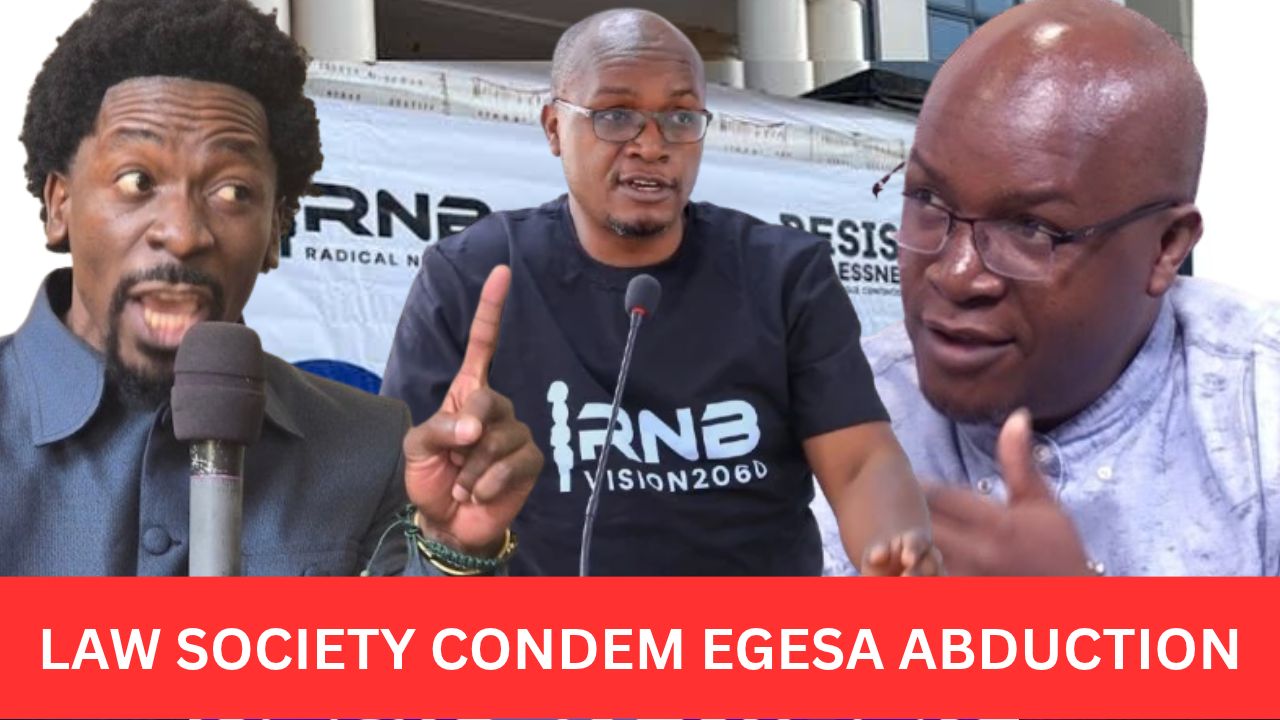 FeaturedNovember 14, 2026WHY EGESA WAS SNATCHED FROM RADIO ONE: Political Analyst Ronald Leonard Egesa Was Reportedly Bundled Into An Unmarked Van Shortly After An Akaboozi FM Talk Show, Prompting The Uganda Law Society To Condemn The Incident As An Abduction And Demand His Immediate Release
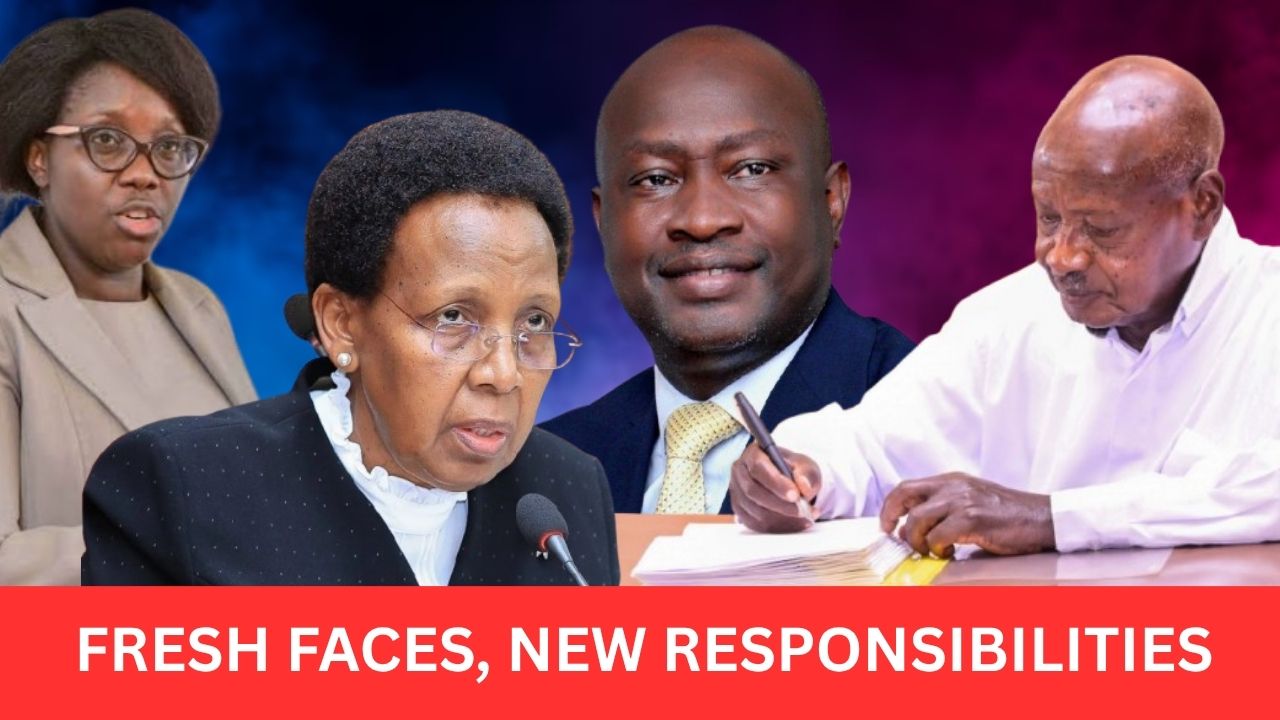 FeaturedNovember 9, 2026HOW M7’S 13 NEW PERMANENT SECRETARIES SIGNAL A MAJOR SHAKE-UP OF GOVERNMENT: From Defence And Foreign Affairs To Agriculture, Works And The Office Of The Prime Minister, The President’s Latest Appointments Usher In A New Administrative Team As Several Long-Serving Officials Make Way
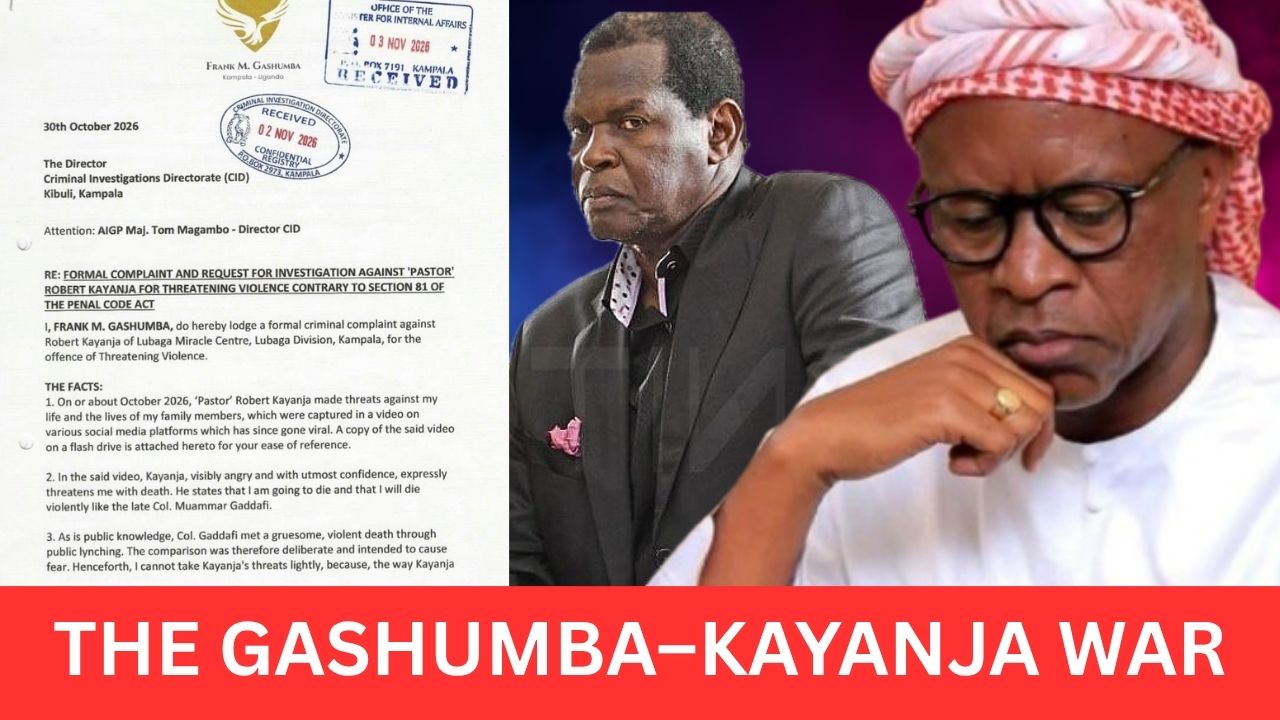 FeaturedNovember 7, 2026WHY GASHUMBA HAS TAKEN PASTOR KAYANJA TO CID OVER ALLEGED DEATH THREATS: Businessman Frank Gashumba Accuses The Lubaga Miracle Centre Preacher Of Threatening To Kill Him And Members Of His Family, Asking CID Boss Maj Tom Magambo To Open A Criminal Investigation
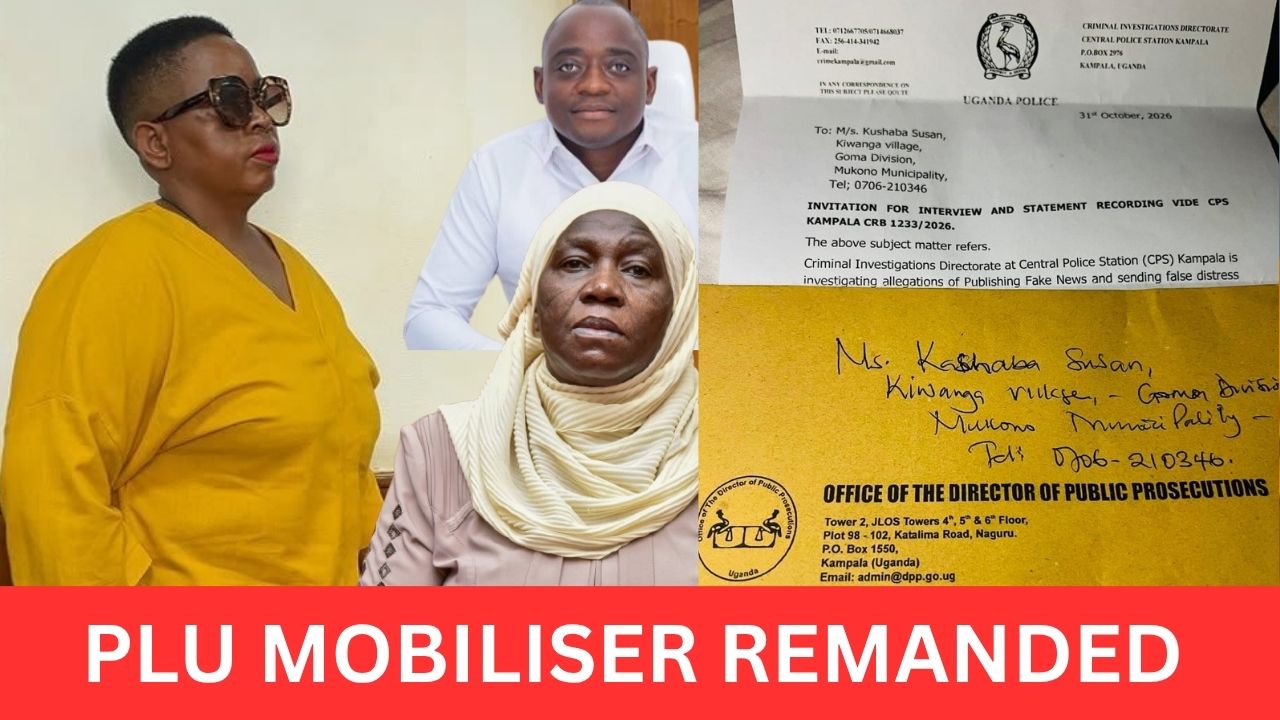 FeaturedNovember 5, 2026KUSHABA ROARS SILENCED? Susan Kushaba, Presenter Of The Weekly Kushaba Roars, Faces A Legal Battle After Allegedly Accusing Kampala Ministers Of Fraud, Embezzlement And Land Grabbing In Tiktok Videos