



















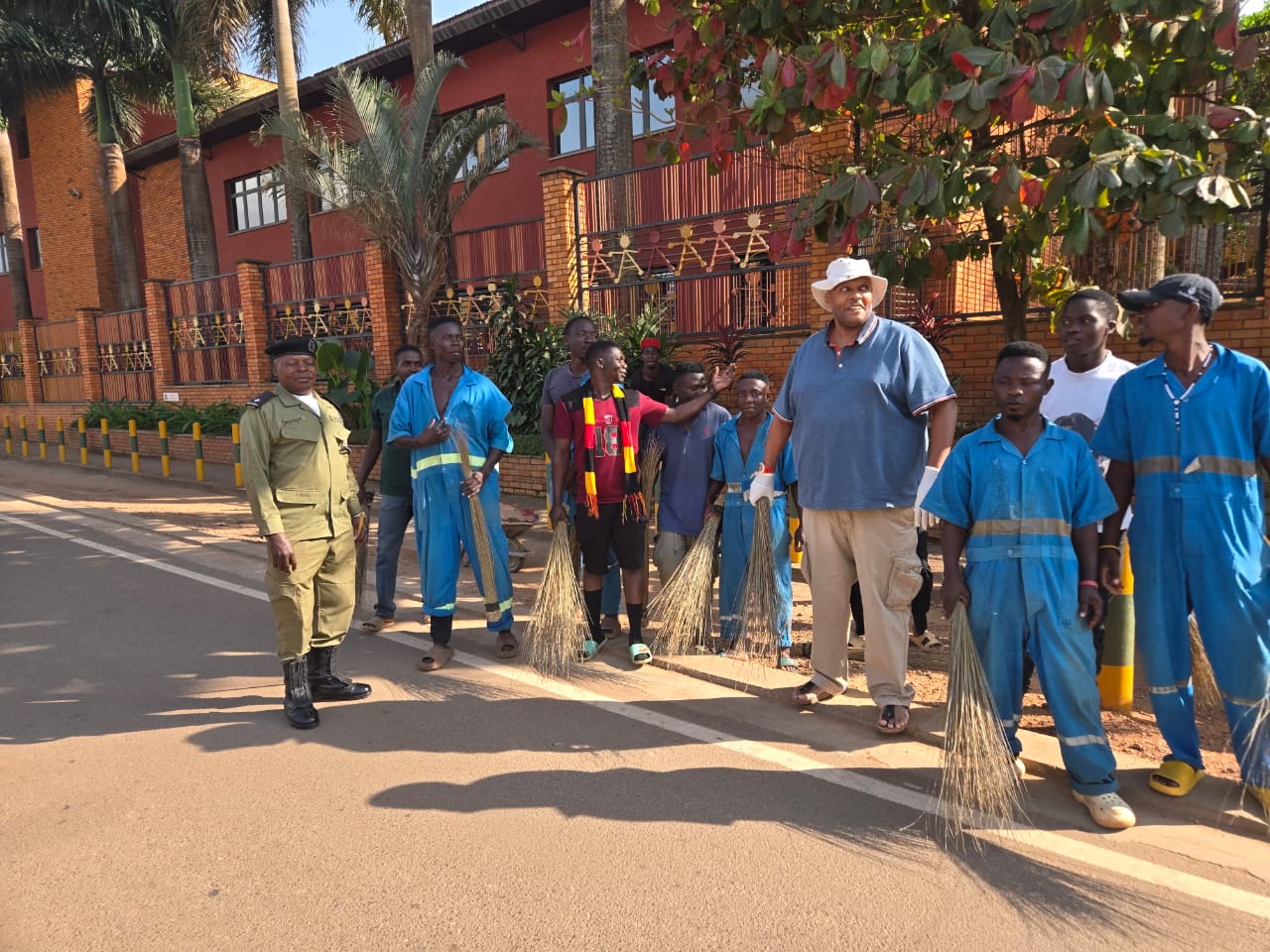
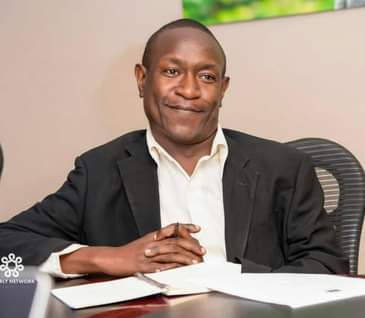
Businessman Andrew Kananura Kansiime, popularly known as Desh, has demonstrated that national civic responsibility can begin right from one’s neighbourhood after personally leading residents and members of his automobile community in the National Cleaning Day exercise in Naguru, Kampala.
The Chief Executive Officer of Panamera Holdings, known for his vibrant personality, patriotism and passion for community initiatives, joined hands with neighbours and members of his exclusive vintage automobile squad to clean the streets and surroundings around the Sandler Way area of Naguru.
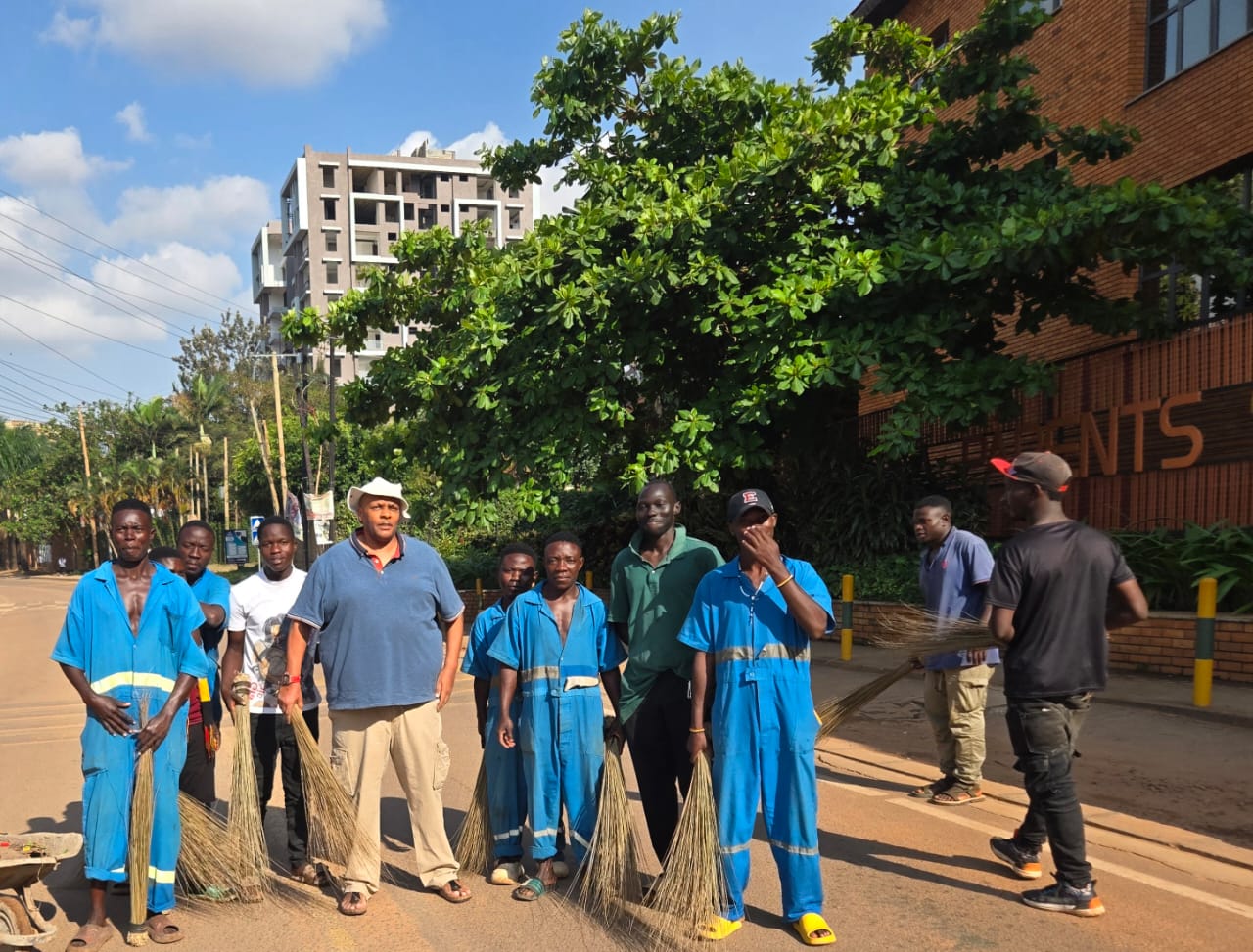
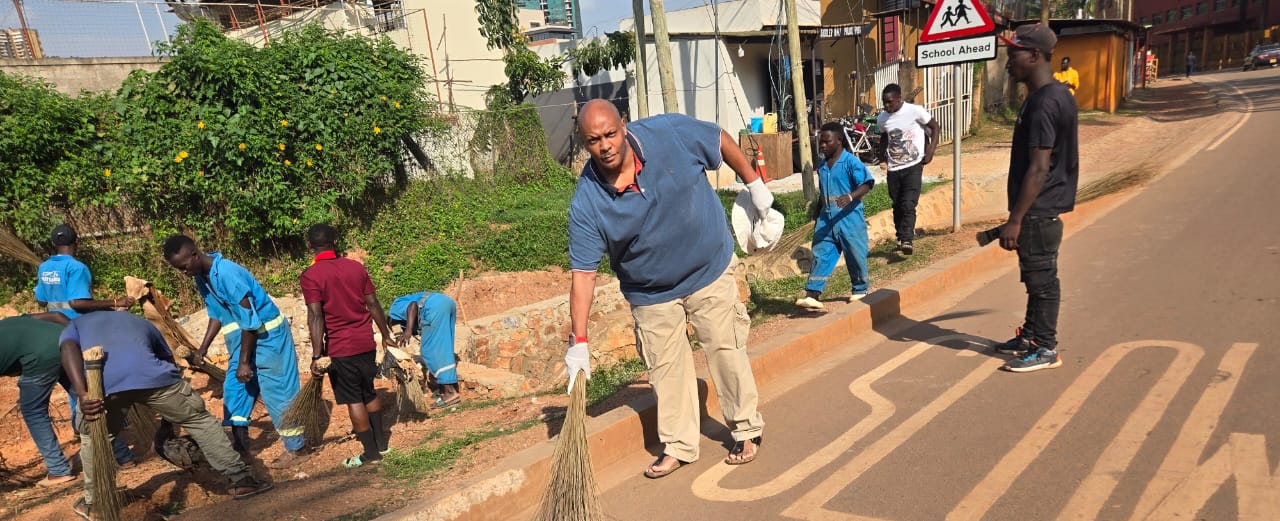
Rather than simply mobilising people and providing the equipment needed for the exercise, Desh actively participated in the cleaning, picking up a broom and leading from the front. His participation attracted attention from residents and passers-by, with the businessman demonstrating that the National Cleaning Day initiative is not merely an obligation for ordinary citizens but a collective responsibility that should involve people from all walks of life.
Desh reportedly mobilised a number of his neighbours and members of his automobile circle to participate in the exercise, ensuring that the team had the necessary cleaning materials, including brooms, shovels and other sundries. Dressed for the occasion, the businessman personally took part in sweeping and cleaning the surroundings, sending a message that keeping communities clean should not be left to local authorities or municipal workers alone. His involvement comes at a time when Government is seeking to build a culture of cleanliness and collective responsibility across the country through the newly established National Cleaning Day programme.
A new national tradition
The Government has designated the last Saturday of every month as National Cleaning Day, a programme intended to encourage Ugandans and other residents to take collective responsibility for maintaining clean and healthy communities. The initiative was officially launched by Vice President Jessica Alupo on July 25, 2026, in Kisenyi, Kampala.
The programme was approved by Cabinet, chaired by President Yoweri Museveni, on August 11, 2025, and is being supervised and championed by Prime Minister Robinah Nabbanja. Under the programme, the country is expected to dedicate three hours on the last Saturday of every month to organised community cleaning activities.
The exercise runs from 7:00 a.m. to 10:00 a.m., during which citizens are encouraged to clean their homes, roads, markets, schools, health facilities, places of worship, drainage channels and other public spaces. The programme is part of Government’s wider effort to address poor sanitation, indiscriminate dumping of waste, blocked drainage channels and other environmental challenges affecting communities. By making cleaning a regular national activity, authorities hope to encourage citizens to develop a greater sense of ownership of their surroundings.
Desh leads by example
For Desh, however, the exercise offered an opportunity to put that message into practice. The businessman, who is often associated with high-end cars and a flamboyant lifestyle, temporarily swapped the glamour of his exclusive automobile collection for the simplicity of a broom and shovel.
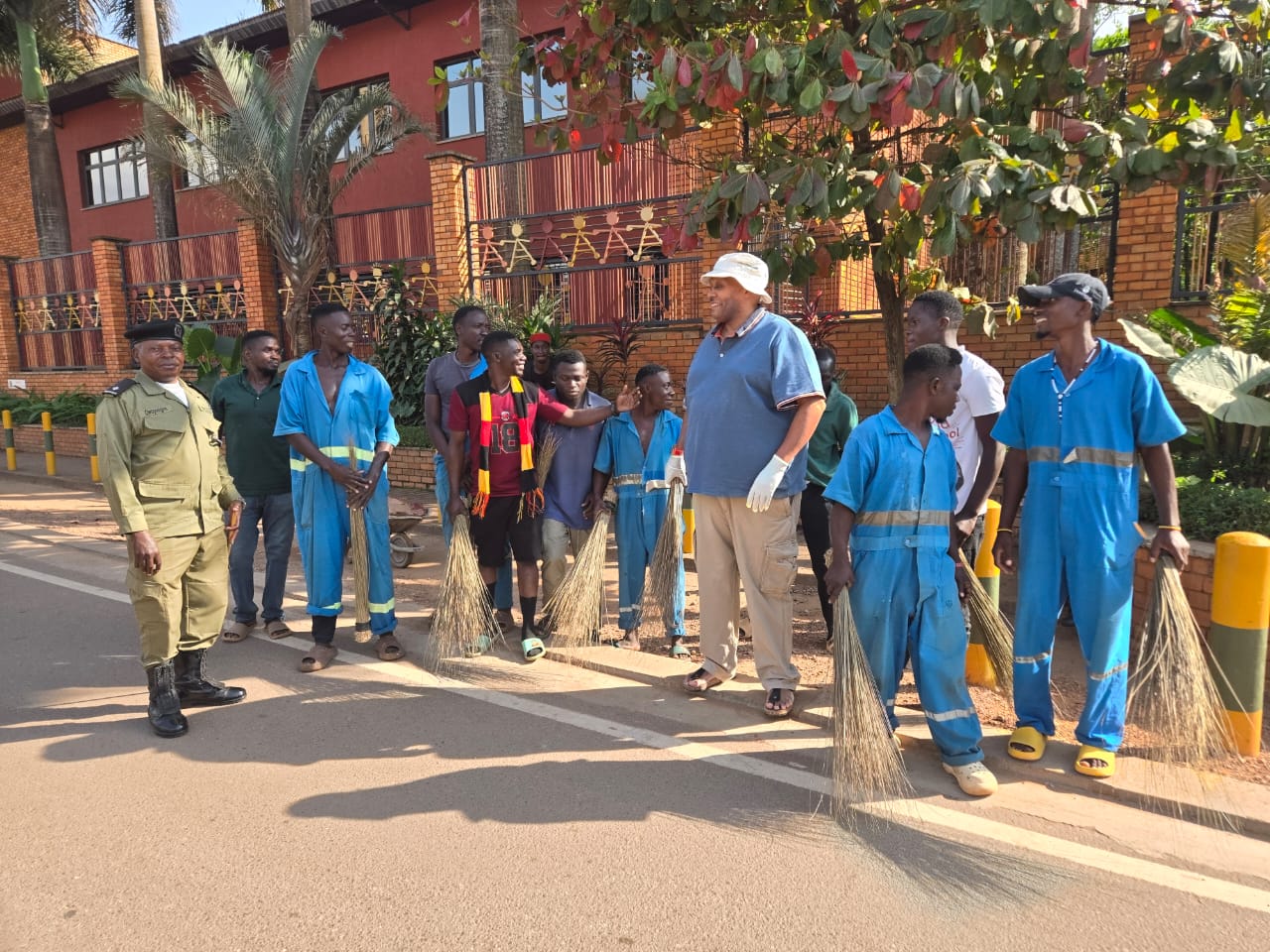
His participation was significant because public figures and members of the business community have an important role to play in encouraging citizens to embrace civic initiatives. Rather than watching from a distance, Desh chose to participate physically, helping clean the neighbourhood and encouraging others to join the exercise.
His decision to personally lead the sweeping also helped reinforce the message that cleanliness is not determined by one’s social or economic status. Whether one is a businessman, professional, student, resident or community leader, keeping the environment clean remains a shared responsibility. The Naguru exercise also brought together neighbours who might ordinarily interact only casually, giving them an opportunity to work together towards a common objective. Such community participation is one of the central ideas behind National Cleaning Day.
Beyond the broom
While the exercise involves physical cleaning, its objectives go beyond simply sweeping roads and collecting rubbish. The programme seeks to cultivate behavioural change among citizens by encouraging them to take greater responsibility for waste disposal and environmental cleanliness. Uganda’s rapidly growing urban centres, particularly Kampala, face persistent challenges associated with waste management. Poor disposal of garbage, plastic waste, blocked drainage systems and littered public spaces continue to affect many communities.
These challenges can contribute to flooding, environmental degradation and the spread of sanitation-related diseases. Regular community cleaning exercises therefore provide an opportunity not only to remove accumulated waste but also to sensitise residents about the importance of maintaining clean surroundings. Desh’s participation provided an example of how influential members of society can support this effort. By mobilising his neighbours and personally joining the exercise, he demonstrated that civic responsibility can be incorporated into everyday community life.
Three hours for the country
The National Cleaning Day guidelines provide for a three-hour period of organised community cleaning. During the exercise, unnecessary movement of people and vehicles is restricted to allow communities to undertake cleaning activities without interference. However, exemptions apply to emergencies and essential services, including ambulances, fire and rescue services and security operations.
The restrictions are intended to create an environment in which communities can safely access roads, drainage channels and other public spaces that require cleaning. The initiative requires cooperation between Government agencies, local authorities, businesses, community leaders and individual residents. While authorities provide coordination and guidance, the success of the programme ultimately depends on the willingness of citizens to participate. This is where the involvement of people such as Desh becomes important.
A civic responsibility
Although National Cleaning Day is intended as a national civic responsibility, participation has not been universal. Some residents have been reluctant to embrace the initiative, while others have questioned the need for a designated cleaning day when cleanliness should ideally be maintained every day.
However, proponents of the programme argue that the monthly exercise provides an important opportunity to mobilise communities around sanitation and environmental protection. It also provides a platform for citizens to identify and address sanitation problems within their neighbourhoods.
The involvement of private citizens, businesses and community groups can therefore complement the work of local authorities. For business leaders such as Desh, participating in the exercise also provides an opportunity to demonstrate corporate citizenship and encourage employees, customers, neighbours and other members of society to take part.
Learning from Africa
Uganda is not alone in using organised community cleaning initiatives to promote environmental responsibility. Several African countries have introduced programmes aimed at encouraging citizens to participate in community development and environmental management. Rwanda’s Umuganda is perhaps the continent’s best-known example. The monthly community work programme brings citizens together to undertake activities ranging from environmental conservation to infrastructure development.
Kenya has also implemented initiatives such as Kazi Mtaani, which have involved young people in community improvement and environmental activities. Sierra Leone has similarly introduced national cleaning initiatives encouraging citizens to participate in sanitation activities. Uganda’s National Cleaning Day therefore forms part of a broader African effort to make communities more responsible for their environment.
A message from Naguru
The Naguru exercise led by Desh offered a practical demonstration of the spirit Government hopes to cultivate through the programme. The businessman brought together neighbours and members of his automobile community, provided cleaning materials and, most importantly, picked up the broom himself.
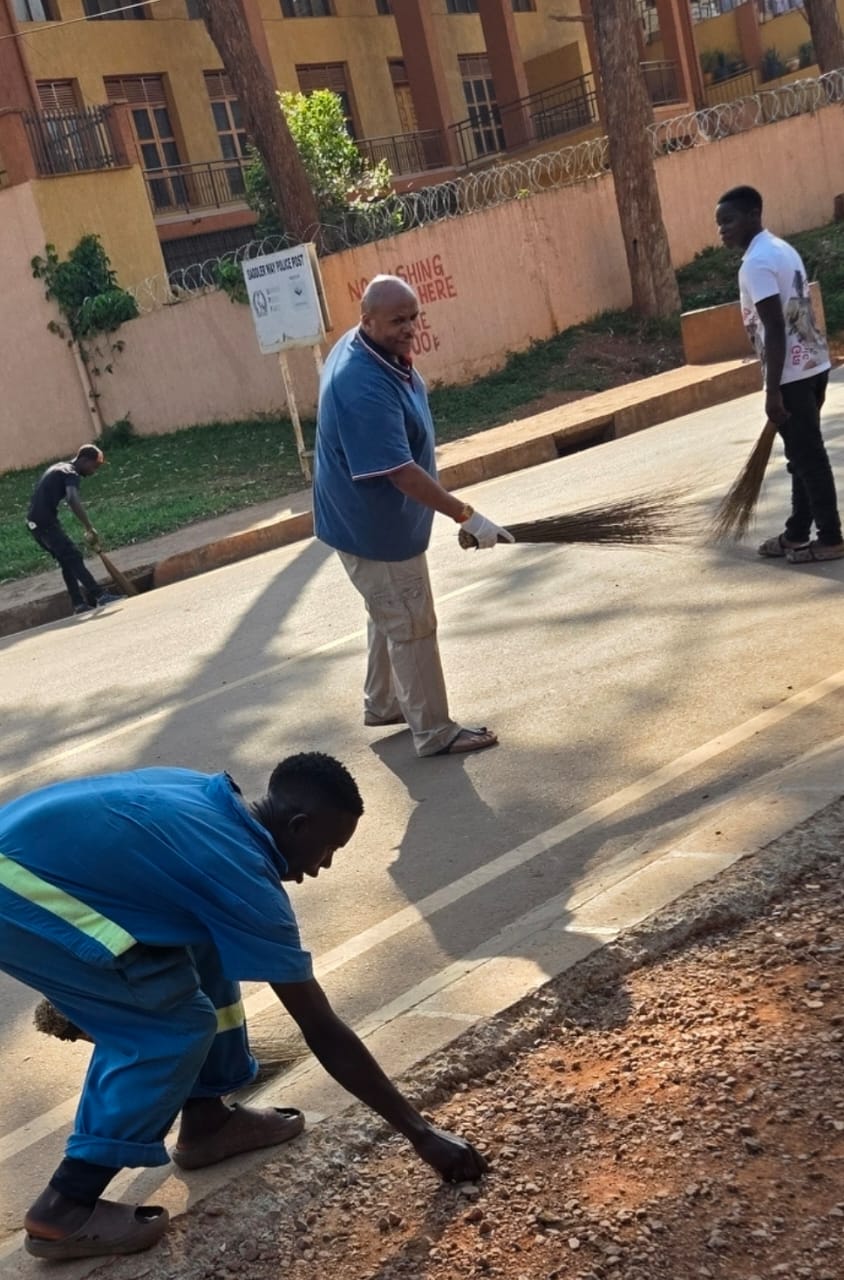
His actions sent a simple message: keeping Uganda clean is everyone’s responsibility. For a country grappling with growing urban populations, increasing volumes of waste and pressure on public infrastructure, such individual and community efforts could make a significant difference.
The challenge now is to ensure that the enthusiasm generated by National Cleaning Day does not disappear once the three-hour exercise ends. Cleanliness ultimately has to become a daily habit rather than a once-a-month activity. For Desh and his Naguru neighbours, however, the latest exercise showed what is possible when residents decide to take ownership of their surroundings.
The image of a businessman known for his exclusive automobiles leading a neighbourhood cleaning exercise with a broom in hand may be unusual, but it carries a powerful civic message. A clean Uganda begins with citizens who are willing to pick up the broom.
Author Profile
- Mr. Jacko David Waluluka is another unique entertainment and general investigative news writer, a field he has diligently covered for over fifteen years. He’s also the Chief Administrator at The Investigator. He can easily be reached via [email protected]
Latest entries
 EntertainmentOctober 8, 2026KOFI OLOMIDE SHOW CANCELLED OVER EBOLA FEARS: Health Ministry Blocks October 9 Concert Over Fears Thousands Of Fans Could Cross From Ebola-Affected Areas Of DR Congo
 FeaturedOctober 8, 2026MORE THAN JUST A BEAUTY QUEEN: Almorie Nagayi Eyes a Future in Diplomacy. At 19, The Masaka City Representative is Pairing Her Pageant Journey with Foreign-Policy Training And a Campaign to Empower Young Women
 FeaturedSeptember 25, 2026LADY TO PIN JILTED LOVER IN MOSES MATOVU MURDER: Detectives to Use Rose Tumusiime`s Confessions to Corner Vincent Nsamba Sitenda Over a Fatal Kibuli Confrontation against the AfrigoBand Boss
 FeaturedSeptember 24, 2026MOSES MATOVU MURDER PROBE: ROSE MOVED TO CID: Katikiro Charles Peter Mayiga, Gerald Mayanja Snr, Nyombi Thembo, Sheebah And Other Ugandans Mourn Matovu As The Music Fraternity Prepares For His Burial In Kyanja On Friday