

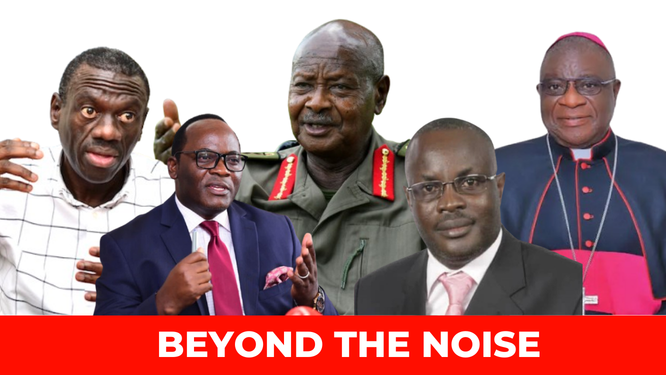

The possibility of a negotiated political settlement between President Yoweri Museveni’s government and its long-standing opponents has gained fresh attention following revelations by Gen Salim Saleh that he has reconnected with detained opposition figure Dr Kizza Besigye and is exploring a possible consociational democracy arrangement for Uganda.
Saleh, the President’s younger brother and a powerful military and political figure in the National Resistance Movement (NRM) establishment, has suggested that discussions involving Besigye could produce a successful outcome within three to six months, raising hopes of a possible breakthrough in one of Uganda’s longest-running political confrontations.
The revelations are particularly significant because Besigye has spent much of his political career challenging Museveni’s leadership, questioning the legitimacy of successive elections and demanding fundamental political reforms.
Speaking while addressing heads of parliamentary committees in Kapeeka, Gen Saleh disclosed that he had recently visited Besigye after learning about his illness.
“I recently reconnected with Dr Kizza Besigye after learning about his illness and paid him a visit. Now that the CDF, Gen Muhoozi Kainerugaba, has asked me to handle his matter, I welcome the opportunity. In the next three to six months, we shall have a successful outcome,” Saleh said.
He added that the discussions were not merely about resolving Besigye’s personal predicament but could extend to a broader national political arrangement.
“In the next few months, we shall have a combined outlook of the Uganda we want to see. We are studying a consociational democracy agreement,” he said.
The remarks introduce an intriguing dimension to Uganda’s political future: whether the ruling establishment and opposition forces can negotiate a framework for sharing political power, managing national divisions and building a more inclusive system of governance.
From comrades-in-arms to political adversaries
The significance of Saleh’s intervention can only be understood against the history of the relationship between Museveni and Besigye, who were once comrades in the armed struggle that brought the National Resistance Movement (NRM) to power in January 1986.
Besigye, a medical doctor by training, joined the National Resistance Army (NRA) rebellion and became one of the movement’s prominent military and political figures.
He subsequently served in government and the military, including as Minister of State for Internal Affairs and senior military adviser to the Minister of Defence.
He was also Museveni’s personal physician and belonged to the inner circle of the revolutionary movement.
However, the relationship began deteriorating as Besigye became increasingly critical of the direction the NRM government was taking.
The decisive break came in 1999 when Besigye authored a document titled An Insider’s View of How the NRM Lost the Broad Base, in which he accused the ruling movement of abandoning its original political ideals.
He questioned the concentration of power, the slow pace of democratic reforms, corruption, the failure to implement political accountability and what he considered the betrayal of the principles for which thousands of Ugandans had fought during the five-year liberation war.
Besigye argued that the NRM had abandoned its original commitment to democracy, accountability, national unity and popular participation.
His criticism was particularly uncomfortable for Museveni because it came from someone who had participated in the struggle and understood the internal workings of the movement.
The disagreement eventually transformed Besigye from a trusted military colleague into Museveni’s most formidable political challenger.
In 2001, Besigye challenged Museveni in the presidential election, marking the beginning of a political rivalry that would define Uganda’s opposition politics for more than two decades.
Museveni won with 69.3 per cent of the vote, while Besigye received approximately 27 per cent.
Besigye challenged the election results in the Supreme Court, alleging widespread irregularities, intimidation and electoral malpractice. Although the court dismissed his petition, it acknowledged significant shortcomings in the electoral process.
The dispute deepened their political differences, with Besigye eventually fleeing into exile in South Africa following the election.
He returned to Uganda in October 2005 and continued his political mobilisation, subsequently becoming the face of the Forum for Democratic Change (FDC), which emerged as a major opposition force.
His presidential campaigns in 2006, 2011 and 2016 further entrenched his position as Museveni’s principal challenger.
In 2011, his Walk-to-Work protests against rising fuel and commodity prices attracted significant public attention and were met with a heavy security response.
Besigye was repeatedly arrested, detained and subjected to restrictions on his political activities, while his relationship with the President remained irreconcilable.
His political journey illustrates how the disagreement between two men who once fought on the same side eventually developed into one of Uganda’s most enduring political confrontations.
The Nairobi arrest and Luzira incarceration
The latest chapter in the confrontation began on November 16, 2024, when Besigye disappeared while in Nairobi, Kenya, where he had travelled for engagements.
His disappearance generated an international outcry, with his wife, Winnie Byanyima, alleging that he had been abducted and forcibly transferred to Uganda.
He resurfaced on November 20, 2024, when he appeared before a military court in Kampala alongside his political associate Hajj Obeid Lutale.
The charges included offences relating to security and unlawful possession of firearms and ammunition. Besigye rejected the accusations and challenged the legality of being tried before a military court as a civilian. He was subsequently remanded to Luzira Maximum Security Prison.
His legal troubles continued in February 2025 when the Supreme Court ruled against the trial of civilians in military courts, prompting the prosecution to pursue charges before civilian courts.
Besigye, Lutale and UPDF officer Capt. Denis Oola subsequently faced treason charges.
The prosecution alleges that they participated in meetings in different countries, including Greece, Switzerland and Kenya, to organise efforts to overthrow the government. The accused have denied the allegations.
His continued incarceration has attracted criticism from opposition politicians, human rights organisations and international observers, particularly concerning the circumstances of his arrest, access to legal representation, personal liberty and medical treatment.
His health became an additional source of concern following reports of his deterioration and his collapse during a court session in July 2026.
It is against this background that Saleh’s reported intervention has attracted considerable political interest.
Why Muhoozi referred Besigye’s matter to Saleh
Another interesting dimension is the involvement of Gen Muhoozi Kainerugaba, the Chief of Defence Forces (CDF), who reportedly asked his uncle, Saleh, to handle Besigye’s matter.
Muhoozi’s involvement is significant because he has previously made controversial public statements about Besigye, including threats that attracted condemnation from opposition politicians and human rights advocates.
His decision to refer the matter to Saleh could therefore signal a change in approach within the ruling establishment.
Saleh occupies a unique position in Uganda’s power structure. Unlike ordinary political negotiators, he enjoys direct access to Museveni and Muhoozi and has considerable influence within the military and the NRM establishment.
His military credentials, political connections and involvement in government economic programmes give him access to people across different political and social circles.
Justice and Constitutional Affairs Minister Norbert Mao has also previously confirmed that Museveni directed officials to engage stakeholders to find harmony concerning Besigye and former Kampala Lord Mayor Erias Lukwago.
Mao indicated that political consultations were taking place alongside the judicial processes and efforts to address the detainees’ health concerns. However, Besigye’s family and political allies have been cautious about reports of negotiations.
His wife, Byanyima, has maintained that his health, constitutional rights and entitlement to bail should not become bargaining issues.
Similarly, opposition figures have questioned whether political negotiations can legitimately determine matters that are before the courts.
Consociational democracy: Is Uganda ready for power sharing?
Perhaps the most politically consequential aspect of Saleh’s remarks is his reference to consociational democracy.
This is a model of governance associated with political scientist Arend Lijphart, who developed the concept to explain how deeply divided societies can maintain political stability through negotiated power-sharing arrangements.
Rather than allowing one political or social group to dominate government, consociational democracy seeks to accommodate competing interests through institutional arrangements that guarantee participation and representation.
The model generally rests on four fundamental principles. First is grand coalition government, in which major political groups participate in national decision-making.
Second is proportional representation, which ensures that different communities have a fair share of political representation and public resources.
Third is segmental autonomy, allowing different communities a degree of self-governance in matters affecting their interests.
Fourth is mutual veto, which protects minority groups against decisions that could threaten their fundamental interests.
Countries such as Belgium, Switzerland and Lebanon have adopted different forms of power-sharing arrangements, although their political experiences and institutional structures differ considerably.
For Uganda, such a framework could potentially address longstanding concerns about political exclusion, electoral credibility, regional representation, ethnic and religious sensitivities, military involvement in politics and the concentration of executive authority.
However, power sharing should not simply become an arrangement in which political elites divide government positions among themselves.
It must be anchored in constitutionalism, democratic accountability, independent institutions and the genuine participation of citizens.
A credible arrangement would require discussions involving the NRM, the opposition, religious institutions, traditional and cultural leaders, civil society, youth, women and other stakeholders.
It would also need to address the independence of Parliament, the judiciary, the Electoral Commission, security institutions and the protection of fundamental freedoms.
The political questions Saleh must answer
Saleh’s proposed three-to-six-month timeline raises several questions. Does the proposed engagement concern only Besigye’s release and reconciliation with the government, or is it intended to produce a comprehensive national political settlement?
Would the discussions involve Museveni personally, given that he is the central figure in the political confrontation with Besigye?
Would the opposition be prepared to negotiate with a government it has repeatedly accused of undermining democratic institutions?
And, importantly, would any agreement be legally binding and protected against arbitrary changes by those holding executive power?
There is also the question of whether Besigye himself has authorised anyone to negotiate on his behalf.
His supporters have maintained that his constitutional rights and freedom should not depend on political concessions.
Any proposed settlement must therefore respect his agency and ensure that the judicial process is not replaced by private political bargaining.
Ultimately, Saleh’s revelations could represent an important opening for political reconciliation in Uganda, but they should not be mistaken for an agreement that has already been reached.
If successfully negotiated, a consociational democracy arrangement could provide an opportunity to move Uganda away from winner-takes-all politics towards a system in which competing political interests have a legitimate stake in national governance.
For a country whose politics has been dominated by the same political establishment since 1986, the prospect of a negotiated settlement between former comrades Museveni and Besigye would be historically significant.
The question is whether Saleh is merely seeking a way out of Besigye’s current legal predicament or attempting something much bigger: negotiating a new political compact that could redefine how Uganda is governed.
That distinction could determine whether the next three to six months produce another temporary political understanding or the beginning of a fundamental national political settlement.
Author Profile
- Mr. Stephen Kasozi Muwambi is a seasoned crime investigative writer, majoring in judicial-based stories. His two decades’ experience as a senior investigative journalist has made him one of the best to reckon on in Uganda. He can also be reached via [email protected]
Latest entries
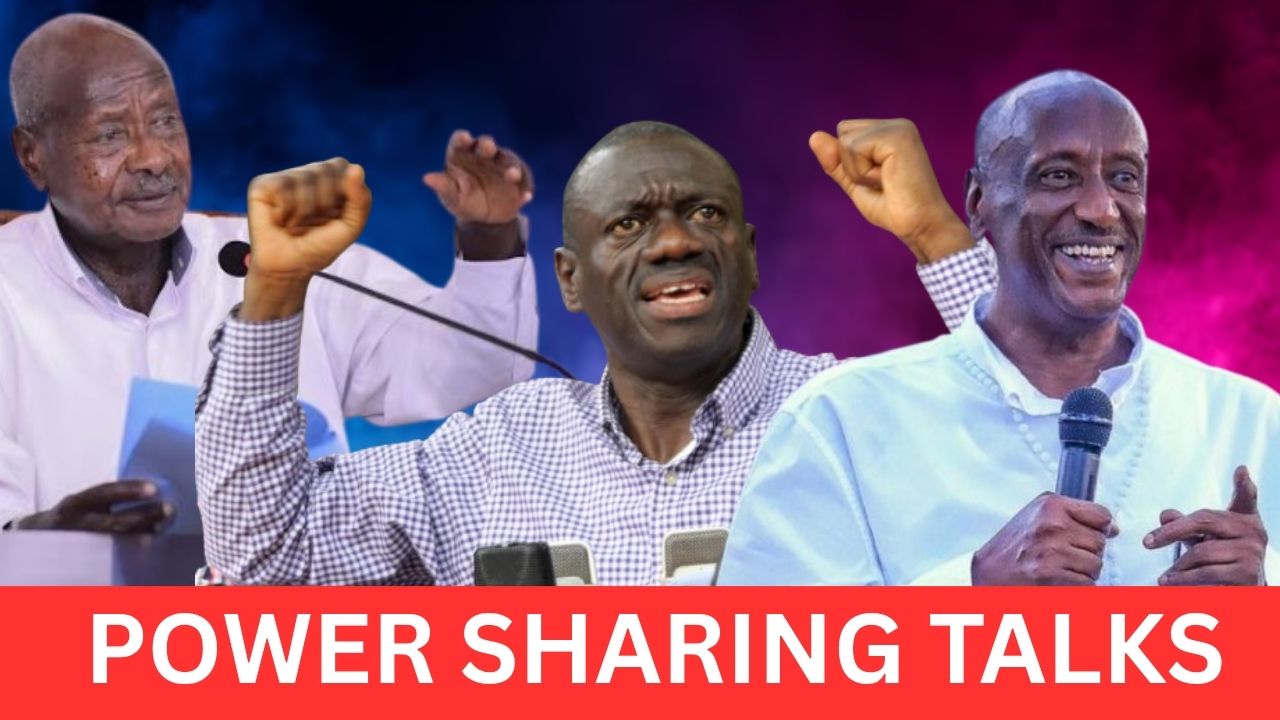 FeaturedOctober 30, 2026MUSEVENI, BESIGYE EYE HISTORIC DEAL: The President’s Brother Unveils Plans To Explore Consociational Democracy, Raising The Prospect Of Power Sharing Among Uganda’s Competing Political, Ethnic And Religious Groups
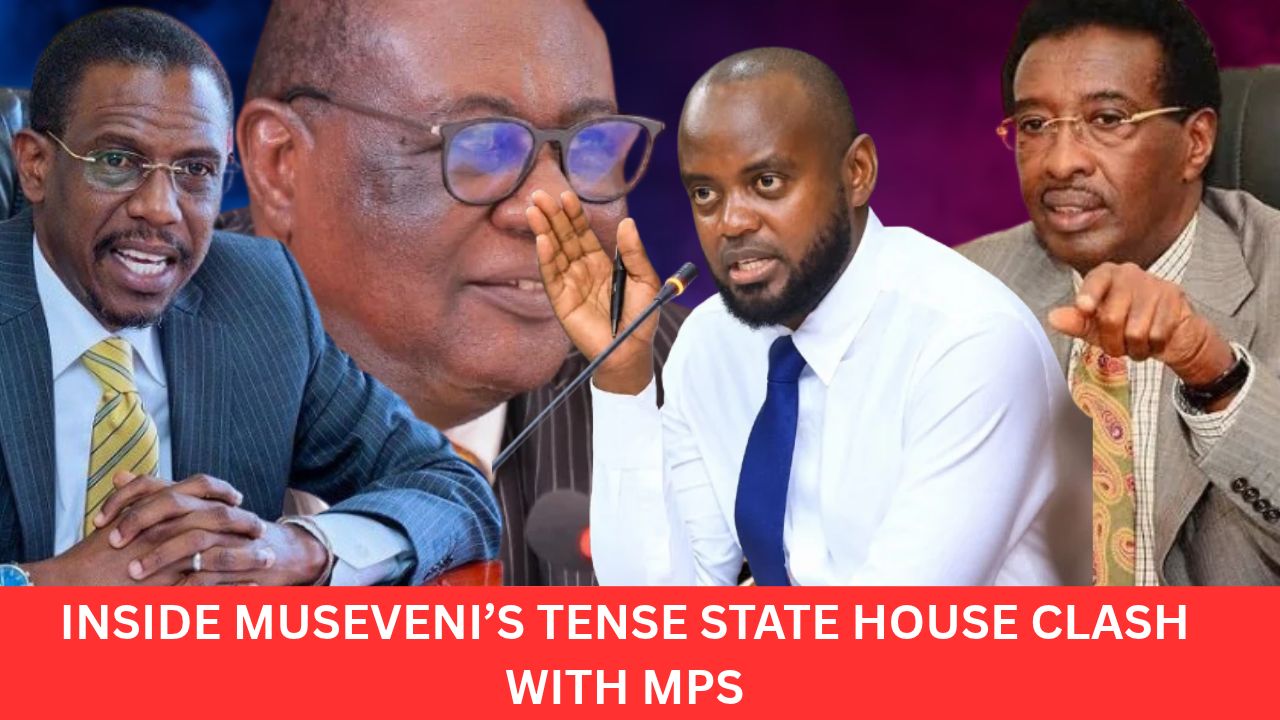 FeaturedOctober 30, 2026INSIDE THE STATE HOUSE MEETING: WHY MUSEVENI WANTS ANSWERS FROM RUSSIAN DIGITAL PLATES FIRM: President Questions The Controversial Contract’s Escalating Cost, Security Shortcomings And Revenue-Sharing Arrangement As Mwine Mpaka Leads Legislators In Demanding Accountability
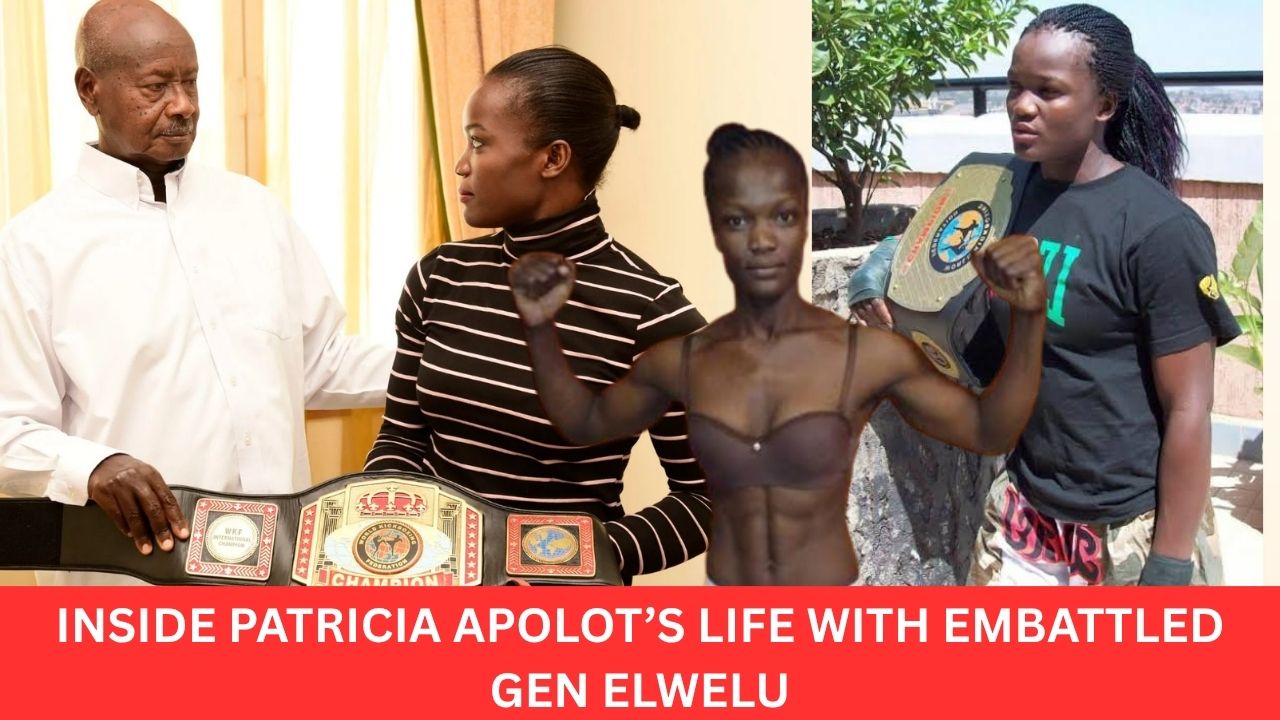 FeaturedOctober 29, 2026WHY KICKBOXING CHAMPION APOLOT MARRIED GEN ELWELU: The 24-year Age Gap Between Patricia Apolot And Retired Lt Gen Peter Elwelu Has Drawn Renewed Attention As Allegations Surrounding Their Marriage Emerge Amid A Military Standoff
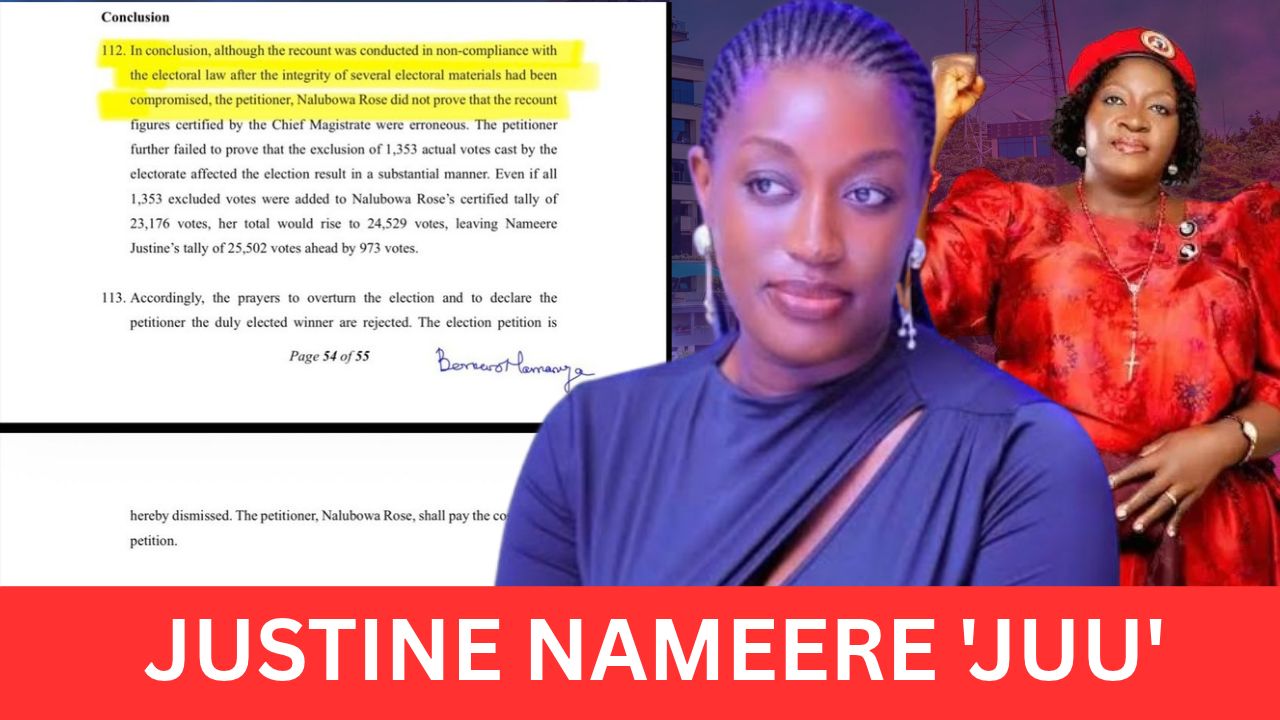 FeaturedOctober 21, 2026NAMEERE RETAINS MASAKA CITY SEAT: High Court Dismisses Nalubowa’s Election Petition, Ruling That Recount Irregularities Did Not Substantially Alter The Final Result