





















Uganda has renewed its commitment to strengthening the Eastern Africa Standby Force (EASF), with senior military leaders warning that the region must prepare for a security environment increasingly defined by shifting conflicts, extremist threats, sophisticated criminal networks and rapid technological change.
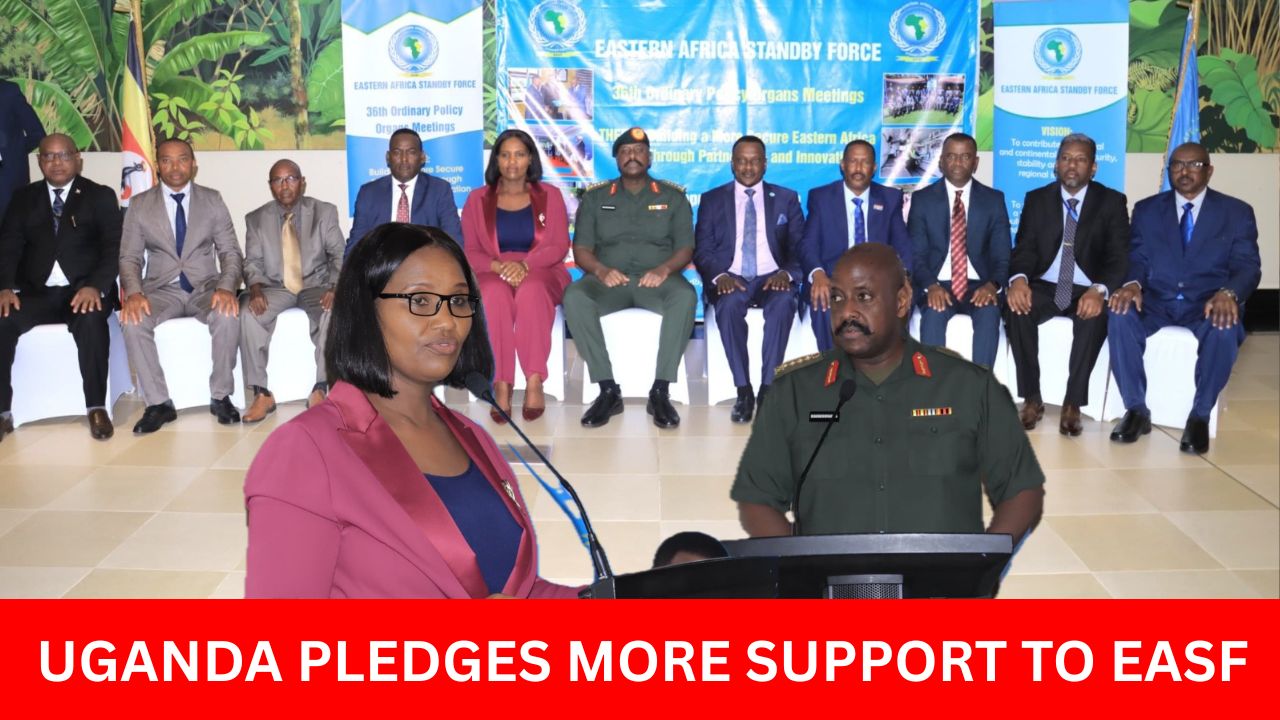
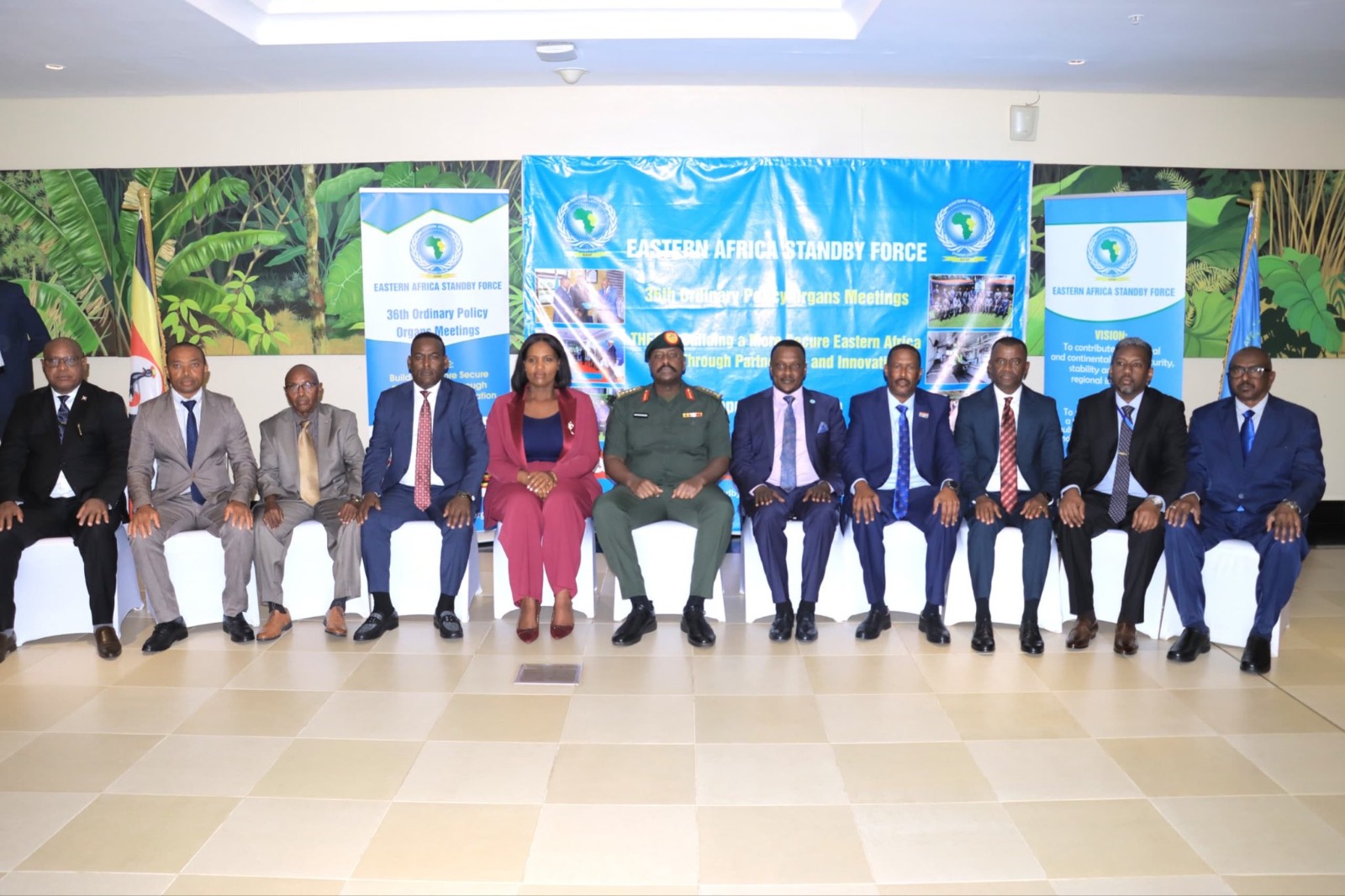
The commitment was made in Kampala during the 36th Ordinary Session of the Committee of Chiefs of Defence and Security of the EASF, which brought together senior defence and security officials from member states to assess the force’s readiness and the region’s emerging security challenges.
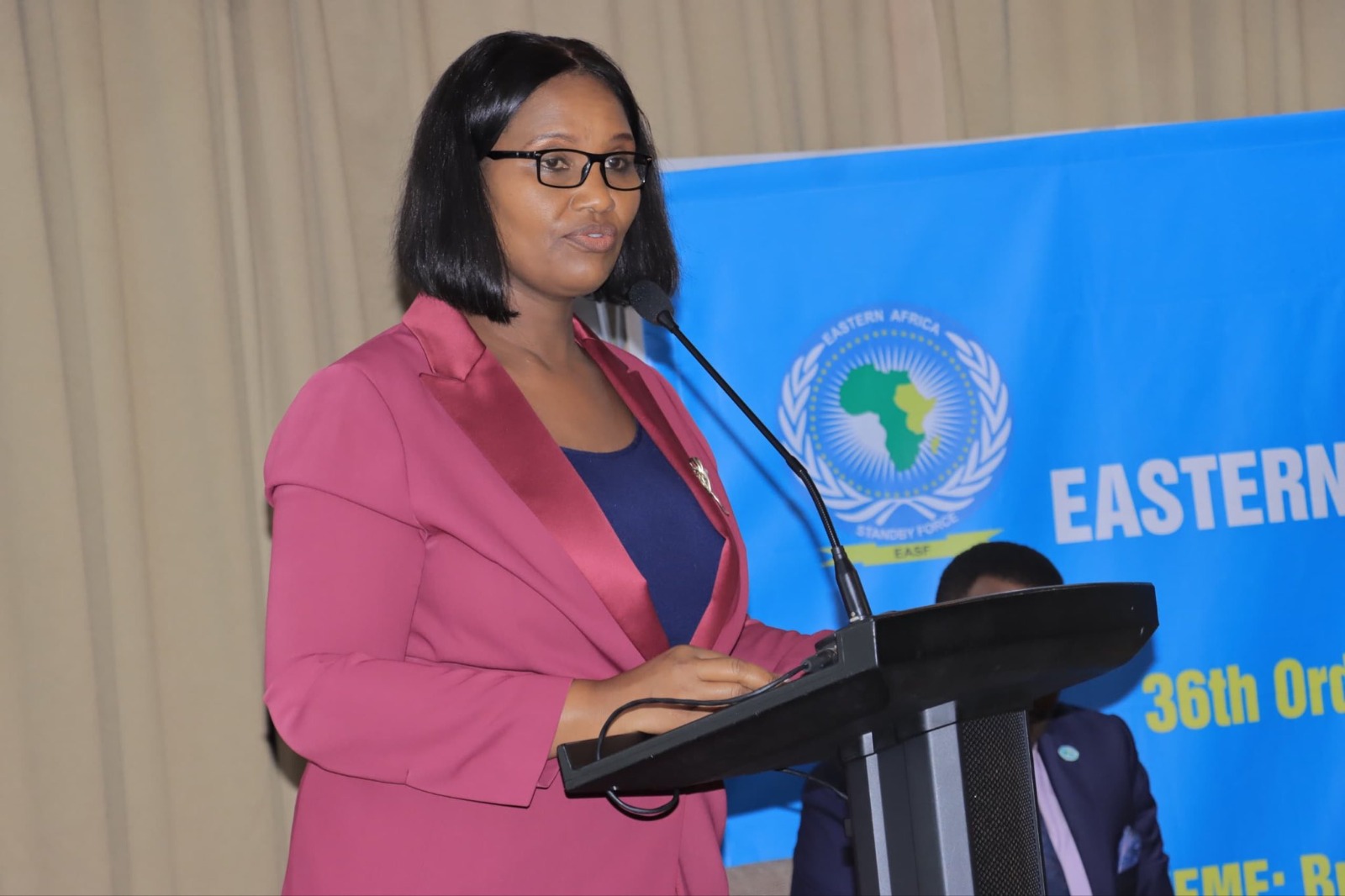
Opening the meeting, Uganda’s Minister of State for Defence and Veteran Affairs (Defence), Hon. Grace Akifeza Ngabirano, said regional security could no longer be guaranteed through individual national efforts.
“Security cannot be sustained through isolation. It is built through confidence, strengthened through partnership, and endures when nations choose cooperation over uncertainty,” Ngabirano said.
Her remarks placed regional cooperation at the centre of discussions, as Eastern African countries grapple with security threats that increasingly cross-national borders.
Security Without Borders
Ngabirano told the military leaders that the region must move beyond reacting to crises and instead develop the capacity to anticipate emerging threats.
She called for stronger professional military dialogue, improved interoperability and deeper cooperation among neighbouring countries. The minister also said the role of Chiefs of Defence and Security had changed significantly.
According to her, senior military commanders were no longer simply commanders responsible for national armed forces but had become strategic advisers to governments, custodians of national resilience and important actors in building confidence between states.
“You are builders of regional confidence. The relationship you cultivate, the truth you maintain, and the cooperation you strengthen are themselves strategic assets that contribute to preventing conflict and preserving stability,” she said.
The message comes at a time when security threats in the region are increasingly interconnected, requiring countries to share intelligence, coordinate responses and develop forces capable of operating together.
For the EASF, this makes interoperability more than a military concept. It is increasingly becoming a requirement for effective regional crisis response.
Muhoozi Warns Of Changing Threats
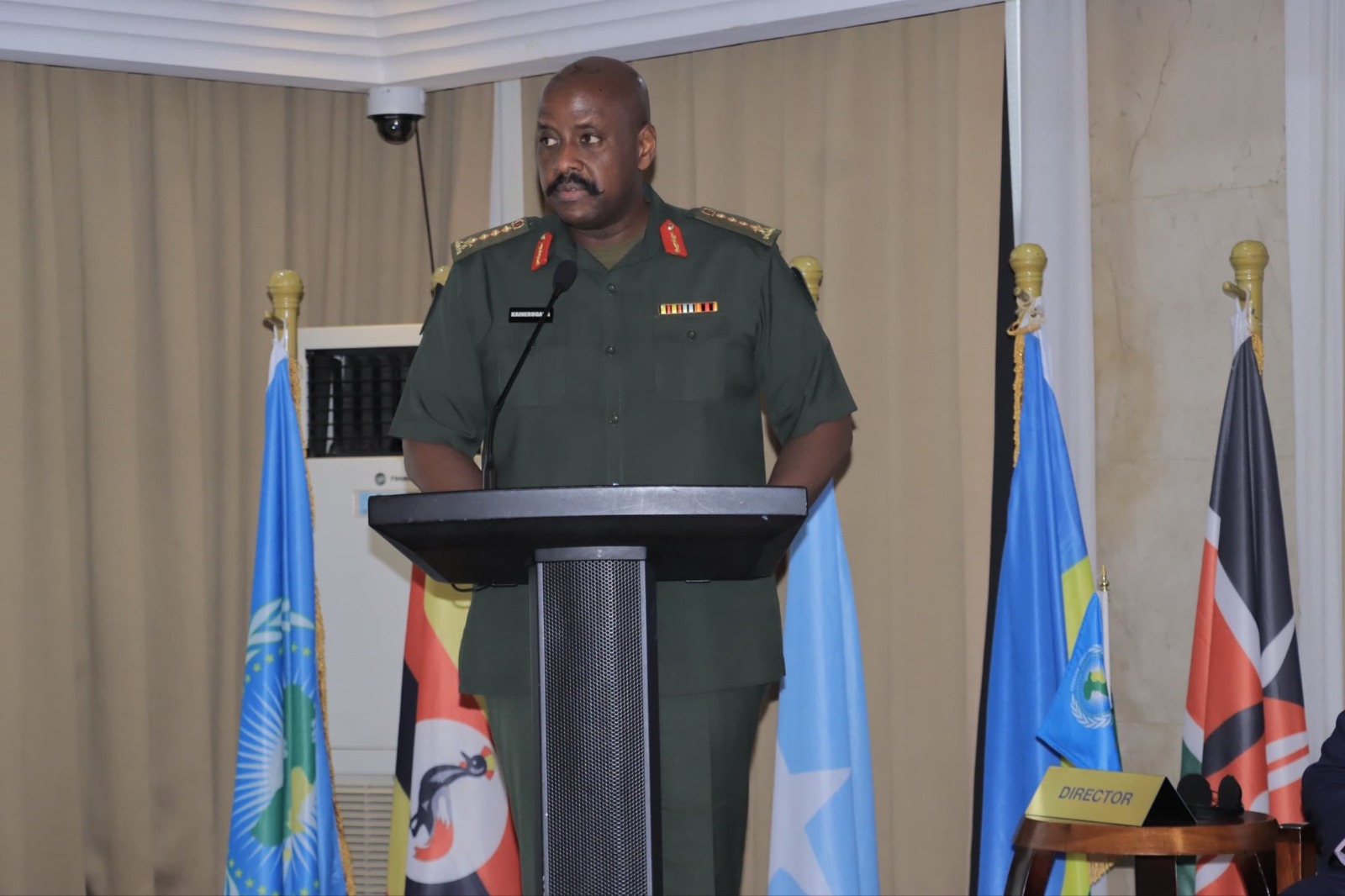
Uganda Peoples’ Defence Forces Chief of Defence Forces, Gen Muhoozi Kainerugaba, said the region’s security environment was becoming more demanding.
He pointed to rapidly changing conflicts, evolving extremist threats, sophisticated illicit networks and technology that is transforming the way military operations are conducted.
“In such an environment, preparedness is no longer measured by numbers alone. It is measured by agility, interoperability, foresight and the ability to respond decisively under uncertain circumstances,” Gen Kainerugaba said.
His assessment reflects a growing shift in military preparedness from simply maintaining troop numbers and equipment to developing forces capable of rapidly adapting to new threats.
For Eastern Africa, where security challenges can quickly spill across borders, the ability of national forces to operate collectively is particularly important.
Gen Kainerugaba said the region could not afford to wait until a crisis emerged before preparing a collective response.
Somalia A Test Of Regional Readiness
The ongoing transition to the African Union Support and Stabilisation Mission in Somalia was cited by Gen Kainerugaba as an example of why the region must maintain a high level of preparedness.
He said the developments in Somalia were a reminder that security requirements can change rapidly and that regional forces must remain ready to respond when called upon.
“We cannot afford to depend on unpredictable circumstances. We must remain prepared to respond whenever the African Union and Member States require collective action,” he said.
The Somalia mission has also underscored the importance of African-led security arrangements and the need for regional forces to maintain the capacity to respond to crises when required.
For Uganda, which has played a significant role in regional peace and security operations, maintaining military readiness remains a major priority.
EASF Tests Its Capability
Gen Kainerugaba also disclosed that the EASF had recently concluded a force verification exercise in Uganda.
He described the exercise as a practical demonstration of the capabilities and readiness of the force’s military, police and civilian components.
The verification exercise was significant because standby forces derive much of their credibility from their ability to demonstrate that they can actually mobilise and operate when required.
“A standby force earns credibility not only through the missions it undertakes, but through the confidence it inspires before deployment becomes necessary,” Gen Kainerugaba said.
The exercise therefore provided an opportunity to assess not only personnel and equipment but also coordination among the different components of the regional force.
Military, police and civilian capabilities are expected to work together during complex operations, particularly in situations requiring stabilisation, humanitarian support and restoration of public order.
Uganda Pledges To Meet Financial Obligations
Beyond military preparedness, funding emerged as another important issue for the regional force. Gen Kainerugaba announced that Uganda would meet its financial obligations to the EASF.
He also urged member states to develop practical and sustainable solutions to the organisation’s funding requirements. The issue of financing is critical to the effectiveness of any regional standby arrangement.
Without predictable funding, maintaining personnel, conducting exercises, purchasing equipment and sustaining readiness becomes difficult.
Uganda’s pledge therefore represents not only a financial commitment but also a political statement of support for the continued development of the regional security mechanism.
For the EASF to remain credible, however, member states will need to ensure that financial commitments are consistently honoured.
Governance And Operational Effectiveness
The EASF Director, Brigadier General Ronald Rwivanga, said the Kampala meeting would consider several issues aimed at strengthening the organisation’s governance, sustainability and operational effectiveness.
The discussions are expected to examine how the force can improve its institutional systems while ensuring that it remains capable of responding to regional security needs.
The meeting of Chiefs of Defence and Security is particularly important because decisions made at that level can influence the readiness, command structures and strategic direction of the regional force.
The discussions also provide member states with an opportunity to identify gaps before they become operational problems.
Building A Regional Security System
The message coming out of Kampala is that Eastern Africa cannot afford fragmented responses to increasingly interconnected security threats.
From violent extremism and organised crime to instability and emerging technological threats, the security challenges confronting individual countries increasingly have regional dimensions.
Uganda’s renewed commitment to the EASF is therefore being framed around cooperation, preparedness and collective action.
Ngabirano’s call for confidence-building, Gen Kainerugaba’s emphasis on interoperability and the pledge to meet Uganda’s financial obligations all point to the same objective: creating a regional force that can respond when circumstances demand collective intervention.
The challenge will now be translating political commitments into sustained funding, regular exercises, stronger coordination and operational readiness.
For the EASF, credibility will ultimately be measured not by declarations made at meetings but by the force’s ability to mobilise and respond when the region faces a serious security crisis.
As Gen Kainerugaba put it, preparedness must be about agility, foresight and the ability to act decisively in uncertain circumstances.
For Eastern Africa, that readiness could prove increasingly important as the region confronts a security landscape that is becoming more complex, unpredictable and interconnected.
Author Profile

- Charles Gazza Kodili is a seasoned journalist with over 20 years of experience in the media industry. He holds a Bachelor of Arts degree in Mass Communication. He’s currently the Chief Editor at the Investigator.
Charles can also be reached via; Tel: +256 774 108978
Email: [email protected]
Latest entries
 FeaturedOctober 16, 2026KAWOOYA UNDER FIRE AS MINISTRY DENIES DR CANDIA SUSPENSION: Health Ministry Says Arua Doctor Remains In Office After Minister Reportedly Ordered Him To Hand Over For “Pocketing”
 FeaturedOctober 14, 2026MATHEW BAGONZA BAIL DEAL DEALS A BLOW TO CDF GEN. MUHOOZI: Rwabwogo’s Camp Sees Relief After Weeks Of Confrontation, As Reported First Family Tensions Raise Questions About The CDF’s Fight With His Brother-In-Law
 FeaturedOctober 14, 2026GOVERNMENT TO CASH IN ON CHARCOAL TRADE: Government Plans To Formalise The Charcoal Business Through Trade Licences, Taxation And Strict Monitoring Of Producers And Dealers
 FeaturedOctober 13, 2026‘PRODUCE SAM MUGUMYA NOW’ — SSENYONYI: LoP Tells Parliament Families Of Missing Ugandans Deserve Answers, Freedom And Justice As He Challenges Government Over The Opposition Activist’s Fate