

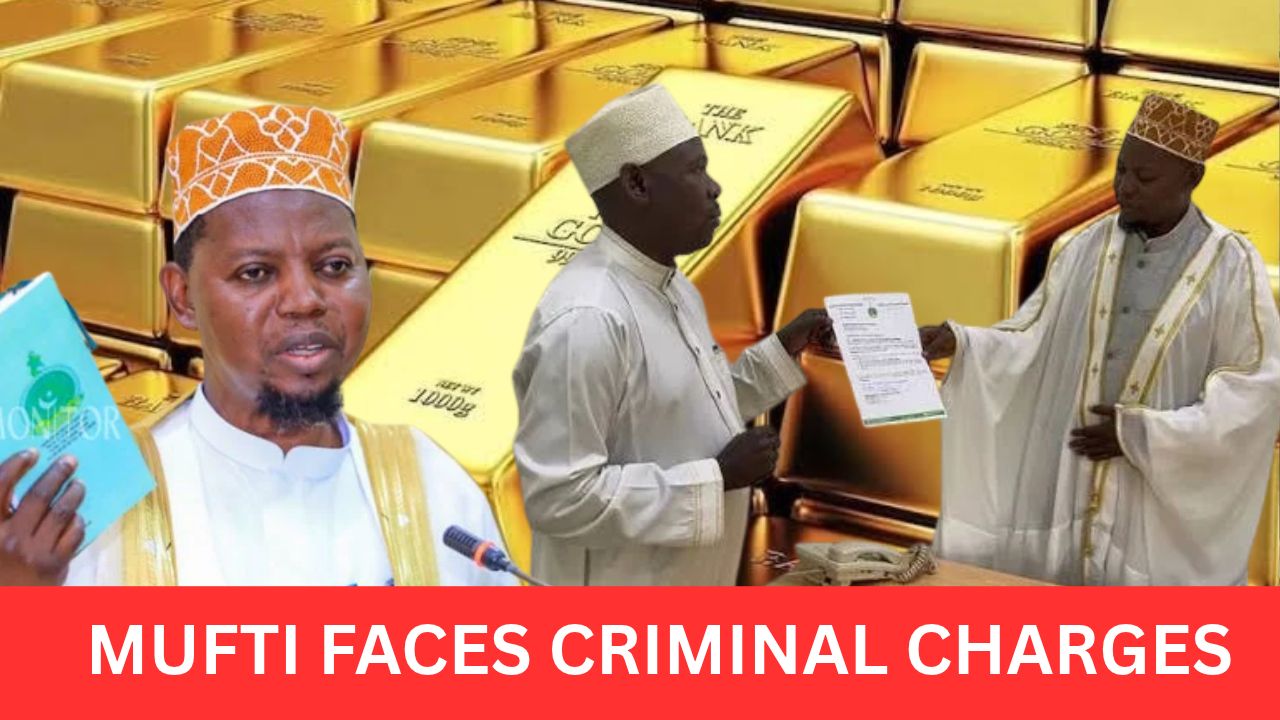










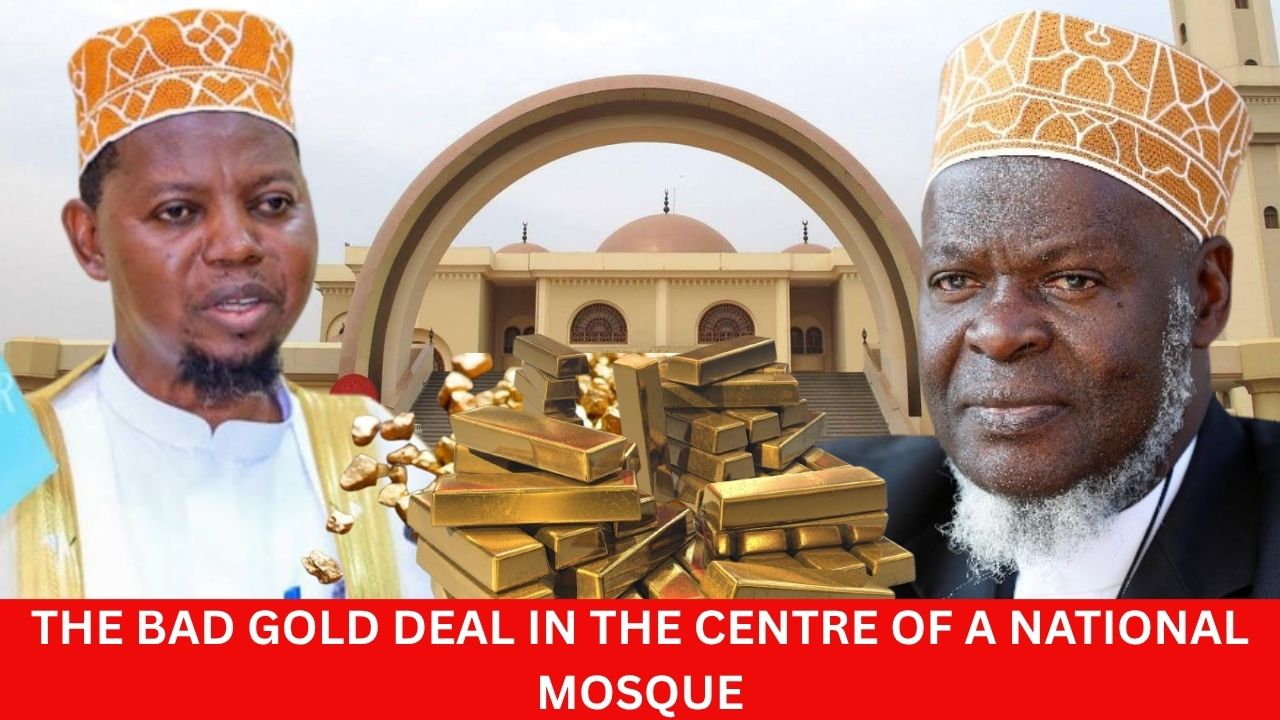
KAMPALA, Uganda: What began as an attempt to source genuine gold ended with a Nigerian diplomat reporting a loss of USD288,000 (UGX1Bn) after three bars presented as genuine gold were allegedly discovered to be total counterfeit.
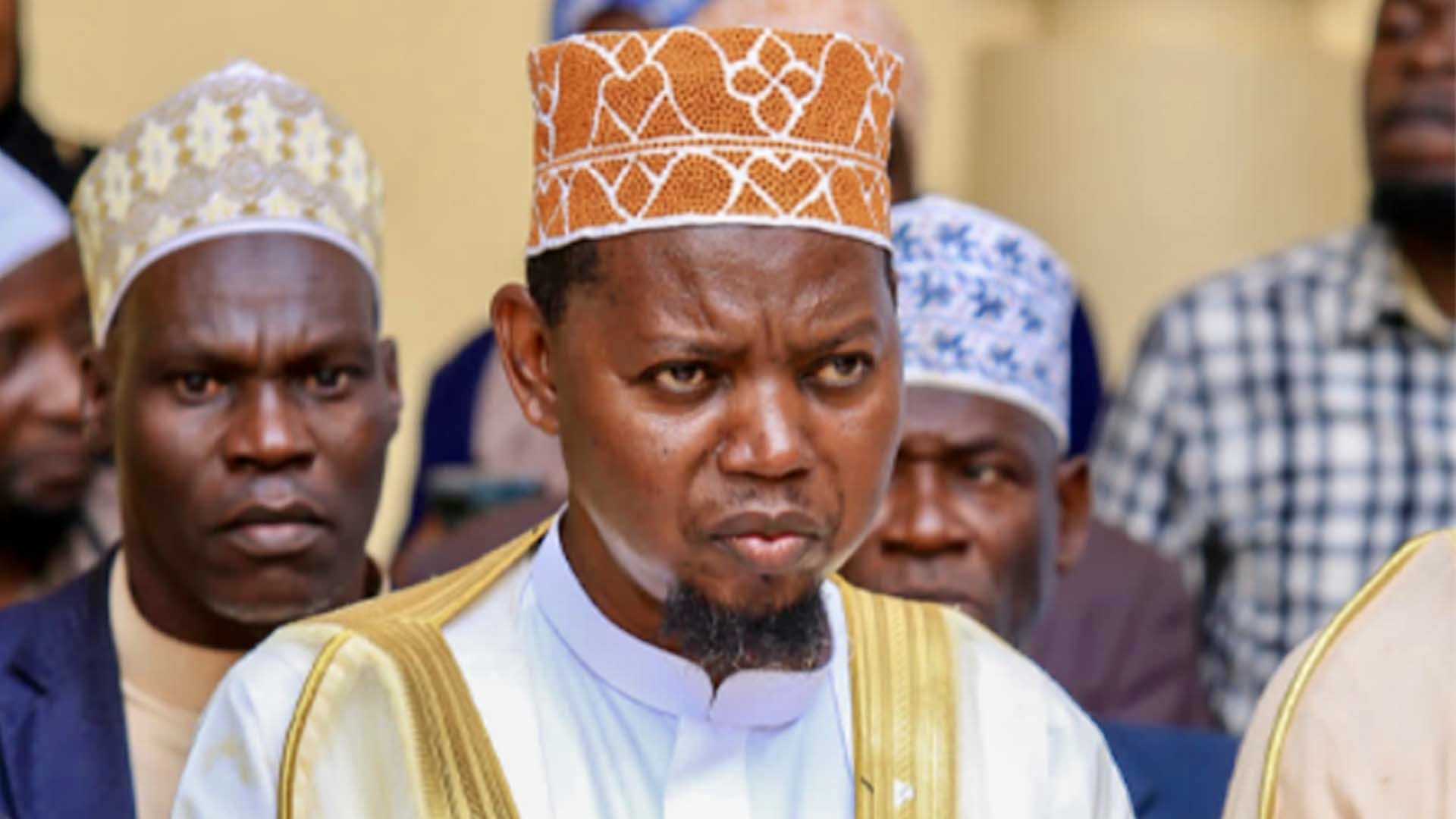
The transaction, according to a statement made to police by Muhammad Ibrahim Abdullahi, a Nigerian national and diplomatic officer serving at the Nigerian High Commission in Kampala, involved a chain of meetings and introductions that included Uganda’s Second Deputy Mufti, Sheikh Dr. Hafidh Muhammad Harunah Bukenya. The account places the centre of the negotiations at Old Kampala Mosque, where the Deputy Mufti’s office reportedly became the starting point for discussions over the proposedgold deal purchase.
Whereas the statement does not establish that Sheikh Bukenya personally supplied or manufactured the counterfeit bars, the Deputy Mufti supposedly introduced the Prince and his associates to people represented as legitimate gold dealers and later became involved in arrangements surrounding all the transactions.
The allegations remain subject to investigation and any persons accused of wrongdoing would be entitled to respond to them and to the presumption of innocence unless and until Court at City Hall determines otherwise.
A trusted introduction
According to Abdullahi’s statement, the events began in early August 2026 when he and a Nigerian medical doctor, also a staff with Mulago Hospital, a one Dr. Sadique, sought to source genuine gold. Sadique, the statement says, knew Sheikh Hafidh Muhammad Harunah Bukenya and had previously been contacted by him concerning gold issues.
The Deputy Mufti allegedly represented that he knew legitimate gold sellers and had a licence relating to gold transactions. That representation, according to Abdullahi, gave the prospective buyers confidence that they were dealing with people, including a respected and trustworth Mufti, who could provide genuine gold.
Abdullahi says him and Sadique subsequently met Sheikh Bukenya at Old Kampala Mosque, where they discussed the sourcing of gold. The Deputy Mufti allegedly confirmed that he had access to legitimate sellers and proposed that the Nigerians work with him and his business associates. But the first attempt quickly ran into trouble.
According to the statement, the first person presented as a seller produced what appeared to be gold but was subsequently considered counterfeit. The proposed transaction consequently collapsed. Rather than ending the search, however, the failed deal was followed by another approach.
Mufti Again Featres with a Second Seller
Abdullahi says that several days later, Sheikh Bukenya contacted Sadique again and claimed that he had found another person who possessed genuine gold. This time, the transaction was allegedly presented as urgent. Muhammad Kwaido, the earlier mentioned complainant and a brother to Abdullahi, attended a subsequent meeting at the Deputy Mufti’s office along with Dr. Sadique.
It was there, according to the statement, that Sheikh Bukenya introduced them to his associate, a man identified as Muzamiru, together with another person presented as the gold seller. Muzamiru has since been arrested and remanded. He was also identfied as Mufti Bukenya`s Personal Assistant. The participants discussed the proposed purchase, including the price, testing arrangements, processing and the procedure for completing the transaction.
The Deal Location Changes Repeatedly
Initially, the transaction was to take place at the Deputy Mufti’s office. Abdullahi says Sheikh Bukenya later changed the proposed location to a restaurant near the Gaddafi Mosque, explaining that his office lacked the electrical power socket required for the intended procedure. Gaddafi is the seat of Isilam faith in Uganda.
The Mufti supposedly suggested that the smelting of the gold could, if necessary, even be conducted from the restaurant at the Mosque. But the restaurant also proved unsuitable! According to the statement, the purported sellers considered the location too open and proposed moving the operation to Nureen Enterprises Ltd, a supposed smelting company of their choice.
The Refinery and the Three Bars
The group then proceeded to Nureen Enterprises in the outskirts of the Capital Kampala. The people present at the refinery, according to Abdullahi, included Sheikh Bukenya, Muhammad Kwaido, Muzamiru, Dr. Sadique, Abdullahi himself and the person presented as the seller. They all waited for about two hours for the purported seller’s partners, a man and a woman, to arrive with the gold.
Eventually, the pair arrived carrying a bag with three bars purported to be gold. The transaction now entered a more technical stage. The parties were told that USD300 was required for smelting and testing the three bars. According to Abdullahi, they were assured that the money paid for testing and smelting would be refunded once the transaction was completed.
At that stage, Abdullahi says, he had no reason to suspect that the bars were fake. He says he relied on the representations of the people presenting the bars as genuine gold, the testing and processing procedures taking place at the refinery and, importantly, the confidence he placed in the people who had introduced the sellers, in particular Sheikh Bukenya and his associate Muzamiru. Following the testing and other arrangements, the purported sellers handed over a locked black toolbox containing the three bars.
The Payment
The group then left the refinery. According to Abdullahi, he temporarily held the locked toolbox as the group travelled in the Deputy Mufti’s vehicle to an area near the Nigerian High Commission. It was at this point that the payment mechanism allegedly changed from an ordinary cash or banking transaction, to cryptocurrency.
Sheikh Bukenya, the sellers and Muzamiru reportedly informed the buyers that payment would be made in USDT, a cryptocurrency commonly used for dollar-denominated transactions. Muzamiru was reportedly instructed to contact a USDT agent who could receive the money.
Abdullahi says the Nigerians contacted a forex agent known to them as Aminu and arranged for the USD288,000 to be sent to the USDT agent introduced by the other side. The payment was eventually made. For the buyers, the transaction appeared to have been completed. But the most consequential part of the deal was yet to come.
The Gold Fails a Second Examination
After payment, Muhammad Kwaido proceeded with arrangements for documentation and the proposed exportation of the purported gold. It was during further examination and testing required before the gold could be documented and exported that the transaction unravelled. The three bars were subjected to additional testing.
According to Abdullahi’s statement, the results showed that they were not genuine gold bars. Instead, the bars were found to consist of steel or another base metal coated or plated with gold. The discovery transformed what had appeared to be a completed multimillion-shilling transaction into a case of sophisticated deception. The buyer had paid for three bars that were allegedly counterfeit.
The race back to the Deputy Mufti’s office
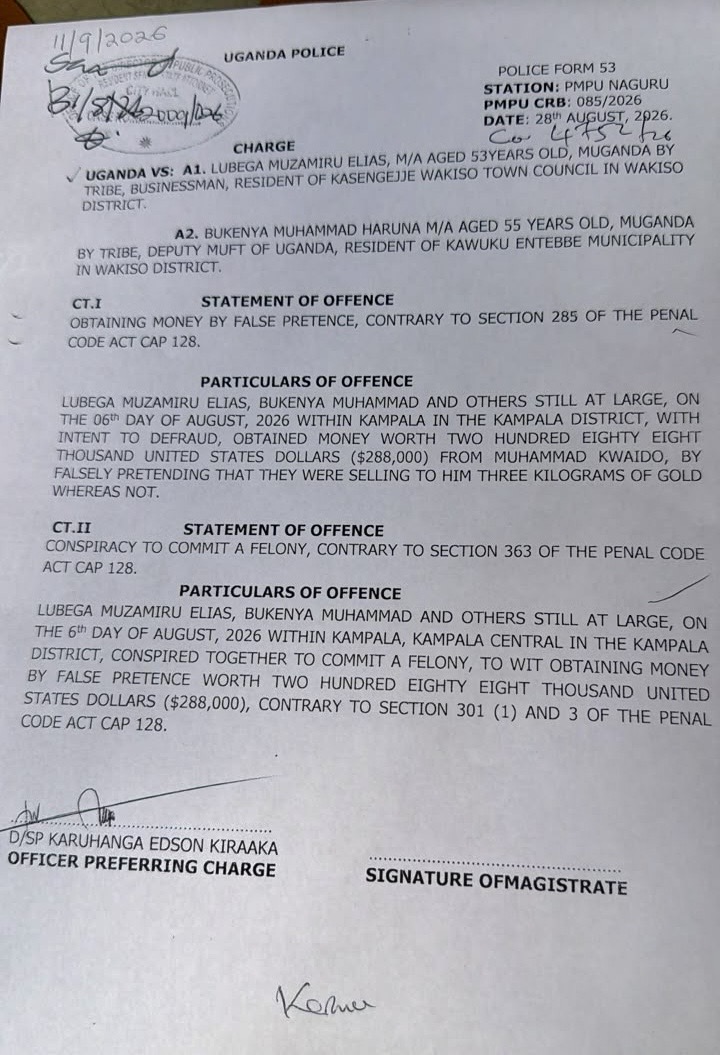
The discovery triggered an immediate attempt to confront those involved. Abdullahi says he and Kwaido contacted Sadique and went directly to Sheikh Bukenya’s office at Gadaffi Mosque. They informed the Deputy Mufti that the purported gold had failed the additional examination and showed him the bars.
The two Nigerians sought his intervention, according to the statement, because of what they described as his involvement in the transaction and because he had introduced Muzamiru as his business partner. In addition, Dr. Bukenya had earlier informed them how he had personally sourced the sellers from DR Congo and that they were in Uganda on his invitation and expense, hence the earlier mentioned urgency the transaction required.
That relationship, the statement suggests, was central to the confidence the prospective buyers placed in the deal. Abdullahi nevertheless makes a deliberate distinction about his own role. He says he was neither the owner, purchaser nor seller of the purported gold and did not introduce Kwaido to the individuals who presented themselves as sellers.
The Mysterious USD5,800
Beyond the headline figure of USD288,000, Abdullahi’s statement raises questions about smaller sums allegedly exchanged before the main payment. He says he was informed that the buyer had already given Sheikh Bukenya US$2,800 in connection with the transaction. He further says Sadique told him that he and the Deputy Mufti had added another USD3,000, allegedly calculated at US$1,000 per kilogramme. Together, the amounts were said to total TO USD5,800.
According to the statement, this amount was to be divided among four people, with each person receiving USD1,450. There was also reportedly a request for an additional USD3,000 from the buyer. Abdullahi says he communicated that request to Kwaido. But after the discovery of the counterfeit gold, he says he returned the USD2,400 he had personally received, to the buyer. The statement does not, by itself, establish the ultimate whereabouts or disposition of all the other funds allegedly paid in connection with the transaction.
Why the Deputy Mufti’s Role Matters

The most sensitive element of the allegations is not simply the counterfeit gold. It is the role allegedly played by a senior religious figure in bringing the parties together. Abdullahi repeatedly emphasises the trust attached to Sheikh Bukenya’s position. In his concluding remarks, he says the discussions concerning the transaction took place at the Deputy Mufti’s office and that those involved believed him to be a person of high integrity because of his position and status.
That confidence, if the account is substantiated, would have been a crucial element in the transaction. For the buyers, the presence and involvement of a senior religious leader allegedly gave credibility to people they did not otherwise know. The central question for investigators, therefore, is whether Sheikh Bukenya was simply an intermediary who was himself deceived by purported gold sellers, or whether he knew, or should have known, that the transaction was fraudulent. Remember he fully owned them before the buyer as his visitors from DR Congo.
A Transaction that Moved Through Trusted Spaces
The chronology described in the statement is striking. The prospective buyers were first brought into contact with the alleged sellers through discussions at Old Kampala Mosque. The transaction was then considered at the Deputy Mufti’s office. It was moved to a restaurant around Gaddafi Mosque.
From there, the parties went to a chosen smelting company, where they waited for the purported sellers’ associates to arrive with the three bars. After the purported gold was handed over, the group travelled in the Deputy Mufti’s vehicle to an area near the Nigerian High Commission. Payment was then made through a USDT arrangement.
Only after the buyer began the process of documenting and exporting the gold did additional testing expose the bars as counterfeit. It is this sequence that gives the allegations their extraordinary character. A transaction worth nearly three hundred thousand US Dollars allegedly passed through a series of locations and intermediaries before the product was ultimately exposed as fake.
Questions Investigators will Have to Answer
As the matter proceeds to a full criminal investigation, several questions become central. Who supplied the three bars? The statement refers to a man and a woman who allegedly arrived with the purported gold, as well as the person initially presented as the seller. Establishing their identities and tracing their movements could be critical.
Who owned the gold, or knew where it came from? Investigators would need to establish the chain of custody of the three bars before they reached Nureen Enterprises. What did the refinery’s first tests actually establish? The statement says the bars underwent testing and processing before payment. Investigators will need to examine what tests were conducted, what their results were and whether the procedures could have been manipulated.
The, Who received the USD288,000? The money was reportedly sent in USDT to an agent introduced by the other side. Tracing the digital wallet addresses, intermediary accounts and eventual beneficiaries could provide an important financial trail.
What was the purpose of the additional payments? The alleged USD2,800, USD3,000 contribution and subsequent request for another USD3,000 will also require clarification. What exactly was the relationship between Sheikh Bukenya and Muzamiru? Abdullahi says Muzamiru was introduced as the Deputy Mufti’s business partner. Investigators would need to establish the nature of that relationship and whether it extended to the gold transaction. Did anyone know the bars were counterfeit before the payment was made? This may ultimately be the most important question.
The presumption of innocence
The allegations contained in Abdullahi’s statement are serious, but an allegation is not proof of criminal liability. The statement represents the account of one participant in the transaction and in our subsquent series, we shall test against the evidence of other participants, transaction records, communications, refinery records, CCTV footage, cryptocurrency transfers and forensic examination of the bars.
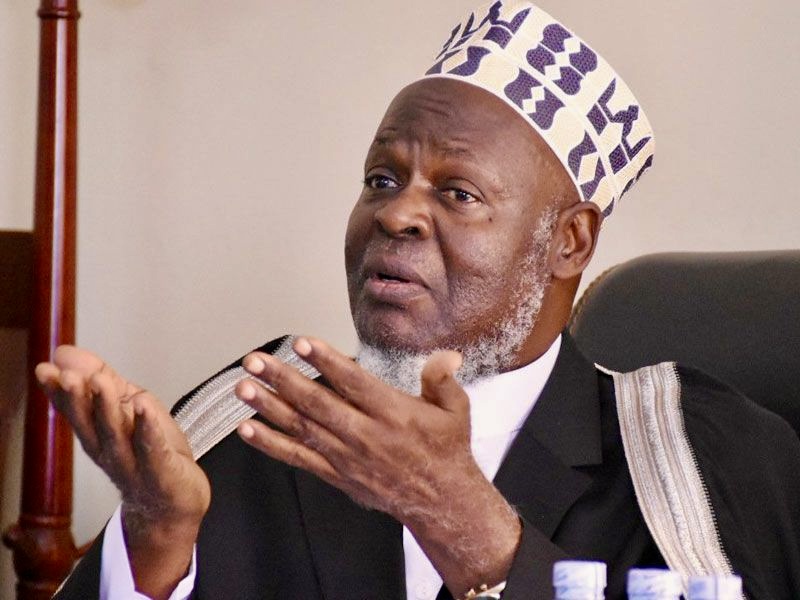
Sheikh Hafidh Muhammad Harunah Bukenya and the other people mentioned in the statement definitely have the right to provide their accounts of what happened. Surprisingly, in one of the clips before our desk, the Mufti of Uganda, Sheikh Ramathan Mubajje is seen on the table, supposedly as a reconcilliator after the bad deal. His statement too, will be sought for our better reporting of the matter.
For investigators, the task is to determine whether this was a case of criminals exploiting the reputation and connections of an influential religious figure, or whether the Deputy Mufti himself played a knowing role in a deliberate scheme to defraud the Nigerian buyer. For Muhammad Kwaido, however, the immediate reality was stark. Three bars that had been represented as gold were allegedly worthless base metal beneath a thin covering of gold. And US$288,000 had already changed hands!
Author Profile

- Stanley Ndawula is a two and a half decades’ seasoned investigative journalist with a knack for serious crimes investigations and reporting. He’s the Founding Editorial Director and CEO at The Investigator Publications (U) Limited
Latest entries
 BusinessOctober 3, 2026NEW KID ON THE CELEBRITIES` BLOCK LT. HERBERT MABONGA UNVEILS HIS CONNECTIONS WITH THE PORTUGESE FUGITIVE: But Who Is Carlos Cohen? The Runaway Gold Dealer With M7`s Ear
 UncategorizedOctober 1, 2026ONE YEAR WITHOUT YOU, NDUGU TATYA: A Tribute to My Friend, Colleague and Brother, Daniels Nabongo Tatya, “The Prince Of Journalism, The Man From the Mineral-Rich Busoga”
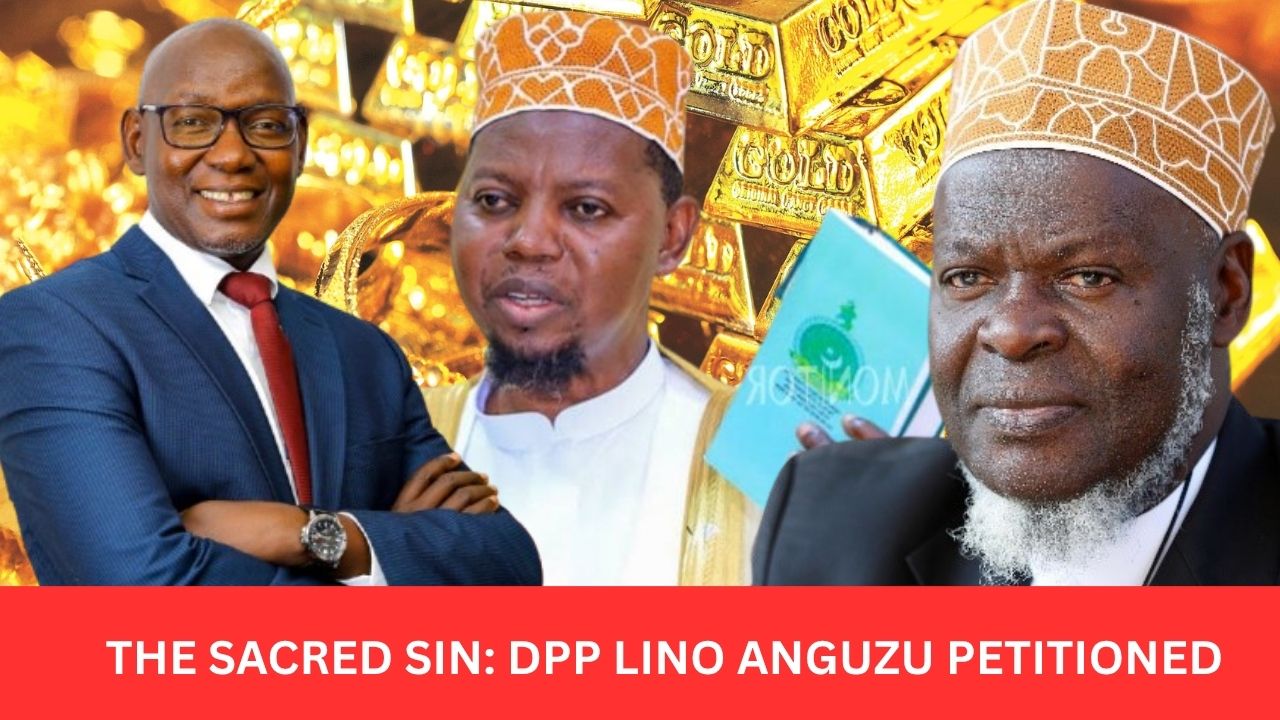 BusinessSeptember 25, 2026OF DEPUTY MUFTI SHEIK DR. HAFIDH MUHAMMAD HARUNAH BUKENYA`S BAD GOLD DEAL AND THE MISSING FILE: DPP Lino Anguzu Petitioned Over the Handling of the UGX1 Billion Criminal Case
 EducationSeptember 23, 2026MY LAST WORD ON FALLEN KING OYO`S SUCCESSION TREK: Maybe Ugandans Love a Good Story! But Punish Not the One Who Asks for Proof Simply Because the Story is Too Good to be Questioned


Anytime I am doing a transaction and someone prefers cash of substantial value than banking, avoids using their personal banking details for the transactions or wants to keep away anyone presented with legal knowledge; I smell little rats and call for the cat.