











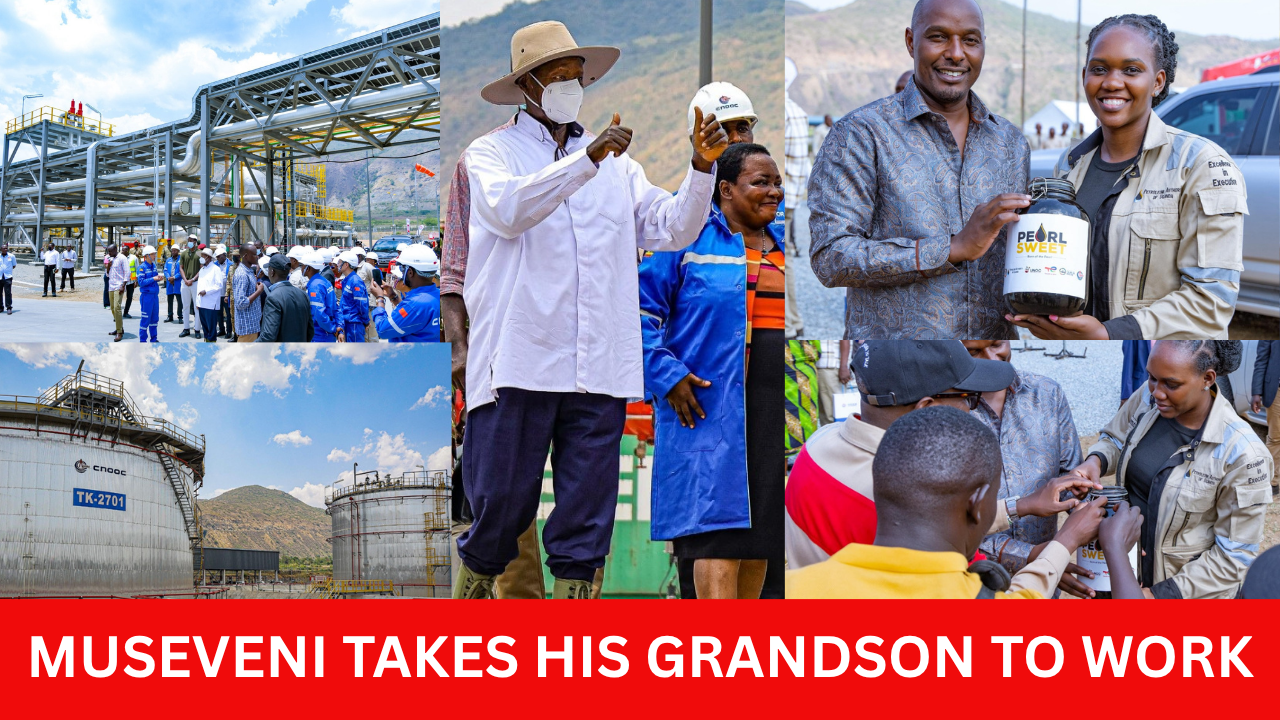
As Uganda prepares to pump its first commercial oil, President Museveni’s decision to tour the Kingfisher oil fields with a grandson has triggered jokes about succession, inheritance and the country’s growing family connection to power.
President Yoweri Kaguta Museveni has apparently decided that when it comes to Uganda’s oil, the old saying that “family business is family business” should be taken quite literally.
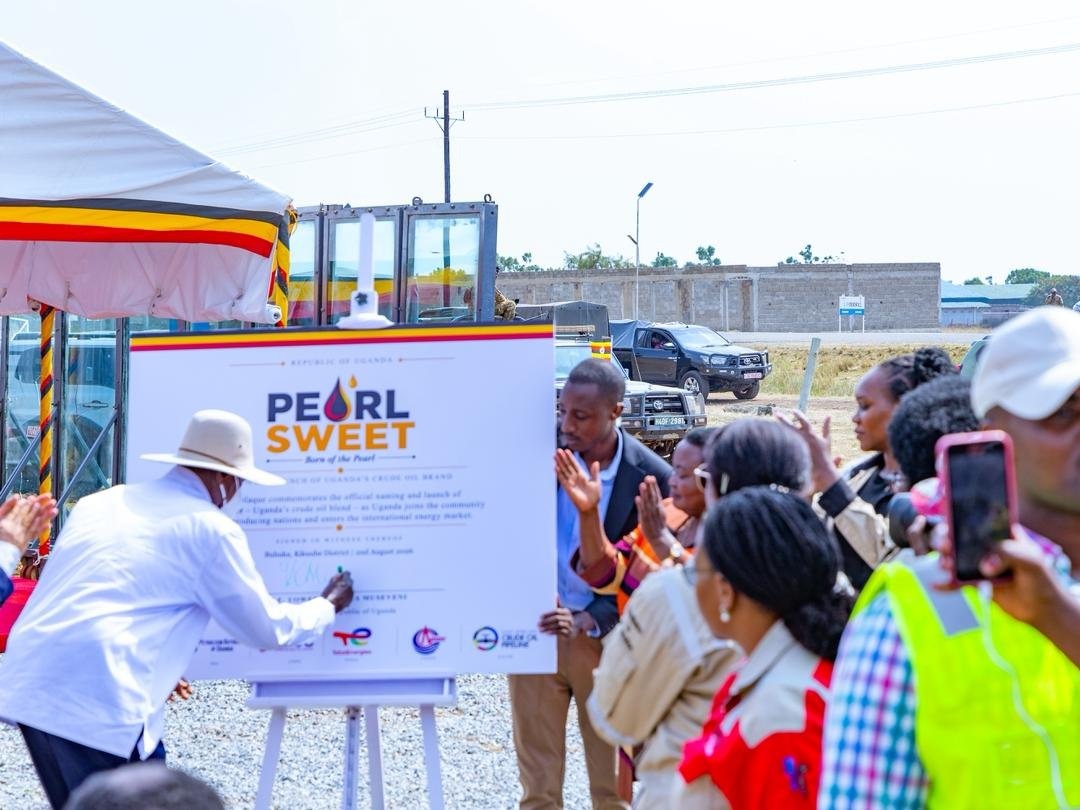
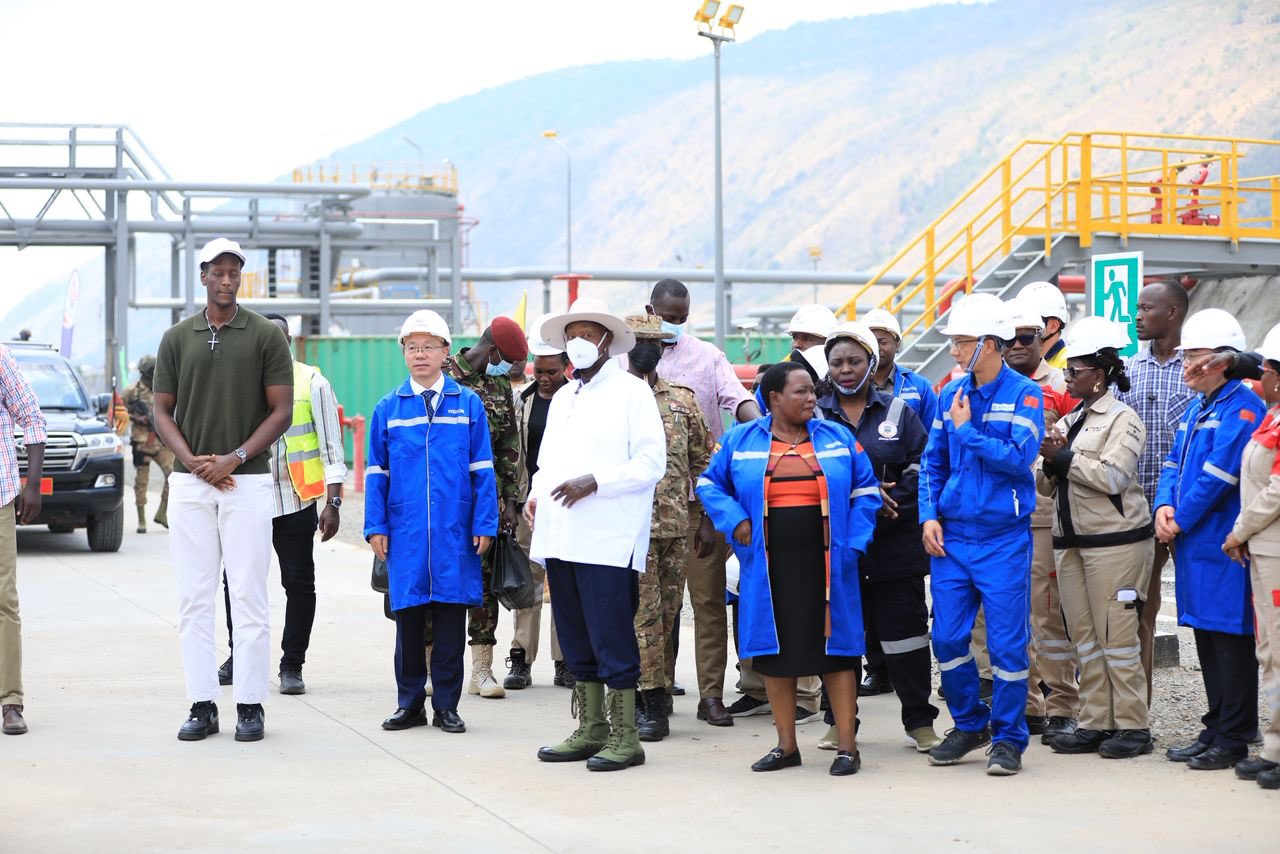
As the President toured the Kingfisher Development Area in Kikuube District, where Uganda officially named its crude oil blend Pearl Sweet, he was accompanied by a tall young man described as his grandson.
For ordinary Ugandans watching the images from the oil fields, the visit provided a rich opportunity for political satire.
Here was the President, in his familiar white shirt and hat, standing among engineers, petroleum officials, security personnel and workers at one of Uganda’s most valuable economic projects.
And beside him stood a tall young member of the Kaguta family.
The optics were almost too perfect for comedians to ignore.
Uganda has spent years being told that oil belongs to all Ugandans.
But judging from the photograph, some Ugandans joked, the President was taking the family through the business premises early enough to make sure that nobody gets lost when the handover eventually comes.
It was, in the language of a Ugandan businessman, “site visit for the future management.”
‘Come, Let Me Show You Your Oil’
Imagine the scene.
The President points towards the massive infrastructure and says:
“Do you see that?”
The grandson looks around.
“Yes, grandfather.”
“That is oil.”
“Yes, grandfather.”
“And that pipeline?”
“Yes.”
“That is also oil business.”
The young man nods.
Then comes the lesson that every aspiring family-business heir must learn.
“Always remember,” the President might have said in the imaginary satirical version of the tour, “never confuse the family business with the family property.”
That distinction could become particularly important in Uganda.
For decades, Museveni has been at the centre of Uganda’s political system. His family members have increasingly become prominent in public affairs, business, politics and the security establishment.
That has fuelled a persistent debate about whether Uganda is gradually becoming a political family enterprise.
The President has consistently maintained that leadership should be based on ability and that the country’s institutions remain bigger than individuals.
But politics, like oil, is not always about what is written on paper.
Sometimes it is about the picture. And the picture from Kikuube was certainly worth a thousand political cartoons.
Pearl Sweet, Family Sweet?
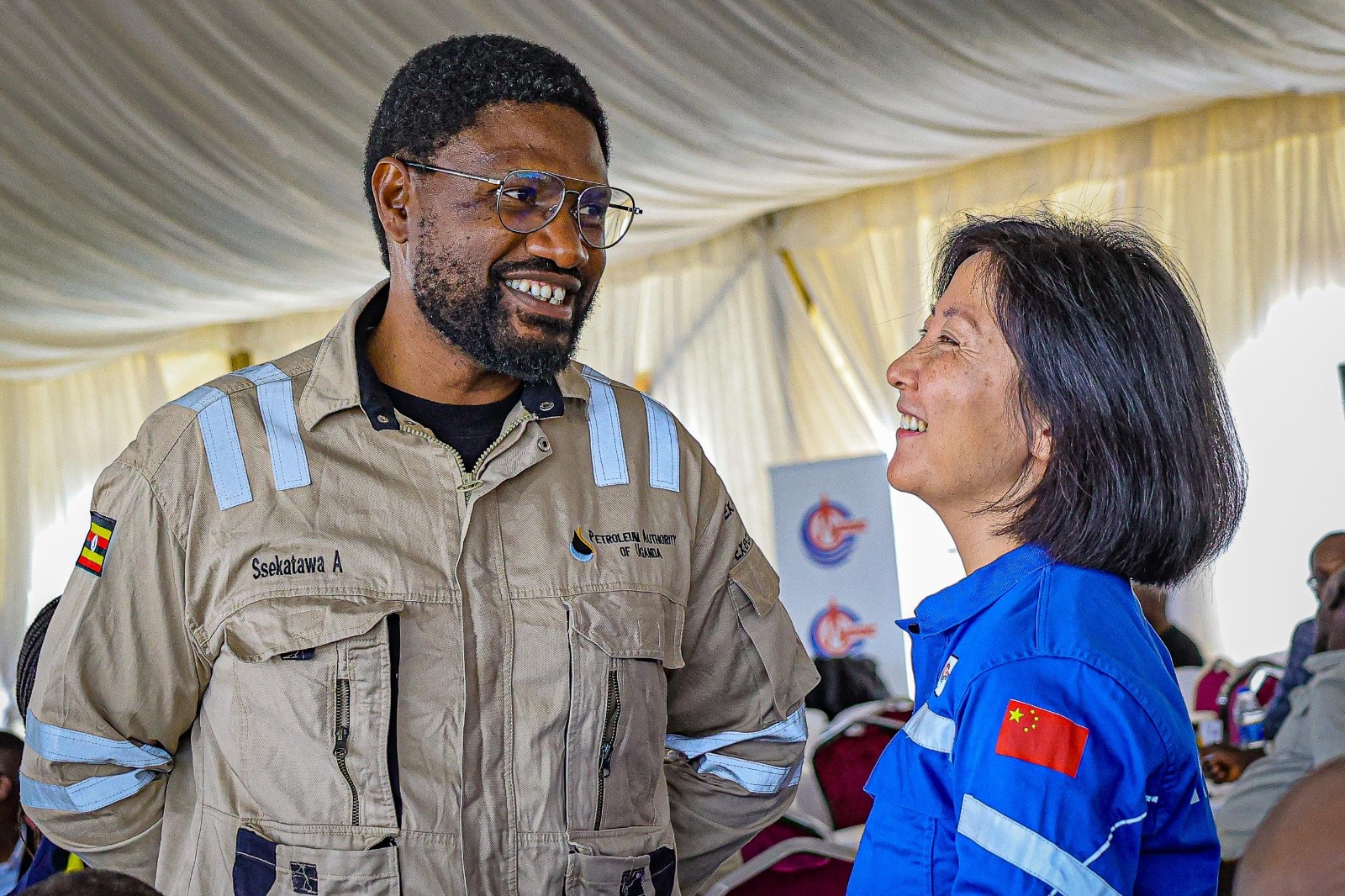
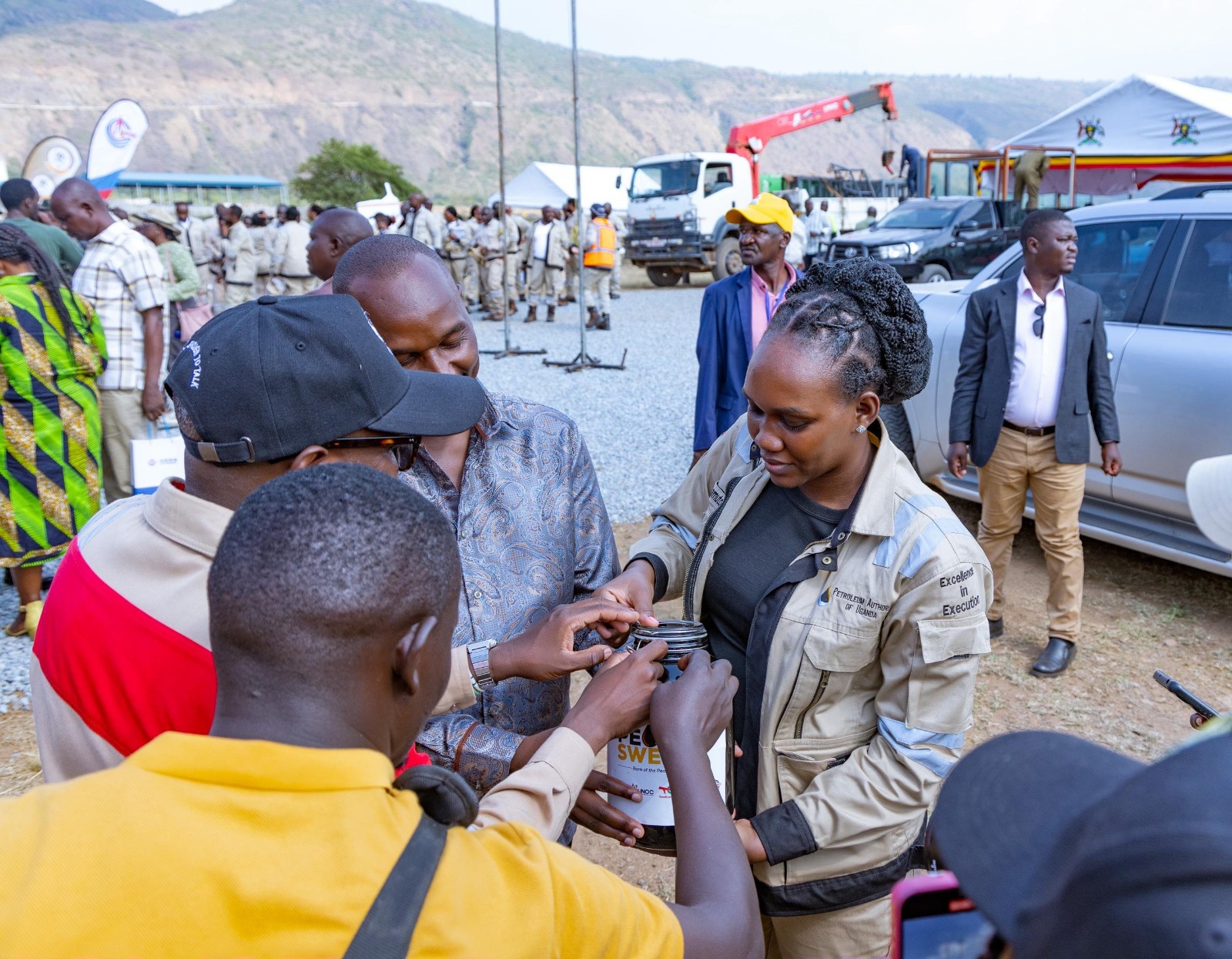
Uganda’s decision to name its crude Pearl Sweet was presented as a significant national milestone.
The name gives the country’s crude a distinct identity as Uganda prepares to enter the international oil market.
But social media users could be forgiven for coming up with alternative meanings.
Pearl Sweet is Uganda’s oil.
Uganda is the Pearl of Africa.
And if the Kaguta family is increasingly visible around the country’s political and economic machinery, satirists may soon be asking whether Pearl Sweet is also destined to become “Family Sweet.”
Of course, that would be unfair to the thousands of Ugandans who have worked on the oil projects and the institutions responsible for managing the resource.
It would also ignore the President’s own argument that oil revenues must benefit the entire country.
Museveni used the occasion to warn Ugandans against squandering oil revenues on consumption.
He said the resource must instead be used to build a productive and sustainable economy.
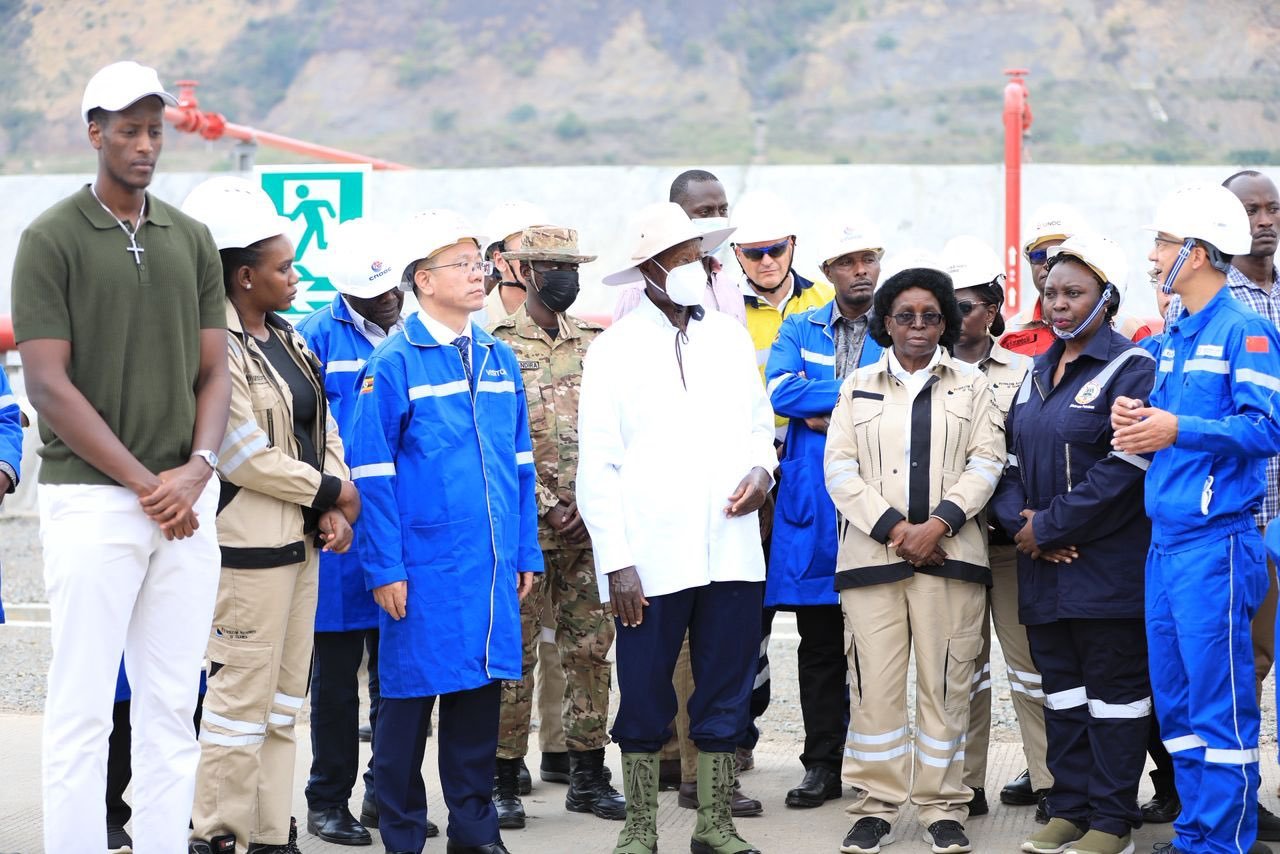
He cited investments in electricity, roads, railways, universities and other long-term national assets.
But Ugandans have another question:
Who will be around to manage all those assets when the current generation of leaders is gone?
That is where the grandson photograph becomes politically interesting.
The Grandchildren’s Tour
There is nothing inherently unusual about a grandfather taking his grandchild to work. A farmer can take his grandson to the garden. A shopkeeper can take her granddaughter to the shop.
A businessman can take his children to the factory. It is how people pass knowledge from one generation to another.
The difference is that Museveni’s workplace happens to be the presidency of a country that has discovered billions of dollars’ worth of oil. His “office” is therefore not exactly a small family shop in Kampala.
The national stakes are enormous. For many Ugandans, the oil fields are the physical embodiment of a resource that has been discussed for more than two decades.
The first oil discovery generated excitement. Then came production-sharing agreements, negotiations, environmental debates, compensation disputes, refinery plans, the East African Crude Oil Pipeline and years of waiting. Now Uganda is approaching commercial production.
So when the President arrives at the oil fields with a grandson, political observers naturally look beyond the boots, helmets and machinery. They see symbolism. They see generations.
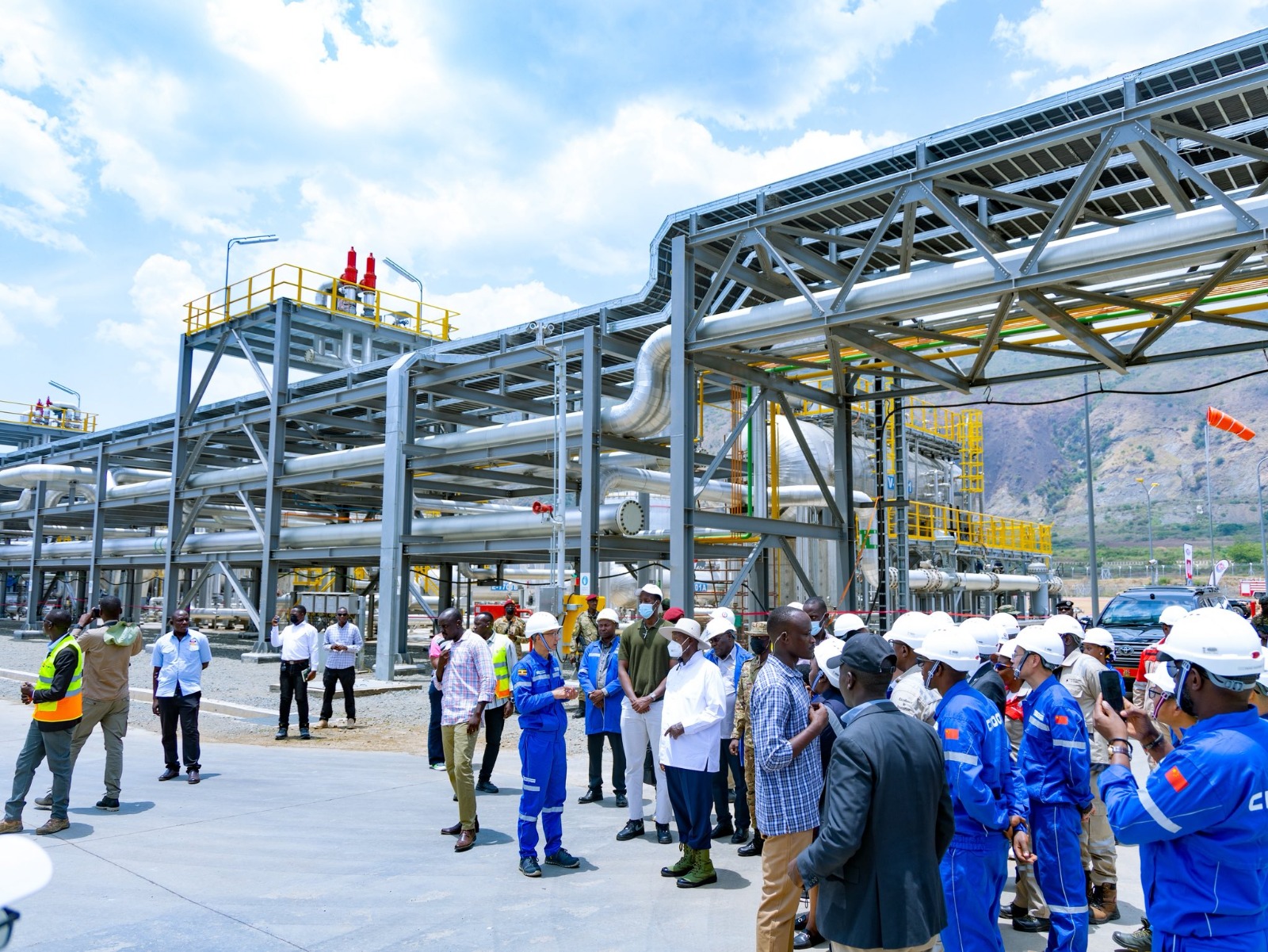
And some see a political dynasty standing next to an economic resource that is expected to generate revenue for decades.
‘Don’t Waste The Family Business’
The satire writes itself.
“Grandfather, what happens when the oil runs out?”
“Then you build other businesses.”
“And what happens to the money?”
“You invest it.”
“And what happens to the country?”
“That depends on whether you have listened.”
It is precisely this question that Museveni himself raised during the ceremony.

He warned that oil is finite and should be converted into permanent productive capacity.
He recalled the mistakes made by some African oil-producing countries, where petroleum wealth failed to create sustainable development.
His warning was blunt: Uganda must not sow ignorance and reap chaos.
The President therefore wants the oil story to be about economic transformation rather than personal enrichment.
That is the official story. But politics has a way of producing a parallel story.
And the parallel story is that while the country is preparing to receive its first barrels of Pearl Sweet, the ruling family is also preparing for a future beyond the generation that discovered the oil.
The Succession Question
The grandson’s appearance will inevitably feed Uganda’s already intense conversations about succession.
The country has witnessed the increasing prominence of members of the First Family and relatives in different areas of public life.
The President’s son, Gen Muhoozi Kainerugaba, is the Chief of Defence Forces and has become one of the most discussed figures in Uganda’s political future.
Other members of the wider family have also held influential positions or attracted public attention. The appearance of the next generation therefore gives political commentators fresh material.
The joke is not necessarily that the grandson has been handed an oil field. No evidence suggests that. The joke is about symbolism.
Ugandans are asking whether the family is simply visiting the oil fields—or whether it is getting an early tutorial in the management of the country that will eventually inherit the consequences of today’s decisions.
From First Barrel To Next Generation
Museveni has repeatedly said Uganda should ensure that its first barrel of oil is not its last.
That statement can now be given a new satirical interpretation: Perhaps the first barrel belongs to the current generation, while the grandchildren will be around to see what became of the money.
And that is ultimately the serious question behind the jokes. Oil wealth can transform Uganda, but only if it is invested wisely, managed transparently and used to build institutions and productive industries that survive the politicians who preside over its production.
Pearl Sweet may flow for only a limited period. The roads, schools, power plants, universities, industries and other assets built from its revenues could last much longer.
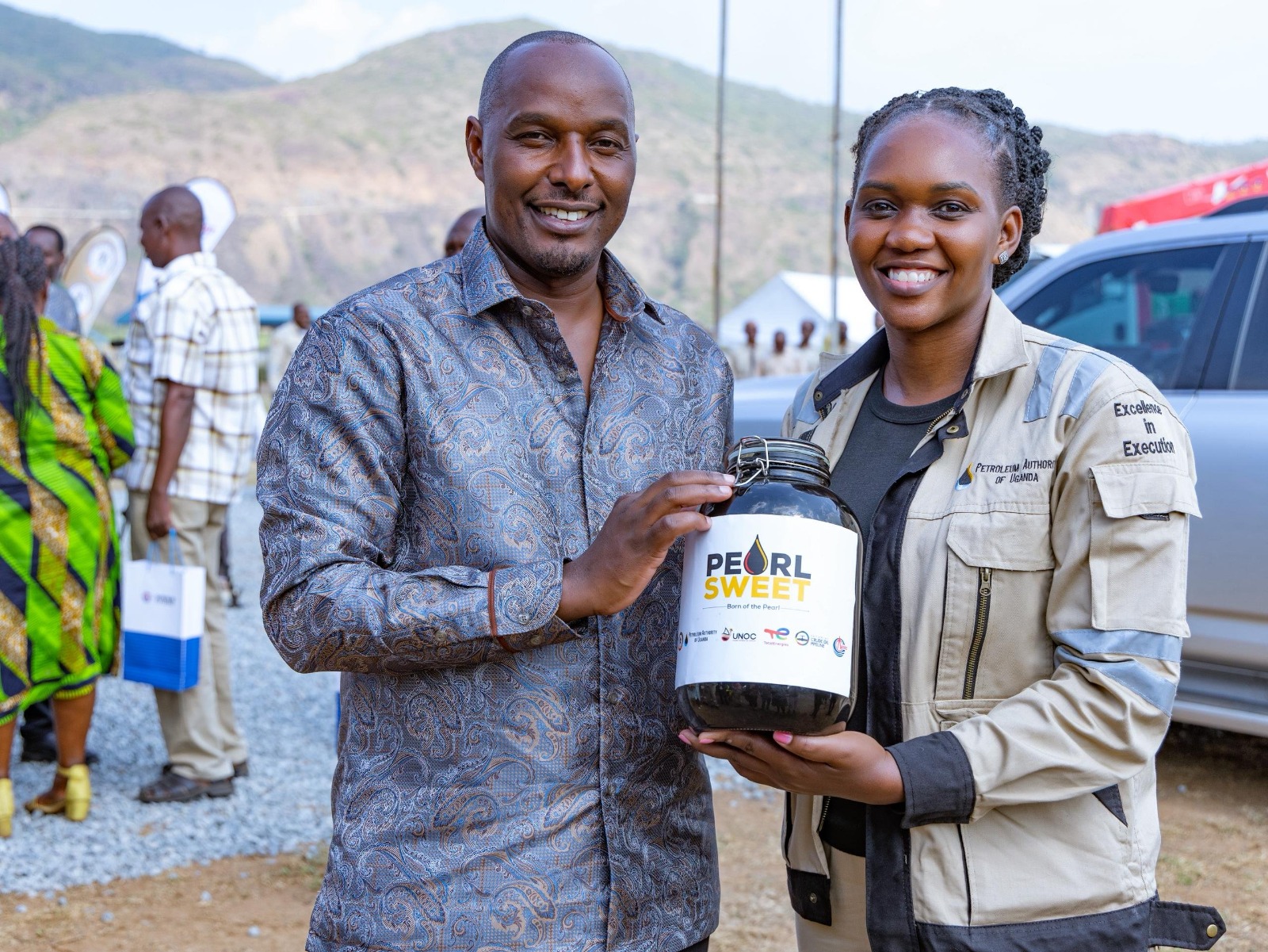
So, while Ugandans laughed at the image of the President taking his grandson to inspect the family’s newest “business venture,” the photograph also captured something deeper.
It showed a country standing at the beginning of an oil era—and a political family that has been at the centre of the country’s affairs for nearly four decades.
Whether the next generation will inherit an oil-rich Uganda, a diversified economy, or merely a collection of abandoned oil infrastructure will depend on the choices made today.
For now, the President has shown his grandson where the oil is. The real test will be whether Uganda can show the next generation what the oil built.
Author Profile

- Charles Gazza Kodili is a seasoned journalist with over 20 years of experience in the media industry. He holds a Bachelor of Arts degree in Mass Communication. He’s currently the Chief Editor at the Investigator.
Charles can also be reached via; Tel: +256 774 108978
Email: [email protected]
Latest entries
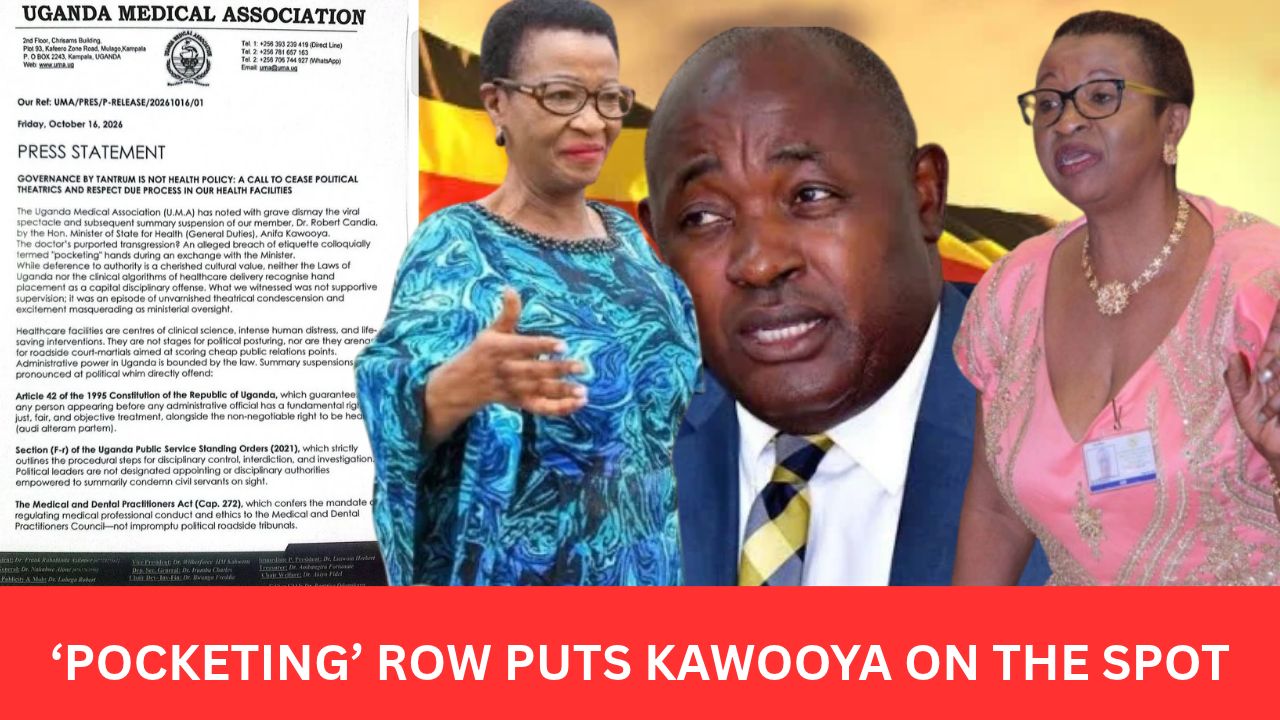 FeaturedOctober 16, 2026KAWOOYA UNDER FIRE AS MINISTRY DENIES DR CANDIA SUSPENSION: Health Ministry Says Arua Doctor Remains In Office After Minister Reportedly Ordered Him To Hand Over For “Pocketing”
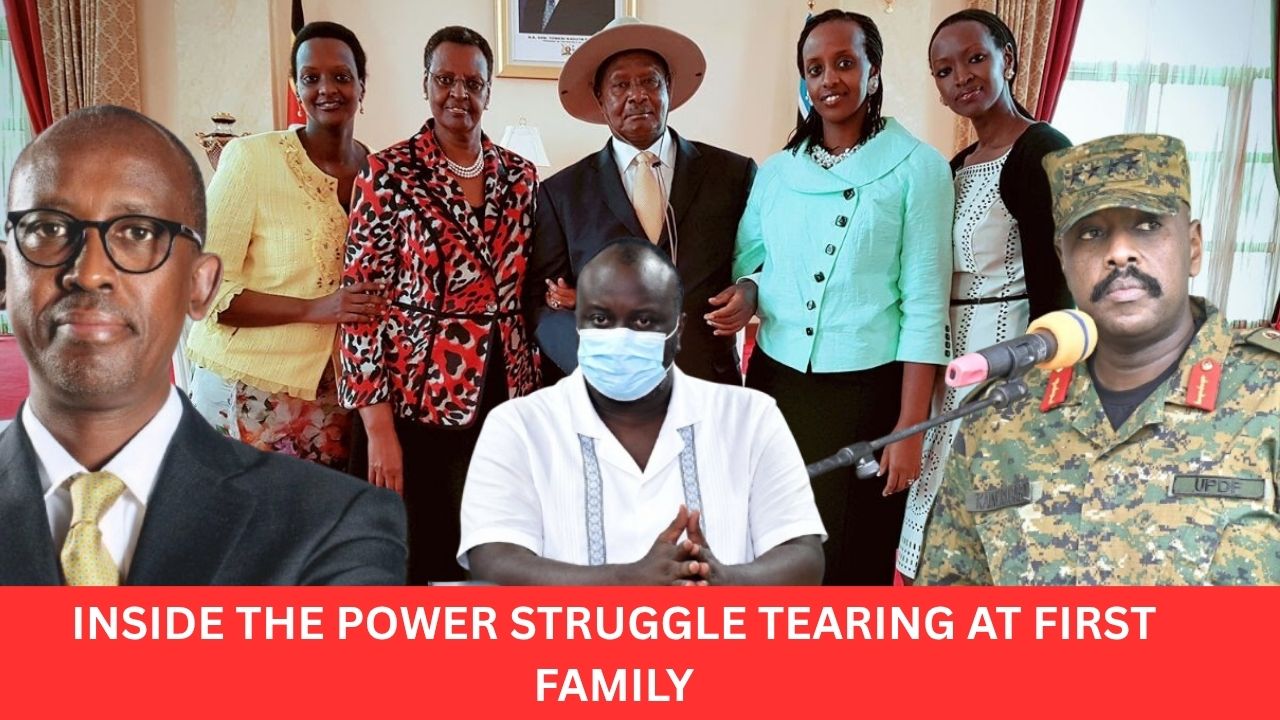 FeaturedOctober 14, 2026MATHEW BAGONZA BAIL DEAL DEALS A BLOW TO CDF GEN. MUHOOZI: Rwabwogo’s Camp Sees Relief After Weeks Of Confrontation, As Reported First Family Tensions Raise Questions About The CDF’s Fight With His Brother-In-Law
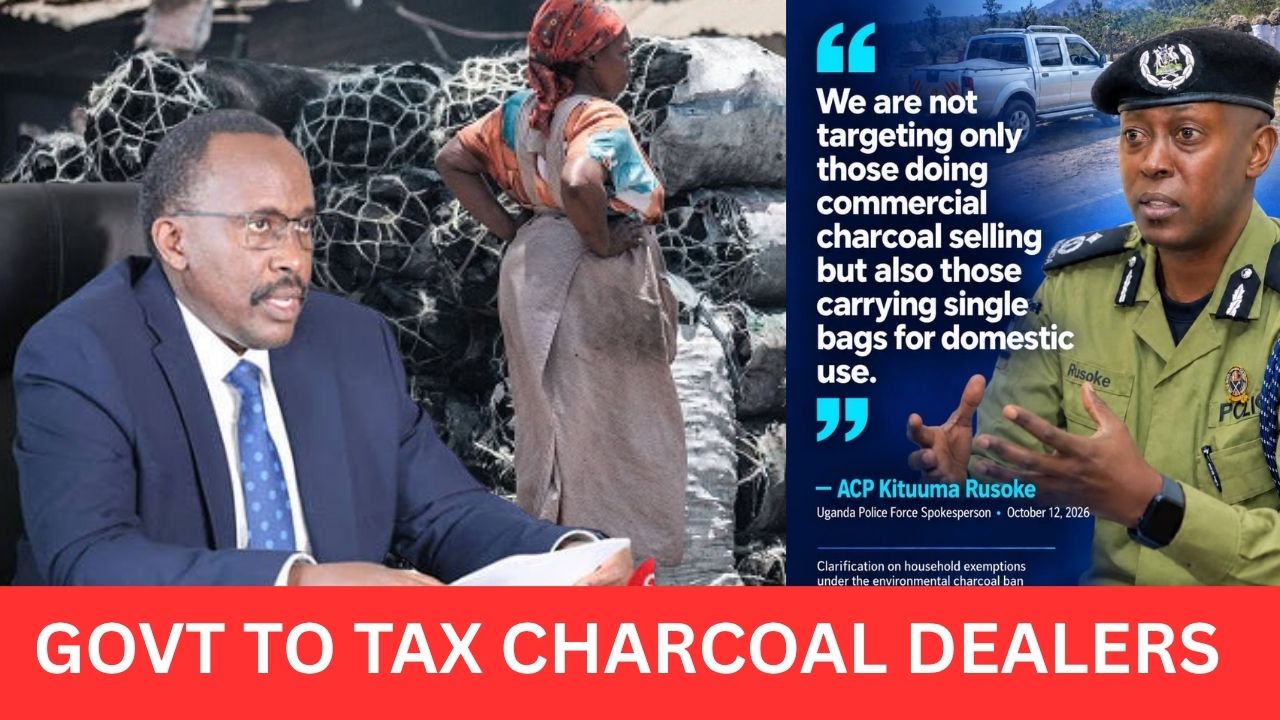 FeaturedOctober 14, 2026GOVERNMENT TO CASH IN ON CHARCOAL TRADE: Government Plans To Formalise The Charcoal Business Through Trade Licences, Taxation And Strict Monitoring Of Producers And Dealers
 FeaturedOctober 13, 2026‘PRODUCE SAM MUGUMYA NOW’ — SSENYONYI: LoP Tells Parliament Families Of Missing Ugandans Deserve Answers, Freedom And Justice As He Challenges Government Over The Opposition Activist’s Fate