










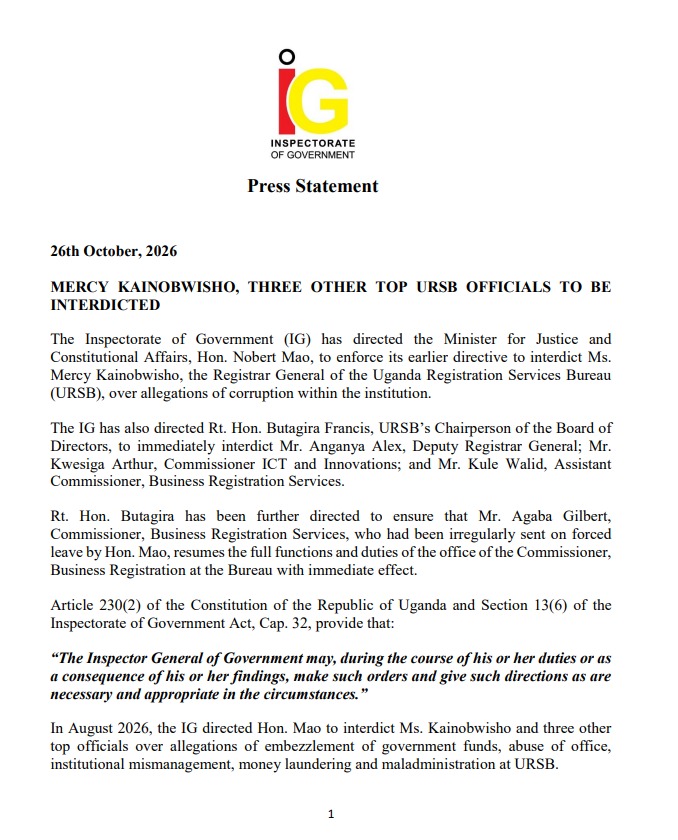
The Inspectorate General of Government, Lady Justice Aisha Naluzze Batala has stepped up her confrontation with Justice and Constitutional Affairs Minister Norbert Mao over the interdiction of Uganda Registration Services Bureau (URSB) Registrar General Mercy Kainobwisho, ordering the minister to enforce an earlier directive that she be removed from office pending investigations into alleged corruption.
The latest directive has deepened an institutional standoff between the IGG and the ministry responsible for supervising URSB, with the anti-corruption body insisting that its orders cannot simply be ignored by a government minister.
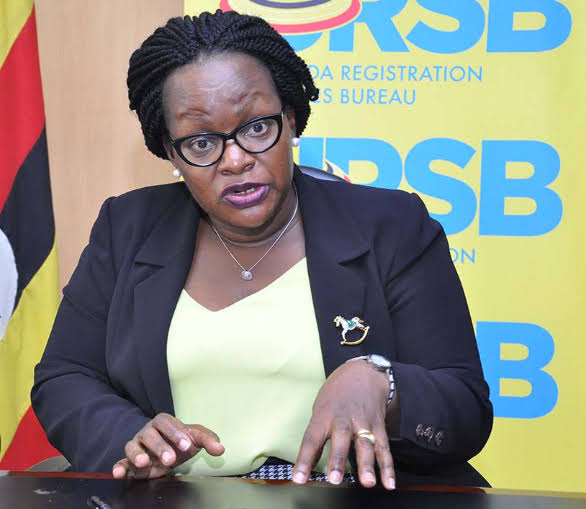
The IGG has directed Mr Mao to immediately implement its earlier decision to interdict Ms Kainobwisho, who heads the government agency responsible for registration of businesses, companies, marriages, births and deaths, intellectual property and other statutory services.
The Inspectorate has also ordered the chairperson of the URSB Board of Directors, Rt Hon Francis Butagira, to interdict three other senior officials—Deputy Registrar General Alex Anganya, Commissioner for ICT and Innovations Arthur Kwesiga, and Assistant Commissioner for Business Registration Services Walid Kule.
The sweeping directive means the Inspectorate wants four senior URSB officials removed from active duty as investigations into alleged corruption and administrative impropriety proceed.
But the dispute goes beyond the fate of individual officials. At its centre is a constitutional and administrative question: who has the final say when the Inspectorate orders the interdiction of a senior government official and the responsible minister does not implement the directive?
The latest order also seeks to reverse a decision attributed to Mr Mao involving another senior URSB official, Mr Gilbert Agaba, the Commissioner for Business Registration Services.
The IG has directed the URSB board chairman to ensure that Mr Agaba immediately resumes his full functions and duties, arguing that he had been irregularly sent on forced leave by Minister Mao.
The directive therefore represents a direct challenge not only to the continued presence of Ms Kainobwisho and the three other officials at URSB, but also to ministerial decisions concerning the agency’s senior management.
IG tightens the screws
The Inspectorate’s intervention follows earlier concerns about alleged corruption at URSB, prompting investigations into the operations of the institution and decisions taken by some of its senior officials.
By directing the minister to enforce its previous interdiction order, the IG is effectively telling the Justice Ministry that the matter can no longer be treated as an internal administrative disagreement.
The anti-corruption agency’s position is that the officials should step aside while investigations are conducted, allowing investigators to examine the allegations without interference from individuals who remain in positions of authority.
Interdiction is an administrative measure rather than a finding of guilt. It is ordinarily intended to protect an investigation by temporarily removing an official from active duty while preserving due process.
For Ms Kainobwisho, however, the directive carries considerable significance because of her position as Registrar General and head of URSB.
Her removal would temporarily alter the leadership of one of Uganda’s important public institutions, whose work touches virtually every part of the formal economy.
URSB is responsible for registering companies and businesses and maintaining critical public records. Its systems are also increasingly central to government efforts to digitise public services and improve the business environment.
Any allegations involving senior management therefore have implications beyond the individuals named in the IG directive.
Mao caught in the middle
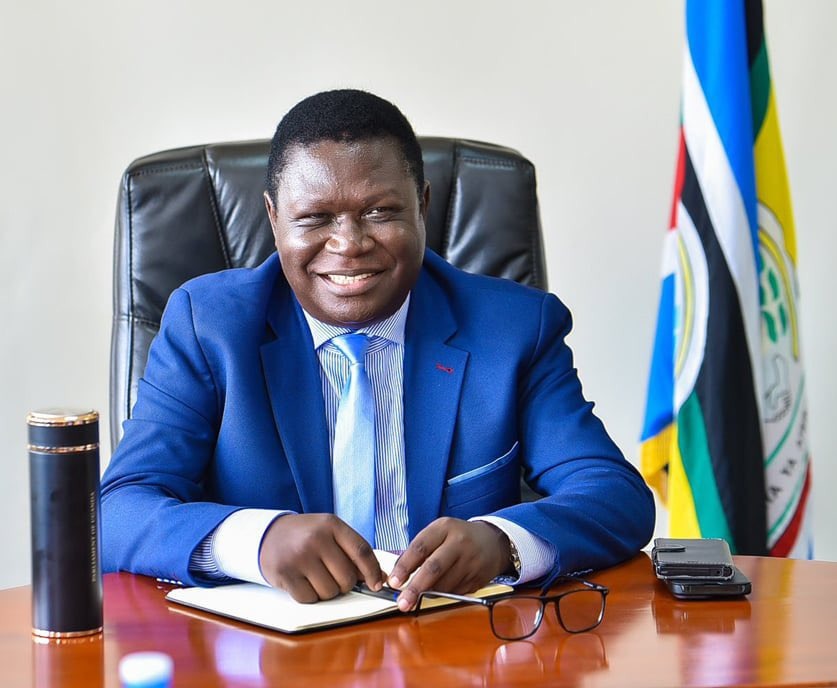 The confrontation puts Mr Mao, a former opposition politician who now serves in President Museveni’s Cabinet, in an awkward position.
As Minister for Justice and Constitutional Affairs, Mao has political responsibility for the ministry under which URSB operates. The minister has therefore been involved in administrative decisions affecting the bureau and its leadership.
The IGG’s latest directive, however, seeks to compel him to enforce its earlier order concerning Kainobwisho.
The disagreement is particularly significant because the Inspectorate is constitutionally mandated to investigate corruption, abuse of authority and other forms of maladministration involving public officials.
The question now is whether the minister can decline to implement a directive issued by the country’s principal anti-corruption watchdog, and what consequences may arise from such a disagreement. The IGG’s language signals that it considers the matter settled from its side.
Rather than issuing another recommendation, the Inspectorate has ordered implementation of the earlier directive, putting the minister under renewed pressure.
Board also ordered to act
The Inspectorate has simultaneously brought the URSB Board of Directors into the dispute. Board chairman Francis Butagira has been directed to interdict Mr Anganya, Mr Kwesiga and Mr Kule.
The board has also been ordered to restore Mr Agaba to his position and allow him to resume the full responsibilities of Commissioner for Business Registration Services.
This part of the directive is especially important because it seeks to undo what the IG describes as an irregular administrative action by the minister.
The Inspectorate says Mr Agaba was irregularly sent on forced leave by Mr Mao and should therefore return to work immediately. The orders effectively place the URSB board at the centre of an increasingly complicated administrative battle.
The board must now navigate competing institutional pressures while ensuring that its actions comply with the law and the government’s established human-resource procedures.
 Allegations yet to be tested
While the Inspectorate has cited allegations of corruption, the accusations against the officials remain allegations unless and until established through the appropriate investigative or judicial processes.
That distinction is important in a matter involving senior public servants whose careers and reputations are at stake. Interdiction itself does not amount to conviction.
It is intended to create room for investigations to proceed without the risk of interference, manipulation of records or influence over witnesses.
The officials affected by the directive are therefore entitled to due process and an opportunity to respond to any allegations made against them.
The wider controversy also raises questions about accountability within public institutions.
For years, Uganda’s anti-corruption institutions have faced criticism over their ability to translate investigations and recommendations into actual disciplinary or criminal consequences.
The URSB dispute now provides a test of whether the Inspectorate can ensure compliance with its directives even when they collide with decisions taken by a minister.
 A test of institutional authority
The developing confrontation between the IG and Mao could ultimately become less about individual personalities and more about the boundaries of institutional authority.
If a minister can decline to enforce an IG directive, questions arise about the practical force of the Inspectorate’s anti-corruption mandate.
Conversely, if a minister believes an interdiction directive has been issued without following the appropriate administrative procedures, the dispute could raise questions about the limits of the Inspectorate’s powers. That tension makes the URSB case particularly consequential.
At stake is not simply whether Kainobwisho remains in office, but how Uganda’s public institutions resolve disagreements when their mandates overlap.
The Inspectorate has now made its position unmistakable: Kainobwisho should be interdicted, three other URSB officials should also step aside, and Agaba should return to his office. The next move rests with Minister Mao and the URSB board.
Their response will determine whether the confrontation escalates into a wider institutional battle—or whether the parties find a way to resolve the dispute within the established legal and administrative framework.
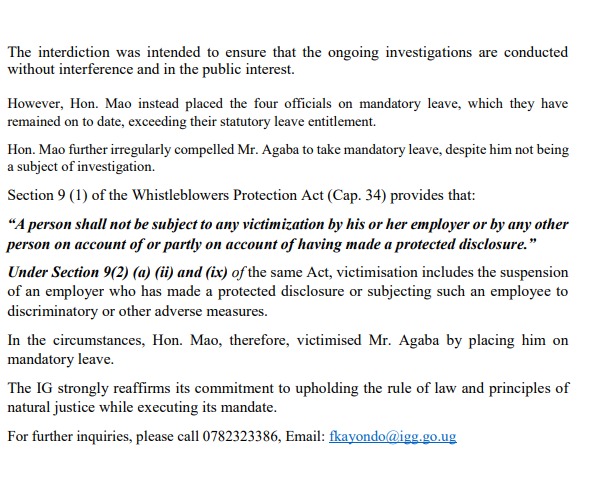 For URSB, meanwhile, the controversy comes at a sensitive time. The bureau is a critical pillar of Uganda’s commercial and civil registration infrastructure, and prolonged uncertainty at the top could have consequences for staff morale, service delivery and public confidence.
The unfolding clash has therefore transformed an internal disciplinary matter into a broader test of Uganda’s accountability architecture.
At its heart is a simple but difficult question: when the country’s anti-corruption watchdog issues a directive, can a minister choose not to act?
Author Profile
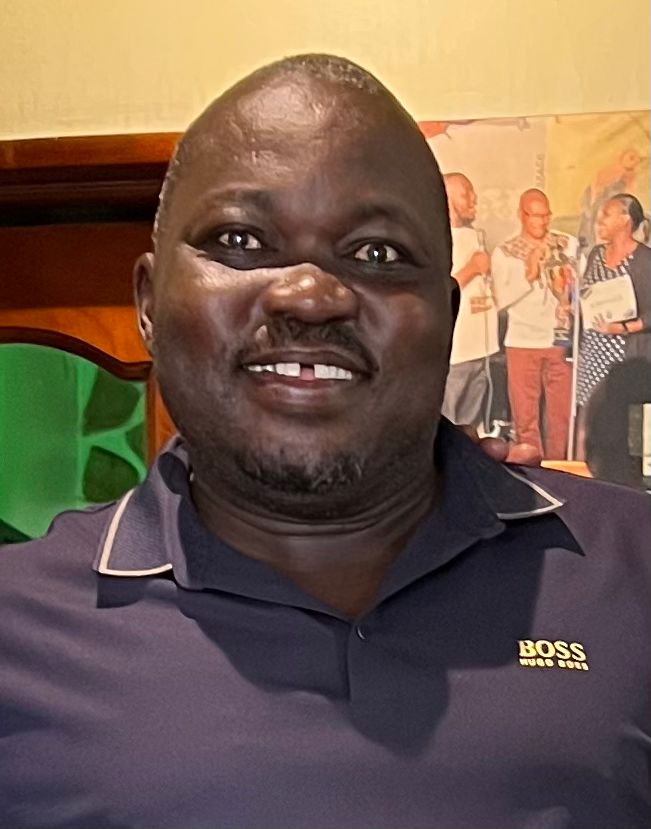
- Charles Gazza Kodili is a seasoned journalist with over 20 years of experience in the media industry. He holds a Bachelor of Arts degree in Mass Communication. He’s currently the Chief Editor at the Investigator.
Charles can also be reached via; Tel: +256 774 108978
Email: [email protected]
Latest entries
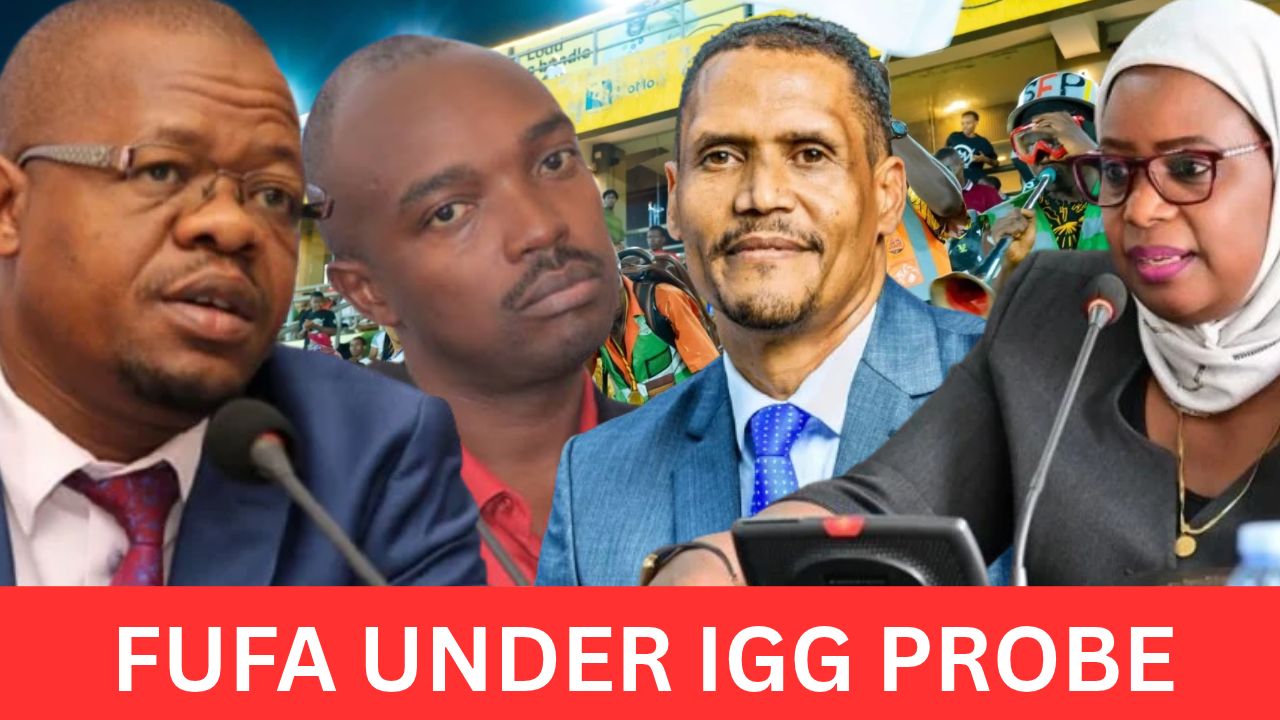 FeaturedOctober 26, 2026IGG DEMANDS 10 YEARS OF FUFA FINANCIAL RECORDS: From Kadiba Stadium And FUFA House To Startimes Broadcasting Deals, The Inspectorate Of Government Demands Bank Statements, Contracts And Revenue Disclosures As Football’s Financial Accountability Comes Under Scrutiny
 FeaturedOctober 26, 2026THE SHILLING ON FREE FALL: BoU Moves As Dollar Nears Shs4,500, President Museveni Has Publicly Opposed Using Reserves Simply To Make Imports Cheaper, Arguing That A Weaker Shilling Can Improve The Local-Currency Earnings Of Exporters
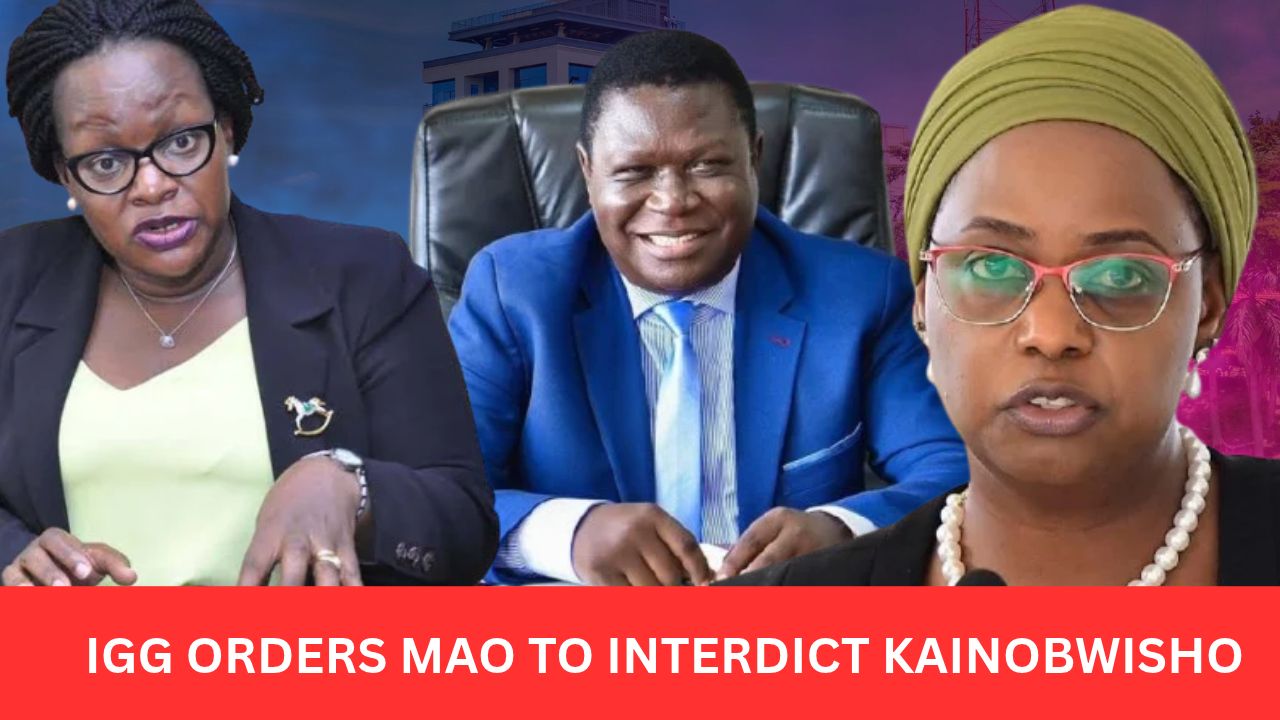 FeaturedOctober 26, 2026IGG, MAO CLASH OVER KAINOBWISHO: The Inspectorate Of Government Orders Justice Minister Norbert Mao To Enforce Its Directive Against URSB Registrar General Mercy Kainobwisho And Three Senior Officials Over Alleged Corruption
 FeaturedOctober 26, 2026WHERE IS SAM MUGUMYA? UPDF Denies Holding Missing Opposition Activist As Lawyers Demand Answers, While A Former Detainee Says He Was Held With Him And Gen Muhoozi Is Reported To Have Claimed The Activist Is In His Custody