






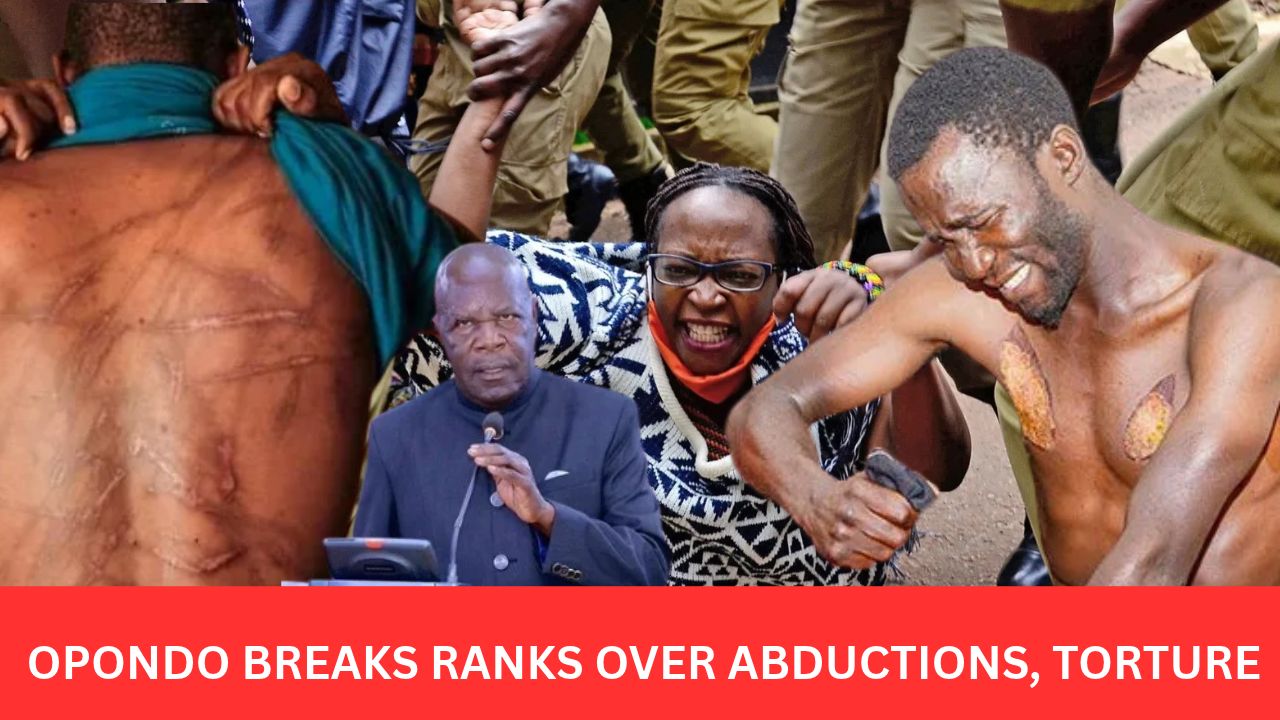
A rare and unusually sharp criticism from within the ruling National Resistance Movement (NRM) has reopened Uganda’s long-running debate over torture, enforced disappearances and the conduct of security agencies, with veteran politician Ofwono Opondo warning that his party risks presiding over impunity.
Mr Opondo, the Member of Parliament for Older Persons representing the Eastern Region and a former government spokesperson, made the remarks during a parliamentary debate on alleged human rights violations and missing persons.
His intervention was triggered by the case of 27-year-old human rights lawyer and activist Aloikin Praise Opoloje, whose arrest and subsequent detention raised questions over the involvement of security agencies and the manner in which suspects are apprehended.
“I didn’t know that as NRM, we would reach the level where we fear to say the truth, but that’s where we are,” Mr Opondo told Parliament. He questioned why security agencies would allegedly use a police station as a decoy to apprehend a suspect before military personnel take over.
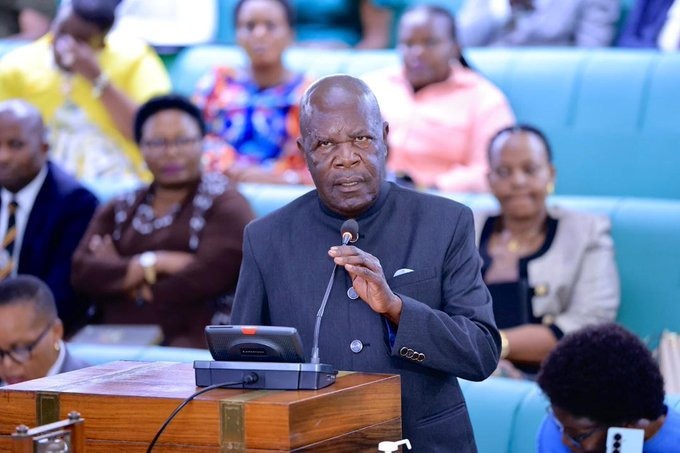 “Is this now the way to apprehend suspects—that they make a decoy, lure you into a police station and then the military come and arrest? Is this the way?” he asked.
Mr Opondo said the allegations surrounding Opoloje demanded answers from the government, particularly the Ministers of Internal Affairs and Defence and the Attorney General.
“I think, Mr Speaker, it is unacceptable for the NRM to preside over impunity and torturing citizens, particularly a young person, moreso a woman. It is unacceptable,” he said.
His intervention is significant because it came not from the political opposition but from a long-serving NRM figure who has spent years defending the government against criticism.
Opoloje case exposes security questions
Opoloje was arrested in September and subsequently charged before the Buganda Road Chief Magistrate’s Court with allegedly using another person’s SIM card for an unlawful purpose. She denied the charge and was remanded to Luzira Prison before being granted bail of Shs500,000 on October 14.
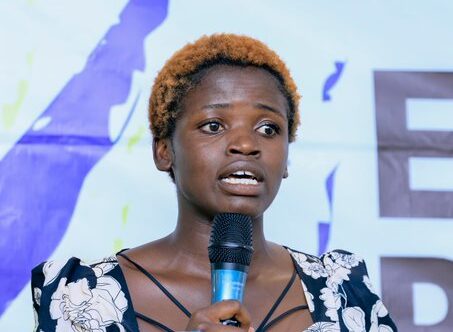
Police rejected claims that she had been abducted, saying she was in police custody and would be produced before court.
However, human rights organisations and lawyers questioned the circumstances surrounding her initial arrest. According to reports, she had been summoned to Namungoona Police Station before allegedly being handed over to men identified as Defence Intelligence and Security officers.
Opoloje later alleged that she was assaulted after being put into a vehicle commonly referred to as a “drone”. Those allegations are central to the concerns raised by Mr Opondo, who urged Parliament to establish exactly what happened.
He said Opoloje claimed that the people who arrested her demanded access to her phone and PIN and that she had photographed one of the men before being ordered to surrender the device.
Mr Opondo argued that the phone could provide investigators with evidence capable of identifying those involved. “So it is possible to actually examine her phone to see, so that we get to the root of this so that people don’t use impunity,” he told Parliament.
The case has therefore become a test of whether security agencies can be held accountable when allegations of mistreatment arise.
 A pattern stretching beyond Opoloje
For critics of the government, Opoloje’s case is not an isolated incident but the latest in a succession of controversies involving opposition politicians, activists, lawyers and journalists.
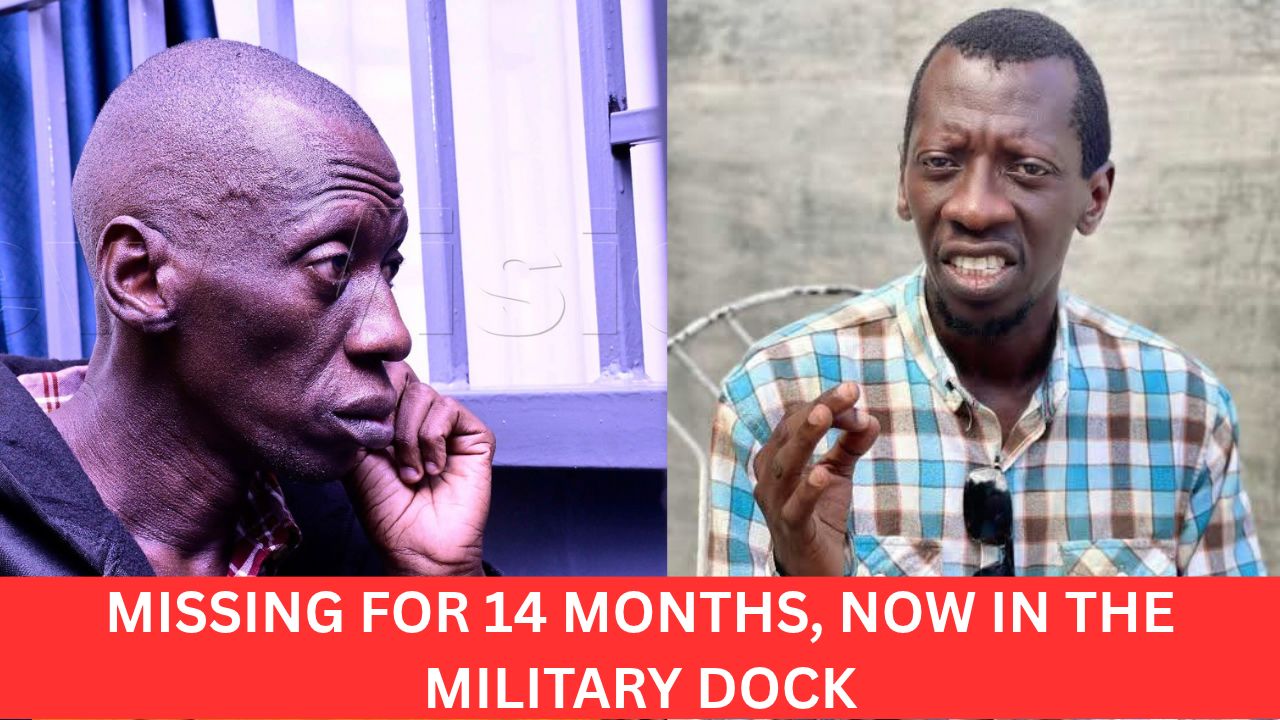
One of the most disturbing cases concerns opposition activist Sam Mugumya, whose whereabouts have repeatedly generated concern.
In September, a video circulated purporting to show Mugumya in a severely weakened physical condition. Opposition politicians and activists alleged that he had been tortured while in secret detention. Parliament subsequently demanded that the government account for his whereabouts.
A former security intelligence officer, Lt Herbert Mabonga Matanda, also made allegations concerning a military detention facility and claimed knowledge of Mugumya’s detention. The UPDF dismissed the claims as fabricated and described Mabonga as a deserter, while the authenticity and circumstances surrounding the video of Mugumya have not been independently established.
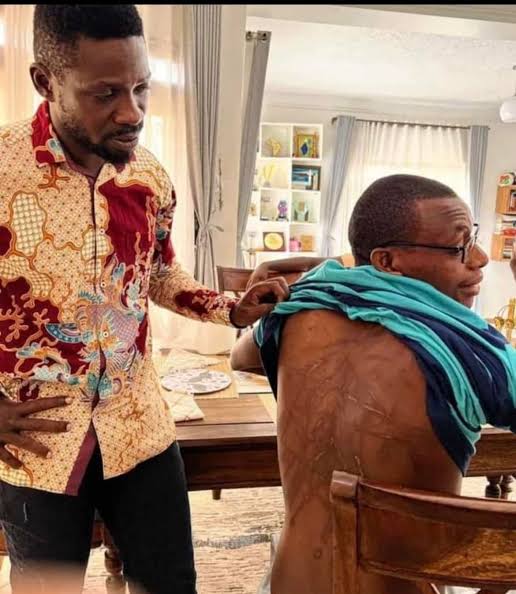
Mugumya’s case is not new to Uganda’s human rights debate. Amnesty International raised concerns as far back as 2014 when he was detained incommunicado in the Democratic Republic of Congo and warned that he was at risk of torture and other ill-treatment.
Kakwenza case and scars of detention
The case of novelist and satirist Kakwenza Rukirabashaija remains another prominent example. Kakwenza was arrested in December 2021 after publishing critical social media comments about President Yoweri Museveni and his son, Gen Muhoozi Kainerugaba.
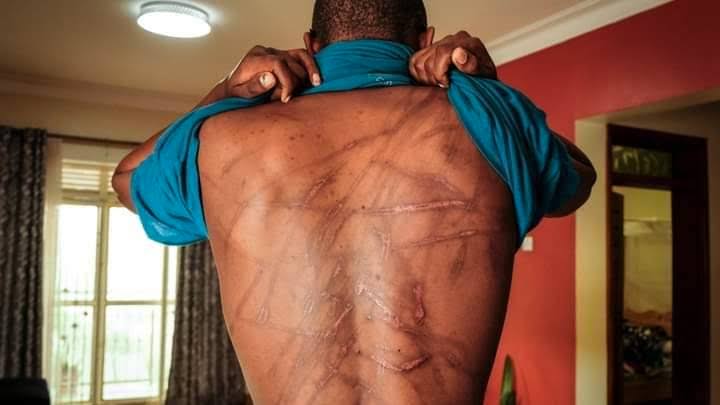
He spent 13 days in incommunicado detention and later alleged that he had been tortured.
Amnesty International documented his detention and allegations of torture, while the Uganda Human Rights Commission later reported that its officials had observed visible scars and injuries on his body.
A Uganda Prisons medical examination also reported healing scars on his back, buttocks, thighs and hands. Kakwenza eventually left Uganda, saying he feared for his safety.
His ordeal became an international symbol of the risks faced by Ugandan writers and activists who openly criticise those in power.
 Eddie Mutwe and the ‘basement’ controversy
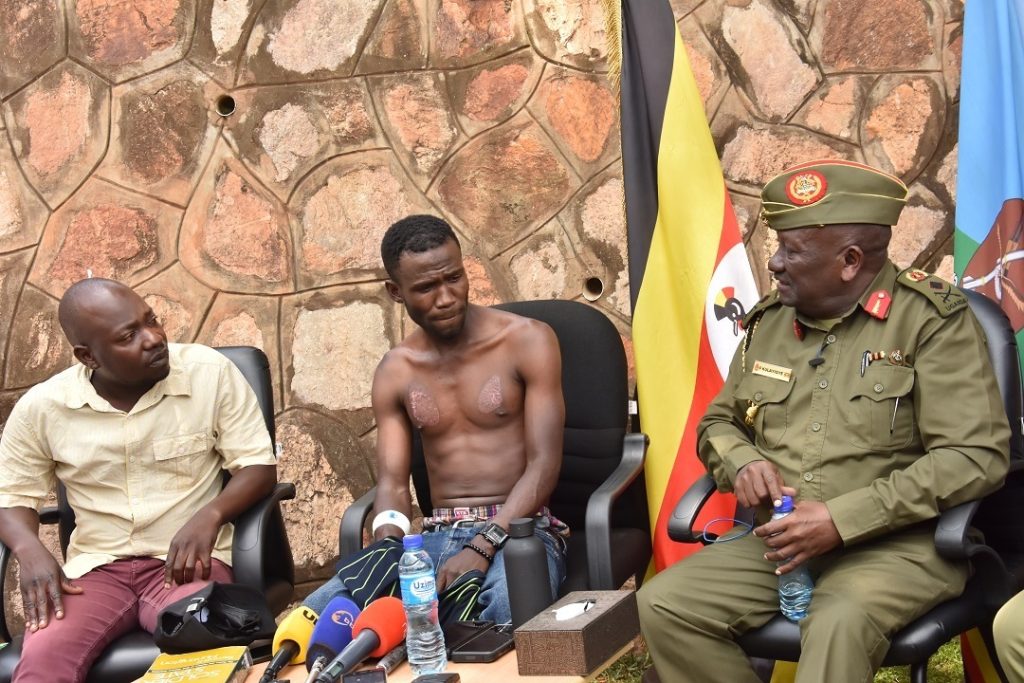
The controversy surrounding torture and military detention resurfaced dramatically in 2025 with the arrest of Edward Ssebuufu, popularly known as Eddie Mutwe, the chief civilian bodyguard of National Unity Platform leader Robert Kyagulanyi, also known as Bobi Wine.
Mutwe disappeared in April 2025 and was later produced before court facing robbery and assault charges.
His condition shocked observers. He appeared weak and struggled to walk. His lawyers said he had been severely tortured while in detention, including allegations of beatings and electrocution. The Uganda Medical Association subsequently reported that doctors who visited him found open wounds, bruises, swelling and severe psychological distress.
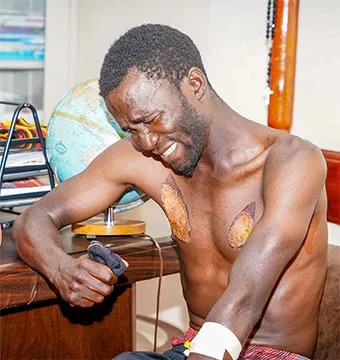
The case acquired an even more controversial dimension after Gen Muhoozi Kainerugaba publicly acknowledged that Mutwe had been detained under his watch and referred to holding him in his “basement”. Contemporary reports quoted Kainerugaba as saying he had captured Mutwe and used him as a punching bag.
Mutwe’s lawyers alleged that he had been held in a basement and tortured daily. The allegations were denied by government officials and the circumstances remain a major point of contention.
By October 2026, Mutwe and three co-accused had obtained bail after prolonged detention. The episode has nevertheless left a lasting question over the boundaries between military authority, political power and civilian law enforcement.
Lukwago: lawyer becomes detainee
The case of former Kampala Lord Mayor and opposition lawyer Erias Lukwago has further intensified concerns.
Lukwago, who represents opposition leader Dr Kizza Besigye, was arrested on June 15, 2026 by armed security personnel and taken to an undisclosed location. For more than 48 hours, his whereabouts were unknown.
Human rights organisations described the incident as an enforced disappearance and arbitrary detention. During the period, Gen Muhoozi Kainerugaba publicly claimed responsibility for Lukwago’s detention and said he had taken him to his “basement”.

Lukwago was subsequently transferred to police custody and charged with misprision of treason.
His lawyers and rights groups raised concerns about his treatment and health. The New York City Bar Association described the reported arrest, detention and alleged ill-treatment as part of a worrying deterioration in respect for the rule of law.
The episode was particularly controversial because Lukwago was not merely an opposition politician; he was a lawyer representing Besigye in a major criminal case.
His detention therefore raised concerns about both personal liberty and the ability of lawyers to represent politically sensitive clients without intimidation.
Journalist Tugume and the cost of covering opposition politics
The concerns also have a long history in Uganda’s media sector. In 2011, journalist Gideon Tugume, then working for Capital FM, was shot in the leg while covering the return of opposition leader Kizza Besigye during the Walk-to-Work protests.
Tugume later told the Uganda Human Rights Commission that he had identified himself as a journalist before he was shot.
The Human Rights Network for Journalists-Uganda documented his complaint, which accused police of violating his protection from torture, cruel, inhuman and degrading treatment. A subsequent court case resulted in the police being ordered to account for compensation arising from the incident.
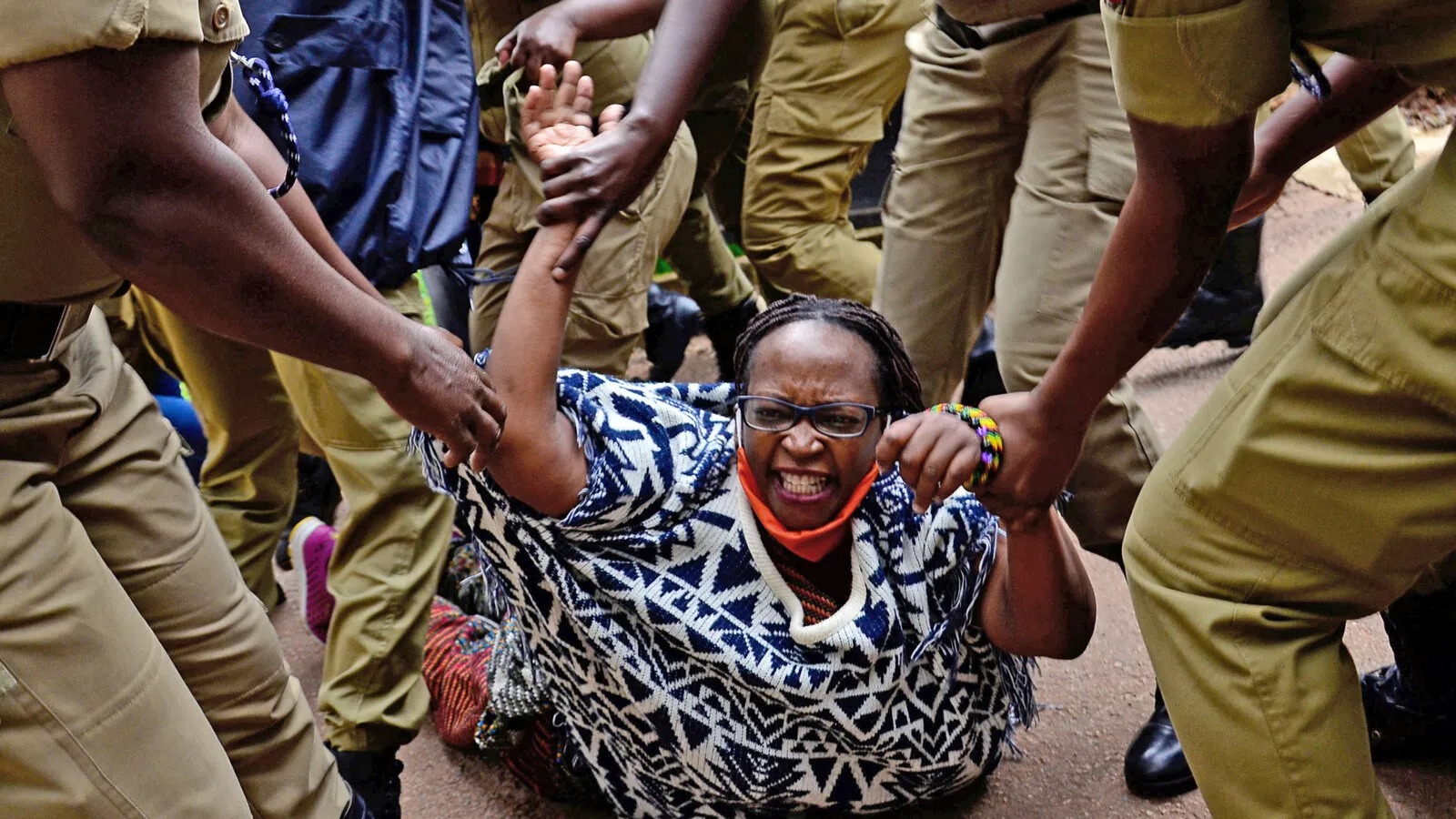 His case illustrates how journalists covering political demonstrations have historically found themselves caught between security operations and the public’s right to information.
Opondo’s message to his own party
Against this background, Opondo’s intervention is politically important. The former government spokesperson was effectively asking the NRM government to account for the behaviour of institutions operating under its authority.
He questioned whether the ruling party had reached a point where its members were afraid to speak honestly about abuses.
“We are NRM, the overwhelming majority in this House,” he said. “There is a known established procedure of the NRM. Is this the new law of the NRM?”
His remarks amount to an internal warning that the party’s political dominance cannot become a shield for security excesses.
The question is particularly relevant because Parliament has repeatedly demanded explanations over missing persons, alleged abductions and suspects reportedly held outside normal judicial procedures.
The issue also extends to Dr Kizza Besigye, whose prolonged detention and deteriorating health have generated concern among opposition leaders and rights advocates.
In a separate intervention, Opondo argued that regardless of the allegations against Besigye, he should receive appropriate medical care.
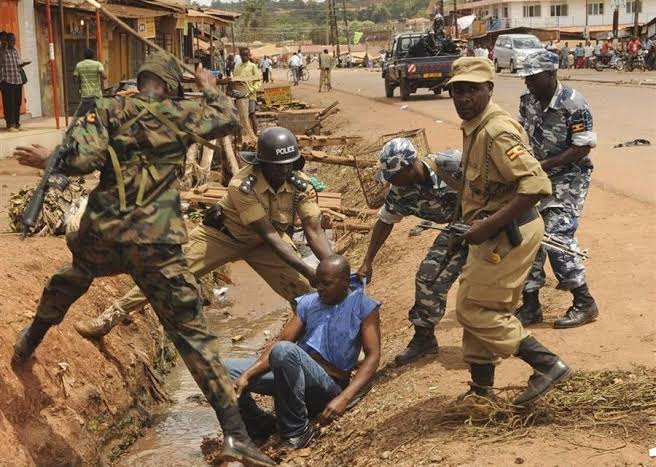 “Dr Besigye’s condition has been cascading gradually. No matter what the case against him is, from a professional and humane point of view, he should have been given access to medical care of his choice,” he said.
That position places Opondo alongside a growing number of voices arguing that human rights should not depend on political affiliation or the charges facing a suspect.
International image at stake
Uganda’s human rights record is also being viewed against a wider international backdrop.
The United States currently places Uganda under a Level 4 “Do Not Travel” advisory, its highest travel warning. The US State Department lists unrest, crime, terrorism and health risks among the indicators for Uganda.
Uganda is among 11 African countries currently reported under the Level 4 category, alongside Burkina Faso, the Central African Republic, Chad, the Democratic Republic of Congo, Libya, Mali, Niger, Somalia, South Sudan and Sudan.
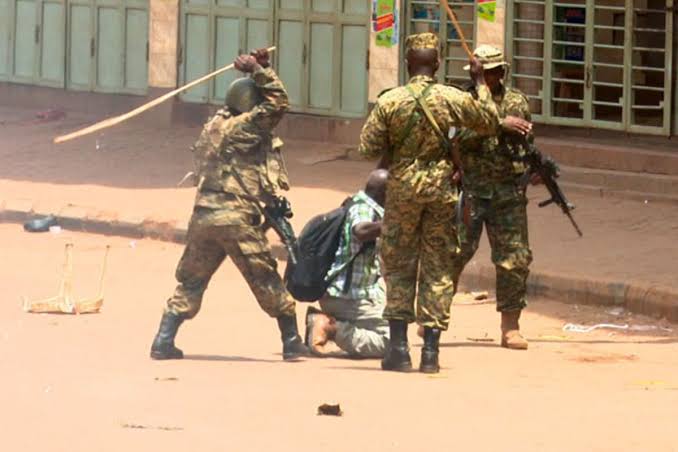 However, the US advisory should not be presented as being imposed solely because of torture or human rights abuses. The State Department’s official listing identifies several categories of risk, including unrest, crime, terrorism and health concerns.
Nevertheless, Uganda’s continuing controversies over arrests, disappearances, torture allegations and the treatment of political opponents contribute to the international scrutiny surrounding the country.
For the NRM, Opondo’s intervention therefore comes at a sensitive moment. After four decades in power, the party’s biggest challenge may not only be winning elections but demonstrating that institutions under its government remain subject to the law.
His message was simple but politically uncomfortable: political power cannot be a licence for impunity.
If allegations against Opoloje, Mugumya, Mutwe, Lukwago, Kakwenza and others are to be resolved, the government must do more than dismiss them as opposition propaganda.
It must investigate, prosecute where wrongdoing is established, compensate victims where the State is found liable and ensure that every suspect—whether opposition supporter or NRM member—is arrested, detained and prosecuted according to the law.
That, ultimately, is the test posed by Opondo’s warning: whether the NRM can police the institutions of power it controls, or whether impunity will become normalised as part of the machinery of government.
Author Profile
- Charles Gazza Kodili is a seasoned journalist with over 20 years of experience in the media industry. He holds a Bachelor of Arts degree in Mass Communication. He’s currently the Chief Editor at the Investigator.
Charles can also be reached via; Tel: +256 774 108978
Email: [email protected]
Latest entries
 BusinessNovember 19, 2026INSIDE MUSEVENI’S DANGOTE DEAL AND WHY UGANDA NEEDS AFRICA’S RICHEST MAN: Making Sense into How Aliko Dangote’s Expanding East African Empire Could Reshape Uganda’s Oil Industry and Manufacturing Ambitions
 FeaturedNovember 19, 2026M7 GETS TOUCHY WITH SULUHU! From Hand-Holding To Escorting The Tanzanian Leader Along The Red Carpet, Museveni Displays Rare Public Affection, Leaving Ugandans Wondering What Has Changed
 FeaturedNovember 19, 2026INSIDE MUSEVENI’S DANGOTE DEAL: WHY UGANDA NEEDS AFRICA’S RICHEST MAN: How Dangote’s Expanding East African Empire Could Reshape Uganda’s Oil Industry And Manufacturing Ambitions
 FeaturedNovember 19, 2026INSIDE ULS FIGHT FOR ACCOUNTABILITY OVER MUGUMYA’S DISAPPEARANCE: The Bar Says Mugumya’s Secret Production Before A Military Tribunal Cannot Legitimise His Disappearance, Vows Legal Action

I have a feeling that our security laws need to be reviewed and may be amended. Hon Ofono O pondo can not be a saviour just because he is in Parliament. He has been in powerful positions associated with communication systems, but said nothing. There is a well organized sabotaging system to disrupt peace and security by undermining government Security procedures. Security organisations need to be on the alert to prompt more networks to detect, determine and defuse the on going sabotage.
Maj Ruranga, your point about reviewing security laws and strengthening the capacity of security agencies is well taken. However, that is precisely why Ofwono Opondo’s intervention is important—not because he is a “saviour” or because he sits in Parliament, but because he is a veteran voice within the NRM establishment challenging the system to account for allegations of abductions, torture and secret detention.
Criticism of security agencies should not automatically be equated with sabotage. A secure state is one where security agencies are strong enough to detect genuine threats, but also disciplined enough to operate within the law and be held accountable when citizens’ rights are violated.
The question raised by Opondo is therefore not whether Uganda needs strong security. It is whether security can be strengthened without allowing impunity to take root. Those two objectives are not contradictory. In fact, lawful and accountable security institutions are ultimately more effective and more trusted.
And on the point that he previously held powerful communication positions: that history makes his present criticism even more significant. It is fair to ask why he did not speak out earlier, but that should not invalidate what he is saying now. The better question is whether the concerns he has raised deserve a transparent answer.
The story was not presented as an endorsement of Opondo as a “saviour”; it was about the substance of his challenge to government and the need for accountability. Uganda needs both vigilance against genuine threats and vigilance against abuse of state power. One should not be sacrificed in the name of the other. – Editor The Investigator
Maj Ruranga, your point about reviewing security laws and strengthening the capacity of security agencies is well taken. However, that is precisely why Ofwono Opondo’s intervention is important—not because he is a “saviour” or because he sits in Parliament, but because he is a veteran voice within the NRM establishment challenging the system to account for allegations of abductions, torture and secret detention.
Criticism of security agencies should not automatically be equated with sabotage. A secure state is one where security agencies are strong enough to detect genuine threats, but also disciplined enough to operate within the law and be held accountable when citizens’ rights are violated.
The question raised by Opondo is therefore not whether Uganda needs strong security. It is whether security can be strengthened without allowing impunity to take root. Those two objectives are not contradictory. In fact, lawful and accountable security institutions are ultimately more effective and more trusted.
And on the point that he previously held powerful communication positions: that history makes his present criticism even more significant. It is fair to ask why he did not speak out earlier, but that should not invalidate what he is saying now. The better question is whether the concerns he has raised deserve a transparent answer.
The story was not presented as an endorsement of Opondo as a “saviour”; it was about the substance of his challenge to government and the need for accountability. Uganda needs both vigilance against genuine threats and vigilance against abuse of state power. One should not be sacrificed in the name of the other. – Editor