















Nigeria’s first confirmed Ebola case in more than a decade has triggered a fresh regional health alert after the Swiss government said the patient was believed to have contracted the virus during a visit to Uganda, contradicting earlier accounts from Ugandan authorities about her travel history.
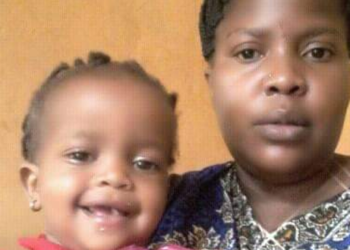
The patient, a Ugandan-born woman married to a Swiss diplomat stationed in Nigeria’s capital, Abuja, tested positive for the Bundibugyo strain of Ebola on October 20, 2026, becoming the latest person linked to an outbreak that has spread across several African countries.
In a statement to Reuters, Switzerland’s Federal Department of Foreign Affairs said the woman had been receiving treatment at a private clinic in Abuja for about a week after developing symptoms.
“She is believed to have contracted the virus whilst travelling to Uganda around two weeks ago,” the Swiss government said.
The statement has placed Uganda at the centre of investigations into the source of Nigeria’s infection, even as international health agencies caution that the precise location where the woman contracted Ebola has not been established.
The World Health Organisation (WHO) said the information it had received about the patient’s movements did not include travel outside Uganda.
“The facts which we have received is that the patient returned to Abuja on October 3, being away from September 16 in Uganda,” WHO representative to Nigeria Pavel Ursu said during a press briefing.
The distinction is significant because the Democratic Republic of Congo (DRC), where the current outbreak was first declared in May, has been the principal focus of regional containment efforts.
Ugandan authorities had earlier suggested that the woman travelled to eastern DRC for business before passing through Uganda on her way back to Nigeria. However, the WHO and the Africa Centres for Disease Control and Prevention (Africa CDC) said they had not received verified information confirming that she had visited Congo.
The conflicting accounts have raised questions about the patient’s travel history, possible exposure to infected people and the route through which the virus reached Nigeria.
Patient’s journey under investigation
According to the WHO and Nigerian health authorities, the woman returned to Abuja on October 3 after spending more than two weeks in Uganda.
She developed symptoms several days after her return and initially sought treatment at a private health facility, believing she might be suffering from malaria.
After her condition failed to improve, she sought care at another private hospital, where she was admitted on October 11. Laboratory tests subsequently confirmed Ebola on October 20.
The delay between her arrival in Nigeria, the onset of symptoms and confirmation of the infection has become an important part of the investigation.
Health officials are reconstructing her movements during the period between returning to Abuja and being isolated, including the medical facilities she visited and the people with whom she may have come into contact.
The woman’s husband, who accompanied her during the trip to Uganda, has been placed in isolation as a precaution but had not developed symptoms at the time of the Swiss government’s statement.
Nigeria’s health authorities initially identified 44 contacts for monitoring, including people potentially exposed to the patient before her diagnosis. Officials have also strengthened infection-prevention measures at the facilities where she received treatment.
The WHO said the patient remained hospitalised and was showing signs of improvement, while investigators continued efforts to establish the source of the infection.
The agency has emphasised that the priority is to contain the case, trace contacts and prevent further transmission rather than prematurely assign responsibility to any country.
Switzerland rejects claim of Congo visit
The controversy deepened on Friday, October 23, when Switzerland reportedly rejected the assertion that the patient and her husband had travelled to the DRC.
Reuters reported that the Swiss government said the couple had not visited Congo, directly contradicting the earlier account from Ugandan authorities. Switzerland’s initial statement had already indicated that the woman was believed to have contracted the infection in Uganda.
The disagreement highlights the difficulties investigators face when different countries provide conflicting accounts of a patient’s movements.
Uganda’s Ministry of Health has maintained that the country has no confirmed active Ebola cases. Health officials have warned that a traveller’s presence in Uganda does not, on its own, prove that infection occurred there.
Uganda recorded 20 cases during May and June 2026, most of them linked to infections imported from Congo. The WHO declared the country Ebola-free in August after the outbreak was brought under control.
The new case has therefore raised concerns about whether there could have been an undetected exposure during the woman’s visit, although no evidence published so far conclusively establishes that she acquired the virus in Uganda.
Possible connection with Kenya’s Ebola outbreak
Investigators are also examining whether the Nigerian patient could have crossed paths with Kenya’s first Ebola patient at Entebbe International Airport on October 3.
The Kenyan patient, a man who had travelled from the DRC through Uganda, arrived in Nairobi on the same day the Nigerian woman returned to Abuja. Kenya subsequently confirmed additional cases linked to the initial infection.
Africa CDC emergency preparedness and response official Wessam Mankoula said a possible interaction between the two travellers was one of the scenarios being investigated, but no connection had been established.
Investigators are seeking to determine whether the patients shared airport facilities, came into contact with one another or encountered a common source of infection.
Genomic sequencing and reconstruction of their travel histories could help determine whether the cases are epidemiologically linked. Until that evidence is available, officials have cautioned against treating the airport theory as an established explanation.
The investigation also underscores the challenges of controlling infectious diseases across borders, particularly when travellers move between countries experiencing outbreaks.
Nigeria intensifies containment measures
Nigeria has activated its public health response, including isolation of the confirmed patient, contact tracing and infection-prevention measures at the health facilities she visited.
The 44 contacts initially identified are being monitored for symptoms, while officials continue to establish whether additional people may have been exposed before the woman was diagnosed.
The WHO has urged countries in the region to maintain strong surveillance, strengthen laboratory capacity, protect healthcare workers and ensure that suspected cases are detected and isolated quickly.
Ebola spreads through direct contact with the blood or other bodily fluids of an infected person, or with contaminated objects. People who have not developed symptoms are not considered infectious, making early identification of symptomatic cases and prompt contact tracing central to containment.
The WHO has also advised against imposing travel or trade restrictions on affected countries, emphasising the importance of coordinated public health action rather than measures that could disrupt essential movement.
Nigeria’s experience in 2014, when it successfully contained an Ebola outbreak following the arrival of an infected traveller from Liberia, has given its health authorities experience in tracing contacts and responding to imported infections.
The central question remains unanswered: where did the Nigerian patient contract Ebola? Switzerland believes the infection occurred during her visit to Uganda, but the WHO says the source of exposure is still unknown. Until investigations establish the patient’s movements and possible contacts, the competing accounts remain unresolved.
The case serves as a reminder that declaring an outbreak over does not eliminate the need for surveillance and cross-border cooperation, particularly while the same virus continues circulating elsewhere in the region.
Author Profile
- Charles Gazza Kodili is a seasoned journalist with over 20 years of experience in the media industry. He holds a Bachelor of Arts degree in Mass Communication. He’s currently the Chief Editor at the Investigator.
Charles can also be reached via; Tel: +256 774 108978
Email: [email protected]
Latest entries
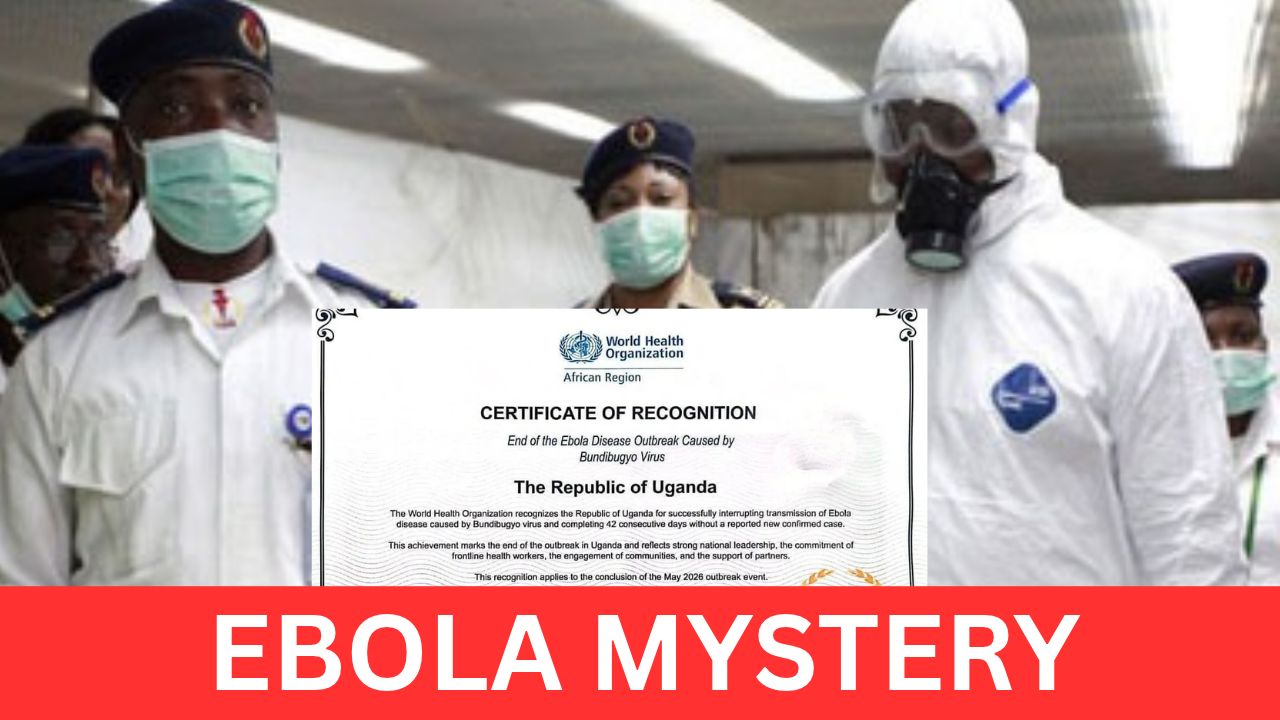 FeaturedOctober 23, 2026UGANDA AT THE CENTRE OF EBOLA MYSTERY: The Swiss Government Says The Infected Woman Likely Contracted Ebola During A Visit To Uganda, But The WHO Says The Source Of Infection Remains Unconfirmed
 FeaturedOctober 23, 2026BILL TO CHANGE ELECTION OF OPPOSITION LEADER GAZETTED: Buyaga West MP Dennis Namara’s Bill Seeks To Give All Opposition Mps A Vote In Choosing The Leader Of The Opposition, Raising Fears Of Ruling-Party Interference
 FeaturedOctober 23, 2026MATOVU’S MYSTERY DEATH: NUP Raises Questions Over Sudden Death Of Former Busiro South MP As He Battled In Court To Overturn Kenan Opio’s Disputed Election Victory
 FeaturedOctober 23, 2026OFWONO OPONDO: WE MUST STOP PRESIDING OVER IMPUNITY: The veteran NRM voice Challenges His Own Government To Explain Alleged Abductions, Torture And Secret Detention Of Citizens, Warning That The Ruling Party Must Not Shield Security Agencies From Accountability