






Veteran journalist Andrew Mwenda has predicted that Uganda’s Chief of Defence Forces (CDF), Gen Muhoozi Kainerugaba, will first become Vice President and Minister of Defence before eventually taking over the presidency from his father, President Yoweri Museveni, in a succession arrangement that could dramatically reshape the country’s political and security establishment.
In remarks circulating in a video on social media, Mwenda suggests that the transition would involve removing Vice President Jessica Alupo from her current position and elevating Muhoozi into the country’s second-highest executive office, while simultaneously giving him control of the Defence Ministry.
Mwenda also made controversial remarks about how a government under Muhoozi would deal with political opponents and individuals perceived to be obstructing his leadership, suggesting that soldiers and Local Defence Units (LDUs) would be deployed on the streets to enforce discipline through physical punishment.
The veteran journalist’s comments have attracted attention because they come amid growing political mobilisation around Muhoozi’s presidential ambitions and disagreements within the ruling National Resistance Movement (NRM) over whether a serving military commander should succeed Museveni.
The prediction is particularly significant because Muhoozi has now publicly declared that he intends to contest for the presidency after his father, insisting that nobody will stop him.
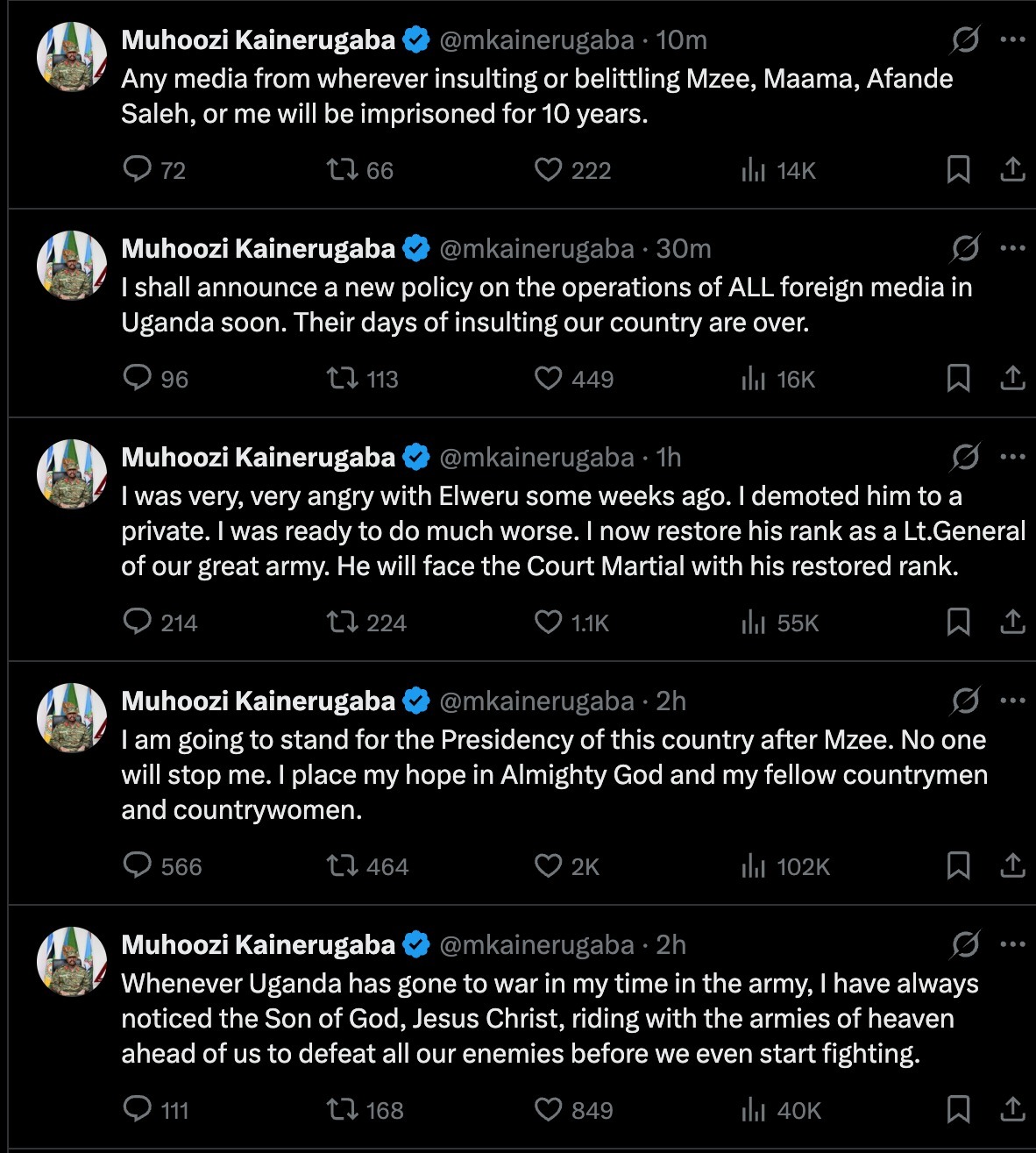
“I am going to stand for the Presidency of this country after Mzee. No one will stop me. I place my hope in Almighty God and my fellow countrymen and countrywomen,” Muhoozi posted on X.
His declaration, made this morning in a barrage of tweets, has effectively moved the succession conversation beyond speculation, with the army chief openly presenting himself as a future presidential candidate.
However, while Muhoozi is talking about succeeding his father, Mwenda’s prediction suggests that the general could first occupy the Vice Presidency and Defence Ministry as an intermediate stage in the transition.
There has been no official announcement confirming the proposed appointments, and President Museveni has not publicly announced a decision to replace Alupo or appoint his son to the Cabinet.
Nevertheless, the remarks have intensified scrutiny of the relationship between the First Family, the military establishment and the political structures being assembled around Muhoozi.
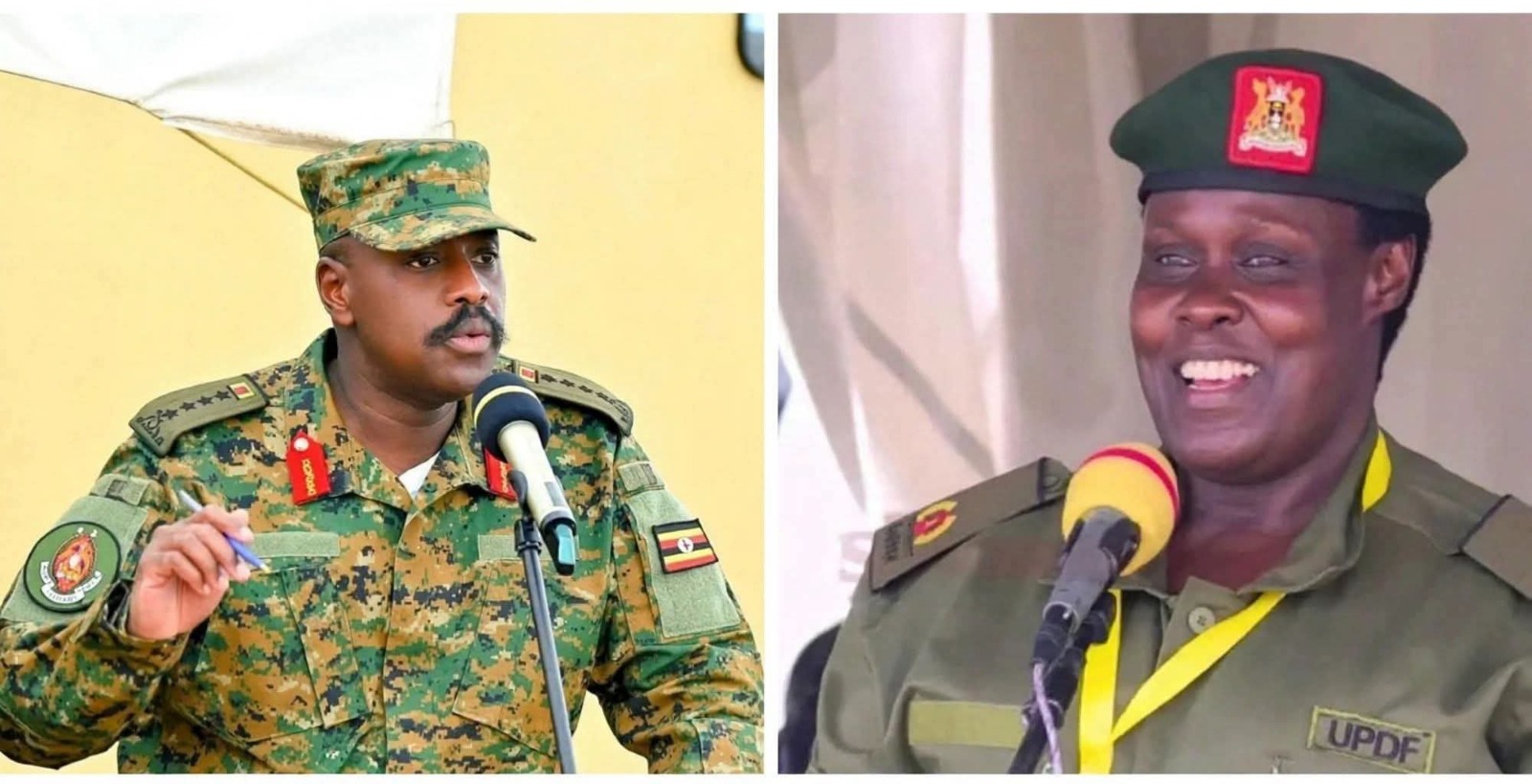 Mwenda’s vision of a Muhoozi government
In the circulating video, Mwenda speaks confidently about Muhoozi’s anticipated elevation, suggesting that the general would become Vice President and Minister of Defence.
He also refers to the current Vice President, Jessica Alupo, saying she would be pushed aside, using the expression that she would be taken to the “basement”.
The journalist goes further to describe a proposed security approach involving soldiers and LDUs being deployed across the country to deal with people opposed to Muhoozi.
His remarks include references to physical punishment, beating and the use of security personnel to enforce the proposed leadership arrangement.
The statements have raised questions about the place of constitutional safeguards, judicial processes and civil liberties in the political future being described by some of Muhoozi’s supporters. His remarks come against the background of Muhoozi’s own public statements about the Vice Presidency.
On November 9, the CDF took to X and declared that whoever occupied the office should prepare to hand it over. “About being Vice President. I think we have been diplomatic enough. Whoever is in that office should prepare to hand it over soon,” Muhoozi wrote.
In another post, he outlined how government would operate under his leadership. “As Vice President, the government will operate on military terms. There will be no more inefficiency,” he declared.
Although he did not initially name Alupo in the handover message, the statement was widely interpreted as referring to the incumbent Vice President.
Alupo has occupied the office since May 2021 and remains the serving Vice President. Any replacement would require a formal constitutional process, including presidential nomination and parliamentary approval. Muhoozi’s statements and Mwenda’s prediction have consequently created the impression among political observers that the Vice Presidency could feature prominently in discussions about the country’s succession arrangements.
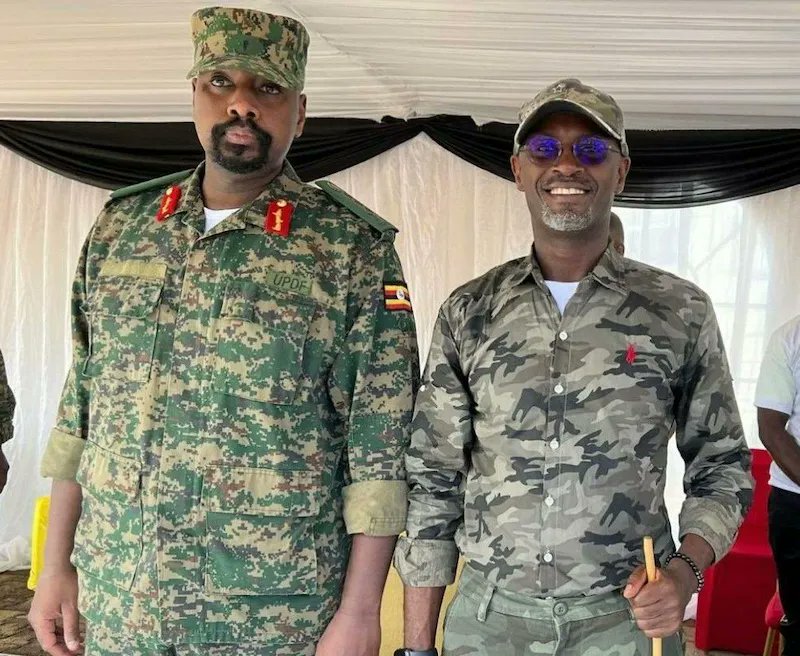
Mwenda says Muhoozi will break the corruption networks
Beyond predicting Muhoozi’s elevation, Mwenda has also attempted to explain the kind of leadership he believes the general intends to introduce.
In a separate discussion, the journalist defended Muhoozi’s apparent willingness to disregard established government procedures, arguing that Uganda’s corruption problem has become entrenched in institutions that are supposed to fight it.
Mwenda cited public procurement processes, evaluation committees, contracts committees, Parliament, the Inspectorate of Government, police investigations and other accountability mechanisms.
He argued that despite the existence of these structures, corruption continues because some officials have learnt to manipulate the very procedures designed to prevent abuse of public resources.
According to Mwenda, Muhoozi wants to demonstrate that he can confront people who allegedly use the law to protect their criminal activities.
“MK is trying to demonstrate to Ugandans that so many things that have bedevilled Uganda; so many things have gone wrong and in correcting them, no one can follow due process or what we call the rule of law,” Mwenda said.
He added that Muhoozi wants to show that officials who exploit legal processes to avoid accountability cannot expect those same procedures to protect them.
“So, if you think that you are very smart and use the law and its attendant procedures to hide your criminality and circumvent accountability, I will demonstrate to you that I can break those laws and hold you accountable,” Mwenda said.
He further suggested that Muhoozi wants Ugandans to understand his approach to leadership before making any eventual move for the presidency.
The remarks have placed Mwenda at the centre of the debate about whether the proposed Muhoozi administration would pursue corruption through existing institutions or adopt a more forceful approach.
While fighting corruption is a stated objective of successive Ugandan governments, Mwenda’s argument has raised questions about whether breaking established legal procedures can deliver accountability without creating another form of impunity. The distinction between investigating corruption and punishing suspects without due process remains central to the controversy.
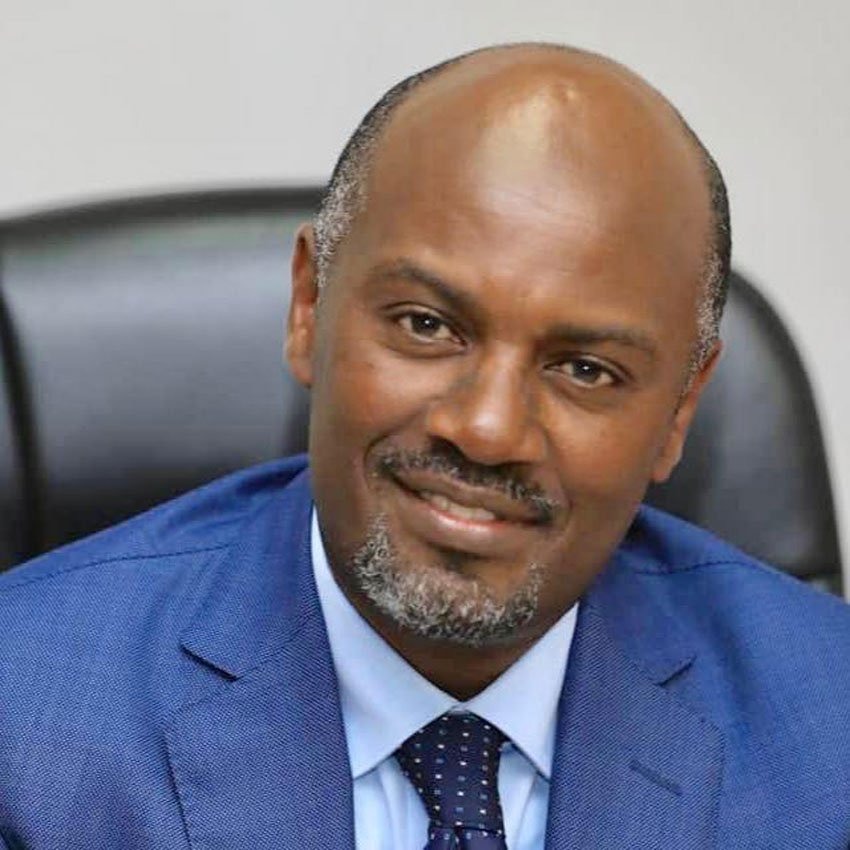
CEC divided over Muhoozi’s succession
Mwenda’s predictions come at a time when the NRM’s Central Executive Committee (CEC), the party’s top decision-making organ, is reportedly divided over the prospect of Muhoozi succeeding his father.
At a November 10 meeting, several senior party members reportedly questioned the proposal to position the serving CDF as Museveni’s successor in the 2031 presidential election.
According to accounts from participants reported by Agence France-Presse, the committee abandoned a proposed vote after objections emerged.
Of the 28 CEC members, only seven had reportedly voted before the process was halted, with four supporting Muhoozi’s candidature and three opposing it.
Some members reportedly expressed concern about Muhoozi’s confrontational social media statements and threats against political opponents, arguing that such conduct could complicate his efforts to build support within the party.
NRM Vice Chairman for Eastern Uganda David Calvin Echodu reportedly urged Museveni to retire his son from the army and give him a civilian government appointment to prepare him for national leadership.
Echodu reportedly argued that a civilian position would allow Muhoozi to interact more closely with ordinary Ugandans and acquire experience outside military command.
He also reportedly advised Museveni to seek another term in 2031, arguing that his son needed more time before assuming the country’s highest office.
Other members, including NRM Vice Chairman for Western Uganda Hassan Basajjabalaba, were also reported to have raised concerns about the succession proposal. However, some politicians have supported Muhoozi’s ambitions.
State Minister for Foreign Affairs Haruna Kasolo reportedly backed the general, citing his military experience, Pan-Africanist outlook and commitment to fighting corruption.
The disagreements have exposed the difficulty facing Museveni as he attempts to manage the succession question within a party he has led for four decades.
NRM Secretary General Richard Todwong subsequently dismissed reports that the CEC had formally rejected Muhoozi’s succession proposal, maintaining that accounts of the meeting had been misrepresented.
The competing accounts underline the absence of a publicly established party position naming Muhoozi as Museveni’s successor.
 The constitutional question: Can a serving CDF become president?
Muhoozi’s declaration also raises a major constitutional question because he remains the serving head of the UPDF.
Article 208(2) of Uganda’s Constitution requires the armed forces to be non-partisan, national in character, professional, disciplined and subordinate to civilian authority.
The UPDF Act provides an even more specific requirement for military officers seeking political office. Section 97 of the UPDF Act states that a serving officer or militant who desires to seek political office must first resign or retire from the Defence Forces in accordance with regulations made by the Minister responsible for Defence.
The provision means that Muhoozi cannot simply move from military command into elective politics while retaining his status as a serving officer. He would have to complete the legally required transition from military service before seeking political office.
The constitutional framework does not permanently prevent former military officers from becoming president. It requires them to comply with the applicable laws governing military service and civilian political participation.
The issue is particularly important because Muhoozi is not only the CDF but also the chairman of the Patriotic League of Uganda (PLU), whose supporters have been mobilising political endorsements for his proposed presidential candidature.
The apparent overlap between military command and political mobilisation has consequently attracted scrutiny from legal and political commentators.
Ten years in prison for insulting the First Family
Muhoozi’s presidential declaration has also coincided with controversial threats against media organisations and individuals perceived to be insulting the First Family.
In a series of posts on X, the CDF announced that he would introduce a new policy governing the operations of foreign media organisations in Uganda. “I shall announce a new policy on the operations of ALL foreign media in Uganda soon. Their days of insulting our country are over,” he wrote.
He subsequently warned that media organisations found insulting or belittling President Museveni, First Lady Janet Museveni, Gen Salim Saleh or himself would face 10 years in prison.
“Any media from wherever insulting or belittling Mzee, Maama, Afande Saleh, or me will be imprisoned for 10 years,” Muhoozi posted. He later declared: “The ten-year prison sentences start with Egesa. More will follow.”
The reference appeared to concern political commentator and business strategist Ronald Leonard Egesa, whose arrest has attracted condemnation from sections of the legal fraternity.
The statements have raised concerns about press freedom and the limits of military authority in a constitutional democracy.
Criminal penalties must be established through legislation and imposed through the relevant judicial processes. A declaration on social media by a military commander does not, by itself, create a new criminal offence or sentencing provision.
The threats have also drawn attention to the implications of Muhoozi’s political ambitions for media freedom and the ability of journalists to scrutinise the government and powerful public officials.
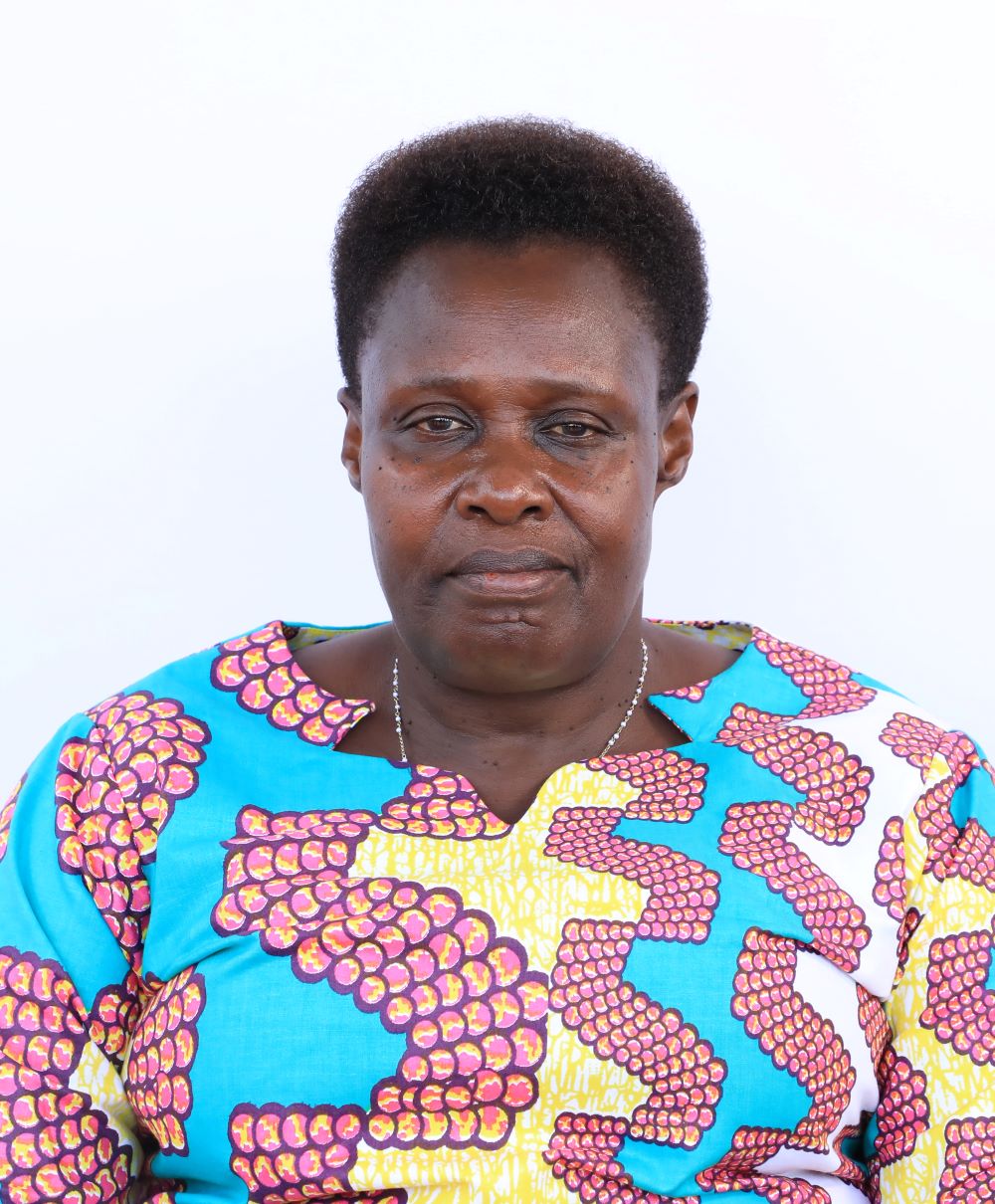
Balaam, Kabanda endorse the presidential ambition
Muhoozi’s declaration that nobody would stop him attracted immediate support from some of his political allies.
Local Government Minister Balaam Barugahara Ateenyi, one of the prominent figures associated with the PLU, expressed confidence that the general enjoyed overwhelming public backing.
“Nobody can stop you. You’ve majority support from over 80% of Ugandans. They have great hopes in you that I can confirm,” Balaam posted. He did not provide polling evidence to support the 80 per cent figure.
Kasambya County MP Daudi Kabanda, the PLU executive secretary, also responded with a religious blessing. “May the Lord bless the journey,” Kabanda wrote. The two politicians have been among the prominent voices advocating for Muhoozi’s political ambitions.
On September 1, Kabanda announced the launch of Muhoozi’s presidential bid for 2031 and beyond, saying the general had instructed him to communicate his intentions.
The PLU subsequently embarked on mobilisation and endorsement activities aimed at building support for the proposed candidature.
However, critics have questioned the language surrounding Muhoozi’s declaration, particularly the assertion that nobody would stop him.
Political commentator Anne Mugisha has argued that a presidential candidate in a republic should seek the people’s mandate through an electoral process rather than speak as though the presidency were an inherited position.
Other commentators have questioned the role of military influence in the proposed succession and urged respect for constitutional institutions.
The succession battle moves into the open
Muhoozi’s declaration, Mwenda’s predictions and the reported disagreements within the NRM CEC have brought Uganda’s succession debate into sharper focus.
For the first time, the CDF has explicitly stated that he intends to stand for the presidency after his father, while some of his political allies are already mobilising support around that ambition.
Mwenda’s prediction of an intermediate arrangement involving the Vice Presidency and Defence Ministry adds another dimension to the succession conversation, particularly because it touches on the future of Alupo and the country’s security leadership.
But the proposed appointments remain unconfirmed, while the NRM has yet to publicly establish Muhoozi as its official presidential candidate. The constitutional question also remains unresolved: Muhoozi must first leave military service in accordance with the law if he intends to seek elective political office.
Ultimately, the succession debate will test the relationship between the ruling party’s internal structures, the military’s constitutional non-partisanship and the principle that presidential authority derives from an electoral mandate.
For now, Muhoozi has made his ambition clear. Mwenda has offered his prediction of how the transition could unfold. What remains uncertain is whether the political arrangement being described by Muhoozi’s allies will receive the support of the NRM, comply with the Constitution and withstand the scrutiny of Ugandans.
Author Profile
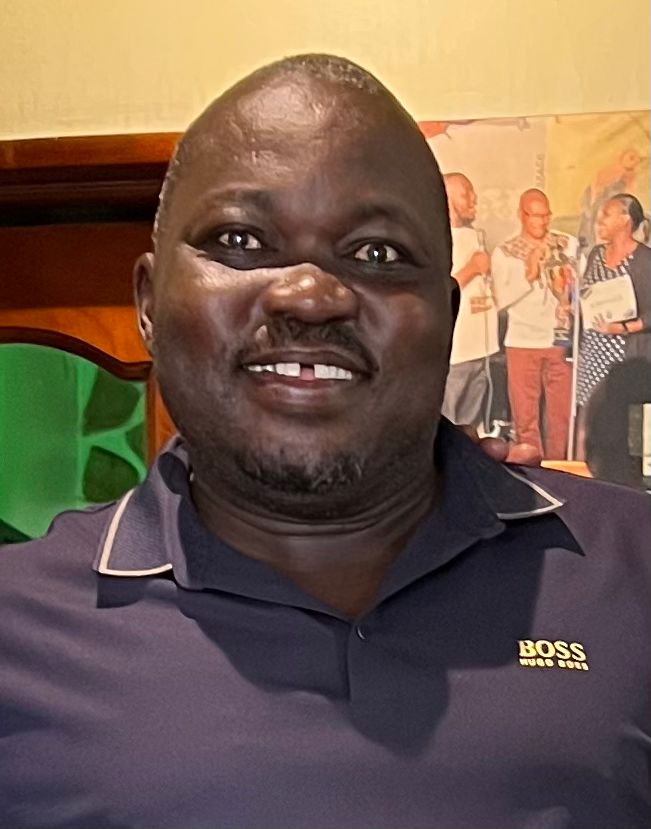
- Charles Gazza Kodili is a seasoned journalist with over 20 years of experience in the media industry. He holds a Bachelor of Arts degree in Mass Communication. He’s currently the Chief Editor at the Investigator.
Charles can also be reached via; Tel: +256 774 108978
Email: [email protected]
Latest entries
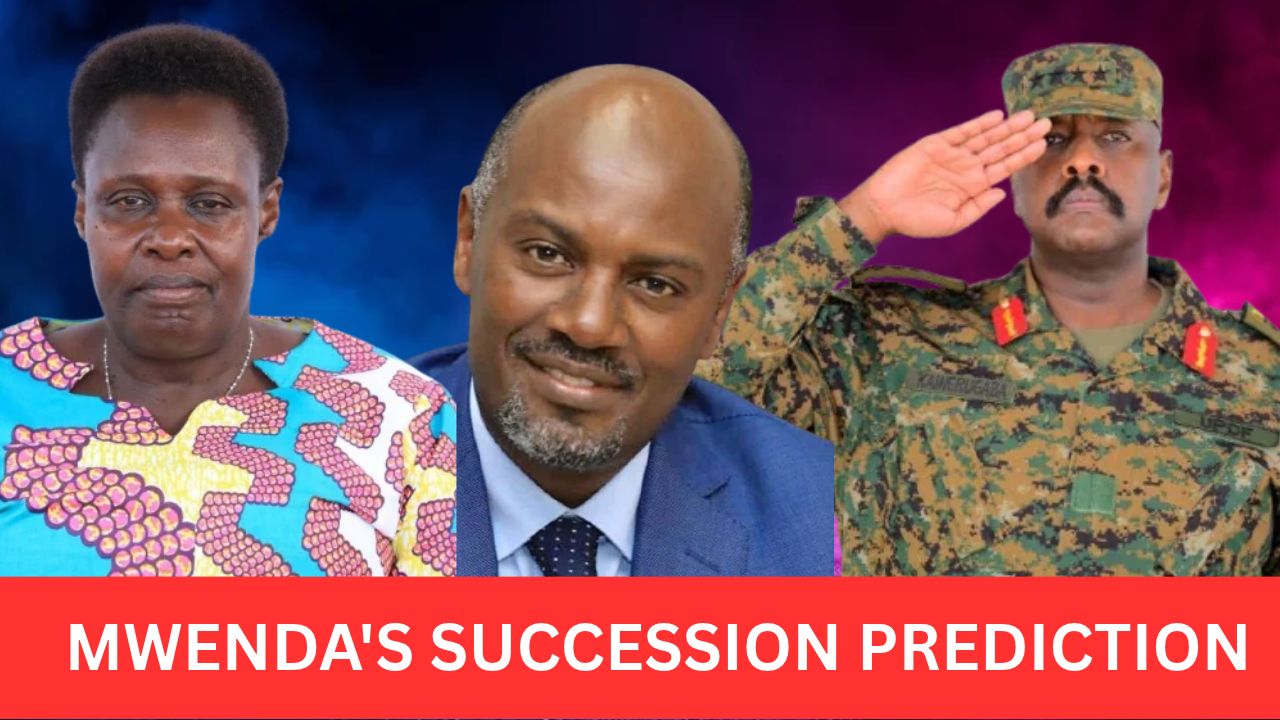 FeaturedNovember 17, 2026INSIDE MUHOOZI’S 2031 PRESIDENTIAL SUCCESSION PLAN: How Mwenda Sees CDF Gen Muhoozi Becoming Vice President, Defence Minister Before Taking Over from Museveni
 FeaturedNovember 16, 2026BESIGYE’S LIFE ON THE LINE: ‘STOP PLAYING POLITICAL FOOTBALL WITH BESIGYE’S LIFE’: Two Years After Besigye Was Seized In Nairobi And Brought To Uganda To Face Trial Before A Military Court, His Wife Says His Physical Condition Has Deteriorated Dramatically, While Four Bail Applications Have Been Rejected And A Fifth Remains Unheard
 FeaturedNovember 16, 2026GEN MUHOOZI UNDER LEGAL FIRE: The ULS President Warns That Military Rank And Political Influence Cannot Excuse Alleged Human Rights Abuses, Demanding Investigations, Unconditional Releases And Accountability For Enforced Disappearances
 FeaturedNovember 13, 2026OTAFIIRE’S CRYPTIC WARNING TO MUHOOZI: As Gen Muhoozi Kainerugaba Intensifies His Push For The Vice-Presidency And Publicly Challenges Jessica Alupo, Veteran Bush-War Commander Maj Gen (Rtd) Kahinda Otafiire Has Returned With Another Dose Of Political Satire, Using A Journey To Mbarara