












Uganda’s increasingly unpredictable succession politics have provided another stage for the country’s veteran bush-war politicians to remind the younger generation that capturing power, commanding an army and governing a country are three different things.
This time, it is Maj Gen (Rtd) Kahinda Otafiire, the outspoken Minister of Water and Environment, who has delivered a message laden with satire, historical imagery and unmistakable political undertones as Chief of Defence Forces (CDF) Gen Muhoozi Kainerugaba steps up his public campaign for Uganda’s vice-presidency.
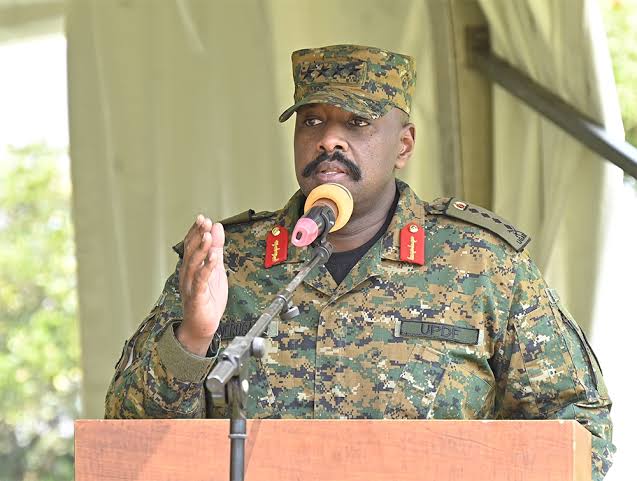 Speaking on Thursday during celebrations to mark 40 years of the Kigezi Diocese Water and Sanitation Programme at St Peter’s Cathedral, Rugarama, in Kabale Municipality, Otafiire warned Ugandans against repeating political mistakes that previously plunged the country into conflict.
Although he did not expressly name Muhoozi in the reported address, the timing of his remarks, coming barely days after the CDF’s public confrontation with Vice-President Jessica Alupo, has placed the veteran general’s message in the centre of the succession debate.
Otafiire’s most intriguing contribution was his use of a journey to Mbarara to illustrate the importance of choosing the right leadership vehicle.
“First know what you want to do and what will take you forward. If we want to travel from here to Mbarara, do you board a lorry or a wheelbarrow?” he asked.
“If you want to reach Mbarara safely, you must board a lorry because a wheelbarrow will not take you to the planned destination. You must board a sound vehicle because a faulty one will develop mechanical problems along the way.”
He then invoked a Banyankole proverb to reinforce his message about the dangers of ignoring advice. “The Banyankole say that when a small stick hits your eye, it is telling you to see properly, and when it hits your ears, it tells you to listen properly,” Otafiire said.
The imagery was particularly striking because it came from a man whose political career has repeatedly put him on a collision course with the younger generation of NRM politicians, especially those championing Muhoozi’s succession ambitions.
The underlying message was that leadership requires foresight, preparation, sound judgment and the ability to listen to warnings before a country finds itself on the wrong political road.
It was also a reminder that the consequences of poor political choices are not borne only by those making them but by the entire country. Otafiire’s other warning was even more direct about Uganda’s historical experience.
“I was a young supporter of the Uganda People’s Congress but when they mixed up things, I joined my colleagues to fight them. We picked guns to fight Idi Amin who was brought by the Obote government and yet we were the ones that mixed up things,” he recalled.
“Don’t mix up things again and pay the price that we already paid. We paid the price of peace, don’t burden yourself and end up paying the price we already paid for you.”
The minister was drawing from his own experience of Uganda’s turbulent political history, warning that a country that has endured successive wars should not take peace for granted.
But coming against the backdrop of Muhoozi’s latest pronouncements about replacing Alupo, the speech has acquired another political dimension: a veteran revolutionary warning that the ambitions of individuals must not be confused with the interests and stability of the country.
Muhoozi’s Alupo ultimatum and the vice-presidency question
Otafiire’s remarks came at a particularly sensitive moment for Muhoozi, who on November 9 took his public political ambitions to another level by openly demanding that whoever occupies Uganda’s vice-presidency should prepare to hand over the office.
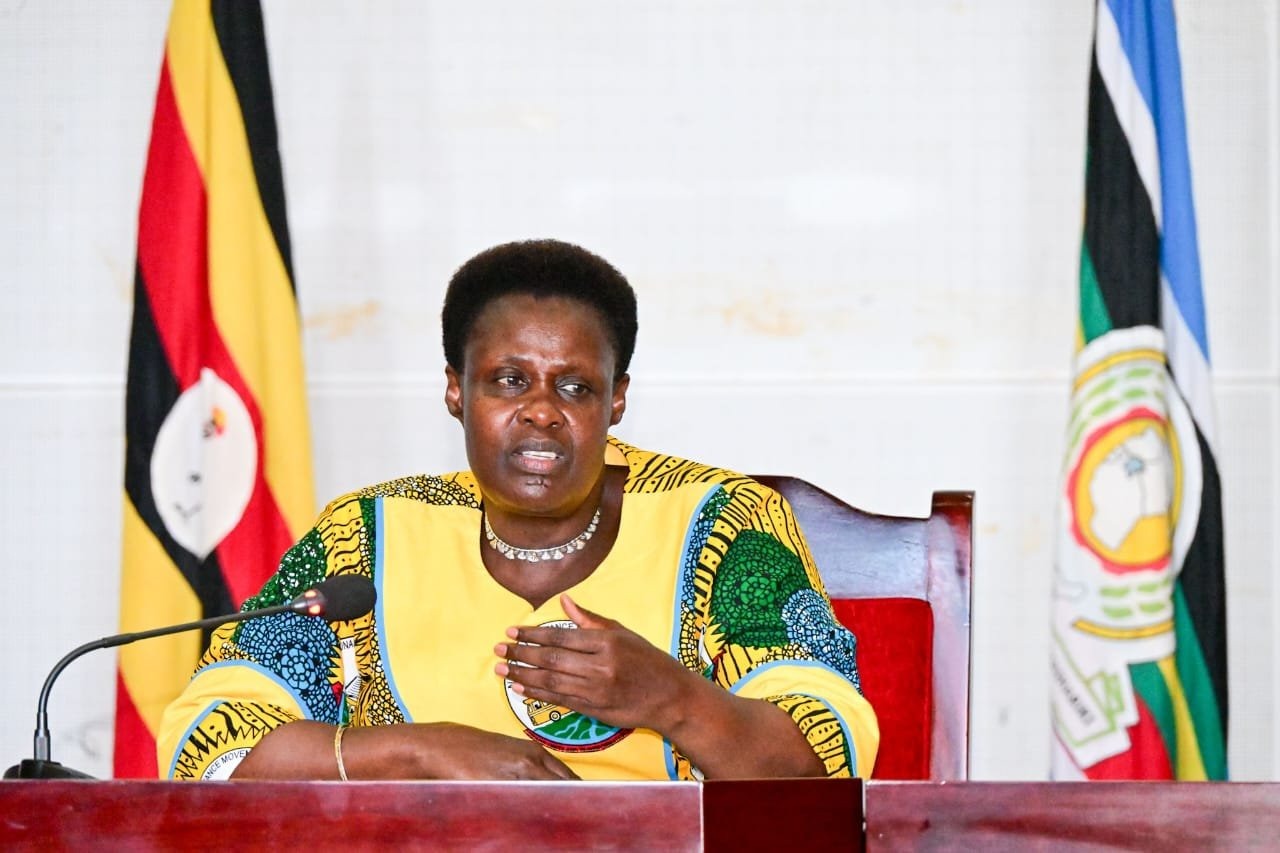
In a series of posts on his X account, @mkainerugaba, the CDF appeared to directly target Alupo, who has occupied the office since June 2021.
“About being Vice President. I think we have been diplomatic enough. Whoever is in that office should prepare to hand it over soon,” Muhoozi wrote. He went further, suggesting that if appointed vice-president, he would introduce military-style management of government.
“As Vice President, the government will operate on military terms. There will be no more inefficiency,” he declared.
In another post, Muhoozi threatened that Alupo would be dismissed from government, questioned her political loyalty and claimed to have substantial support in the Teso sub-region, where the Vice-President comes from.
“As Deputy Commander in Chief, Jessica will be dismissed from our government soon. We have very many supporters in Teso. We don’t have to rely on traitors,” he wrote.
He also accused Alupo of supporting former prime minister Amama Mbabazi during the 2016 presidential contest against President Yoweri Museveni, although the allegation was not independently established.
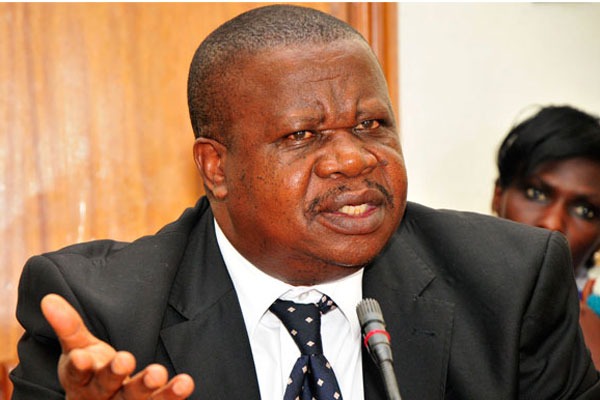
The posts were particularly controversial because Muhoozi was speaking as the serving CDF, a military officer constitutionally expected to remain outside partisan political activity.
His account became inaccessible on November 10, hours after the controversial messages, although no official explanation was issued about whether he had deactivated it or whether X had taken action.
The controversy raised questions about whether Muhoozi was attempting to use his military position to influence an executive appointment that constitutionally belongs to the President, subject to parliamentary approval.
Article 108 of the Constitution provides for the President to appoint a Vice-President with Parliament’s approval. There was, however, no official announcement that Museveni intended to replace Alupo.
For Otafiire, whose political disagreements with Muhoozi have become increasingly public, the latest episode reinforces an argument he has repeatedly made: that military strength and political ambition should not be confused with the ability to govern.
The general who believes battles can be won without bullets
Otafiire’s latest intervention cannot be understood without revisiting his September 30, 2026 address to Parliament, which triggered another explosive confrontation with Muhoozi.
While addressing legislators on political tolerance, the Minister of Water and Environment departed from his ministerial brief to discuss the dangers of resolving disagreements through violence. He argued that disagreements were natural in any society but that the ability to resolve them peacefully was the true measure of civilisation. “When you see a general who prefers violence as the best means of solving problems, then there is a problem,” he told Parliament.
He followed this with a statement that appeared to challenge the military philosophy of those who regard force as the first solution to political disagreements. “The greatest generals I know of are those who resolve problems without shooting a bullet.”
Otafiire explained that effective military leadership depends on information and intelligence, which enable commanders to understand their adversaries, anticipate their intentions and prevent confrontation.
He argued that a commander who understands the intentions of an adversary can change the circumstances that would otherwise lead to conflict.
The argument was particularly significant because Muhoozi has repeatedly been criticised over his use of social media to threaten political opponents and announce security-related actions.
Although Otafiire did not mention the CDF by name in Parliament, Muhoozi appeared to interpret the remarks as a personal attack. On October 2, the CDF demanded that Otafiire apologise within one week, describing the minister as his junior and threatening unspecified consequences. “I hear my junior MG. Otafiire made some statements in parliament against me. I’m giving him exactly 1 week to apologise to me or else he will see,” Muhoozi posted. He subsequently reduced the deadline to three days.
Otafiire did not apologise. Instead, he maintained his defiant position, saying he would rather die fighting than live on his knees begging.
The confrontation exposed a generational and ideological disagreement between two men who belong to different chapters of the same political and military establishment.
From arrest threats to a battle of political wills
 The Otafiire-Muhoozi disagreement is not new. It has developed over several years, largely around the question of succession, the authority of the old NRM guard and the political activities of the CDF.
One of the earliest public confrontations emerged in late 2022, when Muhoozi and his supporters began openly discussing his possible presidential ambitions.
The campaign, popularly associated with the Muhoozi Project, unsettled some of the NRM’s founding figures, who believed the succession question was being raised prematurely and that the historical contribution of the liberation struggle veterans was being disregarded. Otafiire became one of the most vocal critics.
In an interview with CBS FM in January 2023, he warned that the historical members of the NRM would not sit back and allow the younger generation to disrespect them.
“We know you are Museveni’s son but we shall not allow you to disrespect us,” he said.
The remarks followed Muhoozi’s earlier criticism of the old guard, in which he challenged Otafiire and other historical figures, suggesting their political influence had expired.
Otafiire subsequently clarified that his disagreement was not based on personal hatred of President Museveni’s son but on his opposition to Muhoozi automatically succeeding his father.
Speaking in his home district of Mitooma in 2024, he made the distinction particularly clear. “I do not personally hate him,” he said, explaining that he liked Kainerugaba as Museveni’s son but did not support him becoming President.
The minister’s argument was that presidential leadership should not be treated as an inheritance and that the NRM’s founding generation had a responsibility to defend the principles for which they fought.
The confrontation resurfaced in February 2026 when Muhoozi threatened Otafiire with arrest following disagreements over the minister’s political remarks.
Muhoozi suggested that the decision on Otafiire’s fate should be left to his father, President Museveni, and indicated that the army could arrest the minister almost instantly. Otafiire responded with a dismissive “LOL” on X.
The exchange illustrated the unusual political situation in which a serving CDF was publicly threatening a senior cabinet minister and fellow liberation-war veteran.
Who is Kahinda Otafiire, the general who refuses to bow?
Born on December 29, 1950, in present-day Mitooma District, Otafiire is one of the surviving veterans of the political and military struggles that shaped Uganda’s post-independence history.
He initially pursued religious studies at a seminary before moving into secular education. He later graduated from Makerere University with a Bachelor of Arts in Social Sciences and obtained a certificate in French.
Before joining the armed struggle, he worked as a youth officer between 1975 and 1976 and subsequently as a Foreign Service officer in the Ministry of Foreign Affairs from 1976 to 1980.
In 1981, he joined Museveni’s National Resistance Army (NRA), becoming one of the original fighters in the rebellion against the Milton Obote government.
He served as Chief Political Commissar between 1981 and 1984 and subsequently as National Political Commissar.
Following the NRA’s capture of power in January 1986, Otafiire entered government, serving in several positions, including Minister of State for Internal Affairs, Presidential Assistant for Security and Director General of the External Security Organisation (ESO).
He was also a delegate to the Constituent Assembly that drafted the 1995 Constitution. Over the years, he has occupied several ministerial portfolios, including Justice and Constitutional Affairs, Trade and Industry, East African Affairs and Internal Affairs.
In May 2026, Museveni appointed him Minister of Water and Environment. He is also the elected MP for Ruhinda County in Mitooma District.
Otafiire’s political significance comes from his long association with Museveni and his place among the NRM’s founding generation.
Unlike many younger politicians who have built their careers under Museveni’s administration, Otafiire participated in the struggle that brought the Movement government to power.
His position within the establishment has consequently given him the confidence to publicly challenge political decisions and individuals whom he believes are undermining the founding principles of the NRM.
His relationship with Muhoozi is therefore complicated by two competing sources of authority: the CDF’s command of the contemporary military establishment and Otafiire’s historical credentials as one of the veterans of the liberation struggle.
CEC meeting: Is Muhoozi being told to leave the army first?
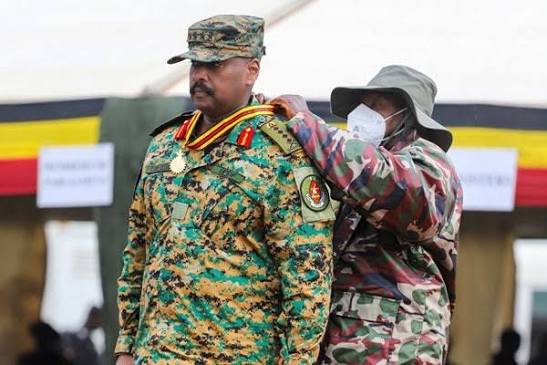
Otafiire’s warning has also coincided with growing disagreements within the ruling NRM over Muhoozi’s political ambitions and whether he can simultaneously remain CDF while positioning himself for the presidency.
On Tuesday, President Museveni chaired a closed-door meeting of the NRM Central Executive Committee (CEC) at State House, Entebbe, where the succession question reportedly generated considerable disagreement. According to accounts by five participants cited by Agence France-Presse, some committee members opposed efforts to position Muhoozi as Museveni’s successor in the 2031 presidential election.
The reported disagreement centred partly on the CDF’s controversial public statements, his confrontational approach to political opponents and whether his military experience alone made him suitable for the country’s highest political office.
One of the reported voices of resistance was NRM vice-chairperson for Eastern Uganda, Calvin Echodu, who argued that Muhoozi needed more experience interacting with ordinary Ugandans outside the military.
Echodu reportedly suggested that Museveni should seek another term in 2031 rather than immediately position his son as successor.
The reported meeting also brought into focus the question of whether Muhoozi should first leave military service before pursuing partisan politics.
This is not merely a political argument. Articles 208 and 209 of the Constitution, together with Section 16 of the Political Parties and Organisations Act, restrict serving members of the armed forces from engaging in partisan political activities.
The question of retirement was also raised publicly by Alliance for National Transformation national coordinator Alice Alaso and Sarah Bireete in discussions about the succession controversy, with Bireete arguing that Museveni should retire Muhoozi from the UPDF to allow him to pursue politics freely.
However, it is important to distinguish these proposals from an actual CEC resolution. The NRM has not officially announced a decision requiring Muhoozi to retire from the army. Indeed, Secretary General Richard Todwong issued a statement on November 12 dismissing as false reports that the CEC had rejected Muhoozi’s succession bid.
The reported disagreements, therefore, remain accounts of a closed-door meeting rather than an officially confirmed party decision.
The political significance of the debate is that even within the ruling party, there are questions about how Muhoozi’s military career, political mobilisation through the Patriotic League of Uganda (PLU) and ambitions for higher office should be reconciled.
For Otafiire and other historical figures, the issue goes beyond whether Muhoozi is capable of becoming President. It concerns the process through which leadership is acquired, the place of the NRM’s founding principles and whether the country’s institutions should be subordinated to individual ambitions.
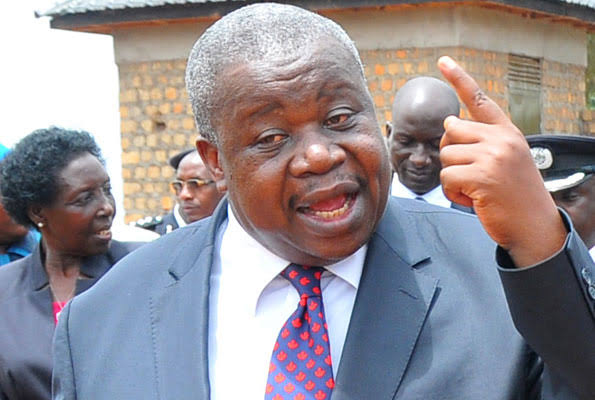
The old guard versus the new generation
Otafiire’s latest speech in Kabale may have been delivered at a water and sanitation anniversary, but its political implications extend far beyond the ministerial brief.
His lorry and wheelbarrow analogy speaks to a succession debate in which the choice of leadership, the suitability of the candidate and the capacity of institutions to deliver the country safely to its destination have become increasingly contentious.
For Muhoozi, the challenge is to demonstrate that his military career, political following and association with the President can translate into the broader leadership credentials required to govern a country.
For Otafiire, the warning is that Uganda has already paid too dearly for political miscalculations to allow another generation to gamble with its stability.
The veteran minister has repeatedly demonstrated that he is unwilling to retreat simply because his political adversary commands the army or happens to be the President’s son.
And his latest intervention suggests that he intends to keep reminding the younger generation that the road to State House is not necessarily the same as the road to military command.
His final message, therefore, is perhaps the most important: choose the right vehicle, make sure it is sound, listen when warned and understand where you are going before setting off.
Because, as Otafiire’s own history demonstrates, when political leaders choose the wrong road, it is the country that pays the price.
Author Profile
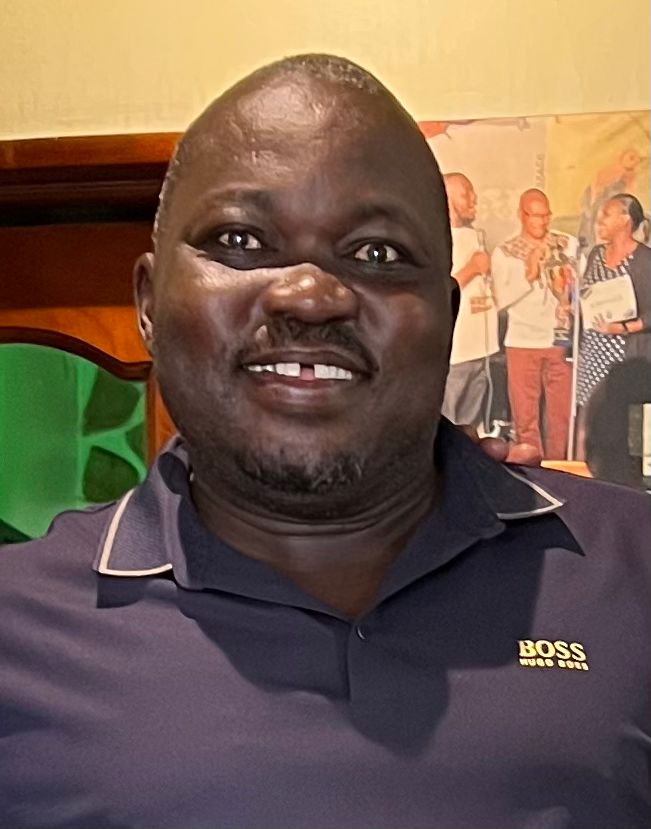
- Charles Gazza Kodili is a seasoned journalist with over 20 years of experience in the media industry. He holds a Bachelor of Arts degree in Mass Communication. He’s currently the Chief Editor at the Investigator.
Charles can also be reached via; Tel: +256 774 108978
Email: [email protected]
Latest entries
 FeaturedNovember 13, 2026OTAFIIRE’S CRYPTIC WARNING TO MUHOOZI: As Gen Muhoozi Kainerugaba Intensifies His Push For The Vice-Presidency And Publicly Challenges Jessica Alupo, Veteran Bush-War Commander Maj Gen (Rtd) Kahinda Otafiire Has Returned With Another Dose Of Political Satire, Using A Journey To Mbarara, A Faulty Lorry And A Wheelbarrow To Warn Against Making Dangerous Leadership Choices
 FeaturedNovember 13, 2026WHY BISHOP WANOK’S ELECTION MATTERS TO UGANDA’S CATHOLIC CHURCH: With Archbishop Lambert Bainomugisha As His Deputy, The New Episcopal Conference Leadership Inherits A Church Deeply Embedded In Education, Healthcare, Governance And National Affairs, With Expectations To Defend Its Moral Voice And Strengthen Its Pastoral Mission
 FeaturedNovember 12, 2026INSIDE THE MAKING OF UGANDA’S MILITARY SPY MACHINE: How Maj Gen Fred Toolit, A Young NRA Intelligence Officer, Led The Team That Designed The Concept Paper Elevating DMI Into CMI, Laying Foundations Later Expanded By Henry Tumukunde And Noble Mayombo
 FeaturedNovember 12, 2026INSIDE THE BOLD CHALLENGE TO THE MUHOOZI PRESIDENCY PROJECT: The Eastern Region NRM Vice-Chairperson Reportedly Told CEC That Muhoozi Was Not Ready To Inherit State House And Should First Quit The Military