












Tooro Kingdom has been plunged into another leadership crisis following the resignation of its Prime Minister, Calvin Armstrong Rwomiire Akiiki, who has stepped down less than two months after being retained by the new Omukama, Edward Rukiidi Nyabongo I, citing a breakdown of trust, consultation and institutional discipline within the kingdom’s leadership.
Armstrong’s resignation, formally submitted in a letter dated November 20, 2026, exposes deep-seated disagreements within the palace over the management of the kingdom, the authority of the Prime Minister, cabinet appointments, accountability for development projects and the influence of individuals surrounding the throne.
His departure also raises questions about the stability of the new administration, which inherited an already polarised institution following the death of Omukama Oyo Nyimba Kabamba Iguru Rukidi IV in August. In his resignation letter addressed to Omukama Nyabongo, Akiiki paints a picture of an administration in which consultation has increasingly broken down, decisions made through established procedures are allegedly reversed without explanation, and individuals outside the formal leadership structure wield considerable influence over kingdom affairs. Although his public resignation statement was diplomatic, emphasising reconciliation and the greater interests of Tooro, the accompanying letter reportedly offers a more detailed account of the circumstances that made his continued service increasingly difficult.
At the heart of his grievances is what he considers the erosion of the independence and credibility of the office of Omuhikirwa, the traditional title for the Prime Minister.
Armstrong argues that he could no longer effectively discharge his responsibilities under circumstances where decisions taken jointly with the Omukama could subsequently be reversed without consultation, notification or explanation. The disagreements appear to have turned the relationship between the kingdom’s political and administrative leadership into an increasingly difficult working arrangement.
Cabinet appointments at the centre of the fallout
One of the major issues identified in Armstrong’s resignation letter concerns the reversal of cabinet appointments that had reportedly been made following joint consultations with the Omukama.
According to the outgoing Prime Minister, some appointments made through consultation with the monarch were subsequently overturned without his knowledge or an explanation.
For Armstrong, the development was not simply a disagreement over who should occupy particular ministerial positions. It represented a fundamental breakdown in the working relationship between the Prime Minister’s office and the throne.
The Prime Minister’s office is central to the coordination of kingdom administration, including the supervision of ministers, implementation of programmes and management of institutional responsibilities.
Consequently, decisions concerning cabinet composition directly affect the authority of the person expected to coordinate the administration. Armstrong appears to have been particularly concerned that his office was being left to bear responsibility for decisions over which he had diminishing control.
The controversy also raises broader questions about the extent of the Prime Minister’s authority under the new reign and how administrative decisions should be communicated and implemented.
His complaint about individuals surrounding the throne exercising influence without accountability further suggests that the disagreements extended beyond formal cabinet structures.
He expressed concern that some individuals close to the monarch were advancing personal interests rather than the collective wellbeing of the kingdom.
Although he did not publicly identify the individuals, his remarks point to tensions over the informal power networks that often emerge around traditional institutions during periods of leadership transition.
For an institution still attempting to recover from a bitter succession dispute, such disagreements threaten to complicate efforts to establish a functional administration.
The Supreme Council accountability review
Another major source of tension was the review of Armstrong’s previous administration before the kingdom’s Supreme Council, also known as Orukurato.
On October 27, Omukama Nyabongo convened the first meeting of the Supreme Council under his reign at the kingdom headquarters in Muchwa, Fort Portal City.
During the meeting, the monarch directed Armstrong to submit an accountability report covering projects and activities undertaken during the reign of his predecessor, King Oyo.
The Prime Minister was given until November 12 to submit the report, after which the Supreme Council was expected to review it for seven days before forwarding its findings to the monarch.
The King explained that Armstrong’s appointment was intended to manage the transition and ensure continuity of development projects initiated under the late monarch rather than immediately establish a completely new administration.
The directive was significant because it placed the outgoing Prime Minister’s previous administration under scrutiny at a time when he was simultaneously expected to manage the kingdom’s affairs.
The King also indicated that some ministers had been appointed in error, a pronouncement that reportedly attracted applause from members of the Supreme Council.
Armstrong, however, appears to have interpreted aspects of the review as an attempt to discredit his previous administration rather than conduct an objective assessment of its performance. In his resignation letter, he reportedly questioned the fairness and independence of the process, suggesting that the review was increasingly becoming a vehicle for undermining his credibility.
The disagreement exposed a difficult contradiction in his position: he was expected to oversee the kingdom’s transition while simultaneously defending the record of an administration whose activities were being examined.
Accountability is an important component of institutional governance, particularly where public-facing development programmes and partnerships are involved. However, Armstrong’s complaint suggests that the process lacked the independence and fairness he expected.
It remains important to distinguish his concerns from any established findings of wrongdoing. The fact that an accountability review was ordered does not, in itself, establish misconduct by the former administration. Nevertheless, the disagreement appears to have further weakened the confidence necessary for him to continue working with the new leadership.
MTN funds and unanswered questions
Armstrong also raised concerns over the handling of grassroots sports funds under the kingdom’s Memorandum of Understanding with telecommunications company MTN.
In his resignation letter, he reportedly complained that formal submissions concerning suspected irregularities and the management of the funds had not received an independent examination. The MTN partnership was among the development and community engagement initiatives associated with the kingdom’s previous administration.
Grassroots sports programmes are particularly important to traditional institutions because they provide opportunities for young people, promote community participation and strengthen cultural identity.
However, partnerships involving financial resources require transparent management, proper documentation and clear accountability mechanisms.
Armstrong’s concern appears to have been that questions surrounding the handling of the funds were not receiving the independent attention they deserved.
His complaint introduces another dimension to the crisis because it suggests that the disagreements were not limited to personalities and appointments but also involved questions about financial accountability and institutional oversight.
The outgoing Prime Minister’s position appears to have been that suspected irregularities should be independently investigated rather than allowed to become political ammunition against particular individuals.
There is, however, no basis to conclude from the resignation letter alone that any individual or institution misappropriated the funds. The concerns require independent examination and responses from the relevant parties.
The King Oyo Model Farm land controversy
Another sensitive issue raised by Armstrong concerns reports that members of the family of the late King Oyo are being asked to vacate land at Bugaki, where the King Oyo Model Farm is located.
The former Prime Minister reportedly urged that the matter be handled lawfully and respectfully, reflecting the sensitivity surrounding property and legacy issues following the death of the former monarch.
The King Oyo Model Farm was among the agricultural initiatives associated with the late King’s development agenda.
The farm was intended to contribute to agricultural development, demonstrate modern farming practices and support household income improvement.
During his October 7 presentation of a 10-point development agenda following his reappointment, Armstrong highlighted the importance of strengthening household incomes through agricultural interventions.
He also confirmed engagements with Agriculture Minister Frank Tumwebaze to secure agricultural inputs, including seedlings and fertilisers, building on initiatives such as the King Oyo Model Farm in Bugaaki, Kyenjojo District.
Consequently, reports concerning the possible eviction of the late King’s family from the property presented a particularly sensitive challenge.
The issue touches on the legacy of the former monarch, the rights of his family and the future of a development initiative bearing his name.
Armstrong’s intervention suggests that he wanted the matter resolved through established legal and institutional procedures rather than through confrontation.
The land dispute also illustrates how unresolved questions surrounding the previous reign continue to influence the new administration.
From Oyo’s Prime Minister to Nyabongo’s caretaker premier
Armstrong’s departure marks the end of a relatively turbulent period in which he served under two different monarchs.
On February 14, 2025, the late Omukama Oyo appointed him Prime Minister of Tooro Kingdom, replacing Stephen Kiyingi.
His appointment placed him at the centre of the kingdom’s administrative machinery, where he was expected to coordinate government programmes, oversee the cabinet and translate the monarch’s development priorities into practical interventions.
He subsequently became one of the key figures in the administration of King Oyo, who had ruled Tooro since his enthronement in 1995 at the age of three.
During Oyo’s reign, the kingdom pursued several development initiatives in agriculture, youth empowerment, education, community engagement and strategic partnerships.
Armstrong’s administration was expected to provide the institutional coordination necessary to advance those programmes.
However, his tenure was interrupted by the death of the monarch on August 27, 2026, in the United States, where he had been receiving treatment for cancer. He was 34.
Oyo’s death triggered one of the most complicated succession disputes in the recent history of the kingdom.
The disagreement centred on the identity of the rightful successor, with members of the royal family raising questions about a purported will and claims that the late monarch had a biological son.
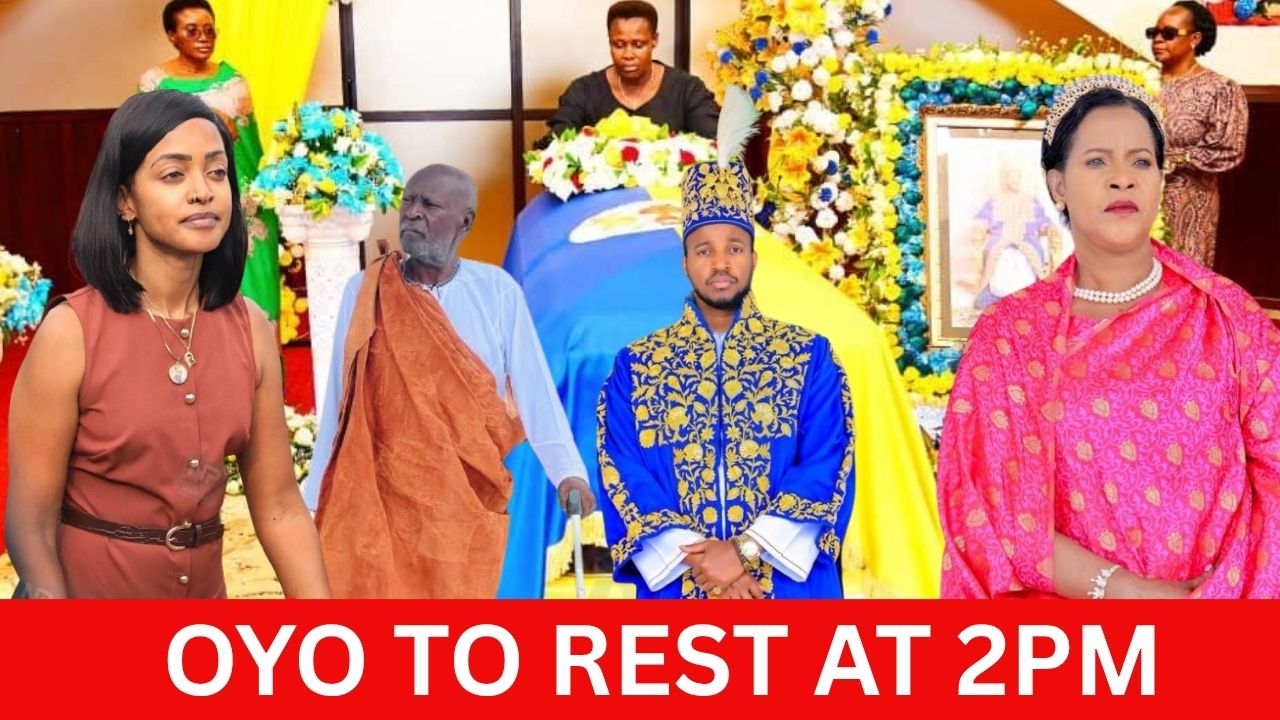
The Babiito royal clan eventually selected Prince Edward Rukidi Kijanangoma, who was crowned Omukama Edward Rukiidi Nyabongo I on September 29, 2026.
The succession process was contested by sections of the royal family, including Queen Mother Best Kemigisa and Princess Ruth Komuntale, who questioned the process and raised issues surrounding the late King’s purported wishes. Armstrong found himself managing the kingdom during this delicate period.
On September 10, he appealed to the government to provide guidance and support to ensure that cultural, legal and institutional processes surrounding the succession were handled peacefully.
He maintained that government should help create an environment for a peaceful resolution but should not choose the next monarch for Tooro. He also appealed for restraint and reconciliation, warning that divisions were threatening the unity of the kingdom.
His position placed him in the difficult position of trying to preserve institutional stability while disagreements emerged between sections of the royal family and the Babiito clan leadership.
He subsequently offered to engage Charles Kayondo Kamurasi, the head of the ruling Babiito clan, to resolve differences that had become increasingly visible in public.
The disagreements partly concerned information about the late King’s condition before his death and the identity of the alleged heir. These tensions demonstrated the difficulty of managing a traditional institution in which succession, royal family interests, customary authority and administrative responsibilities intersect.
Nyabongo retains Akiiki, but the honeymoon does not last
Following his coronation, Omukama Nyabongo moved to establish his administration.
On October 5, less than a week after his coronation, he retained Akiiki as Prime Minister on an interim six-month appointment.
The decision was widely interpreted as an attempt to maintain administrative continuity while the new monarch familiarised himself with the kingdom’s programmes, outstanding obligations and institutional structures.
The King also retained Prince Charles Kayondo Kamurasi as head of the Babiito royal clan and appointed an 11-member advisory committee to support his administration.
Armstrong’s retention was particularly significant because it suggested that the new monarch was initially prepared to rely on the experience of the previous administration rather than immediately dismantle it.
The outgoing Prime Minister subsequently presented a 10-point development agenda, outlining priorities that included institutional accountability, youth employment, agricultural development, strategic government partnerships and reconciliation. He was given until March 2027 to demonstrate measurable progress in completing stalled development projects. However, the arrangement quickly encountered difficulties. The October 27 Supreme Council meeting, during which the King ordered an accountability review and questioned some previous appointments, exposed the growing differences over the direction and management of the kingdom. The monarch’s position was that the six-month appointment was intended to manage a transition, not to begin a completely new administration. Akiiki, on the other hand, appears to have expected sufficient institutional independence and consultation to execute the responsibilities entrusted to him.
The difference between those expectations may have become one of the central problems behind his resignation.
A resignation presented as a sacrifice for unity
In his public statement announcing his departure, Armstrong was careful not to portray his resignation as a personal confrontation with the monarch.
Instead, he described it as a difficult decision taken after considerable reflection, with the overriding objective of allowing Tooro to heal, reconcile and move forward.
He acknowledged that personal considerations had played a part but emphasised that the kingdom’s interests should take precedence over individual ambitions and positions.
He thanked his colleagues in Cabinet and the wider administration for their dedication, sacrifices and support.
He also paid tribute to the late Omukama Oyo for entrusting him with the responsibility of serving as Prime Minister.
To Omukama Nyabongo, he expressed gratitude for the opportunity to continue serving under the new reign.
His reference to having served Tooro under two monarchs was particularly significant, considering the turbulent circumstances surrounding the transition.
He also thanked the people of Tooro for their love, trust and encouragement throughout his tenure, while acknowledging the support of his family.
But perhaps the most revealing part of his statement was his insistence that his departure should not be interpreted as abandoning the kingdom.
“My resignation is not an abandonment of Tooro, but a difficult personal decision made in the hope that unity, reconciliation and institutional stability will prevail,” he said.
He concluded with a message that appeared directed at all those involved in the kingdom’s internal disagreements: “Positions are temporary, but our Kingdom and our collective responsibility to its future must endure.” “Tooro must come first. Always.”
What next for Tooro Kingdom?
Armstrong’s resignation leaves Omukama Nyabongo with the responsibility of finding a new Prime Minister capable of restoring confidence within the kingdom’s administration.
The immediate challenge will be to address the institutional concerns raised by the outgoing premier while ensuring that the transition does not descend into another prolonged leadership dispute.
The issues surrounding cabinet appointments, accountability reviews, the MTN partnership and the Bugaki land controversy will require careful handling.
More importantly, the kingdom will need to establish clear lines of authority between the monarch, Prime Minister, cabinet, Supreme Council and other traditional leadership structures.
The new monarch inherited an institution that was already divided by a succession dispute. His first months in office have therefore been an important test of his ability to reconcile competing interests and establish a stable administration.
Armstrong’s resignation suggests that the challenge has extended beyond the question of who occupies the throne to the more fundamental question of how the kingdom should be governed.
For the former Prime Minister, leaving office appears to have become preferable to continuing in a position where he believed he lacked the necessary confidence, consultation and institutional support. For Nyabongo, the departure is an early setback to his efforts to establish a new administration while preserving continuity with the previous reign.
And for the people of Tooro, the latest development is a reminder that the end of the succession dispute did not necessarily mean the end of the kingdom’s internal divisions.
The coming weeks will determine whether Armstrong’s departure creates an opportunity for reconciliation or opens another chapter in the palace power struggles.
Ultimately, the test of the new administration will not simply be the appointment of another Prime Minister but whether it can restore trust, strengthen accountability and ensure that the kingdom’s development agenda is not held hostage by internal rivalries. Tooro has buried one King, crowned another and now lost a Prime Minister who served both.
The kingdom’s greatest challenge remains ensuring that its institutions survive the personalities and disagreements surrounding them.
Author Profile
- Charles Gazza Kodili is a seasoned journalist with over 20 years of experience in the media industry. He holds a Bachelor of Arts degree in Mass Communication. He’s currently the Chief Editor at the Investigator.
Charles can also be reached via; Tel: +256 774 108978
Email: [email protected]
Latest entries
 FeaturedNovember 23, 2026KABANDA’S JESSICA BEDROOM BOMBSHELL! PLU Attack Dog Fires Bedroom Salvo At Vice-President Alupo As Teso Elders Demand Apology And Muhoozi’s 2031 Camp Faces Fresh Embarrassment
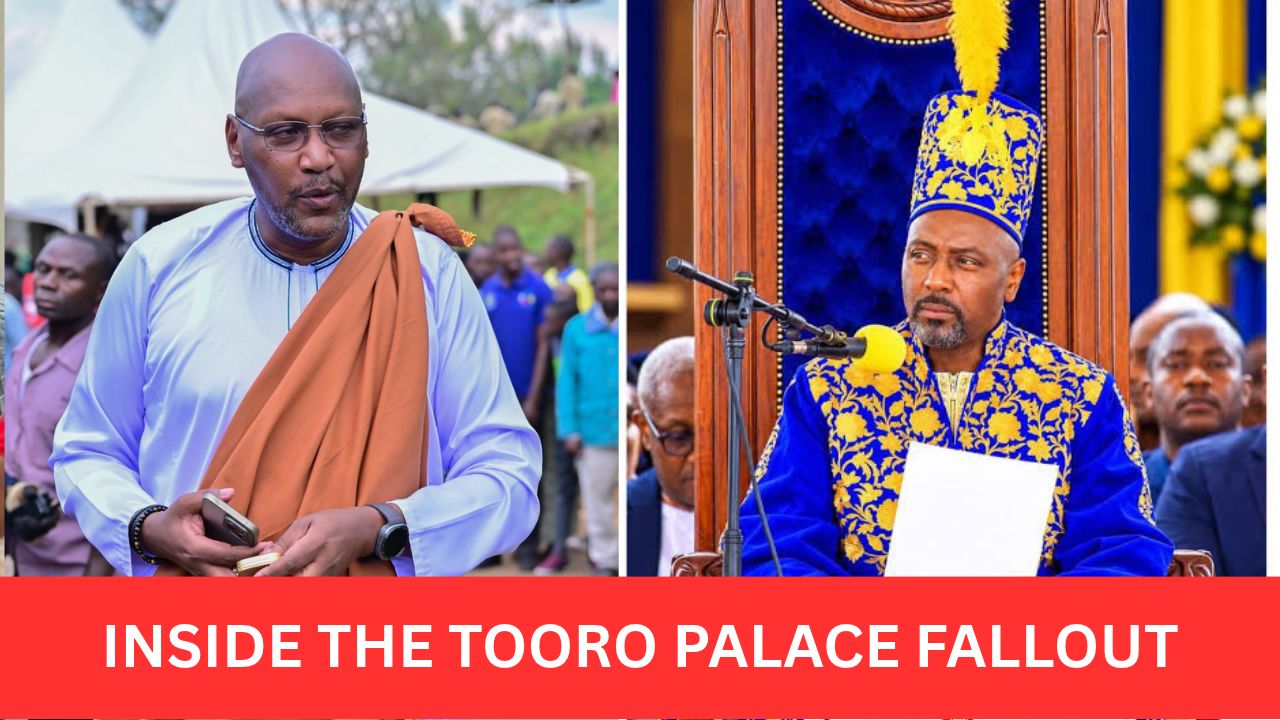 FeaturedNovember 23, 2026WHY TOORO PRIME MINISTER QUIT: Having Served Two Kings And Navigated A Bitter Succession Dispute, The Outgoing Premier Says Personal Interests, Unaccountable Palace Influencers And Collapsing Institutional Discipline Have Put Tooro’s Unity At Risk
 FeaturedNovember 21, 2026‘LET US FIGHT, OLD MAN’: MUHOOZI THREATENS OTAFIIRE AS NRM GENERATIONAL WAR EXPLODES The CDF Challenges The Veteran General To A Confrontation, Recalls Arresting Seven Of His Soldiers And Hints At Removing Him From Cabinet After Otafiire Warned The PLU Against Grabbing Power
 FeaturedNovember 20, 2026OTTO’S SECOND LIFE IN MUHOOZI’S MILITARY: His Removal From Military Intelligence Triggered Speculation About His Future, But The Officer With Experience In Somalia, CAR, Karamoja And DR Congo Has Secured Another Strategic Assignment Directly Under Gen Muhoozi Kainerugaba