



























There is a moment in the life of any nation when the pretense of invincibility collapses. When the men who believe they can operate in the shadows, behind burner phones, safehouses, and money that moves in silence, are confronted by a state that has decided to be competent. That was the Susan Magara case.

It was never only about one young woman taken from Lungujja, held in Konge, and murdered in Kigo despite a paid ransom. It was about the fundamental question every society must answer: can justice still be precise, patient, and scientific in an age where crime has become corporate? The answer, delivered in the High Court through months of painstaking work, was yes. What the public witnessed was not vengeance. It was reckoning. It was the meeting point of law, science, intelligence, and leadership, proving that organized crime, no matter how carefully compartmentalized, cannot survive when the State chooses to function as one unified body.

The investigation and prosecution of the Susan Magara kidnap and murder case now stands as one of the most defining moments in modern East African law enforcement. It illustrated with brutal clarity the power of forensic science, procedural discipline, interagency synergy, and public cooperation. The perpetrators constructed what they believed was an impenetrable scheme. They used burner mobile phones to hide identity, anonymous safehouses to conceal the victim, and fragmented roles so that no single operative knew the whole picture. They assumed complexity equaled immunity. They were wrong. They underestimated the unrelenting patriotism and meticulous methodology of Uganda’s law enforcement agencies and the Office of the Director of Public Prosecutions. What unfolded was a masterclass in modern criminal detection. Traditional police work merged seamlessly with science, creating a prosecution so tightly woven that reasonable doubt had no space to breathe.
At the very heart of this outcome lay a principle older than any of the accused, yet made new again by technology: the “Locard Exchange Principle.” Edmond Locard taught that every contact leaves a trace. In 2018, that trace was no longer only fiber and fingerprint. It was digital. It was a cell call placed at a specific time, a SIM card moved between handsets, a vehicle traveling from Lungujja to Konge, a ransom drop, and finally, to the Entebbe Express Highway. Guided by this doctrine of scientific precision, field detectives, cyber forensic analysts, and prosecutors approached the file as a national duty. Working under the firm operational command of the Director of Criminal Investigations, AIGP Grace Akullo, teams compiled thousands of data points, cross-referenced communications, and tracked financial movements with surgical patience. This was reinforced by clear strategic guidance from the highest office and unprecedented collaboration among military intelligence, domestic security organs, and specialized cyber units. Every claim presented before the High Court was anchored in verifiable fact, not speculation.

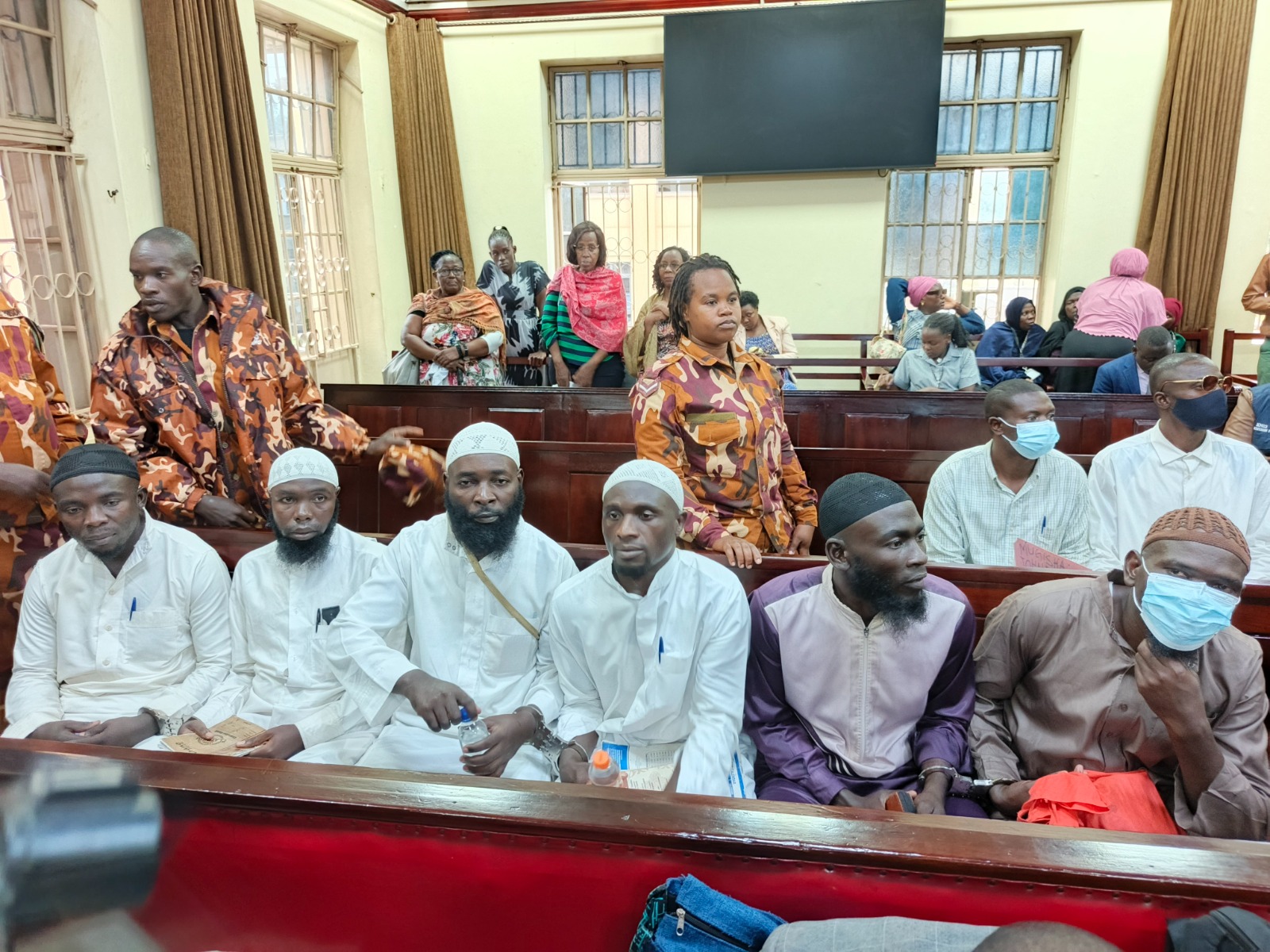
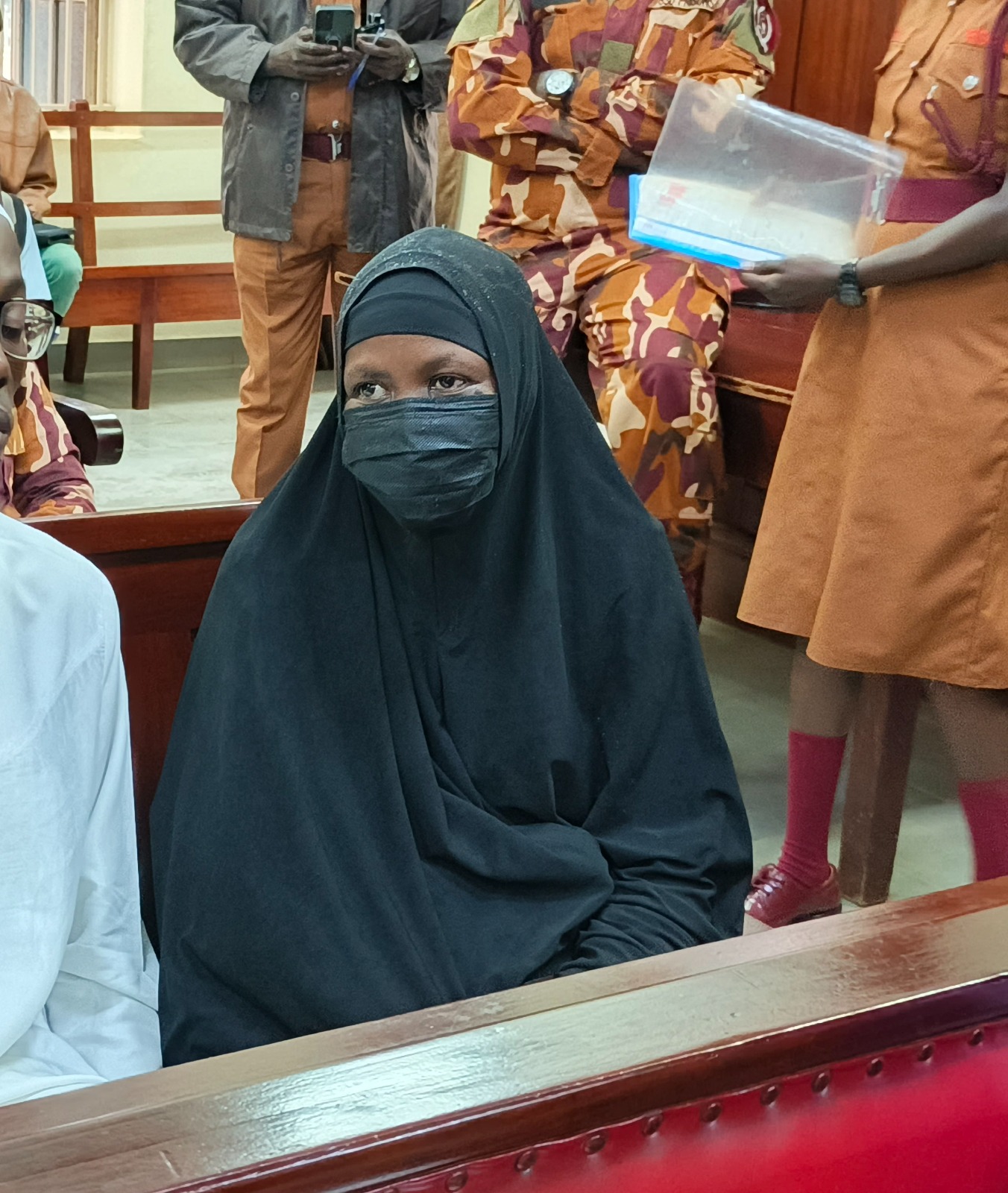
Nine persons stood trial for this crime: Yusuf Lubega, Hussein Wasswa, Muzamiru Ssali, Hajara Nakandi, Abubaker Kyewolwa Mahad Kisalita, Hassan Kato Miiro, Ismail Bukenya, and Musa Abbas Buvumbo The prosecution alleged that on February 7, 2018, these accused persons, together with others still at large, kidnapped Susan Magara, a cashier at Bwendero Dairy Farm, to procure a ransom. After negotiations, approximately $200,000 or Shs700 million was paid. Despite this, on February 27, 2018, in Kigo, Wakiso District, Magara was brutally murdered. The charges before court were kidnap with intent to extort ransom and murder. From the first mention, it was clear this was not the work of opportunists. The timing, planning, compartmentalization, and attempt to erase identity all pointed to a syndicate that had studied how to defeat a fragmented state response.

This was organized crime in its purest and most dangerous form, engineered specifically to exploit security gaps. One cell planned and identified the target. Another executed the abduction using vehicles later photographed and tendered as exhibits. A third managed communications and negotiated the ransom using audio channels that would later face acoustic spectrographic analysis. Another provided custodial guard in the Konge safehouse, where anonymity relied on the silence of neighbors. A fifth handled logistics and movement. Finally, a laundering cell converted the proceeds into land purchases in Mukono and Luwero, tying illicit enrichment directly to bank cash deposit timelines. In such an architecture, no single agency can succeed alone. Police action without cyber forensics chases ghosts. Cyber forensics without financial investigation misses the motive of profit. Forensics without a prosecutor who understands chain of custody collapses under judicial scrutiny. Intelligence without legal doctrine can not survive cross examination. It took the synchronized weight of detectives, cyber analysts, financial investigators, and prosecutors moving under one command to map the entire enterprise. When crime organizes itself, the State must organize itself better. Only then does the network crack.
Science was the silent witness that made this outcome possible, speaking in a language the court could not ignore. Call Detail Record analysis and cell tower triangulation reconstructed the physical journey of the suspects through every phase of the crime. Data plotted devices moving from the point of abduction to the holding location, to the places where ransom was negotiated and dropped, and along the corridor where Magara’s body was recovered. The defense could not credibly deny physical presence when mathematical coordinates placed those phones at those exact locations at those hours. Complementing this was voice spectral analysis. Cyber experts compared intercepted extortion calls against baseline acoustic voiceprints taken upon arrest, mapping pitch, formant frequencies, and vocal tract resonance to link demands directly to specific accused individuals. This destroyed the theory of mistaken identity. Physical exhibits completed the picture. Photographs of motor vehicles used in the kidnapping were retaken and tendered, while items recovered from the safehouse, digital media, and biological samples were handled under strict protocols. Together, they formed an unassailable narrative.
Yet, raw evidence in the hands of an unprepared advocate is merely noise. The ultimate alchemy occurred at the prosecution desk. If ever there was a trial where the midnight oil burned until dawn, it was this one. The state prosecutors did not merely turn up to read statements; they lived in the file. Night after night, they equipped themselves with an unyielding prosecutorial posture, conducting relentless, routine case conferencing to stress test every theory before entering the courtroom. They met defense maneuvers not with hesitation but with absolute firmness, transforming complex scientific data into an unshakeable wall of truth. One might tongue in cheek speculate that the long awaited ODPP salary enhancement, which arrived around that period, offered a little extra fuel for those sleepless nights. But humor aside, what those prosecutors delivered went far beyond monetary incentive. They stood in that courtroom not just as officers of the court but as defenders of the public consciousness. They made Ugandans proud, demonstrating with fierce intellectual pride the true majesty and solemn duty of Article 120 of the Constitution, proving that public prosecution is a sacred trust to protect the innocent and execute justice without fear or favor.
From their victory, the next generation of investigators and lawyers must draw lasting lessons. First, follow the money. Extortion is a financial crime, and the moment ransom is paid, the economic trail begins. Investigators traced how portions of the money were converted into tangible land assets, proving enrichment and satisfying the legal elements of money laundering. Second, never investigate to justify an arrest. Investigate to survive cross examination. Patience, documentation, and corroboration are the true antidotes to clever defense strategies. Third, protect the integrity of information. In complex kidnappings, early hours are fragile. Fragmented communication between security organs and family negotiators creates gaps that syndicates exploit. Leaks to the media can compromise victim safety, alert suspects to surveillance, and force tactical changes. What is required is a unified command structure from the moment a kidnap is reported, alongside strict public communication protocols that safeguard both victim and investigation.
Yet before scientific evidence ever reaches a courtroom, it must first survive uncorrupted in the community where the crime took place. This reality reminds us that security is not the exclusive work of the state; it is a civic contract. The Konge safehouse existed in a residential neighborhood. Criminals hide in plain sight, depending on the assumption that communities will look away. Active neighborhood vigilance, community policing initiatives, and citizen reporting are the first line of defense. When residents notice isolated properties with unusual traffic or sudden unexplained wealth without visible sources of income, prompt reporting can prevent tragedies. The bravery of civilian witnesses, particularly the victim’s family, was pivotal. Their willingness to preserve communication records, provide detailed timelines, and endure the emotional burden of testifying gave technical evidence its human context. Citizens must also understand their duty at physical crime scenes. When an abduction occurs, the instinct to help must be balanced with the discipline to preserve. Refraining from touching objects or walking through scenes protects fragile trace evidence so science can speak without contamination.
The conclusion of the Susan Magara trial stands as a testament to what happens when professional integrity meets forensic science, when directorial leadership meets interagency synergy, and when the law is applied without compromise. It proves that when strategic command is matched with operational discipline, criminal syndicates face inevitable extinction. This landmark trial reassures the public that no matter how sophisticated a criminal network appears, a synchronized security apparatus equipped with modern methodology will unravel the truth. For young detectives entering the force today, let this case be your compass. Emotion may draw you to the job, but emotion alone does not convict. What convicts is meticulous documentation, strict adherence to the chain of custody, and seamless operations where intelligence shares with police, police shares with forensics, and forensics delivers to prosecution in a form the court must accept.
Evil believes it can live forever in the dark. It cannot. Truth, carried by method and held up by law, will always find it and break it. Justice is not given. It is built, line by line, exhibited by exhibits, by people who choose to stay awake so others can sleep in peace. rest well, Susan.
Article By Charles Twiine Mansio
Author Profile

Latest entries
 FeaturedOctober 7, 2026FROM POLICY TO PROSPERITY: Uganda’s Tenfold Growth In A Rapidly Changing Global Economy, The Growth Requires A New Era Of Value Addition, Private Investment And Technology-Driven Productivity
 FeaturedOctober 5, 2026ADF RECRUITS ADMIT MURDER AS CMI SCANDAL DEEPENS: Court Hears How Munyonyo And Kalerwe Operations Unfolded As Investigators Trace The Alleged Terror Plots Up The Intelligence Chain
 FeaturedOctober 3, 2026MUSEVENI GIFTS NEW KABALE BISHOP LAND CRUISER: Finance Minister Henry Musasizi, Representing President Museveni, Handed The New Bishop A Brand-New Land Cruiser And Praised Bishop Emeritus Callist Rubaramira For His Service
 FeaturedOctober 3, 2026THE CROWN, THE KING, THE GLORY! If You Missed The Historic Coronation? The Investigator Brings You The Grand Ceremony In Pictures — From The Royal Procession And Cultural Performances To The Distinguished Guests And The Crowning Of Tooro’s New King