







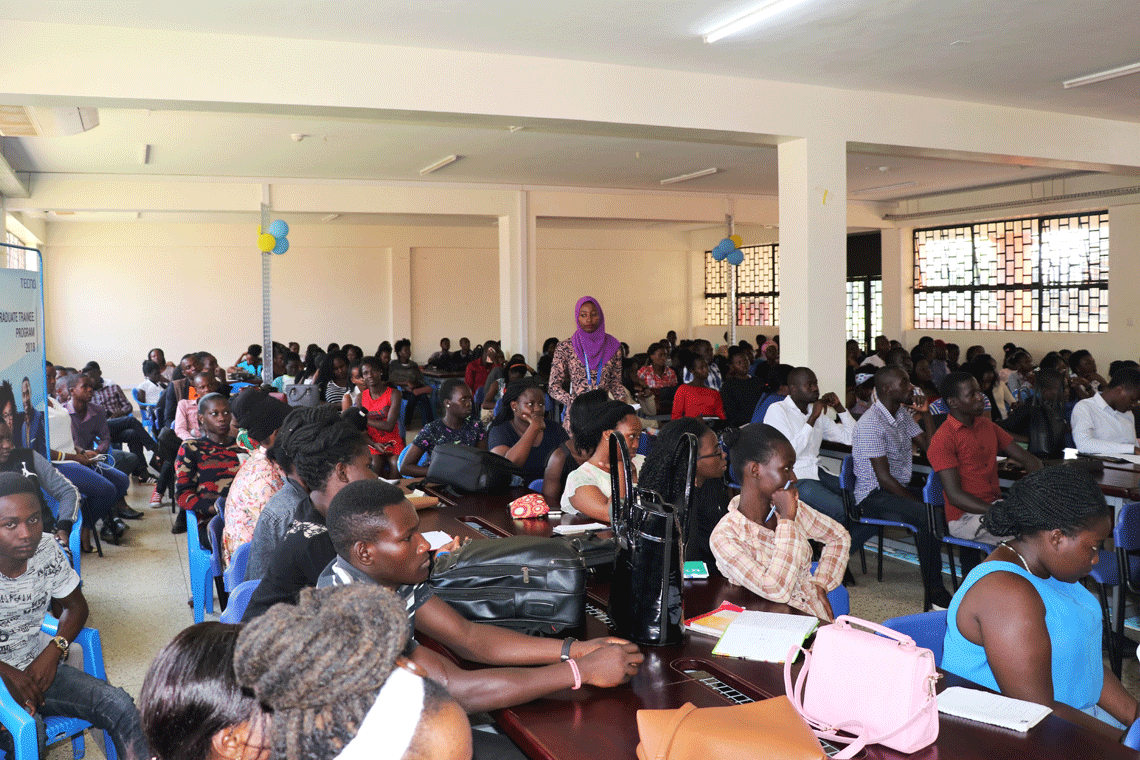
















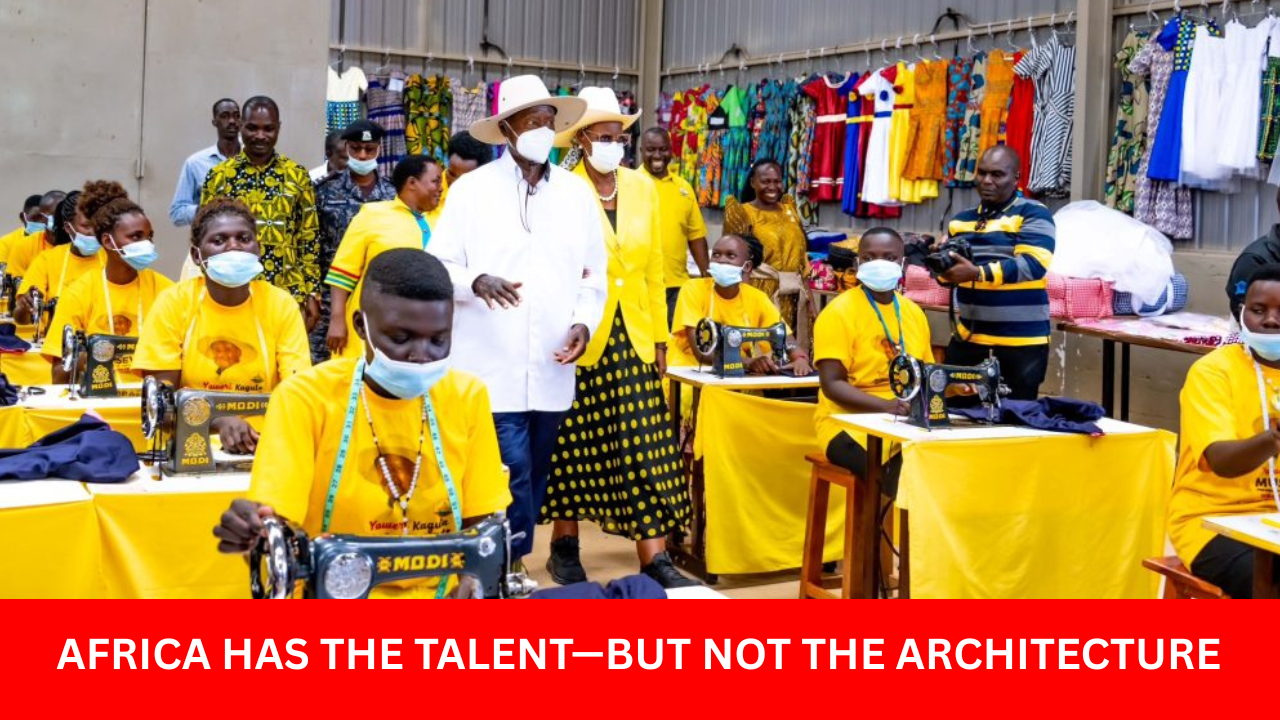
There is a classroom somewhere in Kampala, in Lagos, in Nairobi, where a young person is doing exactly what was asked of them. They are studying. They are showing up. They are carrying, without complaint, the accumulated hopes of a family that bet everything on education as the passage to economic dignity.
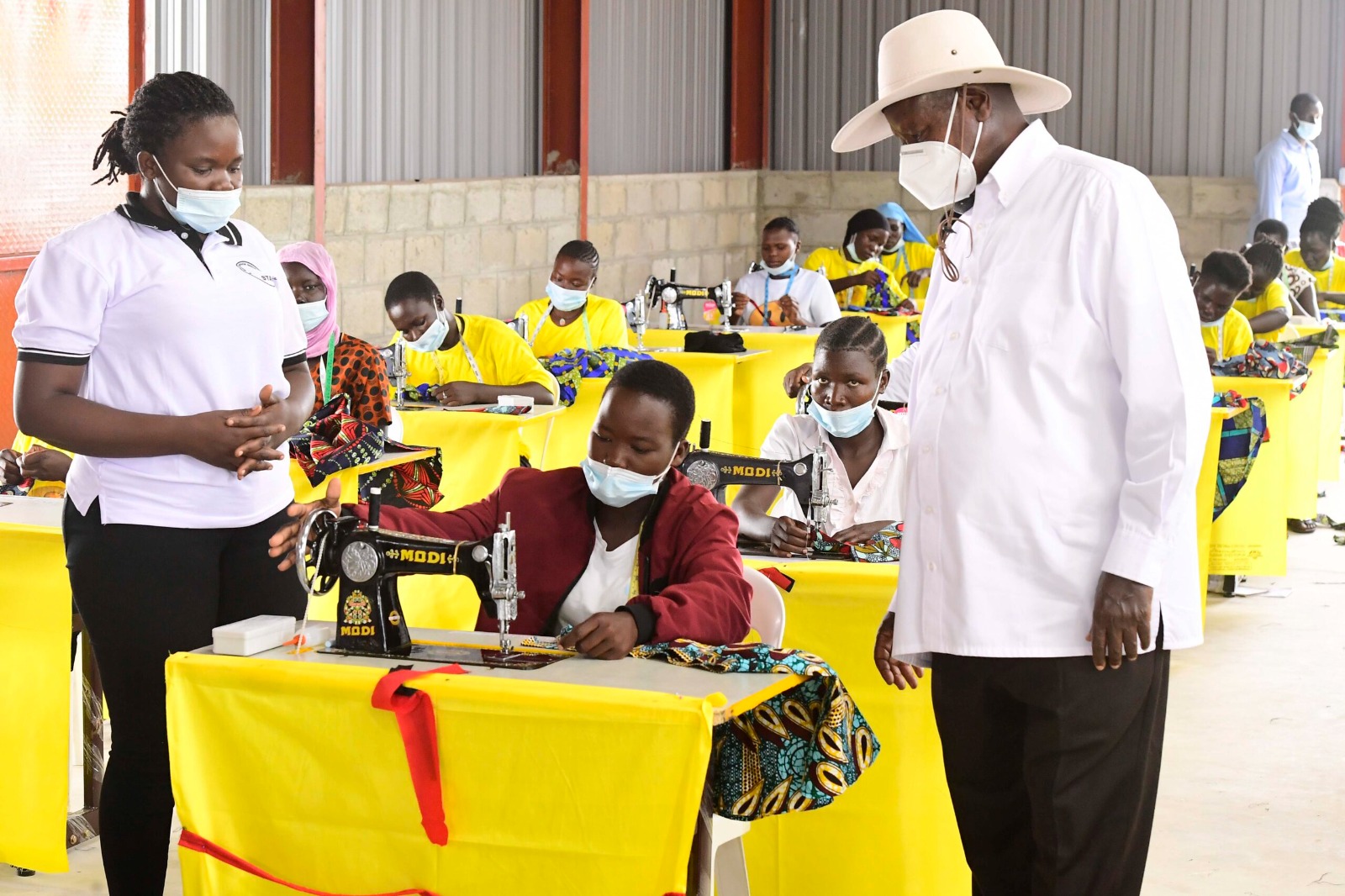
They will graduate. And then, with considerable likelihood, they will wait. This is the central paradox of African development in our time. The continent is not short of ambition. It is not short of intelligence. It is not short of young people willing to work — there are, by most credible projections, more than a billion of them who will enter the global workforce over the next decade, the largest cohort of young workers any civilisation has ever produced. The question that should be keeping policymakers awake at night is not whether Africa has the people. It is whether Africa has built anything worthy of receiving them.

It has not. Not yet. The dominant model of youth development across the continent remains stubbornly linear: train young people with skills, then release them into labour markets thin on formal employment and thick with credentialed candidates chasing the same narrow band of opportunities. This is not a pipeline. It is a funnel pointed at a wall.
The more honest diagnosis is structural. Economies do not absorb talent automatically. They absorb talent when institutions, capital, information, and infrastructure are arranged in ways that allow that talent to become productive. When those arrangements are absent — when a software engineer cannot find a seed investor, when an agricultural scientist cannot access a value chain, when a robotics graduate cannot find a manufacturer willing to take a risk on local innovation — the skills become inert. The talent is real. The system to activate it does not exist.

This is the gap that defines the challenge. And it is the gap that neither governments nor conventional training providers have been honest enough to name directly.
What Africa’s youth require is not more training programmes calibrated to a job market that is itself being disrupted. What they require is what economists would call opportunity infrastructure — the connective tissue between learning and livelihood, between innovation and investment, between a prototype built in a university lab and a business that can survive contact with a real market.
The distinction matters enormously in practice. A skills programme produces a graduate. An opportunity system produces a participant in the economy — someone capable not merely of filling a role that already exists, but of creating the conditions under which new roles become possible.
Consider agriculture, which remains the largest employer on the continent and one of its most undervalued sites of innovation. The problem in African agriculture is rarely the absence of knowledge about how to grow food more efficiently. The problem is the absence of systems connecting that knowledge to financing, to markets, to supply chains, to the kind of scaled technology deployment that turns a precision farming technique from a research finding into a replicable business. The talent exists in abundance. The architecture to deploy it profitably does not.
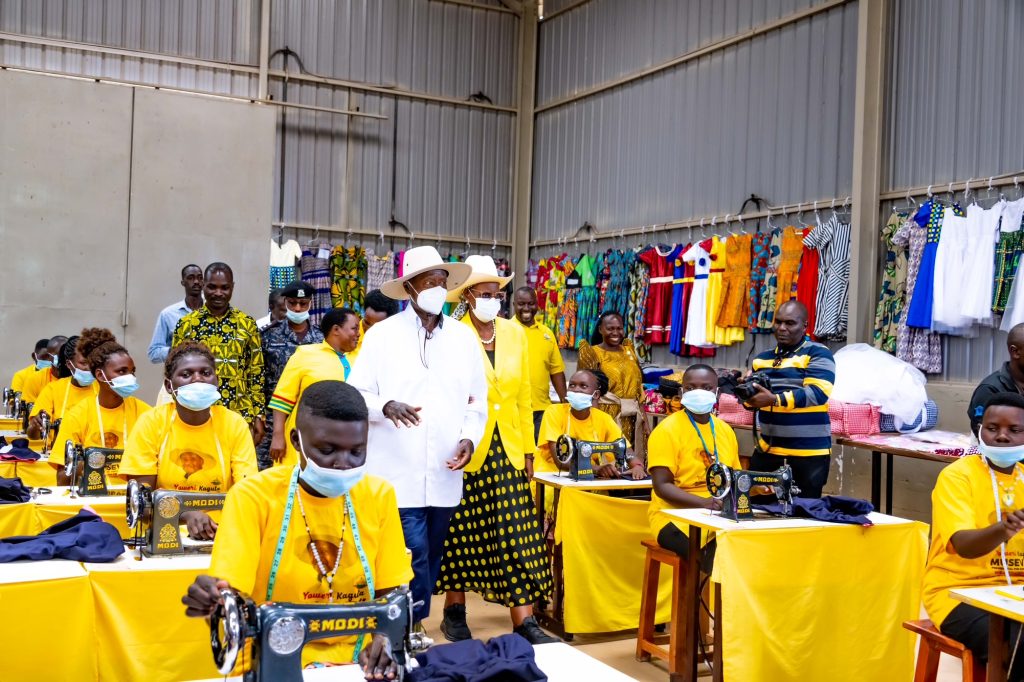
The same is true in every domain where Africa’s development potential remains unrealised. It is true in climate solutions, where the communities most vulnerable to environmental disruption are rarely the ones with access to adaptation capital. It is true in the digital economy, where young developers build products that die for want of distribution infrastructure rather than engineering quality. It is true in health, in energy, in mobility. In each case, the constraint is not human capacity. It is systemic design.
This is not an abstract argument. It has practical implications for how institutions, investors, and governments choose to spend the next decade. The instinct, particularly among international development organisations, has been to fund training — to treat the problem as one of individual deficit rather than collective architecture. The result is a proliferation of programmes that are, individually, often excellent, and collectively, insufficient. They produce capable people into systems that cannot yet use them.
The more productive investment is in the integrating layer: the institutions that connect skills to innovation, innovation to enterprise, enterprise to capital, and capital back into community wealth. Not schools. Not hubs. Not incubators in isolation. But platforms that hold the entire value chain in view and take responsibility for outcomes at every stage of the journey from learning to economic participation.
This is not charity. It is, properly understood, the highest-return infrastructure investment available in the African context. Human capital that finds productive outlet compounds. Human capital that does not — that graduates, waits, and eventually emigrates or retreats into informality — represents not just a wasted opportunity but an active cost. The social mathematics of youth unemployment are not benign.
The institutions being built to address this challenge at the systems level deserve the same serious attention, the same patient capital, and the same quality of policy support that roads and ports and power grids have historically commanded. Because they are, in the most precise sense, infrastructure. They are the architecture through which a generation converts its ambition into economic output.
Africa does not lack the people to build its future. It lacks, still, the systems designed to let them.
Building those systems — deliberately, at scale, with the full complexity of the problem in view — is the defining institutional challenge of this generation. It is a challenge that merits the attention of this publication, and of every reader who understands that the prosperity of the next fifty years will be determined not by the countries that produced the most graduates, but by the ones that built the most capable ground for those graduates to stand on.
Article by Richard Rays Kyorakunde Founder & Chief Executive Officer
ThirdSpace Solutions
Author Profile

Latest entries
 FeaturedOctober 7, 2026FROM POLICY TO PROSPERITY: Uganda’s Tenfold Growth In A Rapidly Changing Global Economy, The Growth Requires A New Era Of Value Addition, Private Investment And Technology-Driven Productivity
 FeaturedOctober 5, 2026ADF RECRUITS ADMIT MURDER AS CMI SCANDAL DEEPENS: Court Hears How Munyonyo And Kalerwe Operations Unfolded As Investigators Trace The Alleged Terror Plots Up The Intelligence Chain
 FeaturedOctober 3, 2026MUSEVENI GIFTS NEW KABALE BISHOP LAND CRUISER: Finance Minister Henry Musasizi, Representing President Museveni, Handed The New Bishop A Brand-New Land Cruiser And Praised Bishop Emeritus Callist Rubaramira For His Service
 FeaturedOctober 3, 2026THE CROWN, THE KING, THE GLORY! If You Missed The Historic Coronation? The Investigator Brings You The Grand Ceremony In Pictures — From The Royal Procession And Cultural Performances To The Distinguished Guests And The Crowning Of Tooro’s New King