











The whereabouts of opposition activist Sam Mugumya have once again become the centre of a growing legal and political confrontation between Uganda’s security establishment and lawyers seeking answers through the courts.
For more than a year, the question has remained stubbornly unanswered: Where is Sam Mugumya?
On Monday (today), the question returned to the High Court in Kampala, where lawyers representing the missing activist pressed for answers under the ancient legal remedy of habeas corpus—a procedure intended to compel authorities to produce a person allegedly being unlawfully detained.
 But instead of Mugumya being produced in court, the Uganda People’s Defence Forces (UPDF) maintained that it does not have him.
The denial has intensified rather than ended the controversy, particularly because of conflicting accounts attributed to senior military officials and witnesses about Mugumya’s whereabouts.
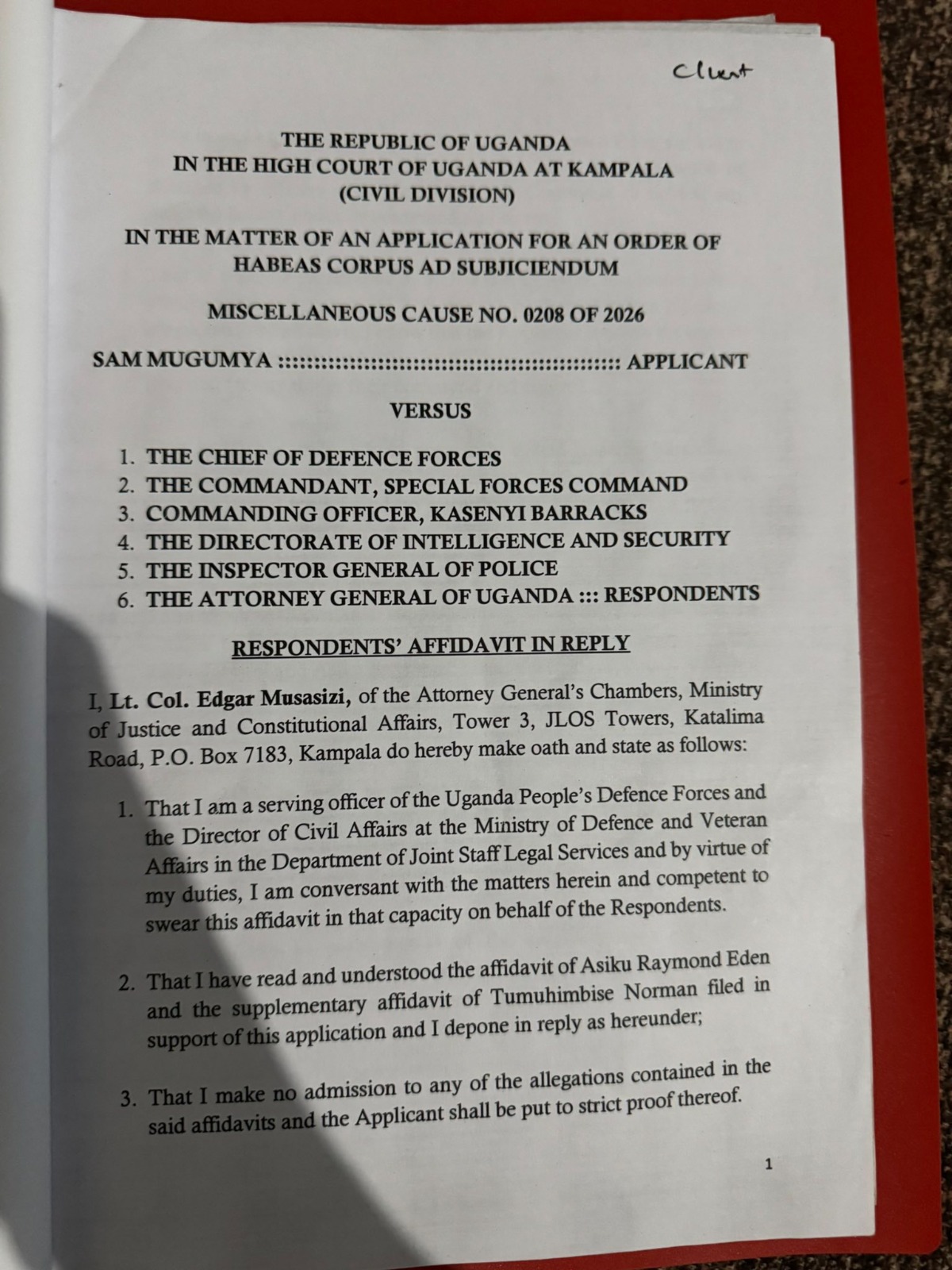
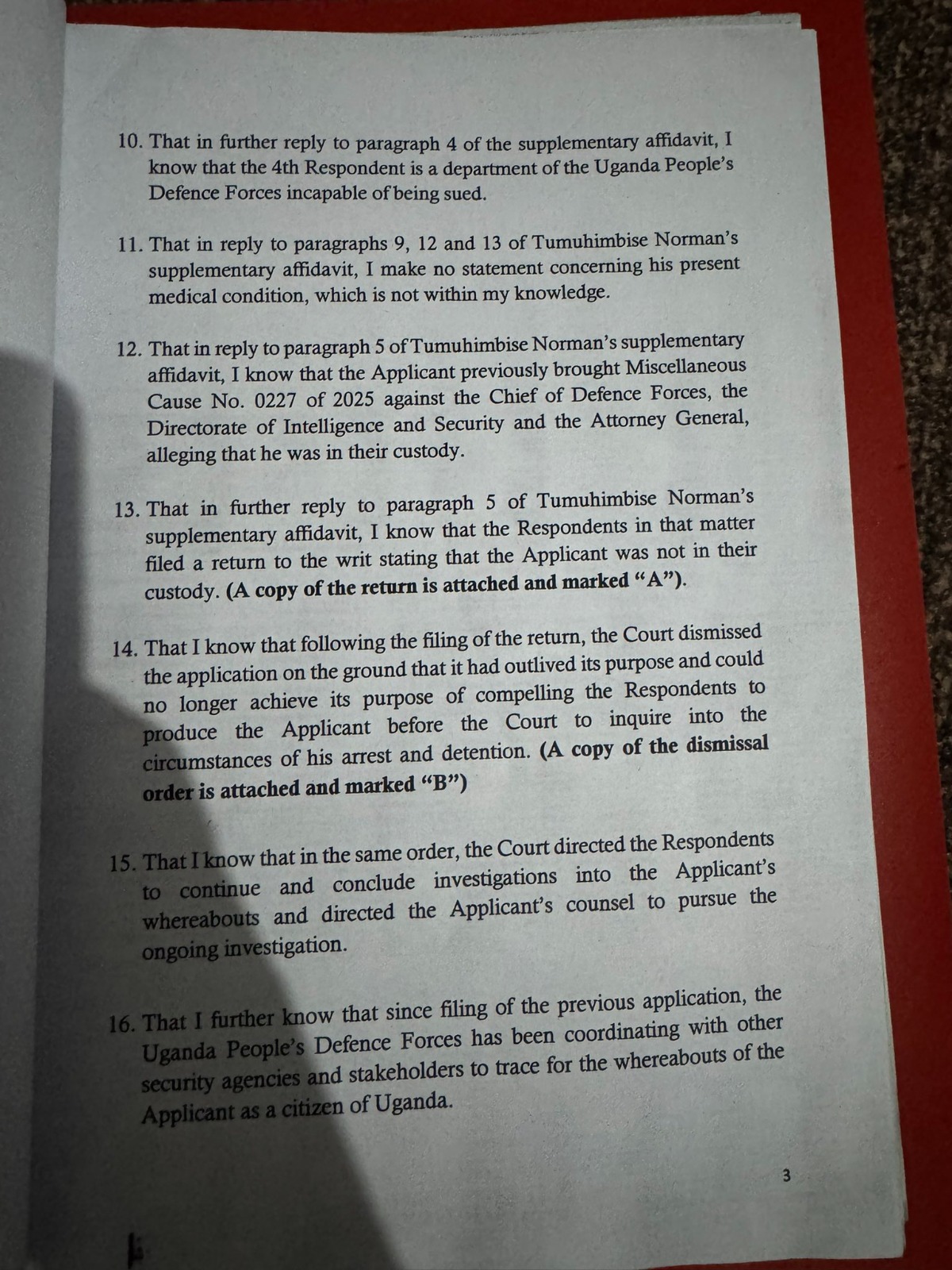
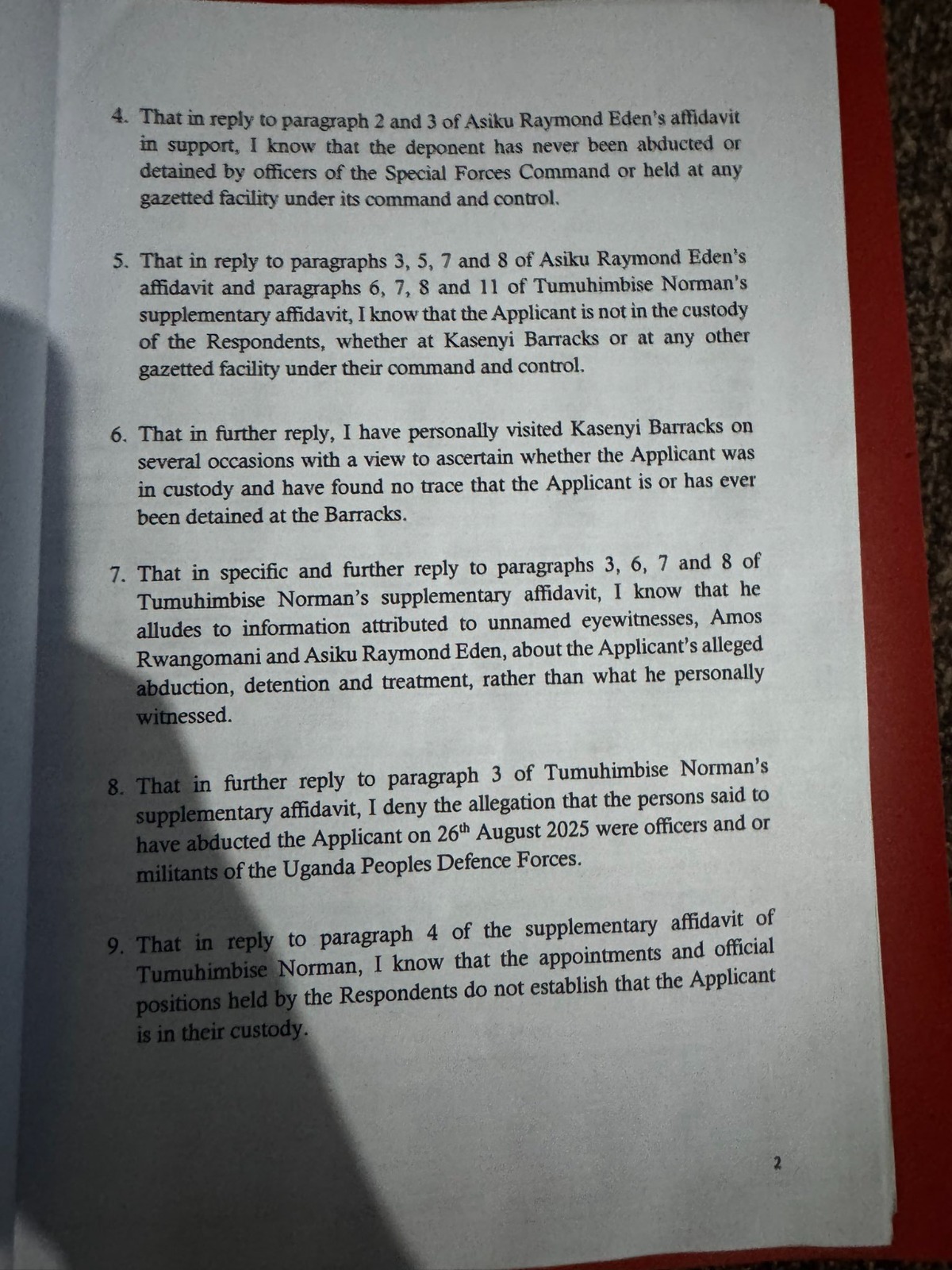
At the centre of today’s proceedings was an affidavit sworn by Lt Col Edgar Musasizi, the Director of Civil Affairs at the Ministry of Defence and Veteran Affairs, who denied that Mugumya had ever been detained by the Special Forces Command (SFC) or held in any military facility under its control.
“Sam Mugumya has never been abducted or detained by Special Forces Command or held at any gazetted facility under its control. He is not in the custody of the respondents at Kasenyi Barracks or any other facility,” Lt Col Musasizi states in the affidavit filed in response to the habeas corpus application.
The respondents in the case include the Chief of Defence Forces, SFC, the command at Kasenyi Barracks and the Directorate of Intelligence and Security, among others.
Yet the military’s denial has been met with scepticism by Mugumya’s lawyers and other people who say they have information linking him to military detention.
‘Where Is Sam Mugumya?’
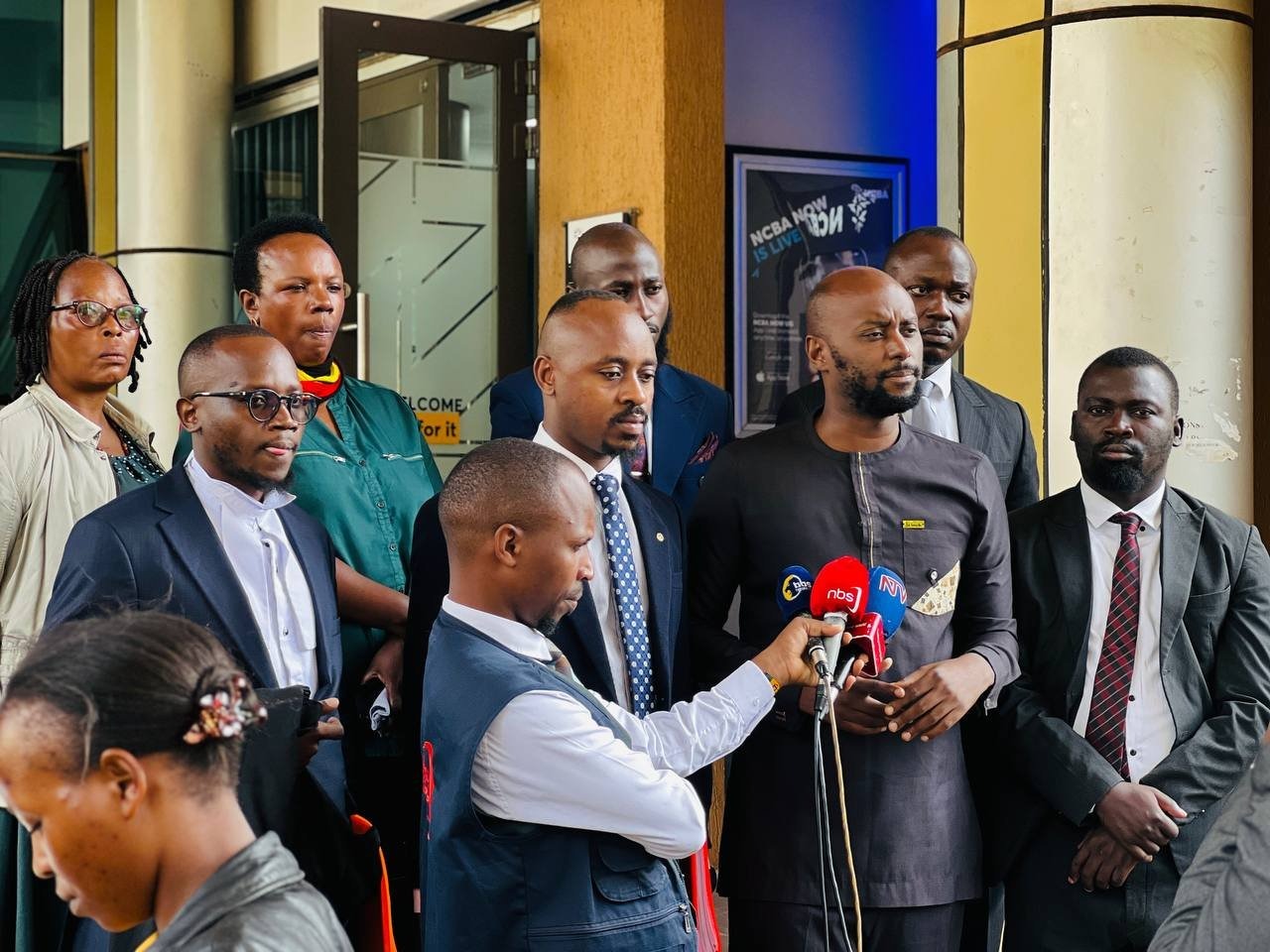
David Lewis Rubongoya, the National Unity Platform (NUP) secretary general and one of the prominent voices following the case, said the lawyers returned to the High Court expecting the State to account for Mugumya.
“This morning, we went back to the High Court for a Habeas Corpus hearing for comrade Sam Mugumya, who has been missing for one year and 2 months now,” Mr Rubongoya said in a post on X.
He said the military had sworn an affidavit denying that it was holding Mugumya despite what he described as “all evidence and previous admissions” indicating that the activist was in military custody.
“The matter has been deferred to 9th November to apparently give the state more time to do ‘further investigations’ and report back,” Mr Rubongoya said.
The adjournment means the mystery surrounding Mugumya’s whereabouts will continue for at least another two weeks.
Justice Simon Peter Kinobe, who handled Monday’s proceedings, gave the State until November 9 to conclude investigations and report back to court.
For Mugumya’s lawyers, however, the issue is not simply whether the UPDF admits to holding him. They argue that if the military does not have Mugumya, the State still has an obligation to establish where he is.
Lawyer Challenges Military Denial
Kampala lawyer Atukunda Isaac, a former secretary of the Uganda Law Society, has sharply criticised the UPDF’s response.
In a statement titled “An Affidavit in Reply to a Habeas Corpus Application Filed for Sam Mugumya Is Not Accountability: Where Is Sam Mugumya?”, Mr Atukunda said a denial of custody does not resolve the fundamental question of what happened to the missing Ugandan.
“The UPDF’s denial of custody of Sam Mugumya is not, by itself, an answer to the question of his whereabouts,” he said.
Mr Atukunda pointed to constitutional provisions governing the responsibilities of the security agencies and the protection of fundamental rights.
 He cited Article 212(a) of the Constitution, which mandates the Uganda Police Force to protect life and property, and Article 209, which sets out the UPDF’s constitutional role in preserving and defending Uganda’s sovereignty and territorial integrity.
He also invoked Articles 20(2), 23(9) and 44(d), arguing that the State has a constitutional duty to respect human rights and that the right to habeas corpus is protected.
The lawyer further referred to Uganda’s obligations under the International Covenant on Civil and Political Rights, particularly provisions concerning the protection of life, freedom from torture and arbitrary detention, and the investigation of credible allegations of enforced disappearance.
His argument goes beyond the question of whether the UPDF has Mugumya. If the military does not have him, he argues, what has the State done to find him?
“What investigations have been undertaken to establish Sam Mugumya’s whereabouts? Which security agencies have been interrogated? What concrete efforts have been made to trace him?” Mr Atukunda asked. “This is what political accountability entails,” he said.
He added that if the State neither holds Mugumya nor knows where he is, it must demonstrate that it has taken effective steps to locate him.
“A citizen’s disappearance cannot be answered with institutional denials alone. The Constitution of Uganda demands accountability, not evasion,” Mr Atukunda said.
He urged the State to either produce Mugumya before court or transparently establish what happened to him.
A Former Detainee Says: ‘I Was With Him’
The military’s denial has also collided with testimony from journalist-turned-lawyer Gideon Tugume, who says he personally shared a detention facility with Mugumya.
Tugume says he was detained at an SFC facility and that Mugumya was there when he was released.
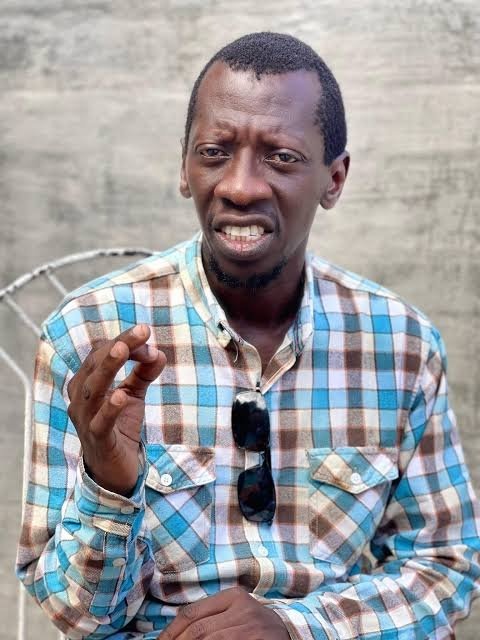
“The UPDF are playing games. I was detained with Mugumya at the SFC detention centre in Kabale zone on Entebbe Road. That’s where I left him when I got released. I am here ready to swear an affidavit,” Tugume said.
Tugume also claims he was tortured during the approximately two weeks he spent in SFC detention facilities.
If such testimony were placed formally before court and subjected to examination, it could add another layer to the already contested question of Mugumya’s whereabouts.
The dispute therefore presents the High Court with competing narratives: the UPDF says its records and detention facilities contain no trace of Mugumya, while individuals claiming direct knowledge say he was detained by military authorities.
The Chronology That Refuses To Go Away
The Mugumya saga has produced a series of developments that have kept the question alive. According to the timeline provided by those following the case, Mugumya was reportedly abducted by armed men in plain clothes at NIM Hotel in Nyamitanga, Mbarara City.
The account says he was bundled into a drone vehicle and driven away to an unknown destination. His disappearance subsequently became a subject of litigation.
On August 28, 2025, Mugumya’s lawyers appeared before the High Court demanding that the State produce him “dead or alive”.
The military’s response, according to the supplied court chronology, was that it had searched its detention facilities and records but had found no entry relating to Mugumya. Lt Col Musasizi reportedly said the UPDF had no knowledge of his whereabouts.
 Police also denied holding him. On September 5, 2025, Justice Collins Acellam reportedly directed the State and the UPDF to produce Mugumya in court or account for his whereabouts within seven days.
That order placed an additional burden on the security agencies to explain what had happened to the missing activist. But the controversy did not disappear.
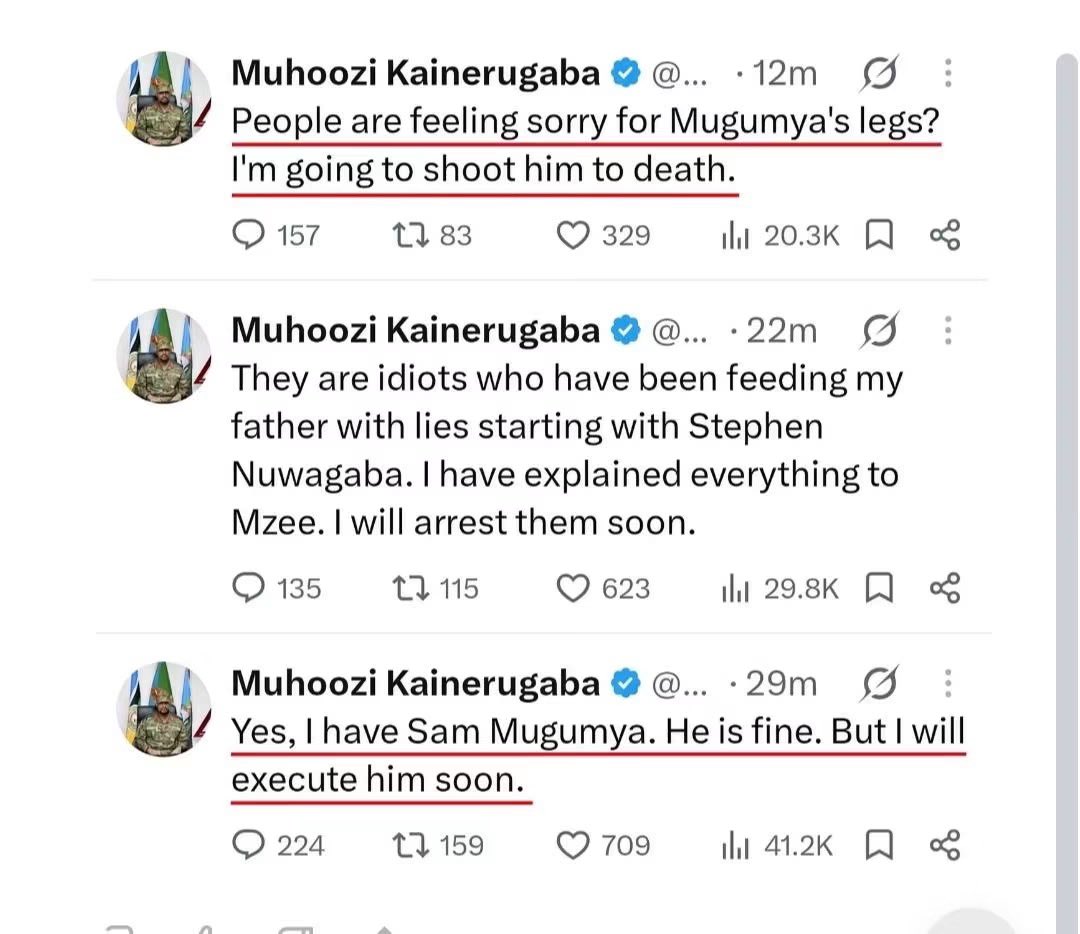
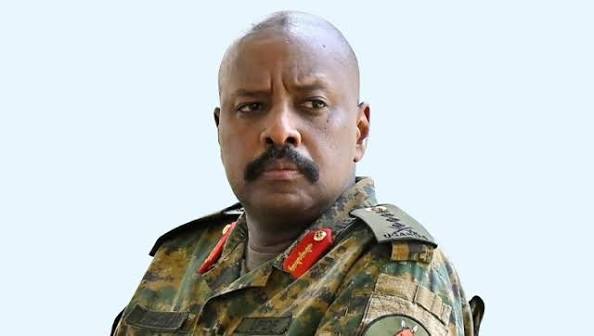
On October 2, 2026, CDF Gen Muhoozi Kainerugaba was reported to have made a striking claim that he had Mugumya and that the activist was fine, while also saying he would execute him soon.
That alleged statement, if accurately reported and contextualised, dramatically complicates the military’s present position that Mugumya has never been detained by SFC or held in a facility under its control. The question naturally follows: If the CDF said he had Mugumya, what did he mean? And if Mugumya is not in military custody, where is he? These are precisely the contradictions that lawyers want clarified through court.
The Military’s Position
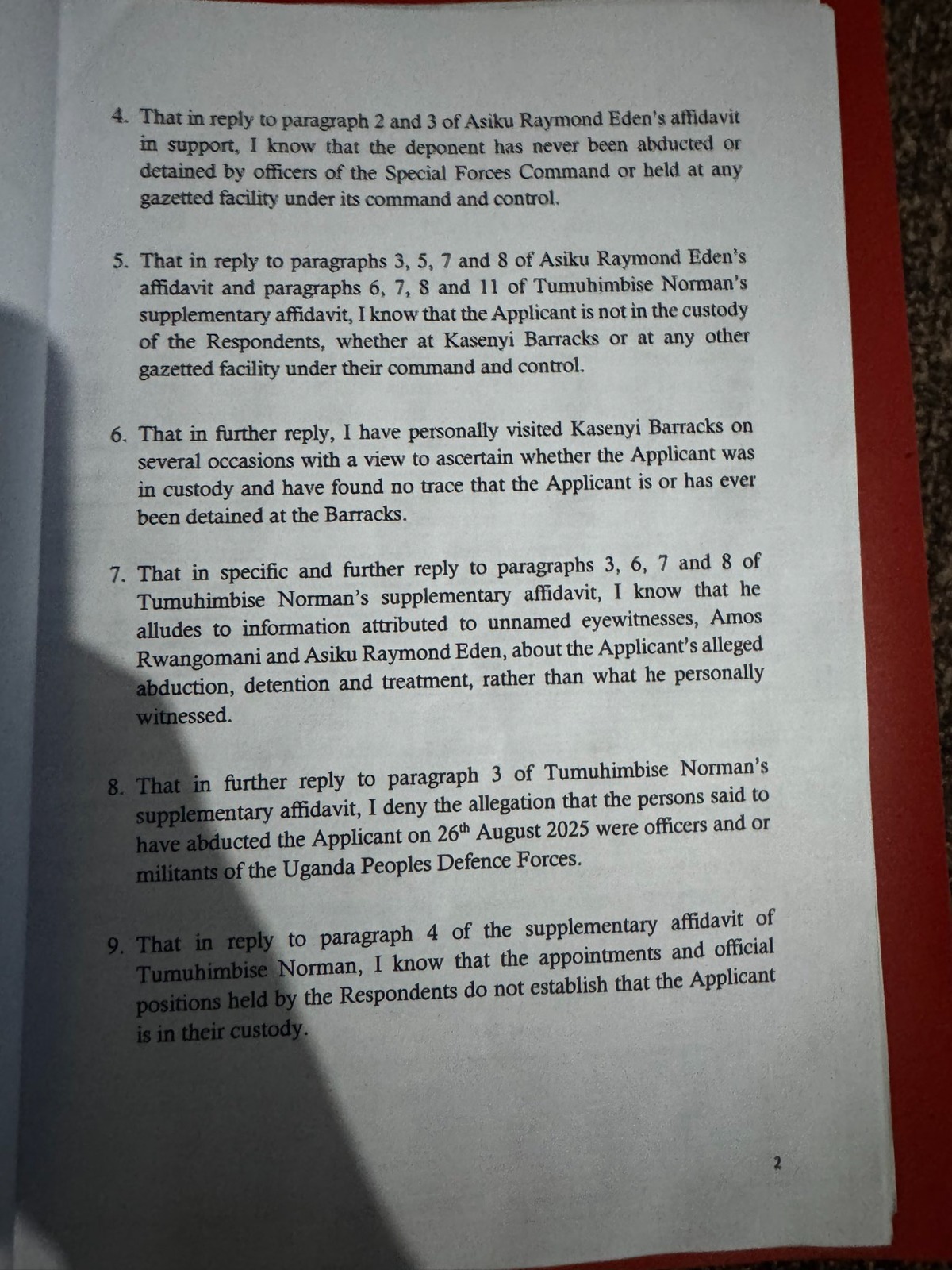 Lt Col Musasizi’s latest affidavit seeks to draw a clear line between the UPDF and Mugumya’s disappearance. The military position is categorical: Mugumya was never abducted or detained by SFC; he has not been held at a gazetted facility under SFC’s control; and he is not at Kasenyi Barracks or any other facility controlled by the respondents.
That position effectively puts the responsibility elsewhere. But for lawyers, the denial creates another question: Who, then, is responsible for establishing what happened to a Ugandan citizen who has disappeared?
Mr Atukunda argues that the State cannot simply respond with institutional denials. His position is that accountability requires investigation.
If the UPDF does not have Mugumya, then investigators should establish which agency may have taken him, whether he was transferred, whether he was released, or whether something else happened to him.
The Broader Human Rights Question
The Mugumya case has now moved beyond the fate of one opposition activist. It raises questions about the limits of security powers, the responsibility of military institutions and the effectiveness of judicial remedies when a citizen disappears amid conflicting accounts from State agencies.
Habeas corpus exists precisely because detention places a person under the control of the State. The court’s role is not merely to accept an institution’s denial but, where circumstances warrant, to establish whether a person is being unlawfully deprived of liberty.
 For the lawyers involved, therefore, the central question is simple. Where is Sam Mugumya?
If he is alive and in custody, they want him produced. If he is not in custody, they want the State to establish where he is.
If he was detained and subsequently released, the circumstances of his disappearance must be explained.
And if something happened to him while in the hands of State agents, those responsible must be identified and held accountable.
November 9: Another Deadline
For now, the High Court has given the State another opportunity. Justice Simon Peter Kinobe has deferred the matter to November 9, giving the authorities two weeks to conduct what has been described as further investigations and report back.
 For Mugumya’s family, lawyers and political colleagues, however, two more weeks represent another period of uncertainty in a disappearance that has already stretched for more than a year.
For the UPDF, the case presents an opportunity to demonstrate that its denial is supported by a comprehensive investigation rather than simply an institutional response.
And for the court, the November hearing could become a crucial moment in determining whether the State has done enough to answer the question before it.
Because the dispute is no longer simply between Mugumya’s lawyers and the UPDF. It is a question that has entered the public domain. Where is Sam Mugumya?
The lawyers say Uganda’s Constitution requires an answer. The UPDF says he is not in its custody.
Author Profile
- Charles Gazza Kodili is a seasoned journalist with over 20 years of experience in the media industry. He holds a Bachelor of Arts degree in Mass Communication. He’s currently the Chief Editor at the Investigator.
Charles can also be reached via; Tel: +256 774 108978
Email: [email protected]
Latest entries
 FeaturedOctober 26, 2026IGG DEMANDS 10 YEARS OF FUFA FINANCIAL RECORDS: From Kadiba Stadium And FUFA House To Startimes Broadcasting Deals, The Inspectorate Of Government Demands Bank Statements, Contracts And Revenue Disclosures As Football’s Financial Accountability Comes Under Scrutiny
 FeaturedOctober 26, 2026THE SHILLING ON FREE FALL: BoU Moves As Dollar Nears Shs4,500, President Museveni Has Publicly Opposed Using Reserves Simply To Make Imports Cheaper, Arguing That A Weaker Shilling Can Improve The Local-Currency Earnings Of Exporters
 FeaturedOctober 26, 2026IGG, MAO CLASH OVER KAINOBWISHO: The Inspectorate Of Government Orders Justice Minister Norbert Mao To Enforce Its Directive Against URSB Registrar General Mercy Kainobwisho And Three Senior Officials Over Alleged Corruption
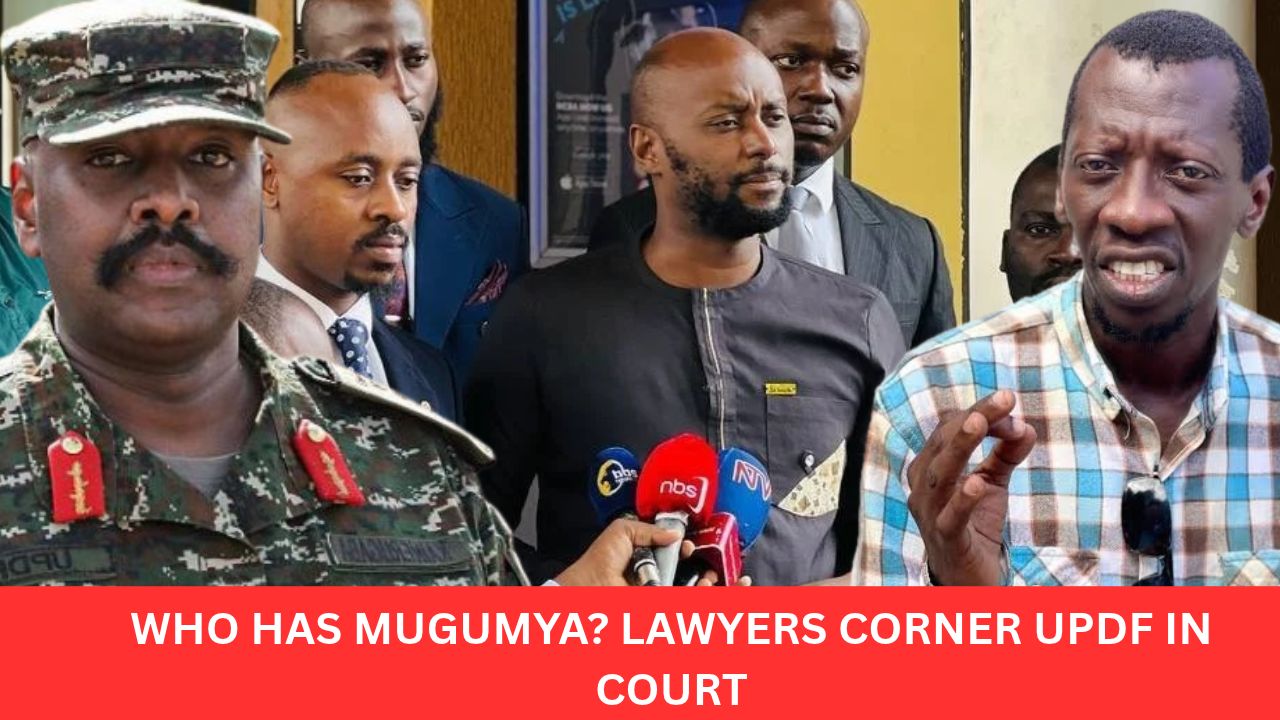 FeaturedOctober 26, 2026WHERE IS SAM MUGUMYA? UPDF Denies Holding Missing Opposition Activist As Lawyers Demand Answers, While A Former Detainee Says He Was Held With Him And Gen Muhoozi Is Reported To Have Claimed The Activist Is In His Custody