

























When President Yoweri Museveni named Dr Edward Sengonzi Damulira as his preferred candidate for Clerk to Parliament, the announcement appeared, at first glance, to be another routine reshuffle of senior civil servants.
But behind the appointment of the economist lies a potentially bigger story about the President’s confidence in a generation of technocrats he has cultivated through government institutions, particularly State House and the Ministry of Finance, Planning and Economic Development.
Damulira is not an unfamiliar face in the corridors of power. His career has taken him through the Office of the President, the Ministry of Health and, most significantly, the Ministry of Finance, where he rose through the administrative ranks to become Under Secretary and Accounting Officer, one of the most influential positions in Uganda’s public financial management system.
His nomination to take charge of Parliament’s administrative machinery could therefore represent more than a change of personnel. It raises questions about the President’s broader administrative strategy, the growing influence of Finance Ministry technocrats and the possibility of importing a financial management culture into an institution that has faced persistent questions over expenditure, accountability and internal controls.
For people familiar with the political and administrative networks surrounding the Presidency, Damulira is regarded as one of the trusted officials whose professional rise has coincided with his long association with the establishment. Some sources describe him as one of Museveni’s blue-eyed technocrats, a description that reflects the confidence he is believed to enjoy within the President’s circle.

From State House corridors to the Ministry of Finance
Damulira’s public service journey reportedly began at State House, where he worked as a relatively junior officer, including responsibilities connected to the administration of State scholarships. Sources familiar with his early career say he worked from Okello House, an administrative centre associated with State House operations, before moving through different government assignments.
His early exposure to the Presidency reportedly gave him an opportunity to understand the machinery of government, the management of presidential programmes and the administrative demands of public service.
One of the responsibilities associated with his early State House career was the handling of government scholarships, an assignment that required coordination, administrative follow-up and engagement with beneficiaries of government-supported education programmes.
However, his professional progression was not confined to the Presidency.
He subsequently served in the Ministry of Health, where he occupied a senior administrative position, before returning to the central government machinery and eventually building a career at the Ministry of Finance.
A profile published when he was appointed Under Secretary in 2020 indicates that Damulira had previously served as Principal Assistant Secretary at the Ministry of Finance from December 2017. He had also served as Principal Assistant Secretary in the Ministry of Health and the Office of the President, alongside an earlier assignment as Private Secretary – Social and Welfare to the President.
His appointment as Under Secretary and Accounting Officer at Finance took effect on October 1, 2020, replacing Betty Kasimbazi, who had retired from public service. The elevation was an important turning point in his career.
As Under Secretary and Accounting Officer, Damulira became responsible for overseeing administrative and financial management functions within one of the most consequential government ministries.
The position placed him at the centre of public expenditure management, budget implementation, financial accountability and the coordination of government resources.
It also meant working within the technical leadership structure of a ministry responsible for national budgeting, economic planning, resource mobilisation and public financial management.
His career progression illustrates the value of institutional experience in Uganda’s public service, where officers who understand the internal workings of government can gradually rise to positions of considerable influence.

The economist behind the administrator
Damulira’s professional background is anchored in economics. He holds a PhD in Economics, a Master’s degree in Economic Policy and Planning and a Bachelor’s degree in Quantitative Economics, all from Makerere University. He also undertook an Administration Officers’ Law Course at the Law Development Centre.
His academic training combines economic analysis, public administration and the legal understanding necessary for managing government institutions.
His professional profile identifies accounting, project planning and management, policy analysis, economic management, resource economics and environmental economics among his areas of expertise.
These qualifications have helped position him as a technocrat whose career has been built around the intersection of public administration and economic management.
In 2023, Damulira was appointed a non-executive director of New Vision Printing and Publishing Company Limited, the company listed on the Uganda Securities Exchange.
The appointment notification described him as the Under Secretary and Accounting Officer at the Ministry of Finance, Planning and Economic Development, with experience in financial management, policy analysis and project planning.
His involvement in corporate governance expanded his exposure beyond the traditional public service environment. He subsequently became associated with Vision Group’s board leadership, adding another dimension to his professional profile. This combination of government administration, economic training and corporate governance is likely to be relevant in the parliamentary office he has been nominated to occupy.
A family history intertwined with the liberation establishment
Beyond his professional qualifications, Damulira’s family background is another dimension attracting attention among people familiar with the political networks surrounding the Presidency. According to sources familiar with the family, his late father, Vitali Damulira, was among the financial contributors who supported the National Resistance Army’s bush war during the struggle that brought Museveni to power in 1986.
The relationship is described by people familiar with the family’s history as extending beyond ordinary political association.
Museveni is said to have maintained a close relationship with the Damulira family, with some accounts describing him as one of the bakuza — caretakers or guardians — within the family. The family’s connections also extend into the security establishment.
Damulira’s brother, Colonel Seruyange Damulira, is identified by sources as serving in the intelligence structure of the Special Forces Command (SFC), while another brother is said to hold the rank of Lieutenant Colonel in the Air Force.
These family connections have generated interest in the political and institutional environment within which Damulira has built his career.
However, family relationships should not automatically be interpreted as evidence of political patronage or preferential treatment. His academic qualifications and documented progression through senior public service positions remain important elements of his professional record.
The question is how these personal connections, institutional experience and presidential confidence intersect in the latest appointment.

The Finance Ministry network moving into Parliament
Perhaps the most consequential aspect of Damulira’s proposed deployment is the possibility that Parliament could become the next destination for a group of financial and economic technocrats associated with his former institutional environment.
Sources familiar with the developments describe a quiet effort to assemble experienced finance and economic personnel around the parliamentary administration, with the objective of strengthening financial controls and restoring administrative discipline.
Among the names mentioned is David Mugisha, an economist associated with parliamentary financial and economic administration.
The wider picture being described by sources is that experienced officers with backgrounds in budgeting, financial management, economic analysis and public expenditure administration could play an increasingly important role in Parliament.
Their anticipated contribution would be to strengthen the technical side of parliamentary administration, particularly expenditure monitoring, resource allocation and financial reporting.
If the arrangement takes shape as described, it could amount to an administrative reorganisation in which financial expertise becomes a central instrument for managing Parliament’s affairs.
The significance is that the Clerk’s office is not merely a secretariat handling parliamentary correspondence.
It is the administrative nerve centre of the Parliamentary Service, responsible for coordinating institutional operations, supervising staff and ensuring that the legislature has the resources and administrative support required to conduct its business.
The Clerk also serves as the accounting officer, placing the office at the centre of financial accountability.
Damulira’s previous experience at Finance therefore gives him a professional background directly relevant to these responsibilities.
Nevertheless, the identities, transfer arrangements and precise responsibilities of the alleged incoming team require further documentary confirmation.
Why Parliament needs a financial reset
The timing of Damulira’s nomination is particularly significant because Parliament has been struggling with questions about financial accountability and the management of public resources.
In 2024, revelations surrounding the controversial Shs1.7 billion service awards to four parliamentary commissioners generated public outrage and renewed debate about expenditure controls within the legislature.
The controversy was part of a wider public examination of parliamentary spending, including allegations concerning travel allowances, community outreach expenditure and the use of staff bank accounts in handling institutional funds.
The controversy attracted scrutiny from civil society organisations, opposition politicians and sections of the public, who questioned whether Parliament was adequately enforcing the financial standards it was expected to demand from other government institutions.
It should be remembered that at the height of the parliamentary financial scandal, the High Court directed the Secretary to the Treasury to institute disciplinary proceedings against outgoing Clerk Adolf Mwesige over his role in the service award controversy.
These developments have left Parliament facing an institutional credibility challenge.
The legislature is constitutionally mandated to scrutinise government expenditure, hold public officials accountable and examine reports from oversight institutions.
Its ability to perform these functions is inevitably affected when its own financial administration comes under sustained public scrutiny.
Damulira’s proposed arrival therefore presents an opportunity to strengthen internal financial controls.
His experience at Finance could help introduce more rigorous expenditure planning, improved financial reporting, stronger budget monitoring and tighter compliance with public financial management regulations.
However, the real test will be whether such changes are applied consistently, including to the spending decisions of powerful parliamentary officials.
Financial discipline cannot simply be imposed on junior administrators while politically influential officeholders remain insulated from scrutiny.
Museveni’s breed of technocrats
Damulira’s nomination also fits into a broader pattern in which Museveni has increasingly relied on technocrats with extensive experience in the public service to occupy strategic administrative positions.
The President’s November 8, announcement named 13 individuals for senior government positions, including 12 Permanent Secretary positions and Damulira for the Office of the Clerk to Parliament.
The changes affect several important government institutions, from the Office of the Prime Minister and the Inspectorate of Government to the ministries responsible for water, agriculture, defence, foreign affairs and public service.
The reshuffle appears designed to strengthen the administrative leadership of government institutions and improve the implementation of government programmes. Damulira’s selection is particularly interesting because Parliament is not an ordinary ministry.
It is an independent arm of government whose administrative machinery must support the legislative and oversight functions of elected representatives.
The appointment therefore places a senior technocrat with a long history in the executive branch at the administrative helm of the legislature.
It also raises questions about the balance between executive influence and parliamentary institutional independence.
The Clerk must serve the institution, not simply the political interests of the appointing authority.
For Damulira, the challenge will be to demonstrate that his loyalty to public service and professional obligations can coexist with the independence Parliament requires to discharge its constitutional mandate.
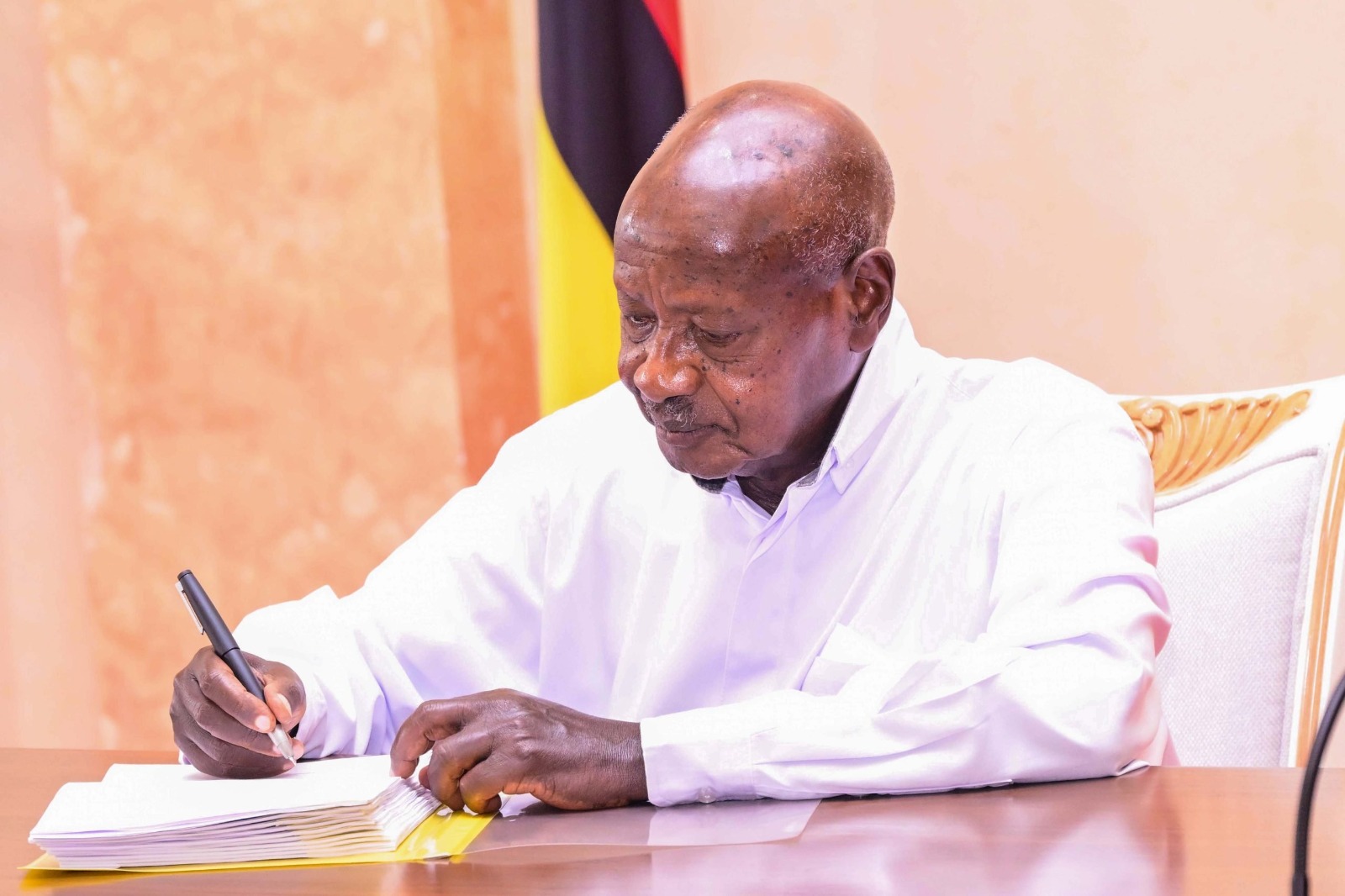
The test awaiting the new Clerk
Although Museveni announced Damulira’s nomination, the President’s communication directed the Public Service Commission to assess the suitability of the nominees and advise him accordingly.
The process must therefore be completed before the proposed appointments are formalised. If confirmed, Damulira will inherit an institution that requires more than routine administrative management.
He will have to deal with competing demands from the Speaker’s office, parliamentary commissioners, Members of Parliament, committee leadership and the Parliamentary Service workforce.
He will also face the challenge of ensuring that public resources are managed transparently in an institution where financial decisions can carry enormous political consequences.
His Finance Ministry background provides him with the technical experience to undertake that assignment.
But the bigger question is whether he can translate the financial discipline associated with the Treasury into an administrative culture that respects institutional independence, transparency and accountability. For Museveni, Damulira’s nomination appears to reflect confidence in a technocrat whose career has developed within the machinery of government.
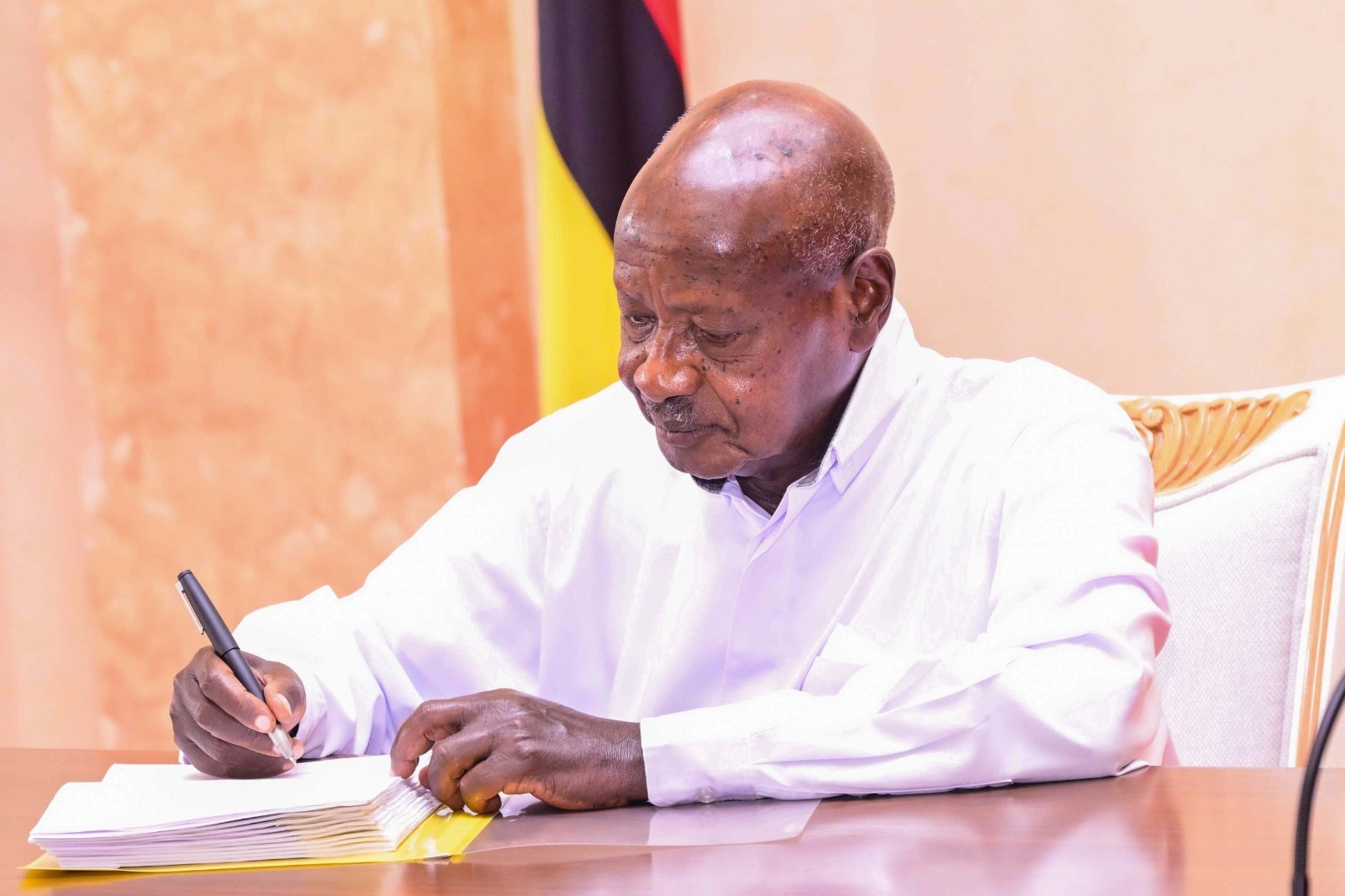 For Parliament, it could mark the beginning of a new administrative chapter, particularly if the anticipated strengthening of its financial and economic management structures materialises.
And for Damulira himself, the move from the Ministry of Finance to Parliament represents one of the most consequential assignments of his public service career.
His journey from the relatively junior administrative corridors of State House to the position of Under Secretary and Accounting Officer at Finance has been a steady climb through the government establishment.
Now, the proposed move to Parliament places him at the centre of a different challenge: proving that the financial discipline he was entrusted to oversee at the Treasury can be extended to the institution constitutionally mandated to hold the government accountable.
Ultimately, the story of Damulira’s rise is not simply about an economist getting a bigger office. It is about the movement of trusted technocrats, the influence of presidential networks and the future of financial accountability in Uganda’s Parliament.
Author Profile

- Charles Gazza Kodili is a seasoned journalist with over 20 years of experience in the media industry. He holds a Bachelor of Arts degree in Mass Communication. He’s currently the Chief Editor at the Investigator.
Charles can also be reached via; Tel: +256 774 108978
Email: [email protected]
Latest entries
 BusinessNovember 9, 2026EQUITY BANK vs DEI PHARMACEUTICALS: Inside the Muwema-Equity Bank Showdown Over Magoola’s Impending Property Auction
 FeaturedNovember 9, 2026THE PRESIDENT’S TRUSTED ECONOMIST: HOW DAMULIRA ROSE FROM STATE HOUSE TO PARLIAMENT: From Managing State House Scholarships To Becoming Finance Ministry Under Secretary And Accounting Officer, Dr Edward Sengonzi Damulira’s Appointment As Clerk To Parliament Signals The Rise Of A Trusted Presidential Technocrat
 FeaturedNovember 6, 2026FIVE GENERALS, ONE POWERFUL SEAT: WHO WILL SUCCEED MUHOOZI? With Gen Muhoozi Kainerugaba Announcing His Intention To Leave The CDF Position, Five Senior Commanders Are Emerging In The Succession Conversation, With Kayanja Muhanga And David Mugisha Tipped As Leading Contenders
 FeaturedNovember 6, 2026THE REVOLUTION EATS ITS OWN: OPONDO CHALLENGES THE FIRST SON: In An Extraordinary Confrontation, A Man Who Has Spent Decades Defending President Museveni Turns The Tables On His Son, Mocking A Demand For An Apology And Daring The Political Establishment To Confront The Implications