





















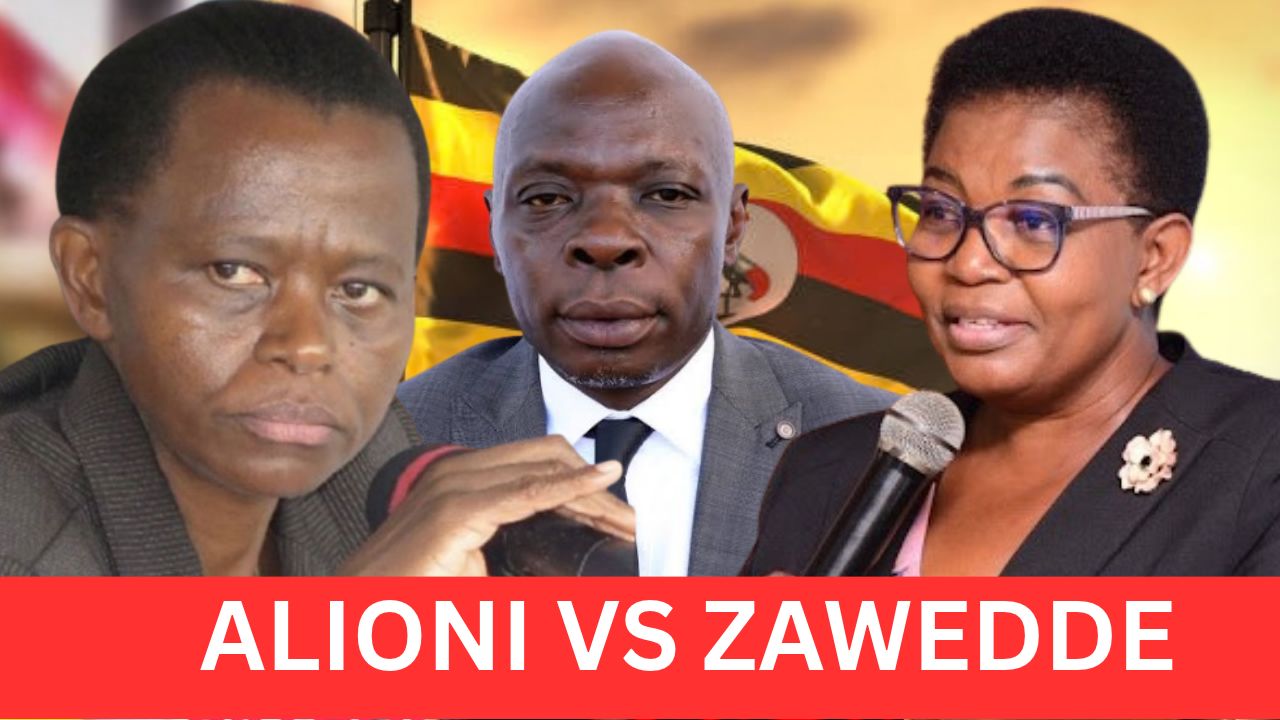
The power struggle at the Ministry of ICT escalated on Thursday evening when State Minister Alioni Yorke Odria confronted Dr Aminah Zawedde, who reportedly continued exercising Permanent Secretary powers more than two weeks after President Museveni transferred her.
The confrontation, which reportedly took place at about 6pm, marked a dramatic escalation in an increasingly bitter administrative standoff that has exposed divisions within one of Uganda’s strategic government ministries, raised questions about the authority of newly appointed accounting officers and triggered fresh concerns over billions of shillings in public expenditure.
Alioni, who had just emerged from a multi-agency meeting he was chairing, reportedly arrived at Zawedde’s office accompanied by several ministry directors. What followed was an uncomfortable confrontation in which the minister questioned why the outgoing Permanent Secretary was still occupying the premises and allegedly exercising powers attached to an office from which she had already been transferred by President Yoweri Museveni.
“What are you doing here?” Allioni asked. He reminded her that the President had already redeployed her and questioned why she had not reported to her new duty station. The minister’s intervention reportedly culminated in Zawedde vacating the office, bringing to a standoff that had been building since the beginning of November.
The confrontation was not merely about occupying an office. At the centre of the dispute was the question of who had legitimate authority to control the ministry’s administration, approve expenditure, commit government resources and exercise the powers of Permanent Secretary and Accounting Officer following the President’s decision to reshuffle the ministry’s top leadership.
And with reports that transactions worth Shs12.2 billion had been approved following Zawedde’s transfer, the dispute had taken on a potentially explosive financial dimension.

Museveni’s transfer triggers administrative war
The troubles began on November 9, 2026, when President Museveni announced a redeployment affecting the top administrative leadership of the Ministry of ICT and National Guidance.
Under the changes, Dr Zawedde was transferred to the Office of the Prime Minister (OPM), where she was expected to take up responsibilities relating to coordination.
In her place, Museveni appointed Prof Stephen Akandwanaho as the new Permanent Secretary, effectively ending Zawedde’s tenure at the ICT ministry, where she had served since July 2021.
The presidential directive was expected to facilitate a smooth transition, with Zawedde handing over the ministry’s administrative responsibilities, official documents, financial records and other government property to her successor.
However, more than two weeks after the announcement, the transition had reportedly not been completed, with Zawedde continuing to occupy the Permanent Secretary’s office and undertake responsibilities associated with the position.
The situation became more complicated when Head of Public Service and Secretary to Cabinet Lucy Nakyobe intervened. In a letter dated November 18, Nakyobe directed Zawedde to report to her new duty station, effectively reinforcing the President’s redeployment decision and removing any ambiguity about where the transferred Permanent Secretary was expected to serve.
The directive was significant because Nakyobe is the country’s most senior public service administrator, responsible for coordinating government appointments, transfers and administrative arrangements within the public service. Her intervention was intended to ensure that the presidential changes were implemented without unnecessary administrative disruption.
But the apparent failure to complete the handover raised questions about whether Zawedde was resisting the transfer, whether there were outstanding administrative issues or whether the ministry’s leadership transition had become entangled in a dispute over financial and procurement decisions.

Kasule Lumumba raises alarm over Shs12.2b transactions
Even before Thursday’s confrontation, the dispute had attracted the attention of the senior Minister of ICT and National Guidance, Justine Kasule Lumumba, who reportedly became concerned about Zawedde’s continued exercise of the Permanent Secretary’s responsibilities.
In a strongly worded letter dated November 26 addressed to the Minister of Finance, Kasule Lumumba raised concerns about the continued involvement of the transferred Permanent Secretary in financial transactions and other administrative decisions at the ministry.
The senior minister specifically noted that Zawedde was still undertaking the functions and responsibilities of the Permanent Secretary, including those of the Accounting Officer, despite the presidential redeployment and the appointment of a successor. Kasule Lumumba’s intervention suggested that the dispute had moved beyond an ordinary disagreement over the mechanics of handing over office to a more serious question of financial accountability.
She asked the Ministry of Finance to stop recognising financial instructions and commitments originating from Zawedde in her purported capacity as Permanent Secretary and Accounting Officer.
In her letter, she requested that the Ministry of Finance “honour no financial transactions, payment instructions, commitments or other financial instruments initiated, authorised or endorsed by Dr Aminah Zawedde” in that capacity.
The request was aimed at preventing what the minister considered potentially unauthorised financial commitments and protecting government resources during the leadership transition.
Kasule Lumumba further emphasised the need to safeguard public resources and ensure compliance with public financial management regulations.
Her intervention effectively placed the Ministry of Finance at the centre of the dispute, requiring it to establish which officials had legitimate authority to initiate and approve transactions on behalf of the ICT ministry. It also raised the prospect that financial transactions approved during the contested transition period could face additional scrutiny.
Shs12.2b payment controversy
The most contentious aspect of the standoff revolves around reports that Zawedde approved payments amounting to approximately Shs12.2 billion after her redeployment by President Museveni.
According to information circulating within government circles, about Shs10 billion was reportedly transferred on Thursday, November 26, the same day Kasule Lumumba wrote to the Ministry of Finance seeking intervention.
The payments were reportedly associated with pension obligations and legal fees, although the circumstances surrounding the approvals, the beneficiaries and the precise authorisation procedures remain unclear. The timing of the transactions has intensified concerns within the ministry, particularly given that a new Permanent Secretary had already been appointed.
The central question is whether Zawedde retained the legal and administrative authority to approve such transactions after the President had transferred her and appointed a replacement.
Under Uganda’s public financial management framework, Permanent Secretaries serve as Accounting Officers for their respective ministries and are responsible for ensuring that public funds are committed and spent in accordance with approved budgets, procurement procedures and applicable financial regulations.
The Accounting Officer’s position carries significant responsibilities, including accountability for expenditure, financial controls, procurement decisions and the proper management of public resources.
Consequently, uncertainty over who was exercising those powers at the ICT ministry created an administrative risk that could potentially affect government payments, contractual obligations and ongoing projects.
Kasule Lumumba’s letter appears to have been intended to prevent the Ministry of Finance from processing transactions whose authorisation could subsequently be challenged.
It remains unclear whether the Ministry of Finance acted on her request or whether the reported Shs10 billion transfer had been completed before the concerns were formally communicated. Neither the ministry nor the Finance authorities had publicly clarified the status of the disputed payments by November 28.
Allioni takes possession of controversial documents
The Thursday confrontation also reportedly involved the handling of several signed and unsigned framework contract documents that had become a source of concern during the leadership transition.
Sources said Alioni took possession of some of the documents during his intervention, including framework contracts whose status and circumstances of approval had reportedly raised questions among officials.
The development added another dimension to the dispute, suggesting that the disagreement was not restricted to the transfer of administrative authority but also involved the control and management of procurement documentation. Framework contracts are particularly important in government procurement because they establish the terms under which public entities may obtain goods, services and works over a specified period.
Depending on their value and nature, such arrangements can create substantial financial obligations for government and require strict compliance with procurement and public financial management procedures. The seizure or securing of the documents, as described by sources, therefore raises questions about the contracts involved, whether they had received all the necessary approvals and whether any financial commitments had been made before the new Permanent Secretary assumed office. However, no detailed public explanation had emerged regarding the specific framework contracts reportedly taken by Alioni.
The ministry will also need to establish whether the documents were part of routine procurement processes or whether they were linked to decisions made during the disputed period.
Shs79.17b procurement scrutiny adds pressure
The controversy comes at a particularly sensitive time for the Ministry of ICT, which is already facing parliamentary scrutiny over its management of government technology projects and procurement expenditure. Parliament’s Public Accounts Committee has been examining contracts worth approximately Shs79.17 billion relating to the development, acquisition and upgrading of government ICT systems over a three-year period.
The scrutiny has focused on various digital infrastructure projects, including incomplete works, outstanding contractual obligations and questions surrounding the implementation of government technology initiatives. The parliamentary investigations have placed additional pressure on the ministry’s leadership to demonstrate transparency, accountability and prudent management of public resources.
Against this background, the dispute involving Zawedde, Alioni and Kasule Lumumba could complicate efforts to establish responsibility for contracts and financial decisions undertaken during the previous administration.
The appointment of Prof Akandwanaho was expected to usher in a new administrative chapter, but the unresolved handover has created uncertainty over the management of ongoing projects and the accountability of officials involved in previous transactions. It also raises questions about whether the incoming Permanent Secretary has received all the necessary records to assume full responsibility for the ministry’s operations.
For a ministry at the centre of Uganda’s digital transformation agenda, any prolonged leadership dispute risks disrupting critical programmes, procurement processes and service delivery.

Zawedde’s four-year tenure
Zawedde’s departure marks the end of a significant chapter at the Ministry of ICT, where she served as Permanent Secretary from July 2021. She made history as the first woman to occupy the position, overseeing a period during which government intensified efforts to expand digital literacy, promote technology-driven employment and position Uganda as a destination for information technology-enabled services. Among the initiatives associated with her tenure were national ICT job fairs and digital skills training programmes that reportedly benefited more than 160,000 citizens.
She also oversaw the launch of the National Outsourcing Policy, an ambitious government initiative targeting the creation of 150,000 jobs by 2030 through the expansion of business process outsourcing and other technology-enabled services.
The policy was intended to position Uganda to benefit from the growing global demand for outsourced services, particularly in areas such as customer support, information technology, digital operations and business services.
Her contribution to the ICT sector was also recognised in 2023 when she received a national medal for distinguished service in ICT. However, her departure is now being overshadowed by the circumstances surrounding the presidential transfer and the subsequent confrontation over her continued occupation of office.
The controversy also places her administrative legacy under scrutiny, particularly regarding procurement decisions, outstanding government contracts and the financial transactions reportedly approved after her redeployment.
Who has the final authority?
The confrontation has exposed a broader weakness in the implementation of senior public service transfers, particularly where the outgoing officeholder remains in control of sensitive administrative and financial responsibilities.
Presidential appointments and redeployments are binding administrative decisions that require the affected officers to report to their designated duty stations and facilitate an orderly transition. Nakyobe’s November 18 communication was an additional administrative instruction intended to ensure that Zawedde complied with the redeployment.
The appointment of Prof Akandwanaho simultaneously established the incoming leadership, making the continued exercise of Permanent Secretary functions by the outgoing officeholder a matter requiring urgent clarification.
The dispute also highlights the importance of ensuring that the transfer of accounting officer responsibilities is properly documented, with clear communication to the Ministry of Finance and other government institutions responsible for processing payments.
Without such clarity, government risks a situation in which different officials issue competing instructions, potentially exposing public funds to unauthorised commitments or creating uncertainty over accountability.

Zawedde’s silence as government awaits answers
As of Saturday, the full circumstances surrounding the confrontation and the disputed financial transactions remained unclear. Efforts by this publication to obtain a response from Zawedde had not yielded results by the time of publication.
It was also unclear whether she had formally completed the handover to Prof Akandwanaho, whether all ministry records and procurement documents had been transferred, and whether the Ministry of Finance had implemented Kasule Lumumba’s request.
The Ministry of ICT will also face pressure to clarify the status of the framework contracts reportedly taken by Alioni and whether any commitments arising from them were made in accordance with the law.
For now, the confrontation has exposed an extraordinary power struggle within a government ministry where the President had already made his decision on who should occupy the top administrative office. What was expected to be a routine transfer of a Permanent Secretary has instead turned into a public test of administrative authority, financial accountability and discipline within the public service.
With Kasule Lumumba raising the alarm over financial transactions, Nakyobe directing the transferred official to report to her new station and Alioni personally intervening to enforce the change, the pressure is now on the Ministry of Finance and the Office of the President to establish who was legally authorised to exercise the powers of Permanent Secretary during the disputed period.
Ultimately, the biggest question is not simply why Zawedde remained in office after her transfer, but whether government financial decisions worth billions of shillings were made under the authority of an official who had already been redeployed by the President.
Author Profile

- Charles Gazza Kodili is a seasoned journalist with over 20 years of experience in the media industry. He holds a Bachelor of Arts degree in Mass Communication. He’s currently the Chief Editor at the Investigator.
Charles can also be reached via; Tel: +256 774 108978
Email: [email protected]
Latest entries
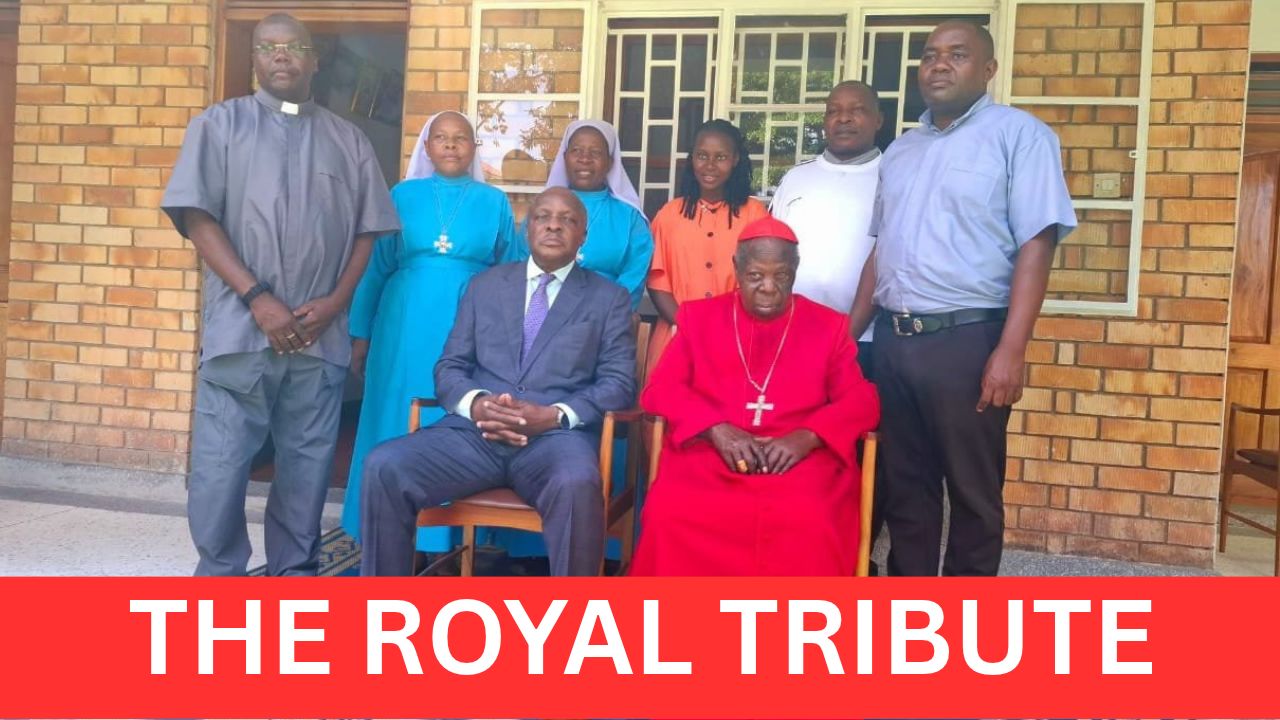 FeaturedNovember 28, 2026KABAKA MUTEBI HONOURS CARDINAL WAMALA AHEAD OF 100TH BIRTHDAY: The Kabaka Visits The Retired Archbishop Of Kampala At His Nsambya Residence As Uganda Prepares To Celebrate The Catholic Prelate’s Historic Centenary On December 15
 FeaturedNovember 28, 2026DR ERIC ADRIKO THE MAN WHO OPENED DOORS FOR OTHERS: From Founding Makerere University’s Faculty of Technology In 1970 To Serving In Cabinet, Leading Two Universities And Building A Business Empire, The Celebrated Engineer Leaves Behind A Remarkable National Legacy
 FeaturedNovember 28, 2026WHY ALIONI FINALLY STORMED ZAWEDDE’S OFFICE: More Than Two Weeks After Museveni Transferred Her, Aminah Zawedde Was Still Reportedly Exercising Permanent Secretary Powers, Triggering A Dramatic Showdown With Her Minister
 FeaturedNovember 28, 2026WHY SEMAKKADDE WANTS TO RULE THE BAR AGAIN: Isaac Ssemakadde Seeks Re-Election Despite Spending Much Of His First Term Abroad Following His Contempt Conviction, As Lawyers Prepare For A Fiercely Contested December Poll