





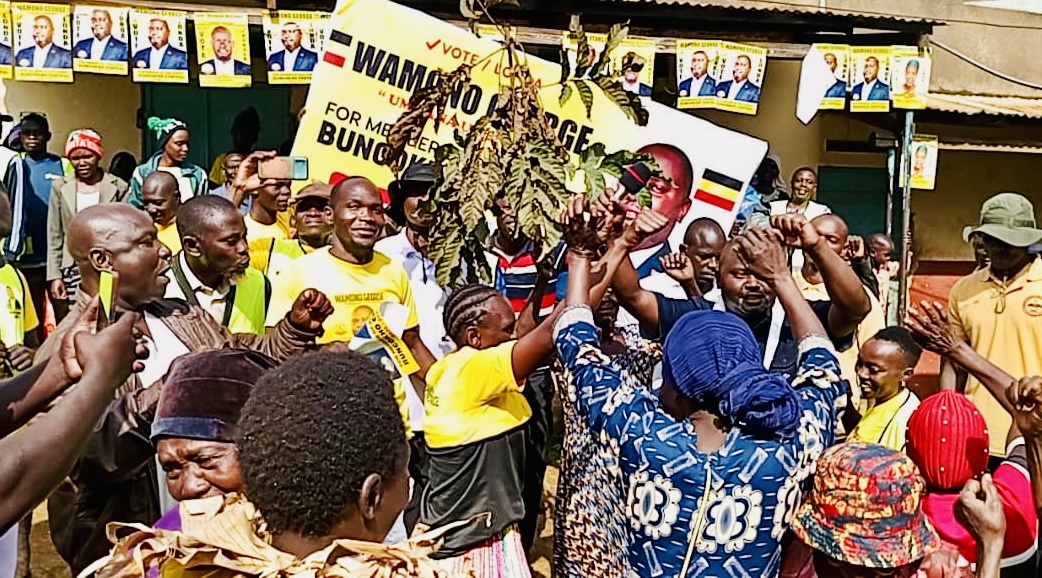
Last week Ugandans were gripped with dramatic news surrounding the hullabaloo that followed the NRM party primaries that were gripped with massive rigging, violence, injuries and death of some unlucky participants.
Although the elections were conducted manually on a head-count basis, where the voters had to line-up behind their preferred candidates, some shrewd contestants found a way to rig their way to victory. The most notorious method used to rig was through the importation of voters from other constituencies, the use of underage voters and out right dishing out of money to the voters.
In the end the exercise ended with unwarranted injuries and death of many Ugandans culminating into hundreds of petitions at the table of Prof Tanga Odoi’s s NRM tribunal. At the time of penning this article, some members of the ruling party had vowed to run as independents in the forthcoming 2026 elections.
This scenario, as dramatic as it turned out, prompted questions as to whether it is, or was worth it to undergo a process as tedious as it looks! From a strategic point of view, some of us believe that its completely unnecessary for someone to seek for a party flag by contesting in a party primary. Why is it so? Because it turns out that the party flag comes at a huge cost.
We witnessed that in some hotly contested constituencies, the contestants spent billions to emerge victorious. For instance, in some hotly contested areas like Rakai, one of the contestants, Hon Kinyamatama unleashed a lot of practical financial power that overwhelmed retired Maj Gen Elly Kayanja to resort to lamentations.
Gen Elly Kayanja questioned where the young legislator got the money to overwhelm the whole of Rakai – with reports that over 20 drones kept ferrying Kinyamatama supporters from one polling station to another. Kayanja ended up throwing tantrums, where he even displayed the leg injuries he suffered from the NRA bush war 40 years go.
But it’s practically obvious that his lamentations were misplaced because the NRA primaries were not necessarily conclusive to put anyone in Parliament. They were equivalent to a stag party that takes place before the ultimate wedding. Party primaries are like the semifinals of a two legged final. Losing the first leg doesn’t necessarily tantamount to the loss of the whole war, but rather a loss of the battle.
This means that even a defeated candidate can redeem themselves in the final election. This calls for a logical question; why waste time and resources in the party primaries very well knowing that they cannot send a given candidate to parliament? A strategic person with a refined mind would be right to skip them and prepare for the final elections. Why?
The Exorbitant Costs
Because first, they are very expensive for nothing, given the fact that they have no resultant effect of putting the contestant in the desired office. There are reports that some naive Ugandans pay millions to get the flags for NRM and NUP parties. One member of parliament called Hon Nsubuga revealed that at NUP, the aspiring candidates pay not less than one hundred million shillings to win the flag. In other words, the flag goes to the highest bidder. Yet a logical person should or would simply use that dime to run the campaigns.
Voter Fatigue
Secondly, the exorbitant costs aside, the party primaries put the voters in an awkward position because they have to maintain that momentum up to the real final election. These party primaries took place in late July, and yet the final elections will take place in February next year.
This means that the contestant, especially the winner of the primary has got to maintain his and or her bid for more than 150 days, interfacing with his voters because he needs them to vote for him/her again in February. There is a good chance the voters can get frustrated with someone if they don’t meet their demands during this period. There is a good chance they can suffer from voting fatigue.
Having been bruised from the primaries, they get the feeling that they have done the needful to vote for you and therefore, don’t feel obliged enough to enthusiastically vote for you again in the final, yet very crucial election. It becomes a very delicate ball game, which you can avoid if don’t run at all and wait for the finals.
Complacency
Thirdly, once someone contests in the party primaries, they blow away the element of surprise that would have worked in their favour in case they went in that one final national election. In other words, they (voters) can tend to get used to the process, and can get drunk with victory and relax, hence exposing the whole mission to the enemy.
This complacency can be a big incentive for the opponent who can capitalize on that to bounce back and win the ultimate election. You find that while the winner of the primary is in jubilation, the loser if strategizing, trying to correct the mistakes and therefore plans how to achieve victory at all costs.
This partly explains why most losers of the party primaries bounce back to victory when they run as independents. A case in point is the experience of the current Ugandan Vice Jessica Alupo who lost the NRM party in her constituency, only to bounce back victoriously as an independent.
No Legal Imperative
The fourth point, which should be considered fundamental is the fact that these party primaries are not legally binding. That is to say, that there is no law in our constitution that compels anyone to run in the primaries. This concept is only catered for in the party constitution and not the national constitution. This means that you break no law when you opt to contest as an independent candidate. Therefore, from the legal point of view, contesting in a party primary while seeking for the party flag tantamount to double jeopardy.
The Way Forward
From strategic point of view, one needs to use this period between the party primaries to announce their political wishes by printing posters, appearing on radios and tv shows and interfacing mildly with the voters. In fact, it’s better to spend more time with the voting agents than the voters themselves, to allow one get in the fray with the element of surprise at their disposal.
Author Profile
- Fred Daka Kamwada is a seasoned journalist, blogger and political analyst for over a decade in Uganda
Latest entries
 FeaturedSeptember 8, 2025Fred Daka Kamwada Ideas: Why We Should Get Rid Of The Presidential System And Adopt An All-Inclusive Parliamentary System To Stabilize Uganda
 FeaturedAugust 13, 2025The Other View with Fred Daka Kamwada: About the Bogus Party Primaries and Why Any Strategic Candidate Shouldn’t Consider Participating in Them
 BusinessJanuary 20, 2023Economic Crumps: Pres Museveni Should Institute a Salaries, Wages Commission to Reduce the Awful Public Expenditure
 BusinessJanuary 9, 2023Tougher Times Ahead as China is Most Likely to Attack Taiwan and Send the 2023 Global Economy into a Terrible Spin