













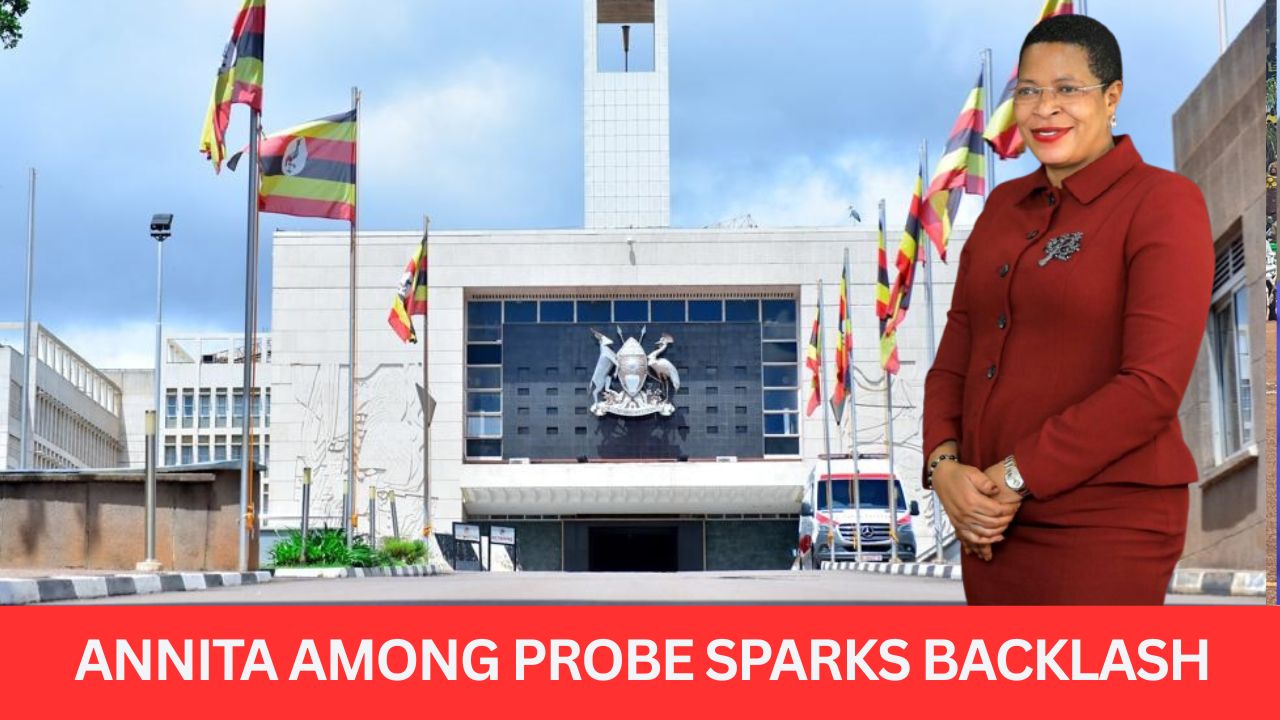
A storm is brewing around Uganda’s Parliament following the circulation of explosive documents that allegedly expose how billions of shillings moved through the institution over the last three years.The leaked records, now widely shared on social media and messaging platforms, have sparked fierce debate over accountability, transparency and whether ongoing investigations are targeting the right people—or only a select few.For many Ugandans, the biggest question is no longer whether Parliament’s books deserve scrutiny. It is whether the scrutiny is being applied fairly.Critics say the current focus on Speaker Anita Among risks becoming little more than a political spectacle if investigators fail to examine the wider network of parliamentary offices, departments and officials whose names also appear in controversial financial records.
The Shs68 Billion Document That Set Off Alarm Bells
At the centre of the controversy is a document attributed to civil society organisation AGORA under the banner “Uganda Parliament Exhibition II.”The document allegedly lists more than Shs68 billion that reportedly passed through various parliamentary staff members and parliamentary structures between 2023 and 2026.The single biggest entry is recorded as Parliamentary Commission Operations, which allegedly received nearly Shs39 billion.The remaining amounts are linked to individual names, with some entries running into billions of shillings.
Among the largest figures listed are:
Leonard Okema – Shs5.51 billion
Ranny Ismail – Shs4.45 billion
Chris Obore – Shs3.22 billion
Daniel Adilo – Shs2.95 billion
Kaaya Raja Semalulu – Shs2.41 billion
Perhaps most puzzling is an entry labelled simply “No Name” carrying an allocation of more than Shs1 billion. The figures have left many Ugandans asking a simple question: Where exactly did all this money go?
Denials Deepen The Mystery
What has made the controversy even more intriguing are claims that some of the individuals whose names appear on the document allegedly denied ever receiving the money attributed to them.If those claims are true, investigators face several difficult questions.
Were payments wrongly recorded?
Were names used as conduits for operational transactions?
Did the money reach different beneficiaries?
Or are the records themselves inaccurate?
Without access to payment vouchers, bank statements, approval documents and accountability reports, the public is left guessing. And in a country where public finance scandals have repeatedly made headlines, suspicion naturally fills the information vacuum.
Is The Among Probe Missing The Bigger Picture?
While public attention has largely focused on Speaker Anita Among, critics argue that concentrating investigations on a single office risks creating the impression of selective accountability.Political analysts note that Parliament is a large institution with numerous departments, commissions and administrative structures.If questionable transactions occurred, they argue, responsibility cannot automatically be narrowed to one office without first examining the broader system through which funds were approved, processed and disbursed.This perception of selective scrutiny has fuelled accusations that the ongoing investigations may be more political than institutional. For many observers, the test of credibility will be whether every office implicated by available records receives equal scrutiny.
Recruitment Questions Refuse To Go Away
The controversy does not stop at money. Fresh questions are also emerging about recruitment practices within the Parliamentary Service.Critics have questioned whether all positions filled since the start of the 11th Parliament followed legally required procedures, including public advertisement of vacancies and competitive recruitment processes.Documents circulating online have listed dozens of individuals said to be employed in different parliamentary offices, including some attached to the Office of the Deputy Speaker.The publication of these names has intensified calls for Parliament to disclose how vacancies were advertised, how interviews were conducted and how successful candidates were selected.
What Forensic Auditors Would Look For
Financial experts caution against drawing conclusions solely from lists of names and figures. According to auditors, proving wrongdoing requires much more than a spreadsheet.
Investigators would need access to:
Bank transaction records
Payment vouchers
Procurement documents
Internal approval memos
Accountability reports
Payroll databases
Audit findings
Only then can investigators establish whether money was properly authorised, correctly accounted for and delivered to its intended purpose.In many institutions, officials sign for operational funds on behalf of departments, projects or committees rather than for personal benefit.That distinction could prove critical in determining whether any laws were broken.
Public Trust On The Line
The controversy arrives at a time when public confidence in government institutions is already under pressure.Good governance advocates argue that Parliament, as the nation’s law-making body, should set the highest standards of transparency.They insist that citizens deserve clear explanations whenever large sums of public money are involved.For them, the issue goes beyond Anita Among, individual parliamentary officials or political rivalries. It is about whether taxpayers can trust the systems designed to safeguard public resources.
The Questions That Won’t Go Away
Until independent investigators verify the authenticity of the leaked documents and examine the supporting records, the allegations remain just that—allegations.Yet the sheer scale of the figures involved means the matter is unlikely to disappear.
Ugandans want answers.
Why do some names appear against billions of shillings?
What exactly was covered under Parliamentary Commission Operations?
Why are some recipients allegedly denying the transactions?
And perhaps most importantly, why do investigations appear focused on a few individuals while broader questions about Parliament’s financial and recruitment systems remain unresolved?Until those questions are answered, many citizens will continue to view the Anita Among probe not as a full investigation—but as an incomplete story.
By Investigative Desk
Author Profile
- Mr. Jacko David Waluluka is another unique entertainment and general investigative news writer, a field he has diligently covered for over fifteen years. He’s also the Chief Administrator at The Investigator. He can easily be reached via [email protected]
Latest entries
 FeaturedOctober 16, 2026SOFTWARE BATTLE ROCKS CHiNT, IT EXPERT ARRESTED: Abdul Ssebiina, Described As A Key Developer Of ChiNT’s Operational Software, Was Reportedly Detained At Jinja Road Police Before Being Transferred To The Special Investigations Unit In Kireka
 FeaturedOctober 12, 2026NAKIVUBO CHANNEL DEMOLITIONS SPARK FRESH LAND GRAB FEARS: How Police Arrested And Prosecuted Four Suspects Over The Razing Of Traders’ Premises. Questions Remain Over Who Ordered The Operation, KCCA’s Denial Of A Demolition Permit And Alleged Encroachment On Public Land
 EntertainmentOctober 12, 2026MISS UGANDA WITH A DREAM OF DIPLOMACY: Newly Crowned Almorie Nagayi Wants To Look Beyond The Runway, With An Interest In Foreign Policy, International Relations And The Empowerment Of Young Women
 EntertainmentOctober 8, 2026KOFI OLOMIDE SHOW CANCELLED OVER EBOLA FEARS: Health Ministry Blocks October 9 Concert Over Fears Thousands Of Fans Could Cross From Ebola-Affected Areas Of DR Congo