














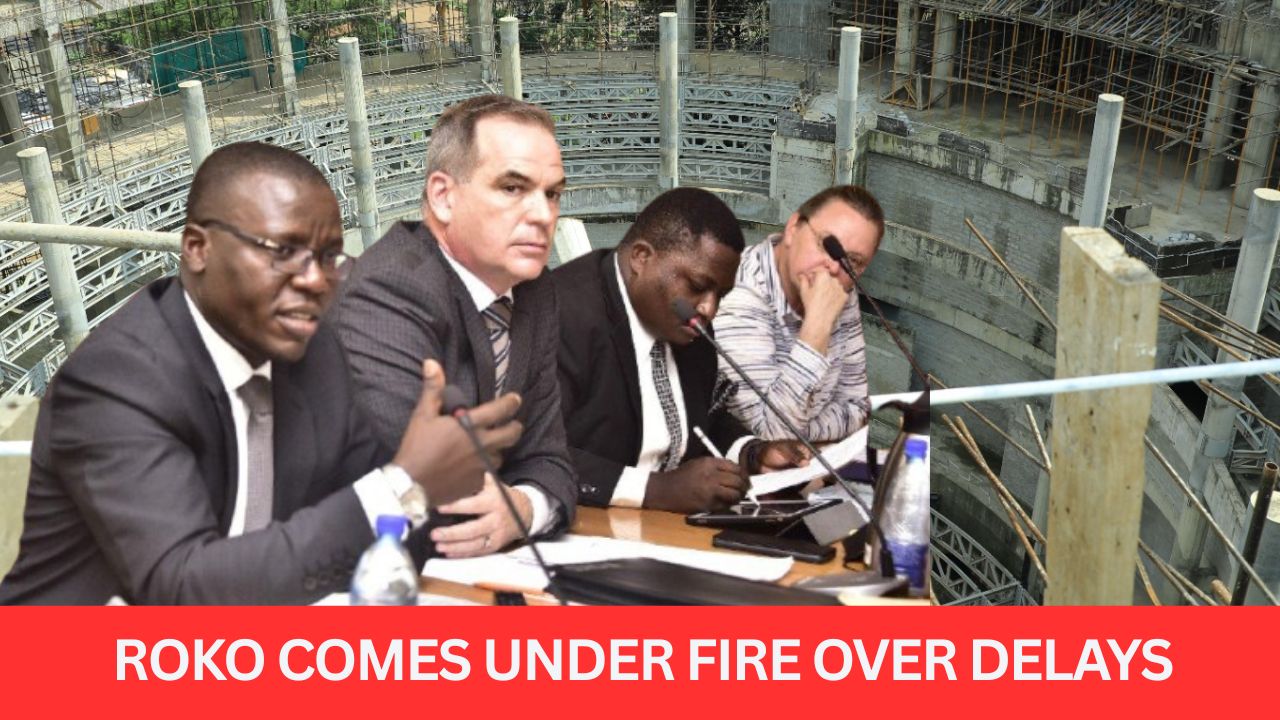
Fresh controversy has erupted over the delayed construction of Uganda’s new parliamentary chambers, with Members of Parliament demanding a full-scale probe into the project after nearly ten years of construction work and billions of taxpayers’ money spent with little to show for it.The project, which was launched with the promise of easing congestion at Parliament and providing modern facilities for legislators, has become a symbol of government project delays, cost overruns and growing public frustration over accountability.Now, lawmakers are turning their guns on construction giant Roko Construction Limited, warning that the company could lose the contract if satisfactory explanations are not provided regarding the endless delays.
MPs Lose Patience
Several legislators have openly questioned how a project that was initially expected to take only a few years has dragged on for nearly a decade.Members of Parliament sitting on oversight committees recently demanded answers after reports showed that construction progress remains far below expected levels despite substantial government funding. According to findings cited in the Auditor General’s report, the project is significantly behind schedule, with completion estimates repeatedly revised.Legal and Parliamentary Affairs Committee members reportedly expressed concern that parliamentary authorities themselves appear uncertain about when the building will actually be completed.
Outgoing Budget Committee Chairperson Patrick Isiagi Opolot was quoted raising concerns that corruption could be one of the factors behind the prolonged delays, saying Parliament must establish what exactly has gone wrong.Other MPs argue that the delays have embarrassed Parliament, an institution tasked with holding other government agencies accountable.“How can Parliament demand accountability from ministries and agencies when its own building project has remained unfinished for years?” one legislator reportedly asked during discussions on the matter.
A Project Haunted by Delays
The construction of the new chambers began in 2017 after Parliament determined that the existing chamber had become too small for the growing number of legislators.Uganda’s current parliamentary chamber was originally designed in the 1950s to accommodate fewer than 100 legislators. Today, Parliament has more than 500 members, creating serious space challenges.
The new facility was expected to solve the problem by providing seating for hundreds of MPs as well as additional office space and support facilities. However, almost from the start, the project encountered obstacles.Early delays were blamed on difficulties in securing land documentation, design adjustments and relocation of major utility infrastructure around the construction site.Later, Parliament approved changes to the design, including plans for additional facilities such as a museum and expanded seating capacity, leading to further interruptions.Despite assurances from the contractor that lost time would be recovered, the project continued to miss completion deadlines.
Billions Spent, Questions Remain
The most troubling issue for legislators is the amount of money already invested. Reports indicate that more than Shs263 billion has so far been spent on the project, with the overall cost continuing to rise as construction timelines are extended.The Auditor General reportedly found that while the project should have reached nearly 70 percent completion during the review period, actual progress stood at around 49 percent.The completion date has reportedly been shifted multiple times, with the latest projections now stretching to 2027. For many MPs, those figures are unacceptable.
Roko Under Intense Scrutiny
The spotlight has inevitably fallen on Roko Construction Limited, one of Uganda’s largest indigenous construction companies.The company has in recent years faced significant financial difficulties, prompting government intervention.In 2022, the government approved a controversial bailout package involving the purchase of preference shares worth more than Shs200 billion to keep the company afloat and protect ongoing public infrastructure projects.However, some legislators now argue that despite the financial rescue, several major projects under Roko continue to suffer delays.Apart from the parliamentary chambers, critics have pointed to concerns surrounding other government-funded projects associated with the contractor.This has led some MPs to ask whether Parliament should continue entrusting public projects to a contractor that repeatedly fails to meet deadlines.
Parliament Changes Payment System
Faced with mounting criticism, parliamentary authorities have already taken extraordinary measures. Last year former Speaker Anita Among revealed that Parliament had suspended direct payments to Roko and instead adopted a system where funds are paid directly to suppliers and service providers involved in the construction works.The move was intended to improve transparency and ensure that public funds directly support construction activities rather than disappear into administrative bottlenecks.The Speaker has also warned that terminating the contract outright could create even bigger fin
Public Anger Growing
Outside Parliament, many Ugandans are increasingly questioning why major government projects routinely exceed deadlines and budgets.The stalled chambers project has become a frequent topic of discussion on social media, where critics argue that taxpayers deserve clear explanations regarding how public money has been spent.Transparency activists say the project highlights broader weaknesses in project supervision, procurement processes and contractor management within government institutions.With Uganda facing demands for better healthcare, roads, schools and job creation, many citizens wonder whether billions tied up in unfinished projects represent value for money.
What Happens Next?
Parliament now faces a critical decision. Some legislators want the contract reviewed and potentially terminated if investigators establish negligence or mismanagement.Others fear that replacing the contractor midway could create legal disputes and further delays, ultimately costing taxpayers even more. For now, the demand for a probe appears to be gathering momentum.If Parliament proceeds with a full investigation, officials from Roko, parliamentary administrators, project consultants and government ministries could all be summoned to explain how a project launched with optimism became one of Uganda’s most controversial construction ventures.Until then, the unfinished structure standing beside Parliament remains a visible reminder of the growing gap between project promises and project delivery
Author Profile

- Charles Gazza Kodili is a seasoned journalist with over 20 years of experience in the media industry. He holds a Bachelor of Arts degree in Mass Communication. He’s currently the Chief Editor at the Investigator.
Charles can also be reached via; Tel: +256 774 108978
Email: [email protected]
Latest entries
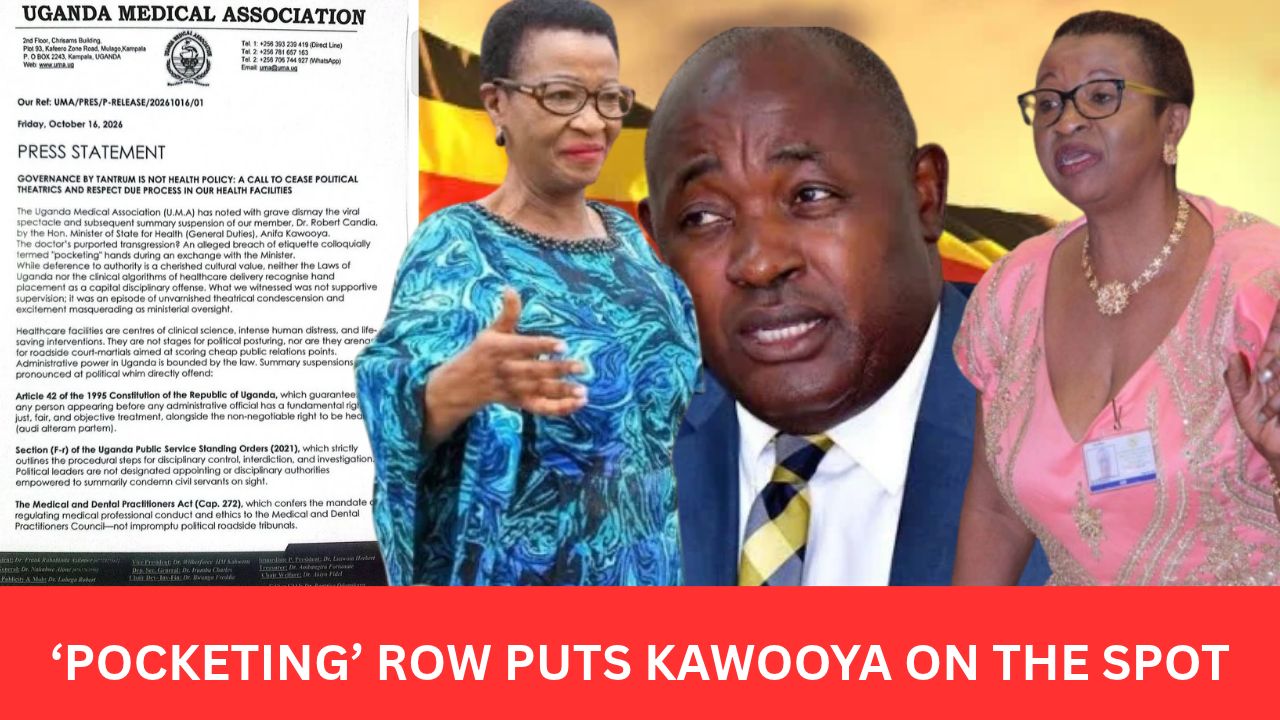 FeaturedOctober 16, 2026KAWOOYA UNDER FIRE AS MINISTRY DENIES DR CANDIA SUSPENSION: Health Ministry Says Arua Doctor Remains In Office After Minister Reportedly Ordered Him To Hand Over For “Pocketing”
 FeaturedOctober 14, 2026MATHEW BAGONZA BAIL DEAL DEALS A BLOW TO CDF GEN. MUHOOZI: Rwabwogo’s Camp Sees Relief After Weeks Of Confrontation, As Reported First Family Tensions Raise Questions About The CDF’s Fight With His Brother-In-Law
 FeaturedOctober 14, 2026GOVERNMENT TO CASH IN ON CHARCOAL TRADE: Government Plans To Formalise The Charcoal Business Through Trade Licences, Taxation And Strict Monitoring Of Producers And Dealers
 FeaturedOctober 13, 2026‘PRODUCE SAM MUGUMYA NOW’ — SSENYONYI: LoP Tells Parliament Families Of Missing Ugandans Deserve Answers, Freedom And Justice As He Challenges Government Over The Opposition Activist’s Fate