














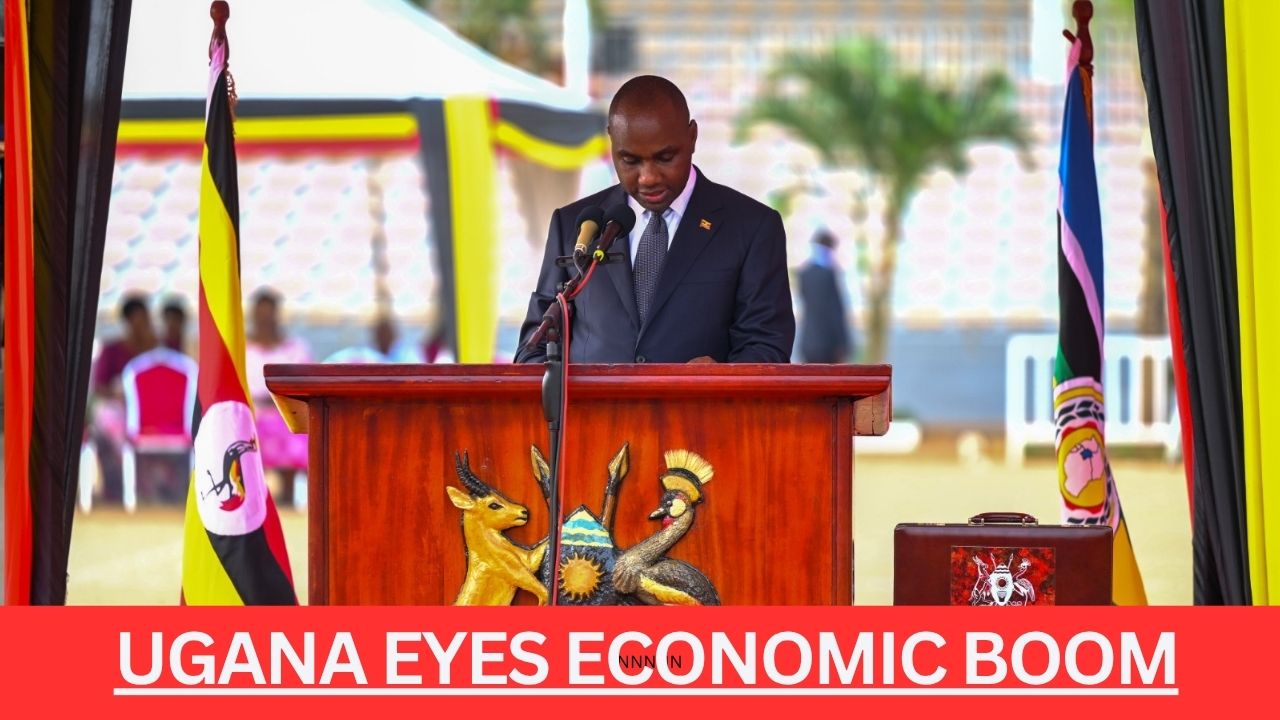
Uganda is set for what government describes as a new era of economic transformation after Finance Minister Henry Musasizi presented an ambitious Shs84.39 trillion national budget for the Financial Year 2026/27, promising accelerated growth, more jobs and increased household incomes.
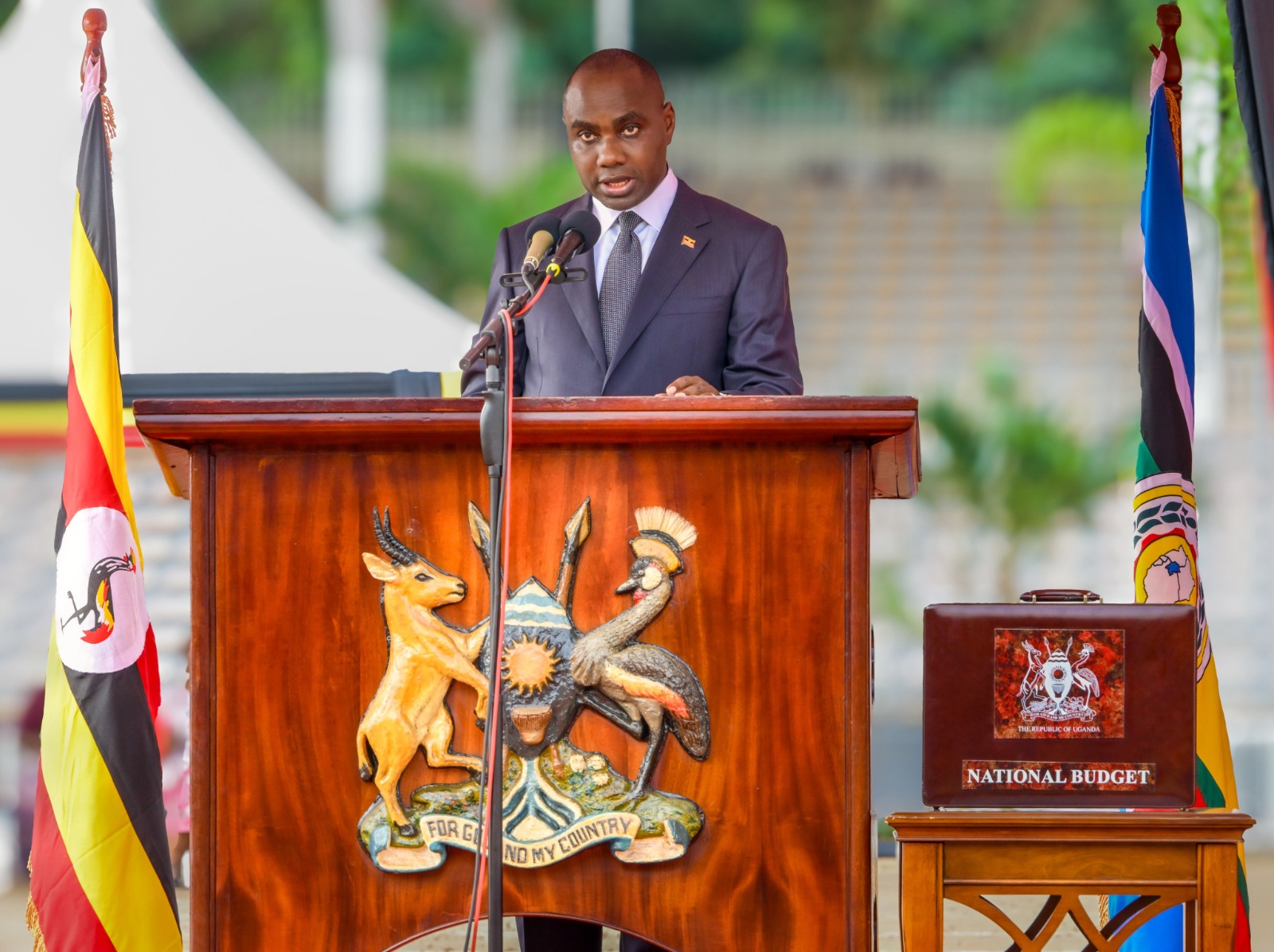
Delivering his maiden budget speech before Parliament at Kololo Ceremonial Grounds, Musasizi said Uganda’s economy is entering a period of unprecedented expansion, driven by commercial oil production, increased exports and strategic investments in key sectors.The minister announced that Uganda’s GDP per capita is projected to rise to approximately Shs5.1 million per person, while the economy is expected to register double-digit growth of 10.2 percent in FY2026/27.
“With commercial oil production commencing later this year, Uganda’s economy is projected to grow by 10.2 percent, marking the first return to double-digit growth since the reforms of the 1990s,” Musasizi said.He added: “The economy is stable, growth is accelerating, inflation is low, the exchange rate is stable, exports are rising, investment is increasing and confidence in Uganda’s future remains strong.”
ECONOMY AND REVENUE
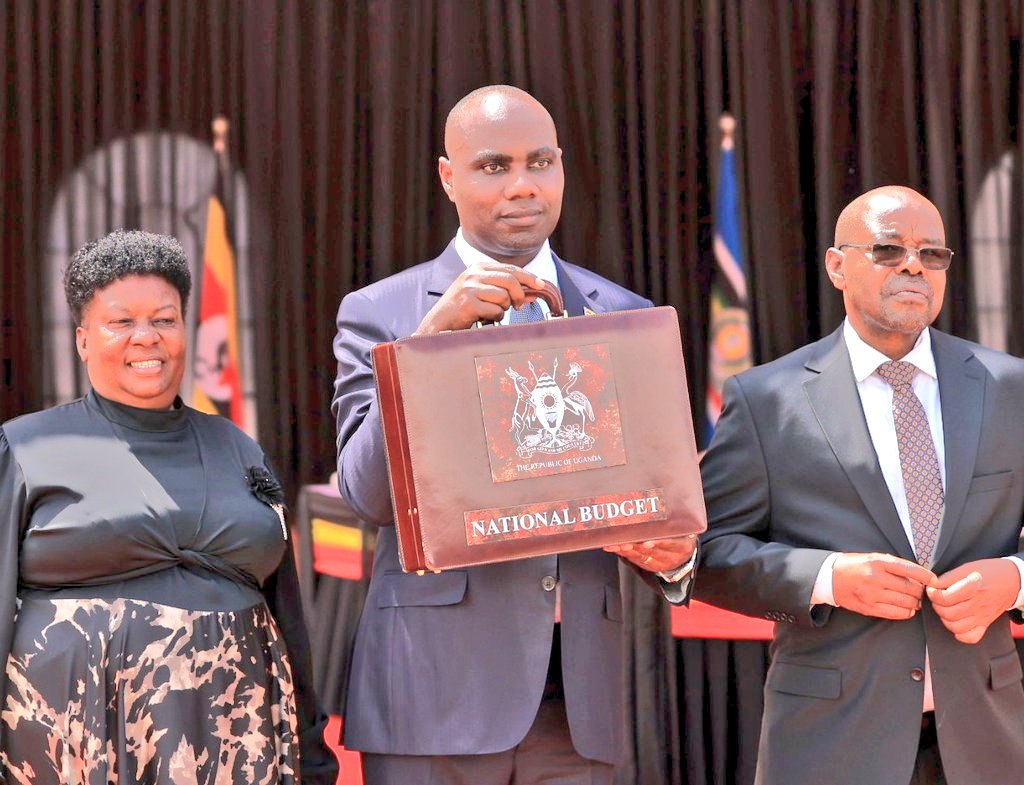
The Shs84.39 trillion budget represents an increase of Shs2.78 trillion from the revised Shs81.61 trillion budget of FY2025/26.According to Musasizi, domestic revenue is projected to increase to Shs45.6 trillion, up from Shs35.7 trillion in the current financial year.
The budget will be financed through:
Shs45.96 trillion from domestic revenue
Shs11.97 trillion from domestic borrowing
Shs13.97 trillion for debt refinancing
Shs1.22 trillion from external borrowing
Shs11.27 trillion from external project financing
The minister revealed that Uganda’s economy is expected to reach Shs250.4 trillion by June 2026, equivalent to approximately US$69.3 billion.“Uganda enters the new political term from a position of strength, with a stable, resilient and rapidly growing economy,” Musasizi told legislators.
AGRICULTURE GETS BOOST
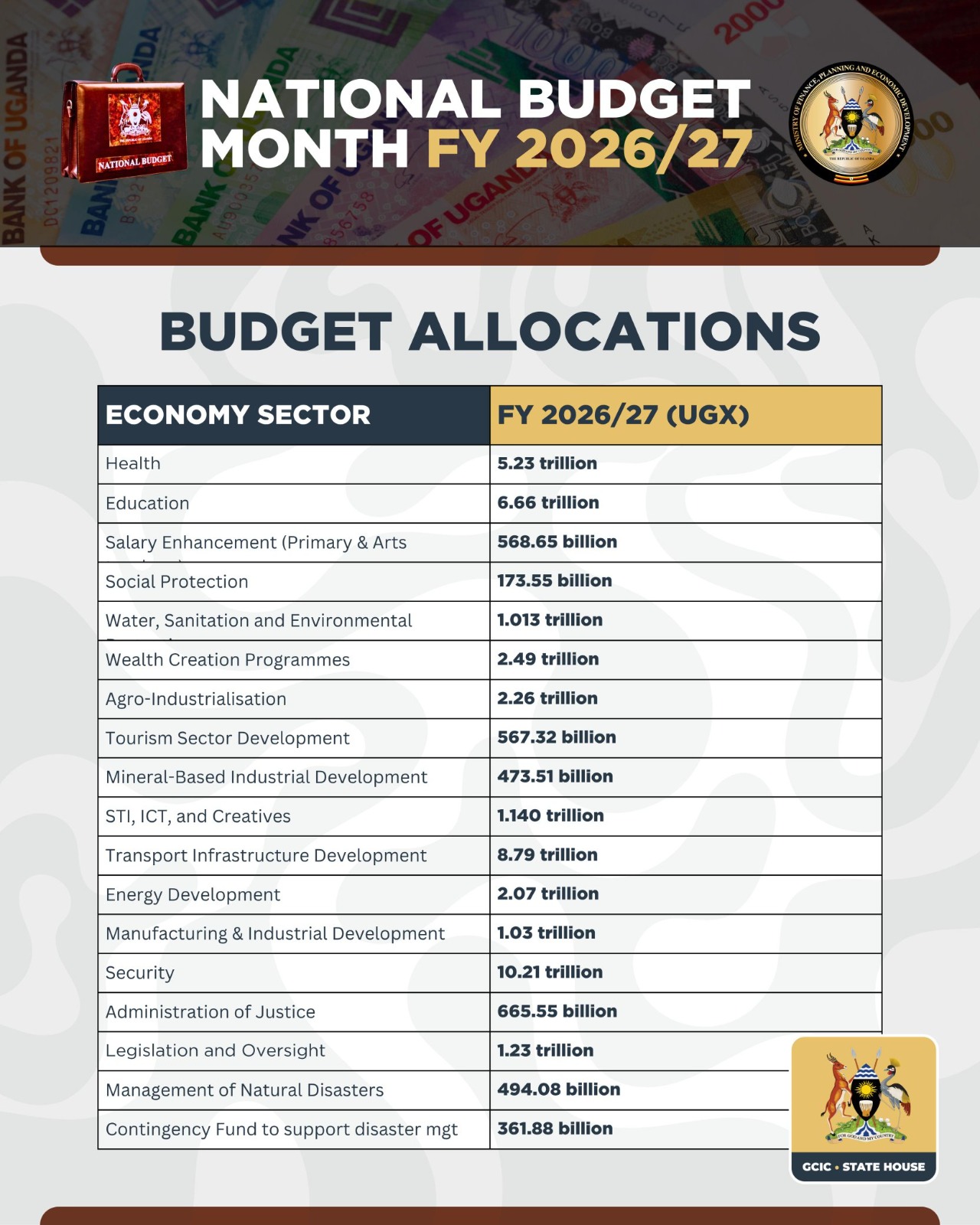
Agriculture emerged as one of the biggest beneficiaries of the new budget, receiving a record Shs2.26 trillion allocation under the Agro-Industrialisation Programme. Musasizi described agriculture as the backbone of Uganda’s economy.“Agriculture remains the backbone of Uganda’s economy. It employs millions of Ugandans, supplies raw materials to industry, produces exports and sustains livelihoods across the country,” he said.
The funds will support:
Agricultural research and innovation
Irrigation and water for production
Extension services
Quality agricultural inputs
Post-harvest handling
Agro-processing and value addition
Market expansion
Government also plans to commercialise the anti-tick vaccine and strengthen coffee production, a sector that continues to shine.Musasizi revealed that coffee exports earned Uganda US$2.46 billion in the year ending March 2026, up from US$1.84 billion the previous year.
TOURISM BACK TO LIFE
The tourism sector received Shs567.32 billion after fully recovering from the Covid-19 pandemic. “Tourism receipts increased to US$1.86 billion in 2025 compared to US$1.4 billion before the pandemic,” Musasizi said.
The funding will support:
International branding and marketing
Tourism infrastructure
Highway sanitation facilities
Wildlife conservation
Hospitality training
Health tourism
Economic diplomacy
Government hopes tourism will continue generating foreign exchange and creating jobs for thousands of Ugandans.
OIL, GAS AND MINING
The long-awaited oil era is finally approaching, with government allocating Shs473.51 billion towards mineral-based industrial development, mining, oil and gas.
Priority projects include:
Continued mineral exploration
Capitalisation of the Uganda National Mining Company
Mineral markets and buying centres
Operationalisation of EACOP
Oil refinery development
Musasizi stressed that Uganda’s future lies in value addition.
“Sustainable transformation will come not from extracting minerals but from processing and adding value to them,” he said.The minister noted that Uganda has confirmed an estimated 300 million tonnes of iron ore and is pushing forward with major oil infrastructure ahead of First Oil.
SCIENCE, ICT AND INNOVATION
Government has earmarked Shs1.14 trillion for Science, Technology and Innovation, ICT and creative industries.
The allocation will support:
Commercialisation of Kiira Motors vehicles
Dei BioPharma drugs and vaccines
Establishment of a Hi-Tech City
Research and innovation
Expansion of digital infrastructure
Growth of Business Process Outsourcing (BPO)
Musasizi disclosed that internet costs have dropped by half, from US$70 to US$35 per megabit per second.
Uganda now boasts 57.3 million mobile subscriptions and about 20 million smartphones connected to local networks.
ROADS, RAILWAY AND TRANSPORT
Transport infrastructure remains a major priority with Shs8.79 trillion allocated to the sector.
The money will fund:
Construction of the Malaba-Kampala Standard Gauge Railway
Road upgrades and maintenance
Strategic bridges
Ferry and port infrastructure
Kabalega International Airport
Uganda Airlines expansion
The government is also implementing a massive road upgrade programme in Greater Kampala Metropolitan Area, targeting over 600 kilometres of roads within five years.
HEALTH SECTOR
The health sector received Shs5.23 trillion. According to Musasizi, funding will focus on:
Maternal and child health
Nutrition
Immunisation
Non-communicable diseases
Essential medicines
Specialised healthcare
Emergency response systems
The minister also revealed that the International Specialised Hospital of Uganda at Lubowa is now 75 percent complete and is expected to be finished by December 2027.
SECURITY AND GOVERNANCE
Security, governance and rule of law institutions will receive Shs10.21 trillion.
Priority areas include:
UPDF modernisation
Border security
Counter-terrorism operations
Crime intelligence
CCTV expansion
Cybersecurity
Anti-corruption efforts
National ID registration
The minister said security remains critical for economic growth and investment.
EDUCATION AND SOCIAL SERVICES
Government has allocated Shs13.56 trillion for direct investments in people through education, health, water and social protection.
A further Shs568.65 billion has been set aside to enhance salaries for primary school teachers and Arts teachers in secondary schools and BTVET institutions.
Water and sanitation services will receive Shs1.013 trillion.
WEALTH CREATION PROGRAMMES
Musasizi said government has invested nearly Shs11 trillion in wealth creation programmes over the years.
The Parish Development Model remains the flagship programme.
“Over the past five years, Government has transferred Shs4.4 trillion to all 10,589 parishes nationwide as revolving capital,” he said.
By the end of this month, PDM is expected to have reached more than four million beneficiaries.
Government has also allocated an additional Shs2.49 trillion to wealth creation initiatives including:
PDM
Emyooga
Youth programmes
Women funds
Agricultural Credit Facility
Uganda Development Bank
Creative industry revolving funds
PUBLIC DEBT AND EXPORTS
As of December 2025, Uganda’s public debt stood at US$34.86 billion, equivalent to Shs126.19 trillion.
Musasizi said the debt-to-GDP ratio stands at about 53 percent.On exports, the minister reported remarkable growth.
“Exports of goods and services increased by approximately 204 percent, reaching US$18.04 billion in the twelve months to March 2026,” he said.Remittances from Ugandans abroad also surged to US$2.8 billion.
TAX CHANGES TO HIT FUEL, EASE BURDEN ON WORKERS
Musasizi also unveiled a series of tax measures aimed at raising revenue while supporting businesses and low-income earners.Among the most notable changes is the introduction of a Shs200 levy on every litre of petrol and diesel, a move expected to generate additional revenue for road maintenance and infrastructure development. The new tax is likely to increase transport costs and could eventually affect prices of goods and services across the country.
However, government also announced several relief measures designed to put more money into the pockets of ordinary Ugandans. The monthly PAYE tax-free threshold has been increased from Shs235,000 to Shs335,000, allowing low-income earners to retain a larger portion of their salaries.Small businesses also received a boost after the annual VAT registration threshold was raised from Shs150 million to Shs300 million, reducing compliance costs and paperwork for thousands of entrepreneurs.
To stimulate investment in the tourism sector, government introduced a tax holiday for developers of ultra-luxury tourism facilities, a move expected to attract high-end investors and position Uganda as a premium tourism destination.In the energy sector, the income tax exemption granted to Bujagali Energy has been extended, with government arguing that the measure will help keep electricity tariffs affordable for households and businesses.
The minister further announced a range of tax relief measures intended to encourage voluntary compliance and enable taxpayers to clear outstanding tax obligations without punitive penalties, as government seeks to widen the tax base while supporting economic growth.These tax changes are expected to play a key role in helping government achieve its ambitious domestic revenue target of Shs45.96 trillion in the coming financial year.
THE “NO MORE SLEEP” MESSAGE
Concluding his maiden budget speech, Musasizi dedicated the budget to wealth creators, particularly young people.“The Budget launches Uganda into the Kisanja No More Sleep. Every Ugandan must actively engage in wealth creation, and every leader must be accountable for transforming households and communities,” he declared.
“The era of planning and debate is over; the era of implementation and results has begun. Our mission is clear: produce more, earn more, export more, and lift every household out of subsistence.”With oil revenues expected to start flowing and government spending hitting record levels, all eyes will now be on whether the ambitious promises in the Shs84.39 trillion budget can translate into jobs, incomes and prosperity for ordinary Ugandans.
Author Profile
- Charles Gazza Kodili is a seasoned journalist with over 20 years of experience in the media industry. He holds a Bachelor of Arts degree in Mass Communication. He’s currently the Chief Editor at the Investigator.
Charles can also be reached via; Tel: +256 774 108978
Email: [email protected]
Latest entries
 FeaturedOctober 9, 2026UGANDA ECONOMY TO HIT $73.96B: President Museveni Cites Decades Of Economic Growth As He Receives A Top National Honour During The 64th Independence Anniversary Celebrations At State House, Entebbe
 FeaturedOctober 9, 2026KABALEGA: THE KING WHO FOUGHT THE BRITISH: From Battles Against Sir Samuel Baker To Uganda’s Independence In 1962, The Bunyoro King Became A Symbol Of Resistance Against Foreign Domination
 FeaturedOctober 8, 2026UGANDA AT 64: From Obote Receiving the Instruments of Power in 1962 to Museveni Receiving a National Medal in 2026, Uganda’s Independence Story Remains Unfinished. We Journey With You the Thorney 6+ Decades of Uhuru
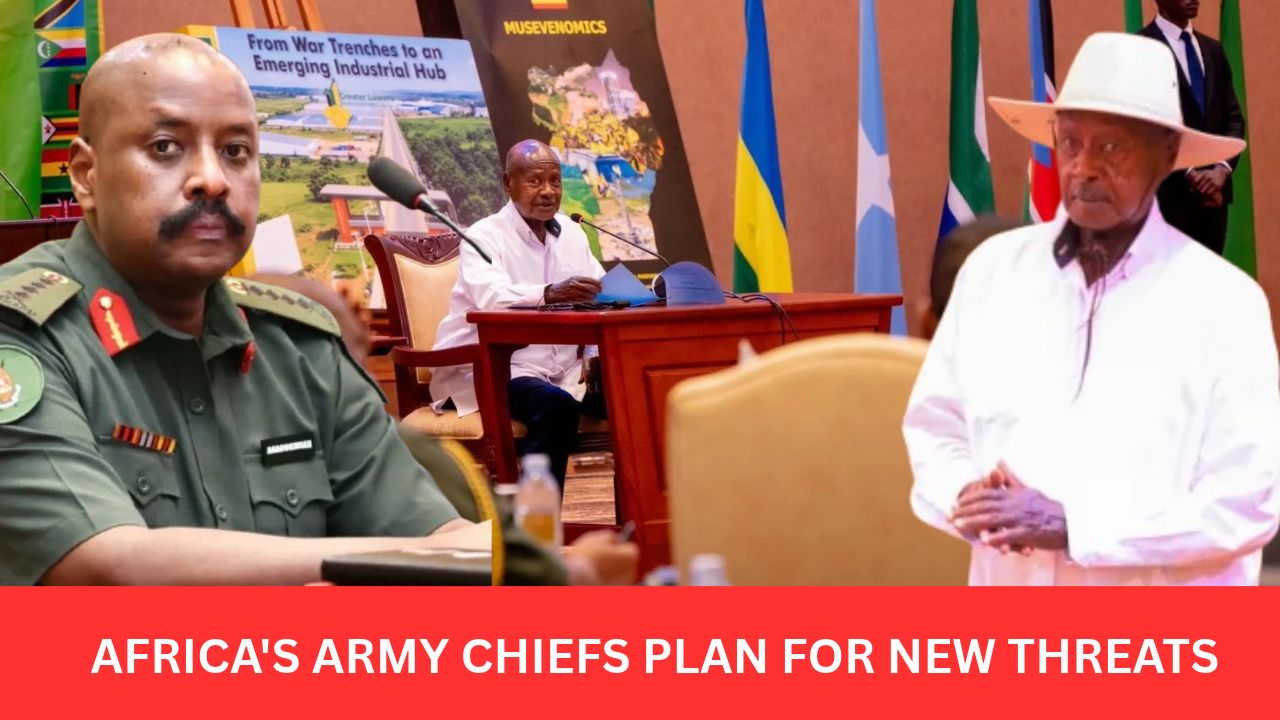 FeaturedOctober 8, 2026AFRICA MUST PREPARE FOR NEW WARS – MUSEVENI: The President Challenges Defence Chiefs to Link Military Strength With Economic Power, Political Stability and Regional Integration as African Armies Rethink Security Beyond Conventional Warfare