












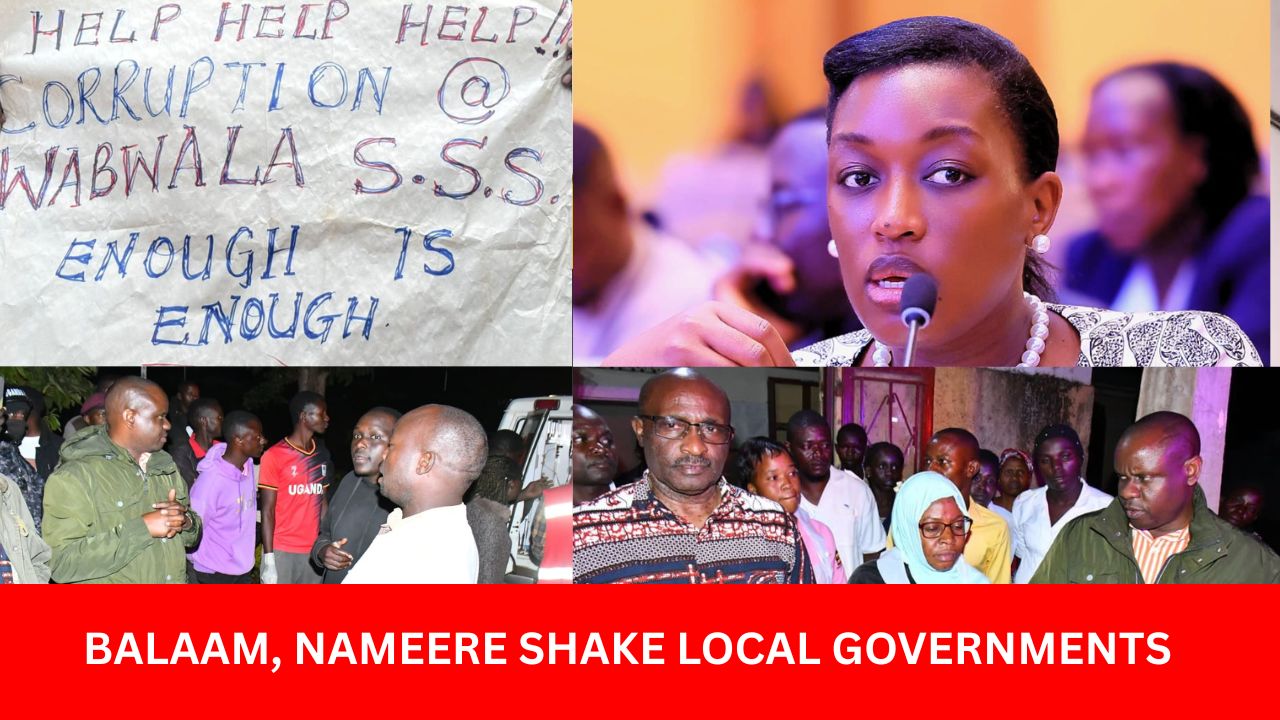
The anti-corruption campaign spearheaded by Local Government Minister Balaam Barugahara Ateenyi and State Minister Justine Nameere has done more than expose corrupt officials in Uganda’s local governments. It has laid bare a much deeper governance crisis—the apparent collapse of routine oversight mechanisms that were specifically created to detect and prevent corruption before it reaches crisis levels.
Over the past weeks, the ministers have toured several districts under the nationwide campaign dubbed “Expose and Fight Corrupt Officials in Local Governments.” Their inspections have reportedly uncovered ghost workers on payrolls, inflated school enrolment figures, abandoned road projects, procurement irregularities and suspected diversion of public funds. In some instances, district engineers and senior administrators have been arrested or subjected to investigations.
Yet perhaps the most disturbing revelation is not the corruption itself, but how long it appears to have flourished without intervention from institutions mandated to supervise local governments.
Oversight Institutions Under Question
Every district in Uganda has an elaborate oversight structure comprising the Resident District Commissioner (RDC) or Resident City Commissioner (RCC), Deputy RDCs, District Internal Security Officers (DISOs), Internal Auditors, Chief Administrative Officers (CAOs), District Public Accounts Committees and various security agencies.
Their mandate extends beyond security. They are expected to monitor government programmes, report abuse of public resources and ensure public funds are used for intended purposes.
However, many of the irregularities being uncovered by the ministers are not hidden crimes.
Ghost workers remain on payrolls for months. Roads are either poorly constructed or never completed despite payments being made. Public buildings deteriorate while maintenance funds disappear. Schools reportedly inflate enrolment figures to attract additional capitation grants.
Such activities occur in full public view.
The obvious question therefore becomes: Where were the oversight institutions?If ministers can discover these irregularities within days of inspection tours, critics argue that local oversight organs either failed in their responsibilities or deliberately ignored the wrongdoing.
A Failure of Routine Accountability
Governance experts argue that anti-corruption campaigns should not become substitutes for functioning institutions.
Human rights defender Dr Sarah Bireete, has consistently argued that corruption thrives where accountability institutions become weak or compromised. He has maintained that lasting success depends on strengthening institutions rather than relying solely on periodic crackdowns.
The current campaign appears to reinforce that argument.The inspections suggest corruption had become normalized within some local governments, allowing procurement fraud, payroll manipulation and poor supervision to continue largely unchecked until ministers arrived.
This raises difficult questions about institutional culture.
If district security committees receive regular intelligence reports, how did such widespread irregularities remain undetected?If internal auditors produce quarterly reports, why were warning signs not acted upon?If RDCs submit periodic reports to the Office of the President, why did many of these concerns never trigger intervention earlier?
Winnie Kiiza: Institutions Must Work
Former Leader of the Opposition Winnie Kiiza has previously argued that Uganda’s anti-corruption struggle cannot rely on dramatic arrests alone but requires strong, independent institutions capable of preventing abuse before it occurs.
She has repeatedly emphasized that corruption flourishes when accountability offices become politically weak or fail to act independently, arguing that genuine reform requires strengthening oversight systems from the village level to central government.
Her position aligns with growing public concern that periodic anti-corruption operations often expose wrongdoing that had existed for years while those responsible for supervision remained inactive.
Eastern Uganda Under the Spotlight
Eastern Uganda has become the first major testing ground for Balaam’s campaign.
During inspections in the Bugisu sub-region, the ministers uncovered allegations involving:
suspected ghost workers on district payrolls;
inflated school enrolment figures;
questionable road works;
alleged misuse of funds allocated for local government projects; and
procurement irregularities.
The campaign resulted in the arrest of Bulambuli District Engineer Paulo Walimbwa, while several other technical officials were subjected to investigations as government widened the probe into the management of district resources.
Subsequently, the campaign extended to Jinja, where Minister Balaam directed the Chief Administrative Officer to step aside pending investigations by the State House Anti-Corruption Unit and the Inspectorate of Government over corruption allegations.
These actions demonstrate government’s willingness to intervene.
However, they also reveal that local oversight systems had failed to identify or stop the alleged misconduct before ministerial intervention became necessary.
Security Agencies Cannot Escape Scrutiny
The campaign inevitably places RDCs, RCCs, DISOs and district security committees under uncomfortable scrutiny.
These officials attend district security meetings regularly.
They receive intelligence.
They monitor implementation of government programmes such as the Parish Development Model (PDM), road maintenance, education grants and health services.Consequently, it becomes increasingly difficult to explain how widespread irregularities persisted without corresponding administrative action.
Some analysts argue that oversight officials should equally be subjected to performance audits whenever significant corruption is uncovered in their jurisdictions.
If corruption becomes systemic within a district, responsibility should extend beyond technical officers to include those charged with monitoring governance.
Public Confidence at Stake
The ministers’ campaign has generated considerable public support because many citizens have long complained about poor service delivery despite increasing government expenditure.
Roads remain impassable.
Health centres lack medicines.
Schools continue to suffer infrastructure deficits.
Yet billions of shillings are appropriated annually.
Each new exposure reinforces public perception that corruption, rather than inadequate funding, remains one of the greatest obstacles to development.
The campaign has therefore become both an anti-corruption exercise and a public confidence initiative.
However, sustaining that confidence will depend on successful prosecutions and institutional reforms rather than publicity alone.
Beyond Arrests
Political analysts caution that anti-corruption campaigns often begin with energy but gradually lose momentum unless backed by structural reforms.
Uganda already possesses multiple anti-corruption institutions, including the Inspectorate of Government, State House Anti-Corruption Unit, Auditor General, Directorate of Public Prosecutions and Criminal Investigations Directorate.
The latest campaign therefore highlights not merely the existence of corruption, but the need for these institutions to coordinate more effectively and intervene before ministers are forced to conduct surprise inspections.
Ultimately, Balaam Barugahara and Justine Nameere’s campaign has exposed two crises simultaneously.
The first is the theft and misuse of public resources.
The second—and arguably more serious—is the apparent breakdown of routine oversight within local governments.
Until RDCs, RCCs, DISOs, internal auditors, district councils and security committees consistently perform their statutory oversight responsibilities, corruption will remain cyclical, requiring periodic ministerial interventions rather than being prevented through strong institutions.
The campaign has therefore shifted the national conversation from merely identifying corrupt officials to questioning whether Uganda’s accountability architecture is functioning as intended—a debate likely to continue long after the current inspections conclude.
Author Profile
- Charles Gazza Kodili is a seasoned journalist with over 20 years of experience in the media industry. He holds a Bachelor of Arts degree in Mass Communication. He’s currently the Chief Editor at the Investigator.
Charles can also be reached via; Tel: +256 774 108978
Email: [email protected]
Latest entries
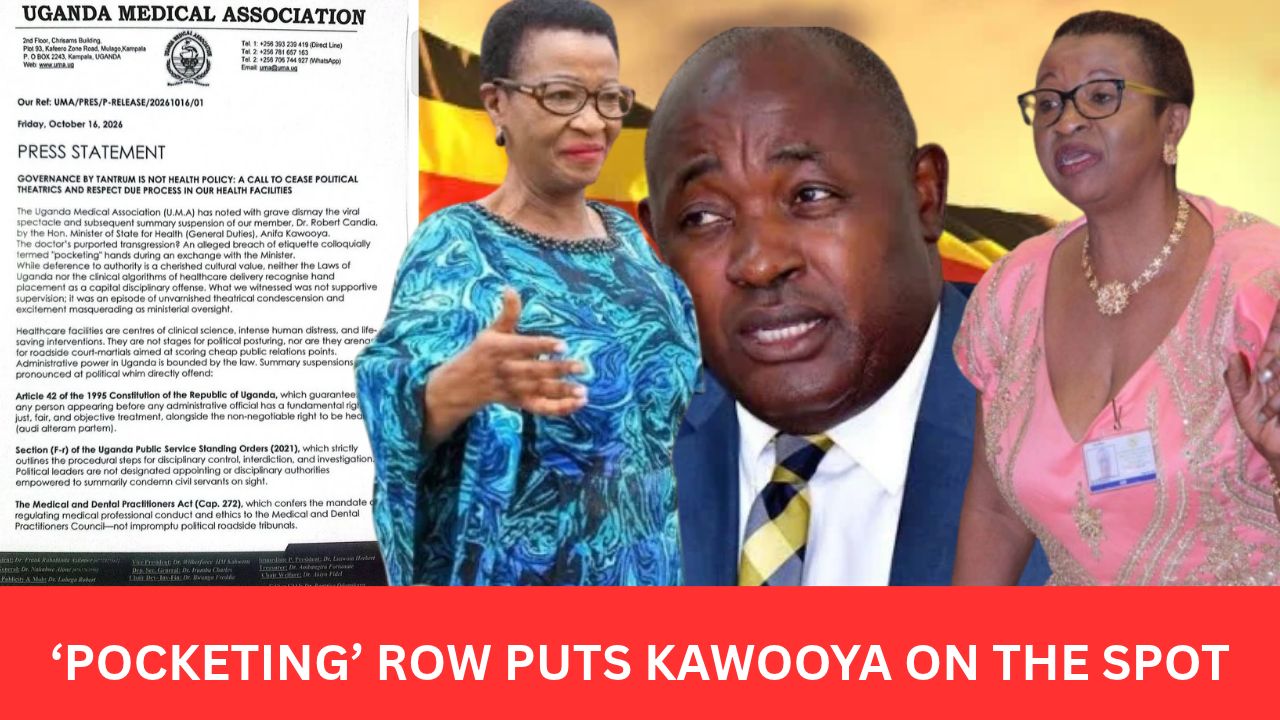 FeaturedOctober 16, 2026KAWOOYA UNDER FIRE AS MINISTRY DENIES DR CANDIA SUSPENSION: Health Ministry Says Arua Doctor Remains In Office After Minister Reportedly Ordered Him To Hand Over For “Pocketing”
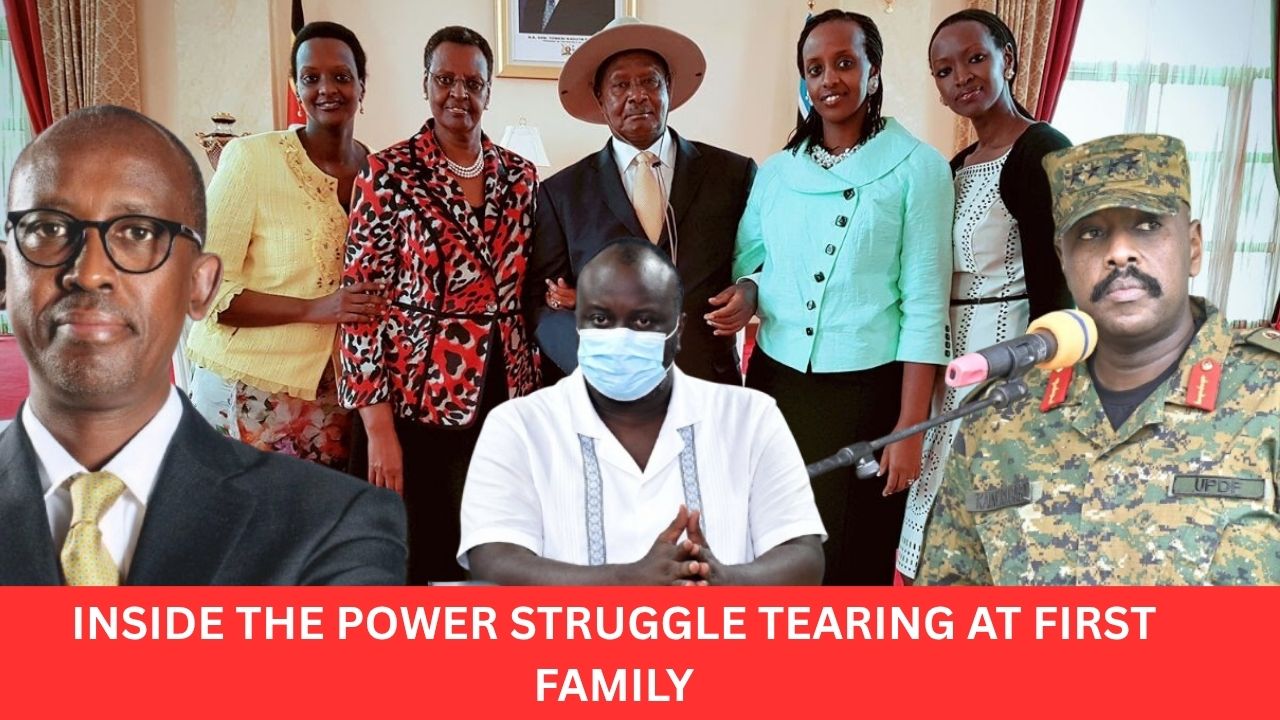 FeaturedOctober 14, 2026MATHEW BAGONZA BAIL DEAL DEALS A BLOW TO CDF GEN. MUHOOZI: Rwabwogo’s Camp Sees Relief After Weeks Of Confrontation, As Reported First Family Tensions Raise Questions About The CDF’s Fight With His Brother-In-Law
 FeaturedOctober 14, 2026GOVERNMENT TO CASH IN ON CHARCOAL TRADE: Government Plans To Formalise The Charcoal Business Through Trade Licences, Taxation And Strict Monitoring Of Producers And Dealers
 FeaturedOctober 13, 2026‘PRODUCE SAM MUGUMYA NOW’ — SSENYONYI: LoP Tells Parliament Families Of Missing Ugandans Deserve Answers, Freedom And Justice As He Challenges Government Over The Opposition Activist’s Fate