








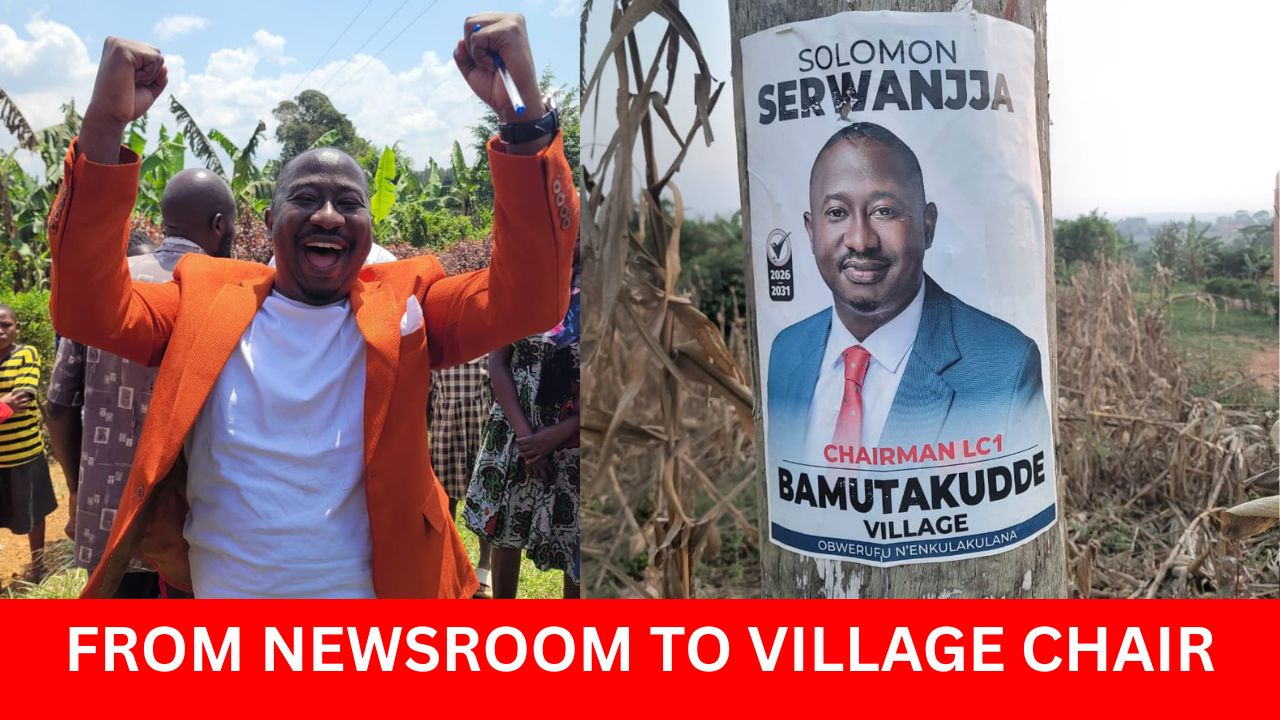
Veteran investigative journalist Solomon Serwanjja has added a new chapter to his distinguished public life after winning the Bamutakudde Village Local Council One (LC1) chairperson seat in Mukono District by the narrowest of margins—just one vote.
The celebrated journalist, renowned for exposing corruption and championing accountability through investigative reporting, secured 106 votes to defeat National Unity Platform (NUP) flag bearer Lule Badru Ssozi Kirwana, who polled 105 votes in one of the most dramatic village elections witnessed in the district. Independent candidate David Kyambadde Zziwa finished third in the closely fought race.
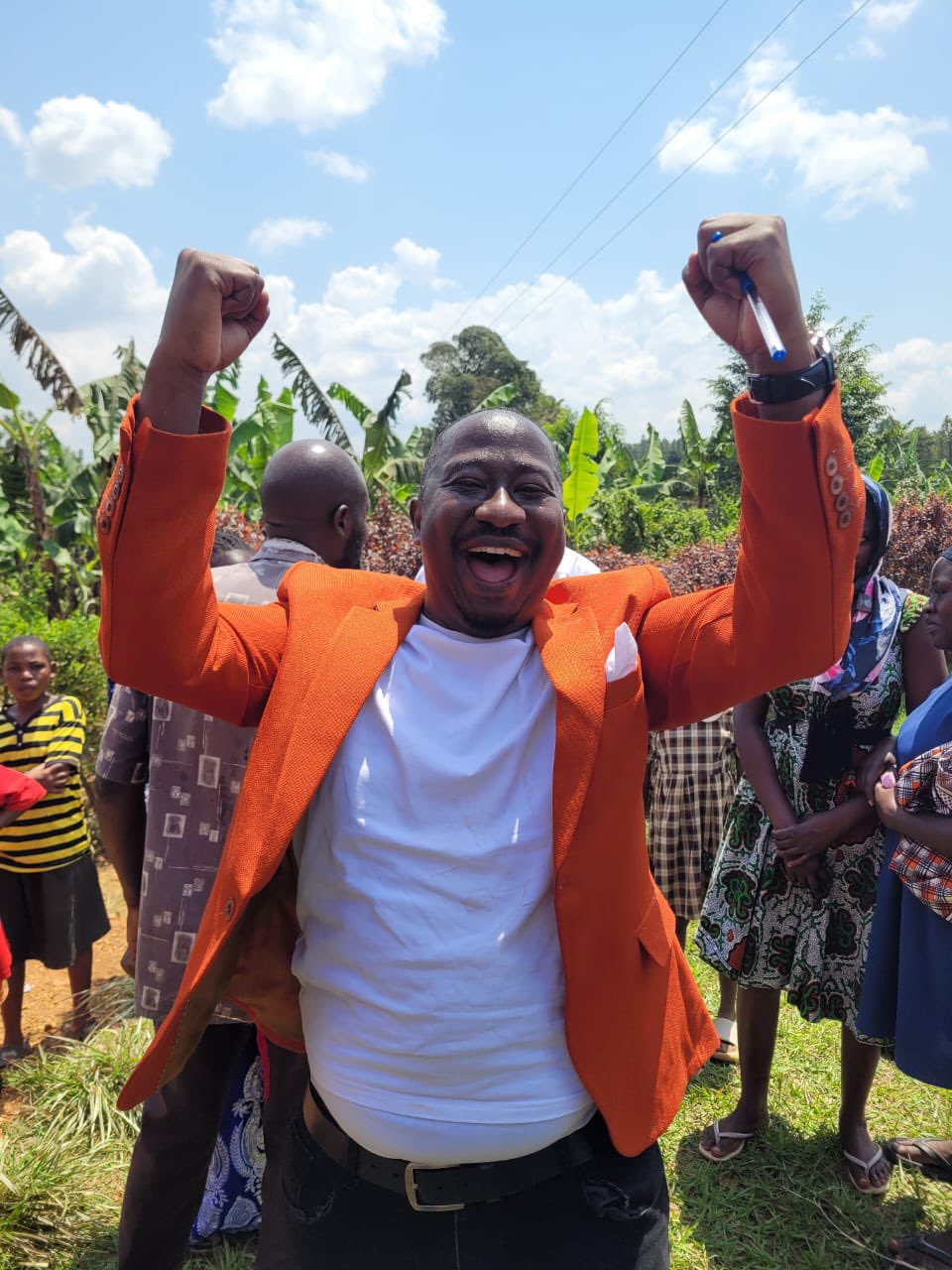
The razor-thin victory immediately became one of the most talked-about outcomes of Uganda’s ongoing Local Council elections, underscoring the importance of every single vote in a democratic contest.
For Serwanjja, whose career has largely been spent asking difficult questions of leaders and public officials, the election marks a transition from reporting on governance to becoming directly responsible for delivering it at the grassroots level.
A Victory by the Smallest Margin
Election officials announced that Serwanjja had garnered 106 votes, just one more than his closest challenger, Lule Badru, who received 105 votes. David Kyambadde Zziwa, another independent candidate, trailed behind in the three-man contest.
The final tally meant that a single ballot determined who would lead Bamutakudde Village for the next term, a result that quickly sparked discussion across social media, where many users observed that every vote truly matters.
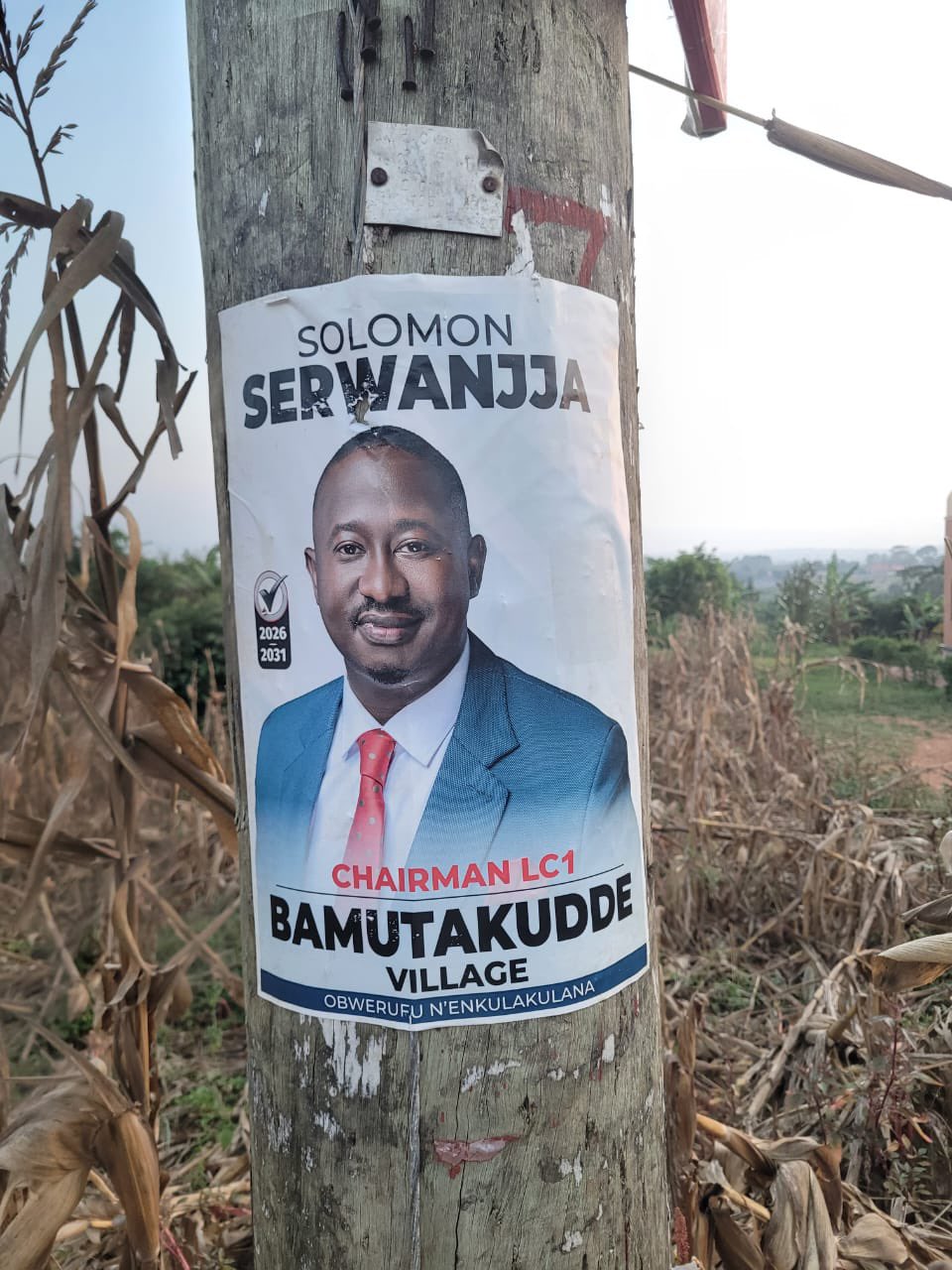
Supporters who had followed the campaigns closely said the outcome reflected an intensely competitive race in which none of the candidates could comfortably claim victory before the votes were counted.
Several residents noted that the village had been deeply divided between candidates throughout the campaign period, making the final one-vote difference all the more remarkable.As congratulations poured in, many pointed out that Serwanjja had earlier expressed confidence that the contest would be extremely close, a prediction that proved strikingly accurate.
From Investigative Journalism to Public Office
Serwanjja is widely respected as one of Uganda’s leading investigative journalists. Over the years, he has built a reputation for fearless reporting, producing investigations into corruption, abuse of office and misuse of public resources.
His journalism has earned him recognition both locally and internationally, with many of his investigations triggering public debate and prompting authorities to respond to issues affecting ordinary Ugandans.
Unlike many politicians who begin their careers through party structures, Serwanjja entered the race as an independent candidate, presenting himself as someone focused on practical community service rather than partisan politics.
His campaign reportedly emphasized improving local administration, promoting transparency and ensuring residents participate more actively in decisions affecting their village.
The election therefore represented more than a contest between three individuals. It also tested whether voters would embrace an independent candidate with a strong professional background over candidates enjoying political party structures.
Ultimately, voters gave Serwanjja the mandate—albeit by the slimmest of margins.
The Significance of an LC1 Chairperson
Although often overlooked compared to parliamentary or presidential elections, the LC1 chairperson remains one of the most influential public offices at community level.
The village chairperson serves as the first point of contact between residents and government, handling disputes, mobilizing community development initiatives, coordinating security matters with local authorities and representing residents before higher administrative structures.The office also plays an important role in implementing government programs, maintaining village records and working alongside local councils to identify development priorities.
For someone like Serwanjja, whose professional life has revolved around demanding accountability from leaders, the new role presents an opportunity to demonstrate how transparency and effective leadership can work in practice.
Observers say expectations among residents are likely to be high, given his public profile and longstanding advocacy for good governance.
Independent Candidates Continue Making Their Mark
Serwanjja’s victory also reflects the growing influence of independent candidates in Uganda’s local politics.
While political parties remain dominant nationally, village elections frequently revolve around individual credibility, personal integrity and direct engagement with residents rather than party ideology alone.Many voters tend to prioritize candidates they believe understand community challenges and can deliver practical solutions.
Political analysts have often noted that Local Council elections differ significantly from national contests because candidates interact directly with virtually every voter, making personal reputation a decisive factor.
In Serwanjja’s case, his years in public service through journalism appear to have resonated with many residents seeking accountable leadership.
A Lesson in Democratic Participation
Perhaps the biggest lesson emerging from the Bamutakudde election is the extraordinary value of every single vote.Had just one Serwanjja supporter stayed home, or had one additional voter chosen Lule Badru instead, the outcome could have been entirely different.
The one-vote margin serves as a powerful reminder to Ugandans that participation in elections, regardless of the office being contested, can significantly influence leadership outcomes.Electoral observers frequently lament voter apathy during Local Council elections, with many citizens considering the positions too minor to warrant attention.
Yet the Bamutakudde contest demonstrates that grassroots leadership often hinges on the smallest electoral shifts.The result is already being cited by many as an example of why every eligible voter should participate in democratic processes.
Expectations Ahead
As celebrations subside, attention will quickly turn to governance. Residents are expected to look to Serwanjja to address local priorities, ranging from infrastructure concerns and sanitation to security, youth engagement and effective communication between village leaders and government agencies.
Given his investigative background, many residents also expect him to promote openness in village administration and encourage greater public participation in decision-making.
Whether those expectations can be translated into tangible results remains to be seen.
Unlike journalism, where exposing problems is often the primary responsibility, elected leadership requires balancing competing interests, managing limited resources and building consensus among residents with differing views.
That transition from watchdog to public administrator may well become Serwanjja’s greatest test.
Congratulations Pour In
Following the declaration of results, congratulatory messages flooded social media from fellow journalists, civil society actors and members of the public.Many praised Serwanjja for taking the bold step of seeking elective office instead of remaining an observer of public affairs.
Others described the victory as symbolic, arguing that individuals who have consistently advocated accountability should also be willing to serve when entrusted with public office.Supporters celebrated not only the victory itself but also what they viewed as a triumph for grassroots democracy, where leadership was determined by the people’s choice down to the very last ballot.
For Serwanjja, the one-vote victory may become one of the defining moments of his public career.
It is a reminder that democracy often turns on the smallest of margins and that leadership begins not in grand political arenas but in villages where ordinary citizens decide who they trust to represent them.
With 106 votes against 105, Bamutakudde Village has handed one of Uganda’s best-known journalists a new assignment—not to report the news, but to help shape it from the frontlines of community leadership.
Author Profile
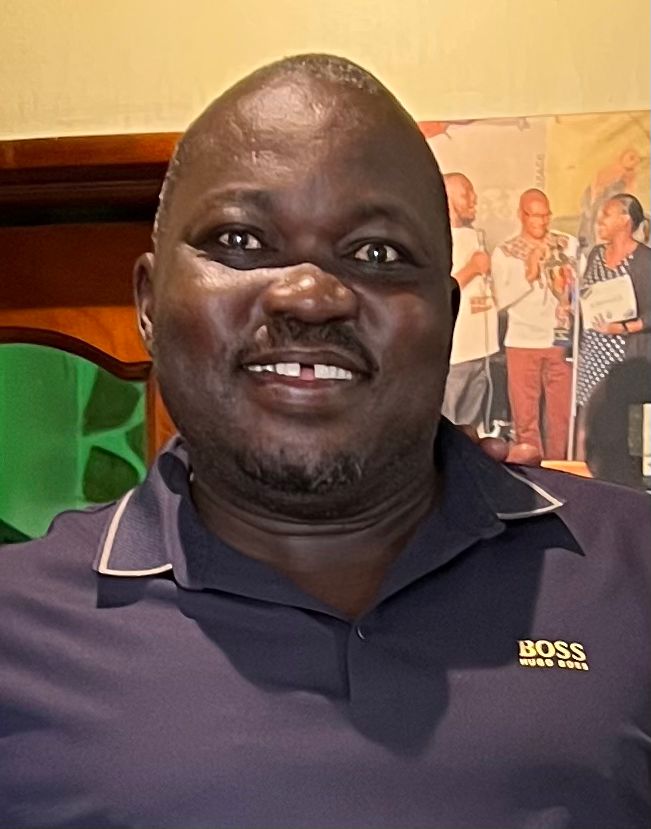
- Charles Gazza Kodili is a seasoned journalist with over 20 years of experience in the media industry. He holds a Bachelor of Arts degree in Mass Communication. He’s currently the Chief Editor at the Investigator.
Charles can also be reached via; Tel: +256 774 108978
Email: [email protected]
Latest entries
 FeaturedOctober 10, 2026MUHOOZI UNDER FIRE OVER DEATH THREATS New York Times article puts Muhoozi’s human rights record under fresh scrutiny as UPDF cries foul
 FeaturedOctober 9, 2026UGANDA ECONOMY TO HIT $73.96B: President Museveni Cites Decades Of Economic Growth As He Receives A Top National Honour During The 64th Independence Anniversary Celebrations At State House, Entebbe
 FeaturedOctober 9, 2026KABALEGA: THE KING WHO FOUGHT THE BRITISH: From Battles Against Sir Samuel Baker To Uganda’s Independence In 1962, The Bunyoro King Became A Symbol Of Resistance Against Foreign Domination
 FeaturedOctober 8, 2026UGANDA AT 64: From Obote Receiving the Instruments of Power in 1962 to Museveni Receiving a National Medal in 2026, Uganda’s Independence Story Remains Unfinished. We Journey With You the Thorney 6+ Decades of Uhuru