



Uganda’s long-running contest over political influence within the ruling National Resistance Movement (NRM) has taken a fresh turn, with veteran bush-war fighter Maj Gen (Rtd) Kahinda Otafiire finding himself in the crosshairs of veteran journalist Andrew Mwenda, a close ally of Chief of Defence Forces Gen Muhoozi Kainerugaba.
Mwenda’s latest remarks, in which he describes Otafiire as “chicken feed” for the Patriotic League of Uganda (PLU), have sharpened a political confrontation that goes beyond a personal disagreement between two influential figures.
At stake is the question of who has the power to shape the future of the NRM: the veterans who helped President Yoweri Museveni capture power in 1986, or a younger political network rallying around Muhoozi, who has publicly expressed ambitions to become Uganda’s next president.
In remarks attributed to Mwenda, he argued that PLU should use its strength within the NRM to remove individuals he considers obstacles to its political ambitions, specifically naming Otafiire as one of its targets.
“We are tougher cookies. That is what I want people to know. PLU is the most powerful political organisation in Uganda,” Mwenda reportedly said.
He went further, suggesting that the group could have Otafiire removed from Cabinet, defeat him in his Ruhinda constituency and dismantle his political network.
“Otafiire is chicken feed for us. We will just eat him like grasshoppers,” Mwenda said, according to the remarks supplied for this article.
The language marks a dramatic escalation in a dispute that raises questions about political succession, the authority of the NRM’s established leadership and the limits of influence wielded by a military commander with presidential ambitions.
From disagreement over succession to open confrontation
The roots of the dispute lie in Otafiire’s repeated rejection of the idea that Muhoozi should inherit the presidency because he is Museveni’s son.
Otafiire, a veteran of the National Resistance Army bush war that brought the NRM to power in 1986, has argued that Muhoozi must demonstrate his own leadership abilities rather than rely on family connections.
In a previous interview, Otafiire made his position clear: he had no problem with Muhoozi as Museveni’s son but did not support him becoming president simply because of that relationship. He challenged the General to compete on his own merits.
The remarks placed Otafiire among the few senior figures within the ruling establishment to openly question the succession narrative surrounding Muhoozi.
For the retired general, the issue touches the principles for which he and his colleagues fought during the bush war. His argument is that leadership should be earned through demonstrated competence and fair competition, rather than inherited.
Muhoozi’s supporters, however, have increasingly presented the PLU as a vehicle for a younger generation seeking a greater role in Uganda’s political future.
The clash is therefore not simply about whether two generals get along. It reflects competing interpretations of the NRM’s future and the political influence of those who have served under Museveni for decades.
The ultimatum that changed the tone
The dispute intensified in early October when Muhoozi publicly demanded an apology from Otafiire over remarks the veteran minister had made in Parliament and during a public lecture at Valley University of Science and Technology in Bushenyi.
On October 2, Muhoozi initially gave Otafiire a week to apologise, before shortening the deadline to three days.
“When old men like Otafiire refuse to respect us they become nuisances,” Muhoozi wrote in posts reported by Ugandan media.
The language was striking because the two men belong to the same broad political and military establishment, with their respective careers tied to the government that has ruled Uganda since 1986.
Muhoozi is the serving Chief of Defence Forces, while Otafiire is a retired major general and a senior government minister. Their positions give the confrontation significance beyond a disagreement on social media.
The ultimatum also brought into focus a question that has repeatedly surfaced in Uganda’s political debate: how should serving military officers relate to senior civilian leaders, particularly when disagreements involve political succession?
Otafiire’s supporters could interpret the demand for an apology as an attempt to silence a veteran who has exercised his right to express a political opinion. Muhoozi’s supporters, on the other hand, may see the dispute as a question of respect and discipline.
Neither interpretation resolves the larger political issue: whether influential figures can disagree openly without being threatened with political retaliation.
PLU turns up the pressure
Mwenda’s latest intervention comes against this background of increasingly direct pressure on Otafiire.
As a close associate of Muhoozi and a spokesperson for the PLU, Mwenda is not an ordinary commentator observing the dispute from a distance. His position gives his statements additional political weight, although his remarks should not automatically be treated as formal decisions by the CDF or the organisation.
In March 2026, New Vision identified Mwenda as the PLU spokesperson and reported his role in communicating details of the MK Fund, an initiative associated with Muhoozi.
His latest remarks go beyond criticising Otafiire’s views. They outline a strategy of using PLU’s influence within the NRM to isolate opponents, push them out of the party and potentially remove them from government.
“We can even go to his constituency and defeat him there in Ruhinda if we decide to,” Mwenda reportedly said.
He also invoked the experience of former prime minister Amama Mbabazi, who fell out with Museveni and contested the presidency in 2016. Otafiire himself had publicly criticised Mbabazi during that political battle.
The comparison carries a clear warning: political longevity within the NRM does not guarantee protection if a senior figure loses the President’s confidence.
Otafiire knows this history well. In 2016, he lost the Ruhinda County parliamentary seat in the NRM primaries to Capt Donozio Kahonda, before returning to Parliament in 2021 after the constituency was divided into Ruhinda North and Ruhinda South.
Mwenda’s reference to Otafiire’s constituency therefore invokes a genuine vulnerability in the veteran politician’s record. Yet it does not establish that PLU could defeat him in a future election. That would depend on voters, party processes and the political circumstances at the time.
Kabanda’s intervention adds to the pressure
Mwenda is not the only Muhoozi ally to have targeted Otafiire. On October 6, David Kabanda, the head of the PLU chairman’s office and Kasambya County MP, reportedly called on Museveni to remove Otafiire from government. Kabanda also threatened to ask Muhoozi to reconsider the PLU’s alliance with the NRM if the veteran minister remained in government.
Kabanda accused Otafiire of failing to recognise the contribution of young people and PLU supporters to the ruling party’s electoral success. He presented the demand as his personal opinion.
The intervention suggests that the confrontation has expanded beyond Muhoozi’s personal demand for an apology. Members of his political network are now openly discussing Otafiire’s continued presence in government and the consequences of excluding their group from decisions.
This creates a delicate situation for Museveni. Otafiire is a longstanding member of the ruling establishment, while PLU has emerged as an increasingly influential mobilisation network associated with his son.
A decision to remove the veteran minister could be interpreted as a victory for Muhoozi’s allies. Retaining him, however, would not necessarily mean that the President endorses every statement he has made.
The President’s handling of the dispute could therefore provide an indication of how competing centres of influence within the ruling establishment are being managed.
A bigger battle over the NRM’s future
The rise of PLU has made this confrontation particularly significant.
The group, which evolved from the MK Movement, has grown from a network mobilising around Muhoozi into an organisation with links to senior political figures and government officials. Its expansion has fuelled debate about whether it is a support network operating alongside the NRM or an emerging power centre capable of competing with the party from within.
Muhoozi’s position as CDF gives him a powerful institutional platform, while his political allies have sought to expand their influence within government and the ruling party.
Otafiire represents a different source of legitimacy: the historical contribution of the veterans who fought alongside Museveni and helped establish the current political order.
The tension between these two constituencies raises questions about generational change, party loyalty and the relationship between military authority and civilian politics.
For now, Mwenda’s description of Otafiire as “chicken feed” is political rhetoric, not proof that the veteran minister is about to be removed from Cabinet or defeated in Ruhinda. But it reveals the confrontational mood surrounding the dispute.
The immediate question is whether Otafiire will respond to the latest attacks, whether Muhoozi will maintain his demand for an apology, and whether Museveni will intervene to contain the fallout.
The deeper question is whether the NRM can accommodate a veteran who challenges the political ambitions of a powerful younger figure without turning the disagreement into a test of loyalty.
For Otafiire, the fight is about more than personal survival. It concerns whether the generation that fought its way into power can still speak independently about the country’s future.
For Muhoozi’s camp, the confrontation may be a test of how much influence PLU can exercise over the ruling party and government.
And for Museveni, it presents a difficult balancing act between a veteran ally and a son whose political ambitions have become a central feature of Uganda’s succession debate.
The outcome could help determine not only Otafiire’s political future, but also the balance of power within the NRM as Uganda navigates the question of who will eventually succeed its long-serving President.
Author Profile
- Mr. Stephen Kasozi Muwambi is a seasoned crime investigative writer, majoring in judicial-based stories. His two decades’ experience as a senior investigative journalist has made him one of the best to reckon on in Uganda. He can also be reached via [email protected]
Latest entries
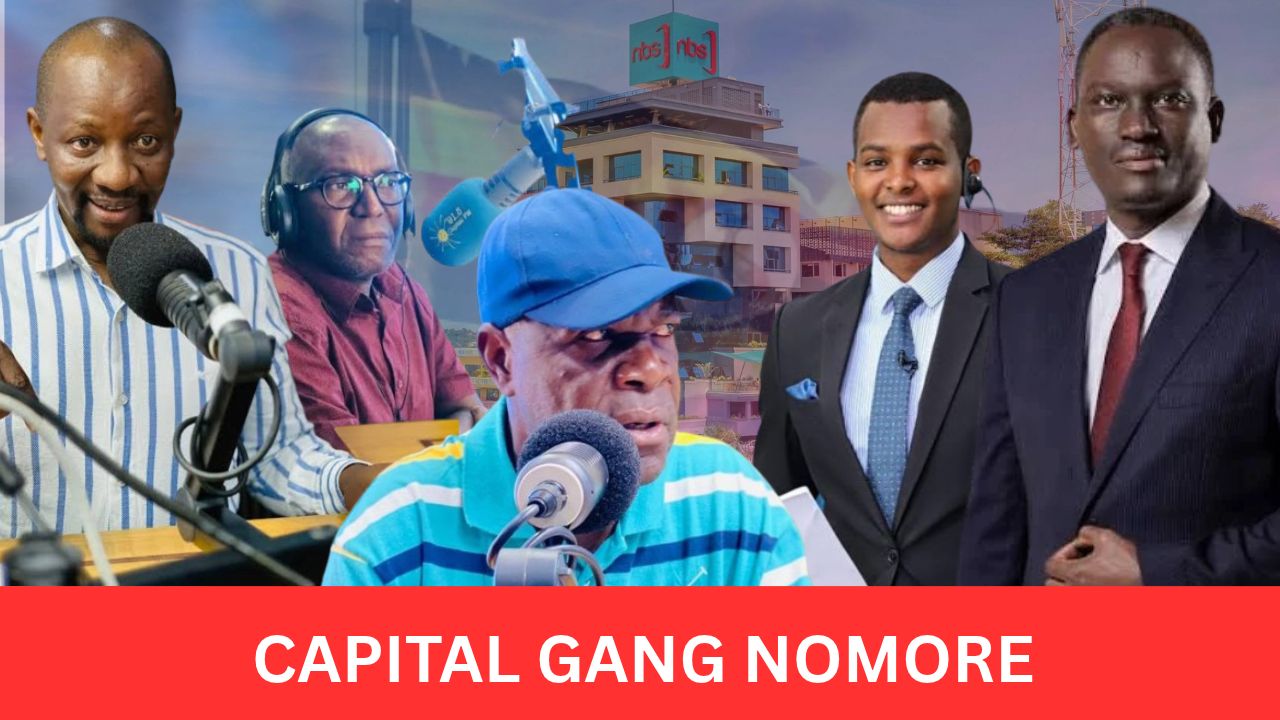 FeaturedOctober 13, 2026CAPITAL GANG IN TURMOIL: OSCAR SEMWEYA QUITS AFTER 30 YEARS: Capital FM’s Legendary Talk-Show Host Reportedly Exits After Clashing With New Owner Kin Kariisa As Producer Patricia Osman And Panellist Derrick Wandera Face The Exit Door
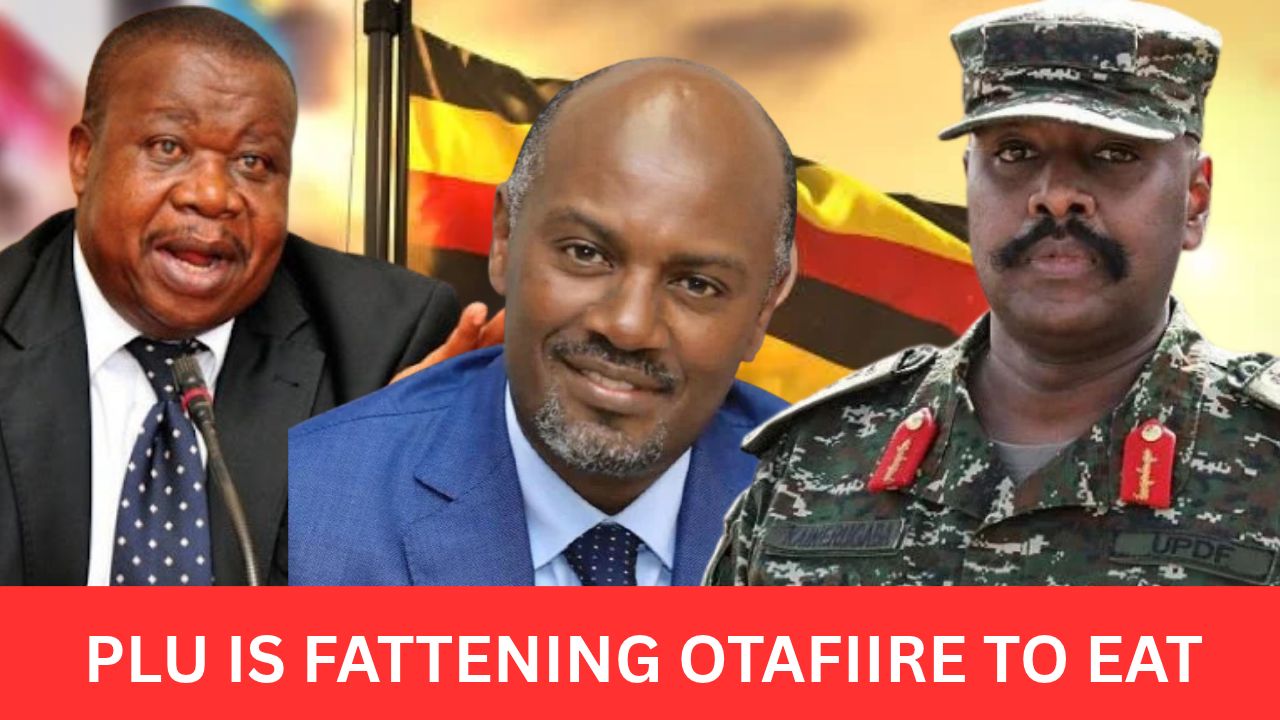 FeaturedOctober 13, 2026‘WE SHALL EAT OTAFIIRE LIKE GRASSHOPPERS’ CDF Muhoozi Ally Andrew Mwenda Escalates The War Against The Veteran Minister, Threatening To Dismantle His Political Network And Defeat Him In Ruhinda
 FeaturedOctober 13, 2026WHO WANTS KAMPALA CITY SQUARE? Hassan Bulwadda’s Shs400b Solar-Powered Mall And Hotel Proposal Revives Questions Over The Fate Of Public Land, Presidential Influence And A 30-Year History Of Controversial Investor Deals
 FeaturedOctober 12, 2026‘WE WON’T BE SOLD!’ Among’s Followers Protest Social Media Rebranding, Reject Transfer To Global Africa And Demand Answers After Former Speaker Annet Anita Among’s Accounts Reportedly Change Ownership