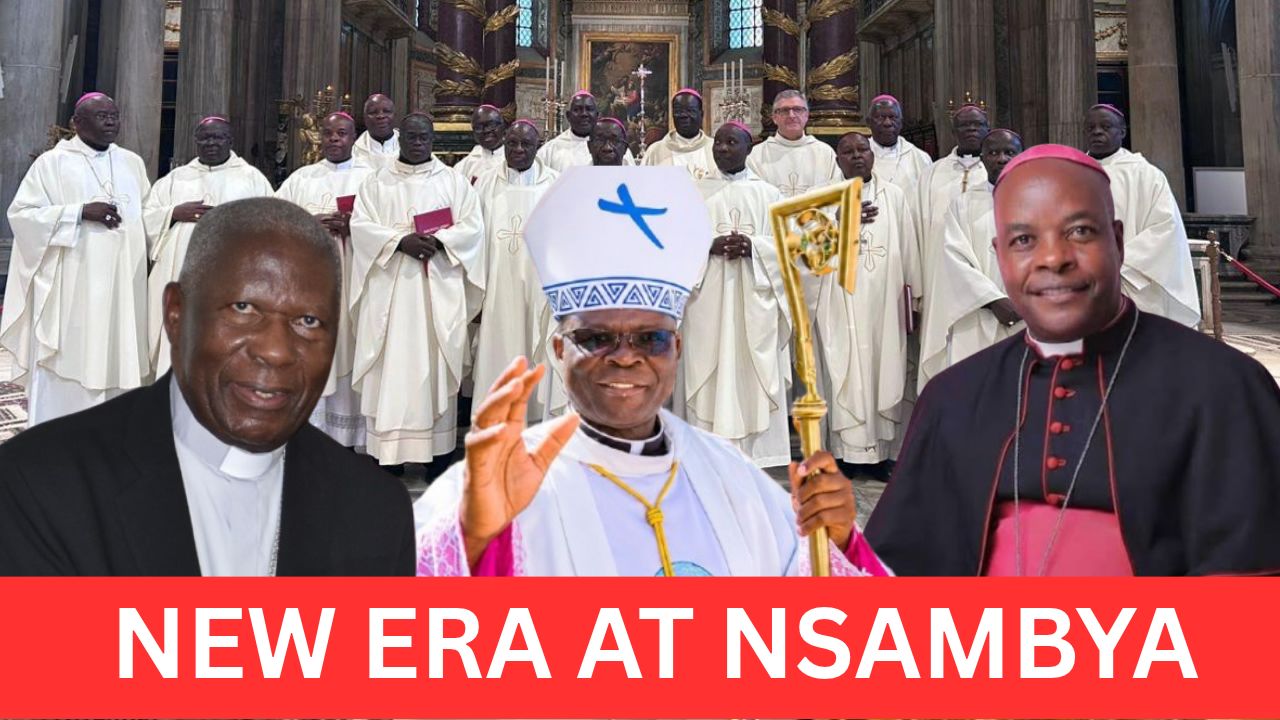






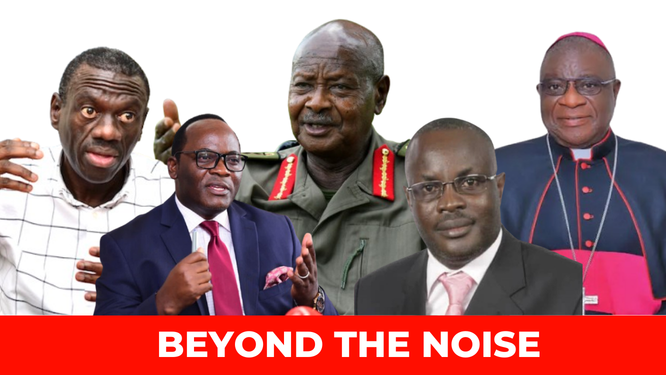


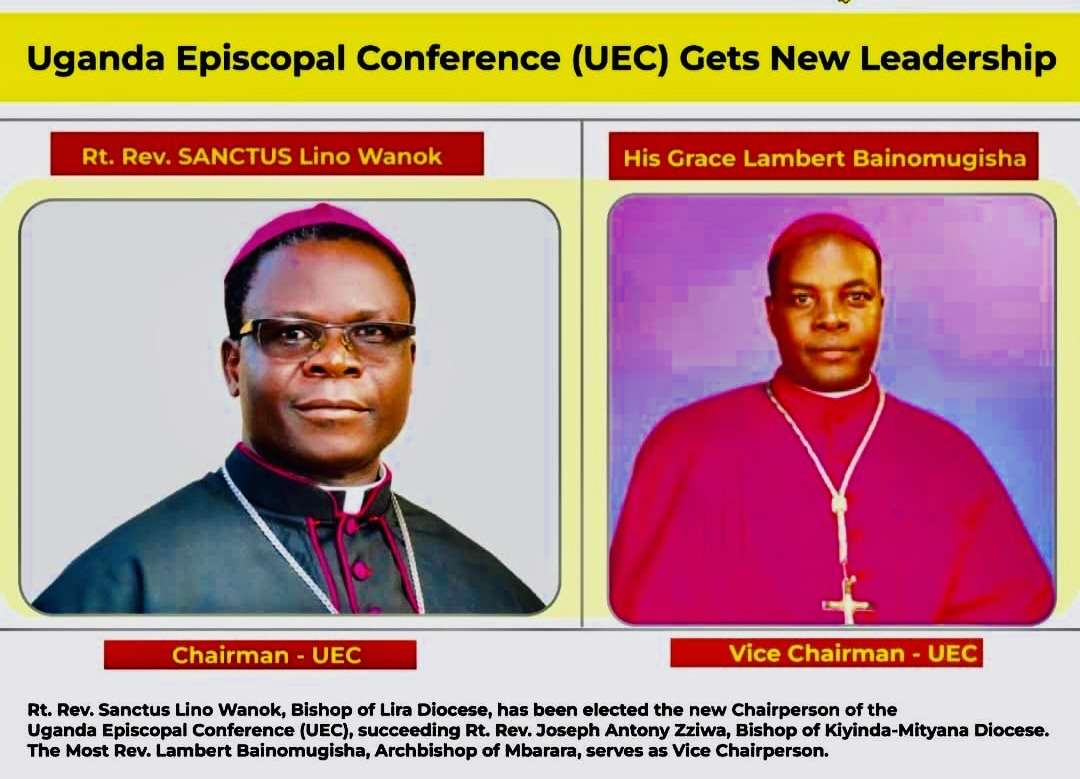
Following that symbolic white smoke, we warmly congratulate Rt. Rev. Sanctus Lino Wanok, Bishop of Lira, on his election as Chairman of the Uganda Episcopal Conference. Alongside him, we congratulate Most Rev. Lambert Bainomugisha, Archbishop of Mbarara, as Vice Chairman. Together, this vibrant duo steps onto centre stage at a historic hour. Uganda is chasing Uganda Vision 2040, and at the same time Uganda is debating inclusive governance and consociational democracy. The goal is clear, and it is to end bitter winner takes all politics forever.This new Episcopal leadership holds the golden key to keeping our nation united during such big debates, and the reason is simple. The Catholic Church itself is Uganda’s oldest and strongest living example of unity in diversity. Every Sunday morning, Baganda, Acholi, Banyankole, Iteso, Basoga, and Karamojong kneel side by side before the same altar. In that moment, they share one bread, one faith, and one destiny without tribal suspicion.
If we look even closer, the spiritual pedigree and pairing of this presidency become clearer. Bishop Sanctus Lino Wanok was directly mentored by the legendary peacemaker Archbishop Emeritus John Baptist Odama, and through that mentorship he drank deeply from the sacred wells of reconciliation wisdom in Northern Uganda. When he is paired with Archbishop Lambert Bainomugisha, who anchors Southwestern dynamism, the result is a leadership that blends hard won peacebuilding mastery with vibrant regional balance.
That spirit of unity, however, must quickly translate into practical prosperity for every Ugandan household. The reason is that middle income status is never built on political agreements, tarmac roads, power dams, and oil pipelines alone. Physical buildings without strong moral values remain a weak house built on shifting sand. True economic growth therefore demands three unshakeable pillars, and these pillars are lasting peace, community security, and real social justice woven directly into daily life.
To erect those three pillars nationwide, an urgent call must go out to State House, civil society, and international development partners to seize this golden moment. The clear step is to institutionalize an annual Church and State Development and Peace Forum that aligns national budgets with parish execution. For clarity, the Uganda Episcopal Conference should convene this Forum, government and development partners should fund it jointly, and the Forum should report publicly every year on what was promised and what was delivered. At the same time, our Bishops must read the government’s noble development plans, hear citizens’ cries, and use their moral voice to lift Uganda.
Doubters who question the Church’s ability to drive real development need only open their eyes across Uganda. Long before modern NGOs arrived, Catholic missionaries and dioceses built towering monuments of human progress. For example, think of great schools like St. Mary’s College Kisubi, Mt. St. Mary’s College Namagunga, Namilyango College, St. Joseph’s Secondary School Nagalama, St. Henry’s College Kitovu, and Uganda Martyrs University Nkozi. In addition to these, countless technical colleges teach vital vocational skills across the country.
Beyond classrooms and workshops, the same impact appears in healthcare. Trusted hospitals like St. Francis Hospital Nsambya, Rubaga Hospital, Lacor Hospital in Gulu, and Virika Hospital in Fort Portal save thousands of lives every year, even in remote corners where private investors fear to go. Through Caritas Uganda, Centenary Bank’s humble beginnings, and village water projects, the Church has repeatedly proved that it knows how to deliver results.
Even in agriculture, which is the backbone of Uganda’s economy, Catholic dioceses have quietly led an inspiring revolution. Across rural parishes, Church owned demonstration farms, cooperative unions, and seed multiplication centres teach smallholder farmers modern irrigation, soil conservation, and value addition. As a result, when priests and parish coordinators champion commercial farming alongside spiritual growth, entire villages escape subsistence poverty with dignity and speed.
Trusting development programmes to this proven Church network can therefore greatly ease the government’s heaviest operational struggles. The reason is practical. Where government offices sometimes slow down because of red tape, money leakages, or poor reach, the parish priest, catechist, and local leader already live right inside every village. Consequently, working directly with Church structures cuts out middlemen, makes public money go further, and guarantees honest results on the ground.
Nowhere is this partnership needed more urgently than in protecting peace, which is the vital air every growing economy must breathe. Investors run away from gunfire, and farmers cannot dig gardens soaked in fear. While Uganda enjoys hard won border safety, lasting peace still requires healing political anger and community tension. Having drunk from Archbishop Odama’s peace-making fountain, Bishop Wanok and his team therefore carry unmatched moral authority to guide peaceful dialogue.
Equally critical is security, which in modern Uganda has grown beyond army barracks into an urgent moral and youth challenge. Millions of energetic young people finish school without jobs, and idle hands risk drifting into petty crime, drug abuse, and online fraud. For this reason, linking the Parish Development Model directly with Catholic technical colleges and Small Christian Communities can turn vulnerable youths into disciplined, hardworking business owners.
Indeed, when young people gain both practical vocational skills and moral discipline, neighbourhood crime drops naturally without heavy police patrols. Local parish councils already know which families lack food, which youths feel hopeless, and where domestic conflicts are brewing. Therefore, pairing community policing officers with parish leaders creates an early warning safety net, and these net rescues troubled youths before prisons ever claim their bright futures.
Alongside security stands the third indispensable pillar, which is social justice. No country marches into middle income status while losing its wealth to corruption and land grabbing. Social justice is the Church’s native language. Through diocesan justice and peace commissions, the Bishops hold up an honest mirror to society, and in doing so they defend poor farmers, demand medicine in public hospitals, and fight for fairness so every citizen thrives.
Equally transformative is the Church’s unmatched reach in strengthening family stability and financial discipline across rural communities. Through marriage preparation programmes, women’s guilds, and parish savings groups, Catholic leaders nurture responsible parents. These parents prioritise education, healthcare, and household savings. Strong, stable families therefore form the bedrock of any modern economy, because they raise law abiding citizens capable of sustaining national progress across generations.
True partnership, however, always works both ways. Just as the government must respect the Church’s honest voice, our Bishops must also understand the good wealth creation goals of the state with warm support. Poverty is never a blessing, because extreme need crushes human hope. When Bishops preach modern farming, honest tax payment, financial discipline, and hard work from the pulpit, they actively build the country.
Ultimately, the Holy Bible destroys any false wall separating spiritual worship from economic progress. From the very beginning, God placed people in a garden to “till it and keep it” (Genesis 2:15). Through Jeremiah, God told His people to “seek the welfare of the city” (Jeremiah 29:7). Jesus declared He came so people “may have life abundantly” (John 10:10). Development truly is another name for peace.
History rarely knocks twice with such a clear promise. The graceful farewell of Bishop Joseph Antony Zziwa and the exciting rise of Bishop Sanctus Lino Wanok and Archbishop Lambert Bainomugisha mark a blessed season for Uganda. Let government, development partners, and citizens therefore rally behind these shepherds. Let us unite the Cross and the Coat of Arms to spark an unstoppable, God blessed era of unity and middle-income prosperity.
The Writer, Twiine Mansio Charles is the CEO and Founder of The ThirdEye Consults (U) Ltd
Author Profile

- Twiine Mansio Charles is the CEO of The ThirdEye Security Consults (U) Ltd, a Doctoral Scholar in Political Science / International Studies at Stellenbosch University, and a geopolitical analyst specializing in regional security and international statecraft.
He possess two Masters, one in Management studies and another in Security and diplomatic studies.