





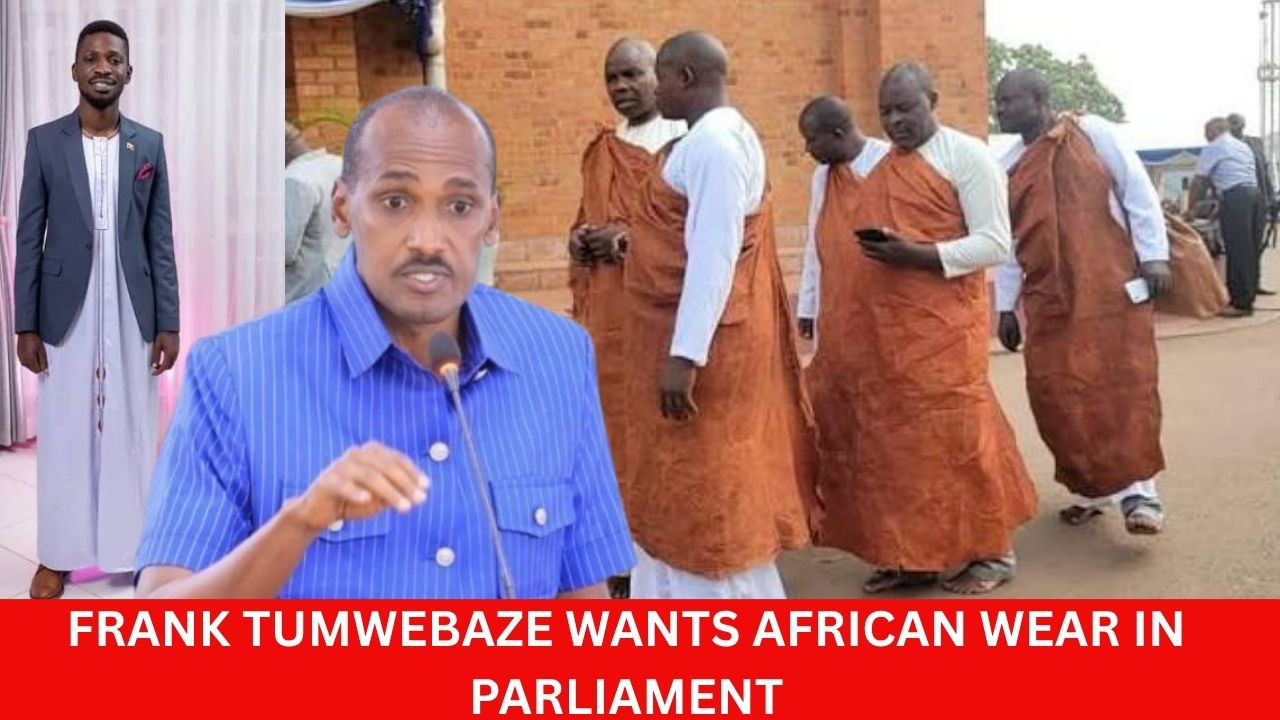
Kibale East County MP Frank K. Tumwebaze has taken the battle over what MPs should wear in Parliament from the Chamber to the Rules, Privileges and Discipline Committee, proposing amendments that could formally recognise African traditional attire as acceptable parliamentary dress.
Tumwebaze wants Parliament to amend Rule 88 of its Rules of Procedure to expressly provide for a wider range of formal wear, including the Kaunda suit, Madiba shirt and kanzu, alongside the conventional suit and tie.
The proposed changes come after a dispute on the floor of Parliament in August when some legislators wearing Kaunda suits were challenged over whether their clothing complied with the institution’s dress requirements.
Speaker Jacob Marksons Oboth subsequently ruled in favour of the legislators, allowing them to remain in the Chamber.
Rather than leave the matter to individual rulings, Tumwebaze is now pushing for the rules themselves to be changed to remove ambiguity and give African attire a clear place within Parliament’s formal dress code.
Under his proposed amendment to Rule 88, male MPs would be allowed to appear in the Chamber wearing a suit and shirt with a tie, cravat and flaps; a formal safari suit; a Kaunda suit; a Madiba shirt with trousers; or a kanzu with trousers and a jacket.
The proposal would also recognise military attire, except combat uniform, for MPs representing the army.
Tumwebaze argues that Parliament can maintain standards of decency, dignity and professionalism without insisting that legislators conform to one particular style of formal clothing.
The legislator says the issue is bigger than what an MP wears to work. For him, it touches on identity, culture and the extent to which African institutions should continue treating Western-style formal clothing as the default symbol of authority.
‘African Attire Should Not Be Inferior’
Tumwebaze’s proposal is anchored in the argument that Parliament is a national institution representing Ugandans from different cultural, religious and ideological backgrounds.
He argues that the rules should therefore recognise diversity rather than create a hierarchy in which Western clothing is automatically regarded as more formal or respectable than African attire.
His position is that African clothing can be both culturally significant and sufficiently formal for the proceedings of Parliament.
The proposed amendment would consequently move the debate away from individual interpretations of what constitutes “decent” parliamentary dress and establish a written list of acceptable options.
Tumwebaze says prescribing only one model of formal dress risks disregarding the cultural and personal convictions of MPs.
Treating African attire as inferior or less legitimate in spaces of power, he argues, amounts to an insult to African heritage.
The debate has particularly focused on the Kaunda suit, a style of formal African clothing associated with Zambia’s first president, Kenneth Kaunda, but which has become widely worn across Africa.
Its characteristic high-collared, collarless or minimalist design has increasingly been adopted by political leaders and public figures as an alternative to the conventional Western suit and tie.
Similarly, the Madiba shirt, associated with South Africa’s former president Nelson Mandela, has become a recognised form of formal political attire.
Tumwebaze wants such clothing to be explicitly recognised rather than left to interpretation by parliamentary authorities.
From A Chamber Dispute To A Rule Change
The immediate trigger for the proposed amendment was the August confrontation over MPs wearing Kaunda suits.
The dispute exposed a potential gap in Parliament’s rules: while the institution requires members to maintain decorum and dress appropriately for parliamentary business, questions can arise over whether certain forms of African attire qualify as formal wear.
Speaker Oboth’s ruling allowing the MPs to remain in the Chamber provided an immediate resolution, but did not permanently settle the question. Tumwebaze’s intervention seeks to ensure that similar disputes do not recur.
By taking the matter to the committee responsible for Parliament’s rules and procedure, the MP is effectively asking the institution to settle the question through legislation of its own internal procedures. The proposed amendment could also provide parliamentary authorities with clearer guidance when enforcing the dress code.
Instead of debating whether an individual garment is sufficiently formal, officials would have a defined list of acceptable attire against which MPs can be assessed.
Tumwebaze’s Case
Tumwebaze maintains that the objective should not be to abolish standards. Instead, he wants Parliament to distinguish between decency and uniformity.
His argument is that an MP can be properly dressed, dignified and professional without necessarily wearing a Western-style suit and tie.
The proposed list therefore retains the traditional suit while expanding the options available to legislators.
A conventional suit and shirt with a tie, cravat and flaps would remain permissible. But members would also be able to choose a formal safari suit, Kaunda suit, Madiba shirt with trousers or a kanzu paired with trousers and a jacket.
The proposal also makes room for MPs representing the Uganda People’s Defence Forces, allowing them to wear military attire provided it is not combat uniform.
For Tumwebaze, this approach would preserve the authority and dignity of Parliament while acknowledging the country’s cultural realities.
He has argued that Uganda’s Parliament should not have rules that implicitly suggest that African attire is unsuitable for formal state institutions.
A Wider Cultural Debate
The controversy has opened a wider conversation about the symbolism of clothing in African public institutions.
For decades, suits and ties have dominated formal government settings across much of Africa, largely reflecting colonial administrative traditions and international diplomatic conventions.
But African political leaders have increasingly used clothing to express cultural identity. Mandela’s colourful shirts became an important part of his public image, while Kaunda’s signature suits became synonymous with his political identity.
In Uganda, the kanzu has long been associated with formal occasions and remains a prominent item of men’s ceremonial and cultural dress.
Tumwebaze’s proposed amendment would therefore bring Parliament’s internal dress regulations closer to a reality in which African garments are already used by politicians and public officials at major national and international events.
The proposal could also settle a recurring tension between cultural expression and institutional formality.
If adopted, MPs would have greater freedom to select attire that reflects their identity while still meeting Parliament’s expectations regarding dignity and decency.
Rules Committee To Consider Proposal
The proposed changes will now put the Rules, Privileges and Discipline Committee at the centre of the dress-code debate.
The committee will have to consider whether the suggested categories are sufficiently clear and whether additional provisions are necessary to prevent disagreements over what constitutes formal African attire.
The debate could also determine whether Parliament should continue prescribing specific garments or instead adopt broader principles based on decency, formality and appropriateness.
Tumwebaze’s proposal nevertheless represents a significant shift in the conversation.
What began as a disagreement over whether MPs wearing Kaunda suits could sit in the Chamber has now evolved into a formal attempt to redefine what Parliament considers appropriate attire.
If the amendment succeeds, Kaunda suits, Madiba shirts, safari suits and kanzus could become explicitly recognised forms of formal parliamentary wear.
For Tumwebaze, the central question is not whether MPs should dress formally, but whether formal dress in Uganda’s Parliament must necessarily look Western.
His answer is no. He wants the rules to recognise that African identity and parliamentary dignity can coexist—and that an institution representing Ugandans should have room for both.
Author Profile
- Mr. Stephen Kasozi Muwambi is a seasoned crime investigative writer, majoring in judicial-based stories. His two decades’ experience as a senior investigative journalist has made him one of the best to reckon on in Uganda. He can also be reached via [email protected]
Latest entries
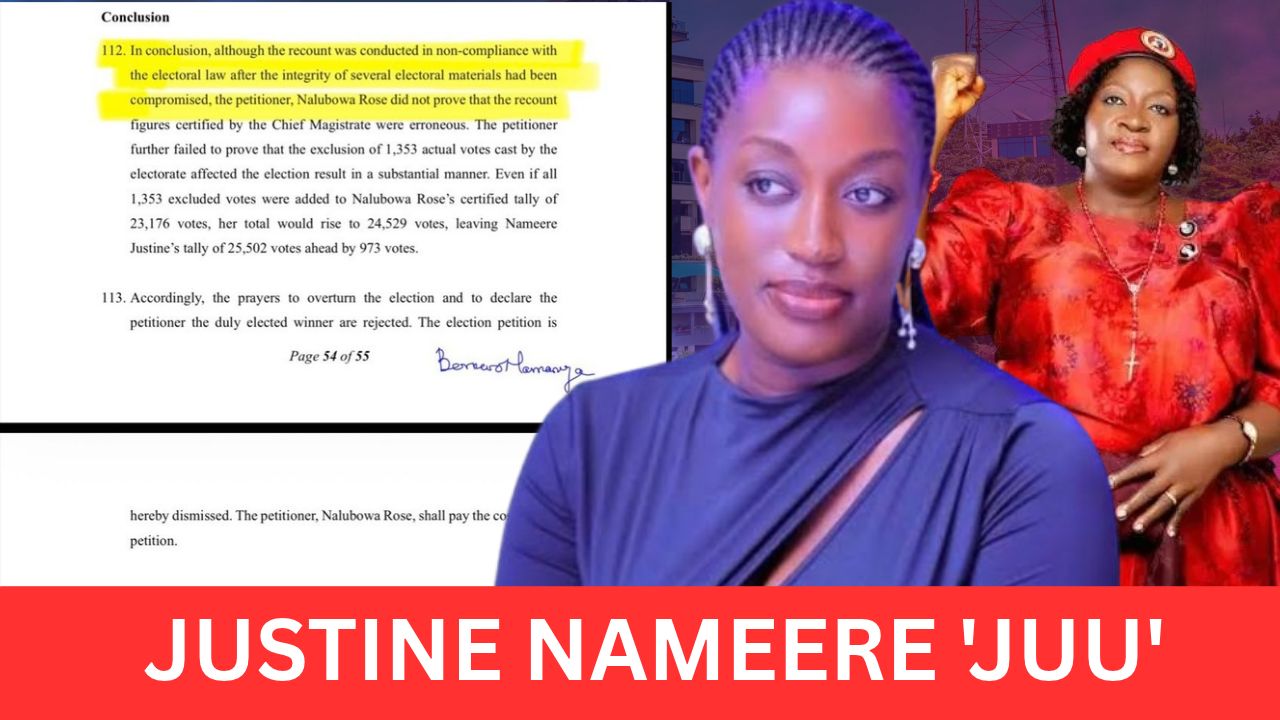 FeaturedOctober 21, 2026NAMEERE RETAINS MASAKA CITY SEAT: High Court Dismisses Nalubowa’s Election Petition, Ruling That Recount Irregularities Did Not Substantially Alter The Final Result
 FeaturedOctober 20, 2026VETERAN JOURNALIST KASYATE JOINS OPM: Simon Kasyate Moves Back Into Government Communications After Years In Journalism, Corporate Affairs And Public Relations, Including A Senior Role At KCCA
 FeaturedOctober 19, 2026BILLIONS LOST, INVESTORS DUPED, GOLD TRADE UNDER SCRUTINY: A City Pastor’s Arrest Over An Alleged Shs2.9b Fraud Involving American Investors Adds To A String Of High-Profile Gold Scams Threatening Uganda’s Investment Reputation
 FeaturedOctober 17, 2026THREE VETO POWERS THREATEN OTUNNU’S UN BID: With Three Of The Five Permanent Members Reportedly Against Him, Otunnu Must Win Over Powerful Opponents Or Risk Seeing His Campaign Collapse Before The Final Selection